 Pulse Reviews and Analysis
How do you coach reps to find the economic buyer?
 Curated by Kory White · Fractional CRO, CRO Syndicate
Direct Answer
Coach reps to find the economic buyer by making "Who can spend money that isn't already budgeted?" a standing question in every deal review, then drilling the access motion: have your champion sponsor an introduction by framing it as a mutual-fit conversation, not a sign-off request.
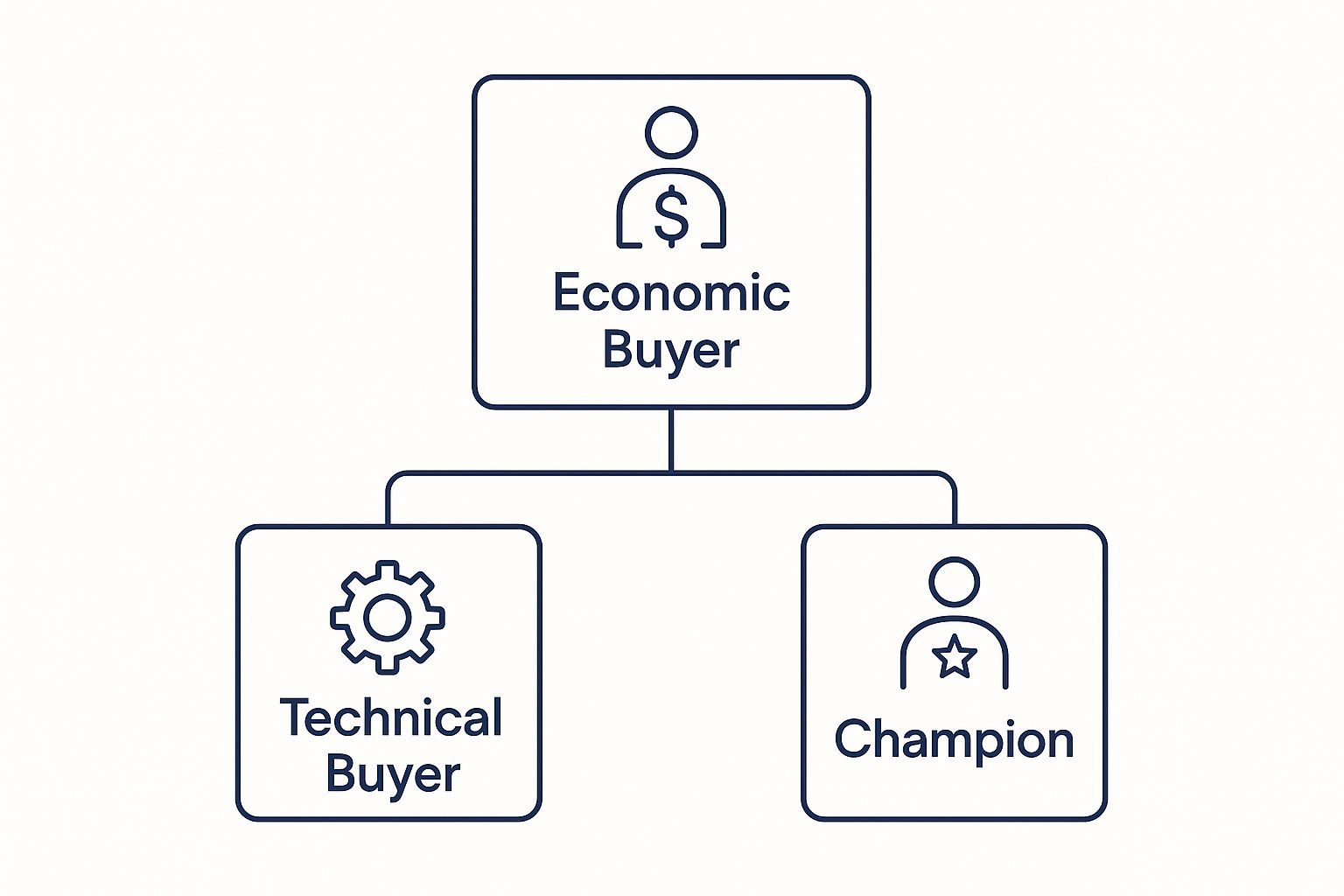
The core move is teaching reps to separate the buyer roles in MEDDIC — the economic buyer (signs and reallocates budget), the champion (sells for you internally), and the user buyer (lives with the tool) — and to refuse to forecast a deal as committed until they've had a two-way conversation with the person who owns the money.
This is a manager-led skill: you build it in 1:1s and call reviews, not in a one-time training. In 2027, with larger buying committees and tighter budgets, the rep who never reaches the economic buyer is the rep who loses to "no decision."
Why This Happens — Diagnose Before You Coach
Before you coach the behavior, find the real cause. Reps fail to reach the economic buyer for very different reasons, and the fix for each is different. Sort it into skill, will, knowledge, or system so you don't run a confidence drill on a rep who actually has a process gap.
- Knowledge gap. The rep doesn't know what an economic buyer *is* versus a champion or a user buyer. They think the friendly VP who takes their calls is the decision-maker. This is the most common cause for SDRs and first-year AEs, and it's the easiest to fix.
- Skill gap. The rep knows the concept but can't execute the access motion — they don't have the language to ask a champion for an introduction without sounding like they're going over the champion's head.
- Will / confidence gap. The rep is afraid to "bother" a senior leader, or afraid that asking for the economic buyer will offend their champion and blow up the deal. This is call reluctance pointed at the top of the org chart.
- System / territory problem. Sometimes the rep is right — in this segment, deals genuinely close at the director level, or your ICP is a flat org with no separate economic buyer. Coaching access into a deal that doesn't have one wastes everyone's time.
Run this tree in the deal review out loud. Most managers skip straight to "go higher" advice, which only works when the cause is a skill gap. Diagnose first.
The Coaching Conversation
Use the GROW model — Goal, Reality, Options, Will — to run the 1:1. Don't lecture. Ask questions that force the rep to discover the gap themselves; they'll own the fix far more than one you hand them. Here are verbatim scripts.
Goal — set the target for the deal:
"Walk me through this deal. Who do you have to convince, and who actually signs the contract and moves money to pay for it? Are those the same person?"
If the rep can't answer the second half, you've found your coaching point. Keep going.
Reality — expose what they actually know:
"On a scale of one to ten, how confident are you that the person you've been talking to can reallocate budget to buy this *without* asking someone else for approval? What's the evidence?"
"What did your champion say the approval process looks like? Who else has to say yes, and what's their criteria?"
When a rep says "my contact said they'll handle it internally," teach them that is a red flag, not a green light. A real economic buyer wants to meet the vendor before committing money; a champion who hides them is often hiding that they don't have the authority they implied.
Options — generate the access plays. Give the rep these scripts to use with the champion:
"We're at the point where I usually loop in the executive who owns the budget — partly so they hear the business case in their own words, and partly so there are no surprises at signature. Who's that on your side, and what's the best way to get 20 minutes with them together?"
And the reframe when a champion resists:
"Totally fair — and to be clear, I'm not trying to go around you. You know the politics better than I do. What would make you comfortable bringing them in? Would it help if I sent you a one-page business case you could forward, and we set up the meeting jointly?"
Teach the rep the champion test: a true champion will get you to the economic buyer; if they can't or won't, they're a coach or a friend, not a champion, and the deal needs multithreading. The language: *"would you be willing to introduce me to your CFO?"* — if the answer is a soft no, the deal is softer than the forecast says.
Will — lock the commitment:
"What are you going to do before our next 1:1 to get on the economic buyer's calendar, and what will you have ready going in?"
Make them say the action and the date. Write it down. Follow up on it next week — follow-through is where most coaching dies.
The Coaching Plan / Cadence
One conversation won't change behavior. Build a loop. Here's a 30/60/90 frame plus the weekly mechanics.
- Days 0–30 — Knowledge + language. Teach the MEDDIC buyer-role distinctions in a team session. Have every rep audit their top three open deals and name the economic buyer (or admit they can't). Review one Gong or Chorus call recording per rep where they had champion access and ask: "Where could you have asked for the EB?"
- Days 31–60 — Skill + reps. Role-play the champion-intro ask weekly until it's automatic. Add "Economic buyer met? Y/N" as a required field in Salesforce and inspect it in every pipeline review. No deal moves to "negotiation" stage without it.
- Days 61–90 — Will + accountability. Shift from "did you find the EB" to "what did the EB tell you about their decision criteria and timeline." By now the access motion should be a habit; you're coaching depth of access, not existence of access.
The loop is weekly: observe a real call, diagnose, coach, practice, send them to execute, measure, repeat. The discipline is in closing the loop — inspecting what you asked them to do.
Drills & Role-Play
- The org-chart drill. Before any deal review, the rep draws the buying committee on a whiteboard or in a deal-map tool and labels each person economic buyer, champion, user buyer, or blocker. You point at a box and ask, "How do you know?"
- Champion-intro role-play. You play the protective champion who says "I'll handle it internally." The rep has to win the introduction using the reframe scripts above. Run it three times, raising the resistance each time.
- Call-review scorecard. Pull a recorded call from Gong or Chorus. Score it on one axis only: did the rep advance toward the economic buyer? Use a simple rubric — asked nothing (0), asked indirectly (1), secured a next step toward the EB (2).
- The "follow the money" drill. Give the rep a deal and have them trace, in writing, exactly how the purchase gets funded: which budget line, who controls it, who can override it. Most reps have never been forced to do this.
What to Measure
Coach to leading indicators, not just won/lost quota, because quota tells you the answer three months too late.
- Economic-buyer-met rate — percentage of committed-stage deals where the rep has had a two-way conversation with the EB. This is the single best number for this skill.
- Multithreading depth — average number of distinct stakeholders engaged per opportunity. Gong Labs research has repeatedly linked higher contact counts to higher win rates.
- Stage-conversion lift — win rate of deals with EB access versus deals without. When your reps see this gap in their own pipeline, the behavior change accelerates.
- Single-threaded deal count — how many forecasted deals rest on one contact. This is your risk dashboard.
- Slippage cause — tag lost/slipped deals where "never reached EB" was a factor. It makes the cost of skipping this step undeniable.
Common Mistakes Managers Make
- Rescuing the rep. Jumping on the call to get the EB access yourself. It closes this quarter and teaches the rep nothing. Coach the play; let them run it.
- Coaching the deal, not the skill. Fixing this one deal's access problem without building the rep's repeatable motion. Next quarter you'll have the same conversation.
- No follow-through. Asking for an action in the 1:1 and never inspecting it. Reps learn fast what you don't check.
- Confusing a friend with a champion. Letting the rep — and yourself — treat a friendly, powerless contact as a champion. Apply the champion test in every review.
- Coaching everyone the same. A knowledge-gap rep and a will-gap rep need opposite interventions. Diagnose individually.
- Forcing access where there's none. Demanding an economic buyer in a flat, low-ACV deal that genuinely closes at the director level. Sometimes the rep is right and the playbook is wrong for that segment.
FAQ
What exactly is an economic buyer versus a champion? The economic buyer owns the money — they can approve the purchase and reallocate budget without asking anyone else. The champion is the internal seller who wants you to win and has the influence and access to sell on your behalf.
They are rarely the same person. A champion gets you to the economic buyer; that's the test of a real champion.
How do I coach a rep who's afraid to go over their contact's head? Reframe it as protecting the contact, not bypassing them. The script: "I'm not going around you — I want to bring your exec in jointly so there are no surprises at signature." Role-play it until the fear drops.
This is a will gap, so build confidence with reps, not more information.
What if the champion refuses to introduce the economic buyer? That refusal is data. Coach the rep to multithread and to read it honestly: a champion who can't or won't open the door usually lacks the authority they implied. Don't let the rep forecast that deal as committed until access exists.
Which framework should I teach for this? MEDDIC (or MEDDPICC) is the most direct fit because it explicitly separates the economic buyer, champion, and decision criteria. Pair it with the GROW model for running the coaching conversation itself.
How do I measure whether the coaching is working? Track economic-buyer-met rate on committed deals and multithreading depth as leading indicators. Then show the rep the win-rate gap between their EB-access deals and their single-threaded deals — that comparison changes behavior faster than any lecture.
Is this different in a 2027 buying environment? Yes. Committees are larger, budgets are scrutinized harder, and "no decision" beats most vendors. Reaching a genuine economic buyer early is now the difference between a deal that closes and one that stalls in committee.
AI call tools like Gong and Chorus make it easy to inspect whether reps actually asked.
Bottom Line
The one move that matters: make "Have you had a two-way conversation with the person who owns the money?" a non-negotiable gate in your pipeline reviews, and build the access skill through diagnosis, GROW-based 1:1s, role-play, and weekly follow-through. Teach the MEDDIC buyer roles, apply the champion test, and measure economic-buyer-met rate as a leading indicator.
Coach the skill, not the deal — and never let a rep forecast a deal as committed when it rests on a single friendly contact.
Sources
- Gong Labs — multithreading and win rates
- MEDDIC Academy — the economic buyer in MEDDIC
- Harvard Business Review — the new sales imperative and buying committees
- RAIN Group — sales coaching research and best practices
- Sales Hacker — multithreading and reaching the economic buyer
- Sandler — coaching salespeople and identifying decision-makers
- Winning by Design — buyer roles and deal qualification
- SBI — sales coaching cadence and leading indicators
*Sales coaching for finding the economic buyer — how to coach reps to identify and reach the economic buyer, a sales manager coaching guide, a rep coaching framework for MEDDIC buyer roles, and a coaching playbook for 2027.*