 Pulse Reviews and Analysis
How do you coach reps to use stage exit criteria correctly?
 Curated by Kory White · Fractional CRO, CRO Syndicate
Direct Answer
Coach reps to use stage exit criteria correctly by anchoring every stage to a buyer-verifiable outcome — proof the buyer did something, not proof your rep feels good. The core move is to stop asking "what stage is this in?" and start asking "what has the buyer done that earns this stage?" Run a weekly pipeline review where the rep must name the evidence for the current stage and the single exit criterion blocking the next one.
If they can't point to a buyer action, the deal moves back, not forward. This is a manager's habit-building job for 2027: with longer cycles and larger buying committees, optimism-based forecasting collapses, and exit criteria are the cure.
Why This Happens — Diagnose Before You Coach
Reps misuse exit criteria for predictable reasons, and the fix is different for each. Before you correct anyone, separate skill, will, knowledge, and system so you don't role-play a problem that's actually a CRM design flaw.
- Knowledge gap: The rep doesn't actually know what each stage *means*. They were never taught that a stage is a buyer milestone, so they advance deals on activity ("I sent the proposal") instead of outcome ("they confirmed budget and a signing date").
- Skill gap: The rep knows the criteria but can't *create* the buyer action — they can't get a champion to introduce the economic buyer, so they fudge the stage rather than admit the deal is stuck.
- Will gap: The rep games the stages on purpose to look healthy, hit a SPIFF, or avoid a hard pipeline-review conversation. This is a coaching-plus-accountability problem, not a teaching problem.
- System gap: Your Salesforce stages are misdefined — they describe *seller* actions ("Demo Given") instead of buyer actions ("Buyer Confirmed Success Criteria"). No amount of coaching fixes a broken stage definition. Fix the schema first.
The Coaching Conversation
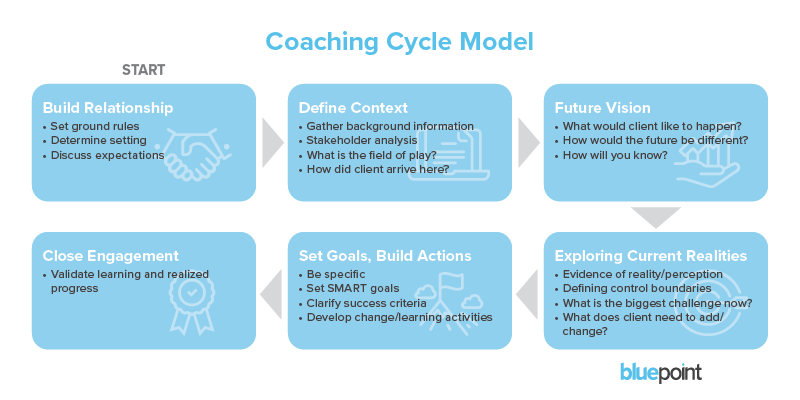
Use the GROW model — Goal, Reality, Options, Will — so the rep diagnoses their own deal instead of defending it. Keep these scripts copy-pasteable for your next 1:1. Notice every script forces the rep to cite buyer-verifiable outcomes, never rep optimism.
Goal — set the frame: "Let's make sure this stage is honest before we forecast it. What does the buyer have to have done for this deal to legitimately sit in 'Validation'?"
Reality — pressure-test the evidence: "Show me the buyer action that proves we're in this stage — what did they do, not what did we send?" If the rep says "I gave the demo," reply: "A demo is our activity. The exit criterion is *their* confirmation. Did the buyer tell us, in their words, the three problems this solves and what it's worth to fix them?"
Reality — surface the real blocker: "What is the one exit criterion standing between this deal and the next stage?" Then: "Who specifically owns that on the buyer's side, and when have they committed to it?"
Options — build the path forward: "If the exit criterion is 'economic buyer confirms budget,' what are two ways you could earn that meeting this week?" Let the rep generate options; resist solving it for them.
Will — lock the commitment: "By Friday, what buyer action will you have secured, and how will I see it in the CRM?" Close with: "If that action doesn't happen, we move this deal back a stage together — no penalty, just honesty."
When you suspect gaming, drop the soft frame: "I'm not grading you on stage count. I'd rather have ten honest deals than twenty optimistic ones — what does this one really look like?"
The Coaching Plan / Cadence
Build the habit over a 30/60/90 arc, then sustain it weekly.
- Days 1–30 — Teach: Run a one-hour clinic defining each stage as a buyer milestone. Co-author a one-page exit-criteria card the rep keeps open during calls. Re-stage their entire pipeline together using only buyer evidence; expect 20–40% of deals to slide back. That slide is the win, not a failure.
- Days 31–60 — Practice: In every weekly 1:1, the rep defends two deals using buyer evidence only. Tie exit criteria to MEDDIC — Metrics, Economic buyer, Decision criteria, Decision process, Identify pain, Champion — so "qualified" has a spine. Reps map each MEDDIC element to the stage where the buyer confirms it.
- Days 61–90 — Sustain: Shift from "did you re-stage?" to "your pipeline is staying clean — let's coach the *skill* of creating the next buyer action." Now the coaching is about advancing deals, not just labeling them.
Drills & Role-Play
- The evidence drill: Pick five live deals at random in pipeline review. The rep has 60 seconds per deal to name the buyer action justifying the current stage. No buyer action = deal moves back on the spot. Done weekly, this rewires the default.
- The exit-criterion role-play: You play a champion who likes the rep but won't introduce the economic buyer. The rep must earn that introduction — the literal exit criterion — using real language. Run it three times until the ask is smooth.
- Call-review with AI: Use Gong or Clari to pull a recording where the rep advanced a stage. Together, find the moment the buyer *did or didn't* confirm the exit criterion. AI call-coaching surfaces these moments fast in 2027; you supply the judgment.
- The "move it back" reps: Deliberately practice de-staging a deal in front of peers so it stops feeling like a confession. Normalizing backward movement is the cultural unlock.
- Committee mapping: With larger 2027 buying committees, drill the rep on which committee member must act for each exit criterion — not just "the buyer."
What to Measure
Track leading indicators of accurate staging, not just closed quota:
- Stage-slippage rate: How often deals move backward. Early on this should *rise* — that's honesty installing. A flat-zero slip rate is a red flag for gaming.
- Exit-criteria completion rate: Percentage of advanced deals with a logged buyer action in the CRM. Aim for 90%+.
- Stage conversion accuracy: Compare each stage's historical win-rate before and after. Honest staging makes later-stage win-rates climb because junk deals exited early.
- Forecast accuracy: Commit-category deals that actually close. Clari or Salesforce dashboards expose drift here.
- Time-in-stage outliers: Deals parked in one stage signal a rep who can't create the exit action — a skill-coaching trigger.
Common Mistakes Managers Make
- Rescuing the rep: You spot the missing buyer action and tell them the answer. Ask, don't tell — GROW exists so the rep owns the diagnosis.
- Coaching the deal, not the skill: Saving one deal feels productive but teaches nothing. Coach the *pattern* of creating buyer actions so the next ten deals improve.
- Punishing honesty: If a rep gets grilled for moving a deal back, they'll never do it again. Reward accurate staging louder than optimistic staging.
- Tolerating seller-worded stages: Leaving "Demo Given" in Salesforce guarantees activity-based advancement. Fix the schema to buyer-verifiable language.
- Coaching everyone the same: A knowledge gap needs teaching; a will gap needs accountability. Same script for both fails both.
- No follow-through: Defining exit criteria once in a kickoff and never inspecting them weekly lets the old habit return within a month.
FAQ
What exactly is a stage exit criterion? It's the specific, observable buyer-verifiable outcome that must be true before a deal can leave one stage and enter the next — for example, "the economic buyer confirmed budget and a target signing date." It is always a buyer action you can point to, never a seller activity like "sent proposal."
How is this different from just having a sales process? A sales process lists *your* steps; exit criteria define *the buyer's* milestones. Most teams have stages but no real exit criteria, so reps advance deals on effort. Tying each stage to a buyer action — ideally mapped to MEDDIC — turns the process from a checklist into a forecast you can trust.
My rep insists the deal is real but can't name a buyer action. What do I do? Treat the absence of a buyer action as the signal. Coach with GROW: "If it's real, what would the buyer do this week to prove it?" If they still can't produce a buyer action, the deal moves back. Belief is not evidence.
Won't moving deals backward crush morale and the forecast? Short term, your pipeline shrinks and looks worse — that's the truth surfacing, not damage. Reps relax once they learn honest staging is rewarded, and your forecast accuracy climbs, which protects them from end-of-quarter surprises and credibility hits with leadership.
When is this a coaching problem versus a CRM problem? If stages are labeled with seller activities ("Demo Given," "Proposal Sent"), no coaching will fix it — redefine them as buyer milestones first. If the stages are sound but reps still misuse them, then it's knowledge, skill, or will, and you coach accordingly.
How do I coach exit criteria with a remote or hybrid team in 2027? Lean on AI call-coaching from Gong or Chorus to pull the exact moments buyers did or didn't confirm criteria, then review them async or in a short live 1:1. The evidence is on the recording, so distance stops being an excuse for optimism-based staging.
Bottom Line
The one move that matters: make every stage earn its place with a buyer-verifiable outcome, and inspect that evidence every week. Coach the rep to name the buyer action and the single blocking exit criterion — if they can't, the deal moves back, not forward. Fix seller-worded stages in Salesforce first, then build the habit with GROW conversations and MEDDIC discipline until honest staging is the default.
Sources
- Gong Labs — what separates top closers (deal stage data)
- MEDDIC / MEDDPICC sales qualification methodology
- Winning by Design — Revenue Architecture and the buyer journey
- Salesforce — defining opportunity stages and sales processes
- Harvard Business Review — coaching salespeople into sales champions
- RAIN Group — sales coaching that drives performance
- Clari — pipeline inspection and forecast accuracy
- The GROW coaching model overview
*Sales coaching for stage exit criteria — how to coach reps to use stage exit criteria correctly, sales manager coaching guide, rep coaching framework, and a coaching playbook for 2027.*