 Pulse Reviews and Analysis
How do you coach a remote sales team effectively?
 Curated by Kory White · Fractional CRO, CRO Syndicate
Direct Answer
To coach a remote sales team effectively, build a fixed coaching rhythm that survives distance: weekly 1:1s anchored to recorded calls in Gong or Chorus, short async feedback loops in Slack or Loom between live sessions, and one team role-play block where reps practice on camera.
The core move is to replace hallway osmosis with intentional, scheduled coaching reps — because remote managers lose the ambient signals (overheard calls, body language, walk-by check-ins) that office managers coach from for free. Coach the skill from the recording, not the deal from memory, protect connection on purpose, and measure leading behavior change, not just quota.
This is the 2027 default: hybrid and fully-remote teams, AI-tagged call libraries, and reps who will quietly disengage if the only time you talk is the forecast call.
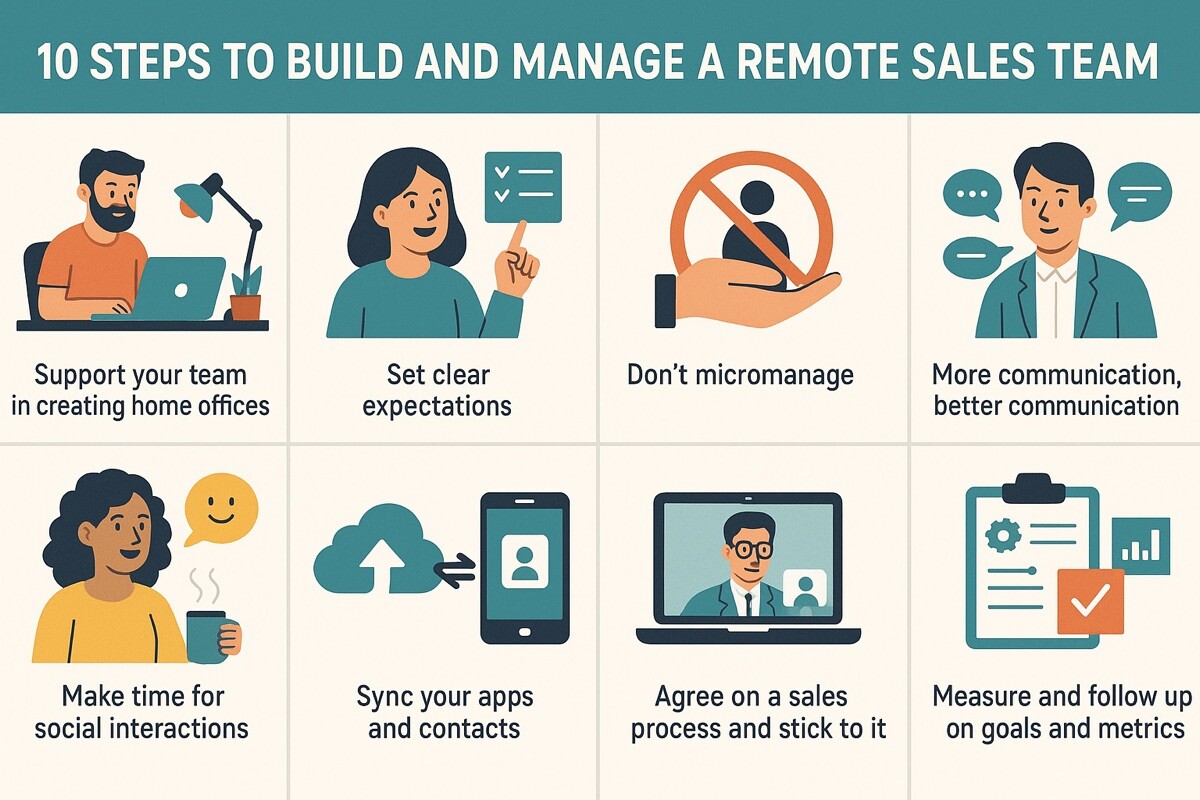
Why This Happens — Diagnose Before You Coach
Remote coaching breaks down for predictable reasons, and you cannot fix all of them with "more coaching." Before you build a plan, root-cause what is actually going wrong, because the fix for a skill gap is different from the fix for a will gap, a knowledge gap, or a system/territory problem.
- Skill — The rep knows the motion but executes it poorly on video calls (talks too much, no multi-threading, weak discovery). This is coachable with reps and recordings.
- Will — The rep is isolated, disengaged, or quietly checked out. Remote hides this for months. This needs connection and clarity of expectation before any tactical coaching lands.
- Knowledge — The rep does not know the product, the buyer, or the process. This is an enablement gap, not a coaching gap; sending them to more 1:1s wastes both of you.
- System / territory — The rep is working a dead patch, a broken lead flow, or an unrealistic quota. No amount of coaching fixes a comp or territory problem. Name it and escalate it.
The remote multiplier is invisibility. In an office you sense a struggling rep in a week; remote, you can miss it for a quarter. That is why diagnosis has to be deliberate and recording-driven.
The Coaching Conversation
Run remote 1:1s on the GROW model — Goal, Reality, Options, Will — using a recorded call as the shared artifact so you are both looking at the same evidence instead of arguing about memory. Open the call recording in Gong before the meeting, clip two moments, and screen-share. Here are the verbatim scripts.
Open with connection, not the number. Remote reps brace for the forecast interrogation. Disarm it:
"Before we get into pipeline — how are you actually doing this week? What's been the most frustrating thing, and what went well?"
Goal — make them name it. Do not assign the goal; ask for it.
"What's the one skill you want to be better at by the end of this month? If we only fix one thing in our calls, what should it be?"
Reality — coach from the recording, not the story. Play the clip, then:
"I pulled a clip from your Acme call. Watch this 90 seconds with me. When the buyer said 'we're happy with our current vendor' — what was happening in your head right there? What did you do next, and why?"
Then the high-leverage question that builds self-awareness:
"If you ran that exact moment again tomorrow, what would you do differently?"
Options — let them generate the move first. Resist the urge to hand them the answer; remote reps already feel managed-from-afar.
"Give me two other ways you could have handled that objection. What would a peer like [strong rep] have tried?"
Only after they generate options do you add yours:
"Here's one more I'd add — try a 'feel, felt, found' pivot, then a confirming question. Want to run it right now, on camera?"
Will — lock the commitment and the rep. Vague intentions die in remote work. Make it specific and observable:
"So this week you'll run that pivot on your next two discovery calls and tag both in Gong so I can review them. I'll watch one by Thursday and drop you a 2-minute Loom. Deal?"
Close every remote 1:1 by naming the next live touchpoint so the rep never feels dropped between meetings.
The Coaching Plan / Cadence
Distance kills coaching when it is ad hoc, so the rhythm has to be scheduled and non-negotiable. Use a blended cadence of live, async, and team reps.
Weekly cadence (per rep):
- One live 30-minute 1:1 on Zoom or Google Meet — camera on, recording open, GROW format, one skill focus.
- One async feedback loop — a Loom or Gong comment on a tagged call mid-week so coaching is not a once-a-week event.
- One team block — a 45-minute group role-play or call-review where reps coach each other.
30/60/90 for a new remote hire:
- Days 1–30: Daily 10-minute async check-in; shadow recorded calls; first solo calls reviewed within 24 hours.
- Days 31–60: Shift to twice-weekly live 1:1s; rep self-scores calls before you review; introduce role-play.
- Days 61–90: Move to the standard weekly rhythm; rep runs a call review for a peer; full quota expectation set.
The loop itself is what makes remote coaching compound. Observe a real call, diagnose the one gap, coach the skill, have the rep practice it on camera, measure whether the behavior changed in the next recording, then repeat.
Drills & Role-Play
Remote reps lose the office's ambient practice, so you have to manufacture reps on purpose.
- Call-review club. Weekly, every rep brings one recorded call clip. The group scores it against a shared call scorecard (opening, discovery depth, objection handling, next-step). Reps coaching reps builds judgment fast and fights isolation.
- On-camera objection gauntlet. You play a difficult buyer for five minutes; the rep handles live objections with camera on. Remote selling is camera selling — practice it on camera.
- Silent-discovery drill. The rep must ask questions and stay quiet; you count their talk-time. Gong's talk-ratio data makes this measurable afterward.
- Async micro-drills. Post a one-line buyer objection in Slack; reps reply with a 60-second Loom of their response. Five-minute reps, no meeting required.
- Self-scoring before review. Have the rep score their own call first, then compare to yours. The gap between their score and yours is the real coaching target.
What to Measure
Quota is a lagging indicator that tells you nothing about whether your coaching worked. Track leading behavior change:
- Behavior change in the next recording — did the coached skill actually show up on the following call? This is the single best proof point.
- Talk-to-listen ratio trending toward 45/55 (from Gong or Chorus).
- Coaching cadence adherence — are 1:1s and async loops actually happening, or slipping?
- Discovery depth — number of qualifying questions, multi-threading on each deal.
- Conversion by stage — discovery-to-demo, demo-to-proposal, isolating where the skill gap costs deals.
- Ramp time for new remote hires versus your historical baseline.
- Engagement signals — async response time, camera-on participation, voluntary call-sharing. Falling engagement is the early warning of a will/isolation problem.
Common Mistakes Managers Make
- Coaching the deal, not the skill. "What's the next step on Acme?" is a forecast question, not coaching. Coach the repeatable skill so it transfers to every deal.
- Rescuing the rep. Jumping onto the call to save the deal feels helpful and teaches nothing. Let them run it; debrief the recording after.
- No follow-through. Coaching once and never checking the next recording means nothing changes. The async loop is what makes it stick.
- Coaching everyone the same. A struggling new hire and a stalled veteran need different cadences. One-size-fits-all coaching is the office habit that fails worse remotely.
- Mistaking silence for fine. Remote, a quiet rep is often a disengaged rep. Schedule connection; do not wait for the number to drop.
- Confusing a system problem for a skill problem. If the territory is dead, coaching is cruelty. Diagnose first.
FAQ
How often should I do 1:1s with a remote rep? Once a week live, minimum, plus one async feedback loop mid-week. New hires need daily light-touch check-ins for the first 30 days. The live 1:1 should be a coaching session built on a recorded call, not a status update — keep the forecast review separate.
Camera on or off for remote 1:1s? Camera on for coaching and role-play. You are reading reactions, building trust, and modeling the camera presence reps need with buyers. Be flexible for routine standups, but coaching sessions are face-to-face.
How do I coach a remote rep I suspect is disengaged? Lead with connection, not accountability. Name what you see without judgment: "I've noticed you've been quieter the last few weeks — what's going on?" Disengagement is usually a will or isolation problem; rebuild the relationship and reset clear expectations before any tactical coaching.
Which tools do I actually need to coach remotely? A conversation-intelligence platform (Gong or Chorus) to review and clip calls, video (Zoom or Google Meet) for live 1:1s and role-play, and an async tool (Loom or Slack) for between-session feedback. The recording library is the non-negotiable — it replaces the office overhear.
How do I keep async feedback from feeling cold or harsh? Use voice or video (Loom), not text alone — tone carries in voice and dies in writing. Start with one specific thing that worked, then one thing to try, and always end with a question that invites a reply so it stays a conversation, not a verdict.
Bottom Line
Remote coaching works when you make it a deliberate, scheduled rhythm built on recorded calls instead of relying on the ambient signals distance takes away. Diagnose skill versus will versus knowledge versus system first, coach the repeatable skill from a real recording using GROW, close every loop with async follow-up, and measure whether the behavior actually changed on the next call.
Protect connection on purpose — the remote rep who only hears from you on the forecast call is the one you will lose.
Sources
- Gong Labs — Sales Coaching Research
- Harvard Business Review — The Best Sales Managers Don't Chase Revenue Directly
- RAIN Group — Sales Coaching Best Practices
- Sales Hacker — Remote Sales Coaching Guide
- Winning by Design — Coaching Frameworks
- Sandler — Sales Coaching Resources
- Salesforce Blog — Remote Sales Team Management
*Sales coaching for remote sales teams — how to coach a remote sales team effectively, sales manager coaching guide, virtual rep coaching framework, async coaching cadence, and a remote coaching playbook for 2027.*