
How do you coach a rep to shorten their sales cycle in 2027?
 Curated byKory White · Fractional CRO · Maryland
 PULSEKNOWLEDGE LIBRARY
Quality
Certified

Coach cycle length as a qualification and deal-control problem, not a speed problem. Require a confirmed compelling event, direct economic-buyer access, and a mapped buying process before investing demo hours, then enforce a mutual action plan and a scheduled next step on every call. Track stage velocity while holding win rate steady.
The two levers you can actually pull: qualify harder or drive harder
Every real coaching plan for a long-cycle rep reduces to two levers, and managers who blur them get nowhere. The first lever is front-end qualification: teach the rep to confirm a compelling event, identify and reach the economic buyer, and map the decision process before the deal consumes serious hours. The second lever is mid-deal control: multithreading, parallel-pathing buyer-side steps, running a mutual action plan, and never ending a call without the next meeting on a calendar.
They fail differently, and that matters. A qualification failure produces deals that look healthy in the CRM and die at 120 days with no loss reason anyone believes — the "no decision" bucket. A control failure produces deals that were genuinely winnable but drifted, where security review started in week nine instead of week three because nobody asked what the buyer's process actually required.

The diagnostic split is simple. Pull the rep's last ten closed-lost deals. If most died without ever reaching an economic buyer, the problem is upstream — qualification. If most reached the right people and still took forever, the problem is downstream — control and sequencing. A rep can be excellent at one and terrible at the other; treating both with the same coaching wastes a quarter.
There's a third possibility worth naming honestly before you coach anyone: the segment itself is slow. Enterprise, regulated, or procurement-heavy buyers have a floor set by their own governance, and no amount of coaching compresses a mandated security review to zero. Pushing speed there produces discounting, burned champions, and a rep who learns that your coaching is disconnected from their reality. The manager's job in that case is to reset the expectation, not the behavior — and to make sure the forecast model reflects the true cycle length rather than an aspirational one.

The two levers also carry different risk profiles. Qualification coaching shrinks the pipeline before it grows velocity — the rep disqualifies deals they used to carry, coverage drops for a few weeks, and a nervous manager reverses course right before the payoff lands. Control coaching is lower-risk and faster to show results, but it caps out: you can only drive so hard on a deal that never had a reason to close. That asymmetry is why sequencing matters more than intensity.
Choosing the right lever for the rep in front of you
Route the symptom to the cause before you open your mouth in the 1:1. The same complaint — "my deals take forever" — comes from at least four distinct causes, and each takes a different conversation.

A skill gap means the rep doesn't know how to surface urgency. They ask "what's your timeline?" and accept "sometime this quarter" as an answer. Coach the specific language: *"If you don't solve this by the end of Q3, what actually happens to the business?"* A will gap means they know how and avoid it, usually because forcing a timeline risks hearing no, and a maybe-deal still counts in pipeline review. That's an accountability conversation, not another deal review. A knowledge gap means they don't understand the buyer's internal machinery — how long a security questionnaire takes, when the budget cycle closes, whether legal reviews the MSA in parallel or in sequence. And a system reality means the cycle is what it is.
Use the rep's own deal data to decide. Three numbers settle most arguments: percentage of open deals with a documented compelling event, percentage multithreaded to two or more contacts including an economic buyer, and percentage with a scheduled next step on the calendar. A rep at 30% on compelling events and 85% on next steps has a qualification problem. Reverse those numbers and you have a control problem. This is where a decent RevOps partner earns their keep — those three fields should be reportable, not reconstructed by hand from opportunity notes the night before a QBR.

One caution on the diagnosis: don't run it off a single deal. One stalled opportunity is noise — a champion changed jobs, a budget froze, a reorg landed. Look at the pattern across five to ten deals before you name a cause, and say out loud which cause you picked and why. Reps accept coaching far better when the diagnosis is explicit and falsifiable than when it arrives as generic pressure to move faster.
What the numbers look like on each path
Be concrete about what each lever buys, and equally concrete about what it costs, because vague promises are why reps stop believing coaching plans.

Qualification path. The mechanism is subtraction: the rep stops carrying deals that were never going to close, so average cycle length drops partly because the tail of zombie deals leaves the denominator. Expect pipeline coverage to fall first — often noticeably in the first three to four weeks — before win rate and velocity improve. Set that expectation with the rep and with your own leadership before you start, or the mid-quarter coverage review will kill the plan. The measurable proof is the percentage of deals in working stages with a documented compelling event; inspect it weekly and expect it to climb quickly, because inspection alone changes behavior. Watch for the failure mode: reps who learn that "no compelling event" gets a deal removed from inspection will start writing fiction in the field. Require a date and a business consequence, not a sentence.
Control path. The mechanism is addition: same deals, fewer dead gaps between touches. The gap between calls is where cycles quietly inflate — a two-week wait for a follow-up email that becomes three weeks over a holiday, repeated four times across a deal. Parallel-pathing is the biggest single compression available in most enterprise deals: security review, legal redlines, and procurement onboarding often run sequentially by default when nothing prevents them running at once. Ask the buyer directly whether their security questionnaire can start while legal reviews the MSA. Many champions have never been asked and don't know the answer, which itself is useful information about how much internal weight they carry.
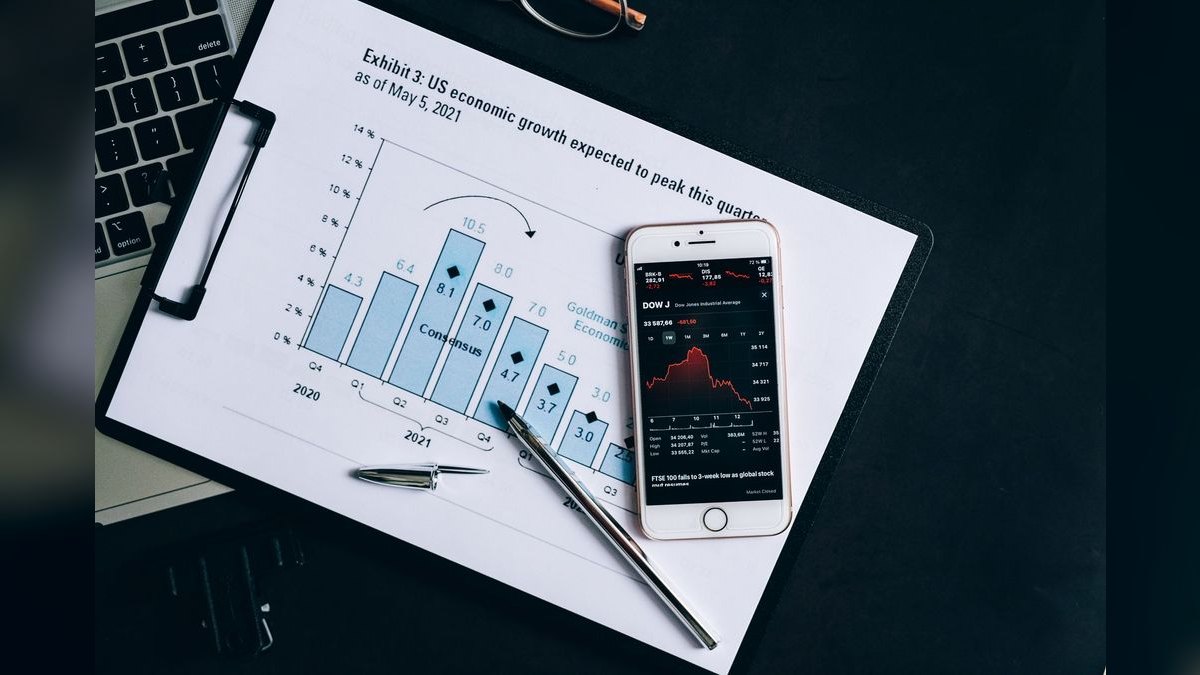
The guardrail. Win rate is the number that tells you whether speed is real or purchased. If cycles shorten and win rate holds, the coaching worked. If cycles shorten and win rate falls, the rep is either disqualifying winnable deals to look disciplined or discounting to force a close date. Both are correctable, and both are invisible if you only watch cycle time. Average selling price is the companion check — a shrinking ASP alongside shrinking cycles is discounting wearing a costume.
Measure over a full cycle, not a month. If deals typically run 90 days, a 30-day read on cycle length is mostly composition noise. Use leading indicators — compelling-event coverage, multithread rate, next-step-scheduled rate — for the weekly read, and treat cycle length and win rate as the quarterly verdict. Segment the reporting too: blended cycle time across SMB and enterprise hides everything that matters, and a rep whose mix shifted toward larger accounts will look like they got slower when they actually got promoted into harder deals.

Sequencing the plan across ninety days
Qualification first, control second. A well-driven deal with no reason to close is a car with a full tank and no destination, and the reverse — a qualified deal run passively — at least eventually closes. Sequence accordingly.
Days 1–30: qualification reps. Two deal reviews per week, every new opportunity inspected against a documented standard. MEDDIC and MEDDPICC are the common frameworks, and the specific choice matters less than the discipline of requiring the same fields on every deal. The rep may not advance a deal into a working stage without three artifacts: a compelling event stated as a date plus a business consequence, an identified economic buyer with a plan to reach them, and a written map of the buying process including security, legal, and procurement steps. Run the compelling-event drill in every session — pick three open deals, state the event for each in one sentence with a date. The deals that fail this test are the coaching, not a distraction from it.

Days 31–60: deal control. Shift to mid-funnel. Require a mutual action plan on every deal past discovery, backward-planned from the target close date with buyer-side owners named for each step. Review two recorded calls per week and grade three things only: did the rep confirm urgency, did they multithread, did they lock a next step. Role-play the economic-buyer ask until it stops sounding rehearsed — you play the champion who says "I'll take it to my boss," and the rep practices earning the direct meeting rather than accepting a proxy. Five reps of the same line in one session beats one rep across five sessions.
Days 61–90: independence and verification. The rep self-grades against the scorecard before the 1:1 and you spot-check rather than lead. This is the stage most plans skip, and skipping it is why coaching gains evaporate — a behavior that only appears when the manager is watching isn't a behavior, it's a performance. Pull a random sample of the rep's open deals and check the three leading indicators yourself without warning.

Make it durable past day 90. Individual coaching that never touches the system decays. The behaviors that survive are the ones the pipeline review asks about every week, the ones with a required field in the CRM, and the ones the forecast model actually uses. If your weekly review still opens with "walk me through your number," it teaches reps that the number is what you inspect. Open with next steps and compelling events instead and the rep's prep changes within two weeks — which is genuinely the cheapest behavior change available to a sales manager.
Adjacent effects worth anticipating. Shorter cycles change downstream workloads. Deal desk and legal see requests bunch differently. Onboarding and customer success get accounts sooner, sometimes before implementation capacity is ready. Marketing's attribution windows and lead-scoring thresholds were tuned to the old cycle length and will misreport for a quarter. Loop RevOps in early so stage definitions, exit criteria, and forecast categories move with the coaching rather than lagging it by two quarters. The same logic runs upstream: if qualification tightens and reps start disqualifying earlier, demand gen needs to hear about it before the MQL target becomes a fight about lead quality.

Related questions
Does this coaching approach work for a rep whose cycles are short but win rate is low?
No — invert it. Short cycles with poor win rate usually mean the rep is rushing discovery and pitching before understanding the problem. Coach depth, not speed: more discovery questions, slower advancement, explicit confirmation of business impact before demo.
How do you shorten cycles for transactional or SMB deals?
The levers shift. Compelling events matter less; friction removal matters more. Focus on reducing steps — fewer calls to a decision, self-serve pricing visibility, e-signature, and removing internal approval delays on your own side, which are often the real bottleneck.
What if the buyer's procurement process is the bottleneck?
Map it early and parallel-path. Ask in discovery what procurement requires and how long it takes, then start security questionnaires and legal review concurrently with the business evaluation rather than after it. Buyers rarely volunteer this timeline unprompted.
Should managers ever close deals for a struggling rep?
Rarely, and only when the revenue genuinely can't be lost. Jumping on the call fixes one deal and builds zero capability. Better: attend as a resource, let the rep run the meeting, and debrief the specific move afterward.
How does this change for a team selling through partners or resellers?
Cycle control gets harder because you don't own the buyer relationship. Coach the rep to build a mutual action plan with the partner, not just the end customer, and to insist on direct access to the economic buyer at least once before proposal.
FAQ
How short can a sales cycle realistically get? There's a floor set by the buyer's own process — security review, legal, and procurement don't compress to zero, especially in regulated industries. The goal isn't a target number; it's removing self-inflicted delay from weak qualification and passive deal control. Benchmark against your own fastest closed-won deals in the same segment rather than an industry average, since segment and deal size drive cycle length far more than technique does.
Should I coach qualification or deal control first? Qualification first in almost every case. A poorly qualified deal can't be rescued by excellent mid-funnel execution, so control coaching on top of bad qualification just makes the rep more energetic about deals that were never going to close. Once the rep reliably confirms a compelling event and reaches an economic buyer, shift to multithreading and next-step discipline.
How do I shorten cycles without pushing reps to discount? Separate urgency from price explicitly. Discounting to hit a close date treats price as the only available lever, which trains buyers to wait for quarter end. Coach the rep to anchor the decision to the buyer's own compelling event so the deadline belongs to them. Watch win rate and average selling price together — if either drops while cycles shorten, you're buying speed with margin.
What's the single highest-leverage behavior change? Scheduling the next meeting before the current one ends, every call, with two specific time options offered live. It's the easiest behavior to coach, the easiest to inspect, and it eliminates the multi-week dead gaps where deals quietly decay in inboxes. Audit it by pulling recent calls and checking how many ended with "I'll follow up next week."
When is a long cycle a coaching problem versus a performance problem? If the rep can learn the behaviors and does once coached, it's coaching. If they repeatedly decline to multithread, avoid asking about urgency, and let deals drift after multiple documented conversations, that's a will and accountability issue requiring a direct performance conversation. The tell is whether the behavior appears when you're not inspecting it.
How much of this should be systematized rather than coached one-on-one? As much as possible. Required CRM fields for compelling event and economic buyer, exit criteria on every stage, and a pipeline review that opens with next steps rather than the forecast number all make the behavior the default. Individual coaching should teach the skill; the system should make skipping it visibly inconvenient.
Sources
- Gong Labs — sales research and call analysis
- RAIN Group — sales research and training insights
- MEDDIC Academy — MEDDPICC methodology overview
- Winning by Design — revenue architecture resources
- Harvard Business Review — sales and negotiation research
- Salesforce — sales coaching resources
- HubSpot — sales blog
- Challenger — commercial selling research
Related on PULSE
- How do you shorten sales ramp time with better coaching?
- Top 10 questions to diagnose a stalled deal in the sales cycle
- Top 10 Coaching Techniques for Shortening the Sales Cycle
- How do you coach a brand-new sales manager on their first hire?
- How do you coach a career-changer into their first sales role?
This page will be disappearing soon. Save it to your device for $1 — or read it free while it is here.
@Kory-White- · if Venmo asks, the last 4 of my number are 2012
This page is gone.
This one is off the shelf now. $1 keeps it on your phone for good — the whole page, pictures and diagrams included.
 sales-coachingHow do you coach reps to build a mutual action plan with buyers in 2026?
 sales-coachingHow do you coach reps to open a cold call without getting hung up on in 2026?
 sales-coachingHow do you use enablement and coaching together in 2027?
 sales-coachingHow do you coach reps to increase average deal size in 2026?
 sales-coachingHow do you coach reps to surface hidden objections in 2026?
 sales-coachingHow do you deliver tough feedback to a sensitive sales rep in 2026?
 sales-coachingHow do you coach reps you never see in person in 2027?
 sales-coachingHow do you coach an SMB rep to move fast without cutting corners in 2027?
 sales-coachingHow do you create a coaching culture on a sales team in 2027?
 sales-coachingHow do you coach reps to set next steps at the end of a demo in 2027?