 Pulse Reviews and Analysis
How Do I Rationalize and Consolidate My RevOps Tech Stack in 2027?
 Curated by Kory White · Fractional CRO, CRO Syndicate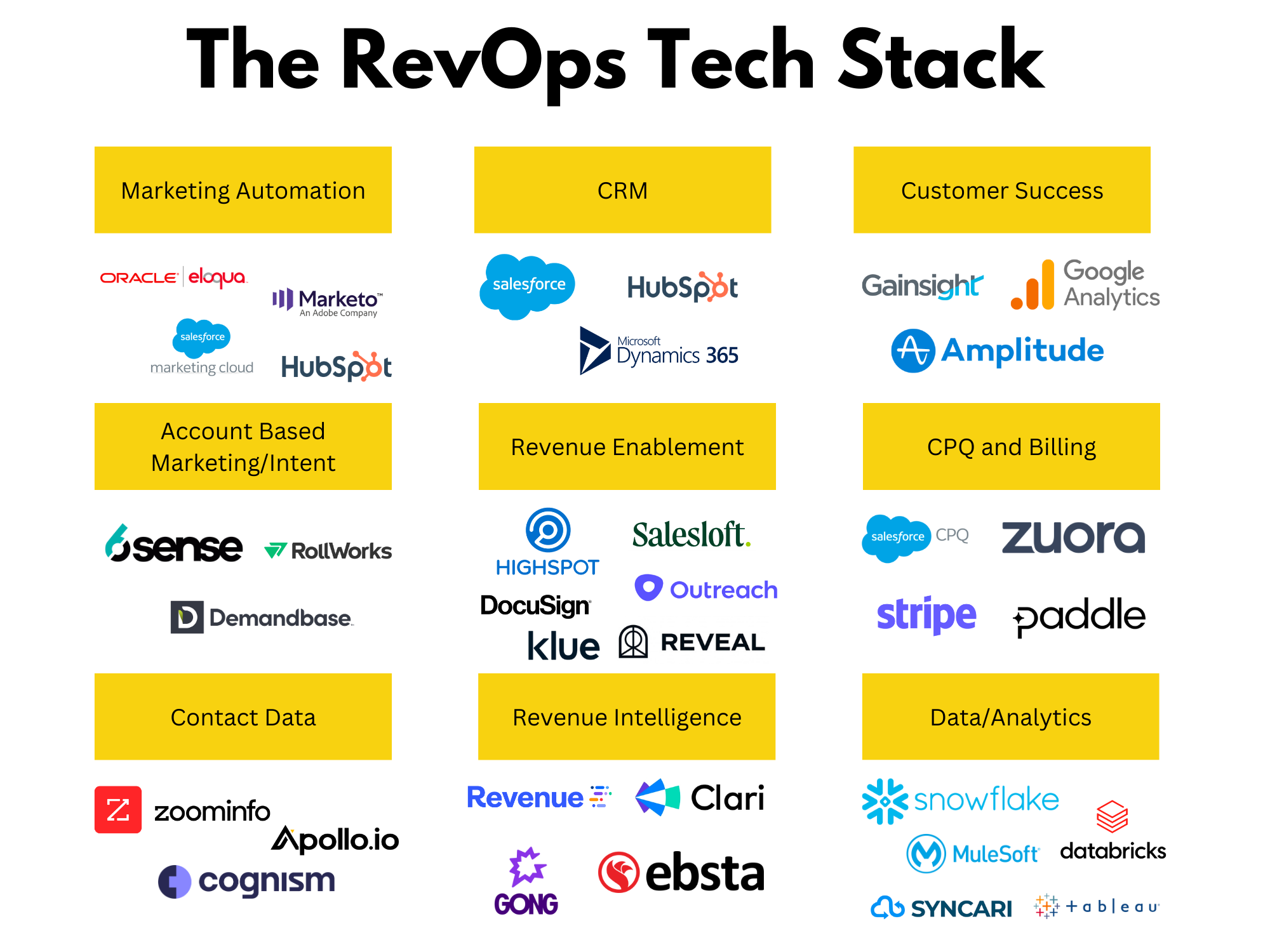
Direct Answer
To rationalize and consolidate your RevOps tech stack in 2027, run a disciplined audit-rationalize-consolidate cycle driven by actual usage and overlap, not by which tool each team is emotionally attached to. Start by inventorying every revenue tool, its annual cost, its owner, its real adoption rate, and its integration footprint; then map tools to the jobs they do so you can see where two or three products are paying to do the same work.
The highest-leverage cuts are the tools with low adoption and high overlap — you are paying twice and getting partial value from both. The goal is not minimalism for its own sake; it is a stack where every tool earns its keep, the data flows cleanly through a single source of truth, and you are not bleeding budget on shelfware.
In a 2027 climate of efficiency scrutiny, an unrationalized stack is both a direct cost and a hidden tax on data quality.
Why Stacks Bloat — and Why It Is a RevOps Problem
RevOps stacks accumulate the way garages do: every team buys the point solution that solves its immediate pain, nobody owns the whole, and within a few years you are running dozens of overlapping tools. Marketing buys one enrichment tool, sales buys another, and ops buys a third — all doing similar work, none fully adopted, all charging annually.
The result is wasted spend, fragmented data, brittle integrations, and reps toggling between tools instead of selling.
This is squarely a RevOps responsibility because RevOps owns the system as a whole. Without a single owner, no one is accountable for whether the stack is coherent. With efficiency under the microscope in 2027, the stack is one of the clearest places to recover margin without touching headcount.
Step 1 — Build the Inventory
You cannot rationalize what you cannot see. Build a complete inventory capturing, for every revenue tool:
- Annual cost (including overage and per-seat creep).
- Owner — the single person accountable for it.
- Real adoption — actual active usage, not licenses purchased. Shelfware hides here.
- Job(s) it performs — the underlying capability, normalized so you can compare across vendors.
- Integrations — what it reads from and writes to, since integration debt is the hidden cost of every tool.
- Renewal date — your decision and negotiation calendar.
Step 2 — Map Tools to Jobs and Find Overlap
Group every tool by the *job* it does — data enrichment, sales engagement, conversation intelligence, scheduling, CPQ, attribution, and so on. Overlap jumps out immediately when three tools all claim the same job. For each overlapping cluster, decide which single tool wins on the criteria that matter: adoption, data quality, integration fit, and total cost.
Overlap plus low adoption is the strongest signal to cut.

👉 Quick Call with Kory White, Fractional CRO · See Kory on LinkedIn · CRO Syndicate
Step 3 — Decide: Consolidate, Cut, or Keep
For each tool, make an explicit call:
- Consolidate when a platform you already own (or a suite vendor) can absorb the job at acceptable quality. Suite consolidation reduces integration debt and often lowers cost, at the price of best-of-breed depth — a real trade-off to weigh, not assume.
- Cut the shelfware and the redundant overlap with no clear winner-level adoption.
- Keep the tools with strong adoption, clean data, and a job no other tool does well. Then make sure they are properly integrated into the single source of truth.
Beware swinging too far toward an all-in-one suite if it cripples a critical best-of-breed capability your team genuinely relies on. The right answer is usually a lean stack of a few well-adopted, well-integrated tools — not the absolute minimum count.
Step 4 — Migrate and Govern
Cutting a tool is a project, not a checkbox. Plan data migration, rebuild the workflows the tool supported in its replacement, communicate the change, and retrain users. Then put governance in place so the bloat does not return: a single intake process for new tool requests, a requirement that any new tool name the job it does and what it replaces, and an annual stack review tied to renewals.
What Good Looks Like
A rationalized stack has a few characteristics: every tool has a named owner and a clear job, adoption is high because there is one obvious tool for each task, data flows cleanly through the CRM and warehouse without duplicate sources of truth, integration debt is low, and spend per revenue dollar is trending down.
Reps spend their time in fewer tools, which itself lifts productivity.
Common Pitfalls
- Counting licenses instead of usage. Shelfware looks adopted until you measure real activity.
- Cutting on cost alone. The cheapest tool to cancel might be the one with the best data quality. Decide on the full picture.
- Over-consolidating into a suite. Trading away a critical best-of-breed capability to save on tool count can cost more in lost productivity than it saves.
- Cutting without migrating. Killing a tool whose workflows have no home creates chaos and erodes trust in the whole exercise.
- No governance afterward. Without an intake gate, the stack re-bloats within a year.
FAQ
How often should I rationalize the stack? Run a full audit annually, timed to your major renewal dates, with a lightweight intake gate operating continuously so new bloat is caught as it happens.
Best-of-breed or all-in-one suite? It depends on your team. Suites cut integration debt and cost; best-of-breed gives depth. Most teams land on a lean hybrid — a core platform plus a few best-of-breed tools where depth genuinely matters.
What is the fastest win? Find the tools with low adoption and high overlap. They are pure waste and the easiest to cut with little disruption.
Who should own stack decisions? RevOps, with input from the team leaders who use each tool. RevOps owns the coherence of the whole; team leaders own the requirements for their jobs.
Related on PULSE
- What does a modern RevOps data warehouse and reverse-ETL stack look like in 2027?
- When Should I Hire My First RevOps Person in 2027?
- How Do I Stop CRM Data Decay and Keep My Database Clean in 2027?
- How do you operationalize the Rule of 40 inside a RevOps dashboard in 2027?
- Explore the Pulse Tech Stacks library for industry-specific stack blueprints.