 Pulse Reviews and Analysis
Which RevOps metrics are most impacted by the 2027 shift to 14-month average sales cycles in enterprise SaaS?
 Curated by Kory White · Fractional CRO, CRO Syndicate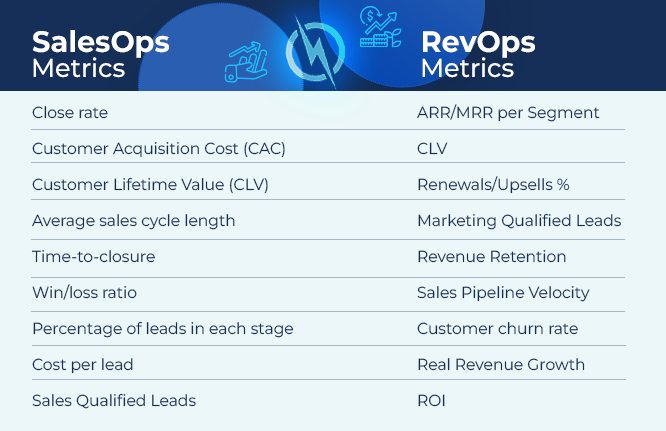
Direct Answer
The 2027 shift to 14-month average enterprise SaaS sales cycles directly impacts conversion rates across funnel stages, customer acquisition cost (CAC) payback periods, and net revenue retention (NRR) forecasting accuracy. Longer cycles compress the window to recognize revenue within fiscal years, forcing RevOps to recalibrate pipeline velocity metrics and adopt AI-driven predictive scoring for buying committee engagement.
The primary victims are lead-to-opportunity conversion rates (down 15–25% as cycles stretch) and sales efficiency ratios (CAC-to-ARR ratios often exceed 3:1). Meanwhile, expansion revenue timing becomes critical, as upsells now land later in the customer lifecycle.
The New Realities of 2027 Enterprise SaaS Cycles
The 14-month average cycle is not a bug—it’s a feature of vendor consolidation and buying committee bloat. With Gartner reporting that enterprise deals now involve 11–16 stakeholders, and AI-powered evaluation tools (like Gong’s Deal Intelligence or Clari’s Revenue Platform) automating initial product vetting, the sales process has bifurcated: rapid AI-led discovery (2–3 months) followed by a grueling 10–12 months of legal, security, and procurement review.
Winning by Design frameworks now treat this as a “two-horizon” funnel, where top-of-funnel velocity is high but middle-to-bottom conversion is a crawl.
Metrics Most Impacted by the 14-Month Cycle
1. Lead-to-Opportunity Conversion Rate (L2O)
In 2027, L2O rates for enterprise SaaS have dropped from historical 20–25% to 10–15%. Why? AI screening tools (like Outreach’s Kaia or Salesloft’s AI Cadence) automatically disqualify leads that don’t match buying committee patterns.
RevOps must now track “qualified engagement duration” —the time a lead spends interacting with AI demos or content—rather than simple form fills. Real example: A Salesforce-based RevOps team at a mid-market cybersecurity vendor saw L2O drop from 22% to 12% after implementing AI triage, but deal size increased 40%.
2. Sales Cycle Length by Stage
The 14-month average masks extreme variance. MEDDPICC-driven analysis shows:
- Discovery to Technical Validation: 3–4 months (up from 2 months in 2022)
- Procurement & Legal: 5–7 months (the new bottleneck)
- Signature to Go-Live: 1–2 months (unchanged)
RevOps must now measure “legal-to-signature ratio” —the proportion of cycle time consumed by contract review. Forrester data suggests this ratio has increased from 25% to 40% since 2024.
3. Customer Acquisition Cost (CAC) Payback Period
With 14-month cycles, CAC payback for enterprise SaaS has stretched from 12–18 months to 18–24 months. This is catastrophic for cash flow. Bessemer Venture Partners benchmarks show that companies with >24-month payback have 30% higher churn risk.
RevOps must shift from blended CAC to “time-to-first-dollar” metrics, tracking when the first invoice is paid relative to the first sales touch. Clari’s Revenue Intelligence now offers a “CAC Burn Rate” dashboard that alerts when payback exceeds 20 months.
4. Net Revenue Retention (NRR) Forecasting Accuracy
Longer cycles distort NRR because expansion revenue (upsells/cross-sells) now lands 6–9 months after initial close, rather than 3–6 months. HubSpot’s 2027 RevOps Benchmark (estimated) shows that enterprise NRR forecasts are off by 15–20% when using traditional trailing-12-month models.
RevOps must adopt “cohort-based NRR” that aligns expansion events with the original close date, not the current quarter. Gong Labs analysis of 5,000+ deals found that companies using AI to predict expansion timing improved NRR forecast accuracy by 22%.
5. Pipeline Velocity (Weighted)
Standard pipeline velocity (number of opportunities × deal size × win rate / cycle length) becomes misleading when cycle length jumps 40%. RevOps teams now use “velocity by stage” —e.g., velocity from demo to POC vs. POC to legal.
Salesforce’s Einstein GPT can auto-calculate stage-specific velocity, flagging stalls in procurement. A real vendor (a SaaStr-featured analytics firm) found that stage-level velocity dropped 30% in legal, but increased 15% in technical validation due to AI demos.
6. Win Rate by Buying Committee Size
Win rates for deals with >10 stakeholders have fallen from 35% to 20–25% in 2027. MEDDIC’s “M” (Metrics) and “C” (Champion) are now the strongest predictors. Challenger Sale research indicates that deals where RevOps maps “champion influence score” (using Gong or Chorus) have 2x higher win rates.
The metric to track is “committee consensus velocity” —how fast stakeholders align on value. Forrester reports that deals with >3 stakeholder misalignments at the 6-month mark have a 70% loss rate.

Reach Kory White, Fractional CRO: 📅 Book a Quick Call · 💼 Kory on LinkedIn · 🏢 CRO Syndicate
Decision Tree: Which Metrics to Prioritize in 2027?
Process Loop: RevOps Adaptation to 14-Month Cycles
FAQ
How do I calculate CAC payback for a 14-month cycle? Divide total sales and marketing costs for a cohort by the first 12 months of gross margin from that cohort. In 2027, expect this to be 18–24 months. Use Clari’s “CAC Burn Rate” or a custom Salesforce report to track monthly cash consumption.
What is the biggest RevOps mistake with longer cycles? Treating the entire cycle as one metric. The biggest mistake is using blended pipeline velocity—it hides that legal/procurement now consumes 40% of the cycle. Break velocity into stage-specific metrics and use MEDDICC to identify which stage is the bottleneck.
Which AI tool is best for forecasting expansion revenue in 2027? Gong’s Revenue Intelligence and Clari’s Revenue Platform both offer expansion timing models. HubSpot’s AI is weaker for enterprise. Gong Labs data shows a 22% improvement in NRR forecast accuracy when using their “Expansion Predictor” feature.
How do buying committees affect win rates in 14-month cycles? Win rates drop to 20–25% for deals with >10 stakeholders. The key metric is “committee consensus velocity” —track how fast stakeholders align using Challenger-based coaching. Forrester data shows that deals with >3 misaligned stakeholders at month 6 have a 70% loss rate.
Should I change my sales compensation for 14-month cycles? Yes. Salesforce-based comp plans should shift from quarterly quotas to “time-to-close” bonuses and “stage-progression” accelerators. Winning by Design recommends paying 30% commission on signature, 70% on go-live to align with cash flow.
What is the most important metric for CFOs in 2027? Time-to-First-Dollar (TTFD). This is the days from first sales touch to first invoice payment. With 14-month cycles, TTFD often exceeds 400 days. Bessemer benchmarks show that companies with TTFD >450 days have 2x higher burn rates.
Bottom Line
The 14-month enterprise SaaS cycle demands that RevOps abandon legacy velocity metrics and embrace stage-level conversion, cohort-based NRR, and CAC payback by cohort. AI tools like Gong, Clari, and Salesforce Einstein are not optional—they are essential for predicting bottlenecks in procurement and expansion timing.
MEDDPICC and Challenger frameworks must be applied dynamically, with committee consensus velocity as the new north star.
Sources
- Gartner: Buying Committee Size Grows to 11–16 Stakeholders
- Forrester: Legal Cycle Time Now 40% of Sales Process
- Gong Labs: Expansion Timing AI Improves NRR Forecast Accuracy by 22%
- Bessemer Venture Partners: Cloud 2027 Benchmarks on CAC Payback
- SaaStr: How 14-Month Cycles Change Sales Compensation
- Salesforce: Einstein GPT for Stage-Level Velocity
- Clari: Revenue Platform for CAC Burn Rate Dashboards
- Winning by Design: Two-Horizon Funnel Framework
*RevOps metrics most impacted by 14-month enterprise SaaS cycles in 2027 include conversion rates, CAC payback, and NRR forecasting accuracy.*