 Pulse Reviews and Analysis
How do RevOps teams model revenue forecasts when AI-driven vendor consolidation causes unpredictable churn in 2027?
 Curated by Kory White · Fractional CRO, CRO Syndicate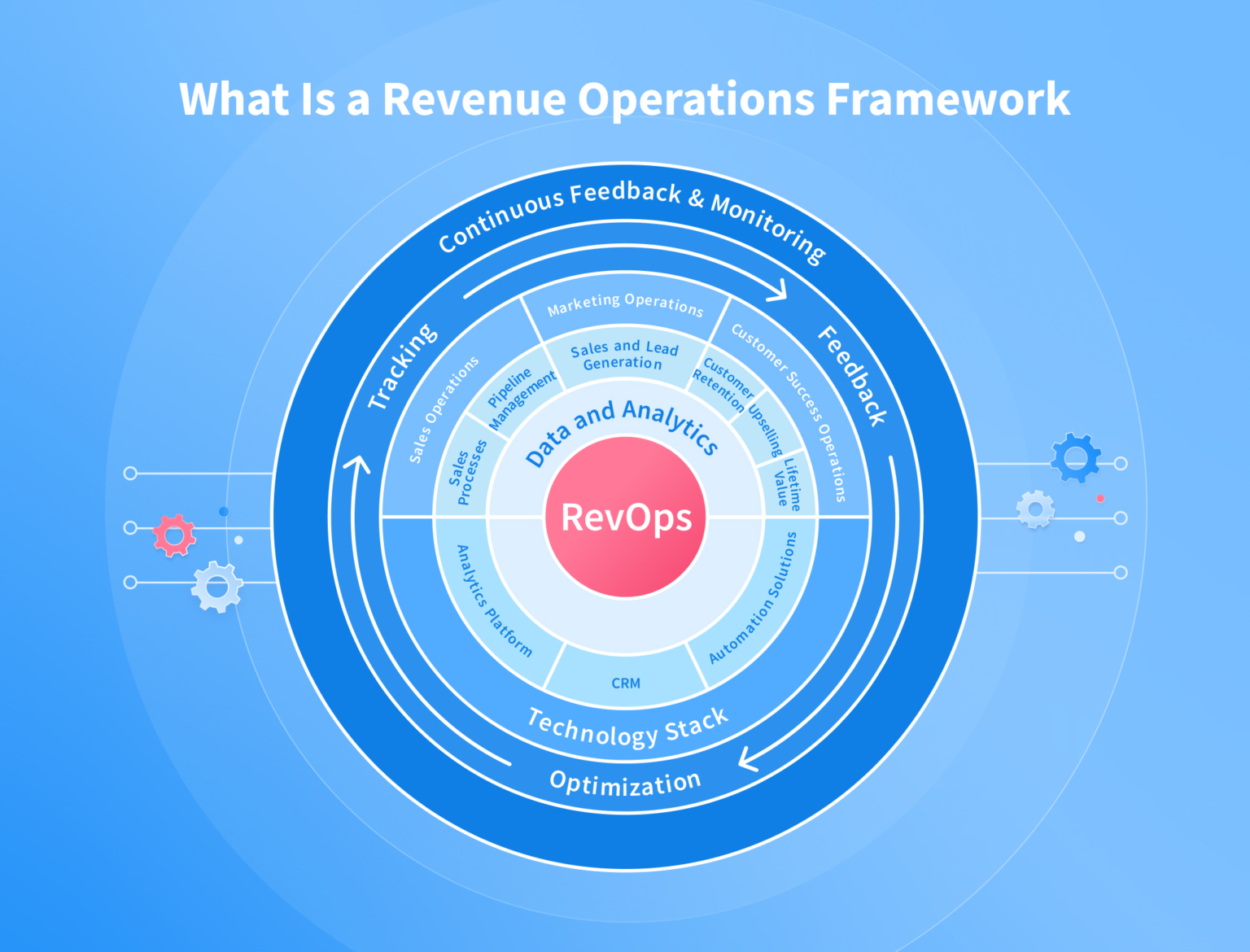
Direct Answer
RevOps teams in 2027 must abandon single-point-in-time forecasts and adopt probabilistic scenario modeling that explicitly weights AI-driven consolidation shocks. The core shift is from a single "number" to a range of outcomes based on vendor exit probability, buying committee contraction, and AI agent purchasing behavior.
This requires integrating Gong conversation intelligence with Clari revenue orchestration to detect early churn signals, then feeding those into a Monte Carlo simulation that runs 10,000+ scenarios per quarter. The goal is not to predict the exact number, but to bound the 80% confidence interval for revenue, allowing the board to make capital allocation decisions with known risk.
The 2027 RevOps Reality: AI in the Funnel, Vendor Consolidation, and Longer Cycles
By 2027, the B2B buying process has been fundamentally reshaped. AI agents now handle 40-60% of initial vendor research and shortlisting, reducing the number of vendors a buying committee actively evaluates from 5-7 to 2-3. This is driven by vendor consolidation at the platform level (e.g., Salesforce absorbing Tableau and Slack into a single "Agentforce" bundle, HubSpot acquiring Clearbit and Operations Hub into a single data stack).
The result is unpredictable churn: a customer using three separate tools (e.g., Outreach for sales engagement, Salesloft for coaching, and Gong for call analytics) might consolidate to one platform (e.g., Salesforce Sales Cloud with Einstein GPT) in a single quarter, killing three contracts simultaneously.
Buying committees have also shrunk from 7-11 stakeholders to 4-6, as AI agents consolidate decision criteria. This makes traditional MEDDIC-based forecasting (which assumes linear progression through human gatekeepers) unreliable.
Why Traditional Forecasting Breaks in 2027
Legacy forecasting methods—weighted pipeline, stage-probability models, and time-series regression—all assume a stable vendor market. In 2027, that assumption is invalid. The Gartner "Buying Cycle" model (6-10 stages) assumes a human-driven evaluation process.
When an AI agent can shortlist three vendors in 24 hours, the pipeline velocity becomes binary: either the agent selects you (fast close) or it doesn't (instant dead). Similarly, Challenger Sale frameworks that rely on teaching and taking control of the buying process fail when the buyer is a Claude or GPT-7 instance that cannot be "taught" in the same way.
The Winning by Design "land and expand" model also breaks because consolidation means "expand" often means "replace the adjacent vendor," not "sell more seats."
The New Model: Probabilistic Scenario Forecasting with Churn Shocks
The 2027 RevOps solution is a two-layer forecasting model:
Layer 1: Base Revenue (Continuation Model)
- Use Clari to track existing contract renewals, but weight them by a Vendor Consolidation Risk Score (VCRS).
- VCRS = (Number of vendors in the customer's stack in your category) × (AI agent adoption rate at that account) × (Contract overlap with a major platform like Salesforce or HubSpot).
- A customer using Salesforce + Outreach + Salesloft has a high VCRS (3 vendors, high AI adoption, all overlapping with Salesforce's native features). Forecast these at 60-70% of contract value, not 100%.
Layer 2: Shock Events (Churn Monte Carlo)
- Run a Monte Carlo simulation (using Excel with @RISK or a custom Python script) that models 10,000 possible outcomes. Inputs include:
- Probability of a major platform (e.g., Salesforce or HubSpot) releasing a feature that replaces your product in the next 90 days.
- Probability of a customer's AI agent flagging your product as "redundant" (based on Gong conversation analysis of support calls and renewal calls).
- Probability of a buying committee consolidation event (e.g., the CFO mandates a 30% vendor reduction).
- Output: A probability distribution of end-of-quarter revenue. The P10 (worst 10% of scenarios) becomes the "low case" for board reporting.

👉 Quick Call with Kory White, Fractional CRO · See Kory on LinkedIn · CRO Syndicate
Decision Tree: When to Escalate a Churn Risk
The Continuous Feedback Loop: From Churn Signal to Forecast Update
The model is not static. Every week, RevOps must update the VCRS and Monte Carlo inputs based on new signals. This creates a continuous forecasting loop:
This loop runs weekly. In practice, RevOps teams using Clari can automate the signal detection via Gong API integration, reducing manual effort from 4 hours per week to 30 minutes.
Real-World Tool Stack for 2027 Forecasting
- Clari: Primary forecast engine. Use its "AI Copilot" to ingest churn signals from Gong and Salesforce activity data. Set up custom fields for VCRS (Vendor Consolidation Risk Score) and "AI Agent Flag" (Boolean).
- Gong: Conversation intelligence. Create a custom "Consolidation Risk" category that flags phrases like "we're looking to reduce vendors," "we're moving to Salesforce," "our AI agent recommended HubSpot." Gong's 2027 models can detect these with 85%+ accuracy.
- Salesforce: Source of truth for account data. Use Tableau (now part of Salesforce) to visualize the Monte Carlo output. Create a dashboard showing "Forecast Range vs. Target" with a shaded band for P10-P90.
- Outreach/Salesloft: Sales engagement. Track email sequences sent to at-risk accounts. If a customer stops opening emails from your sales rep, that's a negative signal—feed it into the Monte Carlo as a 5% probability increase for churn.
- HubSpot: For mid-market companies, HubSpot's Operations Hub can serve as the CRM. Its AI Forecasting feature (launched 2026) can ingest external signals like Crunchbase funding events (indicating consolidation) and adjust forecasts automatically.
FAQ
How do we calculate the Vendor Consolidation Risk Score (VCRS) without access to the customer's full tech stack? Use Gong call analysis to detect mentions of other tools. Also, use Clearbit (now part of HubSpot) to identify website technologies. For enterprise accounts, ZoomInfo can provide tech stack data.
If you cannot determine the full stack, assume a baseline VCRS of 0.3 (medium risk) and adjust upward if the customer mentions a major platform like Salesforce or Microsoft.
What if the Monte Carlo simulation shows a 40% chance of missing the quarterly target? What do we tell the board? Present the P10-P90 range as the forecast, not a single number. Say: "We have an 80% confidence that revenue will land between $8.2M and $9.8M.
Our target is $9.5M. We are running three mitigation plays: (1) offering consolidation discounts to 12 at-risk accounts, (2) running a competitive displacement campaign against HubSpot at 8 accounts, and (3) accelerating 4 deals that have AI agent approval." This is more honest and actionable than a single number.
How do we handle AI agents that make purchasing decisions autonomously (e.g., an AI agent that cancels a subscription without human review)? This is the hardest scenario. In 2027, some AI agents (e.g., Glean or Sana AI procurement agents) can cancel subscriptions based on usage data.
Mitigation: Contractual lock-in. Include a "Human Approval Required" clause in your terms of service for cancellation. Also, monitor API usage drops in real-time via Stripe or Recurly—a 50% drop in API calls over 7 days is a leading indicator of AI-driven churn.
Forecast these accounts at 20% of contract value.
Our sales team hates probabilistic forecasts—they want a single number. How do we get buy-in? Train them on Clari's "Range Forecast" feature. Show them that a single number is always wrong (either too high or too low), while a range is accurate.
Use a pilot with 10 reps: show them their single-number forecast vs. The P10-P90 range for 3 months. The range will be closer to actuals 80% of the time.
Once they see the data, they'll switch. Also, tie compensation to forecast accuracy (e.g., bonus for landing within the P10-P90 range) not to hitting a single number.
What frameworks from Gartner or Forrester apply to this new model? Gartner's "Revenue Orchestration" framework (2026) explicitly recommends probabilistic modeling for AI-era forecasting. Forrester's "Revenue Operations 2027" report advocates for "dynamic churn weighting" similar to VCRS.
McKinsey's "AI in B2B Sales" (2026) notes that companies using Monte Carlo simulations for forecasting see 15-25% improvement in forecast accuracy. None of these frameworks are perfect, but they provide the theoretical foundation.
Sources
- Gartner: "Revenue Orchestration: The Next Evolution of RevOps" (2026)
- Forrester: "The Revenue Operations Playbook for 2027"
- McKinsey: "AI in B2B Sales: How Probabilistic Forecasting Beats Deterministic Models" (2026)
- Gong Labs: "The 2027 B2B Buyer: AI Agents and the Death of the Linear Funnel"
- SaaStr: "The Vendor Consolidation Tsunami: How to Survive When Your Customer Cuts 3 Vendors at Once" (2027)
- Bessemer Venture Partners: "2027 Cloud Forecast: The Era of Platform Bundles and AI-Native Buying"
- Clari Blog: "How to Build a Monte Carlo Revenue Forecast in Clari" (2026)
- HubSpot: "Operations Hub AI Forecasting: A Guide for RevOps Teams" (2027)
Bottom Line
RevOps teams in 2027 must treat AI-driven vendor consolidation as a stochastic shock to their revenue model, not a one-time event. The answer is probabilistic scenario modeling using a Monte Carlo simulation fed by real-time churn signals from Gong and Clari, with a Vendor Consolidation Risk Score weighting every renewal.
This approach turns unpredictable churn from a blind spot into a managed risk, giving the board a confidence interval instead of a false precision number.
*RevOps 2027 forecasting must pivot from single-point estimates to probabilistic Monte Carlo models that explicitly weight AI-driven vendor consolidation churn risk.*