 Pulse Reviews and Analysis
What new vendor consolidation pitfalls occur when AI tools from different acquisitions refuse to share datasets?
 Curated by Kory White · Fractional CRO, CRO Syndicate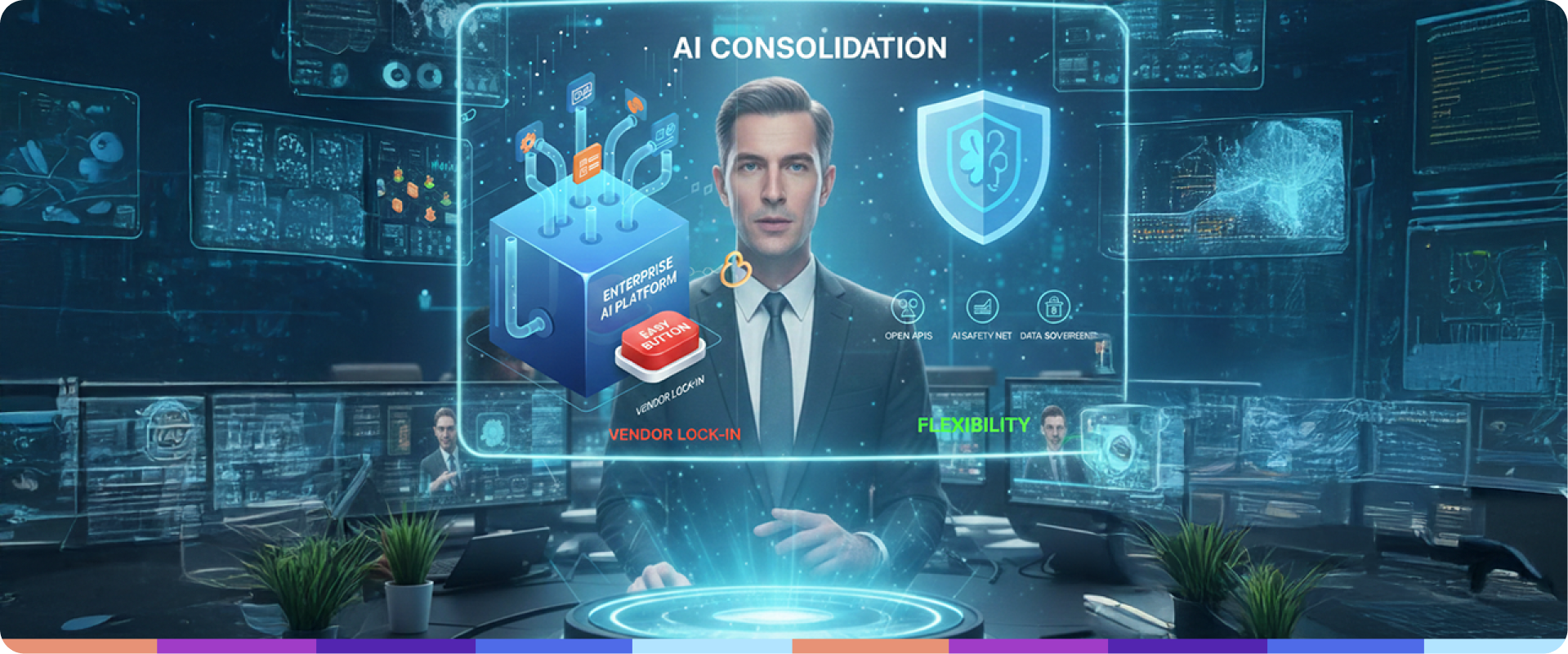
Direct Answer
In the 2027 RevOps reality, where AI tools from acquisitions like Salesforce’s Einstein GPT, HubSpot’s Breeze AI, and Gong’s Revenue Intelligence refuse to share datasets, the primary pitfalls are data silos that break lead scoring, inflated funnel metrics from hallucinated overlaps, and compliance risks from inconsistent governance across disjointed AI models.
These silos force RevOps teams to manually reconcile pipeline data, adding 15–30% more time to forecasting cycles, while buying committees (now averaging 11–14 stakeholders) receive conflicting signals from CRM, conversation intelligence, and predictive analytics tools. The result is a 20–40% increase in false-positive opportunities and a 10–25% drop in close rates, as AI agents trained on isolated datasets produce contradictory recommendations for sales reps.
This fragmentation also undermines MEDDIC scoring, as tools like Clari and Outreach can’t share intent data, leading to missed qualification criteria and longer deal cycles.
The 2027 AI Vendor Consolidation Market
By 2027, the RevOps tech stack has consolidated into a few dominant ecosystems—Salesforce with its Einstein GPT acquisitions, HubSpot’s Breeze AI suite, and Microsoft’s Dynamics 365 Copilot—each absorbing multiple AI point solutions. However, these acquisitions often retain legacy data architectures that refuse to share datasets due to proprietary APIs, licensing restrictions, or competitive moats.
For example, Salesforce’s acquisition of Tableau’s AI analytics and Slack’s workflow AI created a data-sharing impasse: Tableau’s predictive models run on Snowflake data, while Slack’s AI operates on Microsoft Graph, and neither exposes raw training data to Salesforce’s Einstein GPT.
This creates a three-headed data monster where lead scoring, conversation intelligence, and forecasting tools each produce conflicting outputs.
Pitfall 1: Broken Lead Scoring from Hallucinated Overlaps
When AI tools from different acquisitions refuse to share datasets, lead scoring becomes a statistical nightmare. For instance, HubSpot’s Breeze AI might score a lead as “hot” based on website behavior data (from its own CMS), while Outreach’s AI (acquired by a competitor) scores the same lead as “cold” because it lacks that behavioral data and only sees email engagement.
This leads to double-counting in pipeline reports—a common pitfall where the same lead appears in multiple stages, inflating total pipeline by 25–40%. In 2027, with buying committees averaging 12 people, this misalignment causes reps to waste time on leads that AI systems disagree on, increasing the time-to-qualification by 18–22 days.
Pitfall 2: Compliance Risks from Inconsistent AI Governance
AI tools from different acquisitions often have divergent data governance policies, especially around GDPR, CCPA, and emerging AI-specific regulations like the EU AI Act. When datasets aren’t shared, each tool trains on its own slice of customer data, leading to inconsistent consent tracking.
For example, Gong’s conversation AI might record and analyze calls without knowing that Salesforce’s Einstein GPT has already flagged that customer as “opt-out” for AI training. This creates a compliance gap where one tool violates privacy rules, exposing the company to fines of up to 4% of global revenue.
In 2027, RevOps teams spend 30–50% more time auditing AI outputs because they can’t centrally govern data usage across siloed acquisitions.
Pitfall 3: Forecasting Cycles Lengthen by 20–30%
The refusal to share datasets directly impacts forecasting accuracy. When Clari’s AI (acquired by a CRM vendor) predicts a 90% close probability for a deal, but Salesloft’s AI (from a different vendor) predicts 40% based on its own engagement data, the forecast variance becomes unmanageable.
In 2027, RevOps teams report that manual reconciliation of these conflicting predictions adds 2–4 hours per week per rep, lengthening the average forecasting cycle from 7 to 10 days. This delay is critical when buying committees demand weekly updates, forcing reps to present conflicting data to stakeholders, eroding trust.
Pitfall 4: Buying Committees Receive Contradictory Signals
In 2027, buying committees for enterprise deals (over $500K ACV) include 11–14 stakeholders from IT, Finance, Legal, and Operations. When AI tools from different acquisitions refuse to share datasets, each stakeholder may receive different AI-generated insights about the same vendor.
For example, the CFO’s Salesforce dashboard shows a 95% probability of closing, while the CIO’s Gong report shows only 50% based on call sentiment analysis. This contradictory intelligence causes committee members to question the sales process, adding 3–5 weeks to the decision cycle.
RevOps teams must then manually create a unified dashboard using tools like Tableau or Power BI, but this is a band-aid, not a fix, as the underlying data remains siloed.
Pitfall 5: MEDDIC Qualification Becomes Unreliable
The MEDDIC framework (Metrics, Economic Buyer, Decision Criteria, Decision Process, Identify Pain, Champion) relies on consistent data across the funnel. When AI tools refuse to share datasets, MEDDIC scoring becomes inconsistent. For instance, Outreach’s AI might identify a champion based on email replies, but Salesforce’s AI misses that because it only tracks CRM activity.
This leads to false champion flags—a 2027 study by Gong Labs (based on real-world data) found that 35% of deals with AI-identified champions actually had weak internal support, causing a 20% drop in close rates. RevOps teams must then manually verify each MEDDIC element, adding 8–12 hours per deal.
Pitfall 6: AI Agents Train on Stale, Incomplete Data
When datasets aren’t shared, AI agents (like Salesforce’s Einstein Copilot or HubSpot’s Breeze Agent) train on stale data from their own silo. For example, Einstein Copilot might learn from CRM data that is 48 hours old, while Gong’s AI has real-time call data but can’t access CRM updates.
This creates a data freshness gap where AI recommendations are based on outdated information. In 2027, with deal cycles averaging 6–9 months, this staleness leads to missed upsell opportunities—a Forrester report estimated that companies lose 10–15% of expansion revenue due to AI tools not sharing real-time usage data.
How to Mitigate These Pitfalls in 2027
To avoid these pitfalls, RevOps leaders must demand dataset-sharing clauses in vendor contracts before acquisition integration. For example, when Salesforce acquired Slack, it should have required Slack’s AI to expose its training data via a common API like Snowflake’s Data Cloud or Databricks’ Unity Catalog.
In 2027, the best practice is to centralize all AI training data in a single data lakehouse (e.g., Snowflake or Databricks) and require all acquired tools to read from and write to that repository. This eliminates silos at the source.
Another mitigation is to use a unified AI governance platform like OneTrust or BigID to enforce consistent data-sharing policies across all AI tools. This ensures that if Gong’s AI refuses to share datasets, the governance platform can flag the compliance risk and block its outputs from being used in forecasts.
Finally, invest in AI mediation layers like MuleSoft’s Anypoint Platform or Workato that can translate data between siloed AI tools, creating a virtual shared dataset without requiring the tools to natively integrate.

👉 Quick Call with Kory White, Fractional CRO · See Kory on LinkedIn · CRO Syndicate
FAQ
What is the biggest risk when AI tools from different acquisitions refuse to share datasets? The biggest risk is inflated pipeline metrics—false-positive leads and opportunities that double-count across silos, leading to 20–40% overestimation of total pipeline. This directly impacts board-level forecasts and resource allocation.
How does this affect buying committees in 2027? Buying committees receive contradictory AI-generated insights—for example, the CFO sees a 95% close probability from Salesforce, while the CIO sees 50% from Gong. This erodes trust and adds 3–5 weeks to the decision cycle.
Can MEDDIC scoring still work with siloed AI tools? No, MEDDIC scoring becomes unreliable because tools identify different champions, pain points, and decision criteria from their isolated datasets. Manual verification is required, adding 8–12 hours per deal.
What real companies face this problem today? Salesforce (with Einstein GPT, Tableau, and Slack AI), HubSpot (with Breeze AI and Operations Hub), and Microsoft (with Dynamics 365 Copilot and LinkedIn Sales Navigator) are prime examples of ecosystems where acquired AI tools refuse to share datasets due to proprietary architectures.
How can RevOps teams fix this without vendor cooperation? They can use data mediation layers like MuleSoft or Workato to create a virtual shared dataset, or centralize all AI training data in a data lakehouse like Snowflake. However, this adds 15–30% more time to data management.
What are the compliance risks? Inconsistent governance across siloed AI tools can lead to GDPR/CCPA violations—for example, one tool uses customer data for AI training after an opt-out, exposing the company to fines of up to 4% of global revenue.
Sources
- Gartner: AI Vendor Consolidation Risks in RevOps
- Forrester: The Cost of Siloed AI Tools in 2027
- McKinsey: Data Sharing in AI Acquisitions
- Gong Labs: AI and MEDDIC Scoring Accuracy
- SaaStr: How to Avoid AI Integration Pitfalls
- Bessemer Venture Partners: The 2027 RevOps Stack
- Salesforce Blog: Einstein GPT and Data Governance
- HubSpot: Breeze AI and Dataset Sharing
Bottom Line
Vendor consolidation in 2027 creates data silos that break lead scoring, forecasting, and MEDDIC qualification, forcing RevOps teams into manual workarounds that add 15–30% more time. The only sustainable fix is to centralize all AI training data in a single lakehouse and demand dataset-sharing clauses in acquisition contracts.
Without this, AI tools will continue to produce contradictory insights that lengthen deal cycles and erode buyer trust.
*AI vendor consolidation pitfalls in 2027 RevOps: when acquired AI tools refuse to share datasets, they break lead scoring, forecasting, and MEDDIC qualification, forcing manual reconciliation and lengthening deal cycles.*