 Pulse Reviews and Analysis
How to architect revenue operations for a medical billing company in 2027
 Curated by Kory White · Fractional CRO, CRO Syndicate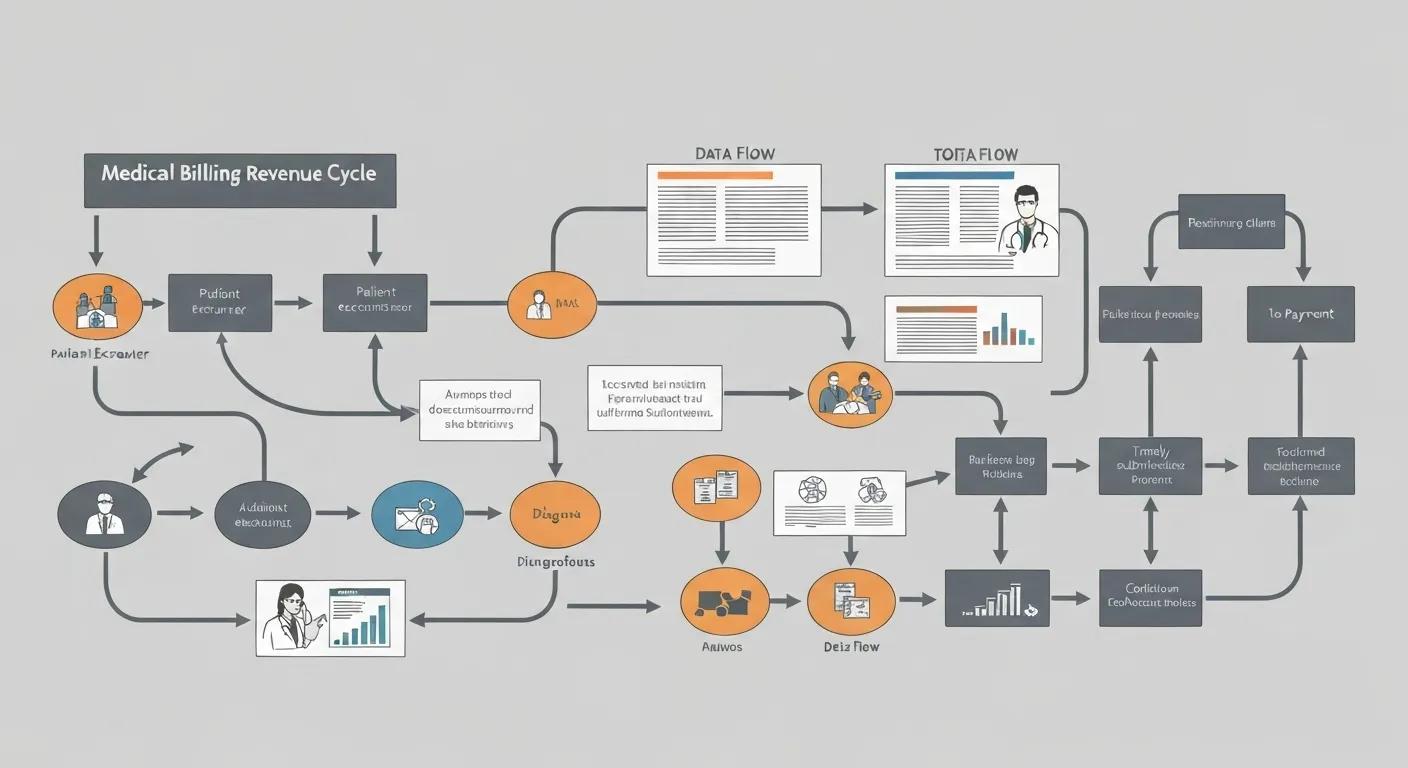
Direct Answer
You architect revenue operations for a medical billing company in 2027 by making the practice-management/RCM platform the claim-and-client source of truth, engineering revenue around net collections percentage of billings under management rather than claim volume, and building a client-and-collections engine that grows billings under management from provider clients while improving clean-claim and denial-recovery rates. A medical billing company is neither a software vendor nor a generic back office; it is a percentage-of-collections service business where revenue depends on how much provider revenue (charges) is under management, the net collection rate achieved, the percentage fee earned, and how long provider clients stay.
The RCM stack (such as AdvancedMD, Kareo/Tebra, athenahealth, or DrChrono with a clearinghouse like Availity or Change Healthcare) holds patients, claims, payments, and denials, and the architecture must stitch client onboarding, charge capture, claim submission, denial management, and patient billing into one revenue picture, engineer clean charge-to-cash and denial-recovery cycles, and run a client-and-collections engine that compounds billings under management.
For the owner or revenue leader, the operating goal is maximum net collections on managed billings at low days-in-AR — because in medical billing, a lost provider client, a denied claim, and a slow AR each destroy economics that the percentage-fee and payer-complexity model makes unforgiving.
1. Why Medical-Billing Revenue Architecture Is Different
A medical billing company handles revenue cycle management — coding, claim submission, payment posting, denial follow-up, and patient billing — for healthcare providers, usually for a percentage of collections. The economics are driven by billings under management, net collection rate, clean-claim rate, fee percentage, and client retention.
Three structural differences shape the architecture:
- Revenue is a percentage of what clients collect. The company earns when providers get paid, so net collection rate on managed billings is the core driver, not claim count.
- Clients are provider practices, not transactions. Each provider relationship is recurring; billings under management compound with retention and new clients.
- Payer complexity decides yield. Denials, payer rules, and AR aging directly affect collections; denial recovery and clean claims are core revenue levers.
Because of these traits, the RCM platform must be the single source of truth for claims, payments, and denials, and revenue architecture must connect onboarding, charge capture, submission, denial management, and patient billing so collections, AR, and retention are visible and managed.
2. The Revenue Stack: Systems That Run the Company
A medical billing company runs on a stack the architecture must integrate.
The practice-management/RCM platform is the hub: patients, claims, payments, and denials. The clearinghouse (Availity, Change Healthcare) scrubs and routes claims; denial management recovers underpaid and rejected claims; patient billing captures patient responsibility; client reporting keeps providers informed.
Integrated, the company sees net collections, days-in-AR, and client retention in one place.
3. Revenue Model: Billings Under Management, Net Collections, and Fee
The core revenue equation for a medical billing company is:
Revenue = Billings Under Management × Net Collection Rate × Fee Percentage, with profit governed by clean-claim rate, denial recovery, and cost to serve.
The architecture should manage:
- Billings under management — total provider charges processed.
- Net collection rate — collections vs. Collectible charges.
- Clean-claim (first-pass) rate — claims paid without rework.
- Days in accounts receivable (AR) — speed of collections.
- Denial rate and recovery rate — leakage and recapture.
- Client retention — provider relationships kept and grown.
Tracking these turns "we submitted a lot of claims" into a clear view of collection performance.

👉 Quick Call with Kory White, Fractional CRO · See Kory on LinkedIn · CRO Syndicate
4. The Charge-to-Cash and Denial-Recovery Cycle
Revenue depends on a clean cycle from charge capture to posted payment.
Architecturally, every claim should be coded, scrubbed, submitted, adjudicated, and either posted or appealed, with patient balances billed and everything reported to the client. Friction here shows as high denials, aging AR, and collection leakage.
5. The Client-and-Collections Engine
Steady-state revenue comes from a repeatable engine that grows clients and improves collections.
- Client acquisition — winning practices by specialty (cardiology, behavioral health, etc.).
- Onboarding — credentialing, payer enrollment, and clean data feeds.
- Collection optimization — clean-claim discipline, denial work queues, and AR follow-up.
- Client reporting — transparent dashboards that prove value and earn retention.
- Expansion — adding services (coding, credentialing, patient collections) per client.
The platform should track each client's net collection rate and AR so the company defends and grows accounts.
6. KPIs the Architecture Must Expose
- Billings under management and net new clients.
- Net collection rate by client and specialty.
- First-pass clean-claim rate.
- Days in AR and AR aging buckets.
- Denial rate and denial-recovery rate.
- Patient-responsibility collection rate.
- Client retention and revenue per client.
7. Common Revenue-Architecture Mistakes
- Counting claims, not collections. Submission volume without net-collection focus misses the real metric.
- Ignoring denials. Unworked denials are pure collection leakage and lower client results.
- Letting AR age. Slow follow-up shrinks collections and provider trust.
- Weak client reporting. Providers churn when they can't see performance.
- Siloed systems. Disconnected RCM, clearinghouse, and reporting hide true economics.
Frequently Asked Questions
What is the core revenue driver for a medical billing company? Billings under management times net collection rate times fee percentage, with profit governed by clean-claim and denial-recovery rates. Net collections, not claim count, is the metric that matters.
Which software should anchor the revenue stack? A practice-management/RCM platform such as AdvancedMD, Tebra (Kareo), athenahealth, or DrChrono, integrated with a clearinghouse like Availity or Change Healthcare and reporting and accounting tools.
Why does the clean-claim rate matter so much? A high first-pass clean-claim rate means claims are paid without costly rework, lowering days-in-AR and cost to serve while raising the net collection rate that drives revenue.
How does a billing company grow revenue? By running a client-and-collections engine that wins provider clients, improves net collections through clean claims and denial recovery, and expands services per client while retaining accounts.
What is the most overlooked revenue lever? Denial management and AR follow-up. Recovering denied and underpaid claims directly raises net collections on the billings already under management.
Sources
- Https://www.advancedmd.com/
- Https://www.tebra.com/
- Https://www.athenahealth.com/
- Https://www.availity.com/
- Https://www.hfma.org/
- Https://www.aapc.com/