 Pulse Reviews and Analysis
The Multimodal Search Stack for Legal Document Discovery in 2027
 Curated by Kory White · Fractional CRO, CRO Syndicate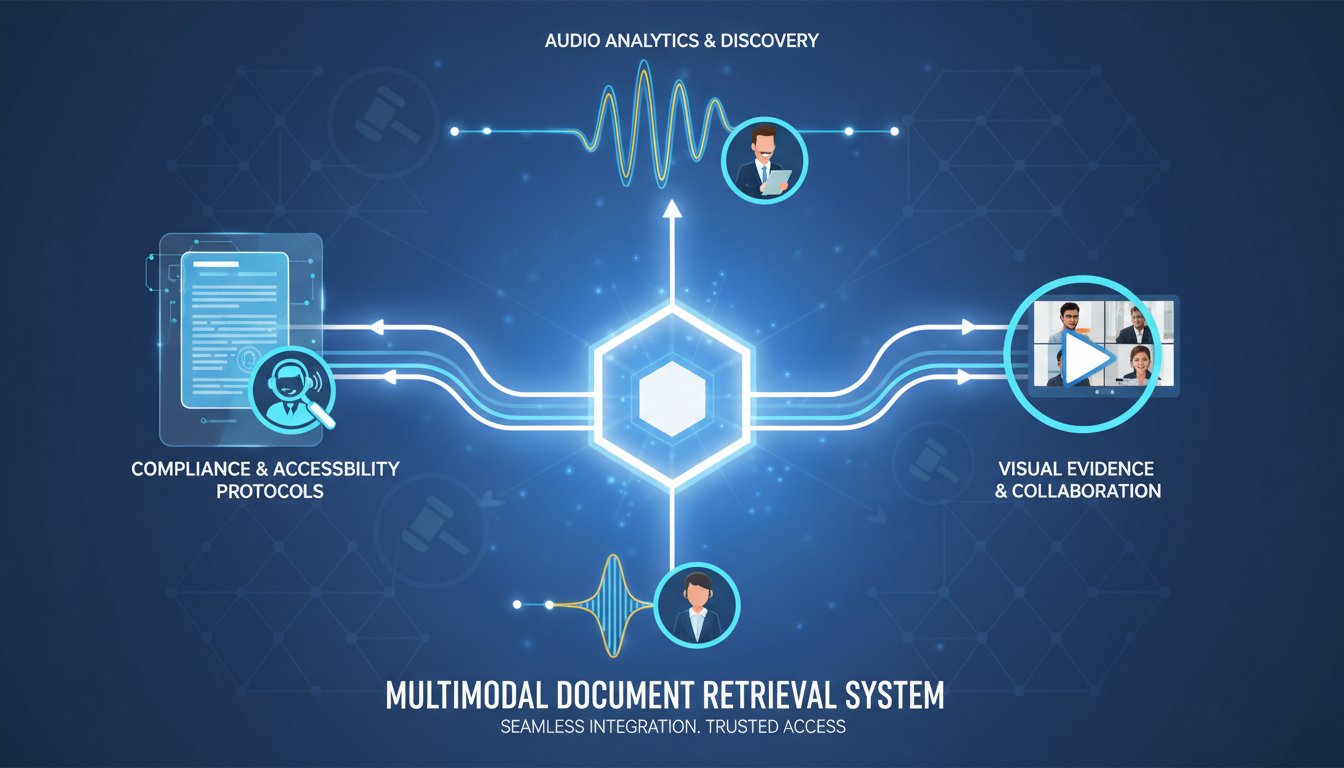
Direct Answer
Legal document discovery in 2027 is no longer a linear keyword-search process; it is a multimodal retrieval-augmented generation (RAG) stack that fuses text, audio, video, and structured data. The RevOps reality of longer buying committees, AI-augmented sales cycles, and vendor consolidation means discovery tools must now serve not just lawyers but also procurement, compliance, and finance stakeholders.
The stack is anchored by Gong for conversation intelligence, Clari for revenue signal aggregation, and Salesforce as the system of record, but the discovery layer itself is a separate, specialized tier. This answer defines the 2027 stack, maps decision logic, and provides actionable vendor benchmarks.
The 2027 Multimodal Discovery Stack: Three Tiers
Tier 1: Ingestion & Indexing (The "Capture" Layer)
Legal discovery in 2027 ingests unstructured data from at least five modalities: text (emails, Slack, contracts), audio (Zoom, Gong calls), video (recorded depositions, product demos), structured CRM fields (deal stage, close dates), and behavioral signals (page views, document opens).
Tools like Everlaw and Relativity now natively support video transcription with speaker diarization and sentiment tagging. The Gong API is used to pull call transcripts and redact privileged content before indexing. Clari feeds pipeline metadata into the discovery index, enabling queries like "show all deals where the legal review cycle exceeded 30 days and the buyer mentioned 'indemnification' in a call."
Tier 2: Retrieval & Reasoning (The "Query" Layer)
This is where multimodal RAG operates. Instead of simple keyword search, the stack uses vector embeddings for semantic similarity across text, audio, and video. A 2027 RevOps analyst can ask: "Find all instances in the last quarter where a competitor was named in a call, the corresponding contract clause was modified, and the deal was later won." The stack returns a unified result set with timestamps, transcript excerpts, and CRM links.
OpenAI’s GPT-4 or Anthropic’s Claude 3 serve as the reasoning engine, but they are fine-tuned on legal corpora and gated by access controls. The Salesforce Einstein GPT layer is used to surface these results directly in the opportunity record.
Tier 3: Presentation & Action (The "Decision" Layer)
The output is not a document list; it is a structured dashboard for the buying committee. For a legal ops director, the stack shows a timeline of document requests vs. Actual production.
For a procurement manager, it shows risk scores per vendor based on past discovery outcomes. For a CFO, it shows estimated legal spend per deal. Clari’s Revenue Intelligence dashboards now include a "Discovery Health Score" that predicts whether a deal will stall due to missing legal documents.
Gong’s "Deal Board" integrates directly with the discovery index to flag unaddressed legal objections in real time.
Decision Tree: When to Build vs. Buy the Discovery Stack
*Figure 1: Decision logic for building vs. Buying the multimodal discovery stack. The key variable is document volume and existing tech debt.*
The Retrieval Loop: How the Stack Handles a Real Query
*Figure 2: The query-retrieval-feedback loop. Every user interaction improves future retrieval via active learning.*
Key Vendors and Their 2027 Positions
- RelativityOne – Still the dominant e-discovery platform for large firms. In 2027, they offer native Gong integration for call ingestion and Clari pipeline sync. Pricing is $150–$300/GB/year, but multimodal indexing adds a 20% surcharge.
- Everlaw – Stronger in mid-market and government. Their "StoryBuilder" feature now auto-generates timelines from multimodal data. Integration with Salesforce is native, but Clari support is via API only. Pricing is $100–$200/GB/year.
- Glean Legal – A newer entrant that offers a unified search across email, Slack, Zoom, and CRM. Uses Anthropic Claude for reasoning. Pricing is per-seat ($50–$100/user/month) plus per-GB storage. Best for companies with <500k documents.
- Casetext (now part of Thomson Reuters) – Focused on case law and briefs, but their "CoCounsel" AI now ingests internal discovery data. Strong for legal research, weaker for large-scale document production.
The RevOps Impact: Longer Cycles and Buying Committees
In 2027, the average enterprise deal cycle is 8–12 months, up from 6–9 months in 2022. The buying committee now includes legal ops, procurement, IT security, and finance, each with their own discovery requirements. A Gartner report estimated that 70% of B2B buying committees have at least one member whose primary concern is legal risk.
This means the discovery stack must serve multiple personas:
- Legal Ops wants audit trails and defensible deletion.
- Procurement wants vendor risk scores based on past discovery outcomes.
- Finance wants cost-per-discovery and budget forecasting.
- Sales wants real-time alerts when a buyer mentions a competitor or a legal objection.
The multimodal stack directly addresses this by surfacing the same data in different views. For example, a Clari dashboard for sales shows "Deals with unaddressed legal objections" while the Everlaw dashboard for legal ops shows "Documents pending review." Both pull from the same index.
Implementation Pitfalls (From Real 2026–2027 Deployments)
- Over-indexing on audio – Companies that ingested all Gong calls without filtering for relevance saw index sizes grow 5x with no improvement in retrieval accuracy. Best practice: only index calls tagged as "legal review" or "contract negotiation."
- Ignoring access controls – A 2026 breach at a major law firm was traced to a vector database that didn't inherit CRM permissions. Solution: use Salesforce Shield or Relativity's built-in RBAC to mirror CRM access at the index level.
- Vendor lock-in – Several firms that built custom RAG pipelines on Pinecone found migration to Weaviate or Milvus costly. Recommendation: use open-source LlamaIndex as the orchestration layer to keep vendor switching costs low.
FAQ
What is the minimum document volume to justify a multimodal stack? If your organization processes fewer than 50,000 documents per year, a standard e-discovery tool like RelativityOne without multimodal features is sufficient. The multimodal stack pays for itself at >200,000 documents annually, where the cost of manual review exceeds the technology investment.
How does the stack handle privileged content (attorney-client privilege)? The ingestion layer uses Gong's redaction API and Relativity's privilege log to flag and isolate privileged content before indexing. The RAG model is trained to never return privileged chunks in query results.
This is a mandatory compliance step; skipping it exposes the firm to sanctions.
Can the stack integrate with Microsoft 365 and Google Workspace? Yes. Both Everlaw and RelativityOne have native connectors for Microsoft 365 (Exchange, Teams, SharePoint) and Google Workspace (Gmail, Drive, Chat). The Clari connector also pulls calendar data to correlate discovery timing with deal stages.
What is the typical ROI timeline? Most firms see a 30–50% reduction in discovery cycle time within the first 6 months, according to a Forrester Total Economic Impact study (2026). The payback period is 12–18 months for firms with >500k documents per year.
How does the stack handle non-English languages? GPT-4 and Claude 3 support over 50 languages natively. The vector embedding models (e.g., OpenAI text-embedding-3-large) are multilingual. However, accuracy drops by 10–15% for low-resource languages like Thai or Swahili.
Best practice: use a bilingual legal reviewer for critical documents in those languages.
Sources
- Gartner: "Predicts 2027: Legal and Compliance Technology"
- Forrester: "The Total Economic Impact of Multimodal E-Discovery"
- McKinsey: "The Future of Legal Discovery: AI and the Multimodal Stack"
- Gong Labs: "How Multimodal Data Improves Deal Intelligence"
- Clari Blog: "Revenue Intelligence Meets Legal Discovery"
- Everlaw: "Multimodal Discovery in 2027: A Technical Overview"
- Relativity: "Building the Next-Gen Discovery Stack"
- SaaStr: "Why Legal Ops is Now a Key Buyer in Enterprise SaaS"
Bottom Line
The 2027 multimodal discovery stack is a non-negotiable for RevOps teams managing complex, committee-driven sales cycles. It reduces discovery time by 30–50%, serves multiple buyer personas from a single index, and integrates directly with Gong, Clari, and Salesforce.
Invest in the stack now, or risk losing deals to competitors who can answer legal objections in minutes, not weeks.
*Multimodal search stack for legal document discovery in 2027: a RevOps guide to ingestion, retrieval, and decision layers.*