
What is the most actionable framework from *Never Split the Difference* for handling a price objection in 2027?
 Curated byKory White · Fractional CRO · Maryland
 PULSEKNOWLEDGE LIBRARY
The most actionable framework is the tactical empathy sequence: label the price concern, mirror the number back, ask a calibrated "how" question that forces the buyer to solve your constraint, then anchor with a no-oriented question. It converts an adversarial price fight into joint problem-solving, and it survives 2027's data-rich, multi-threaded buying committees intact.
A discount request that arrives on a Thursday afternoon
Picture the deal every seller recognizes. It is late in the quarter. You have run a solid cycle: discovery, a technical evaluation, two demos, a business case built with the economic buyer's own numbers. Legal is halfway through redlines. Then the champion forwards an email from procurement with a single line: "Leadership needs this to come in at 30% under the quoted figure or we push to next fiscal year."
The instinctive responses are all bad. The first is capitulation — you split the difference, land at 15%, and teach the buyer that every future renewal starts with a haircut. The second is defensiveness — you send a three-paragraph justification of your pricing model, which reads as a lecture and gives procurement a document to pick apart. The third is escalation — you loop in your VP, who calls their VP, and now two senior people are anchored to positions they have to defend publicly.
Chris Voss's core insight in *Never Split the Difference* is that the number in that email is almost never the actual problem. It is a symptom. Behind it sits something specific: a budget that got cut in a reforecast, a competing quote someone is using as leverage, an internal skeptic who needs a win, a procurement analyst whose bonus is measured in savings percentage, or a genuine gap between what you priced and the value the buyer believes they will capture. Each of those requires a completely different response. Discounting treats all five identically, which is why it works so poorly and costs so much.

The framework's actionable core is a sequence you can run inside a fifteen-minute call. Label the emotion or dynamic you observe. Mirror the last few words to get the buyer to elaborate. Ask a calibrated "how" question that hands them your constraint. Use a no-oriented question to lower their defenses and confirm alignment. Only then, if the gap is real, trade — never concede unilaterally.
What makes this durable heading into 2027 is that the buying environment has moved against the seller in exactly the ways this method compensates for. Committees are larger. Procurement has more benchmark data and more automated comparison tooling. Renewal cycles are shorter and reviewed more aggressively. Many buyers now arrive at the first call with a pricing hypothesis already formed from peer networks, review sites, and public pricing pages. The seller's information advantage has eroded. What has not eroded is the seller's ability to ask better questions than the buyer expected, and to be the only vendor in the evaluation who tries to understand the constraint rather than argue with it.
Note the framing distinction that matters. Voss is a hostage negotiator writing about high-stakes conversations where splitting the difference gets someone killed. The translation to B2B pricing is not literal — you are not in a crisis — but the structural lesson transfers cleanly. When you meet a demand with a counter-demand, you get positional bargaining. When you meet a demand with a question that surfaces the reason behind it, you get information, and information is the only thing that lets you find a trade that costs you less than it gives them.
How the tactical empathy sequence actually works
The sequence has four moves, and the order matters more than most people executing it realize. Running them out of order — leading with a calibrated question before you have labeled anything — reads as interrogation and hardens the buyer's position.

Move one: the label. A label is a verbal observation of the other side's state, phrased as an observation rather than an accusation. The reliable openers are "It seems like…", "It sounds like…", "It looks like…". Never "I understand that…" or "I hear you saying…" — both center you rather than them, and experienced buyers read them as technique. Applied to the Thursday email: *"It sounds like there's pressure on this number that has nothing to do with whether the product is right."* Then stop talking. The silence after a label is the working part. Most sellers step on it within two seconds.
A well-aimed label does two things. It signals that you heard the underlying situation, not just the demand, which lowers the buyer's need to repeat and escalate. And it invites correction — if you are wrong, they will tell you exactly how you are wrong, which is the information you wanted.
Move two: the mirror. A mirror is repeating the last one to three words of what they said, with a slight upward inflection. Buyer: "We just can't justify the premium tier at this price." You: "Justify the premium tier?" It feels absurdly simple written down. It works because it is an implicit request to continue that costs the buyer nothing to answer, and people who continue tend to reveal the reasoning they had not planned to share. Mirrors are the lowest-cost information-gathering move in the entire framework.

Move three: the calibrated question. These begin with "how" or "what" — never "why," which triggers defensiveness in almost every language and culture. The move is to hand the buyer your constraint and let them solve it. *"How am I supposed to get a 30% reduction approved when the scope hasn't changed?"* You are not refusing. You are not agreeing. You are making them an accomplice in your problem. A significant share of the time, the buyer will start proposing the trades themselves — a longer term, a case study, a reference call, a narrower initial scope, an earlier payment schedule.
Move four: the no-oriented question. Voss's counterintuitive finding is that "no" makes people feel safe and in control, while a string of forced "yes" answers makes them feel cornered. So instead of "Does that work for you?" you ask "Is it ridiculous to look at a two-year term to close the gap?" or "Would it be a terrible idea to scope phase one narrower and revisit in six months?" A "no" here means "no, that's not ridiculous" — which is functionally a yes, arrived at without the buyer feeling maneuvered.
Two supporting techniques sit around the sequence. The accusation audit front-runs objections you know are coming: *"You're going to think we're inflexible. You may think we don't understand your budget cycle."* Saying it first defuses it. And the late-night FM DJ voice — slow, downward-inflected, calm — is the delivery layer. The same words delivered fast and high-pitched read as anxiety, and anxiety reads as room to push.

The most common execution failure is treating this as a script rather than a loop. You will often run label → mirror → calibrated question two or three times before the actual constraint surfaces. The first answer a buyer gives about price is usually the rehearsed one. The second or third is closer to true.
Real numbers, ranges, and what to measure
Frameworks that cannot be measured get abandoned within a quarter. Here is what to instrument, with realistic ranges — treat these as internal-baseline targets to set and beat, not as external benchmarks.
Discount depth is the headline metric. Track average discount off list, by segment and by deal size, before and after you train the sequence. Also track the *distribution*, not just the mean — a team averaging 12% might be a team where everyone gives 12%, or a team where most give 5% and two reps give 30%. Those are different problems. The second is a coaching problem with two names attached; the first is a pricing problem.
Discount frequency matters more than depth in most portfolios. The percentage of closed-won deals that carry any discount at all is the cleaner signal. Moving from "almost every deal gets something" toward "discounts are the exception and are always traded for something" is the actual behavior change. If your discount rate is above roughly two-thirds of closed deals, your list price has effectively become fiction, and no negotiation training fixes a pricing problem that structural.

Concession-to-trade ratio. Instrument the share of granted discounts that came with a documented counterparty concession — multi-year commitment, prepayment, reference agreement, case study, expanded scope, earlier start date, reduced implementation support. Unilateral concessions should be a rare, escalated exception. This is the single number that best captures whether the framework is being executed or merely discussed in team meetings.
Cycle-time effect. Expect negotiation-stage duration to lengthen slightly at first. Asking calibrated questions instead of immediately sending a revised quote adds calls. That is the trade. Watch whether the added days are offset by improved win rate and better realized price. If cycle time inflates without any margin improvement after a full quarter, reps are asking questions but not converting the information into trades — a distinct and fixable coaching gap.
Margin math is the part sellers underweight. On a product carrying 70% gross margin, a 10% price cut removes roughly 14% of gross profit. At 50% gross margin, that same 10% cut removes 20% of gross profit. Discounts come out of margin, not revenue, which is why they compound so badly. Run this calculation for your actual margin structure and put it on a card reps can see. Most sellers who feel a 10% discount is "small" have never done that arithmetic for their own product.

Renewal contamination. A discount granted in year one usually becomes the new baseline. Model the multi-year cost: a discount held across a three-year relationship costs roughly three times what the deal desk approved, before you account for the expansion pricing it also anchors downward. This is the strongest internal argument for trading rather than conceding, and it is the argument that gets finance on your side.
Objection-to-close conversion. Tag deals where a price objection was formally raised and measure their close rate against deals where none was. A well-run sequence should narrow that gap. If price-objected deals close far worse than the rest, the objection is functioning as a polite exit rather than a real negotiation — which means the qualification problem is upstream, in discovery, not in the negotiation call.
Practical rollout sizing. A realistic pilot is one segment, six to ten reps, a full quarter, with call recordings reviewed weekly against a short rubric: was a label used, was there silence after it, was a calibrated question asked before any number moved, was every concession traded. Score the behaviors, not the outcomes — outcomes lag by a full cycle and the causal attribution is noisy.
Trade-offs, and when a different strategy fits better
This is not a universal tool, and pretending otherwise is how good frameworks get discredited inside an organization.

Where it underperforms. In genuinely commoditized, spec-driven purchases run through a formal RFP with sealed pricing and no live conversation, there is no channel for tactical empathy. The mechanism requires dialogue. If procurement has structured the process specifically to prevent dialogue, your leverage lives upstream — in shaping requirements before the RFP is written — not in the pricing round. Similarly, in high-volume, low-ACV transactional sales where the whole cycle is one call, the sequence compresses to a single label plus one calibrated question. Anything longer costs more in cycle time than it recovers in price.
Where it competes with other methods. Value-based selling (quantify the return, defend the price with the buyer's own numbers) and MEDDIC-style qualification (surface the economic buyer and decision criteria early enough that price never becomes the battleground) are the two most common alternatives. They are complements, not substitutes. Value-based selling gives you the *content* of your response; the tactical empathy sequence gives you the *delivery mechanism* for it. A quantified business case delivered defensively still loses. A calibrated question with nothing behind it is just a stall.
The honest ranking: if you can only fix one thing, fix qualification. Most price objections that feel unwinnable in the negotiation stage were created in discovery, when nobody confirmed budget authority or established a value hypothesis the buyer actually believed. The negotiation framework is a recovery tool. It is very good at recovery, and it should not be your primary strategy.

Where it becomes counterproductive. With a sophisticated buyer who has also read the book — increasingly common, and the reason the technique's edge has narrowed — mechanical execution is transparent and slightly insulting. The defense is sincerity: labels have to be accurate to work. A wrong label gets corrected and you learn something. A *performed* label with no real observation behind it reads as manipulation, and the relationship cost outlasts the deal. Voss's own emphasis on tactical *empathy* is the point; the empathy is the load-bearing part, and the tactics are just its vocabulary.
Adjacent applications worth knowing. The same sequence transfers directly to renewal negotiations where a customer threatens churn over price, to partner and channel margin disputes, to vendor-side procurement conversations where you are the buyer, and to internal budget defense with your own finance team. Customer success teams handling downgrade requests get outsized value from labels and calibrated questions, because the underlying dynamic — someone announcing a number when the real issue is unrealized value — is identical.
Common pitfalls and how to avoid them
Treating the script as the skill. The most frequent failure. Reps memorize "it sounds like" and deploy it on every call regardless of whether they observed anything. Buyers notice. The fix is coaching on observation before phrasing: what did you actually notice about their tone, their hesitation, who went quiet on the call? Phrase second.

Filling the silence. After a label, most sellers wait under two seconds. The pause is where the buyer decides whether to correct you or elaborate, and it genuinely feels much longer to the person who stopped talking. Practice this on internal calls until four seconds of silence stops feeling like failure. This one habit produces more information than any other single change.
Asking "why." "Why do you need 30% off?" puts the buyer on trial. "What's driving the 30% figure?" gets the same information without the defense. The words are nearly identical; the responses are not. Audit call recordings specifically for "why" — it slips in constantly under pressure.
Conceding to end discomfort. Negotiation is uncomfortable, and discounting is the fastest way to make the discomfort stop. Reps who discount are frequently managing their own anxiety, not the deal. The organizational fix is structural: require a documented trade before any discount is approved, so the path of least resistance runs through the framework rather than around it.
Skipping the accusation audit on known-hard deals. If you know procurement will call you inflexible, say it first. Front-running an objection costs you nothing and removes the buyer's best opening line.

Running the sequence on the wrong person. Labels and calibrated questions work on humans with constraints and discretion. A procurement analyst executing a fixed savings mandate has neither. There, the play is to get the conversation back to the economic buyer who owns the outcome, or to trade non-price value — longer term, published reference, expanded scope — that lets the analyst report a win without you cutting price. Recognizing which conversation you are in is a prerequisite for the whole framework.
Ignoring the multi-threading reality. In 2027 buying committees, the person voicing the price objection often is not the person who originated it. Your label may be accurate about the messenger and completely wrong about the source. A useful calibrated question here: "How does this land with the rest of the group?" It surfaces whether you are negotiating with one person or relaying through them.
Letting the framework substitute for pricing discipline. No negotiation method rescues a price list that the market has already rejected. If most deals require heavy discounting to close, that is pricing and packaging feedback, and it belongs in a product and finance conversation, not a sales training. The framework tells you *why* buyers push back at scale — collect the reasons your reps surface and route them upstream. That feedback loop is often the highest-value byproduct of running this method consistently.
Related questions
Does mirroring work over email or only on live calls?
Mirroring depends on inflection and timing, so it largely does not survive email. Labels do transfer — a written "it sounds like the budget cycle is the real constraint here" works. For anything requiring elaboration, move to a call.
How is this different from just asking discovery questions?
Discovery gathers facts before a proposal exists. Calibrated questions operate after a position has been stated and are designed to shift who owns the problem. Same grammar, different job, different stage of the cycle.
What if the buyer has also read the book?
Say so, lightly, and drop the technique layer. Sincere labels still work because accurate observation is not a trick. Mechanical execution against a sophisticated buyer costs credibility you will need at renewal.
Should I ever give a discount without a trade?
Rarely, and only as an explicit strategic decision with a documented reason — a lighthouse logo, a market-entry beachhead, a relationship repair. Make it a deliberate exception with a name on it, never a default reflex under quarter-end pressure.
Does this apply when I am the buyer?
Directly. Labels, mirrors, and calibrated questions work identically in procurement conversations. Asking a vendor "how am I supposed to get this approved at that number?" is the same move pointed the other direction.
FAQ
What exactly is tactical empathy?
Understanding the other side's perspective and constraints accurately enough to articulate them back, and using that understanding to influence the conversation — without necessarily agreeing with their position. It is a diagnostic and influence tool, not sympathy. The distinction matters: sympathy softens your position, tactical empathy sharpens your information.
Why is "no" better than "yes" in a negotiation?
Because "no" preserves the buyer's sense of autonomy. A run of forced yes-answers makes people feel maneuvered and triggers resistance. A no-oriented question like "is it ridiculous to consider a longer term?" lets them agree by saying no, which feels safe and keeps them engaged rather than defensive.
How long does it take a team to actually adopt this?
Realistically a full quarter of weekly call reviews before the behaviors stabilize, and a second quarter before the pricing metrics move. The bottleneck is almost never comprehension — reps understand it in an hour. The bottleneck is tolerating silence and resisting the reflex to send a revised quote.
Can this be built into CRM or enablement tooling?
Partly. Conversation-intelligence tools can flag whether a calibrated question preceded a price change and whether concessions carried documented trades, and deal desks can require a trade field before discount approval. The judgment about which constraint you are facing stays human. Tooling enforces the discipline; it does not supply the observation.
What is the single highest-leverage move if I only remember one thing?
Ask a calibrated "how" question before any number moves. "How am I supposed to make that work?" hands the buyer your constraint and converts a demand into a shared problem. It is the one move that reliably produces information instead of a concession.
Does this framework hold up as buying gets more automated?
The mechanics of price discovery have automated; the decision to spend still runs through people with internal constraints they cannot fully disclose. As comparison data commoditizes, the differentiator shifts toward the seller who diagnoses the real constraint fastest. That favors this approach rather than eroding it.
Sources
- https://www.blackswanltd.com/the-edge — Chris Voss's Black Swan Group, ongoing negotiation technique articles
- https://hbr.org/2020/07/negotiating-with-a-customer-you-cant-afford-to-lose — Harvard Business Review on high-stakes customer negotiation
- https://www.pon.harvard.edu/ — Harvard Program on Negotiation, research and teaching materials
- https://hbr.org/2003/09/the-hidden-flaw-in-negotiation-strategy — HBR on positional bargaining and negotiation strategy failure
- https://www.mckinsey.com/capabilities/growth-marketing-and-sales/our-insights — McKinsey Growth, Marketing & Sales insights on pricing and discounting
- https://www.bain.com/insights/topics/pricing/ — Bain & Company pricing research
- https://www.gartner.com/en/sales — Gartner sales research on B2B buying groups and buyer behavior
- https://sloanreview.mit.edu/topic/sales-marketing/ — MIT Sloan Management Review, sales and pricing coverage
- https://www.pmi.org/ — Project Management Institute, negotiation and stakeholder management resources
Related on PULSE
- [How does *Never Split the Difference* teach you to handle a "we need to think about it" objection in 2027?](/knowledge/bs0411)
- [How do you reframe price objections using *Never Split the Difference* in 2027?](/knowledge/bs0334)
- [How do you reframe a budget objection using *Never Split the Difference* in 2027?](/knowledge/bs0365)
- [What is the most practical negotiation tactic from *Never Split the Difference* for a first meeting in 2027?](/knowledge/bs449)
- [What’s the best way to use *Never Split the Difference* to build rapport with a hostile stakeholder?](/knowledge/bs0404)
- [What’s the most practical technique from *New Sales. Simplified.* for handling a “send me info” objection?](/knowledge/bs0400)
 book-summaryMEDDICC by Andy Whyte — Cliff Notes Summary & Key Takeaways
 pulse-recentObviously Awesome by April Dunford — Top 10 Key Takeaways for Sales Leaders in 2027
 pulse-recentCrossing the Chasm by Geoffrey Moore — Top 10 Key Takeaways for Sales Leaders in 2027
 pulse-recentThis Is Marketing by Seth Godin — Top 10 Key Takeaways for Sales Leaders in 2027
 pulse-recentContagious by Jonah Berger — Top 10 Key Takeaways for Sales Leaders in 2027
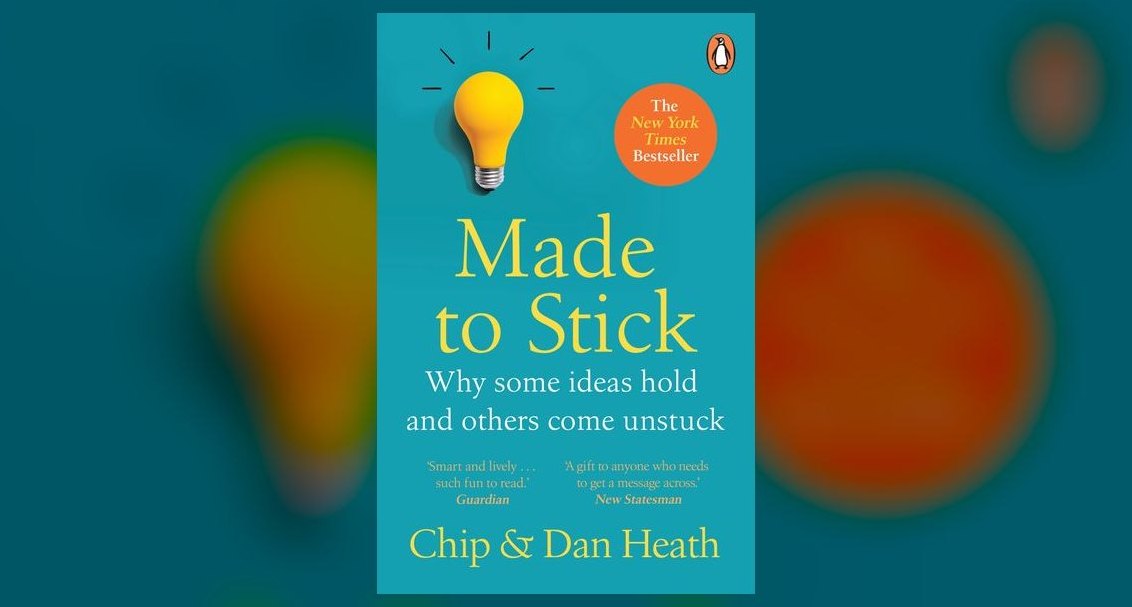 pulse-recentMade to Stick by Chip Heath and Dan Heath — Top 10 Key Takeaways for Sales Leaders in 2027
 pulse-recentBlue Ocean Strategy by W. Chan Kim and Renee Mauborgne — Top 10 Key Takeaways for Sales Leaders in 2027
 pulse-recentPlay Bigger by Al Ramadan — Top 10 Key Takeaways for Sales Leaders in 2027
 pulse-recentThe 22 Immutable Laws of Marketing by Al Ries and Jack Trout — Top 10 Key Takeaways for Sales Leaders in 2027
 pulse-recent$100M Leads by Alex Hormozi — Top 10 Key Takeaways for Sales Leaders in 2027