


How do you build a sales enablement certification program for tenured reps in 2027
Quality
Certified

Build a tenured-rep sales enablement certification program around observed deal behavior, not curriculum hours. Define four to six competencies tied to a named revenue gap, assess through live-call scoring and deal-review defense rather than quizzes, cap total rep time at six to ten hours, recertify annually, and attach a real consequence — pricing authority, territory access, or comp.
The two structures: gate-based versus evidence-based certification
Almost every enablement team building a certification program for tenured reps lands on one of two structural choices, and that decision determines build cost, rep resentment, and whether the program survives contact with a bad quarter.
The gate-based model is the traditional shape. You author a curriculum, deliver it as modules, and end with a summative assessment — a recorded pitch, a written exam, or a role-play graded against a rubric. Reps who pass are certified for a fixed window, usually twelve months. This is what most LMS platforms are built to support and what most enablement teams inherit when they buy a content platform. It is calendar-driven: everyone in the cohort starts together, works the same sequence, and hits the same gate at the same time.
The evidence-based model inverts that. You define the competency, then harvest proof from work the rep is already doing — call recordings from real opportunities, deal reviews, forecast defenses, written mutual action plans, actual objection handling inside a live cycle. Certification is granted when a rep accumulates enough qualifying evidence against each competency, not when they finish a course. Coaching content becomes remediation you assign only when a rep's evidence falls short, rather than a mandatory front-loaded curriculum.

For tenured reps — call it three-plus years in seat, or anyone consistently at or above quota — the difference matters enormously. A gate-based program tells a rep with an eight-year track record that they must sit through foundational modules on discovery frameworks they have used ten thousand times. The predictable result is malicious compliance: the rep skims at 2x speed, memorizes the rubric language for the assessment, passes, changes nothing about their behavior, and now carries an internal credential that means nothing. You have consumed a week of a top performer's selling time to certify that they can perform a role-play. That is the most expensive way to learn nothing.
An evidence-based program does the opposite. The tenured rep who is genuinely strong at multithreading submits three real deals showing four-plus engaged contacts with documented executive alignment, and is certified in that competency in twenty minutes of review time. The same rep who is weak at commercial negotiation — a very common tenured profile, since strong closers often win on relationship and leave margin on the table — has no qualifying evidence, gets flagged, and receives targeted remediation on exactly that competency. The program spends its budget only where the gap actually is.
The trade-off is real and worth stating plainly. Gate-based programs are cheap to build and expensive to run: you author once, then burn rep hours forever. Evidence-based programs are expensive to build and cheap to run: you define observable criteria, instrument call recording and CRM data, and train assessors, but once running, the marginal cost per rep is small and it consumes almost no selling time. If your tenured population is under about twenty reps, gate-based sometimes wins on pure economics. Above forty reps, evidence-based almost always wins, because the rep-hour cost of the gate model scales linearly while the build cost of the evidence model does not.

There is a third structure worth naming because teams keep reinventing it: the hybrid tier. Foundational competencies — product, pricing mechanics, compliance, security posture, competitive positioning — go gate-based, because they are knowledge checks and knowledge checks are legitimately fast. A twenty-question adaptive assessment that lets a rep test out in eight minutes is a perfectly good gate. Behavioral competencies — discovery depth, business-case construction, negotiation, multithreading, forecast accuracy — go evidence-based, because you cannot assess a behavior with a quiz. This is the shape most mature programs converge on after their first failed rollout, and it is the one worth starting with rather than arriving at eighteen months late.
The 2027-specific wrinkle is that conversation intelligence has made evidence harvesting dramatically cheaper than it was five years ago. Automated call scoring against custom rubrics is now a standard feature rather than a research project, which means the historical objection to evidence-based certification — "we cannot possibly review that many calls" — has largely dissolved. The constraint has moved from review capacity to rubric quality. If your scoring criteria are vague, the automation confidently produces vague scores at scale, which is worse than not scoring at all, because it launders subjectivity into a number.
How to decide between the two structures
The decision hinges on four inputs: population size, how much of your rep behavior is already instrumented, whether you have a specific revenue gap to close, and how much political capital you can spend on mandating anything for your top performers.

Start with the revenue gap, because a certification program without a named gap is a solution looking for a problem and it will be the first thing cut when the quarter misses. Concrete gaps that justify a tenured program: win rates dropped against a specific competitor; average selling price is eroding because reps discount early; multi-product attach is flat while the company's whole strategy depends on it; a new pricing model (consumption, outcome-based) requires commercial conversations the tenured team has never had; a segment move upmarket means deals now need executive-level business cases rather than manager-level feature pitches.
That last category is the most common legitimate reason to certify tenured reps in 2027, and it is worth being explicit about. Tenured reps are not underperforming at the old motion — they are excellent at it. The gap is that the old motion no longer maps to the new deal. That framing is also what makes the program politically survivable: you are not remediating veterans, you are re-tooling them for a market that moved.
Instrumentation is the second gate. If you do not already record and transcribe the majority of customer calls, an evidence-based program becomes a manual observation exercise, which caps at roughly three to five assessments per manager per week before it degrades into rubber-stamping. Without recording, run the behavioral portion through structured deal reviews instead — a rep defends two live opportunities against a fixed set of questions, with a second manager present as calibrator. It is lower fidelity than call scoring but it is honest, and it costs about forty-five minutes per rep per competency.
Political capital is the input people underweight. Mandating anything for a rep at 140% of quota is a real cost. Three ways to reduce it, in rough order of effectiveness: make certification unlock something the rep wants (extended discount authority, first access to a new territory or product line, eligibility for the top account tier); make the tenured cohort co-authors of the rubric rather than subjects of it; and allow test-out on every knowledge competency so a strong rep can clear the entire knowledge track in under an hour. If a program cannot offer at least one of those three, it will be resented, and a resented enablement program produces compliance behavior that looks like success on a dashboard and changes nothing in the pipeline.
The fourth input is timing against the fiscal calendar. Never launch a tenured certification in the last six weeks of a quarter, and never in the first two weeks of a new fiscal year when territories and quotas are being absorbed. The workable windows are roughly weeks three through eight of a quarter, and the strongest window is the start of a fiscal year plus two to three weeks, when reps are building plans and are genuinely receptive to new frameworks.
The concrete numbers behind each option

Programs die on unexamined arithmetic. Here are the figures worth modeling before you build anything.
Rep time budget. The hard ceiling for a tenured certification is six to ten hours of total rep time across the whole program, spread over four to six weeks. Not per module — total. A rep carrying a $1.2M annual quota generates roughly $600 of bookings per selling hour across a 2,000-hour year, and realistically far more than that in the top decile. A twenty-hour program across fifty tenured reps is 1,000 selling hours. You have to believe the program moves win rate or ASP enough to clear that, and most do not. Design to eight hours and defend the number.
Assessment throughput. Manual rubric scoring of a recorded call runs twenty to thirty-five minutes per call when done seriously — listening at 1.5x, marking against criteria, and writing usable feedback. Three calls per competency times four competencies is twelve assessments per rep, roughly five to seven hours of assessor time per rep if fully manual. For fifty reps that is 250-350 hours, or about two full-time months. This is the number that kills evidence-based programs that were not modeled honestly. Automated first-pass scoring with human review only on borderline or failing scores typically cuts it to 1.5-2.5 hours per rep, which is the difference between viable and not.
Competency count. Four to six competencies, no more. Every additional competency multiplies assessment load, dilutes focus, and pushes rep time past the ceiling. Teams routinely draft twelve in a workshop and ship four. The four that most often survive for tenured populations: business-case construction and quantified value, commercial negotiation and discount discipline, multithreading and executive access, and forecast integrity. Product knowledge sits in the knowledge track and does not count toward the four.

Pass thresholds and calibration. Set the passing bar so roughly 55-75% of the tenured cohort clears each competency on first attempt. Below 50% and the program reads as a purge, morale craters, and your best people update their résumés. Above 85% and it is theater — you certified what already existed and learned nothing. Calibrate before launch by having three assessors independently score the same six calls; if their scores diverge by more than one point on a five-point scale, your rubric is not specific enough to run. Fix the rubric, not the assessors.
Remediation length. When a rep fails a competency, the remediation loop should be two to three weeks and involve one focused coaching session, one applied attempt on a live deal, and one re-assessment. Longer loops lose the thread; shorter ones do not allow a real deal to progress far enough to generate new evidence.
Recertification cadence. Annual, and it should cost the rep two to three hours, not the full eight. Recertification is an evidence refresh — pull two recent calls per competency, confirm the behavior held, done. Add a trigger-based recert on top: a major product launch, a pricing model change, or a segment move triggers recertification on only the affected competency, not the whole program.
Attribution window. Do not measure the program on bookings in the first quarter. Behavioral change in a sales motion shows up in leading indicators first — meeting-to-opportunity conversion, number of engaged contacts per opportunity, discount depth at close, stage-progression velocity. Those move in thirty to sixty days. Win rate and ASP need two to three full sales cycles, so for a ninety-day cycle that is six to nine months before you can honestly claim a revenue effect. Commit to that timeline publicly at launch, or someone will demand a bookings number in week six and the program will be judged on noise.
Build cost. A hybrid program for forty to sixty tenured reps realistically takes one enablement person eight to twelve weeks at roughly half-time to design, plus twenty to thirty hours of frontline manager input for rubric authoring and calibration, plus whatever conversation intelligence and LMS licenses already cost. If someone proposes building it in three weeks, they are planning to ship a curriculum with an assessment bolted on, which is the gate-based failure mode described earlier.
Implementation details and sequencing

The order matters more than the content, because most failed programs had reasonable content assembled in the wrong sequence — usually curriculum first, criteria last, which guarantees the assessment measures whatever the content happened to cover.
Weeks 1-2: name the gap and get the data. Pull the actual numbers on the revenue gap. Win-rate delta by competitor, discount distribution by rep tenure, contact count per closed-won versus closed-lost, ASP trend by segment. Then listen to fifteen to twenty calls yourself — ten from reps clearing the bar and ten from reps missing it. You are looking for the specific observable difference in behavior, not a theory about it. This step is skippable and it is the one that separates programs that change behavior from programs that produce completion certificates.
Weeks 2-4: write the rubric before any content. For each competency, write what a passing call sounds like in concrete, observable terms. Not "demonstrates strong discovery" — that is unscoreable. Instead: "surfaces at least one quantified business metric the buyer owns, confirms the metric back, and ties a specific capability to moving it." A criterion is good enough to ship when two assessors scoring the same call independently land on the same verdict. Run that test with six calls and three assessors before you write a single slide.
Weeks 4-6: recruit the tenured cohort as co-authors. Take three to five respected veterans and have them review and revise the rubric. They will catch criteria that are academically correct but do not survive a real call, and they will surface the edge cases. More importantly, they become the program's internal advocates. A rubric written by enablement alone and handed down reads as an audit; the same rubric with four veteran names on it reads as a standard the team set for itself. This is the single highest-leverage political move available.
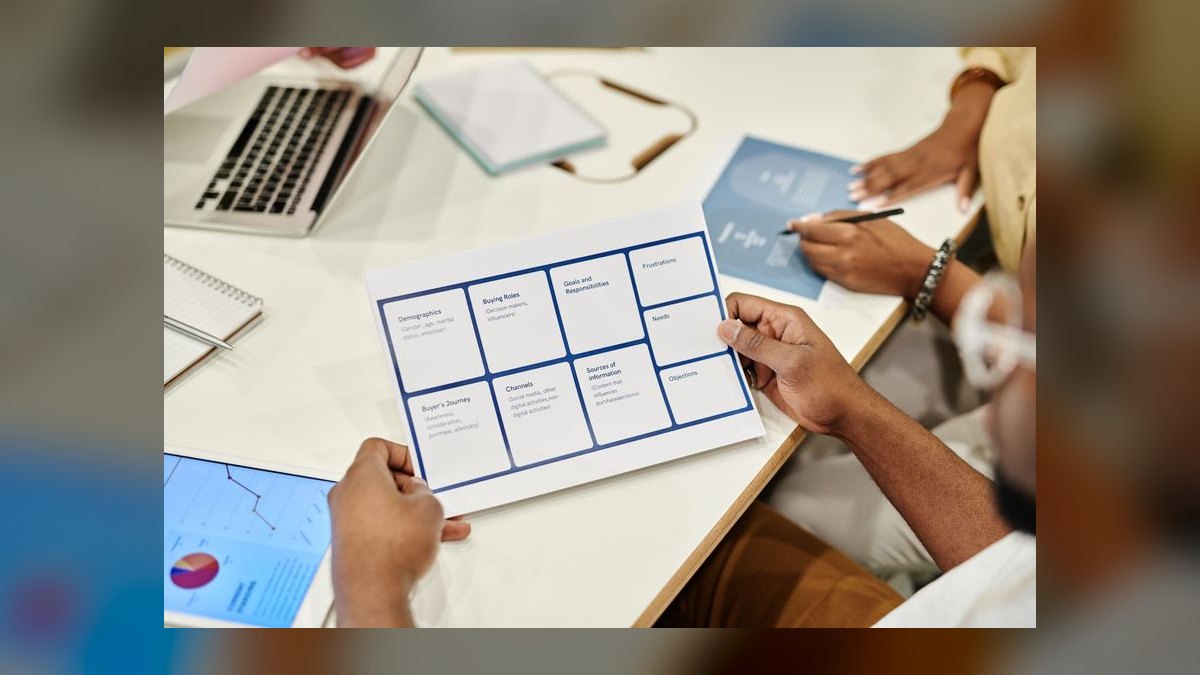
Weeks 6-9: build only the remediation content. Not a curriculum — remediation. For each competency, build one twenty-five to forty-minute focused asset plus a practice structure. You are building for the 30% who fail, not the 100% who enroll. This inverts the usual build order and cuts content volume by roughly two-thirds. Add the knowledge-track assessment here too, with test-out enabled from the start.
Weeks 9-10: pilot with eight to ten reps of mixed performance. Include at least two top performers, two mid, and one struggling. If your top performers fail, your rubric is measuring style rather than effectiveness and you must fix it before rollout — this is the most common pilot finding and catching it here saves the program. If everyone passes trivially, raise the bar. Use the pilot pass rate to check against that 55-75% target.
Weeks 10-16: roll out in waves of fifteen to twenty. Never all at once. Waves let you fix rubric problems between cohorts and keep assessor load survivable. Stagger waves by two weeks.
Ongoing: govern it. Assign one owner, review pass rates by competency quarterly, and retire or rewrite any competency where pass rates exceed 90% for two consecutive cycles — it is no longer discriminating and it is costing rep time for no signal.
On tooling: whatever conversation intelligence and LMS you already own is almost certainly sufficient. The build cost is in rubric authoring and assessor calibration, not software. Buying a new platform to solve an unwritten rubric is the most reliable way to spend six figures and ship nothing.

Five failure modes account for most broken programs, and they are all avoidable. Certification with no consequence — if passing unlocks nothing and failing costs nothing, the program is a survey. The consequence does not have to be punitive; extended discount authority, eligibility for the enterprise account tier, first look at a new product line, or a small comp component all work. What does not work is a badge in a system nobody looks at. Rubrics written in adjectives — "strong," "effective," "consultative" produce inter-assessor variance of two or more points on a five-point scale, which means the certification is measuring which manager you drew rather than how you sell. The calibration test in weeks two through four exists specifically to catch this, and skipping it is the most common root cause of a program losing credibility in month three. Treating tenure as a proxy for competence in either direction — some eight-year veterans are the best negotiators in the building and some have been running the same 2019 playbook on autopilot. The program should be blind to tenure once the cohort is defined; the evidence decides. Similarly, do not exempt top performers by default — a rep can be at 130% of quota on inbound volume and be genuinely weak at the exact competency you are trying to build. Curriculum-first construction — if content exists before criteria, the assessment gets reverse-engineered from the content, and you end up certifying that reps watched videos. Rubric first, always. No sunset — every competency should have a review date. Markets move, products change, and a criterion that discriminated well in 2027 may be table stakes by 2029. A program that never retires anything accumulates into the twenty-hour monster you designed against at the start.
One more, specific to tenured populations: assessor credibility. A tenured rep will accept scoring from a frontline manager who has carried a bag in their segment, from a peer veteran on the co-author cohort, or from a well-calibrated automated score they can appeal. They will not accept scoring from an enablement generalist who has never sold their product, and the program will quietly die of that within one cycle. Staff assessment accordingly.
Related questions
Should top-performing reps be exempt from certification?
No, but they should move through it fastest. Allow test-out on every knowledge competency and evidence-based clearance on behavioral ones. A rep at 140% who is genuinely strong should clear the full program in under three hours. Blanket exemption signals the standard is optional.
How is this different from certifying new hires?

Onboarding certification teaches a motion from zero and can justify forty to eighty hours. Tenured certification re-tools an existing motion and must fit in six to ten hours. Onboarding is curriculum-first by necessity; tenured is evidence-first, because the rep already has real deals generating assessable behavior.
Can automated call scoring replace human assessors entirely?
Not for certification decisions. Use automation for first-pass scoring and to surface qualifying evidence, then route borderline and failing scores to a human. Fully automated pass/fail on a career-affecting credential invites appeals you cannot defend and erodes trust in the rubric.
What if managers refuse to spend time assessing?
That usually means the program has no consequence attached, so assessment reads as administrative overhead. Attach a real unlock, cap assessor load at roughly two hours per rep, and make pass rates by team visible to sales leadership. Manager engagement follows visibility and stakes.
How many competencies should a tenured program cover?
Four to six. Each additional competency multiplies assessment hours, dilutes the message, and pushes total rep time past the eight-hour ceiling. Teams typically draft ten to twelve in workshops and ship four after modeling the actual assessor throughput.
FAQ
How long should a sales enablement certification program for tenured reps take?
Six to ten hours of total rep time spread across four to six weeks, with remediation adding two to three weeks only for reps who miss a competency. The ceiling matters more than the content: every hour past ten is selling time you must justify against the program's expected effect on win rate or average selling price. Recertification the following year should cost two to three hours, since it is an evidence refresh rather than a rebuild.
What should certification actually unlock?

Something the rep values and that leadership can withhold. Common options: extended discount or pricing authority, eligibility for the enterprise or strategic account tier, first access to a new territory or product line, or a modest comp component. Without a real unlock, participation becomes compliance and the program measures attendance rather than capability. The unlock also gives the program a defensible ROI story when budgets tighten.
How do you assess behavior rather than knowledge?
Score real customer calls and live deal defenses against a rubric written in observable terms. A criterion is usable only if two assessors scoring the same call independently reach the same verdict. Quizzes and recorded pitches measure preparation, not practice — a tenured rep can pass either without changing anything about how they run a deal.
What pass rate should you target on first attempt?
Roughly 55-75% of the tenured cohort clearing each competency. Below 50% reads as a purge and drives attrition among people you cannot afford to lose. Above 85% means the bar is measuring what already existed. Check this in the pilot with eight to ten reps of mixed performance before rolling out, and adjust the rubric rather than the cohort.
Who should do the scoring?
Frontline managers who have carried a bag in the same segment, veteran peers recruited onto the rubric co-author cohort, and automated first-pass scoring with human review on borderline results. Tenured reps will not accept assessment from someone who has never sold the product, and assessor credibility is the quietest cause of program failure.
When should you launch relative to the fiscal calendar?
Weeks three through eight of a quarter, and ideally two to three weeks into a new fiscal year when reps are building territory plans and are receptive to new frameworks. Never in the final six weeks of a quarter, and never during the first two weeks of a fiscal year while quotas and territories are still being absorbed.
Sources
- https://hbr.org/2018/06/how-to-really-motivate-salespeople
- https://www.mckinsey.com/capabilities/growth-marketing-and-sales/our-insights
- https://www.gartner.com/en/sales/topics/sales-enablement
- https://www.salesforce.com/resources/research-reports/state-of-sales/
- https://www.forrester.com/blogs/category/sales-enablement/
- https://hbr.org/2017/03/how-the-best-sales-teams-are-using-data
- https://www.atd.td.org/topics/sales-enablement
- https://sloanreview.mit.edu/topic/sales-marketing/
Related on PULSE
- How do you measure sales enablement ROI without attribution theater
- What does a modern sales onboarding ramp plan look like
- How do you build a call-scoring rubric managers actually agree on
- When should you re-territory a tenured sales team
- How do you coach discount discipline without killing win rates
- What belongs in a quarterly deal review versus a forecast call
This page will be disappearing soon. Save it to your device for $1 — or read it free while it is here.
@Kory-White- · if Venmo asks, the last 4 of my number are 2012
This page is gone.
This one is off the shelf now. $1 keeps it on your phone for good — the whole page, pictures and diagrams included.
 pulse-sales-enablementHow do you build a sales enablement training calendar that balances onboarding with ongoing development in 2027
 pulse-sales-enablementHow do you create a sales enablement readiness scorecard for each rep in 2027
 pulse-sales-enablementHow do you design a sales enablement onboarding program that cuts time-to-first-deal in 2027
 pulse-sales-enablementHow do you build a sales enablement certification path for new hires in 2027
 pulse-sales-enablementHow do you design a sales enablement coaching cadence that improves rep performance in 2027
 pulse-sales-enablementHow do you select sales enablement tooling for a growing team in 2027
 pulse-sales-enablementHow do you update a sales playbook for changing market conditions in 2027
 pulse-sales-enablementHow do you create a sales enablement content feedback loop with frontline sellers in 2027
 pulse-sales-enablementHow do you decide whether to build or buy a sales enablement platform in 2027
 pulse-sales-enablementHow do you build a sales enablement onboarding program for a global sales team in 2027