
The Close Loop: Template for Practicing Assumptive and Alternative Choice Closes
 Curated byKory White · Fractional CRO · Maryland
 PULSEKNOWLEDGE LIBRARY
Quality
Certified
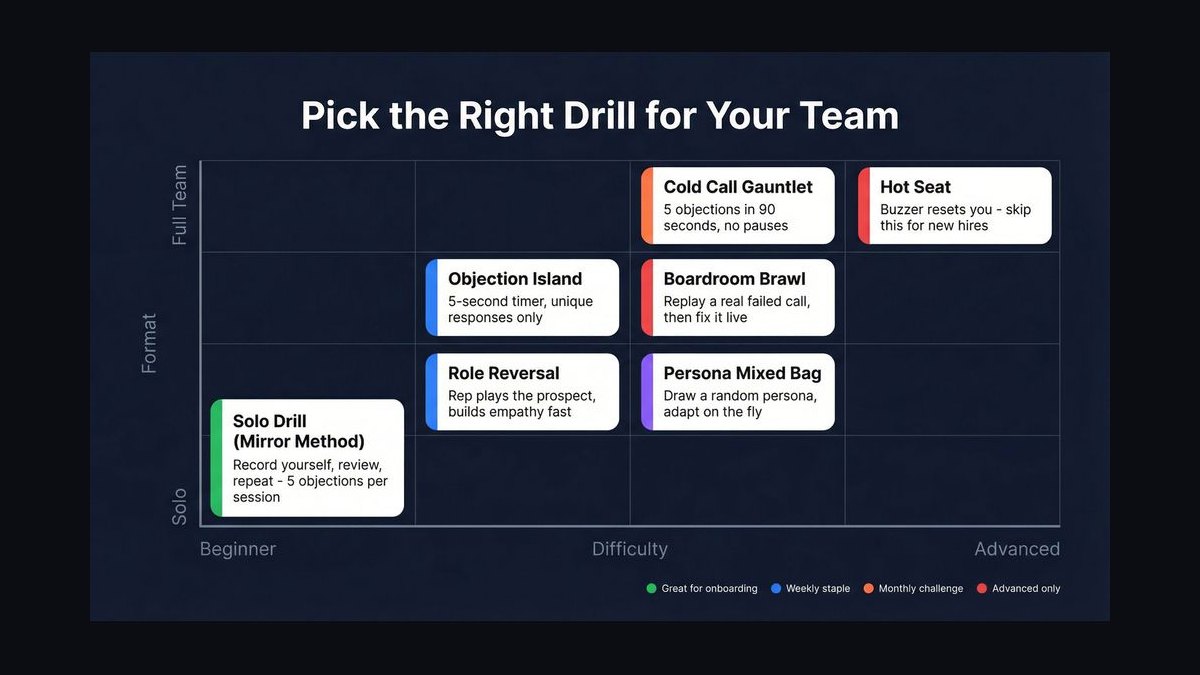
The Close Loop is a 60-minute practice cycle for sales teams: reps write their real closing lines, learn the Assumptive Close and Alternative Choice Close, role-play both against live deals with an observer, and log which technique they used. It works because replacing the closing sentence is mechanical, not motivational — practice beats willpower.
A Tuesday pipeline review that exposes the real problem
A mid-market sales manager runs a Tuesday pipeline review with six reps. Nineteen deals sit in Evaluation or Negotiation. Every rep has a confident answer for what the buyer needs, who signs, and roughly when. Then the manager asks a different question: "Read me the exact sentence you used to ask for the business on your last call."
The room goes quiet. Then the answers come out, and they all sound like this:
- "So — what do you think?"
- "Let me know if that's something you'd want to move forward with."
- "I'll check back in a couple weeks once you've had a chance to review."
- "Does that make sense? Cool. I'll send over some info."
Not one of them is a close. Every one hands the next move to the buyer, and the buyer's default next move is nothing. This is the actual failure being drilled here — not qualification, not discovery, not product knowledge. Reps who can run a flawless MEDDPICC-grade discovery call still soften the ask at the end, because the ask is the only moment in the conversation where they can be told no. So they blur it. They convert a decision request into an opinion request, and an opinion request into a follow-up task.

The Close Loop exists because the fix is mechanical, not motivational. You cannot coach fear of rejection out of somebody in a meeting. You can, however, replace the sentence they say. Both closes in this Template work by removing the yes/no fork from the sentence itself:
- Assumptive Close — you proceed as though the decision is made and move to logistics. The buyer's opportunity to object still exists; it just isn't the question you asked. "I'll send the agreement over this afternoon — is signature routing through you or through legal?"
- Alternative Choice Close — you offer two options that both end in a sale. The buyer chooses *how*, not *whether*. "Would you rather start with the pilot team or bring the whole department on at once?"
Neither is a trick, and both fail loudly when used on an unqualified deal. That is the point of Practicing them in a loop rather than reading them off a slide: reps need reps at *choosing* the close as much as delivering it. A manager running this template for the first time should expect the warm-up alone — reps reading their own weak closing lines aloud — to do half the persuasion work. Nobody defends "let me know if you're interested" once they hear themselves say it in front of peers.
The scenario also sets the scope honestly. This is a training template for the closing sentence and the practice cadence around it. It does not fix a pipeline full of deals with no economic buyer, no compelling event, and no agreed decision process. If your close rate is low because half your Evaluation-stage deals were never qualified, better closing language will surface that faster — reps will get clean, early no's instead of long, slow silences — but it will not manufacture demand.

How the Close Loop mechanism actually works
The session is 60 minutes and has six blocks. Run it with 4–8 reps; above eight, pairs go unobserved and the debrief collapses. Below four, you lose the peer-pressure effect that makes reps rewrite their own scripts.
Block 1 — Warm-up (10 min). Every rep writes down the literal words they used to close their most recent lost or stalled deal. Three read theirs aloud. You are not critiquing; you are building a shared list of weak patterns on the whiteboard. Expect to collect four to six recurring phrases. Keep that list visible for the rest of the hour — it becomes the observer checklist's "don't say this" column.
Block 2 — Framework (15 min). Define both closes with a script skeleton, then map each to qualification state. The skeletons:

> Assumptive: "Since [confirmed qualification element] is settled, I'll [specific next step] by [time]. What's the best [logistical detail] for that?"
> Alternative Choice: "Would you prefer [option A] or [option B]? Both get you [the pain they named] — which fits [their stated decision criteria] better?"
The selection rule matters more than the wording. Use assumptive when the remaining unknowns are logistical: signature path, PO number, start date. Use alternative choice when the remaining unknown is *shape* — scope, timeline, packaging, sequencing. A rep who reaches for assumptive while the buyer is still comparing two vendors sounds presumptuous; a rep who offers a choice when the buyer already said "let's do it" adds friction and reopens a settled decision.
Block 3 — Role-play (20 min). Three seats: Seller, Buyer, Observer. Rotate so everyone plays each seat at least once. Use real opportunities pulled from the CRM, not invented ones — the specificity is what makes the drill transfer. Two drills:

*Drill A, assumptive.* Seller delivers the assumptive line. Buyer is instructed to stall once ("I'm not sure we're ready") but not to hard-refuse. The seller's job is to handle the stall without abandoning the frame — no retreat to "no problem, I'll follow up next month." A clean recovery restates a confirmed element and re-offers the next step: "Totally fair. You told me the renewal date is the 30th and that legal needs ten days — I'll get the agreement into legal now so that window stays open. What else would you want answered before it goes in?"
*Drill B, alternative choice.* Seller offers two options. Buyer is instructed to ask for a third, or for "something in between." The seller redirects without inventing new pricing: "Those two are the ones that fit your timeline — the middle version ends up costing you the pilot's speed without the full rollout's coverage. Which of the two is closer?"
Block 4 — Debrief (6 min). Observers report one strength and one growth area each, and both must quote an actual phrase the seller said. Ban "good job," "solid," and "felt natural." If an observer cannot quote a specific sentence, they weren't observing.
Block 5 — Personal scripts (8 min). Every rep opens their own pipeline, picks one real late-stage deal, and writes both closes for it. Their partner's job is to name which qualification element is missing that would make the assumptive version premature.

Block 6 — Commitment (2 min). Each rep commits to using one of the two closes on their next five late-stage calls and to logging which one they used. Without the logging step this is a nice hour that changes nothing measurable.
The two halves of the loop — practice and live use — are what make the template compound. A single training session decays in about two weeks. The loop only holds if the logging field exists before the session ends and the manager pulls the report on a fixed cadence.
What to measure, and what a realistic result looks like
The honest version of measurement here is that most teams have no baseline for closing *technique* because nothing in the CRM records it. Fix that first, in one field.
The instrumentation. Add a picklist field on the opportunity — call it Close Technique — with three values: Assumptive, Alternative Choice, Other/None. Make it required on stage change into Closed Won or Closed Lost. Three values, not eight; the moment the picklist has a long tail, reps pick whatever is first alphabetically and your data is noise. If your team uses a conversation intelligence tool, a keyword tracker on the closing phrases ("send the agreement," "would you prefer," "which of the two," "move forward") gives you a second, less gameable signal you can reconcile against the field.

The cuts worth running. Once you have four to six weeks of tagged deals, three reports carry almost all the value:
- Win rate by close technique, filtered to late-stage deals only. Filtering matters enormously. If you include every opportunity, the assumptive bucket will look spectacular purely because reps use it on deals that were already going to close. Restrict to opportunities that reached your evaluation or negotiation stage, and the comparison gets closer to honest — though still not causal.
- Days from last demo to close, by technique. This is where alternative choice tends to show its value: giving a buyer two concrete paths compresses the "let me think about it" gap, because thinking about *which* is a faster decision than thinking about *whether*.
- Rate of vague next steps. Count late-stage calls that ended without a dated, owned next step. This is the metric that actually moves first after a Close Loop session, usually within a week or two, and it moves whether or not win rate does. It's your leading indicator.
Setting a target you won't be embarrassed by. Take each rep's own late-stage win rate over the prior 60–90 days as their baseline rather than a team average — spread between reps is usually wide enough that a team number hides everything. Then set a relative improvement target and give it a full quarter. Be disciplined about sample size: a rep closing eight deals a quarter cannot demonstrate a real change in one month. At that volume you are reading noise. Judge the leading indicators (vague next steps, stall-to-recovery rate in role-play, whether the field is even being filled in) monthly, and the lagging one (win rate) quarterly.
What not to claim. Do not attribute a win-rate change to the training without accounting for what else moved: pricing changes, a new competitor, seasonality, territory shuffles, a change in lead source mix. Closing technique is one input among many, and the teams that get durable value from it are the ones that treat the numbers as a coaching instrument rather than a proof of ROI. The number you can genuinely own is the process one: what percentage of late-stage calls now end with a specific, dated, mutually agreed next step. That one is directly attributable to the drill, and it is the one that predicts the rest.

Cadence for the manager. Pull the report monthly. Spend ten minutes of a pipeline review on it. Ask two questions: which technique is each rep defaulting to, and are they choosing it or just repeating the one they find comfortable? A rep whose tags are 95% one technique isn't reading deals — they're reciting.
Trade-offs and alternatives to both closes
Neither close is universally correct, and the template is stronger when reps can articulate the cost of each.
Assumptive Close — what you trade. You gain velocity and clarity; the buyer knows exactly what happens next and when. You risk sounding presumptuous if any material element is unconfirmed, and the failure mode is expensive: a buyer who feels steamrolled goes quiet rather than objecting, which converts a fixable objection into an unexplained stall. The cost is highest with buyers who have to socialize the decision internally — if your contact needs to sell this to three peers, assuming the decision skips the work they still have to do. It's strongest in the last mile: renewal, expansion, or a deal where the only open question is paperwork.
Alternative Choice Close — what you trade. You gain engagement and information; whichever option they lean toward tells you what they actually value. You risk anchoring the deal to the smaller option, because when both choices are safe, most buyers take the safer one. You also risk looking manipulative if the two options are transparently fake — a buyer who senses "would you like to pay us now or pay us later" will say so, and you have lost credibility for the rest of the cycle. It's strongest mid-evaluation, when the buyer is committed to solving the problem but undecided on shape.

The third option people forget: the direct ask. "Are we doing this?" is a legitimate close, and with a certain kind of buyer — blunt, senior, time-poor — it outperforms both techniques in this template because it respects their time and signals confidence. The Close Loop should teach reps to recognize that buyer rather than pretend the two scripted closes cover every situation. Similarly, a summary close (restate the pain, restate the fit, then ask) works better than either when the buyer has forgotten half of a long cycle.
The fourth option: don't close yet. The most valuable outcome of the framework block is reps deciding *not* to close on a deal that isn't ready, and going back to qualification instead. Sales training that only teaches closing produces reps who close hard on bad deals and generate false-positive forecasts. Build the "go back to discovery" branch into the drill explicitly and reward reps for taking it.
Choosing between them under time pressure. A serviceable heuristic for a rep with four seconds to decide: if you can name the exact next physical step and who does it, go assumptive. If you can't, but you can name two versions of the deal that both work, go alternative choice. If neither is true, you are not closing — you are asking a discovery question you skipped.

Common pitfalls and how to avoid them
Scripting the words without the selection rule. The single most common failure. Reps memorize both lines, then apply whichever one they like on every deal regardless of state. You get assumptive closes on unqualified opportunities and choice closes on deals that were already won. Fix: make the observer checklist ask "why this close?" before it asks "how was the delivery?" Reps must justify the selection out loud.
Fake choices. An alternative choice close only works when both options are real and both are genuinely available. Offering "the annual plan or the annual plan with a longer ramp" when only one is actually approved sets up a promise you'll break in procurement. Before the session, confirm with whoever owns pricing and packaging which option pairs reps are allowed to offer. Write those pairs down. Two or three approved pairs beats improvisation.
Delivering assumptive with pressure instead of warmth. Tone carries this close entirely. The same sentence read flat and fast sounds like a demand; read at normal conversational pace with a genuine question at the end, it sounds like a colleague handling logistics. This is the one thing role-play catches that a script document never will — which is why the drill is mandatory rather than a slide.
Abandoning the frame at the first stall. Reps deliver a strong assumptive line, the buyer says "hang on," and the rep instantly retreats: "Oh, no rush at all, take your time, I'll ping you in a few weeks." That retreat is the original problem wearing a new hat. The drill deliberately scripts the buyer to stall so reps practice recovering. Target the recovery, not the delivery.

No logging field, so no loop. A practice session without instrumentation is a workshop, not a loop. If the CRM field doesn't exist before the session ends, it will not exist a month later, and you will have no way to tell whether anything changed. Build the field first — it takes minutes.
Running it once. These are motor skills. One session produces a bump that fades in roughly two weeks. Run the role-play block as a 15-minute segment of an existing weekly team meeting rather than repeating the full hour; the full 60-minute version is for onboarding and for quarterly resets.
Ignoring the buyer's own process. Both closes assume your contact can act. If their organization requires a committee, a security review, and a procurement cycle, the most effective close is neither of these — it's agreeing the sequence of those steps with dates. Teach reps that a close whose next step is "we'll start the security review Thursday and you'll introduce me to procurement Friday" is a better outcome than a signature promise that ignores three gates.
Using it on the wrong call. Neither close belongs on a first discovery call with a stranger. Trial closes ("does that sound like it would work for your team?") belong there. Save these two for late-stage conversations where the buyer has already agreed there's a problem worth paying to solve.
Related questions
How long before a rep sounds natural using an assumptive close?
Most reps need five to ten live attempts before delivery stops sounding rehearsed. Recording the calls and listening back accelerates it sharply — the gap between how it felt and how it sounded is the fastest coaching input available.
Can both closes be used in the same conversation?
Yes, in one direction. Lead with assumptive; if the buyer stalls, pivot to Alternative Choice to keep them choosing rather than deciding. Going the other way — offering a choice, then assuming — reads as ignoring the answer they just gave.
What if the buyer picks the cheaper option?
You closed the deal. Take it. The smaller option is a starting position, not a ceiling, and a live customer with a real implementation gives you far more expansion leverage than a stalled opportunity with a bigger theoretical number.
Do these closes work over email?
Partially. Assumptive works well in writing because it reads as competent logistics: "Sending the agreement over this afternoon — confirm signature routing?" Alternative choice works too but loses the tone control that carries it live, so keep the two options short and concrete.
Should managers run this or should reps self-practice?
Managers run the first session; reps can self-practice in pairs after. Solo practice works only with recording — reps consistently misjudge their own delivery until they hear it played back.
FAQ
How is an assumptive close different from just being pushy?
Pushy is pressure applied to a decision the buyer hasn't made. An assumptive close is the natural continuation of a decision the buyer has already signaled — you're handling logistics for something you both understand is happening. The difference lives entirely in whether you earned it during qualification. On a properly qualified deal it feels like competence; on an unqualified one it feels like being sold to, and the buyer is right.
What do I say when the prospect responds "I need to think about it"?
Treat it as a stall with a cause, not a refusal. Ask what specifically they want to think through, listen to the answer, and then re-close on that narrower thing with an alternative choice: "Would it help more to talk to the team who'd run the implementation, or to see the numbers modeled for your volume?" You've converted an open-ended delay into a scheduled next step.
How many people should be in a Close Loop session?
Four to eight. Below four, you lose the peer accountability that makes reps rewrite their own scripts. Above eight, pairs go unobserved, the debrief runs long, and the quiet reps hide. If you have a larger team, run two sessions rather than one crowded one.
Do I need conversation intelligence software to run this?
No. The full loop is better with recordings because self-review is the highest-leverage part, but the minimum viable version needs only a CRM field for logging the technique and a phone that records. Managers who sit in on live calls can substitute their own notes for automated tagging.
What's the realistic first result I should expect?
The first thing that moves is the rate of calls ending with a specific, dated next step — often within one or two weeks, because it's a direct behavioral change. Win rate is a lagging indicator and needs a full quarter and enough closed deals per rep to read at all. Judge the training on the leading indicator first.
Does this Template work for transactional sales as well as complex enterprise deals?
The mechanics work in both, but the weighting shifts. In transactional cycles, the assumptive close does most of the work because the decision is small and the next step is obvious. In complex deals with buying committees, alternative choice earns its keep by surfacing which shape of deal the organization can actually approve — and the real close is often agreement on a sequence of internal steps rather than a signature.
Sources
- Harvard Business Review — sales and selling research archive
- Gartner — sales insights and research
- Gong Labs — sales conversation research
- Salesforce — sales resources and guides
- HubSpot Sales Blog — closing techniques and methodology
- Sandler — sales training methodology resources
- RAIN Group — sales research and insights
- MIT Sloan Management Review — sales and marketing
Related on PULSE
- [60-Min Sales Training: The Assumptive Close](/knowledge/st0463)
- [60-Min Sales Training: Alternative Close + Take-Away Close](/knowledge/st0464)
- [60-Min Sales Training: Trial Closes Throughout the Cycle](/knowledge/st0462)
- [One-Call Close: A High-Stakes Template for Simplifying Complex Sales Cycles](/knowledge/st0697)
- [The Weekly Pipeline Review Template That Doubles Close Rates](/knowledge/st0655)
- [Financial Advisor Discovery Meeting Close — 60-Min Training](/knowledge/st366)
This page will be disappearing soon. Save it to your device for $1 — or read it free while it is here.
@Kory-White- · if Venmo asks, the last 4 of my number are 2012
This page is gone.
This one is off the shelf now. $1 keeps it on your phone for good — the whole page, pictures and diagrams included.
 pulse-sales-trainingsTop 10 ramping rep workshop agendas for 2027
 pulse-sales-trainingsEmotional Intelligence in Sales: Guided Discussion Template for Team Meetings
 pulse-sales-trainingsTop 10 team-meeting templates for quarterly sales goal alignment in 2027
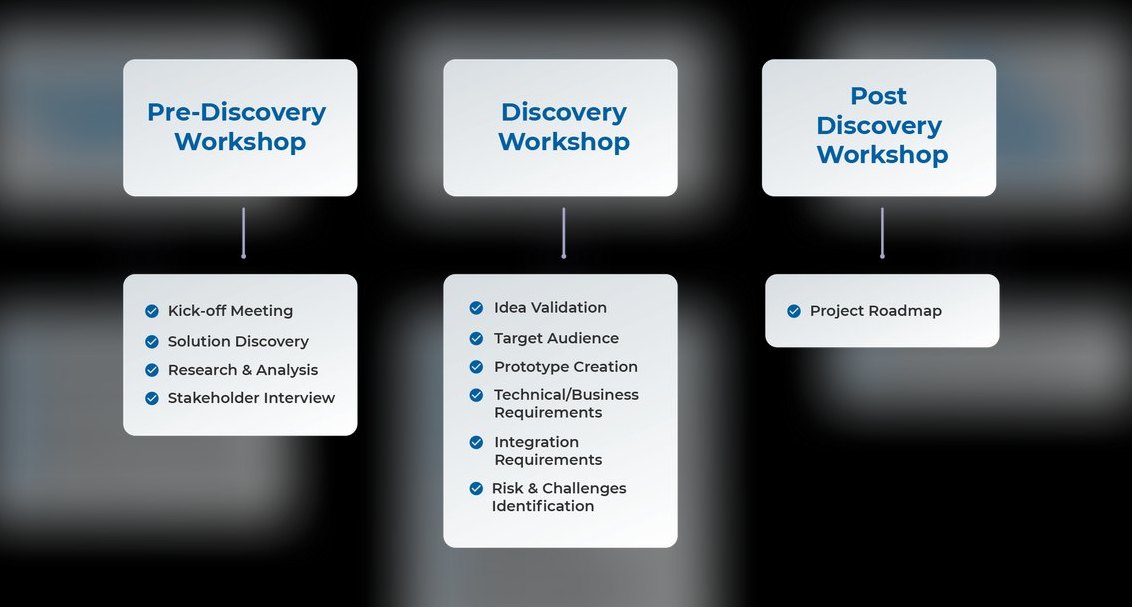 pulse-sales-trainingsReady-to-Run Sales Discovery Workshop Template
 pulse-sales-trainingsTop 10 sales manager workshop agendas for 2027
 pulse-sales-trainingsThe Mutual Action Plan Build Session (60-Min Training)
 pulse-sales-trainingsAccount Planning for Enterprise Deals: Template for a Collaborative Team Exercise
 pulse-sales-trainingsTop 10 Command of the Message training exercises for sales managers in 2027
 pulse-sales-trainingsTop 10 ready-to-run sales training templates for closing complex deals in 2027
 pulse-sales-trainingsTop 10 closing role-play scenarios for sales teams in 2027