
Post-Call Autopsy: A Structured Template for Team Analysis of Recorded Sales Calls
 Curated byKory White · Fractional CRO · Maryland
 PULSEKNOWLEDGE LIBRARY
Quality
Certified

A post-call autopsy is a structured template for team analysis of recorded sales calls: pull deal context first, then dissect three timestamped segments — opening/discovery, objection handling, and next-step commitment — scoring each against fixed criteria. It converts vague "what went well" debriefs into pattern data, then assigns one drilled behavior per rep with a review date.
The Tuesday call that everybody remembers differently
A rep loses a $60K opportunity in a competitive evaluation. In the pipeline review, three people offer three explanations: the manager says pricing came in too high, the rep says the champion went dark, and the sales engineer says the demo ran long. All three are guessing, because nobody has listened to the recording since it happened. The call is sitting in the recording platform with a transcript, a talk-ratio number, and timestamps on every topic switch, and none of it has been opened.
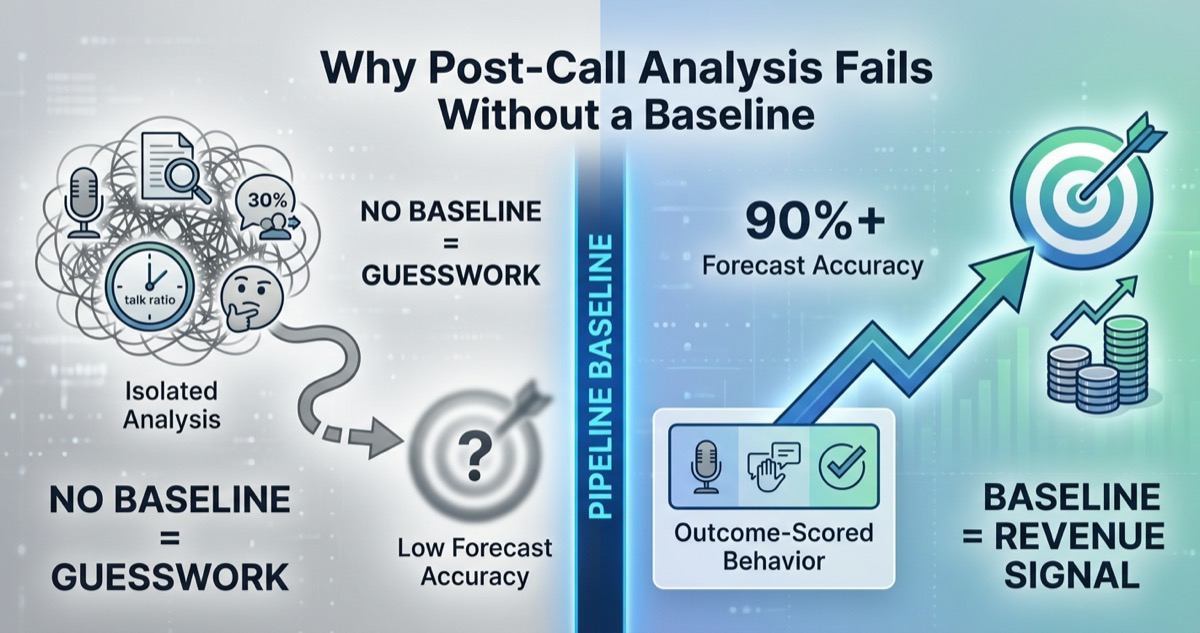
That gap is what the autopsy format exists to close. The premise is narrow and unglamorous: a recorded sales call is evidence, and evidence is only useful when a group examines it against a fixed rubric rather than from memory. Memory-based debriefs converge on whoever speaks with the most confidence. A structured template converges on what the recording actually contains.
Run it as a standing 60-to-75-minute block with a fixed agenda: ten minutes loading deal context, fifteen on the opening and discovery segment, fifteen on the objection or competitive moment, ten on the close, ten mapping the call visually, and ten building the coaching plan. Same clock every week. The predictability matters more than the exact minute allocations — reps stop dreading a meeting whose shape they already know, and the facilitator stops improvising.
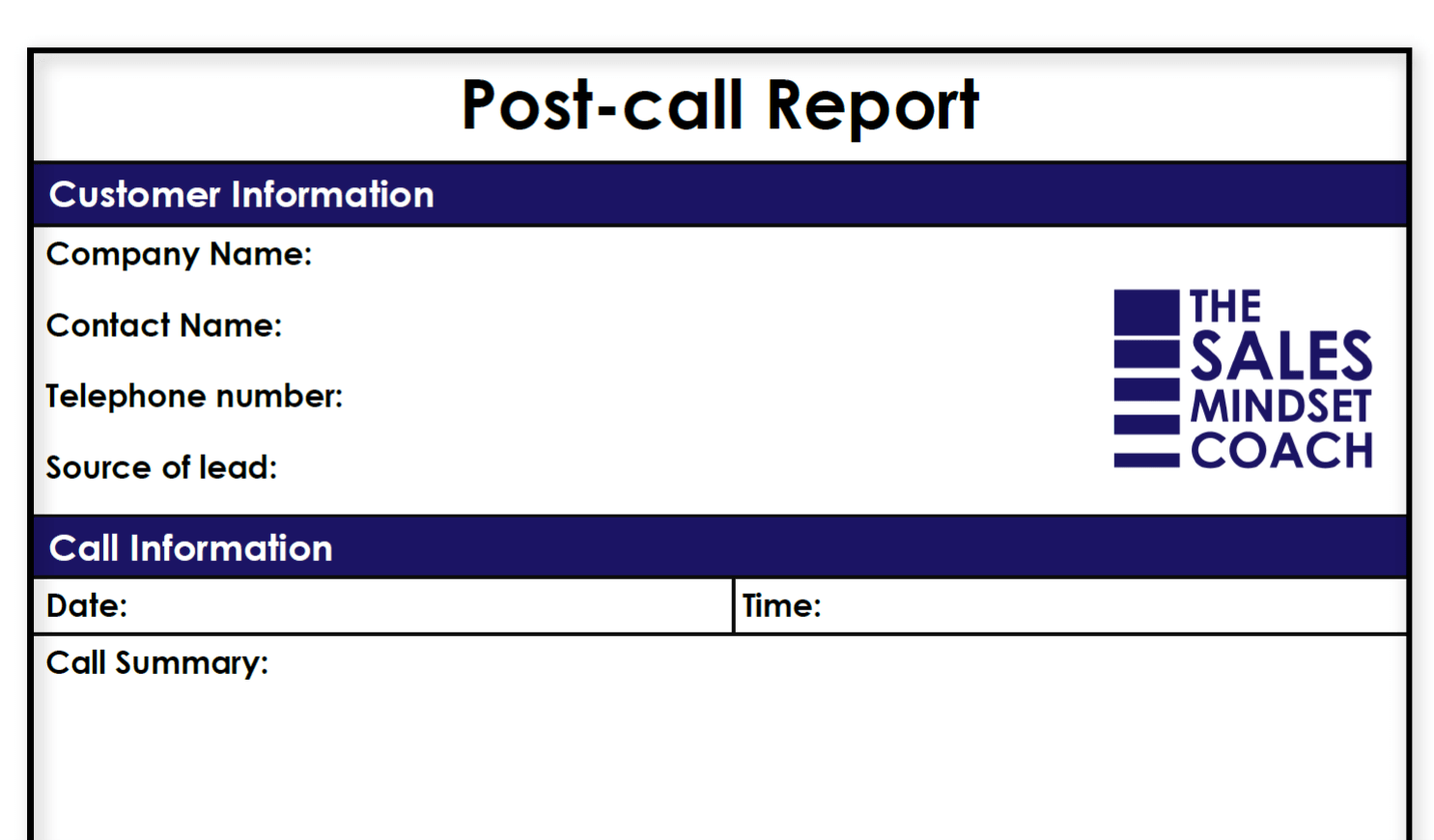
Context loading comes first for a reason that is easy to underestimate. Before anyone presses play, the group pulls up the opportunity record and reads out deal size, stage, the qualification fields your team actually uses (pain, champion, decision criteria, whatever your framework names), and the rep's own stated objective for the call from their notes. Without that frame, the group misreads tone constantly. A call that sounds aggressive is often exactly right when the buyer asked for a direct pitch; a call that sounds warm and collaborative is often a rep avoiding a hard question they were supposed to ask. Context is the lens, and skipping it is the single most common reason autopsies degrade into taste-based critique.
The same discipline transfers cleanly to adjacent workflows. Customer success teams autopsy renewal and escalation calls the same way. Support organizations have run call calibration sessions on this shape for decades — the QA scoring calibration meeting is the direct ancestor of the sales version, and it exists precisely because independent reviewers score the same interaction differently until they practice together against a rubric. Partner and channel teams use it on joint calls where two companies' reps share a buyer and nobody owns the next step.
How the mechanism actually works
The template works because it forces three separations that a normal debrief collapses.
Observation before judgment. Each participant writes their answers privately before the group discusses. The facilitator asks specific, countable questions — did the rep state an agenda inside the first sixty seconds, how many open-ended questions preceded the first feature mention, what exact words did the buyer use for the objection — and everyone writes independently for ninety seconds. Only then does the group compare. This ordering suppresses anchoring: without it, the first person to speak sets the interpretation and the rest of the room converges on it. Support QA calibration figured this out long before revenue teams did.
Segment isolation. You do not review a forty-minute call end to end. You review three windows. The opening window is the first five to seven minutes, where the agenda gets set or lost. The objection window is wherever the buyer pushed back, mentioned a competitor, or stalled — usually one exchange lasting under two minutes. The closing window is the last three minutes. Everything between those windows is context, not evidence. A team that tries to review the whole recording spends ninety minutes and reaches no conclusion.
Pattern over incident. The output is never "this call was good" or "this call was bad." The output is a node-level scorecard that accumulates across weeks. One missed agenda-set is noise. Four consecutive missed agenda-sets is a coachable behavior with a drill attached.
Map the call you just heard onto that flow. Check every node the rep cleared, mark an X on every node they missed, and count the X's. Three or more X's on a single call means the call gets fully re-scripted as a team exercise rather than discussed. Under three, you pick the single highest-leverage miss and drill only that. Trying to fix five behaviors at once fixes none of them.
The two nodes that fail most often in practice are the commitment node and the objection-isolation node. Reps end on soft commits because asking directly for a dated next step feels pushy in the moment, and they miss objections because they are talking when the buyer raises one. Both are visible in a recording within seconds, and both are invisible in a memory-based debrief.
Real numbers, ranges, and benchmarks
Set the operational parameters explicitly so the ritual survives past week three.
Cadence. Weekly beats monthly by a wide margin. Monthly reviews go stale — the deal has moved, the rep has forgotten their reasoning, and the coaching lands as history rather than correction. Weekly, with a rotating schedule, means each rep on an eight-person team gets their own call reviewed roughly every two months while attending every session. Smaller teams rotate faster. If you cannot protect a weekly slot, biweekly with a strict rotation is the floor.
Volume per session. One call. Occasionally two short ones. The instinct to cover four calls per session is the fastest way to kill the format, because you end up skimming and skimming produces the same vague commentary the template was built to eliminate.
Segment lengths. Ten minutes of context, three fifteen/fifteen/ten-minute segment blocks, ten minutes of visual mapping, ten minutes of coaching plan. Total 70 minutes. If your team only has 45, cut the visual mapping and shorten context to five minutes — never cut the coaching matrix, because a session without an assigned drill is entertainment.
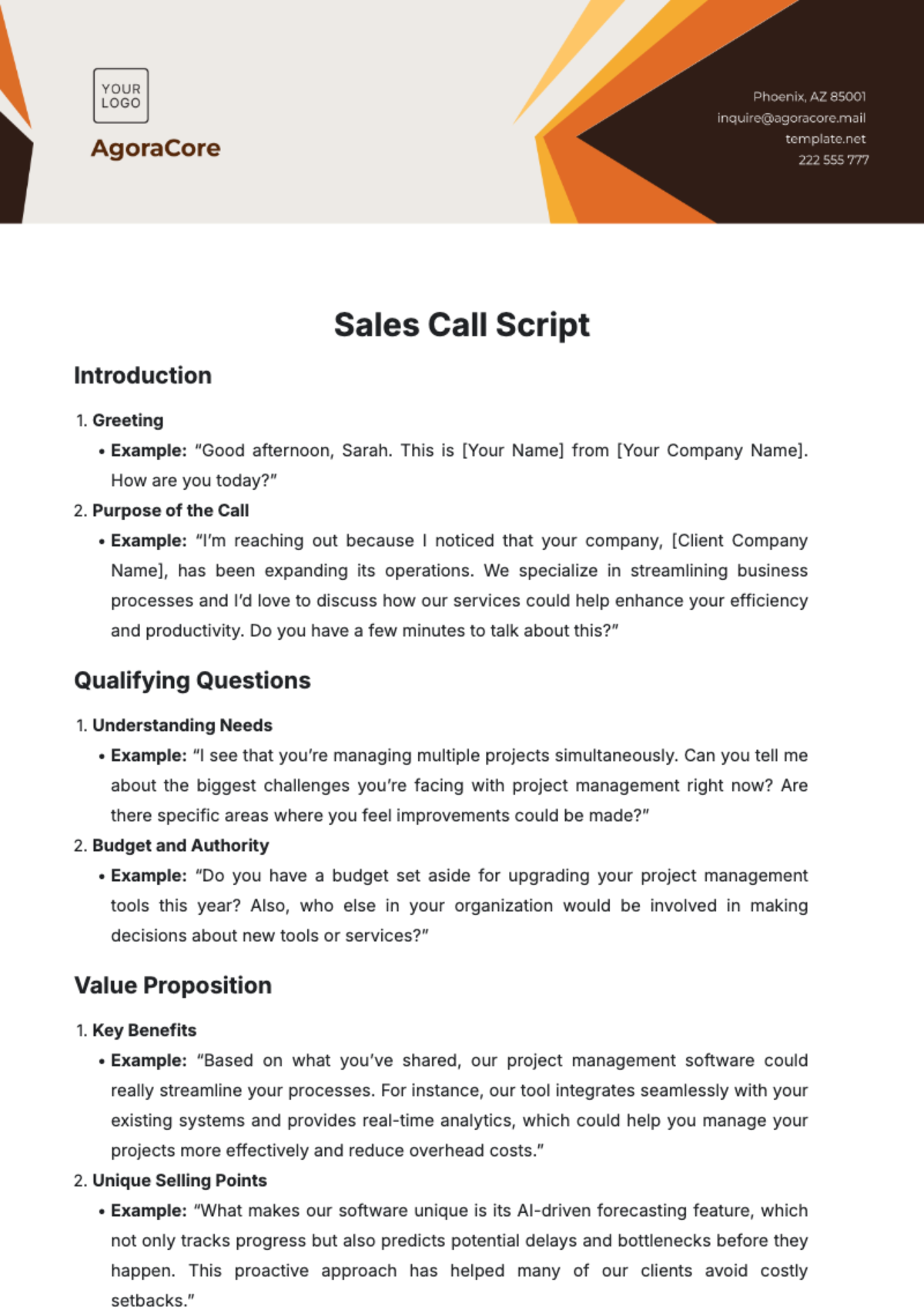
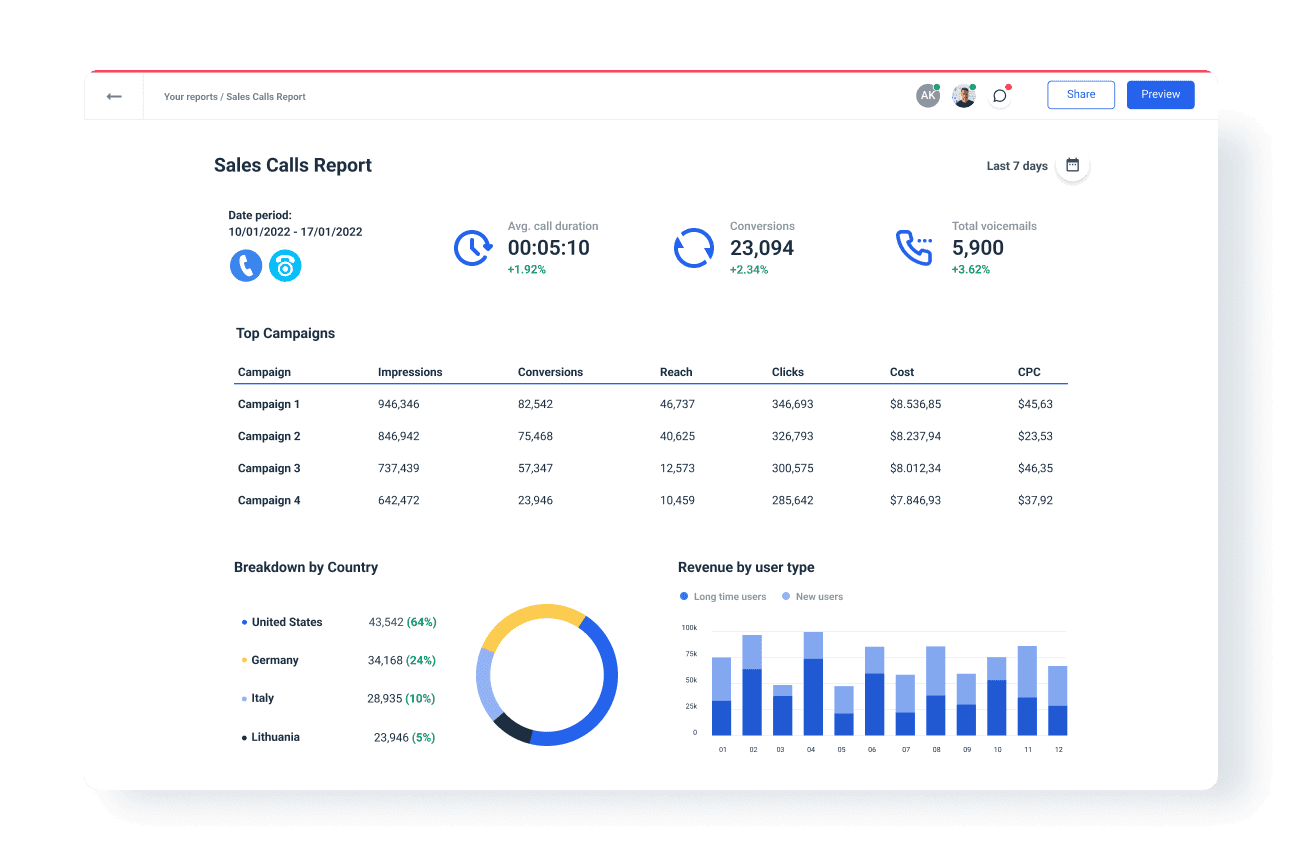
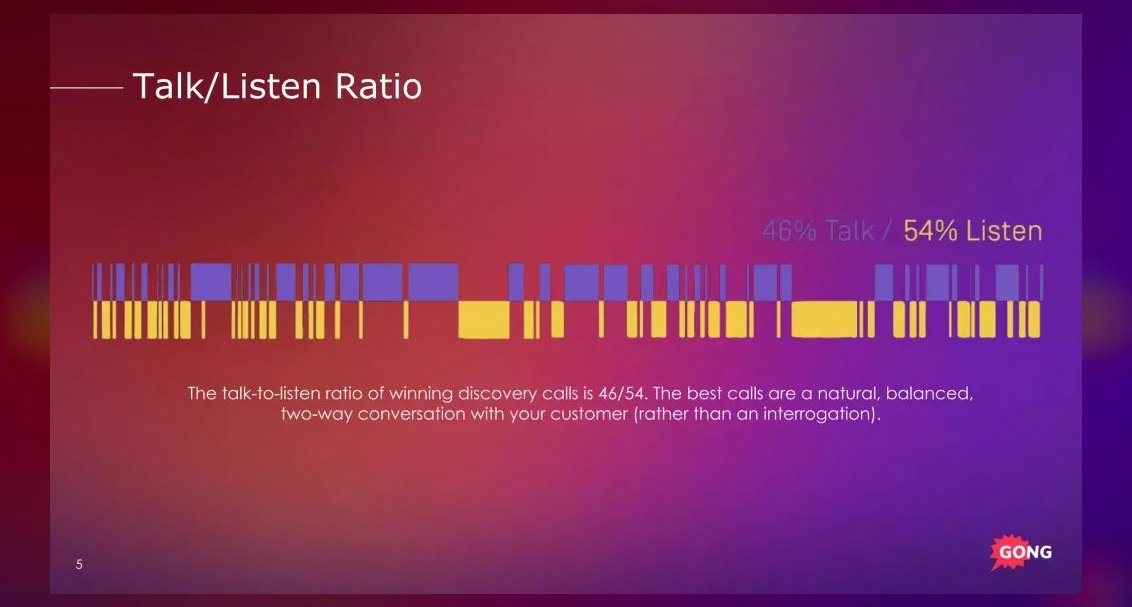
Ratios worth counting. Open-ended to closed-ended questions in the discovery window is the single most useful number a group can generate live. If closed-ended questions outnumber open-ended by more than roughly one to three, the rep is interrogating rather than diagnosing. Time-to-first-feature-mention is the second: a feature named in the first three minutes almost always means discovery got skipped. Talk ratio is available automatically in every major recording platform and is worth glancing at, but treat it as a symptom rather than a diagnosis — a high rep talk ratio on a technical demo call means something entirely different than the same number on a discovery call.
Scoring scale. Use a five-point scale per node on the flow diagram, tracked in a shared sheet, one row per rep per week. Five nodes, five points, twenty-five possible. Do not build a thirty-criterion scorecard; nobody fills it in past the second week, and the granularity is fake precision anyway.
Ramp expectations. The first session is genuinely awkward and produces thin output — plan for it rather than concluding the format failed. By the third or fourth session, reps begin self-correcting on live calls because they know the recording may get reviewed, which is a large part of the value and is not measurable in the meeting itself. Give the ritual a full quarter before judging it, and measure it against next-step-booking rate and stalled-deal counts rather than against close rate, which moves too slowly and has too many confounds.
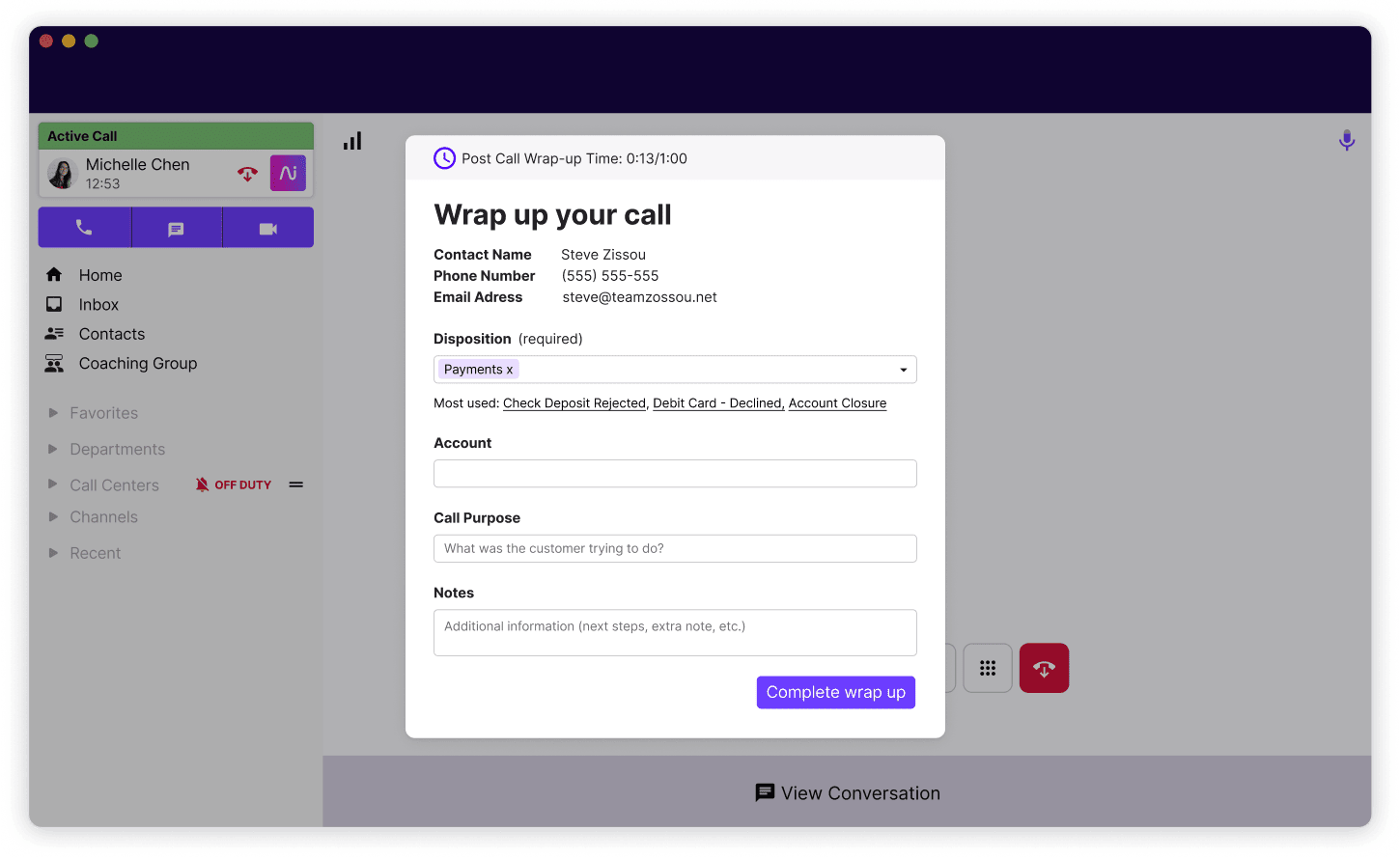
Tooling floor. Any conversation-intelligence platform that records, transcribes, and timestamps is sufficient — the major sales recording tools all do this, and so do the meeting platforms themselves. Add your CRM for deal context, a shared whiteboard or a plain document for the flow mapping, and a spreadsheet for scores. Nothing here requires new procurement. Teams that stall waiting for the perfect tooling stack are usually avoiding the discomfort of the first session.
Trade-offs and alternatives
The structured group autopsy is not the only way to coach from recordings, and it is not always the right one.
Group autopsy versus one-on-one review. Group sessions produce shared vocabulary and let junior reps learn from calls they would never sit on. They also risk public embarrassment and, in teams with unresolved interpersonal friction, can calcify into a performance rather than an analysis. One-on-one review is safer, faster to schedule, and better for a rep with a specific acute problem — but it produces no shared standard, so five managers coach five different ways. Most teams need both: group weekly for the standard, one-on-one for the individual.
Live call coaching versus recorded autopsy. Listening live with whisper-coaching corrects in the moment and is enormously effective for new reps in their first weeks. It also scales badly, biases toward whichever calls the manager happened to attend, and produces no reviewable artifact. Recorded autopsy scales, is auditable, and lets you compare across quarters — at the cost of never fixing the call in question.
Automated scoring versus human panel. Conversation-intelligence platforms will flag objections, count questions, and score talk ratio automatically, and those signals are genuinely useful for choosing which call to autopsy. They do not replace the panel, because the interesting question is almost never "did the rep mention pricing" but "was mentioning pricing at that moment the right call given what the buyer had just said." Use automation for selection and counting; use humans for judgment.
Reviewing wins versus reviewing losses. Loss autopsies feel more urgent and surface obvious gaps. Win autopsies are underused and often more valuable, because they reveal the behaviors your team should replicate rather than a list of things to stop doing. A reasonable mix is roughly two losses to one win. Reviewing only losses trains the room to look for faults, which is exactly the culture failure that kills the format.

There is also a scope question worth settling early. The same template adapts to demo calls by adding a fourth segment on whether the rep mapped each demonstrated feature back to a stated buyer pain, and to renewal calls by replacing the objection segment with a risk-signal segment. What does not adapt well is applying it to cold outbound calls, where the relevant unit is a thirty-second exchange and a full autopsy is wildly disproportionate — those need volume-based review of ten calls at a time, not depth-based review of one.
Common pitfalls and how to avoid them
It becomes a critique culture. This is the failure mode that ends the ritual, usually around week five. The signal is a rep going quiet in their own review. Counter it structurally rather than with reassurance: open the first several sessions with calls from top performers so the group sees that strong calls also have visible gaps, state explicitly that the group analyzes the call and not the rep, and have the facilitator go first when a rep's own call is being reviewed. Some teams have the rep self-assess before the group speaks, which reframes them as a co-investigator rather than a defendant.
Nobody assigns a drill. A session that ends with insight and no assignment produces nothing. Every autopsy ends with a filled coaching matrix per rep: the skill gap, the specific observable behavior, the drill, the measurement, and the review date. "Objection isolation" as a gap becomes "did not ask what would need to change for us to be considered" as a behavior, becomes "five paired role-plays this week" as a drill, becomes "isolation attempt within thirty seconds of the objection on the next three recorded calls" as a measurement, with next week's session as the review date. That specificity is the whole point.

Too many action items. Five improvements per rep means zero. One per rep per cycle, re-tested, then the next.
Context skipped to save time. Covered above, and worth repeating because it is the first thing cut when the meeting runs long. Cut the visual mapping instead.
The facilitator talks the most. If the person running the session is generating the observations, the room is watching a lecture. Private writing before discussion is the mechanical fix; the facilitator's job is to ask the countable question, enforce the ninety seconds of silence, and then shut up.
Cherry-picked calls. Reviewing only the disasters or only the wins both distort. Rotate reps on a schedule so call selection is not a judgment about who is struggling, and mix platform-flagged calls with manager picks.
No feedback loop to the rest of the org. The patterns surfacing weekly in these sessions are the highest-quality voice-of-customer data a company generates, and most of it dies in the meeting. If three consecutive autopsies surface the same competitive objection with no good response, that belongs with product marketing as a battlecard request, not just as a rep drill. If buyers keep raising an implementation concern, that belongs with the onboarding team. Route it — a two-line summary posted to a shared channel after each session is enough.
Treating one call as a verdict. Any single recorded call is a sample of one, affected by the buyer's mood, the time of day, and whether the rep had three back-to-back meetings before it. The scorecard exists to accumulate; read the trend across four sessions, not the score from one.
Related questions
How long should a post-call autopsy session run?
Sixty to seventy-five minutes for one call, split across context loading, three segment reviews, visual mapping, and coaching assignment. Forty-five minutes works if you cut visual mapping. Anything under thirty becomes a summary rather than an analysis.
Should the rep whose call is being reviewed attend?
Yes, and they should self-assess before the group speaks. Reviewing someone's call without them present produces a critique they cannot respond to and destroys trust the moment they find out.
How do we pick which call to autopsy?
Rotate reps on a fixed schedule so selection is not a signal about performance, then within that rep's calls pick one flagged by your recording platform or one tied to a strategically important deal. Mix roughly two losses to one win.
Can this template work for customer success or support calls?
Directly. Support QA calibration sessions predate the sales version and use the same shape. For renewal calls, swap the objection segment for a risk-signal segment; the rest transfers unchanged.
What if the buyer dominated the entire conversation?
That is usually positive, but check whether the rep ever regained control to steer toward next steps. A rep who never resets the agenda ends up with a friendly call and no commitment — that is the coaching point.
FAQ
How often should we run a post-call autopsy?
Weekly is the target. Monthly sessions review stale context, and reps have forgotten why they made the choices they made. Use a rotating schedule so each rep's own call comes up every three to four sessions while everyone attends every week. Biweekly is an acceptable floor if the calendar genuinely will not hold a weekly slot.
What if the rep feels attacked during the session?
Change the structure, not just the language. Start the first several sessions with top-performer calls so the room sees that strong calls have gaps too. Have the rep self-assess before the group speaks. State plainly that the group is analyzing the call, not the person, and have the facilitator name their own misses first. If a rep goes silent during their own review, the format is failing and needs a reset.
Can we use this template for discovery calls only?
Yes, with adapted segments. For pure discovery, weight the opening and question-quality segment more heavily and shorten the objection segment. For demos, add a fourth segment on whether each demonstrated feature was mapped to a stated buyer pain. For renewals, replace objections with risk signals.
What tooling do we actually need?
A recording platform with transcription and timestamps, your CRM for deal context, a shared whiteboard or document for the flow mapping, and a spreadsheet for node scores. Every major conversation-intelligence tool and most meeting platforms cover the recording layer. No new procurement is required to start.
How do we keep the scorecard from becoming bureaucracy?
Cap it at five nodes on a five-point scale. Thirty-criterion scorecards get filled in honestly for two weeks and then get rubber-stamped, which is worse than no scorecard because it produces fake data. Five nodes, one row per rep per week, reviewed as a four-week trend.
How long before we see results?
Expect the first session to be awkward and thin. By the third or fourth, reps begin self-correcting on live calls in anticipation of review. Measure next-step booking rate and stalled-deal counts rather than close rate, which moves too slowly to attribute. Give it a full quarter before judging the format.
Sources
- Gong Labs — sales conversation research
- HubSpot — sales call review and coaching resources
- Salesforce — sales coaching guidance
- Harvard Business Review — sales management and coaching
- Gartner — sales practice insights
- SiriusDecisions / Forrester — B2B revenue research
- Winning by Design — revenue architecture blog
- Sales Enablement Collective — enablement practice library
Related on PULSE
- [The Discovery Call Autopsy — 60-Min Training](/knowledge/st0059)
- [Closing Techniques Deep Dive: Structured Agenda for a Sales Team Huddle](/knowledge/st0779)
- [The Strategic Pause: A Template for Teaching Consultative Silence in Sales Calls](/knowledge/st0664)
- [Facilitator's Blueprint: A Structured 90-Minute Sales Discovery Session Template](/knowledge/st0657)
- [How do you run a sales training on discovery calls in 2027?](/knowledge/st0483)
- [60-Min Sales Training: Body Language + Energy on Sales Calls](/knowledge/st0480)
This page will be disappearing soon. Save it to your device for $1 — or read it free while it is here.
@Kory-White- · if Venmo asks, the last 4 of my number are 2012
 pulse-sales-trainingsTop 10 new hire facilitator guides for 2027
 pulse-sales-trainingsTop 10 account planning role-play scenarios for sales teams in 2027
 pulse-sales-trainingsCompetitive Battle Card Review: A Gamified Team Quiz Template
 pulse-sales-trainingsMastering the Discovery Call: A 30-Minute Ready-to-Run Sales Meeting Template
 pulse-sales-trainingsReady-to-Run Sales Discovery Workshop Template
 pulse-sales-trainingsThe Close Loop: Template for Practicing Assumptive and Alternative Choice Closes
 pulse-sales-trainingsTop 10 team-meeting templates for quarterly sales goal alignment in 2027
 pulse-sales-trainingsPipeline Review to Revenue: Template for a Data-Driven Sales Sprint Session
 pulse-sales-trainingsTop 10 NEAT Selling training exercises for sales managers in 2027
 pulse-sales-trainingsSelling with Stories: Narrative Structure Template for a 45-Minute Sales Workshop