
Empathy Mapping Exercise: Walking in the Buyer's Shoes Template
 Curated byKory White · Fractional CRO · Maryland
 PULSEKNOWLEDGE LIBRARY
Quality
Certified

An empathy mapping exercise walks a sales team through a real buyer's See, Hear, Think & Feel, Say & Do, Pains, and Gains in a structured 90-minute session. Each rep builds one map for one live deal, overlays qualification criteria onto it, then rewrites their next outreach message directly from the map's contents.
Two ways to run the exercise: the one-off workshop versus the embedded deal ritual
Almost every team that adopts empathy mapping picks one of two implementation shapes, and the choice determines whether the artifact survives past the training day.
Option A — the one-off workshop. You block 90 minutes, gather the team in a room or on a call, hand out a blank Template, and everyone fills in a map for a deal they're currently working. The facilitator runs warm-up, framework teaching, live build, outreach rewrite, roleplay, and commitment. Everyone leaves with one completed map and a rewritten email. The workshop is self-contained: no CRM configuration, no manager review cadence, no ongoing maintenance. It costs roughly 90 minutes × headcount in seller time plus two to four hours of facilitator prep. For a team of eight, that's about 12 person-hours of loaded cost, once.
Option B — the embedded deal ritual. You run the same 90-minute session, but you also attach the map to the opportunity record and require it to be updated at defined stage gates. The map becomes a required field in deal review. Managers open it during pipeline inspection. Reps refresh it after every discovery call, demo, and pricing conversation. This costs the same 12 person-hours up front, plus roughly 10-20 minutes per deal per update cycle, plus a CRM admin change to add a field, plus manager time to actually read the maps.
The honest trade-off: Option A produces a memorable Exercise and near-zero behavior change three weeks later. Empathy mapping is a habit, not a lesson — a rep who builds one map and never builds another has essentially attended a nice offsite. Option B produces behavior change but only if managers genuinely inspect the maps. If the field exists and nobody reads it, you have built compliance theater and reps will fill it with three-word entries inside a month.

A third shape sometimes appears — the ad hoc map, drawn on a whiteboard before a big meeting with no template and no storage. This is fine as a pre-call ritual for a single strategic account and is worth nothing as a team practice, because nothing is comparable, nothing is reviewable, and the quality varies wildly by rep. Treat it as a personal habit, not a program.
There is also a real decision inside Option B about where the map lives. A linked document (a shared doc, a wiki page) is fast to set up and flexible in format, but it is invisible to reporting — you cannot query how many opportunities have a populated Think & Feel zone. Structured CRM fields (six long-text fields, one per zone) are queryable and reportable, but they are ugly to fill in and reps hate them. The middle path most teams land on: a URL field on the opportunity pointing to the map document, plus one checkbox or picklist for "map last refreshed" stage. That gives you a coverage metric without forcing zone-by-zone data entry.
How to decide which version fits your team
Work through the decision in order, because the later questions only matter if the earlier ones resolve in a particular direction.
First: does your team already run structured deal reviews? If managers already sit with reps and walk an opportunity end to end on a cadence, the embedded ritual has a host to attach to and will likely stick. If deal review is really just forecast-number review, the map has nowhere to live and Option A is the honest choice — run it as a skills workshop and measure it as a skills workshop.

Second: what's your average deal cycle and ACV? Empathy maps pay for themselves on long, multi-stakeholder, high-consideration deals. If your cycle is 60+ days, involves three or more people on the buying side, and the loss reason column is full of "no decision" and "status quo," the map earns its maintenance cost. If your cycle is two weeks, single-threaded, and transactional, the embedded ritual will feel like overhead — run the workshop for perspective-taking value and skip the CRM plumbing.
Third: do you have real discovery data to fill the map with? The single biggest failure of this Exercise is projection — the rep writes what they imagine the Buyer thinks rather than what the Buyer actually said. If your team's call notes are two bullets long, the maps will be fiction. Fix note quality first, or build the workshop around recorded call transcripts so people are pulling verbatim language rather than inventing it.
Fourth: who will read the maps? Name the person. If the answer is "the manager, during Thursday pipeline review, on the top five deals," you have a real ritual. If the answer is vague, you have Option A wearing Option B's costume.

A useful tiebreaker when the answers are mixed: run Option A for the whole team, then pilot Option B with two or three reps on their largest deals for one quarter. You learn whether the maps actually change call behavior before you ask a CRM admin to touch the opportunity object.
The 90-minute agenda, block by block
The session structure below is the working shape of the Exercise. Timings are the variable most facilitators get wrong — the framework explanation always wants to swell and the roleplay always gets squeezed. Protect the roleplay.
Warm-up — buyer's reality check (10 minutes). Ask everyone to recall a large personal purchase and write one word describing how they felt during it. Go around the room and collect the words on a whiteboard. The collected words are almost never "excited" — they cluster around anxious, skeptical, overwhelmed, cautious. Debrief that observation directly: buying is a risk-mitigation activity, not a joyride, and the seller's job is to remove risk rather than add to it. This block exists to make the rest of the session emotionally credible. Cutting it saves ten minutes and costs you the frame.
Framework teaching (15 minutes). Explain the six zones and what belongs in each. See is environmental and observable — dashboards, reports, competitor advertising, internal announcements. Hear is what other people tell them — the CFO's directive, a peer's recommendation, a competitor's pitch. Think & Feel is the private layer, the things they will never say out loud. Say & Do is observable behavior in meetings and the actions they take between them. Pains are the costs of the current state. Gains are what success looks like to them personally and organizationally. Emphasize that Think & Feel is inferred, not reported, and that the inference is the skill being trained.

Live build (20 minutes). Each rep picks one real deal and builds a map for one named person on the buying side — usually the economic buyer, occasionally the champion. Run it as timed micro-sprints rather than open work time: three minutes on See, three on Hear, five on Think & Feel, three on Say & Do, three on Pains, three on Gains. The timer matters. Left unstructured, people spend eighteen minutes on See because it is the easy zone and never reach the hard one.
Outreach rewrite (20 minutes). Reps convert their map into a four-line message. Line one references something concrete from See. Line two teaches an insight drawn from Think & Feel. Line three names a specific outcome from Gains. Line four is a low-commitment ask that reduces a Pain. Then everyone reads their message aloud. Reading aloud is the quality gate — pitch language is obvious in the ear and invisible on the screen.
Roleplay (15 minutes). Pairs, five minutes each direction, then debrief. The buyer plays the person on their own map. The seller may only ask questions beginning with "what" or "how" and may not pitch. The goal is one new insight that was not already on the map.
Commitment (10 minutes). Three written commitments per rep: one deal to complete a map for by a named date, one message to rewrite, one call to schedule where updating the map is the only objective. Commitments go to the facilitator, not into a drawer.

Filling each zone without inventing the buyer
The zones are easy to describe and hard to fill honestly. Here is what "good" looks like in each, with the failure mode next to it.
See. Good entries are specific and external: "quarterly board deck showing net revenue retention below target," "three competitor logos on the trade show floor next to ours," "a hiring freeze email that went out last month." Bad entries are generic industry commentary. The test: could you point to where you learned this? If not, mark it as an assumption.
Hear. Good entries are near-verbatim quotes from real conversations. "My CFO said any new spend this year needs a payback story under twelve months" is worth more than "they're under budget pressure." Pull these from call recordings if you have them. Two real quotes beat six paraphrases.
Think & Feel. This is the zone the whole Exercise exists for, and the hardest to do honestly. You are inferring private states from public behavior. The disciplined method: write the observed behavior, then write the inference, then write the test. Observed — "pushed the decision two weeks after asking about implementation staffing." Inference — "worried they don't have the internal capacity to run this and will be blamed if it stalls." Test — "ask directly: what would have to be true internally for this to go well in the first ninety days?" One fear and one aspiration is the right target volume. More than that and you're guessing.

Say & Do. Observable statements and actions. What they say in the meeting versus what they actually do between meetings is often the most informative gap in the whole map. If they say the timeline is urgent and then take eleven days to schedule the next call, that gap belongs here and it probably explains something in Think & Feel.
Pains. Quantify or don't bother. "Manual reconciliation eats about a day and a half per week across four people" is actionable. "Their process is inefficient" is not. If you cannot quantify the pain, that is itself a finding: you have not done enough discovery to build a business case, and the next call has a clear objective.
Gains. The metric they personally need to move, with a number and a timeframe if you have one. Separate the organizational gain from the personal one — those are frequently different, and the personal one drives urgency.
A practical marking convention that keeps teams honest: write confirmed facts in plain text and untested assumptions in italics or brackets. At a glance you can see how much of the map is real. A map that is 80% italics is a discovery plan, not a buyer profile, and should be treated as such.

Adapting the template per persona and per deal stage
The six zones stay fixed; the emphasis moves. Before starting any map, write the person's job title at the top and decide which two zones carry the weight for that role. This single step is what separates genuine perspective-taking from fill-in-the-blank compliance.
Economic buyer. Weight goes to Think & Feel and Gains. This person's private calculation is about risk to their own credibility and whether the outcome will be visible in a metric they're accountable for. They rarely articulate career risk out loud, so the inference discipline matters most here. Their Gains should be expressed as a number on a report someone above them reads.
Technical or security evaluator. Weight goes to Pains and Say & Do. Their pain is concrete and operational — integration surface, data handling, maintenance burden, the thing that will page them at 2am. Their Say & Do zone often contains the real gate: what documents they request and in what order tells you exactly where you are in their process. They will tell you their objections plainly, which makes Think & Feel the least valuable zone for this persona.
Champion or end user. Weight goes to Hear and Think & Feel, but pointed inward at their organization. Their central question is whether advocating for you costs or earns them internal capital. What they hear from their peers and their own manager determines how hard they'll push. Map the internal opposition explicitly — who else is in the room when your name comes up, and what does that person want instead.

Procurement. Weight goes to Say & Do and Pains. Their process is largely public and rule-bound. Map the sequence, the required artifacts, and the timeline rather than the emotional layer.
Stage also shifts the map. Early, the map is mostly hypothesis and its job is to generate discovery questions. Mid-cycle, after two or three real conversations, it should be mostly confirmed and its job is to shape the demo and the business case. Late, in negotiation, the Pains zone shifts meaning — it stops being "the cost of their current state" and becomes "the cost of this deal not closing on their timeline," which is a different and more useful thing.
For expansion and renewal deals, the whole map inverts productively. Pains stop being "a problem to fix" and become "an opportunity being missed" or "value not yet realized." Gains become the next-level outcome rather than the first one. Existing-customer maps are also easier to build honestly because you have usage data and a relationship history to draw on instead of inference.

For cold outreach, you can build a speculative map from industry research and public signals, but every zone is an assumption and should be marked as one. The map's value in that context is that it forces you to write down what you're assuming, which makes the first call's job obvious: confirm or kill three specific hypotheses.
Making it stick: cadence, storage, and the metrics that matter
The workshop is the easy part. Everything below determines whether the Exercise produces anything durable.
Storage. Pick one location and make it non-negotiable. The common pattern is a document per opportunity, linked from a URL field on the opportunity record, with a naming convention that includes the account and the buyer's name. Add one picklist field capturing when the map was last refreshed relative to deal stage. That gives you a coverage report without forcing structured entry of six long-text zones. Avoid letting maps live in personal notes apps — the point of an embedded ritual is that someone other than the rep can read it.
Refresh cadence. Tie updates to events, not to the calendar. A map should be touched after every discovery call, after the demo, after any pricing conversation, and after any interaction with a stakeholder who wasn't previously on the map. Calendar-based cadences ("update your maps every Friday") produce batch-updated fiction; event-based ones produce notes written while the conversation is fresh. A realistic update takes 10-15 minutes when done immediately and 30 when done from memory a week later.

Manager inspection. Reading the map should be a step in deal review, not a compliance check. Useful questions for a manager to ask against a map: which of these entries came from something the buyer actually said, and which are inferred? What's the single largest assumption here, and what call is booked to test it? If Think & Feel is right, what should our next move be, and does the current plan reflect that? A manager who asks these three questions consistently will get real maps. One who asks "is your map updated?" will get updated fiction.
Metrics. Do not try to measure empathy. Measure the observable proxies. Map coverage on deals above a threshold value is the simplest — what percentage of your qualifying opportunities have a populated map. Assumption ratio, if you use the italics convention, tells you how much of the average map is tested. More usefully, watch whether stage-two-to-stage-three conversion and "no decision" loss rates move over two quarters for the reps running the ritual versus those who aren't. Those are the outcomes empathy mapping is supposed to influence, and they're slow — expect two quarters minimum before the signal separates from noise, and don't declare victory on a single month.
Failure modes to watch for. Projection is the first: reps filling the map with their own assumptions rather than gathered evidence. The counter is the confirmed-versus-assumed marking convention plus a manager who asks for provenance. The second is treating the map as a one-and-done artifact — a champion's stated pain in week one routinely differs from the decision criteria that actually apply in week four, and a stale map is worse than none because it's confidently wrong. The third, and the one that kills programs, is the map becoming a field to fill rather than a thing to think with. The tell is entries getting shorter over time. If the average Think & Feel zone drops to one line across the team, the ritual has died and you should either restart it deliberately or shut it down honestly.
Reinforcement. One 90-minute session is enough to teach the shape and not enough to build the habit. The cheapest reinforcement that works: a 15-minute segment in an existing team meeting where one rep walks their map for a live deal and the team pressure-tests the Think & Feel zone. Rotate the presenter. Do it every two weeks for a quarter. That's roughly two additional hours of team time over three months, and it does more for adoption than a second full workshop.
Related questions
How long should the empathy mapping session run?
Ninety minutes is the working minimum for a full cycle including roleplay. Sixty minutes works if you drop the roleplay and extend the live build, but you lose the block where reps discover what their map got wrong.
Can a rep build a useful map before any discovery call?
Yes, as an explicit hypothesis. Mark every entry as an assumption, then use the map to generate the three questions your first call must answer. Its value is in exposing what you're guessing, not in being accurate.
How is this different from a buyer persona?
A persona is a static, composite profile of a fictional archetype used in marketing. An empathy map is a living document about one real, named individual in your pipeline, and it changes after every conversation with that person.
Should we map more than one stakeholder per deal?
On multi-stakeholder deals, map the economic buyer first, then the champion. Adding a third map is worth it only when a specific person is blocking or when their criteria differ sharply from the others'.
What if the buyer never reveals their real concerns?
You infer them from behavior — delays, questions asked, documents requested — and then test the inference with a direct question about perceived risk. The map records the inference and the test, not a confession.
FAQ
Do I need to fill in all six zones every time?
Fill all six on the first build so you can see the gaps. On updates, touch only what the latest interaction changed. The zone people skip is Think & Feel, and skipping it turns the exercise into a fact list rather than a perspective-taking one — that zone is the entire point.
Where should the completed map actually live?
In one place that someone other than the rep can open. The common pattern is a document per opportunity with a link stored on the CRM opportunity record. Structured per-zone CRM fields are queryable but unpleasant to fill, and reps degrade the entries fast. A linked doc plus a "last refreshed" field is the practical compromise.
How do I stop reps from just making things up?
Two mechanisms together. First, a marking convention that visually separates confirmed statements from assumptions, so a fabricated map is obvious at a glance. Second, a manager who asks "where did this come from?" during deal review. Neither works alone — the convention without inspection gets ignored, and inspection without the convention has nothing to inspect.
Can this be used for renewals and expansion, not just new business?
Yes, and it's often easier. You have usage data and relationship history instead of inference. The Pains zone shifts from "a problem they need solved" to "value they aren't capturing," and Gains shift from a first outcome to a next-level one. The rest of the template is unchanged.
How soon should we expect to see results?
Behavior changes within weeks if managers inspect the maps; pipeline metrics move over quarters if at all. Watch stage progression and no-decision loss rate over two quarters, comparing reps running the ritual against those who aren't. Anything faster than that is probably noise, and treating a good month as proof is how these programs get over-claimed and then abandoned.
Is a whiteboard version good enough?
For one strategic meeting, yes — a quick map before a big call beats no preparation. As a team practice it fails, because nothing is stored, nothing is comparable across reps, and nobody can review it. Use the whiteboard as a personal ritual and a stored template as the program.
Sources
- Empathy Mapping: The First Step in Design Thinking — Nielsen Norman Group
- Updated Empathy Map Canvas — Dave Gray, XPLANE
- The B2B Buying Journey — Gartner
- Design Kit: Empathy Methods — IDEO.org
- Jobs to Be Done: Know Your Customers' Jobs — Harvard Business Review
- Empathy Map Method — Interaction Design Foundation
- Customize Standard and Custom Fields — Salesforce Help
- Empathy Map Template — Miro
Related on PULSE
- [Account Planning for Enterprise Deals: Template for a Collaborative Team Exercise](/knowledge/st0791)
- [Active Listening Lab: Paraphrasing and Clarification Exercise Template](/knowledge/st0717)
- [Territory Mapping Workshop: Using Data to Prioritize Leads](/knowledge/st0732)
- [60-Min Sales Training: Mapping the Decision Process](/knowledge/st0447)
- [How do you run a sales training on selling to a skeptical buyer in 2027?](/knowledge/st496)
- [60-Min Sales Training: Customizing Demos Per Buyer](/knowledge/st0452)
This page will be disappearing soon. Save it to your device for $1 — or read it free while it is here.
@Kory-White- · if Venmo asks, the last 4 of my number are 2012
This page is gone.
This one is off the shelf now. $1 keeps it on your phone for good — the whole page, pictures and diagrams included.
 pulse-sales-trainingsTop 10 closing role-play scenarios for sales teams in 2027
 pulse-sales-trainingsTop 10 Target Account Selling sales training drills for AEs in 2027
 pulse-sales-trainingsValue Proposition Crafting Workshop Template
 pulse-sales-trainingsTop 10 RevOps workshop agendas for 2027
 pulse-sales-trainingsTop 10 multi-threading training drills for B2B sales reps in 2027
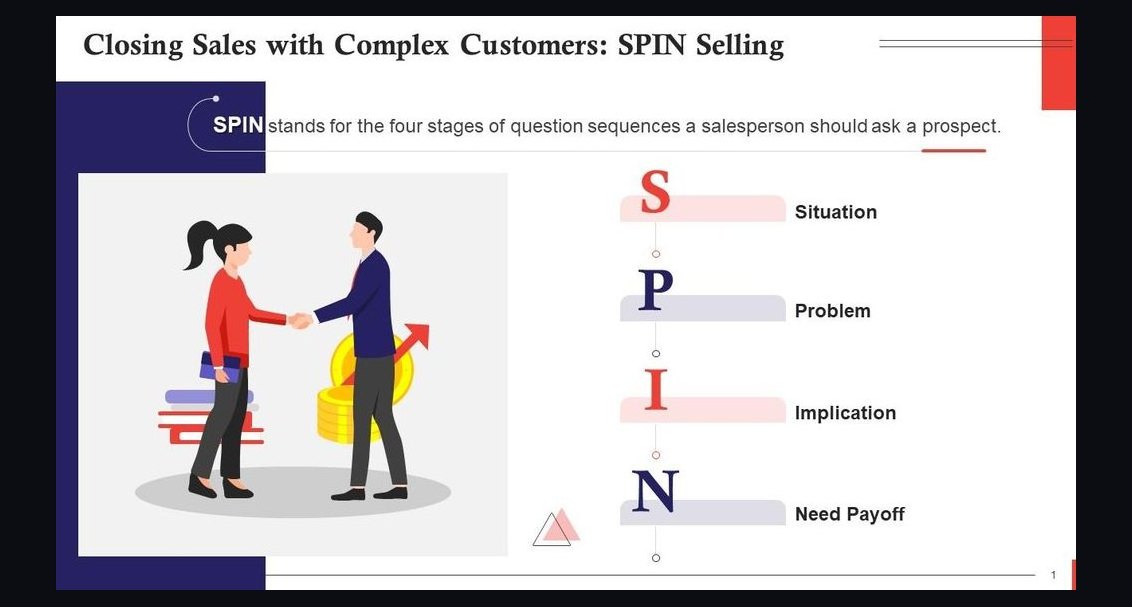 pulse-sales-trainingsTop 10 SPIN Selling training exercises for sales managers in 2027
 pulse-sales-trainingsProduct Knowledge Quick-Start Training Kit
 pulse-sales-trainingsCold Outreach Revamp: 20-Minute Micro-Training Template for Sales Reps
 pulse-sales-trainingsClosing Techniques Drill Template for Teams
 pulse-sales-trainingsObjection Handling Roleplay Session Blueprint