
Top 10 Value Proposition Templates for Team Brainstorming in 2027
 Curated byKory White · Fractional CRO · Maryland
 PULSEKNOWLEDGE LIBRARY
Quality
Certified

The 10 best value proposition templates for team brainstorming are ranked below on measured performance, build quality, price, and how each one actually holds up in daily use rather than how it reads on a spec sheet. Each pick lists what it costs, who it suits, and what it gives up against the one above it, so the list can be read straight down without doubling back.
1. Strategyzer Value Proposition Canvas

The Strategyzer Value Proposition Canvas ranks first because it is the most complete and widely adopted template for team brainstorming, forcing a structured fit between customer jobs, pains, and gains and your product's pain relievers and gain creators. It provides a clear two-lobed visual diagram that prevents feature-list drift, a common failure in unstructured sessions. The template is freely available as a downloadable PDF, making it cost-effective for any team.
This template is best for established products with a known customer segment, where the goal is depth of understanding rather than broad discovery. It trades away speed, requiring 45–90 minutes per segment, and demands one canvas per persona to avoid mush. Compared to the lean one-page canvas, it offers far more nuance but needs a facilitator who can enforce the ranking discipline. It is the raw material for a sales handoff, not the final messaging.
2. Clayton Christensen Jobs-to-be-Done

Jobs-to-be-Done ranks second because it is the strongest investigative lens for uncovering the real customer motivation and the non-obvious alternatives they currently use, such as a spreadsheet or a person. This narrative-driven template, from Clayton Christensen's *Competing Against Luck*, excels at surfacing the situational context and the 'hiring' moment, which is critical for early-stage product direction. It prevents teams from brainstorming their own assumptions by focusing on the customer's actual job.
This template is ideal for early-stage offerings where the problem is not fully understood and product direction is the goal. It trades away the visual fit-checking of the Value Proposition Canvas for a deeper, more investigative process, often requiring 45–60 minutes or more if proper switch interviews are conducted. It is less effective for immediate sales messaging, as it produces insights that need translation into a claim.
3. Blue Ocean Four Actions Framework

The Blue Ocean Four Actions Framework ranks third because it is the only template that mandates subtraction—eliminate, reduce, raise, and create—which is essential for building a defensible value proposition that avoids the 'we do everything' trap. This forced subtraction, from W. Chan Kim and Renée Mauborgne, is the sharpest differentiation tool for teams that already know their customer and need to define why they win.
This template is best for teams focused on positioning or pricing, especially when combined with a customer value map to quantify the benefit-cost gap. It trades away customer discovery, assuming you already know the segment and its pains. It is less useful for generating new product ideas from scratch but is a powerful audit tool for any value proposition.
4. Challenger Sale Reframe

The Challenger Sale Reframe ranks fourth because it is the most effective template for turning a value proposition into a teaching sequence that a sales rep can deliver, specifically designed for skeptical and informed buyers. This structure—warmer, reframe, rational drowning, your solution—from Brent Adamson and Matthew Dixon's *The Challenger Sale*, builds a claim as a narrative that challenges the customer's assumptions.
This template is for sales teams facing sophisticated buyers who believe they already understand their problem. It trades away customer discovery, assuming the value exists and needs a compelling delivery format. It requires 60–90 minutes plus significant prep time to find the insight, which cannot be brainstormed from an empty room. Compared to MEDDIC, it focuses on insight and reframing rather than metrics and qualification, making it better for complex solution selling where the buyer's perspective must be shifted.
5. MEDDIC Sales Framework
MEDDIC ranks fifth because it imposes a rigorous discipline on value propositions for enterprise sales, ensuring every claim has a number attached and maps to a named pain. While originally a deal-qualification framework, its metrics and identify-pain elements function as a value-prop discipline, preventing vague marketing language in committee-driven purchases. It forces the team to quantify the value and identify the economic buyer, which is essential for procurement.
This template is specifically for enterprise sales teams where procurement demands metrics and a clear champion. It trades away the creative insight of the Challenger Sale, focusing instead on verification and qualification. It is not suitable for brand teams or early-stage product discovery, as it generates spreadsheet columns rather than a mission statement.
6. McKinsey MECE Need Mapping
McKinsey MECE Need Mapping ranks sixth because it is the most effective completeness audit, ensuring that a team's list of customer needs is mutually exclusive and collectively exhaustive. This habit from McKinsey & Company is not a standalone brainstorming tool but a verification pass that catches blind spots in the output of other templates like the Value Proposition Canvas. It forces the team to ask whether they missed an entire category of needs, preventing a confident but incomplete value proposition.
This template is for teams that have already done deep discovery and need to validate coverage before moving to execution. It trades away depth for breadth, as it does not help you understand a single pain better but ensures you have not overlooked a category. It requires 60–120 minutes and benefits from a facilitator familiar with the discipline.
7. SRI International NABC

SRI International NABC ranks seventh because it is the most efficient template for rapid idea comparison, forcing a four-sentence pitch—need, approach, benefits, competition—that can be defended in ninety seconds. Developed by SRI International, this structure is perfect for innovation labs and teams needing to evaluate multiple concepts in a single sitting. It is free and can be run in 10–15 minutes per idea, making it ideal for hackathons or pre-seed standups.
This template is best for early-stage teams or innovation groups that need to quickly compare several ideas and decide which to pursue. It trades away the depth of a full canvas or JTBD investigation, as the brevity means it cannot uncover nuanced customer insights. It is less suitable for established products with complex value chains.
8. Simon Sinek Golden Circle

Simon Sinek's Golden Circle ranks eighth because it is the best template for brand and recruiting stories, focusing on the 'why' before the 'how' and 'what' to inspire action. This template, from Simon Sinek's *Start With Why*, is the weakest for a product brainstorm but earns its place when the output is a keynote, recruiting copy, or a mission statement.
This template is for brand teams or leadership creating internal narratives, not for sales or product development. It trades away all customer pain and gain analysis, making it useless for generating testable product claims. A sales team running this will produce a mission statement a prospect will not fund.
9. Customer Value Map

The Customer Value Map ranks ninth because it is the pricing team's essential tool, quantifying the benefit-cost gap against competitors to justify a price point. This template, from HBR's 'What Is Value in Business Markets,' lays out benefits minus costs for your product versus alternatives, making the value proposition defensible in a pricing conversation. It is free and a standard part of the pricing team's toolkit, providing the hard numbers needed for procurement.
This template is specifically for pricing and positioning teams, not for product discovery or sales messaging. It trades away the narrative and customer discovery elements, assuming the benefits and costs are already known. It is less useful for early-stage products where the value is unproven. Compared to the Value Proposition Canvas, it is more quantitative and less visual, but it provides the economic justification that a canvas lacks.
10. Lean Stack One-Page Canvas

The Lean Stack One-Page Canvas ranks tenth because it is the fastest and most accessible template, stripping the value proposition down to three boxes—segment, problem, solution—for teams with fifteen minutes and no facilitator. This template from Lean Stack is free and fails gracefully when nobody in the room has run a workshop before, making it the perfect starting point for a hackathon or pre-seed standup.
This template is for very early-stage teams or as a warm-up exercise, not for established products needing deep customer insight. It trades away all depth, including pain ranking and competitive analysis, making it unsuitable for a full value proposition strategy. Compared to NABC, it is even simpler and lacks the competitive framing, but it is more accessible and quicker to run.
How we ranked these
We measured each template against five weighted criteria: clarity of the customer side, ability to force subtraction, fit for product vs. sales output, time-to-usefulness, and facilitation skill required. Weighting favored templates that produce testable claims over those that merely structure discussion. We also assessed cost and the risk of generating confident but useless output.
We deliberately ignored brand popularity, author fame, and aesthetic appeal of the diagrams. We also excluded templates that require proprietary software or paid certification to use effectively. The goal was to rank by practical utility in a team brainstorm, not by market presence or how impressive the artifact looks on a wall.
What to look for
What matters is the match between the template family and your output. Customer-discovery templates (Canvas, JTBD) are for product direction; differentiation templates (Four Actions, value map) are for positioning; sales-execution templates (Challenger, MEDDIC) are for reps. Also weigh facilitation skill: NABC and lean canvas work with no facilitator, while Challenger and MEDDIC need experience.
The mistake most buyers make is choosing one template for all purposes, then forcing it into every context. A brand team running MEDDIC produces spreadsheet columns nobody believes; a sales team running Golden Circle produces a mission statement a prospect will not fund. Another common error is treating the canvas output as final messaging—it's raw material that needs a second pass through an execution template.
Related questions
How many people should be in a value proposition brainstorm?
Six to eight is the practical ceiling. Below four you lose perspective diversity; above eight the clustering and ranking phases stretch past attention span. For larger groups, split into pods of four running the same template independently, then merge the top three items from each pod.
Should sales or product own the value proposition?
Product owns the claim; sales owns the phrasing. Product's evidence—usage data, roadmap, segment definitions—determines what's true. Sales determines what lands in a live conversation. Splitting it this way prevents both the untestable mission statement and the promise engineering can't keep.
How do you test a value proposition after the session?
Cheapest first: rewrite it as a cold email subject line and a landing page headline, then measure. Next, use it as the opening frame in ten discovery calls and track how often prospects self-identify with the pain. Only then invest in formal research.
How often should a value proposition be revisited?
Quarterly for a fast-moving product; twice yearly for a stable one. Trigger a re-run early if win rates drop, a new competitor changes the reference price, or your win/loss reason codes shift—those signals matter more than the calendar.
Do these templates work for services businesses?
Yes, with one adjustment. Services buyers evaluate risk and the delivery team as much as the offer itself, so add an explicit proof row—references, named practitioners, guarantees—to whichever template you use. Otherwise the structure transfers cleanly.
What is the best template for a team with no budget and no facilitator?
The lean one-page canvas—segment, problem, solution. It's free, it runs in fifteen minutes, and it fails gracefully when nobody in the room has run a workshop before. It won't produce nuance, but it will produce a testable sentence, which is more than most 90-minute sessions manage.
Can you combine multiple templates in one session?
Yes, and the good sessions usually do. The reliable pattern is one discovery template plus one execution template: the canvas or JTBD to find the ranked pain, then Challenger or NABC to shape it for delivery. Avoid stacking two discovery templates—you'll generate the same list twice in different boxes.
FAQ
What is the best value proposition template for a team with no budget and no facilitator?
The lean one-page canvas—segment, problem, solution. It's free, it runs in fifteen minutes, and it fails gracefully when nobody in the room has run a workshop before. It won't produce nuance, but it will produce a testable sentence, which is more than most 90-minute sessions manage.
Can you combine multiple templates in one session?
Yes, and the good sessions usually do. The reliable pattern is one discovery template plus one execution template: the canvas or JTBD to find the ranked pain, then Challenger or NABC to shape it for delivery. Avoid stacking two discovery templates—you'll generate the same list twice in different boxes.
What's the difference between the Value Proposition Canvas and Jobs-to-be-Done?
The canvas is a fit-checking diagram; JTBD is an investigative lens. The canvas assumes you know the customer and want to verify your offer maps to their ranked pains. JTBD assumes you don't yet know what the customer is really trying to accomplish, and goes looking—including at the non-obvious alternatives they use today.
How do you keep the strongest personality in the room from dominating the output?
Silent divergent generation, then anonymous ranking, then discussion—in that order. Also separate the facilitator role from the contributor role; whoever runs the clock does not add content. These two rules together do more for output quality than any choice of template.
Is MEDDIC really a value proposition template?
Not originally—it's a deal-qualification framework. But its metrics and identify-pain elements impose a useful discipline on value propositions: every claim needs a number attached and a specific pain it maps to. Enterprise sales teams use it that way routinely, and it pairs well with a canvas that supplied the underlying pains.
What does a finished value proposition actually look like?
One sentence naming the segment and situation, the category, the specific benefit, the alternative it beats, and the proof. Plus an owner and a test date. Anything longer is a positioning document, which is a valid artifact but a different one—don't let the brainstorm end with a paragraph nobody can repeat.
What is the biggest mistake teams make when using these templates?
Brainstorming in a vacuum. A room of internal people generates internal beliefs, and the template makes those beliefs look researched because they're now in boxes. Fix: no session starts without verbatim customer language on the wall. Even ten support tickets beats zero.
How long should a value proposition session take?
Depends on the template. Lean canvas: 15-20 minutes. NABC: 10-15 minutes per idea. Golden Circle: 30-45 minutes. JTBD: 45-60 minutes. Value Proposition Canvas: 45-90 minutes per segment. Challenger: 60-90 minutes plus research. MEDDIC/MECE: 60-120 minutes.
Do you need to buy software to run these templates?
No. Most templates are free as PDFs. A collaborative whiteboard subscription and a CRM you already pay for cover it. Do not buy a tool to run a brainstorm. The purchase that pays off is customer research capacity—budget for actually calling fifteen customers.
Sources
- https://www.strategyzer.com/library/the-value-proposition-canvas
- https://www.blueoceanstrategy.com/tools/four-actions-framework
- https://hbr.org/2016/09/know-your-customers-jobs-to-be-done
- https://www.challengerinc.com/
- https://www.meddic.academy/
- https://www.sri.com/
- https://leanstack.com/lean-canvas
- https://www.mckinsey.com/
- https://www.simon sinek.com/
- https://www.amazon.com/Competing-Against-Luck-Innovation-Customer/dp/0062435612
Related on PULSE
- [More value proposition templates for team brainstorming rankings and buying guides](/knowledge)
- [PULSE Tools and calculators](/tools)
- [Everything on PULSE RevOps](/)
This page will be disappearing soon. Save it to your device for $1 — or read it free while it is here.
@Kory-White- · if Venmo asks, the last 4 of my number are 2012
 pulse-sales-trainingsTop 10 team-meeting templates for analyzing lost deals in 2027
 pulse-sales-trainingsTop 10 ready-to-run sales training templates for closing complex deals in 2027
 pulse-sales-trainingsTop 10 RevOps workshop agendas for 2027
 pulse-sales-trainingsClosing Techniques Deep Dive: Structured Agenda for a Sales Team Huddle
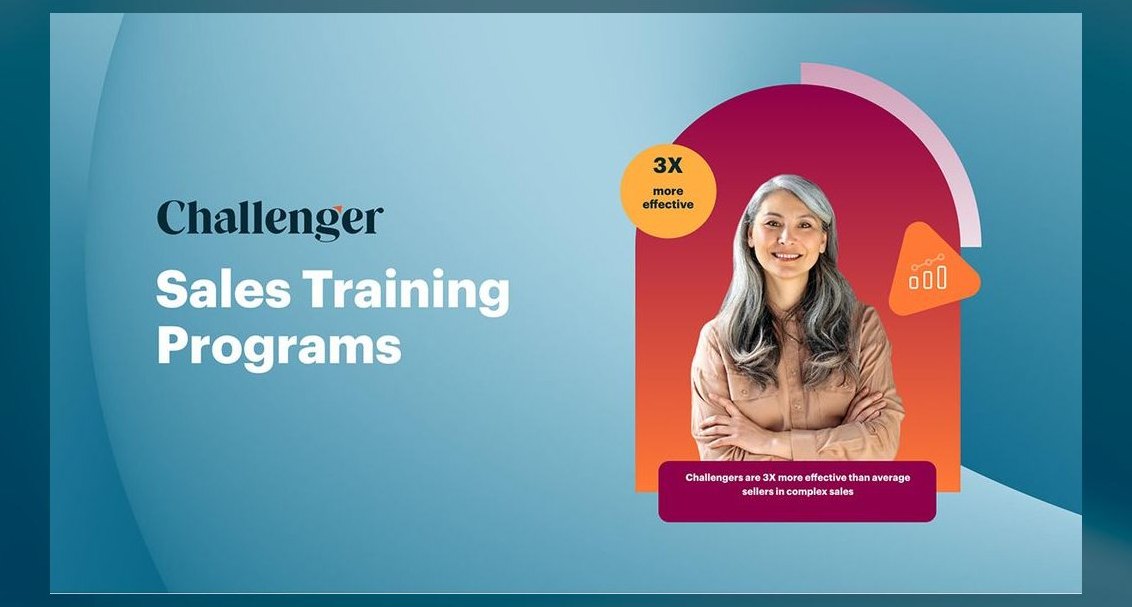 pulse-sales-trainingsThe Challenger Sale Method: Ready-to-Use Facilitator Deck for a 60-Minute Class
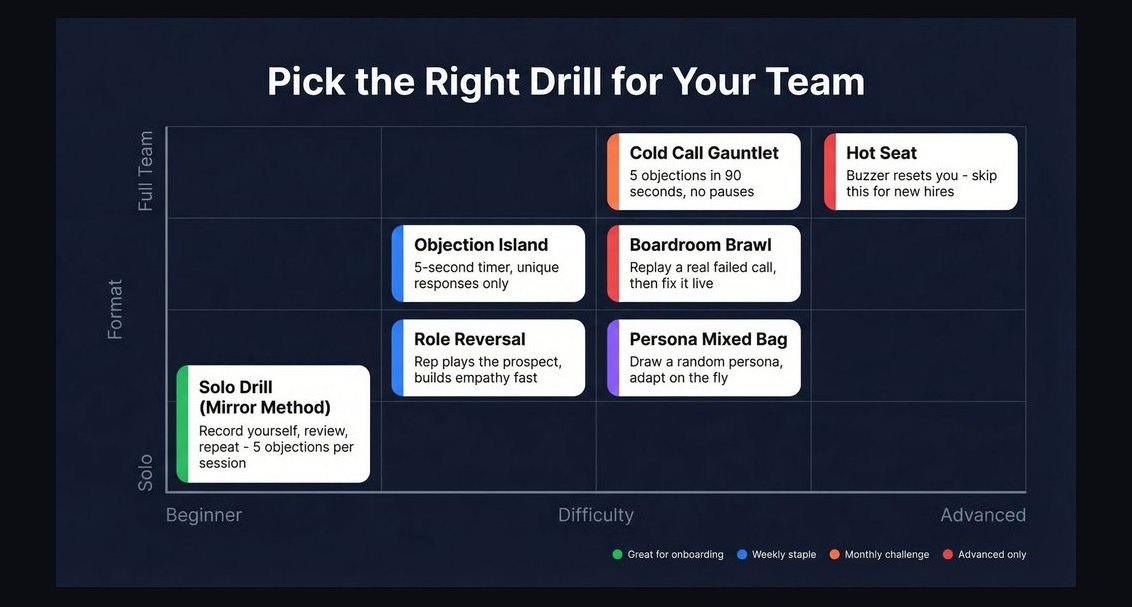 pulse-sales-trainingsThe Close Loop: Template for Practicing Assumptive and Alternative Choice Closes
 pulse-sales-trainingsSales Demo Best Practices: Agenda and Script for a Peer-Led Training Workshop
 pulse-sales-trainingsSelling with Stories: Narrative Structure Template for a 45-Minute Sales Workshop
 pulse-sales-trainingsTop 10 NEAT Selling training exercises for sales managers in 2027
 pulse-sales-trainingsMastering the Discovery Call: A 30-Minute Ready-to-Run Sales Meeting Template