
Value Proposition Crafting Workshop Template
 Curated byKory White · Fractional CRO · Maryland
 PULSEKNOWLEDGE LIBRARY
Quality
Certified

A Value Proposition Crafting Workshop Template is a structured, time-boxed session (typically 90 minutes) that walks a sales team through building buyer-specific value propositions using discovery data, quantified impact, and a repeatable three-layer framework — problem reframe, quantified cost, unique mechanism — then validates the output against real buyer reactions before reps take it into live calls.
The outcome you should expect
Running this workshop well produces three concrete deliverables, not just a good afternoon. First, every participant leaves with a filled-out template mapping at least one real account to a problem reframe, a quantified cost, and a unique mechanism — not a generic feature list. Second, the team walks away with a shared vocabulary: when a rep says "that's a feature, not a value prop" in a pipeline review three weeks later, everyone in the room knows exactly what that means because they built the distinction together. Third, and most measurable, teams that run this workshop and follow it with structured reinforcement typically see a 15-25% lift in value-prop adoption rate (the percentage of discovery calls where reps actually use the reframed language) within three to four weeks. That number comes from post-workshop tracking, not the workshop itself — the session is the input, not the outcome.
What you should not expect: instant close-rate improvement. A single 90-minute Crafting Workshop changes language and framing, not deal economics on its own. The value proposition still has to survive contact with a real buyer, get refined based on their reaction, and get reinforced through coaching. Teams that treat the workshop as a one-time event rather than the start of a cycle typically see the new language fade within two weeks — reps default back to feature-speak under call pressure unless managers actively listen for and reinforce the new pattern in call reviews.

What drives that outcome
The workshop's effectiveness comes down to whether it's built on real discovery data or generic assumptions. A template exercise done in a vacuum — where reps guess at buyer pain instead of pulling it from actual call recordings or CRM notes — produces value propositions that sound plausible but don't land. The mechanism that actually drives adoption is forcing participants to source their inputs from evidence: a call recording, a lost-deal note, a win-loss interview. When a rep writes "you keep losing deals in legal review because your contract cycle time kills momentum, costing roughly 15% of quarterly pipeline," that number has to come from somewhere real — a CRM report, a forecast tool, a finance conversation — or the buyer will spot the bluff immediately.
The second driver is specificity of the buyer target. A value proposition written for "our typical customer" is weaker than one written for a named account currently in the rep's pipeline, because vague targets let the writer stay vague. The third driver is the validation loop itself: propositions that get tested against three real buyers within the following week and refined based on reaction consistently outperform propositions that go straight into a script and never get revisited.

Benchmarks and realistic ranges
Session length: the workshop itself typically runs 60-120 minutes depending on team size, with 90 minutes as the practical sweet spot for a group of 8-15 reps — long enough for hands-on template work and peer review, short enough to hold attention without a second break. Groups larger than 15 should split into breakout pairs for exercise segments or the room loses momentum during share-backs.
Adoption metrics: track the percentage of discovery calls where a rep uses at least three of the five core reframed questions from the template. Teams starting from near-zero structured messaging typically hit 40-60% adoption within the first two weeks post-workshop if there's active coaching reinforcement, climbing toward 70-80% by week four. Without reinforcement huddles, adoption commonly regresses to under 20% by week three — the workshop's effect decays fast without follow-up.

Deal progression: a reasonable target is that 15-25% more opportunities move from discovery to demo within 14 days when reps use workshop-aligned messaging, compared to a baseline cohort using old scripts. This is directional, not a guarantee — it depends heavily on how well the underlying quantified-value numbers were sourced during the workshop itself.
Quantification inputs: the value formula taught in these workshops is current cost of the problem minus cost of the solution equals net value. A realistic mid-market example: 40-60 hours per month of manual work valued at $4,000-$8,000 in labor cost, against a solution cost of $2,000-$4,000 per month, yielding a net value statement in the $2,000-$5,000/month range — specific enough to be credible, round enough to be repeatable in a live conversation. Statements built on vaguer inputs ("saves time," "improves efficiency") consistently underperform in buyer testing regardless of how polished the delivery is.

Refresh cadence: rerun the full workshop quarterly, or immediately after losing a competitive deal to a new entrant — stale value propositions built on last year's competitive landscape are a common cause of win-rate erosion that gets misdiagnosed as a pricing or product problem.
Risks, edge cases, and failure modes
The most common failure mode is running the workshop as a lecture instead of a working session — a facilitator talks through slides on frameworks like the reframe-impact-mechanism structure without participants actually drafting and testing their own material against a real account. Workshops structured this way produce enthusiasm in the room and zero behavior change afterward, because nobody left with a tested, personalized artifact.

A second failure mode is skipping the economic-buyer lens. SDRs and AEs naturally frame value around the day-to-day user's pain because that's who they talk to most. But the person who signs the contract — often a VP or CFO — cares about a different set of outcomes: risk reduction, competitive positioning, budget justification. A value proposition tuned only to user-level pain will stall in procurement or executive sign-off even when the individual contributor loves it. The fix is a persona-filter step in the template that forces a second draft aimed explicitly at the economic buyer.
A third risk is treating the workshop's output as finished rather than draft. Value propositions written in a conference room, without buyer contact, are hypotheses. Teams that skip the validation step and push untested language straight into live calls or outbound sales sequences often see flat or negative reaction, then wrongly conclude the whole framework doesn't work — when the real issue is that nothing was tested.

A fourth edge case: teams with no CRM discipline or call-recording infrastructure will struggle with the discovery-driven design portion, since the template depends on being able to pull real buyer language and historical deal data. In that situation, substitute manual methods — recorded calls via basic conferencing tools, spreadsheet-tracked deal notes — rather than skipping the sourcing step entirely. Manual data beats no data, but skipping sourcing and guessing at numbers is the single fastest way to produce a value proposition that collapses under buyer scrutiny.
Finally, watch for one-size-fits-all output: a value proposition tuned for a mid-market operations leader will not resonate with an enterprise CFO, and vice versa. If the workshop produces one universal script that every rep is told to memorize verbatim, it will underperform a set of buyer-specific variants built from the same underlying framework.

A practical rollout plan
Treat the workshop as the midpoint of a longer rollout, not the whole initiative. Two weeks before the session, ask each participant to pull one real closed-won or actively-progressing deal and bring notes on the buyer's actual language — this seeds the discovery-driven design segment and prevents the workshop from starting cold. During the session itself, sequence the work so each block builds on the last: warm-up to surface intuitive value language, framework teaching to formalize the three-layer structure, discovery-driven drafting against real accounts, quantification with sourced numbers, canvas mapping to visualize fit, and a short validation-planning close where each person commits to testing their draft with three buyers that week.
The rollout doesn't end when the workshop does. Schedule three follow-up huddles at roughly one-week intervals. The first reviews actual call snippets where reps tried the new language — this is where you catch people reverting to feature-speak under pressure. The second compares early pipeline movement for accounts that got the new messaging against a baseline. The third is a refinement pass: fold in what buyers actually responded to and cut what fell flat, updating the shared template so the next cohort starts from a stronger baseline.

Ownership matters here: assign one sales enablement or RevOps lead to own the huddle cadence, because without a named owner these follow-ups are the first thing to slip when the team gets busy — and a Crafting Workshop without reinforcement is close to worthless within a month.
Related questions
How long should a value proposition actually be when spoken on a call?
Around 30 seconds spoken, or two to three sentences written. Longer than that and the buyer's attention drifts before the reframe and the number land. Brevity forces specificity — vague statements tend to run long because they're padded to sound substantial.
Can this template work for outbound SDR messaging, not just AE calls?
Yes. SDRs apply the problem-reframe layer directly in cold outreach — naming a specific pain in the buyer's own language before pitching anything — which performs better than generic feature-forward openers.
What replaces competitor-specific positioning when there's no direct competitor?
Frame the status quo as the competition. Quantify the cost of the buyer continuing to do nothing or continuing their current manual process — that cost is the proposition's anchor number.
How should a team handle price objections that come up mid-pitch?
Reframe the objection as a symptom of an unresolved deeper problem rather than answering it head-on with a discount — connect the price concern back to the quantified cost of the status quo established earlier in the conversation.
FAQ
How many people should attend a single Value Proposition Crafting Workshop session? Eight to fifteen works best. Smaller groups lack enough variety of deal examples for a rich peer-review segment; groups over fifteen need breakout structure or engagement drops sharply during share-back portions.
Do we need call-recording software like Gong to run the discovery-driven design segment? It helps but isn't required. Any recorded call — even a basic Zoom or Teams recording with transcription — works for pulling real buyer language. The requirement is real data, not a specific tool.
Should managers or individual contributors facilitate the workshop? Either can facilitate, but the facilitator needs enough deal exposure to push back convincingly when a draft value proposition is still feature-flavored rather than truly reframed around buyer pain.
What's the single most common reason a workshop-produced value proposition fails with real buyers? The quantified number wasn't actually sourced from anything — it was estimated or invented on the spot. Buyers catch this quickly, especially economic buyers who compare it against their own internal numbers.
How is this different from a general sales training session? General training covers broad skills like objection handling or discovery questions. This workshop produces a specific, tested artifact — a written, validated value proposition tied to real accounts — rather than teaching a skill in the abstract.
Should the template be identical for every team, or customized by segment? Customize the buyer-persona filter and the quantification inputs by segment — enterprise, mid-market, SMB — since the economic-buyer concerns and realistic cost ranges differ meaningfully across segments even when the three-layer framework stays constant.
Sources
- Dixon, M., & Adamson, B. (2011). *The Challenger Sale: Taking Control of the Customer Conversation*. Portfolio. https://www.penguinrandomhouse.com/books/307036/the-challenger-sale-by-matthew-dixon-and-brent-adamson/
- Harvard Business Review. "The Elements of Value." https://hbr.org/2016/09/the-elements-of-value
- Gong Labs. "How to Write a Value Proposition That Actually Works." https://www.gong.io/blog/value-proposition/
- Salesforce. "State of Sales Report." https://www.salesforce.com/
- Clari. "Revenue Forecasting and Pipeline Management." https://www.clari.com/
- Forrester. "Total Economic Impact Studies." https://www.forrester.com/
- Winning by Design. "Value Proposition Canvas Methodology." https://www.winningbydesign.com/
- MEDDPICC. "MEDDPICC Sales Qualification Framework." https://www.meddpicc.com/
Related on PULSE
- [Value Proposition Crafting: Interactive Template for a Weekly Sales Training](/knowledge/st0780)
- [Top 10 Sales Training Templates for Value Proposition Crafting](/knowledge/st0692)
- [Sales Storytelling Workshop: Crafting Case Studies into Narratives](/knowledge/st0748)
- [Top 10 Value Proposition Templates for Team Brainstorming](/knowledge/st0741)
- [Top 10 value proposition role-play scenarios for sales teams](/knowledge/st0560)
- [Top 10 value proposition training drills for B2B sales reps](/knowledge/st0559)
This page will be disappearing soon. Save it to your device for $1 — or read it free while it is here.
@Kory-White- · if Venmo asks, the last 4 of my number are 2012
This page is gone.
This one is off the shelf now. $1 keeps it on your phone for good — the whole page, pictures and diagrams included.
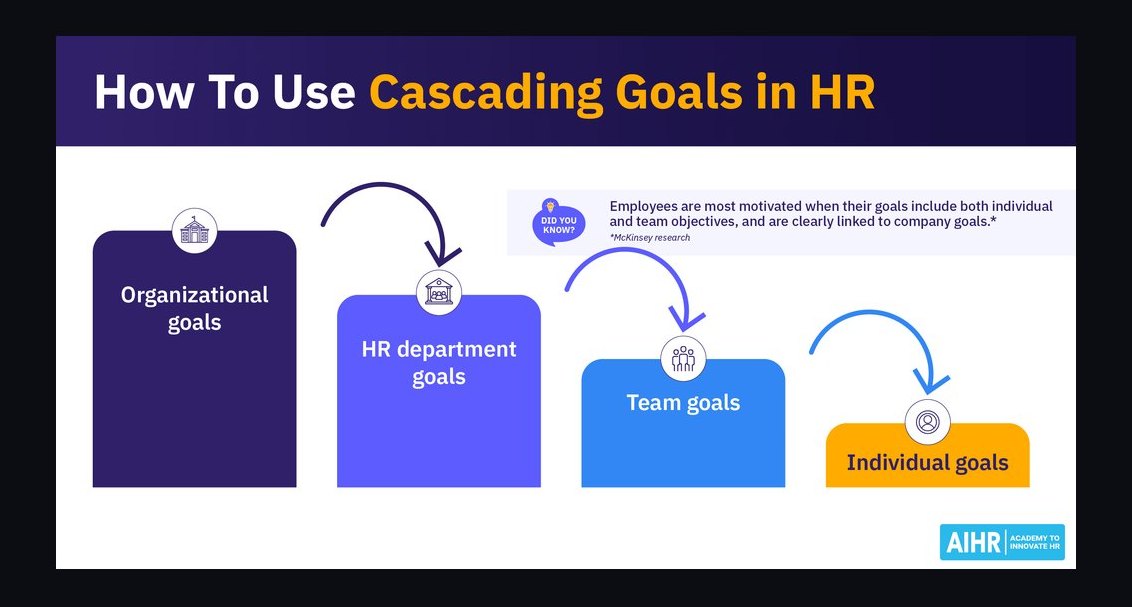 pulse-sales-trainingsQuarterly Goal Cascading: From Quota to Daily Activity Breakdown
 pulse-sales-trainingsHandling the 'Not Interested' Objection: A Ready-to-Run Roleplay Session
 pulse-sales-trainingsTop 10 Sales Training Templates for Value Proposition Crafting in 2027
 pulse-sales-trainingsNavigating the Multi-Stakeholder Sale: Role-Play Template for Team Practice
 pulse-sales-trainingsProduct Knowledge Quick-Start Training Kit
 pulse-sales-trainingsClosing Techniques Drill Template for Teams
 pulse-sales-trainingsTop 10 closing role-play scenarios for sales teams in 2027
 pulse-sales-trainingsTop 10 ramping rep workshop agendas for 2027
 pulse-sales-trainingsEmotional Intelligence in Sales: Guided Discussion Template for Team Meetings
 pulse-sales-trainingsTop 10 RevOps workshop agendas for 2027