


The Demo Excellence Workshop — 60-Min Training
Quality
Certified
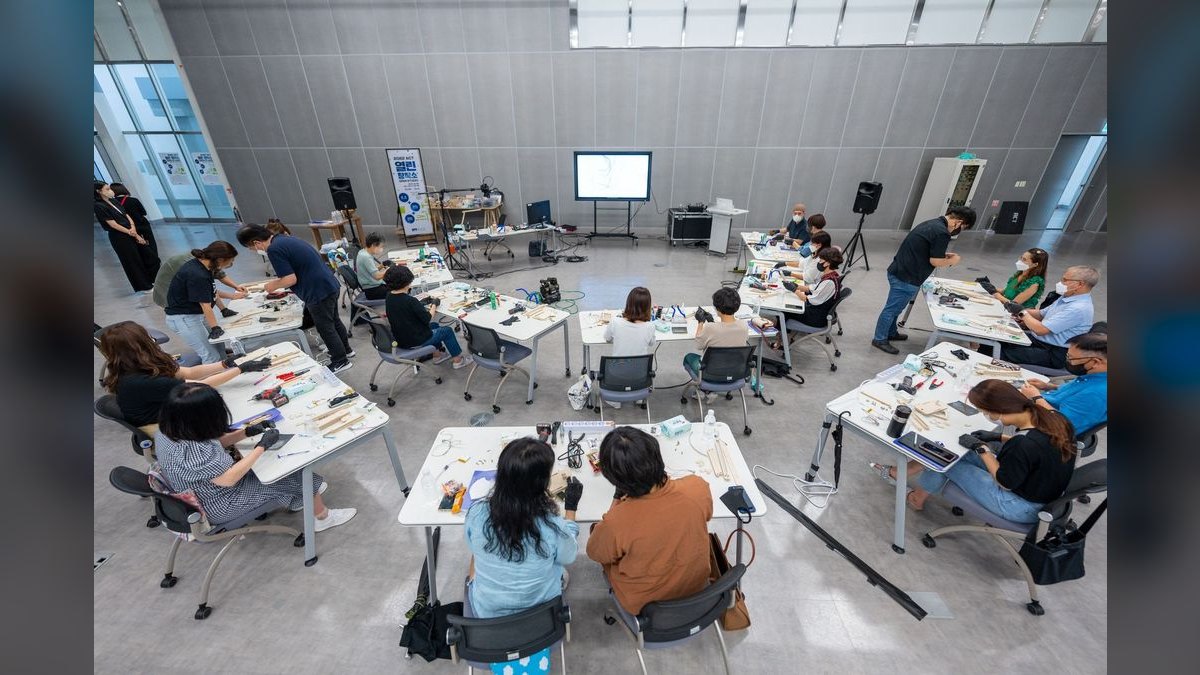
The Demo Excellence Workshop is a 60-minute team training that replaces the feature-dump product tour with a discovery-led, value-based demo discipline: confirm the buyer's pain before sharing your screen, show the payoff first, demo only to named pain, trial close throughout, and lock a specific dated next step before the call ends.
The two workshop formats you are actually choosing between
Most sales leaders think the decision is "do we run demo training or not." The real decision is which of two 60-minute formats you run, because they produce different reps and cost different amounts of manager attention.
Format A — the teach-heavy workshop. Roughly 35 minutes of framework instruction, 15 minutes of scripted read-alouds, and 10 minutes of Q&A. No live roleplay. The manager talks through the four moves (confirm before you show, do the last thing first, demo to the pain, trial close throughout), walks the room through Peter Cohan's *Great Demo!* logic, shows two annotated call clips from Gong or Chorus, and takes questions. This is the format almost every team defaults to because it is the easiest to run and the least socially uncomfortable. It reliably produces reps who can *describe* the framework the next morning and who demo exactly the way they demoed last month.
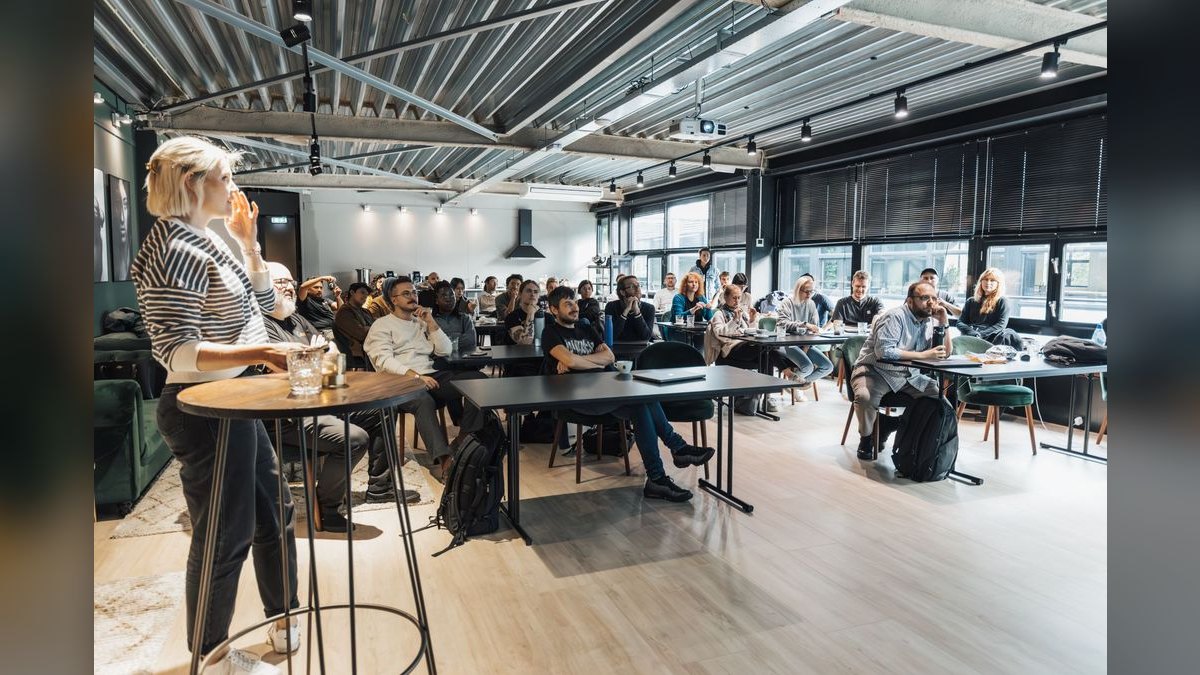
Format B — the practice-heavy workshop. Five minutes on why feature-dump demos lose, ten minutes on the framework, fifteen minutes on verbatim scripts read aloud in pairs, twenty minutes of live roleplay with a scripted buyer and silent scorers, seven minutes of scorecard debrief, three minutes to write commitments. Instruction time drops to roughly a quarter of the session; the rest is reps demoing to a live human who has been handed a buyer brief and a trap. This is the format the Demo Excellence Workshop specifies, and it is harder to run: it requires a written buyer brief, a printed scorecard, a manager willing to sit through awkward silence, and enough room-level trust that a rep can bomb a roleplay in front of peers without it becoming a performance-review event.
The trade-off is not subtle. Format A covers more surface area — you can teach objection handling, competitive positioning, and the demo framework in one hour if nobody has to practice. Format B covers roughly a third of that surface area but changes behavior on the next live call, because the rep has already run the new motion once, badly, in a room where it was safe to run it badly. A rep who has confirmed pain out loud exactly once is meaningfully more likely to confirm pain on a real call than a rep who has only heard it explained well.
There is a third option worth naming so you can reject it deliberately: the recorded async version, where you post the framework video in Slack and ask reps to watch it. It costs almost nothing in manager time and produces almost nothing in behavior change for a motion this physical. Async works for knowledge transfer — pricing changes, new packaging, a competitor's new release. It does not work for a motor skill like resisting the urge to share your screen when a buyer says "can you show me?" Use async only as the pre-read that shortens Format B's instruction block from ten minutes to five.
How to decide between the teach-heavy and practice-heavy formats
The decision comes down to four inputs: how many reps are in the room, how much your average deal is worth, whether your manager can stay quiet, and how recently the team has practiced anything at all.
Headcount. Practice-heavy roleplay works cleanly at four to twelve reps. Below four, the roleplay is not a workshop — it is a one-on-one coaching session with an audience, and reps feel exposed. Above twelve, twenty minutes of roleplay means each rep gets under two minutes of demo time, which is not enough to reach the feature-bait trap. If you have eighteen reps, split into two workshops of nine rather than diluting one. Two sessions of nine beat one session of eighteen every time, even though it costs the manager an extra hour.
Deal value. If your average contract value is small and your demo is short — a fifteen-minute screen share on a self-serve product — the teach-heavy format may genuinely be enough, because the demo carries less of the deal. If your demo is a forty-five-minute event that decides a six-figure deal, the roleplay hour pays for itself the first time one rep does not take the feature-bait question.
Manager temperament. The practice-heavy format has a hard requirement built into its debrief script: after asking a rep to self-grade, the manager stays silent and counts to five. Managers who cannot tolerate five seconds of silence will fill it, and when the manager fills it, the rep stops self-assessing and starts waiting to be told. If you know you are a filler, either run Format A honestly or hand the debrief to someone else and sit in the room as a scorer.
Practice recency. If the team has not roleplayed in a year, do not open with a twenty-minute live demo. Run one abbreviated workshop where the roleplay is five minutes and the scripts block is twenty, then run the full practice-heavy version two weeks later. Reps who have never roleplayed need one low-stakes exposure before the real one.
Run this decision once, write the answer down, and stop relitigating it monthly. The teams that get value out of a demo Workshop are the ones that pick a format and run it on a fixed cadence; the teams that get nothing are the ones that redesign the agenda every time and therefore never build a shared vocabulary.
The concrete minute-by-minute numbers behind each format
Here is how the sixty minutes actually allocate, and what each block costs you in preparation.
Format B, the practice-heavy build:
- 5 minutes — why feature-dump demos lose. Name the three failure modes on a whiteboard: the harbor tour (every feature in menu order, no priority, buyer cannot tell what matters), the premature reveal (showing before the pain is confirmed, so nothing lands), and the monologue (no trial closes, no read on whether anything is connecting). Close the block with the rule said slowly: *a demo is not a product tour; it is a conversation where the product is the evidence.* Prep cost: five minutes to write three phrases on a board.
- 10 minutes — the framework. Four moves in order. Move 1, confirm before you show — replay the pain from discovery and get an explicit yes; no yes, no demo. Move 2, do the last thing first — Cohan's core method: lead with the single screen that resolves the biggest pain, get the reaction, then peel back to how it works. Move 3, demo to the pain, not the feature — every screen ties to a named pain using tell-show-tell (tell them what pain this resolves, show it resolving, tell them what just happened in their words). Move 4, trial close throughout — never wait until the end to learn whether it landed. Prep cost: none if you have run this before, twenty minutes the first time.
- 15 minutes — verbatim scripts read aloud in pairs. Six scripts: the opener, the do-the-last-thing-first reveal, the transition phrase between pains, three trial closes, the "can it do X?" qualifier, and the recap-and-confirm close. Reps read them to each other out loud. Reading silently does not work — the point is to get the words through the mouth once before a buyer hears them. Prep cost: printing.
- 20 minutes — live roleplay. Two rounds so every rep demos once. Roughly two minutes for the buyer to read pains aloud, eight minutes of demo, two minutes for the recap-and-confirm attempt, three minutes for scorers to fill the card, then swap. Prep cost: one buyer brief and one scorecard, written once and reused forever.
- 7 minutes — scorecard debrief. Self-grade first, one manager observation second. Prep cost: none.
- 3 minutes — written commitments. Three lines each, taped to the monitor. Prep cost: none.
Format A, the teach-heavy build: 35 minutes instruction, 15 minutes scripts, 10 minutes Q&A. Prep cost is higher in one dimension — you need two annotated call clips pulled and timestamped, which is fifteen to thirty minutes of listening in Gong or Chorus — and near zero in every other dimension. No brief, no scorecard, no room management.
The scorecard itself is five lines, and it is what makes the practice-heavy format measurable rather than vibes-based:
- Demoed to pain? Did every screen tie to a confirmed pain, or was it a tour? Yes / Partial / No.
- Talk-listen ratio. Roughly what share did the buyer speak? Gong's call analytics consistently show the highest-converting demos give the buyer real airtime rather than running as a rep monologue; feature-dump demos invert this, with the rep holding the floor for the overwhelming majority of the call.
- Trial closes. How many did the rep run? Target at least three across the demo.
- Feature-bait trap. Qualified or took the bait?
- Next step. A specific dated next step, or "I'll send pricing"? The second is the absence of a next step, not a soft version of one.
The buyer brief — handed only to the person playing the buyer — is what makes the roleplay reproducible across sessions: you are a VP of Operations at a 200-person company; your top pain is three hours a week of hand-built reports; your secondary pain is forecasts off by 20% and a CFO losing patience; three minutes in you ask "can it integrate with Salesforce and HubSpot?" as a feature-bait question that does not actually matter to your decision; if the rep demos to your real pain and trial closes, warm up, and if they tour features, go quiet and check your phone. That last line is the whole design — the buyer's disengagement is the feedback, delivered in the room instead of as a ghosted follow-up two weeks later.
Implementation, sequencing, and the tooling around the room
The workshop is one hour, but the sequencing around it decides whether the hour survives contact with next week.
Before the session. Pin the three browser tabs you will actually use: the recording platform (Zoom Pro runs $15.99 per user per month, Business $21.99) queued to the most recent demo recording you will use as the coaching artifact; your CRM open for post-session cadence updates (HubSpot Sales Hub Professional is $90 per seat per month, Enterprise $150; Salesforce Sales Cloud Enterprise is $165 per user per month, Unlimited $330); and your call-intelligence tool (Gong lists around $1,600 per user per year) with the two clips timestamped. A manager who walks in with those three tabs ready saves roughly eight minutes of setup — which, in a sixty-minute session, is the entire commitments block plus the debrief overflow. Print the buyer brief and enough scorecards for every rep to score every demo. Send the agenda the night before with the meeting's one-line purpose at the top.
During the session. Managers float between pairs during roleplay and note exactly one specific moment per rep — not fourteen pieces of feedback, one. The debrief script is deliberately constrained: ask the rep to grade themselves on confirming pain before showing anything, stay quiet, ask whether they qualified the feature-bait trap or took it, stay quiet, then give one observation in two sentences tied to a scorecard line, then ask what they want to do with it on their next live demo, then say "lock it — I'm watching for that one habit on your next call." The three things that break this: piling on every flaw, letting a rep skip the self-grade, and accepting "send me pricing" as a next step.
After the session. This is where most demo Training dies. Three follow-through mechanics, in order of importance:
- Name the call. Before anyone leaves, every rep names the specific live demo they will run the new way this week — account name, day, time. A commitment without a named call is a preference.
- Watch that one call. The manager pulls that specific recording, listens for the one habit that rep committed to, and sends two sentences in Slack (Pro is $8.75 per user per month, Business+ $15) within 48 hours. Not a review — one line on the one habit. This is the highest-leverage fifteen minutes in the whole program.
- Re-score at four weeks. Pull one recorded demo per rep and fill the same five-line scorecard. Compare to their roleplay score. This is the only honest measure of whether the Workshop did anything, and it takes about ten minutes per rep.
Cadence. Fixed weekly beats sporadic. Pavilion's GTM benchmark work has shown AE teams running a fixed-cadence weekly training closing at meaningfully higher rates than teams with no formal training cadence — the mechanism is not the content, it is that a standing hour builds shared vocabulary, and enablement platforms like Highspot, Spekit, and Lessonly all point at shared vocabulary as the leading predictor of multi-quarter program ROI. Run demo Excellence once, then rotate: objection handling, discovery, pricing conversations, then demo again in six to eight weeks with a harder buyer brief.
Tooling caution. Interactive demo builders — Storylane, Demodesk, Consensus, Walnut, Reprise, Saleo — make the artifact easier to assemble, and none of them make a rep confirm pain before sharing a screen. Buy them to shorten build time, not to fix demo discipline. The discipline is human and it is trained in a room. If you are choosing between a demo-automation license and a standing weekly hour with a scorecard, the hour wins for a team that currently feature-dumps; the license wins for a team that already demos to pain and simply cannot build assets fast enough.
What the scripts sound like when they land
The verbatim scripts are the transferable asset — reps memorize the moves, then make them their own. Five matter most.
The opener, which is the whole confirm-before-you-show move: "Before I share my screen, let me make sure I show you the right thing. In discovery you said the biggest problem is that your team spends three hours a week stitching reports together by hand. Is that still the one costing you the most? … Good. Then that's the only thing I'm going to show you for the first few minutes, and you tell me if it actually solves it." Notice the screen is not shared yet. That is the entire discipline in one sentence.
The do-the-last-thing-first reveal: "Most people would build up to this. I'm going to do the opposite. Here's the finished report — the one that takes your team three hours — generated in about eight seconds. Before I explain how, just react: what would getting those three hours back do for your week?" Cohan's argument is that buyers lean in when the payoff arrives first rather than at minute forty, and the practical effect in a roleplay is immediate — the buyer talks, which flips the talk ratio without the rep having to think about talk ratio.
The transition between pains, which prevents the menu tour: "That covers the reporting pain. The second thing you mentioned was forecast accuracy. Want me to show how that's handled, or is the reporting piece the one that matters most right now?" The rep is asking permission to move rather than clicking to the next tab.
The feature-bait qualifier, which is what the roleplay trap tests: "It can — and before I click into it, help me understand what you'd use it for. If it's central to your decision I'll show it properly. If it's a nice-to-have, I'd rather keep us on the thing that's actually costing you money. Which is it?" The answer "it can" is non-negotiable — reps who dodge the question lose trust. The qualifier that follows is what keeps the demo on pain.
The recap-and-confirm close: "Let me play back what we covered. You told me reporting and forecast accuracy were the two pains. You saw the reporting one solved in eight seconds and said that'd give your team three hours back. You saw the forecast view and said it was close to what you pictured. Did I get that right? … So the logical next step is a working session with your ops lead next Tuesday to map this to your data. Does Tuesday at 10 work, or is Thursday better?" It never asks "any questions?" It plays back confirmed value and proposes a specific dated next step with an alternative.
Close the hour by reading Cohan's framing aloud — the purpose of a demo is not to show the product, it is to advance the sale — then pin the scorecard and the scripts in the team's shared drive where a new hire can find them in week one.
Related questions
How many reps should be in one Demo Excellence Workshop?
Four to twelve. Below four, the roleplay reads as one-on-one coaching with spectators. Above twelve, each rep gets under two minutes of demo time and never reaches the feature-bait trap. Split eighteen reps into two sessions of nine rather than diluting a single hour.
Can this run remotely instead of in a room?
Yes, with breakout rooms for the paired roleplay and a shared doc for scorecards. Remote costs you the ability to float between pairs, so assign one silent scorer per breakout and have them post the five scorecard lines back to the main room before the debrief.
What if discovery was thin and there is no confirmed pain to replay?
Then the first five minutes of the demo become discovery. That is the correct trade, not a failure. Teach reps to say it out loud: they earn the right to show something before showing it. A demo run on an unconfirmed pain converts worse than a shortened demo run on a real one.
How do you measure whether the workshop worked?
Re-score one recorded demo per rep at four weeks using the same five-line scorecard from the roleplay, and compare. Trial-close count and dated-next-step rate are the two lines that move first; talk-listen ratio moves more slowly because it is a habit, not a step.
Should sales engineers attend, or just AEs?
Both, and pair them across roles in the roleplay. SEs typically default to the harbor tour because they know every feature; AEs typically default to the premature reveal because they want to impress. Pairing them means each hears their own failure mode named by someone who does not share it.
FAQ
Who is this Workshop for?
B2B software and product sales teams — individual contributors, team leads, and sales engineers. It is most effective for groups that currently run standard product tours and want to shift to a discovery-led, value-based approach. Teams selling short self-serve demos get less from it than teams whose forty-five-minute demo decides a large deal.
What method does the Training actually teach?
Peter Cohan's *Great Demo!* "do the last thing first" technique, combined with a value-selling frame in the Winning by Design tradition and the demo patterns visible in Gong and Chorus call data. The operating discipline is four moves: confirm the pain before showing anything, demo only to that pain, trial close throughout, and lock a dated next step.
How much of the hour is practice versus instruction?
In the practice-heavy format, roughly fifteen minutes of instruction and forty-five minutes of scripts, roleplay, debrief, and commitments. In the teach-heavy format the ratio inverts. The practice-heavy split is the one that changes what a rep does on their next live call.
Do reps need real customer recordings for this to work?
No. The roleplay uses a written buyer brief with invented but realistic pains, and any call clips you show should be your own team's recordings used with internal consent. The aggregate patterns from conversation-intelligence platforms are useful as framing; no other company's proprietary calls are required or appropriate.
What is the single most common way this Workshop fails?
No follow-through. The hour lands, reps write commitments, nobody watches the named call, and by week three everyone is touring features again. The fix is small and non-negotiable: every rep names a specific live demo before leaving, and the manager listens to that one recording and sends two sentences within 48 hours.
How often should we repeat it?
Run demo Excellence once, rotate through other topics for six to eight weeks — objection handling, discovery, pricing conversations — then return with a harder buyer brief: a buyer with three pains instead of two, or one who asks for pricing at minute four. Repeating the identical session monthly produces boredom, not skill.
Sources
- https://greatdemo.com/ — Peter Cohan, *Great Demo!* and the "do the last thing first" method
- https://www.gong.io/resources/ — Gong Labs research on demo calls, talk ratio, and trial closes
- https://www.zoominfo.com/products/chorus — Chorus conversation intelligence and demo conversion patterns
- https://winningbydesign.com/resources/ — Winning by Design value-selling and SaaS sales frameworks
- https://www.storylane.io/ — interactive demo platform documentation and demo-build guidance
- https://www.consensus.com/ — demo automation and self-serve demo research
- https://www.highspot.com/resources/ — sales enablement and training program benchmarks
- https://www.salesforce.com/sales/ — Sales Cloud pricing and sales process documentation
- https://www.hubspot.com/products/sales — Sales Hub pricing and demo best-practice library
- https://joinpavilion.com/ — Pavilion GTM benchmark research and community reports
Related on PULSE
- Sales Demo Best Practices: Agenda and Script for a Peer-Led Training Workshop
- Top 10 demo role-play scenarios for sales teams
- Top 10 demo training drills for B2B sales reps
- 60-Min Sales Training: Handling Demo Objections in Real Time
- 60-Min Sales Training: Running a Killer Demo
- The Product Demo Reboot — 60-Min Training
This page will be disappearing soon. Save it to your device for $1 — or read it free while it is here.
@Kory-White- · if Venmo asks, the last 4 of my number are 2012
This page is gone.
This one is off the shelf now. $1 keeps it on your phone for good — the whole page, pictures and diagrams included.
 sales-trainingHow do you train a sales team in Telecom in 2027?
 sales-trainingHow do you train a sales team in Physical Therapy & Chiropractic in 2027?
 sales-trainingHow do you train a sales team in Landscaping & Lawn Care in 2027?
 sales-trainingThe Mid-Market Multi-Threading Strategy Workshop — 60-Min Training in 2027
 sales-trainingTop 10 sales training budget allocation strategies in 2027
 sales-trainingHow do you train a sales team in Battery & Energy Storage in 2027?
 sales-trainingHow do you train a sales team in SaaS & Software in 2027?
 sales-trainingWhat does a mid-market sales training program cost to build in 2027?
 sales-trainingThe Outbound Call Recording Review — 60-Min Training in 2027
 sales-trainingTop 10 sales training budget templates for mid-market teams in 2027