


The Win/Loss Analysis Workshop — 120-Min Training
Quality
Certified
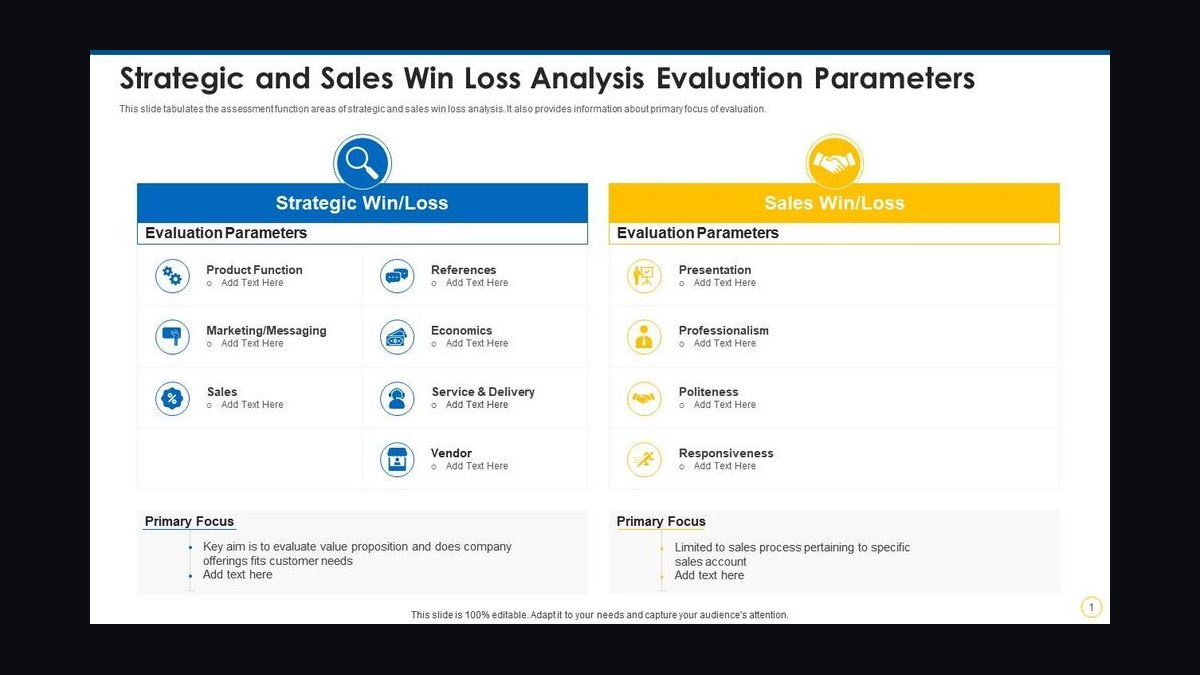
The Win/Loss Analysis Workshop is a 120-minute team training that converts closed deals into a repeatable improvement engine. Teams capture structured outcomes, run scripted buyer and rep interviews, analyze one won and one lost deal live, extract themes across 20–30 closed opportunities, and leave with named owners, coaching changes, and a standing monthly cadence.
What the workshop is and why gut-feel reviews fail
A win/loss review is not a postmortem meeting where the rep tells the story and everyone nods. It is a structured comparison between what the seller believes happened and what the buyer actually experienced, run against enough deals that patterns emerge instead of anecdotes. The 120-minute format exists because that is roughly the shortest block in which a team can cover the framework, practice the interview questions, dissect two real deals, and still have time to convert findings into owned action items. Anything under 90 minutes collapses into theory. Anything over three hours loses the room.
Open the session with a single question on the whiteboard: "Why did we lose our last three deals?" You will get fast, confident answers within thirty seconds. Most of them will be wrong, and the room needs to feel that before the rest of the training lands.
The core failure mode is misattribution, and it is remarkably consistent. When rep-reported loss reasons are compared against what buyers say in neutral third-party interviews, price is blamed far more often by the seller than it is actually cited by the buyer. The true reasons cluster elsewhere: the seller never reached the economic buyer, the champion had no internal authority, a competitor produced an unprompted reference call, the demo confused a committee member who then voted no, or the buying process stalled and a competitor filled the gap.
This is not dishonesty. It is self-protection plus recency bias. "We lost on price" is the only loss reason that requires nothing from the rep — it externalizes the outcome to a pricing committee that is not in the room. "We lost because I never got a meeting with the CFO" is a loss reason that obligates the rep to change behavior next quarter. Given a free-text CRM field and no accountability, humans reliably pick the first one.
Put the framing on the board explicitly, because it becomes the operating rule for the next two hours:

- Gut-feel review: opinions, blame, recency, no pattern, no measurable change.
- Structured win/loss: evidence, themes across many deals, named owners, a re-measured win rate.
- The gap between those two: that gap is the part of your win rate you are leaving on the table.
The rule for the session, stated once and enforced all the way through: *no loss reason survives this room without evidence.* "Price" is a hypothesis. It becomes a finding only when a buyer says it in their own words, or when it repeats across enough deals that the pattern is undeniable. Everything else is a story.
There is a second reason to run this as a Training rather than a memo. Win/loss knowledge decays if only one analyst holds it. When the whole revenue team learns the interview questions and sits through the live teardown, the debrief quality on every future deal improves — the rep who watched a manager dismantle a "lost on price" claim in front of peers writes a better CRM note the following week. The training is the distribution mechanism for the discipline.
The two data sources and what each one is worth
Structured win/loss draws from two sources, and treating them as equivalent is the most common design error in a young program.
Internal deal debriefs are what the rep and the deal team believe happened. They are fast, free, and available on every single closed opportunity, which makes them the backbone of any program. Their weakness is direction of bias: the debrief is written by the party with the most to lose from an unflattering answer, and it is written after the fact, when memory has already reorganized itself into a coherent narrative.

Buyer-side interviews are what the person who actually made the decision experienced. Buyers routinely tell a neutral interviewer things they will never tell the rep who just lost their business — that the pricing was acceptable but the security review dragged three weeks, that a competitor's customer reference called them unprompted, that the champion was overruled by a stakeholder the seller never met. This asymmetry is the entire commercial basis of the specialist win/loss firms: a third party gets the version of events a vendor structurally cannot.
Between those two sits a third category that is neither self-reported nor buyer-reported: system-of-record evidence. Call recordings, email threads, calendar data, and opportunity-stage history are not editable after the outcome is known. If the debrief claims the deal was multi-threaded across four stakeholders, the recording and calendar data either support that or they do not. Use this evidence as the tiebreaker whenever the rep's account and the buyer's account diverge — it is the cheapest form of truth you already own.
Here is what to capture on every closed deal, won or lost, in your CRM as required fields rather than optional ones:
- Outcome and competitor: won or lost, and specifically who else was in the final round — not just "a competitor," but the named alternative including "no decision" and "built internally," which are frequently your largest single loss category.
- Deciding factor: the one thing the buyer says tipped it, in free text, ideally quoted.
- Process signals: did we reach the economic buyer (yes/no), was there a named champion (yes/no), how many distinct stakeholders engaged.
- Stage of loss: did the deal die at discovery, at demo, at technical evaluation, at procurement, or at the final decision. This single field is disproportionately useful because it tells you which part of your process to fix.
- Source of truth: rep-reported, manager-observed, or buyer-confirmed. Without this tag you will eventually average biased and unbiased data together and get a confidently wrong picture.
Make the case to the room in one sentence: the loss reason a rep types into the CRM is the *most convenient* explanation available, not the *most accurate* one, and the fix is not to distrust reps — it is to build a capture structure where the convenient answer and the accurate answer are the same answer.
The step-by-step process for running the 120 minutes

Run the session on a fixed clock. Publish the segment times in advance so the room knows the live teardown is coming and nobody filibusters the framework section. The standard split is 10 / 20 / 20 / 35 / 25 / 10.
Minutes 0–10 — the wrong-answer opener. The whiteboard question, the misattribution reveal, the two-column framing above. Do not skip this and jump to method; the discomfort is what buys you honesty in minute 60.
Minutes 10–30 — the framework. Walk the two data sources, the capture fields, and the source-of-truth tag. End by showing the room where your own CRM data is currently incomplete. Nothing motivates field hygiene like seeing that 40% of last quarter's closed-lost records have an empty competitor field.
Minutes 30–50 — interview question drill. Hand out the two scripts below and have people pair off and role-play for eight minutes each direction, then debrief the drill for four minutes. This is the segment teams cut when they run late, and cutting it is why their program produces thin findings six months later.
*Buyer interview questions — asked by a neutral interviewer, never by the rep who owned the deal:*
- The open: "I'm not here to sell you anything. We lost your business and I want the honest version so we get better. Can you walk me through how you made the decision?"
- The runners-up: "Who else was in the running, and at what point did it narrow to the final two or three?"
- The near-miss: for a loss — "What almost made you *not* choose the winner?" For a win — "What almost made you not choose us?"
- The deciding factor: "If you had to name the single thing that tipped it, what was it?"
- The price test: "Was price the actual reason, or was it the easiest reason to give the vendor who didn't win?"
- The confidence curve: "Where in our process did you feel most confident, and where did you lose confidence?"
- The committee: "Who else had a vote, and did anyone push back on us internally?"
- The redo: "If we could change one thing about how we sold to you, what would have made the difference?"
*Internal debrief questions — asked by the manager, recorded, blame-free:*

- "Did we reach the economic buyer, yes or no — and if no, what specifically blocked it?"
- "Name the champion. What did they actually do to advance this internally when we weren't in the room?"
- "At what stage did momentum change, and what happened that week?"
- "What did the buyer ask for that we couldn't deliver — product, terms, or timeline?"
- "What does the call recording show that contradicts our gut feeling about this loss?"
- "If this exact deal walked in tomorrow, what is the one thing you would do differently?"
Coach the difference explicitly: buyer questions are open and non-leading, internal questions are about process facts. Never ask a buyer "Was it price?" — that hands them a socially frictionless exit and ends the interview's usefulness. The worst question in the entire drill, and one managers ask constantly, is *"We did everything right, they just went cheaper, right?"* It contains its own answer and teaches nobody anything.
Minutes 50–85 — live analysis. Fifteen minutes on the lost deal, fifteen on the won deal, five comparing. Full detail in the next section.
Minutes 85–110 — pattern extraction. Pull 20–30 recent closed deals and sort every reason into buckets. Any bucket that repeats three or more times becomes an action item with a named owner.
Minutes 110–120 — commitments and cadence. Every attendee names one behavior change. Managers book the recurring block before leaving the room.
The rule to write under the diagram: a single deal is an anecdote, a theme across many deals is a finding, and this room only acts on findings.
Running the live teardown on one won and one lost deal
Select both deals before the session, not during it. The ideal candidates closed in the last 60 days, are large enough that people remember them, and have either a completed buyer interview or a clean recording of the final decision call. Pull the opportunity records up on screen so the CRM data is visible alongside the story.

Run the lost deal first. The rep narrates for no more than four minutes — set a timer, because the uninterrupted narrative is precisely the artifact you are testing. Then the manager runs the internal debrief questions live while someone captures answers on the board under the framework headers. Finally, introduce the buyer's voice: read the interview notes verbatim or play the actual clip, and let the gap appear in front of everyone.
The moment that teaches the workshop looks roughly like this:
> Manager: "The CRM says 'lost on price.' The buyer interview says, quoting directly, *'the price was fine — their reference customer called us unprompted and that sealed it.'* [writes COMPETITOR PROOF on the board] So the deciding factor was social proof, not price. Agreed?" > > Rep: "...Yeah. I never lined up a reference call." > > Manager: "Good — that's a process gap we can fix, not a market condition we can't. Tagging it. Next deal."
Note what the manager did and did not do. They did not criticize the rep, litigate the pricing, or ask why the rep wrote the wrong reason. They converted an unactionable market excuse into a fixable process gap in under 60 seconds and moved on. That tone is the whole reason the session doesn't turn into a blame exercise, and it has to be modeled by the most senior person in the room.
Then run the won deal. Teams skip won-deal analysis constantly and it is the single biggest waste in the discipline. Ask the buyer questions about the win with equal rigor: what almost made them choose someone else, who the real champion was, what the deciding factor was, what nearly derailed it at procurement. A win you cannot explain is a win you cannot reproduce — and unexamined wins hide the same process gaps as losses, just with a happier outcome that stops anyone from looking.
The five-minute comparison at the end is where the value concentrates. Put the won and lost deals side by side on the same framework headers and ask the room what structurally differed. Usually it is not the product or the price. It is stakeholder count, whether a champion existed, or whether the seller ran a mutual action plan.
Three things to explicitly prohibit during the teardown:
- Do not let the rep narrate uninterrupted past four minutes. The polished story is the thing under examination, not the evidence.
- Do not stop at "we lost on price" without checking the buyer's actual words or the recording. This is the entire point of the segment.
- Do not skip the won deal because "it went fine." Fine is not a finding.
Costs, timelines, and realistic ranges

Budget the program in three tiers, and be honest with the room about which tier you are actually funding.
Tier one — internal only. Structured debriefs on every closed deal, run by managers, using the question script from this Workshop, supported by call recordings you already pay for. Cost is time: roughly 20–30 minutes per debrief, plus a 30-minute monthly theming block, plus whatever CRM administration is needed to make the capture fields required. For a team of ten reps closing twenty deals a month, that is on the order of 8–12 hours of collective time monthly. This tier gets you a large share of the available value because most themes are process themes, and process themes are visible from internal data alone.
Tier two — internal plus selective buyer interviews. Add neutral-party interviews on your largest or most strategic deals — typically the top 10–20% by value, or every competitive loss above a revenue threshold you set. Interviews run 20–45 minutes with the buyer, and the constraint is almost never cost, it is response rate. Expect a meaningful share of buyers to decline; ask within two to four weeks of the decision while the deal is still fresh and the relationship is still warm, and ask through someone other than the rep who lost. Some teams offer a charitable donation or a copy of the anonymized findings as the incentive rather than a gift card, which reads better to enterprise buyers with gift policies.
Tier three — outsourced program. A specialist firm handles recruiting, interviewing, coding, and thematic reporting on an ongoing basis. Pricing varies widely by interview volume and contract length, so do not quote a number to your CFO from a training deck — get a scoped quote. What you are buying is response rate, interviewer skill, and freedom from internal politics, not access to a secret method. The method is in this session.
On timelines: the first workshop produces findings the same day, but the *win-rate* signal is slower. You need enough closed deals after the fix ships to distinguish a real change from noise, which for most mid-market teams means one to two full quarters. Set that expectation explicitly at the start, or the program gets judged as failed at week six by an executive expecting an immediate number.

On volume for the theming segment: 20–30 recent closed deals is the practical range. Under 15 you cannot separate signal from noise, and any "theme" you find is three coincidences. Over 40 and the sorting exercise will not fit inside 25 minutes. If you have a much larger deal volume, sample deliberately — stratify by segment and by competitor rather than just taking the most recent 30, or you will over-index on whatever your busiest segment happened to be that quarter.
On per-workshop scope: analyze two deals live, deeply, rather than eight superficially. The two-deal teardown is a teaching device; the 20–30 deal sort is the analysis. Teams that try to review eight deals in the live segment end up with eight shallow narratives and no themes.
Where teams get this wrong
Logging loss reasons and calling it a program. The most common objection in the room is "our reps already log loss reasons in the CRM." They log the convenient reason. A picklist with "Price," "Product Gap," "Timing," and "Competitor" as options will return "Price" and "Timing" at rates that do not match reality, because those two require nothing of the person selecting them. Capture is not analysis, and a picklist is not evidence.
Treating price as a finding instead of a hypothesis. When "price" comes back as your top loss reason, the useful follow-up is never a discount. It is: at what stage did price surface, was value ever established with the economic buyer before the number appeared, and did the buyer compare your price to a competitor or to their internal alternative of doing nothing? Discounting in response to unexamined price losses is the most expensive possible reaction to a misdiagnosis.
Skipping the wins. Covered above, but it belongs on this list because it is so consistent. Roughly half your learnings are in deals you won, and nobody schedules time for them.
Letting it become a blame session. The prevention is structural, not motivational. Tag process gaps and product gaps, never people. Never run the teardown on a deal owned by someone who was recently put on a performance plan. And have the most senior person in the room model the corrective tone once, early — the exchange in the teardown section is the template.

No owner, no route. A theme without a named owner is a note. Every promoted theme routes somewhere specific: pricing and packaging themes to RevOps and Finance, product gaps to Product plus an immediate battlecard update so reps can handle the objection tomorrow rather than next release, competitor themes to competitive enablement and a head-to-head play, and process themes to sales coaching — which is the most common bucket and also the fastest to fix.
Interviewing too late. Buyer recall degrades fast, and so does willingness. An interview requested three months after the decision gets a lower response rate and a vaguer answer than one requested at two weeks.
Running it once. A single Workshop is a good afternoon. The win-rate movement comes from the loop: capture on every close, debrief weekly, interview buyers on significant deals, theme monthly, re-measure quarterly. Book the recurring 30-minute block before anyone leaves the room, because a cadence that has to be re-proposed next month will not be.
Averaging biased and unbiased sources. If 90% of your data is rep-reported and 10% is buyer-confirmed, and you pool them into one chart, the pooled result inherits the rep bias almost entirely. Report them separately, or weight explicitly, and always keep the source-of-truth tag.
Decision framework: choosing the right depth for each deal
Not every closed deal deserves the same treatment, and pretending otherwise is how programs die of workload. Route each deal by value, competitiveness, and how much you already understand about the outcome.
Apply three practical filters when you use this in the room. First, "no decision" losses belong in the interview tier far more often than teams assume — they are usually a qualification or urgency problem you can fix, not a market that wasn't ready. Second, if you cannot fund interviews at all this quarter, run tier one honestly rather than running tier two badly on two deals and declaring the program complete. Third, when a theme is ambiguous between two buckets — say, a product gap that only mattered because the rep couldn't reframe it — route it to the faster bucket first. Coaching ships next week; a roadmap item ships next year.
Close the session by reading the action board back aloud: every theme, every owner, every route, every re-measure date. If it does not have an owner, it did not happen. The win rate does not move because you analyzed one loss — it moves because you found the theme behind twenty of them and gave it to someone by name.
Related questions

How many people should attend?
Six to twelve. Below six you lose the pattern-spotting benefit of multiple perspectives; above twelve the live teardown becomes a lecture and the quiet reps stop contributing. Core group is reps, frontline managers, and a RevOps or enablement facilitator, plus a product or marketing stakeholder when themes touch positioning.
Can we run this without call recording software?
Yes. Structured debriefs plus a disciplined interview script deliver most of the value, and recordings are a tiebreaker rather than a requirement. Without them, lean harder on stage-history and calendar evidence in the CRM to check whether multi-threading and economic-buyer access actually happened.
Who should conduct buyer interviews?
Anyone except the rep who owned the deal. A RevOps analyst, an enablement lead, a product marketer, or a neutral third party all work. The requirement is that the buyer does not feel they are delivering bad news to the person affected by it, because that is what produces the polite "it was price" answer.
How often should we repeat the workshop?
Run the full 120-minute Training quarterly or when a third of the team is new. Between sessions, run the 30-minute monthly theming block, which is the part that actually moves the number. The long session teaches the method; the short one operates it.
What if a theme points at pricing we can't change?
Route it to RevOps and Finance anyway, then treat the sales-side response as a separate coaching theme. Most "we're too expensive" themes are really "value was never established with the economic buyer before the number appeared," which is fixable inside your process regardless of the price list.
FAQ

What exactly happens during the 120 minutes?
The session runs on a fixed 10 / 20 / 20 / 35 / 25 / 10 clock: a wrong-answer opener that exposes misattribution, the two-source framework and capture fields, a paired role-play drill on the buyer and internal interview scripts, a live teardown of one won and one lost deal, pattern extraction across 20–30 closed opportunities, and closing commitments with a booked recurring cadence. The output is a themed action board with named owners, produced before anyone leaves.
Do we need special software to run it?
No. A whiteboard or shared doc is enough for the capture and theming exercises. Access to your CRM makes the framework and theming segments concrete because you can show real opportunity records and real gaps in field completion, and call recordings help during the teardown, but neither is a prerequisite for a useful first session.
How many deals should we analyze?
Two deals live — one won, one lost — analyzed deeply, plus 20–30 recent closed deals sorted into buckets during the pattern-extraction segment. Trying to teardown six or eight deals live produces shallow narratives and no themes; the two-deal format is a teaching device, and the bulk sort is where the actual analysis happens.
How do we keep reps honest about losses?
Structurally, not motivationally. Ask process-fact questions instead of feeling questions, check every claim against buyer words or system evidence, tag gaps to process rather than people, and have the senior person in the room model the corrective tone early. When the honest answer costs a rep nothing and the convenient answer gets checked in front of peers, the incentive flips on its own.
What results should we expect after the first session?
Three to five recurring themes, specific coaching points, at least one playbook or battlecard change to test, and a booked monthly cadence. The win-rate signal itself takes one to two quarters of post-fix closed deals to read reliably — set that expectation at the start so nobody declares the program failed at week six.
Should we analyze deals we never really competed for?
Include them, but tag them separately. Deals that were never winnable distort your themes if pooled with genuinely competitive ones. Often the real finding is a qualification gap upstream — if a meaningful share of your closed-lost volume was never realistically yours, that is a marketing-fit or discovery problem, not a sales-execution one.
Sources
- Gong Labs research on sales call and deal patterns — https://www.gong.io/resources/labs/
- Forrester research and blogs on B2B revenue process and buyer behavior — https://www.forrester.com/blogs/
- Harvard Business Review on B2B buying groups and consensus decisions — https://hbr.org/2015/03/making-the-consensus-sale
- Gartner insights on the B2B buying journey and buyer enablement — https://www.gartner.com/en/sales/insights/b2b-buying-journey
- Clozd resources on win-loss analysis methodology — https://www.clozd.com/resources
- Klue guidance on win-loss programs and competitive enablement — https://klue.com/blog
- Crayon State of Competitive Intelligence report — https://www.crayon.co/state-of-competitive-intelligence
- Winning by Design resource library on revenue process and deal review — https://winningbydesign.com/resources/
- Salesforce guidance on opportunity management and CRM data hygiene — https://help.salesforce.com/
Related on PULSE
- The Enterprise Account Planning Workshop — 120-Min Training
- The New-Hire Onboarding Sprint — 120-Min Training
- Post-Call Autopsy: A Structured Template for Team Analysis of Recorded Sales Calls
- Top 10 Team Meeting Templates for Win-Loss Analysis
- RevOps Playbook for UTM Loss Across Subdomains During Services-led Motion — 60-Min Training
This page will be disappearing soon. Save it to your device for $1 — or read it free while it is here.
@Kory-White- · if Venmo asks, the last 4 of my number are 2012
This page is gone.
This one is off the shelf now. $1 keeps it on your phone for good — the whole page, pictures and diagrams included.
 sales-trainingTop 10 sales training cost-per-rep benchmarks in 2027
 sales-trainingHow do you train a sales team in AI & Data in 2027?
 sales-trainingThe Role-Play Reset: Switching from Scripted to Situational — 60-Min Training in 2027
 sales-trainingHow do you train a sales team in Distribution & Wholesale in 2027?
 sales-trainingThe Win-Loss Interview Question Bank — 60-Min Training in 2027
 sales-trainingTop 10 sales training budget templates for mid-market teams in 2027
 sales-training60-Min Sales Training: Negotiating Payment Terms Without Discounting
 sales-trainingHow do you train a sales team in Construction & General Contracting in 2027?
 sales-trainingHow do you train a sales team in SaaS & Software in 2027?
 sales-trainingHow do you run a sales training on mid-market account mapping in 2027?