


Commercial Painting Bid Selling — 60-Min Training
Quality
Certified

Commercial painting bid selling wins on documented scope, not the lowest number. Walk the property with the manager, photograph every substrate defect, specify surface prep and coat count in writing, price the disruption plan, and present the lifecycle cost to whoever approves dollars. Prep and coats are where cheap bids cut and where failures start.
What commercial bid selling actually is and why the buyer is different
A residential estimate sells a homeowner a finished look they will stand in front of every day. Commercial painting bid selling sells a property manager, facility director, HOA board, or asset manager on a coating system — a documented sequence of cleaning, repair, priming, and finish coats applied to specific substrates, backed by a manufacturer warranty and a schedule that keeps a working building working. The homeowner buys color. The commercial buyer buys the absence of a problem: no callback, no tenant complaints, no capital request to repaint the same building twice inside one budget cycle.
That difference drives everything about how the 60-minute training runs. The rep in a commercial bid conversation is not talking to the person who lives with the result. They are usually talking to a person who has to defend the purchase upward — to an owner, a board, an asset manager, a facilities committee. That buyer's real fear is not paying too much. It is signing a bid, watching the coating fail in eighteen months, and standing in a board meeting explaining why the community is repainting a building it already paid to have painted.
The training's core reframe is that the lowest bid is a transfer of risk, not a savings. A bid that comes in dramatically under the field almost never wins on efficiency; it wins on omission. The most common omissions, in rough order of frequency: skipped or inadequate pressure washing, no scraping or feathering of failed edges, no primer over bare or chalking substrate, failed caulk left in place, one finish coat where the manufacturer's written system specifies two, and no scheduling plan for occupied space. Each omission is invisible on the day the job finishes. Each one shows up on the wall within a couple of seasons.
Coating industry guidance from PCA, PDCA workmanship standards, and SSPC/AMPP surface-preparation specifications converges on one point that anchors the whole session: the overwhelming majority of premature coating failures trace to surface preparation, not to the paint itself. Practitioners commonly cite figures in the 70–80% range for prep-related failure. Whatever the exact number in a given study, the direction is not disputed in the trade — the substrate work determines the service life, and the substrate work is exactly the line item a price-driven bid compresses.

So the selling motion is: make the invisible line visible. Reps who learn to put the prep sequence, the coat count, and the manufacturer's written system on the page in plain language give the buyer a comparison tool they did not have. Before that page exists, three bids look like three numbers. After it exists, the buyer can see that one bid includes a masonry primer over bare CMU and two others do not, and the conversation stops being about price and starts being about what is actually being purchased. That is the entire value proposition of this training, and every drill in the next 55 minutes serves it.
One more framing point worth putting on the whiteboard early: repaint work is cyclical revenue. A properly specified exterior commercial coating on a sound substrate is generally sold and budgeted on a multi-year cycle — commonly discussed in the 7-to-10-year range for exteriors depending on substrate, exposure, and system, with interior common areas and high-traffic corridors turning far faster. The contractor who wins the bid with a defensible scope and finishes without disrupting tenants is the contractor the property calls for the next building, the next phase, and the next cycle. That is why the session closes on relationship math, not on a single win.
The walk-and-scope process, step by step
The non-negotiable rule of the session: no walk, no bid. A square-foot number produced over email is a guess, and a guess puts the rep on exactly the same commodity footing as the shop that intends to skip prep. Run the process in this order.

Step one — book the walk with a named person. The rep needs a specific property manager or facility director, a date, and roughly 45–90 minutes on site depending on building count. If the buyer will not grant a walk, that is diagnostic information: a property that buys sight-unseen buys on price alone.
Step two — inventory substrates before anything else. Walk the perimeter and list every distinct surface: stucco, EIFS, CMU block, hardboard or fiber-cement siding, wood trim and fascia, metal railings and stair stringers, doors and frames, soffits, gutters and downspouts, and any previously coated concrete. Each substrate carries its own prep requirement and its own primer. Reps who write "exterior — 40,000 sq ft" on one line have already lost the scope story.
Step three — record the failure state of each substrate. Chalking, peeling, blistering, mildew, efflorescence on masonry, rust bleed at fasteners and railings, failed sealant at control joints and window perimeters, dry rot at trim ends. Photograph each one, with a wide shot for location and a close shot for the defect. Photos are simultaneously the scope evidence at the board presentation and the rep's protection against "we never agreed to that" during the job.
Step four — specify prep by area, in writing. Not "prep as needed." Write the actual sequence: pressure wash at specified pressure appropriate to substrate, scrape and feather failed coating, sand glossy surfaces, remove and replace failed sealant, spot-prime bare and repaired areas with the correct primer for that substrate, and treat rust per the applicable surface-prep standard. Naming a standard such as an SSPC/AMPP surface-preparation designation makes the scope defensible and quietly exposes the bids that do not name one.
Step five — define the coating system and coat count. Manufacturer, product line, sheen, primer, number of finish coats, and dry-film thickness if the system specifies one. Attach the manufacturer's written system when a warranty is involved, because most manufacturer warranties are contingent on the system being applied as published — right primer, right coats, right conditions.
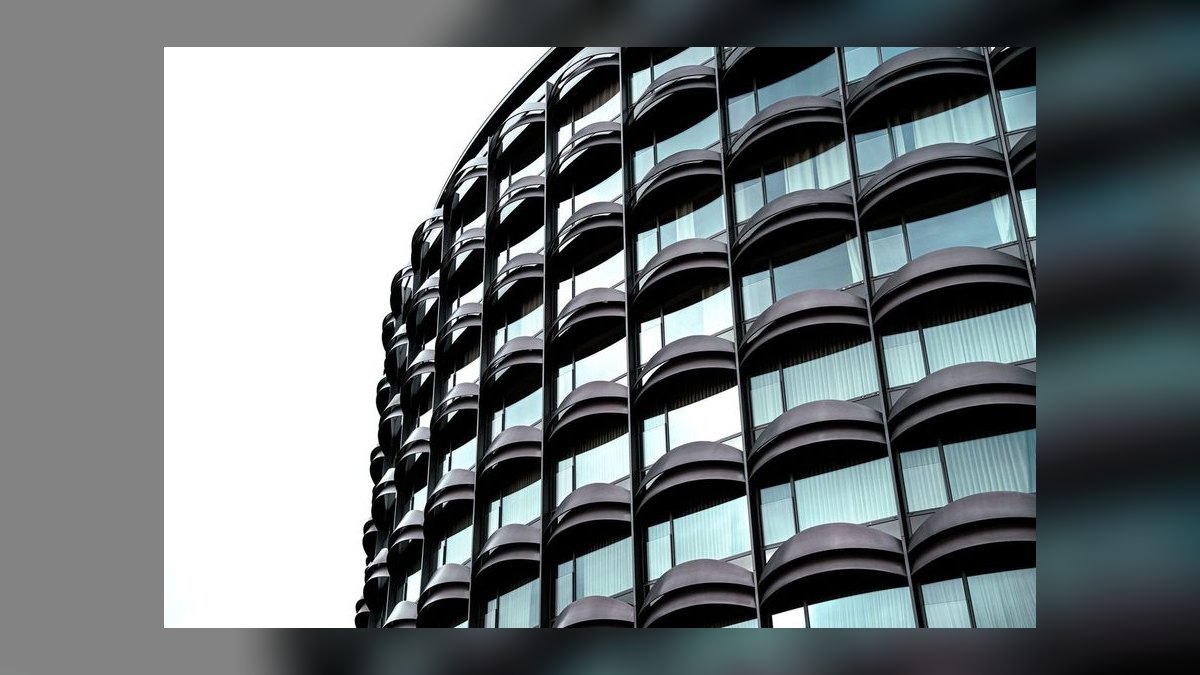
Step six — map disruption constraints before discussing schedule. Tenant business hours, residential quiet hours, parking impacts, dumpster and staging locations, lift or scaffold access, common-area closures, HOA notice requirements, weekend restrictions, and any weather or temperature windows the coating requires. In occupied buildings, this section is often the deciding factor between two competent contractors.
Step seven — identify who signs. The property manager typically scopes and recommends; the owner, board, or asset manager approves the dollars. Get both names, both roles, and the approval calendar — an HOA that meets monthly has a bid cycle measured in months, not days.
Drill this live in the room. Give each rep a real property in their territory and fifteen minutes to fill out the seven steps from memory of the site. The gaps they cannot fill are the questions they need to ask on the next walk.
What a commercial repaint actually costs, and how the timeline breaks down
Refuse to teach fixed dollar figures as universal truth — pricing varies enormously by region, substrate, height, access, and labor market, and a rep who quotes a national average to a local board will be corrected in public. Teach the structure of the number instead, so reps can build and defend a bid in their own market.
The cost stack. Every commercial repaint bid decomposes into roughly six buckets: labor hours for prep, labor hours for application, materials (paint, primer, sealant, sundries), access equipment (lifts, scaffold, swing stage), overhead and mobilization, and margin. On exterior repaints of weathered buildings, prep labor frequently equals or exceeds application labor — which is precisely why it is the first thing a lowball bid cuts. Teach reps to price prep as its own line so it survives negotiation as a visible item rather than getting quietly absorbed.
Why square-foot pricing misleads. Two 40,000-square-foot properties can differ by a wide multiple in true cost. Drivers that move the number the most: building height and whether work is reachable by ladder versus boom lift, substrate condition and how much scraping and patching is required, linear feet of sealant replacement, number of separate colors and cut lines, occupancy constraints that fragment the crew's day, and the sheer number of doors, windows, and railings — detail work consumes hours far out of proportion to its area. A rep who understands these drivers can explain a price gap without sounding defensive.
Timeline structure. Build the schedule backward from the approver's calendar, not forward from the crew's availability. A typical commercial repaint sequence: proposal delivered, approval cycle (days for a single owner, weeks to months for a board that meets monthly), contract and deposit, materials ordering and color approval — including draw-downs or sample sections when a board must vote on color — mobilization, then the work itself phased building by building or elevation by elevation, followed by punch walk and final acceptance. Exterior work also carries a weather dependency: most coatings specify minimum application and cure temperatures and prohibit application to damp substrate, which is why a bid should state the seasonal window rather than promise a date the weather may not allow.
Lifecycle framing, done honestly. The strongest close in the deck is cost per year of service, and it works without inventing statistics. Walk the buyer through it with their own numbers: take the value bid total and divide by the realistic service life of a fully prepped system on that substrate. Take the low bid total and divide by the service life the buyer should expect when prep is compressed. If a scoped job holds through the full exterior cycle and an under-prepped job needs remedial work in a fraction of that time, the low bid's annualized cost is higher even before counting the second mobilization, the second round of tenant notices, and the management hours spent running the process again. Let the buyer supply the assumptions — a board that does the arithmetic itself defends the decision far better than one that is told the answer.

Change orders and how to avoid eating them. Undefined scope is where margin dies. If the walk reveals unknown conditions — hidden rot behind trim, unknown substrate under multiple old coatings, asbestos-era materials on older buildings — write the unknown into the proposal as a stated allowance or a unit price rather than absorbing it. "Wood replacement billed at $X per linear foot beyond the Y feet included" is a professional, transparent line. Discovering rot mid-job and asking for money without a pre-agreed unit price is how a good relationship turns adversarial.
Payment and terms. Commercial work commonly runs on progress billing tied to phases or percentage completion, with retainage on larger contracts. Teach reps to raise terms during the proposal conversation, not after the contract arrives at accounting. A payment schedule that surprises a property manager after approval creates friction on a job that was otherwise won cleanly.
Where reps lose these deals
The failure modes in commercial painting bid selling are consistent enough to drill directly. Read each one aloud and have the room name a time it happened to them.
Racing to a number on the walk. The single most common error. The property manager asks "ballpark it for me" while standing in the parking lot, the rep wants to seem responsive, and a number leaves their mouth before the substrates are inventoried. That number becomes the anchor forever. The scripted response: "I can give you a real number in two business days once I've documented the prep — a ballpark before that would be a guess, and guesses are what cause change orders."

Matching the competitor's bid. "We can beat any bid you've got" concedes that the bids are comparable, which is the exact claim the training exists to refute. If the rep's bid is genuinely priced with two coats over prepped substrate and the competitor's is not, matching the price means either eating the margin or quietly cutting the scope — and cutting the scope makes the rep the thing they were selling against.
Selling to the wrong person. Reps invest an entire cycle with a property manager who cannot approve a five-figure capital expense, then wonder why the deal stalls in "waiting on the board." The manager is a genuine ally and often the internal champion, but the training's rule is to ask on the first walk: "When you have the bids in hand, who signs, and when do they meet?"
Presenting a bare number. A one-page total with no prep line, no coat count, and no warranty reference is indistinguishable from the cheap bid — worse, it is the *expensive* indistinguishable bid. Every proposal leaves the office with the prep sequence, the coating system, the coat count, the warranty, and the disruption plan visible.
Promising a compressed schedule to seem accommodating. "We'll knock the whole property out in one weekend so nobody notices" sounds like service and is actually a promise to skip prep, because there is no other way to compress that work. Coatings need clean, dry, sound substrate and cure time between coats. Reps should sell the phased schedule as the value it is: continuous tenant access, defined noise windows, and a crew that is never working around people.
Trashing the previous contractor. Pointing at the failing coating and saying "whoever did this did terrible work" attacks a decision the property manager probably made. The professional version points at the same wall and says "this pattern is what happens when bare masonry doesn't get a primer — it's a spec problem more than a crew problem." Same information, no defensiveness.
Leaving without a next step. "Send me the proposal" with no date attached is a stall dressed as a yes. The close is a scheduled start window, a board meeting date the bid will be presented at, or a signed acceptance — something on a calendar.
Letting the file go cold after a loss. A bid lost on price to an under-prepped competitor has a natural follow-up date. Set a reminder for a year out. When the coating starts to show, the rep who documented the prep gap in writing is the first call — and that call arrives with the credibility of having predicted it.
Never saying these things on a walk: that one coat will probably be fine; that the crew is the cheapest around; that a firm price is available before prep and coats are specified; or any version of a fixed number attached to an undefined scope.
Choosing the play: which bid posture fits which opportunity
Not every property deserves the full scoped-bid motion, and teaching reps to qualify saves more margin than teaching them to close. Use this decision framework in the last working block of the session.
Qualify on three axes. First, access to the site and the scope — will they permit a documented walk? Second, access to the approver — can the rep reach or at least present to the person who signs? Third, cycle value — is this a one-off single building, or a multi-building property, portfolio, or HOA community with recurring repaint cycles and adjacent work?
A property that scores well on all three is where the full motion belongs: thorough walk, photo documentation, scope-defined proposal, in-person presentation to the board or owner, lifecycle framing, and a phased schedule. That is a deal worth several hours of unpaid pre-work because the cycle value compounds.
A property that refuses the walk and will only accept emailed numbers is a price-only buyer. The correct posture is a clearly qualified budgetary range with explicit assumptions and an offer to convert it to a firm bid after a walk — not a firm number, and not hours of free estimating. Reps should feel permitted to spend twenty minutes there instead of six hours.
A property with a strong incumbent contractor and no visible coating failure is a relationship play, not a bid play. The move is to get on the bid list for the next cycle, learn the approval calendar, and stay visible — not to burn goodwill campaigning against a job that is performing fine.
A property in visible distress with a manager who is actively frustrated is the highest-intent opportunity in the pipeline. Move fast, walk within days, and lead the proposal with the failure diagnosis. The buyer already knows something went wrong; the rep who explains *why* it went wrong wins on competence.
Presenting to a board versus an owner. These are different rooms. A single owner or asset manager wants the financial case: annualized cost, downtime, and risk of a second mobilization. A board wants to feel safe voting in public — they want photos, a named system, a warranty, a schedule that protects residents, and a proposal short enough that every member reads it. For a board, the rep's job is partly to arm the friendliest member with the two sentences they will repeat during the vote.
Commitments before the room clears. Each rep leaves with three written items: one property walk booked with a named contact this week; a standing rule that no proposal ships without a visible prep line, coat count, and warranty; and one rehearsed lifecycle reframe ready for the next board or owner presentation. Pin the scope-brief template and the cost-stack worksheet in the shared drive so the training survives the week.
Related questions
How long should a commercial painting walk take?
Budget 45–90 minutes for a single building and half a day for a multi-building property. The time goes into substrate inventory, defect photography, and disruption constraints — not measurement alone. Rushing the walk produces the vague scope the training exists to eliminate.
Should the bid include a warranty?

Yes, and name whose warranty it is. Distinguish the manufacturer's product or system warranty from the contractor's workmanship warranty, and state the duration of each. Manufacturer coverage typically requires the published system be applied as specified, which reinforces the coat-count argument.
What if the property manager shares competitors' numbers?
Do not match the number. Ask what is on their prep line and how many finish coats they specify. If the competing scope is thinner, the gap is explainable; if it is equivalent and still cheaper, that is a real cost-structure question worth answering honestly rather than discounting reflexively.
How do you handle painting an occupied building?
Phase the work building by building or elevation by elevation, keep entrances and parking accessible, confine noise-generating work to agreed hours, and publish the schedule to tenants in advance through the manager. Disruption control is a priced deliverable, not a courtesy.
Is it worth bidding when you know you will not be lowest?
Yes, if the walk and the approver are accessible. A documented scoped bid that loses still teaches the buyer what to look for and creates a natural follow-up when the cheaper job shows wear. Skip only when the buyer refuses a walk entirely.
FAQ
What if the buyer will not allow a property walk before bidding?
Offer a budgetary range with written assumptions instead of a firm bid, and state plainly that the number converts to a fixed price only after a documented walk. A property that awards work with no site access is buying on price alone, and that opportunity does not justify hours of unpaid estimating time.
How do you justify a bid that is meaningfully higher than the low bid?
With the prep line and the coat count, not with adjectives. Show the photographs of chalking substrate and failed sealant, show the written prep sequence and the manufacturer's system, and ask the buyer to compare those specific lines across bids. Then let them calculate annualized cost using their own service-life assumptions.
What surface preparation standard should a commercial bid reference?
Reference the applicable SSPC/AMPP surface-preparation designations for metal and masonry work, PDCA workmanship standards for general practice, and the coating manufacturer's published system for the specific product being applied. Naming standards makes the scope auditable and makes vague competing bids look vague by contrast.
Who actually approves a commercial repaint — the property manager?
Usually not alone. The manager scopes the work, gathers bids, and recommends; the owner, HOA board, or asset manager approves the spend. Ask on the first walk who signs and when they meet, because an approval body that convenes monthly sets the entire deal timeline.
How is this different from residential painting sales?
The residential buyer purchases an appearance outcome for a home they occupy. The commercial buyer purchases a documented coating system, a warranty, and a disruption plan they must defend to someone above them. Different buyer, different risk, different proof required — which is why the commercial motion is built on written scope rather than color consultation.
What is the follow-up move after losing a bid on price?
Log the competing scope gap in writing and set a reminder roughly a year out. When an under-prepped coating begins to chalk, peel, or fail at sealant joints, the rep who documented the prediction becomes the credible first call — and that second conversation rarely turns into a price comparison.
Sources
- Painting Contractors Association — https://www.pcapainted.org/
- AMPP (Association for Materials Protection and Performance), formerly SSPC/NACE — https://www.ampp.org/
- Master Painters Institute — https://www.mpi.net/
- American Coatings Association — https://www.paint.org/
- BOMA International (Building Owners and Managers Association) — https://www.boma.org/
- APPA — Leadership in Educational Facilities — https://www.appa.org/
- Community Associations Institute — https://www.caionline.org/
- OSHA — Scaffolding and Fall Protection standards — https://www.osha.gov/scaffolding
- U.S. EPA — Lead Renovation, Repair and Painting Program — https://www.epa.gov/lead/renovation-repair-and-painting-program
Related on PULSE
This page will be disappearing soon. Save it to your device for $1 — or read it free while it is here.
@Kory-White- · if Venmo asks, the last 4 of my number are 2012
This page is gone.
This one is off the shelf now. $1 keeps it on your phone for good — the whole page, pictures and diagrams included.
 sales-trainingCommercial Electrical Project Selling — 60-Min Training
 sales-trainingCommercial Flat-Roof Selling — 60-Min Training
 sales-trainingSmart Home Installation Sales — 60-Min Training
 sales-trainingGutter and Gutter-Guard In-Home Sales — 60-Min Training
 sales-trainingSeptic Service and Install Sales — 60-Min Training
 sales-trainingPatio and Hardscape Design Sales — 60-Min Training
 sales-trainingResidential Painting Estimate-to-Close — 60-Min Training
 sales-trainingReplacement Window In-Home Sales — 60-Min Training
 sales-trainingKitchen and Bath Remodel In-Home Sales — 60-Min Training
 sales-trainingFence Installation Sales — 60-Min Training