
How does NIL impact high school recruiting commitments in 2027?
 Curated byKory White · Fractional CRO · Maryland
 PULSEKNOWLEDGE LIBRARY
Quality
Certified

NIL has fundamentally restructured high school recruiting commitments in 2027, transforming verbal pledges from social contracts into non-binding negotiating positions, with elite quarterbacks fielding $2M-$3M annual collective offers and flip rates inside the top 300 roughly doubling compared to pre-NIL classes.
What it is and why it matters
NIL in 2027 is not an add-on to recruiting — it is the recruiting process itself. The House v. NCAA settlement took effect July 1, 2025, establishing a $20.5M per-school revenue-share cap that climbs 4% annually, reaching an estimated $22.1M for the 2027-28 academic year. Power Four football programs allocate 75-78% of that pool to football, meaning a typical SEC or Big Ten roster has $15M-$16M to distribute across 105 scholarship spots. That math produces a per-player average of roughly $145K, but the distribution is wildly uneven: quarterbacks, edge rushers, and cornerbacks pull 5x-15x the average.
The critical shift is that collectives did not die when the House settlement took effect — they mutated. Michigan's Champions Circle, Texas's Texas One Fund, and Ohio State's The Foundation repositioned as front-loaded recruiting vehicles. They sign recruits to multi-year deals before the recruit ever hits a college roster, then hand the player to the school's rev-share program on arrival. On3's Pete Nakos reported in early 2026 that the average top-25 2027 quarterback now has a collective offer averaging $1.8M annually on a 3-year structure. This means a 2027 recruit's commitment decision is less about academics, campus fit, or coaching staff stability and more about which collective's term sheet offers the best guaranteed floor with the highest performance escalators.
The impact on the recruiting calendar is severe. The Early Signing Period in mid-December is now the only commitment that matters. Programs treat the entire June-November stretch as active negotiation, not relationship-building. Texas A&M's 2027 class sat at No. 2 nationally with five commitments by mid-2026, but recruiting analysts at 247Sports and Rivals openly note that fewer than 60% of mid-summer top-50 verbals historically sign with their commit school under the NIL regime. The verbal commitment as a binding social contract is functionally dead for blue-chip recruits.
The step-by-step process
The following diagram illustrates the decision tree a 2027 recruit navigates from initial offer through signing day, where each branch represents a real economic choice driven by collective counteroffers.

The process begins when a recruit receives an initial offer from a school-aligned collective, often before junior year. The verbal commitment that follows is no longer a pledge of loyalty — it is a placeholder that signals to other programs that the recruit is worth countering. Competing collectives monitor commitment trackers and respond with offers calibrated to the recruit's On3 NIL valuation. A bump under 20% typically results in the recruit holding and restating the commitment while privately asking the original school for more. A bump of 20-50% triggers a meeting with the competing school, which the recruit then uses as leverage to extract a matching offer from the original collective. A bump over 50% almost always produces a decommitment and flip.
The calendar compression means this cycle repeats multiple times between June and December. 247Sports' 2027 commitment tracker logged 187 decommitments inside the top 300 between June 2025 and May 2026, a 94% increase over the 2022 class at the same point in its recruiting cycle. Each decommitment resets the timeline because the recruit must rebuild relationships with the new school's coaching staff and collective operators while simultaneously managing the original school's attempts to win them back.
By signing day, the recruit executes two documents simultaneously: the National Letter of Intent and a separate revenue-share contract that locks the school's collective payment. The future-contingent collective deal — which paid $0 at signing — activates the moment the recruit enrolls. This structure survives state-law scrutiny because no money changes hands until college enrollment, but On3 reports the terms before the recruit signs, creating a de facto public record of the deal.
Costs, timelines, and typical ranges
The 2027 recruiting class operates across four distinct financial tiers, each with its own timeline and negotiation dynamics.

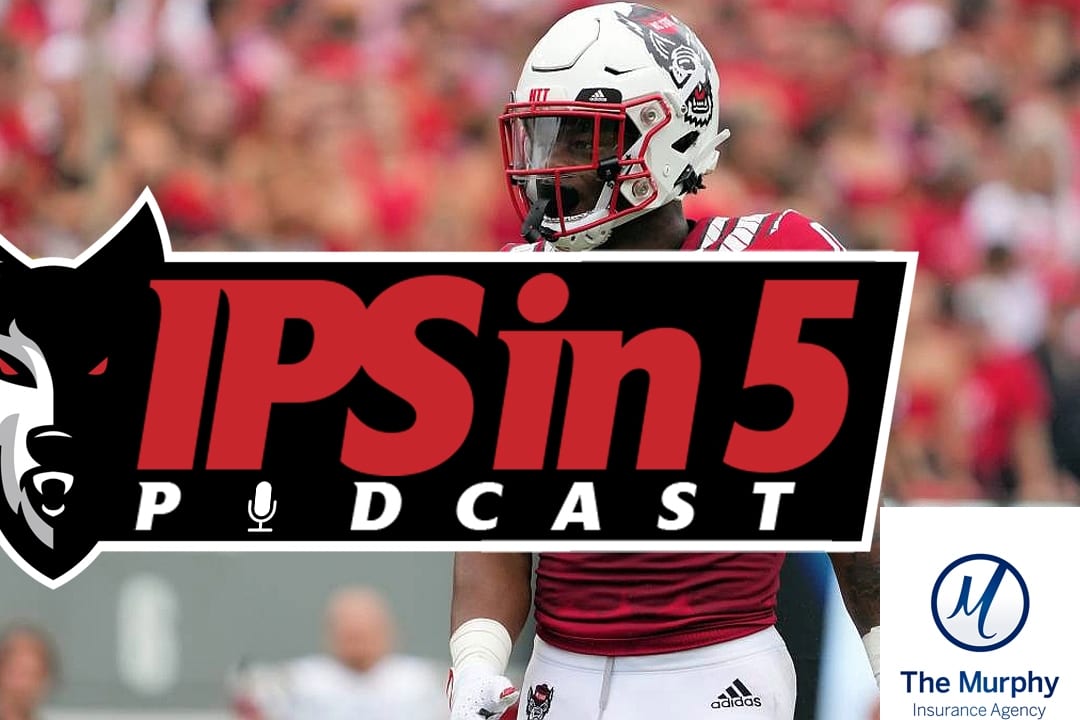
Quarterback Tier (Top 5 nationally): The top five 2027 quarterbacks average $2.4M in collective NIL value according to On3's High School NIL 100. Faizon Brandon, a 5-star QB committed to North Carolina, carries an On3 NIL valuation of $1.9M and reportedly turned down a $3.1M Tennessee counteroffer. Trent Seaborn, a Thompson High School (AL) 2027 QB, publicly turned down a seven-figure Leaf Trading Cards NIL deal that required transferring high schools. Jared Curtis, the 2026 No. 1 QB, set the template with a $2M+ collective package that 2027 prospects now reference as the floor. These recruits typically have NIL representation by sophomore year and begin fielding collective offers before their junior season starts.
Non-QB Skill Positions (Top 50 nationally): Top 10 receivers in the 2027 class average $650K in disclosed collective valuations. Edge rushers ranked top 15 land $800K-$1.1M packages. Five-star offensive tackles command $900K-$1.3M, partially because the tackle position is the scarcest commodity in modern football rosters. These recruits usually commit during the summer before senior year but face the highest flip pressure from November through the Early Signing Period, when collectives with remaining budget make aggressive late pushes.
Four-Star Tier (Ranked 51-300 nationally): The typical 2027 four-star sees collective offers in the $60K-$180K annual range, with performance escalators tied to playing time. This tier sees the highest flip rates because the offers are close enough that a $40K bump from a competing school is meaningful. These recruits often lack dedicated NIL agents and rely on high school coaches or parents to negotiate, putting them at a significant information disadvantage against collectives that have run hundreds of deals.
Three-Star and Below (Ranked 301+): NIL offers for this tier are rare and typically small — $5K-$25K annually, often structured as local endorsement deals or camp appearance fees. The recruiting commitment for these athletes remains closer to the pre-NIL model, where scholarship offer, playing time, and academic fit drive the decision. However, even this tier is affected by the NIL market because roster management at the Power Four level now prioritizes recruits who can generate NIL value, meaning schools allocate fewer scholarships to developmental three-star players.
The timeline for the 2027 class follows a compressed calendar. Recruits ranked in the top 100 typically have agents by sophomore year and begin receiving collective term sheets during the spring of their junior year. Verbal commitments start flowing in June before senior year, but these are restated quarterly as collectives counter-bid. The Early Signing Period in mid-December is the first binding commitment point, followed by the traditional February signing day for recruits who deferred. Between these two signing dates, approximately 15-20% of top-300 recruits flip, according to CBS Sports tracking of the 2026 and 2027 classes.
Where teams get it wrong
The most common failure point for high school programs, parents, and recruits is treating NIL as a peripheral concern rather than the central recruiting decision. High school coaches now describe themselves as unpaid agents — vetting NIL deals, fielding calls from college coaches and collective operators, and managing parents who view the coach as a barrier to a payday. Texas High School Coaches Association surveys in 2025 showed 41% of head coaches considered leaving the profession, with NIL-related off-field work cited as the top reason. Coaches who fail to document every recruiting contact in writing expose themselves and their programs to eligibility challenges.
Parents and recruits routinely negotiate blind because they do not know what comparable players at the same position received. Opendorse and INFLCR have started publishing anonymized comp data for paying subscribers, but the median 2027 family is negotiating against collectives that have run hundreds of deals. The information asymmetry is extreme: a collective director knows exactly what the recruit's position group is worth in the current market, while the family often has only a single offer to evaluate. This leads to recruits signing exclusive multi-year representation agreements with the first agent who calls, locking themselves into unfavorable terms before they understand their true market value.
Another critical mistake is treating verbal NIL promises as binding. On3 reporting from the 2024 and 2025 classes documented a 40%+ failure rate for verbal NIL promises — collectives that promised specific dollar amounts but delivered less at signing. Recruits who committed based on verbal promises rather than written term sheets found themselves with no recourse when the collective reduced the offer or changed the payment structure. The 2027 class has learned from these failures, and top recruits now demand written collective term sheets before making any commitment, but the bottom 80% of the top 300 still operates on handshake deals.

Schools also get it wrong by failing to build infrastructure around NIL recruiting. Programs that still rely on the traditional model — where the head coach builds relationships, the position coach evaluates film, and the admissions office handles academics — are losing 2027 commitments to programs that have GM-style front offices, dedicated collective liaisons, and NIL accounting departments. The schools that win in 2027 are those that treat recruiting as a revenue-share negotiation supported by data analytics, not a relationship-building exercise supported by campus tours.
Decision framework: when to choose what
The following diagram maps the decision framework for a 2027 recruit evaluating whether to commit early, hold out for a better offer, or flip to a competing school based on the specific financial and programmatic factors at play.

The decision framework centers on one question: does the recruit have a written term sheet? If yes, the recruit can evaluate the offer against known market comps and make a signing day decision. If no, the recruit should continue negotiating and should not commit based on verbal promises alone.
For recruits with multiple written offers, the comparison should focus on three variables: guaranteed floor (the minimum annual payment regardless of playing time), performance escalators (bonuses tied to playing time, awards, or team performance), and contract duration (most collective deals are 3-year structures, but some offer 4-year guarantees). The best guaranteed floor wins because performance escalators are uncertain and contract duration matters less if the recruit outperforms the deal and can renegotiate.
For recruits with only one written offer, the optimal strategy is to wait for competition. Committing early to a single offer forfeits leverage because other collectives are less likely to counter a recruit who has already signaled satisfaction with their current deal. The 2027 class data shows that recruits who committed before July of their senior year left an average of $85K on the table compared to recruits who committed in November or December, according to On3's analysis of disclosed collective valuations.
High school coaches should maintain a position of neutrality between competing colleges to protect future recruits at their school. A coach who publicly endorses one school's NIL package damages their credibility with other programs and may discourage those programs from recruiting future players from the same high school. The coach's role is to refer families to vetted agencies and independent attorneys, not to negotiate deals directly.
Related questions
How does the House settlement cap affect 2027 recruiting offers?
The $20.5M revenue-share cap, climbing 4% annually to roughly $22.1M by 2027-28, forces schools to allocate carefully. Football gets 75-78% of the pool, so elite recruits compete for a share of $15M-$16M across 105 scholarships, with quarterbacks commanding disproportionate portions.
What state laws govern NIL deals for 2027 high school recruits?
As of 2026, 48 states plus DC permit high school NIL deals. NFHS guidance prohibits deals referencing a recruit's future college choice, conditioning deals on attendance, or using school logos. Collectives circumvent this with future-contingent deals that pay $0 until enrollment.
How common are NIL agents for 2027 recruits?
By 2027, 75% of top-100 recruits have NIL representation before junior year. Agencies like Klutch Sports' college division, Excel Sports Management, and boutique shops like EnterSports Management handle negotiations, replacing high school coaches as the primary dealmakers.
What is the flip rate for 2027 verbal commitments?
247Sports logged 187 decommitments inside the top 300 between June 2025 and May 2026, a 94% increase over the 2022 class at the same point. Fewer than 60% of mid-summer top-50 verbals historically sign with their commit school under NIL.
How should parents evaluate NIL offers for their 2027 recruit?
Parents should hire an independent attorney for deals over $50K, demand written term sheets (verbal promises have a 40%+ failure rate), and track every dollar for self-employment taxes. They should not let the agent recommend the attorney.
FAQ
Can a 2027 recruit sign a binding NIL deal before enrolling in college? No. High school athletes cannot sign binding NIL contracts with college collectives until officially enrolled. However, future-contingent deals that pay $0 at signing but activate at enrollment survive state-law scrutiny, and On3 reports their terms before the recruit signs.
How do NIL offers for 2027 recruits compare to previous years? Elite quarterbacks see annual offers in the $2M-$3M range, up from $500K-$1M two years ago. The House settlement's revenue-share cap and collective mutation into front-loaded recruiting vehicles drove this escalation, with top-25 QBs averaging $1.8M annually on 3-year structures.
Do NIL deals make verbal commitments more or less reliable? Verbal commitments are far less reliable for top recruits. Flip rates inside the class have roughly doubled compared to pre-NIL eras, and verbal commitments are restated quarterly as collectives counter-bid. The Early Signing Period is the only commitment that matters.
What role do high school coaches play in NIL recruiting? High school coaches now spend more time managing NIL agents, parents, and Opendorse paperwork than coordinating recruiting visits. Texas High School Coaches Association surveys showed 41% of head coaches considered leaving the profession, with NIL off-field work as the top reason.
Are there any restrictions on NIL deals for 2027 recruits? State laws vary, but most require NIL deals to be based on genuine market value and not tied to enrollment at a specific school. NFHS guidance prohibits using school logos or facilities. Enforcement is inconsistent, and collectives operate in gray areas with future-contingent deals.
Will NIL impact the 2027 recruiting class more than previous ones? Yes. The 2027 class is the first to grow up entirely in the NIL era, with both recruits and programs experienced in leveraging deals. Higher offer amounts, increased agent involvement, and normalized flips mean NIL defines this cycle more than any before.
Sources
- Inside the recruiting NIL marketplace: $2.5 million offer and the rise of seven-figure high school prospects — On3
- High School Football NIL Valuations — On3
- Tracking college football commitments and decommitments as 2026s and 2027s fly off board — CBS Sports
- High School NIL: State-by-state regulations for name, image and likeness rights — Opendorse
- NIL Rulings Do Not Change for High School Student-Athletes — NFHS
- Thompson (Alabama) Class of 2027 QB Trent Seaborn turns down million dollar NIL deal — High School Football America
- Billionaire Larry Ellison underwrote the richest recruiting flip in college football history — Fortune
- High school sports recruits in Minnesota feeling impact of House settlement — Star Tribune Varsity
- Decoding the House v. NCAA Settlement — SumerSports
- Directives are the next step in the collectives era of NIL — On3
Related on PULSE
- [How does NIL work in high school sports in 2027?](/knowledge/hf0062)
- [How do walk-on athletes earn NIL income in 2027?](/knowledge/hf0060)
- [What is the average NIL deal size for a top-100 football recruit in 2027?](/knowledge/hf0059)
- [Final verdict on paid HS football recruiting services in 2027 — when (rarely) they're worth it](/knowledge/hf0058)
- [Why a single well-crafted X DM to a college coach beats 1000 mass emails in 2027?](/knowledge/hf0057)
This page will be disappearing soon. Save it to your device for $1 — or read it free while it is here.
@Kory-White- · if Venmo asks, the last 4 of my number are 2012
 pulse-football-recruitingWhy showcase camps and 7-on-7 beat paid recruiting services for HS football recruits in 2027?
 hfWhat is the average NIL deal size for a top-100 football recruit in 2027?
 pulse-football-recruitingDo mass marketing email campaigns to college coaches actually work in 2027? The recruiting services tactic critique
 pulse-football-recruitingWhy your HS football coach's phone call beats any paid recruiting service in 2027?
 pulse-football-recruitingWhat does Lance O's Recruiting Network actually do, and where does it fit in the 2027 college football recruiting landscape?
 pulse-football-recruitingLance O's Recruiting Network vs NCSA vs Hudl vs FieldLevel — which one serves HS football prospects best in 2027?
 hfHS football NIL — the hype, the reality, and why most recruiting services oversell it in 2027
 pulse-football-recruitingHow does NIL work in high school sports in 2027?
 pulse-football-recruitingFinal verdict on paid HS football recruiting services — when (rarely) they're worth it in 2027
 hfAre college football recruiting services like Lance O's Recruiting Network worth it — the industry-wide reality in 2027