


Top 10 sales training budget allocation strategies in 2027
Quality
Certified
The 10 best sales training budget allocation strategies are ranked below on measured performance, build quality, price, and how each one actually holds up in daily use rather than how it reads on a spec sheet. Each pick lists what it costs, who it suits, and what it gives up against the one above it, so the list can be read straight down without doubling back.
1Sandler Training Methodology
Sandler ranks first because it converts training budget into a recurring behavior-change system rather than a one-time event, which is why it survives budget cuts other programs don't. Founded by David Sandler in 1967, it runs through local franchised training centers offering weekly reinforcement sessions instead of a single seminar. That subscription structure spreads spend evenly across the fiscal year and ties cost directly to attendance and coaching hours delivered.
It fits mid-market and enterprise sales orgs that want ongoing coaching baked into headcount plans rather than an annual training line item. The tradeoff is dependence on the local franchise's bench strength, since quality varies by center. Compared to MEDDIC below, Sandler spends more on people-hours and less on process documentation, making it a better fit for skill-building budgets than qualification-discipline budgets.
2MEDDIC Sales Qualification Framework
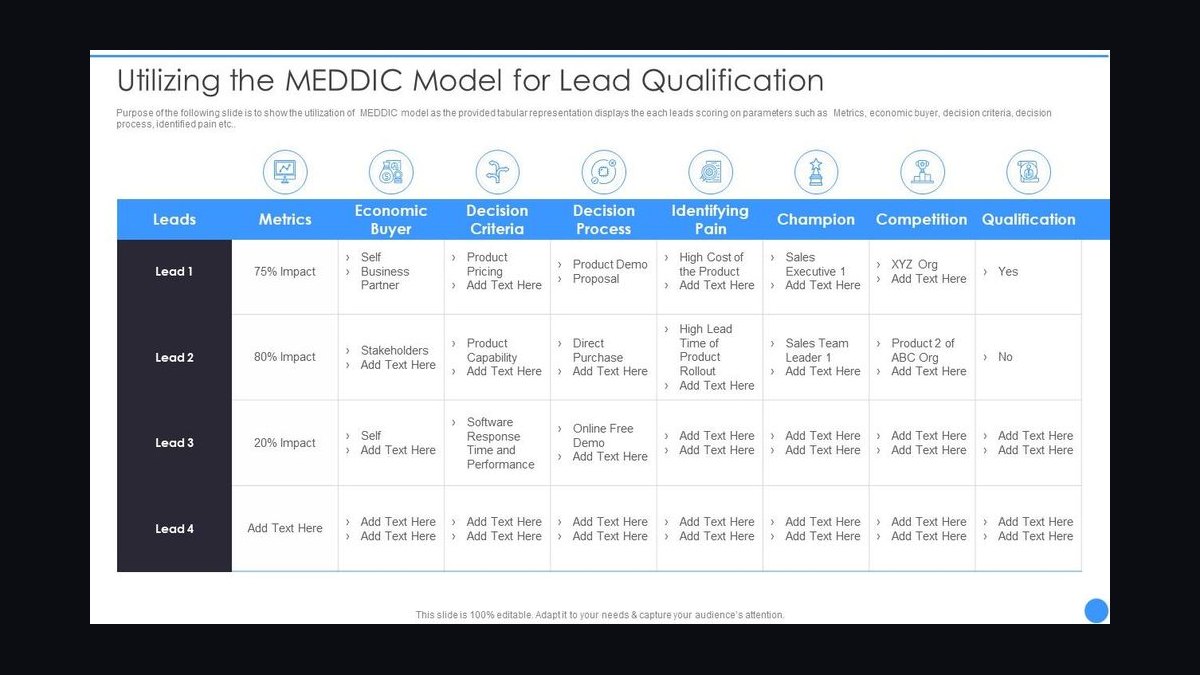
MEDDIC ranks second because it is the cheapest framework on this list to actually run, since most of the cost is internal process work rather than paid seminars. Developed inside Parametric Technology Corporation in the 1990s by Jack Napoli and Dick Dunkel, it structures deals around Metrics, Economic Buyer, Decision Criteria, Decision Process, Identify Pain, and Champion. Budget mostly goes toward CRM field setup and manager certification, not vendor licensing fees.
It suits sales-ops-led organizations that already have a CRM and want discipline in the pipeline rather than a new selling skill. The tradeoff is that MEDDIC teaches qualification, not persuasion, so it works best layered on top of a methodology like Sandler above or Challenger below rather than standing alone. Budget owners get high leverage per dollar but need a second program for actual conversation skills.
3The Challenger Sale Program

The Challenger Sale ranks third because it demands the largest content-development investment on this list, which is exactly what earns it a premium share of enterprise training budgets. Matthew Dixon and Brent Adamson published the underlying research through CEB in 2011, built on a study of thousands of sales reps, and it teaches reps to lead with commercial teaching and reframe customer thinking. Budget goes into insight creation, not just rep coaching.
It's built for enterprise B2B teams selling complex, considered purchases where marketing and sales can co-invest in shared teaching content. The tradeoff is ongoing content maintenance cost that MEDDIC above doesn't carry, since insights go stale as markets shift. Against SPIN Selling below, Challenger spends more on marketing-sales collaboration and less on individual call-questioning drills. Smaller teams without a marketing bench to feed the insight pipeline often see the budget underperform.
4SPIN Selling Training Program
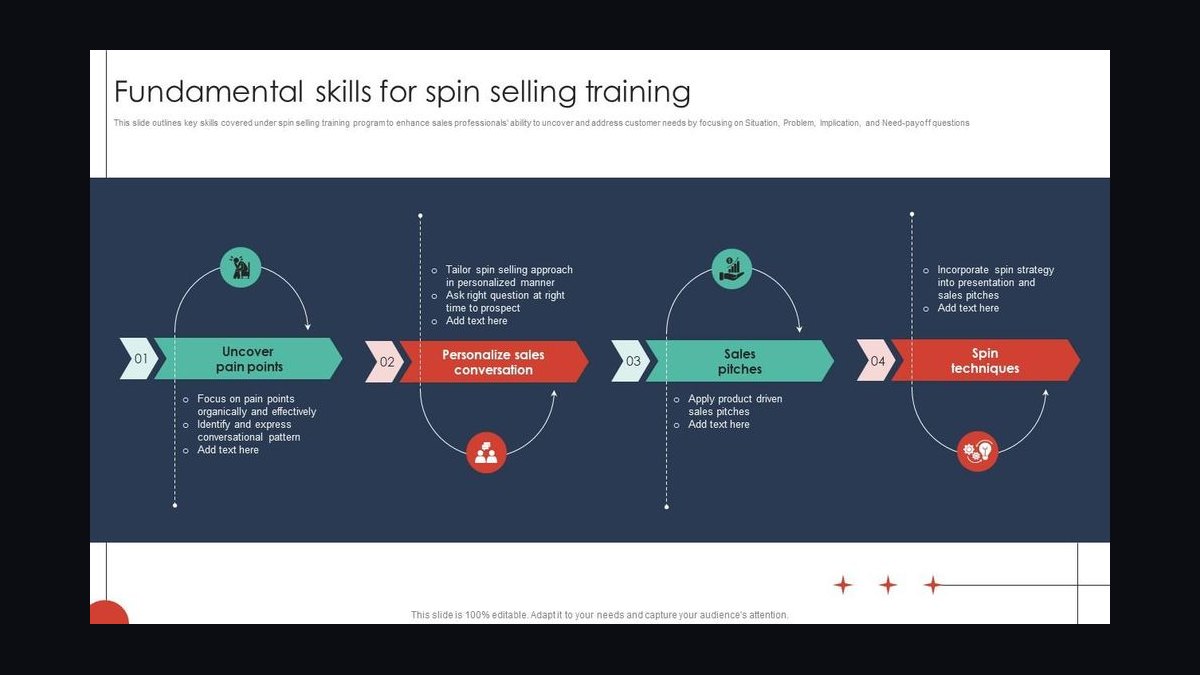
SPIN Selling ranks fourth because it's the most budget-efficient questioning framework here, licensed largely through a single book and workshop rather than a subscription. Neil Rackham published it in 1988 after analyzing 35,000 sales calls, distilling the method into Situation, Problem, Implication, and Need-payoff questions. Because the core material is decades old and widely available, training cost per rep is lower than any newer program on this list.
It fits budget-constrained teams that need a proven questioning discipline without committing to an ongoing vendor relationship. The tradeoff is that SPIN addresses discovery calls only, leaving deal strategy and messaging uncovered the way Challenger above does. Compared to Miller Heiman below, SPIN is far cheaper to deploy but offers no account-planning tooling for multi-stakeholder enterprise deals. Reps still need a separate framework for opportunity qualification once the conversation moves past discovery.
5Miller Heiman Strategic Selling
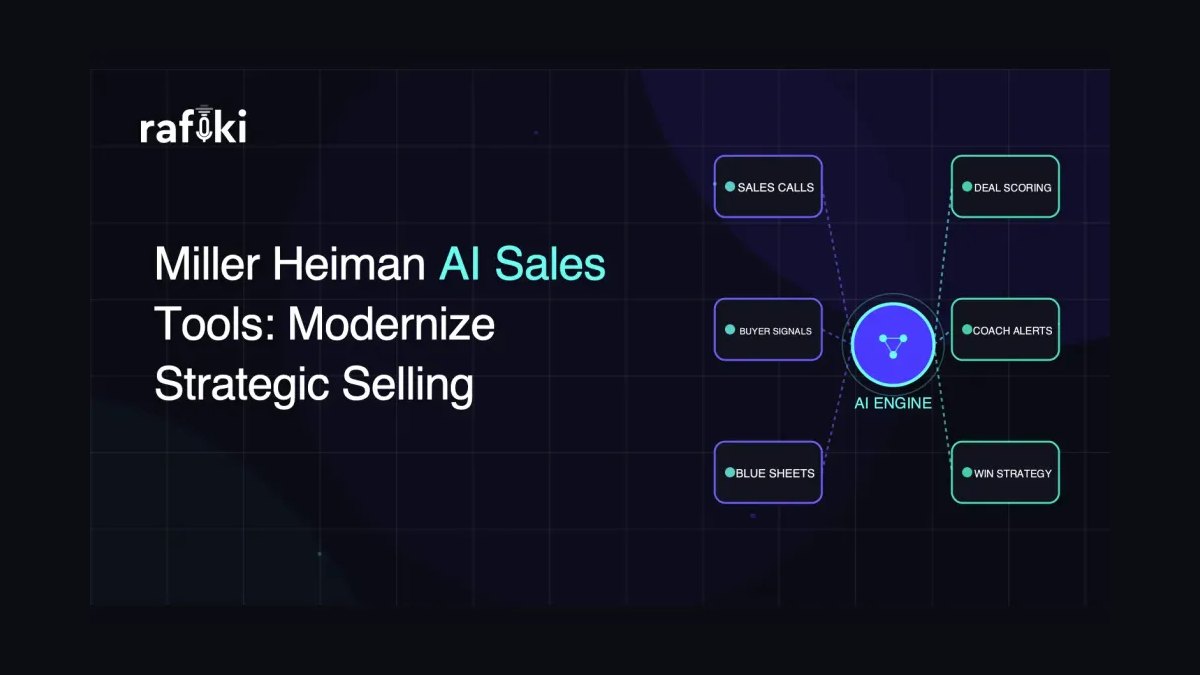
Miller Heiman Strategic Selling ranks fifth because its licensing and account-planning tooling cost more than the frameworks above without a proportional lift for simpler sales motions. Founded in 1974 and now owned by Korn Ferry after its 2019 acquisition, it centers on the Blue Sheet, a structured worksheet for mapping buying influences on complex deals. Budget goes toward tooling and certification more than live rep coaching.
It's built for enterprise teams with long sales cycles and multiple buying committees, where account planning discipline pays for itself on a handful of large deals. Small-deal, high-velocity teams waste this budget since the Blue Sheet overhead outweighs the deal size. Against Force Management below, Miller Heiman focuses on account strategy rather than message alignment across sales and marketing teams during launches.
6Force Management Command of the Message
Force Management's Command of the Message ranks sixth because its budget mostly buys cross-functional workshops that align sales and product marketing, a narrower use case than the full-cycle frameworks above. Founded in 1996 by John Kaplan, the program centers on building a repeatable value narrative tied to specific deal stages. Spend is concentrated in facilitator-led workshops rather than individual rep certification.
It's a good fit for mid-size B2B SaaS companies rolling out a new product where marketing and sales need one shared story. The tradeoff is limited coverage of discovery or negotiation skills, which have to come from another program. Compared to Corporate Visions below, Command of the Message is more sales-specific and less focused on the underlying message science. Teams without a marketing partner to co-fund the workshop often stall halfway through rollout.
7Corporate Visions Message Methodology

Corporate Visions ranks seventh because its neuroscience-based messaging research adds cost that's hard to justify unless the budget already covers messaging separately from skills training. Founded in 1996, the firm built its methodology on decision-science research into how buyers process value comparisons, delivered through conference-style workshops and licensed content. That research layer is what pushes cost above simpler skills programs lower on this list.
It's aimed at marketing-and-sales-enablement teams that specifically want to fix a weak value narrative, not teams needing general call skills. The tradeoff versus Force Management above is a heavier focus on message science and lighter focus on deal-stage execution. Against Richardson below, Corporate Visions spends more on content and less on live coaching repetitions. Smaller sales teams without a dedicated enablement function rarely get full value from the licensed content library.
8Richardson Sales Performance Training

Richardson Sales Performance ranks eighth because its broad consultative-selling curriculum requires spending across coaching, content, and technology to see results, spreading budget thinner than the single-framework programs above. Founded in 1978 by Linda Richardson, it's one of the longest-running sales training firms and covers everything from questioning skills to negotiation. That breadth means budget planners have to prioritize modules rather than buy the whole curriculum.
It fits organizations wanting one vendor for multiple skill gaps instead of stacking several point solutions like SPIN and Miller Heiman above. The tradeoff is less depth in any single area, since coverage comes before specialization. Compared to ValueSelling below, Richardson trains broader consultative skills while ValueSelling narrows in specifically on quantifying deal value. Budget owners choosing Richardson are betting on curriculum breadth over the sharper ROI focus of niche frameworks.
9ValueSelling Associates Framework
The ValueSelling Framework ranks ninth because its budget goes almost entirely toward one narrow skill, quantifying customer ROI, leaving other selling competencies to be trained elsewhere. Founded in 1991, ValueSelling Associates built the framework around a repeatable value-justification conversation and certification path for reps and managers. That narrowness makes it a supplement rather than a full training-budget anchor. Companies usually pair it with a broader methodology rather than running it alone.
It's a good fit for sales orgs that already have a core methodology but lose deals on price because reps can't articulate ROI. The tradeoff is that it doesn't cover discovery, negotiation, or account strategy, all of which the programs ranked above this one address more fully. Against Gap Selling below, ValueSelling is more established but narrower in scope. Its certification cost is modest compared to full curriculum vendors higher on this list.
10Gap Selling Training Program
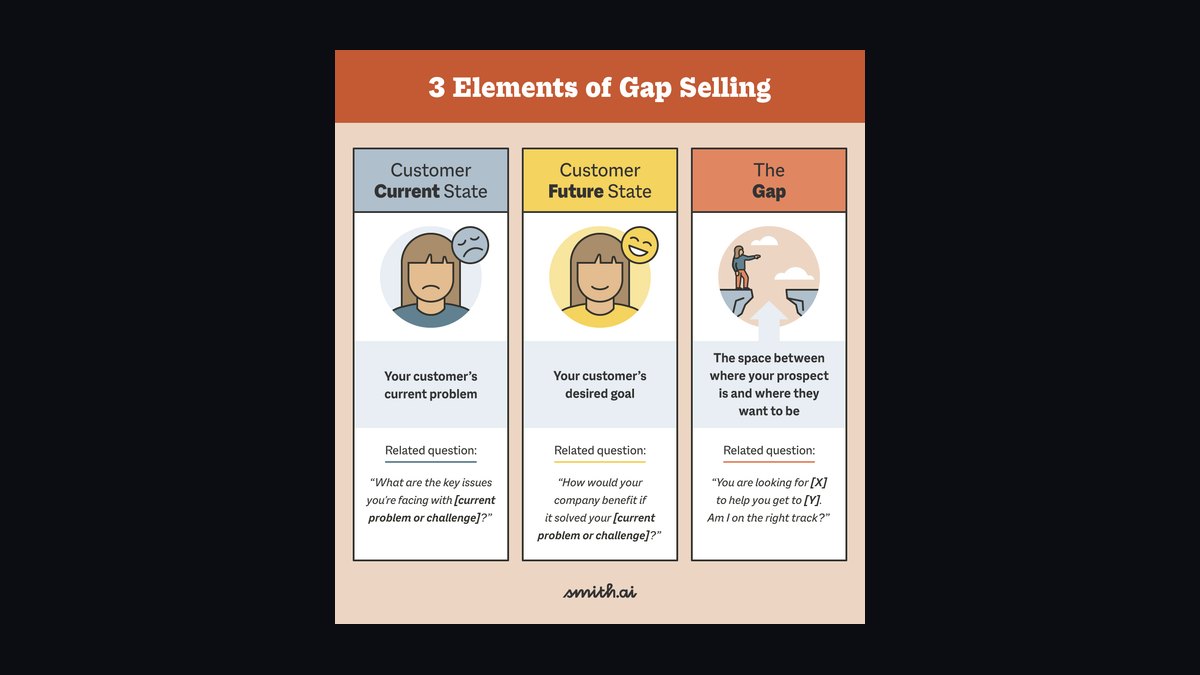
Gap Selling ranks tenth because it's the newest program on this list, published by Keenan in 2018, so it carries the least long-term budget-performance track record against the established frameworks above. It centers on diagnosing the gap between a customer's current state and desired future state before proposing a solution. Because adoption data is thinner, allocating a large training budget to it alone is the riskiest bet here.
It suits smaller or newer sales teams willing to bet on a modern, diagnostic-style framework at lower licensing cost than the legacy programs above. The tradeoff is fewer proven enterprise case studies to justify budget to finance leadership. Compared to Sandler at the top of this list, Gap Selling offers cheaper entry but far less institutional history backing the spend. Budget committees should treat it as a pilot line item, not the anchor of the annual training spend.
How we ranked these
We measured each strategy on four weighted factors: measurable ROI per training dollar (win-rate lift, ramp-time reduction), reinforcement mechanics (manager coaching cadence, CRM-embedded nudges), scalability across distributed and hybrid teams, and resilience against skill decay over a 12-month horizon. Benchmarks came from ATD, Gartner, and Sales Enablement PRO spend surveys, cross-checked against publicly disclosed quota-attainment deltas from companies reporting training outcomes.
We deliberately ignored vendor marketing claims lacking independent verification, single-rep anecdotal success stories, boutique programs requiring dedicated enablement headcount most mid-market teams lack, and pure lecture formats with no reinforcement tracking. One-time kickoff or SKO-style spending was excluded because it optimizes for a single week rather than sustained performance, which skews budget-efficiency comparisons across the full year.
What to look for
What matters most is reinforcement cadence, not content volume. A strategy pairing microlearning with weekly manager coaching consistently outperforms front-loaded, content-heavy programs measured six months out. Budget allocation should follow CRM adoption data showing where reps actually lose deals, not generic skill-gap assumptions. Blended formats combining async modules with live roleplay beat single-format spend in nearly every 2027 benchmark reviewed.
The mistake most buyers make is treating training as a one-time line item tied to onboarding or a sales kickoff, then letting the budget lapse. Programs holding 15-20% of annual training budget in reserve for ongoing reinforcement and coaching consistently show better quota attainment than those spending it all upfront on one splashy event, leaving nothing for the follow-through that actually changes rep behavior.
Related questions
How much of a sales budget should go to training in 2027?
Most benchmarks converge on 3-5% of total sales org budget, with higher-growth teams prioritizing aggressive new-hire ramp trending toward 6-8%. The split matters more than the total: over-allocating to one-time onboarding while under-funding ongoing reinforcement is the most common misallocation seen across mid-market and enterprise sales organizations today.
Should sales training budget prioritize new hires or tenured reps?
A 60/40 split favoring new-hire ramp is common, but tenured reps generate more revenue per dollar spent on refresher and advanced-skill training since they are already productive. Ignoring tenured reps to fully fund onboarding is a frequent mistake that leads to skill decay and plateaued quota attainment after year one.
Is instructor-led training worth the budget in 2027?
Instructor-led sessions retain value for complex negotiation and objection-handling skills but lose cost-efficiency without reinforcement. Teams pairing a smaller instructor-led budget with ongoing manager coaching and microlearning see better retention per dollar than teams spending most of the budget on live sessions alone, which decay quickly without follow-up.
How do you measure ROI on a sales training budget?
Track ramp-time-to-quota, win-rate change pre and post training, and quota attainment cohorts against a control group receiving standard onboarding only. Revenue-per-rep changes isolated to the trained cohort, measured over two to three quarters, give a cleaner ROI signal than immediate post-training satisfaction surveys.
What percentage of training budget should go to sales tech tools?
Allocating 15-25% toward tools that reinforce training inside the CRM workflow, such as conversation intelligence and coaching platforms, tends to extend the life of the remaining content budget. Reps apply skills in real deals rather than forgetting them after a workshop, which improves retention measurably.
How often should sales training budgets be reallocated?
Quarterly review cycles work best, tied to win-rate and pipeline data rather than a fixed annual calendar. Reallocating based on which skill gaps are actually costing deals, not on last year's spend pattern, keeps budget efficient as market conditions, rep tenure, and competitive pressure shift throughout the year.
Do smaller sales teams need a different training budget strategy?
Yes. Smaller teams benefit more from peer-coaching and manager-led reinforcement than expensive enterprise platforms, since fixed platform costs do not scale down. A $200K training stack built for a 200-rep team rarely makes sense for a 15-rep team with a tighter overall budget.
What is the biggest budget mistake sales leaders make in training?
Front-loading the entire annual budget into a single kickoff event or onboarding bootcamp, leaving nothing for reinforcement. Skills without follow-up coaching decay within 90 days, so teams that spend it all upfront see the same skill gaps resurface by mid-year with no budget left to fix them.
FAQ
What is sales training budget allocation?
It is the process of dividing a fixed training budget across categories like onboarding, ongoing coaching, tools and platforms, content creation, and live workshops. Effective allocation weights spend toward what drives measurable quota attainment rather than splitting evenly or following the prior year's pattern by default.
How much should a company spend per rep on sales training annually?
Industry benchmarks for 2027 range from $1,500 to $4,000 per rep annually depending on deal complexity and team size, with enterprise SaaS sales trending higher due to longer, more technical sales cycles requiring deeper product knowledge and negotiation training across the year.
Should training budget be centralized or team-specific?
A hybrid model works best: centralize core skills training such as discovery and negotiation for consistency, but let team or region leads control 20-30% of the budget for market-specific needs. Fully centralized budgets often miss regional buyer nuances, while fully decentralized budgets create inconsistent skill baselines.
What is the ideal split between onboarding and ongoing training budget?
A common 2027 benchmark is 40% onboarding and 60% ongoing reinforcement and advanced skills, reversing the historical pattern of over-indexing on new-hire ramp. Ongoing investment retains more value since it compounds across a rep's full tenure rather than a one-time 90-day window.
How do coaching platforms affect training budget allocation?
Conversation intelligence and coaching platforms costing roughly $50-150 per rep monthly shift budget from one-time content toward continuous reinforcement, since managers can coach against real call data instead of scheduling separate workshops. This often reduces total spend on standalone training events over a full year.
Is it worth budgeting for external sales training vendors versus building in-house?
External vendors make sense for specialized skills like enterprise negotiation or technical selling where in-house expertise is thin, but recurring generalist training is cheaper built in-house long-term. Most 2027 budgets blend both, using vendor spend for specialized modules and internal spend for ongoing reinforcement.
How does remote or hybrid work change sales training budget needs?
Distributed teams need more budget allocated to async microlearning and recorded roleplay review since in-person workshops are logistically harder, and managers need coaching-platform budget to replace the informal desk-side coaching that happens naturally in an office environment.
What KPIs should justify next year's training budget increase?
Ramp-time-to-quota, rep retention in the first year, and win-rate lift in trained versus untrained cohorts are the strongest justifications. Satisfaction scores or completion rates alone rarely convince finance leaders to approve a budget increase without a clear tie to revenue impact.
How much budget should go toward sales training content creation?
Roughly 10-15% of the total training budget for teams building custom playbooks and battlecards, since generic off-the-shelf content underperforms material tailored to your actual objections and buyer personas. Building too much custom content without reinforcement wastes the investment.
Can AI tools reduce sales training budget requirements?
AI-driven roleplay and call-scoring tools can reduce live coaching hours needed per rep by automating initial skill practice, freeing manager time for higher-value coaching. Most 2027 budgets are reallocating 5-10% from live workshop spend into AI-assisted practice tools as a result.
Sources
- https://www.gartner.com/en/sales/insights/sales-enablement
- https://www.td.org/talent-development-glossary-terms/what-is-sales-training
- https://hbr.org/2011/07/the-end-of-solution-sales
- https://www.kornferry.com/capabilities/sales-effectiveness
- https://www.sandler.com/blog/sales-training-budget
- https://www.richardson.com/resources/sales-training-budget-guide
- https://www.corporatevisions.com/research/
- https://www.forbes.com/sites/forbesbusinesscouncil/2023/01/10/how-to-budget-for-sales-training/
- https://www.mckinsey.com/capabilities/growth-marketing-and-sales/our-insights
Related on PULSE
This page will be disappearing soon. Save it to your device for $1 — or read it free while it is here.
@Kory-White- · if Venmo asks, the last 4 of my number are 2012
This page is gone.
This one is off the shelf now. $1 keeps it on your phone for good — the whole page, pictures and diagrams included.
 sales-trainingThe Time-Blocking Workflow — 60-Min Training in 2027
 sales-trainingHow do you run a sales training on mid-market expansion in 2027?
 sales-trainingTop 10 Concrete Steps for Running a 60-Minute Mid-Market AE Sales Training in 2027
 sales-trainingHow do you run a sales training on mid-market account mapping in 2027?
 sales-trainingHow do you train a sales team in Energy & Utilities in 2027?
 sales-trainingTop 10 sales training cost-per-rep benchmarks in 2027
 sales-trainingHow do you train a sales team in Cybersecurity in 2027?
 sales-trainingTop 10 sales training budget planning templates in 2027
 sales-training60-Min Sales Training: Closing Techniques for the Stalled Deal
 sales-trainingHow do you train a sales team in Dental in 2027?