
Top 10 Best Colleges for First-Generation Students in 2027
 Curated byKory White · Fractional CRO · Maryland
 PULSEKNOWLEDGE LIBRARY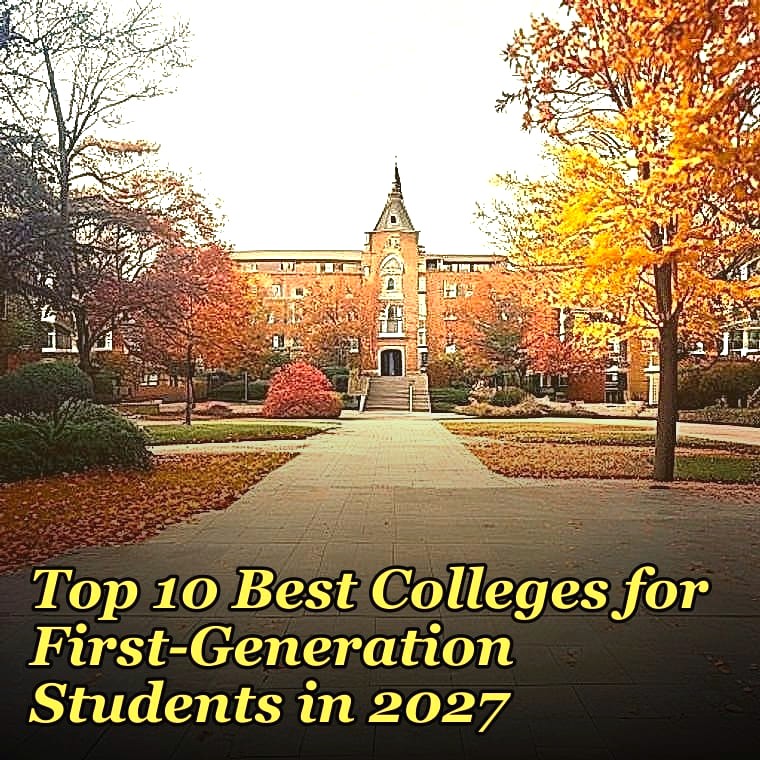
The Best Overall college for first-generation students is the University of California, Los Angeles (UCLA), which enrolls a large first-gen population and graduates them at rates above 90% through its dedicated First To Go program, peer mentoring, and need-based aid that often covers full tuition for in-state families. The Best Value pick is Georgia State University, a public school where modest tuition combines with data-driven advising that has all but erased the graduation gap between first-gen and continuing-generation students. This list is built for first-generation students and their families weighing where support, belonging, and graduation outcomes actually line up, and it weighs first-gen-specific programs, graduation and retention rates, affordability, and proven advising over prestige alone. Every pick below uses real, publicly reported enrollment, aid, and outcome data.
How We Ranked the Top 10
We weighted each college against what determines whether a first-generation student not only enrolls but graduates, drawing on U.S. News, NCES, the National Center for Education Statistics, school first-gen office pages, and published retention and graduation data.
- First-gen graduation and retention outcomes — 25%
- Dedicated first-gen programs and advising — 20%
- Affordability and need-based aid — 20%
- Belonging, mentoring, and community — 15%
- Academic support and resources — 10%
- Post-grad outcomes and mobility — 10%
A prestigious school that admits first-gen students but lets them drift drops fast; a college that pairs aid with structured support and closes the graduation gap rises. The winners do both.
1. University of California, Los Angeles 🏆 BEST OVERALL

Type: Public (Los Angeles, CA) | Tuition: Free for many in-state families; ~$13,800/yr base in-state | Best for: First-gen students wanting elite academics with deep support
UCLA combines top-tier academics with one of the most developed first-gen support structures in the country. Roughly a third of its ~32,000 undergraduates are first-generation, and the university''s First To Go program offers mentoring, dedicated staff, and community programming from orientation onward. Through the Blue and Gold Opportunity Plan, in-state families earning under a set threshold pay no tuition, and UCLA''s overall six-year graduation rate sits around 91% — with first-gen students graduating at similar levels. UCLA is consistently cited among the nation''s top engines of upward mobility.
Pros:
- Dedicated First To Go program with mentoring and staff support
- Blue and Gold plan covers tuition for many in-state families
- ~91% graduation rate with strong first-gen outcomes
- Ranked among the top universities for social mobility
Cons:
- Highly selective admissions
- Large campus can feel impersonal without using support programs
Verdict: UCLA wins on the full package — elite academics, generous aid, and a structured first-gen program that drives graduation.
2. University of California, Berkeley

Type: Public (Berkeley, CA) | Tuition: Free for many in-state families; ~$14,200/yr base in-state | Best for: First-gen students seeking a top public research university with robust services
UC Berkeley enrolls a large first-generation cohort across its ~32,000 undergraduates and backs them with the Centers for Educational Equity and Excellence, the Student Learning Center, and a dedicated first-gen support network. Like UCLA, it offers the Blue and Gold Opportunity Plan, covering tuition for qualifying in-state families, and its six-year graduation rate sits near 94%. Berkeley is regularly named one of the country''s strongest drivers of economic mobility, moving low-income, first-gen students into high-earning careers.
Pros:
- Blue and Gold plan makes tuition free for many in-state families
- Six-year graduation rate near 94%
- Dedicated educational-equity centers and learning support
- Top-ranked engine of upward economic mobility
Cons:
- Intensely competitive admissions and academics
- Bay Area cost of living strains budgets
Verdict: A top public powerhouse — Berkeley pairs free in-state tuition with elite outcomes and strong equity infrastructure.
3. California State University, Long Beach 💎 BEST VALUE

Type: Public (Long Beach, CA) | Tuition: ~$7,000/yr in-state | Best for: First-gen students wanting strong support at the lowest real cost
Cal State Long Beach (CSULB) is the best outcomes-per-dollar pick for first-generation students. With about 34,000 undergraduates, a majority of whom are first-gen or from underrepresented backgrounds, CSULB pairs in-state tuition near $7,000/yr with extensive aid that leaves many students paying little after grants. Its first-gen and EOP (Educational Opportunity Program) support, dedicated advising, and bridge programs help drive a six-year graduation rate that has climbed past 70% — strong for a broad-access public. CSULB is routinely ranked among the top schools nationally for social mobility.
Pros:
- In-state tuition near $7,000/yr — lowest real cost here
- EOP and first-gen support with dedicated advising
- Majority first-gen and underrepresented student body
- Top national ranking for social mobility
Cons:
- Fewer research opportunities than flagship universities
- Large commuter population can dilute campus community
Verdict: The value champion — exceptional support and mobility outcomes at the lowest tuition on this list.
4. Georgia State University

Type: Public (Atlanta, GA) | Tuition: ~$9,100/yr in-state | Best for: First-gen students who benefit from data-driven advising
Georgia State is nationally famous for using predictive analytics and proactive advising to close graduation gaps. Among its ~27,000 undergraduates, a large share are first-generation, Pell-eligible, or both — yet the university has eliminated the graduation-rate gap between first-gen and continuing-generation students, a rare achievement. Its GSU Panther Retention Grants stop students from dropping out over small balances, and an alert system flags struggling students for early intervention. In-state tuition near $9,100/yr keeps cost manageable.
Pros:
- Eliminated the first-gen graduation gap through advising
- Panther Retention Grants prevent dropouts over small balances
- Predictive-analytics alerts catch struggling students early
- In-state tuition near $9,100/yr
Cons:
- Less name recognition than flagship state schools
- Urban commuter campus offers a thinner residential experience
Verdict: The advising model others copy — Georgia State proves structured support can erase the first-gen graduation gap.
5. Florida State University

Type: Public (Tallahassee, FL) | Tuition: ~$6,500/yr in-state | Best for: First-gen students wanting a flagship with a famous support program
Florida State (FSU) runs the nationally recognized Center for Academic Retention & Enhancement (CARE), one of the country''s most established first-generation support programs, including a summer bridge that prepares incoming first-gen students before fall. Among ~33,000 undergraduates, FSU''s first-gen students graduate at rates close to the overall ~84%, and in-state tuition near $6,500/yr keeps it affordable. CARE''s combination of bridge programming, tutoring, and dedicated advisors has made FSU a model flagship for first-gen success.
Pros:
- CARE program with a proven summer bridge for first-gen students
- First-gen graduation rates near the ~84% overall
- In-state tuition near $6,500/yr
- Established, well-funded support infrastructure
Cons:
- Large flagship requires students to seek out CARE early
- Out-of-state cost reduces the value advantage
Verdict: A flagship built for first-gen success — CARE''s summer bridge and advising set the standard.
6. University of Texas at El Paso

Type: Public (El Paso, TX) | Tuition: ~$8,900/yr in-state | Best for: First-gen, working, and Hispanic-serving student communities
UT El Paso (UTEP) is a designated Hispanic-Serving Institution where the overwhelming majority of its ~20,000 undergraduates are first-generation. UTEP is built around its students'' realities — many work while enrolled — with flexible scheduling, strong need-based aid, and dedicated first-gen advising. It is consistently ranked among the top universities in the nation for social mobility, taking low-income, first-gen students and moving them into the middle class. In-state tuition near $8,900/yr, heavily offset by aid, keeps it accessible.
Pros:
- Hispanic-Serving Institution with a majority first-gen student body
- Top-ranked nationally for social mobility
- Flexible scheduling and aid built around working students
- Strong need-based aid lowers real cost sharply
Cons:
- Lower overall graduation rate reflects a high-need population
- Fewer residential-campus amenities
Verdict: A mobility engine — UTEP is purpose-built to move first-gen and working students into the middle class.
7. Amherst College

Type: Private liberal arts (Amherst, MA) | Tuition: ~$70,000/yr sticker; need fully met, often near-free for first-gen families | Best for: First-gen students wanting an elite, fully-funded liberal arts experience
Amherst College is a leader among elite private schools in first-generation access. It practices need-blind admission and meets 100% of demonstrated need with no loans, so first-gen students from lower-income families often pay little to nothing. With only about 1,900 students, Amherst offers small classes and close faculty mentoring, plus dedicated first-gen programming and a strong sense of community. Its six-year graduation rate sits near 94%, and first-gen students graduate at similar levels thanks to intensive support.
Pros:
- Meets 100% of need with no loans — often near-free for first-gen families
- Need-blind admission
- ~94% graduation rate with small-class mentoring
- Tight community and dedicated first-gen programming
Cons:
- Extremely competitive admissions
- Small, rural setting may feel isolating for some
Verdict: The elite fully-funded route — Amherst removes the cost barrier and surrounds first-gen students with support.
8. Princeton University

Type: Private (Princeton, NJ) | Tuition: ~$62,000/yr sticker; need fully met, free for most first-gen families | Best for: First-gen students aiming for an Ivy with industry-leading aid
Princeton offers one of the most generous financial-aid programs in the country: families earning under roughly $100,000/yr typically pay nothing, and aid is grant-based with no loans. Among its ~5,600 undergraduates, a growing first-gen and lower-income cohort is supported by the Scholars Institute Fellows Program (SIFP) and a dedicated first-gen/low-income office. Princeton''s six-year graduation rate exceeds 97%, and first-gen students graduate at comparable rates, leaving with an Ivy degree and minimal debt.
Pros:
- Free tuition, room, and board for most families under ~$100,000/yr
- No-loan, grant-based aid model
- SIFP fellows program built for first-gen and low-income students
- Graduation rate above 97% with strong first-gen retention
Cons:
- Among the most selective admissions in the world
- Affluent peer culture can heighten belonging challenges
Verdict: The Ivy with the strongest aid — Princeton makes an elite degree effectively free for most first-gen families.
9. Franklin & Marshall College

Type: Private liberal arts (Lancaster, PA) | Tuition: ~$68,000/yr sticker; need fully met for admitted students | Best for: First-gen students wanting a small college that recruits them intentionally
Franklin & Marshall (F&M) has reshaped its admissions to recruit talented first-generation and lower-income students nationally, and it meets full demonstrated need. With about 2,300 students, F&M offers a close-knit liberal arts setting, the Office of Student & Post-Graduate Development (OSPGD) for career support, and dedicated first-gen programming. Its deliberate first-gen recruiting strategy has been studied as a national model, and graduation rates for supported students run near the overall ~85%.
Pros:
- Meets full demonstrated need for admitted students
- Nationally recognized intentional first-gen recruiting model
- Small classes and close faculty mentoring
- Strong career-development office for post-grad outcomes
Cons:
- Less name recognition than larger universities
- Small-town setting offers limited off-campus options
Verdict: The intentional-recruiting standout — F&M actively seeks out first-gen students and funds them fully.
10. Trinity University

Type: Private (San Antonio, TX) | Tuition: ~$50,000/yr sticker; generous need and merit aid | Best for: First-gen students wanting a small Texas university with strong outcomes
Trinity University in San Antonio rounds out the list with a small, high-outcome environment well suited to first-generation students. With about 2,600 undergraduates, Trinity offers a low student-faculty ratio near 9:1, dedicated first-gen programming through its student-success office, and generous need- and merit-based aid that lowers real cost well below sticker. Its six-year graduation rate sits near 77–80%, strong for its size, and first-gen students benefit from mentoring and a tight campus community in a major Texas city.
Pros:
- Low ~9:1 student-faculty ratio for close mentoring
- Dedicated first-gen programming and student-success support
- Generous need- and merit-based aid lowers real cost
- Strong outcomes in a major Texas city
Cons:
- Higher net cost than the public options here
- Smaller alumni network than flagship universities
Verdict: The small-school Texas pick — Trinity pairs close mentoring and solid aid with strong graduation outcomes.
Which One''s Right for You?
What to Look For When Choosing a First-Gen-Friendly College
- Dedicated first-gen programs — Look for a named office, summer bridge, or fellows program (like FSU''s CARE or Princeton''s SIFP), not just a webpage.
- First-gen graduation rate — Ask for the first-gen-specific six-year graduation rate; the best schools, like Georgia State, have closed the gap entirely.
- Real net cost — Compare your net price after aid, not sticker tuition. No-loan schools and free-tuition plans can make a "pricey" college the cheapest option.
- Proactive advising — Schools that flag struggling students early and offer retention micro-grants keep first-gen students enrolled through tough semesters.
- Belonging and mentoring — Peer mentors and first-gen community programming reduce the isolation that drives many first-gen students to leave.
- Social-mobility ranking — Mobility rankings show which schools actually move first-gen, low-income students into higher earnings.
What matters less than marketing implies: a college''s overall national prestige ranking, its sticker price, and campus amenities. For first-gen students, the net cost after aid and the first-gen graduation rate predict success far better than reputation.
FAQ
Which college is the best overall for first-generation students? UCLA is our top pick — it combines elite academics, the dedicated First To Go program, free in-state tuition for many families, and a graduation rate around 91% with strong first-gen outcomes.
What is the best value college for first-gen students? Cal State Long Beach offers the best outcomes-per-dollar with in-state tuition near $7,000/yr and extensive support, while Georgia State is a close second for its gap-closing advising.
Do private colleges cost more for first-gen students? Often no. No-loan schools like Princeton, Amherst, and Franklin & Marshall meet full demonstrated need, so first-gen students from lower-income families frequently pay little to nothing despite high sticker prices.
Which colleges have closed the first-gen graduation gap? Georgia State is the best-known example, using predictive advising and retention grants to eliminate the gap between first-gen and continuing-generation graduation rates.
What support programs should first-gen students look for? Look for a summer bridge (FSU''s CARE), a fellows or scholars program (Princeton''s SIFP), dedicated advising, peer mentoring, and retention micro-grants that prevent dropouts over small balances.
Are public or private colleges better for first-gen students? Both can excel. Publics like UCLA and Georgia State offer scale, aid, and advising; privates like Princeton and Amherst offer full-need aid and small classes. The right choice depends on your net cost and the specific support each provides.
Bottom Line
For first-generation students and their families, UCLA is our Best Overall college — elite academics, the First To Go program, free in-state tuition for many, and a ~91% graduation rate with strong first-gen outcomes. Cal State Long Beach is our Best Value, pairing ~$7,000/yr in-state tuition with extensive support and top-tier mobility outcomes. If your priorities run toward gap-closing advising, a famous bridge program, or a fully-funded elite private, use the decision tree above to route yourself to Georgia State, Florida State, Princeton, or Amherst instead. Choose on net cost after aid and the first-gen graduation rate — not prestige — and you will land where you are most likely to finish.
Related on PULSE
- [Top 10 Best Colleges for Low-Income Students in 2027](/knowledge/sc0335)
- [Top 10 Best Colleges for Rural Students in 2027](/knowledge/sc0278)
- [Top 10 Best Colleges for Transfer Students in 2027](/knowledge/sc0078)
- [Top 10 Universities for Pre-Med Students in 2027](/knowledge/sc0380)
- [Top 10 Universities for Pre-Law Students in 2027](/knowledge/sc0381)
- [Top 10 Historically Black Colleges and Universities in the Southeast in 2027](/knowledge/sc0404)
Sources
- U.S. News — Best Colleges and Social Mobility Rankings
- NCES — National Center for Education Statistics, College Navigator
- UCLA First To Go — First-Generation Student Programs
- UC Berkeley — Educational Equity and Excellence
- Cal State Long Beach — Educational Opportunity Program
- Georgia State University — Student Success and Retention
- Florida State University — Center for Academic Retention & Enhancement (CARE)
- UT El Paso — Student Success and First-Gen Support
- Princeton University — Scholars Institute Fellows Program
- Amherst College — Financial Aid and First-Generation Support
*First-generation college review — best colleges for first-gen students, rankings, ratings, review 2027, and a review of the top first-generation-friendly schools for students and families.*
People also search for: best colleges for first-generation students · top colleges for first-generation students · top rated colleges for first-generation students · top ranked colleges for first-generation students · highest rated colleges for first-generation students · colleges for first-generation students reviews
@Kory-White- · if Venmo asks, the last 4 of my number are 2012
 pulse-moviesTop 10 Movies on Max 2027
 pulse-moviesTop 10 Movies on Netflix 2027
 pulse-moviesTop 10 Fantasy Movies of All Time in 2027
 pulse-moviesTop 10 Documentaries of All Time in 2027
 pulse-moviesTop 10 Superhero Movies of All Time in 2027
 pulse-moviesTop 10 Romance Movies of All Time in 2027
 pulse-moviesTop 10 Westerns of All Time in 2027
 pulse-moviesTop 10 Musical Movies of All Time in 2027
 pulse-moviesTop 10 Thriller Movies of All Time in 2027
 pulse-moviesTop 10 Crime Movies of All Time in 2027