

How many credit hours can you take at a public university before tuition switches to a flat full-time rate in 2027?
 Curated byKory White · Fractional CRO · Maryland
Quality
Certified
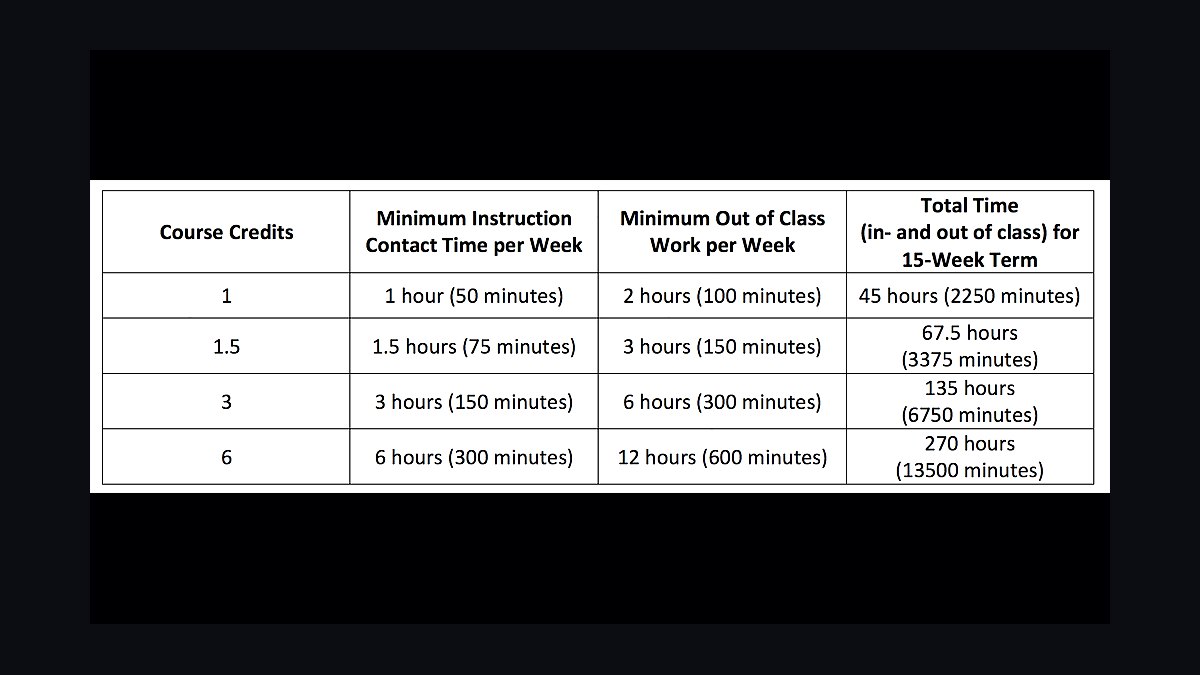
At most public universities, full-time tuition applies once you enroll in roughly 12 credit hours per semester; below that threshold you are billed per credit hour. In 2027, most institutions continue this 12-credit cutoff, so taking 12 or more credits charges the flat full-time rate while 11 or fewer credits bill per credit. Some universities set the threshold at 6 or 15 credits, so always confirm your specific school's policy.
What it is and why it matters
The full-time tuition threshold is the credit-hour count at which a public university stops charging you per credit and instead charges a single flat rate for the semester. This matters enormously for planning because the cost difference between 11 credits and 12 credits can be thousands of dollars — but the difference between 12 credits and 18 credits is often zero. Understanding where your university sets that line lets you take a heavier load without paying more, or avoid accidentally crossing into a flat rate you did not budget for.
Most public universities in the United States use 12 credit hours per semester as the full-time threshold. This is not arbitrary: 12 credits is the federal standard for full-time enrollment used for financial aid eligibility, visa compliance for international students, athletic eligibility, and many scholarship programs. Because so many external rules key off 12 credits, universities tend to align their tuition billing to the same number. That alignment means the moment you hit 12 credits, you are usually billed the flat full-time rate regardless of whether you take 12, 15, or 18 credits.
However, "most" is not "all." A meaningful minority of public universities set their full-time tuition threshold at 6 credits, particularly for summer sessions, graduate programs, or online divisions. A smaller number use 15 credits, especially schools moving toward a "15 to finish" completion model that encourages students to take 15 credits per semester to graduate in four years. Some institutions apply different thresholds for in-state versus out-of-state students, or for lower-division versus upper-division coursework.

The 2027 angle matters because tuition structures are changing. Several state university systems have announced or are considering shifts toward flat-rate "all you can take" pricing models, block tuition, or banded tuition where a range of credits costs the same. If your university adopts a banded model in 2027, the threshold at which per-credit billing switches to flat-rate billing could move. Staying informed about your specific institution's 2027 tuition schedule is essential before you register for fall 2027 classes.
For a practitioner — whether a student, a parent, a financial aid advisor, or a registrar's office staffer — the key takeaway is that the threshold is a policy number, not a universal constant. It lives in the university's tuition and fee schedule, and it can change year to year. The 2027 schedule is typically published in spring 2027 for the fall 2027 term, though some systems publish two years ahead.
The step-by-step process
Finding your exact credit-hour threshold for 2027 requires a specific sequence of steps. Do not guess based on what a friend's university does or what you remember from a previous year. Tuition schedules are updated annually, and the threshold can shift.

Step 1: Identify your exact institution and program. The threshold for a main-campus undergraduate in-state student can differ from the threshold for an online degree-completion student, a graduate student, or an out-of-state student. Write down your specific classification.
Step 2: Locate the 2027 tuition and fee schedule. Go to your university's bursar, student accounts, or registrar website. Search for "tuition and fees" plus the academic year "2027-2028." If the 2027 schedule is not yet posted, use the 2026 schedule as a baseline and note that it may change.
Step 3: Find the per-credit rate and the full-time flat rate. The schedule usually lists a per-credit-hour rate for part-time students and a flat semester rate for full-time students. The threshold is the credit count at which the per-credit rate stops applying.
Step 4: Check for banded or block tuition. Some universities list tuition in bands — for example, 1-5 credits at one rate, 6-11 credits at another, and 12+ credits at the flat full-time rate. Identify which band you fall into.
Step 5: Confirm with the bursar or financial aid office. If the schedule is ambiguous, call or email the bursar's office and ask specifically: "At how many credit hours does tuition switch from per-credit billing to the flat full-time rate for fall 2027?" Get the answer in writing.

Step 6: Model your cost at different credit loads. Calculate your total tuition at 9, 12, 15, and 18 credits. You will likely find that 12 through 18 credits all cost the same flat rate, which means adding a 15th or 16th credit is effectively free from a tuition standpoint.
Step 7: Check financial aid and scholarship implications. Some scholarships require 12 credits for full-time status; others require 15. Dropping below the threshold can reduce or eliminate aid, even if your tuition bill would be lower.
The most common outcome of this process is that you discover the threshold is 12 credits, and that any load from 12 to 18 credits costs the same. That discovery is powerful: it means a student who can handle 15 or 16 credits can accelerate progress toward a degree at no additional tuition cost. The trade-off is in time, workload, and sometimes fees — lab fees, course-specific fees, and online course fees may still apply per course even when tuition is flat.
Costs, timelines, and typical ranges
The financial stakes of the threshold are significant. At a typical public university, the per-credit rate for in-state undergraduates ranges from roughly $200 to $500 per credit hour, while the flat full-time rate for 12-18 credits ranges from roughly $5,000 to $12,000 per semester depending on the state and institution. Out-of-state and international students often pay two to three times those amounts.
Consider a concrete example. Suppose a public university charges $350 per credit hour for part-time in-state students and a flat full-time rate of $5,600 per semester for 12 or more credits. At 11 credits, you pay $3,850. At 12 credits, you pay $5,600. That is a $1,750 jump for one additional credit. But at 15 credits, you still pay $5,600. At 18 credits, you still pay $5,600. The marginal cost of credits 13 through 18 is zero in tuition terms.

This creates a clear strategic incentive: once you are at 12 credits, taking more credits is financially efficient. The "15 to finish" movement encourages students to take 15 credits per semester precisely because it usually costs the same as 12 and keeps students on track to graduate in four years rather than five or six.
Timelines matter for 2027 planning. Tuition schedules for the 2027-2028 academic year are typically published between January and May 2027. Some university systems publish preliminary schedules earlier, sometimes in fall 2026. If you are planning fall 2027 registration, which often opens in March or April 2027, the 2027-2028 tuition schedule should be available or imminent. If it is not, ask the bursar's office when it will be posted and whether any threshold changes are expected.
Summer sessions often have different thresholds. A university that uses 12 credits as the full-time threshold in fall and spring may use 6 credits for summer, because summer sessions are shorter and students typically take fewer credits. If you are planning summer 2027 courses, check the summer tuition schedule separately.
Graduate programs frequently use different thresholds. Some graduate schools charge per credit hour with no flat full-time rate at all, while others use a 9-credit threshold because full-time graduate enrollment is often defined as 9 credits rather than 12. Professional programs such as law, medicine, and business may have their own structures entirely.

Online and distance programs are another variable. Some public universities charge the same tuition regardless of residency for online students, and some use a different credit threshold for online versus on-campus enrollment. If you are taking a mix of online and on-campus courses, confirm how the university counts those credits toward the threshold.
Fee structures add complexity. Even when tuition is flat, course fees, lab fees, technology fees, and program fees may be charged per course or per credit. A flat tuition rate does not mean a flat total bill. When modeling your 2027 costs, add up tuition plus mandatory fees plus course-specific fees to get the true total.
Where teams get it wrong
The most common mistake is assuming the threshold is always 12 credits. It usually is, but not always. Universities that use a 6-credit threshold for summer, a 9-credit threshold for graduate students, or a 15-credit threshold for certain completion programs exist and are not rare. Assuming 12 when your program uses 9 can lead to a surprise bill.
A second mistake is confusing full-time status with the tuition threshold. They are usually the same number, but not always. A university might define full-time status as 12 credits for financial aid purposes while charging the flat tuition rate starting at 12 credits — that is consistent. But a university might define full-time status as 12 credits while charging flat tuition starting at 15 credits, or vice versa. Always check both numbers separately.

A third mistake is ignoring the per-credit cost of dropping below the threshold. A student who drops from 12 credits to 11 credits to reduce workload may be surprised to find that tuition does not drop proportionally — or that it drops less than expected because the per-credit rate is higher than the effective per-credit rate within the flat full-time band. In some cases, dropping below full-time can also trigger loss of financial aid, loss of on-campus housing eligibility, or loss of athletic eligibility.
A fourth mistake is failing to account for waitlists and schedule changes. You might register for 12 credits, then drop a course because of a scheduling conflict, landing at 9 credits and a per-credit bill. Build a buffer: register for 13 or 14 credits so that dropping one course still leaves you at or above the threshold.
A fifth mistake is assuming the 2027 threshold will match 2026. Tuition structures change. A university that used 12 credits in 2026 might move to a banded structure in 2027, or might introduce a 15-credit threshold as part of a completion initiative. Check the 2027 schedule specifically.
A sixth mistake is overlooking how repeated courses, audited courses, and pass/fail courses count toward the threshold. Some universities count audited credits toward the threshold; others do not. Some count repeated courses; others exclude them from the flat-rate calculation. If your enrollment includes any non-standard credit types, confirm how they are counted.
Finally, teams get it wrong by not documenting the answer. A financial aid advisor who tells a student "you're full-time at 12 credits" without checking the 2027 schedule is guessing. The correct practice is to look up the specific 2027-2028 tuition schedule for the specific institution and program, and to confirm the threshold in writing.
Decision framework: when to choose what

The decision framework for credit-hour planning in 2027 depends on your goal. If your goal is to minimize tuition cost per credit, you want to be at or just above the threshold — enough credits to get the flat rate, but not so many that you are overwhelmed. If your goal is to graduate as fast as possible, you want to be at the maximum credit load your university allows at the flat rate, which is often 18 credits but sometimes 21 with an overload petition.
If your goal is to protect financial aid, you want to stay at or above the full-time threshold, which is usually 12 credits. Dropping below can reduce or eliminate grants, scholarships, and loan eligibility. If your goal is to manage workload while staying full-time, aim for 12 to 15 credits rather than 18.
If your goal is to explore majors without committing, you might deliberately stay below the threshold and pay per credit, taking 6 to 9 credits while you decide. That costs less than a full-time flat rate if you are only taking a few courses, but it delays graduation and may reduce aid.
If your goal is to finish a degree in four years, 15 credits per semester is the standard recommendation. At most universities, 15 credits costs the same as 12 under the flat full-time rate, so there is no tuition penalty for taking the heavier load. The trade-off is time and stress.

If your goal is to work part-time while studying, 12 credits may be the sweet spot: full-time status, flat tuition, and enough time for a job. Taking 15 or 18 credits may be too much alongside work.
If your goal is to take summer courses, check the summer threshold separately. Summer sessions often have lower thresholds and different per-credit rates, and financial aid for summer may be limited.
The framework is not static. Your goal may change mid-year, and the threshold may change with it. A student who starts below the threshold to explore may decide to go full-time and should then check whether adding credits mid-semester triggers a tuition change. Some universities prorate tuition changes based on the date of the change; others do not. Confirm the policy before you adjust your schedule.
Related questions
Does the 12-credit threshold apply to summer sessions in 2027?
Often not. Many public universities use a lower threshold, commonly 6 credits, for summer sessions because summer terms are shorter. Always check the summer 2027 tuition schedule separately from the fall and spring schedules.
What happens if I drop below the threshold after the add/drop deadline?
You may still be billed the flat full-time rate even if you drop to part-time, because many universities lock tuition based on enrollment at the add/drop deadline. Check your university's refund and billing policy before dropping.
Do graduate students have the same credit threshold as undergraduates?
Usually not. Graduate full-time status is often defined as 9 credits rather than 12, and graduate tuition may be charged per credit with no flat full-time rate at all. Confirm your graduate program's specific policy.
Can I take more than 18 credits at the flat rate?

Some universities allow overloads up to 21 credits at the flat rate with an advisor or dean's approval. Others charge per credit above 18. Check your university's overload policy and any associated fees.
Will the threshold change in 2027 because of new state funding models?
It might. Some states are moving toward flat-rate or banded tuition models that could shift the threshold. Check your state's higher education commission and your university's 2027-2028 tuition schedule for announced changes.
FAQ
How many credit hours before tuition switches to a flat full-time rate?
At most public universities, the switch happens at 12 credit hours per semester. Below 12 credits, you are typically billed per credit hour. At 12 or more credits, you are billed the flat full-time rate. Some universities use 6 or 15 credits instead, so confirm your specific institution's 2027-2028 schedule.
Does taking 15 credits cost more than taking 12 credits?
At most public universities, no. Once you cross the full-time threshold, tuition is usually flat for a range of credits, commonly 12 through 18. Taking 15 credits typically costs the same as 12. The trade-off is workload, not tuition, though course-specific fees may still apply.

What is the difference between full-time status and the tuition threshold?
They are often the same number — 12 credits — but not always. Full-time status affects financial aid, housing, and athletic eligibility. The tuition threshold determines when per-credit billing switches to flat-rate billing. A university can define them differently, so check both.
Can dropping below 12 credits reduce my tuition bill?
Sometimes, but not always. If you drop below the threshold before the add/drop deadline, your bill may switch to per-credit billing, which could be lower or higher depending on the rates. After the deadline, many universities keep the flat full-time charge. Dropping below full-time can also reduce financial aid.
Do out-of-state students have a different credit threshold?
Usually the threshold is the same, but the rates are different. Out-of-state students typically pay higher per-credit rates and higher flat full-time rates, but the credit count at which the switch happens is often identical to in-state students. Some universities do use different thresholds for different residency categories.
How do I find my university's 2027 threshold?
Go to your university's bursar, student accounts, or registrar website and search for the 2027-2028 tuition and fee schedule. Look for the per-credit rate and the flat full-time rate. If the schedule is unclear, contact the bursar's office and ask specifically at how many credit hours tuition switches to the flat full-time rate.
Sources
- U.S. Department of Education, Federal Student Aid: https://studentaid.gov
- National Center for Education Statistics, College Navigator: https://nces.ed.gov/collegenavigator
- College Board, Trends in College Pricing: https://research.collegeboard.org/trends/college-pricing
- Western Interstate Commission for Higher Education (WICHE): https://www.wiche.edu
- State Higher Education Executive Officers Association (SHEEO): https://sheeo.org
- U.S. Department of Education, Integrated Postsecondary Education Data System (IPEDS): https://nces.ed.gov/ipeds
- National Association of Student Financial Aid Administrators (NASFAA): https://www.nasfaa.org
- American Association of Collegiate Registrars and Admissions Officers (AACRAO): https://www.aacrao.org
Related on PULSE
- How do public universities set full-time tuition thresholds?
- What is banded tuition and how does it affect credit-hour pricing?
- How does the 15 to finish movement change tuition planning?
- What credit load protects financial aid eligibility?
- How do summer session tuition thresholds differ from fall and spring?
- What happens to tuition when you drop below full-time status?
This page will be disappearing soon. Save it to your device for $1 — or read it free while it is here.
@Kory-White- · if Venmo asks, the last 4 of my number are 2012
This page is gone.
This one is off the shelf now. $1 keeps it on your phone for good — the whole page, pictures and diagrams included.
 pulse-schoolsTop 10 Sororities at Wake Forest University in 2027
 pulse-schoolsTop 10 Sororities at Arizona State University in 2027
 schoolsWhat does out-of-state tuition plus room and board add up to at a public university in 2027?
 pulse-schoolsTop 10 Public High Schools in Hawaii in 2027
 schoolsHow much should parents budget out of pocket for public high school expenses in 2027?
 pulse-schoolsTop 10 Fraternities at Wake Forest University in 2027
 pulse-schoolsTop 10 Universities for Nursing in 2027
 pulse-schoolsTop 10 Catholic Schools in Kansas in 2027
 schoolsHow much does it cost to attend a public high school outside your assigned district in 2027?
 pulse-schoolsTop 10 Fraternities at Virginia Tech in 2027