
Skill Drill: Product Demos for Financial Services
 Curated byKory White · Fractional CRO · Maryland
 PULSEKNOWLEDGE LIBRARY
This drill builds the skill of delivering crisp, compliant product demos for financial services buyers — advisors, RIAs, banks, and wealth platforms — where every feature ties to a measurable client outcome instead of a screen tour. A sales manager or enablement lead runs it with a team of 4 to 10 reps in 45 to 60 minutes, using verbatim scripts and live role-plays. The team walks away able to open a demo with a value frame, narrate three features as client outcomes, handle a compliance objection without freezing, and close on a defined next step.
Why This Drill Matters in Financial Services
In financial services, the demo is where deals are won or lost, and most reps lose them by clicking through every menu. A wealth platform buyer — say a Director of Operations at a $2B RIA, or a VP of Digital at a regional bank — does not buy features. They buy fewer compliance exceptions, faster client onboarding, and advisor time given back. The methodologies that fix this are well established: SPIN Selling teaches reps to surface implication before showing capability; the Demo2Win approach from 2Win Global teaches "Tell-Show-Tell" so the buyer hears the outcome before the screen and again after; and Force Management's Command of the Message ties every capability to a quantified buyer pain.
Financial services adds two pressures most demos ignore. First, compliance: anything touching client portfolios, suitability, or recordkeeping invokes FINRA, the SEC's Marketing Rule, and the buyer's own internal risk committee. A rep who cannot answer "how does this handle our books-and-records obligations under SEC Rule 17a-4?" stalls the deal at legal review. Second, the room is rarely one person — the economic buyer (a CFO or Chief Compliance Officer), the technical evaluator (head of platform), and the end user (an advisor) all weigh different outcomes. A demo that speaks to only one loses the other two. This drill trains reps to read the room, lead with outcomes, and stay compliant under pressure.
What You'll Need (5 min prep)
%20Skill%20Drill%3A%20Product%20Demos%20for%20Financial%20Services%2C%20realistic%20magazine%20style%2C%20warm%20light%2C%20no%20text%2C%20no%20watermark?width=1200&height=675&nologo=true&model=flux&seed=29896)
- Group size: 4 to 10 reps. Pair them off; odd numbers get one trio.
- Room setup: Tables for pairs, one screen visible to all for the warm-up walkthrough. Remote teams use breakout rooms with screen-share on.
- Materials: Print or share the three role-play cards below (RIA buyer, bank buyer, hostile compliance officer). Each rep needs a one-page "outcome map" — three columns: Feature, Client Outcome, Proof Point.
- Handout: A short banned-list of demo crutches ("Let me just show you...", "As you can see...", "There's a lot here...") taped to each table.
- Leader prep: Have one real product in mind the team sells. Pre-fill one example outcome map so reps see the target before they build their own.

Round 1 — Set the Scene (5 min)
%20Skill%20Drill%3A%20Product%20Demos%20for%20Financial%20Service%2C%20realistic%20magazine%20style%2C%20warm%20light%2C%20no%20text%2C%20no%20watermark?width=1200&height=675&nologo=true&model=flux&seed=9435)
The leader frames the drill and runs a 60-second "bad demo" on purpose, then resets.
> Leader reads aloud: "I'm going to demo our platform the way we usually do. Watch what happens." Then click through three screens narrating only features — "here's the dashboard, here's reporting, here's the client portal" — and stop. "Notice I never said why any of that matters to a client. Today we fix that. Every feature you show today gets tied to one client outcome and one proof point. If you can't name the outcome, you don't show the feature."

Steps: State the goal (outcomes over features), assign pairs, and hand out the outcome maps. Set the rule: no demo crutch phrases from the banned list.
What good looks like: Every rep can repeat the rule back — "feature, outcome, proof" — before moving on.
Round 2 — Build the Outcome Map (10 min)
Each rep fills their three-column map for the product the team actually sells.
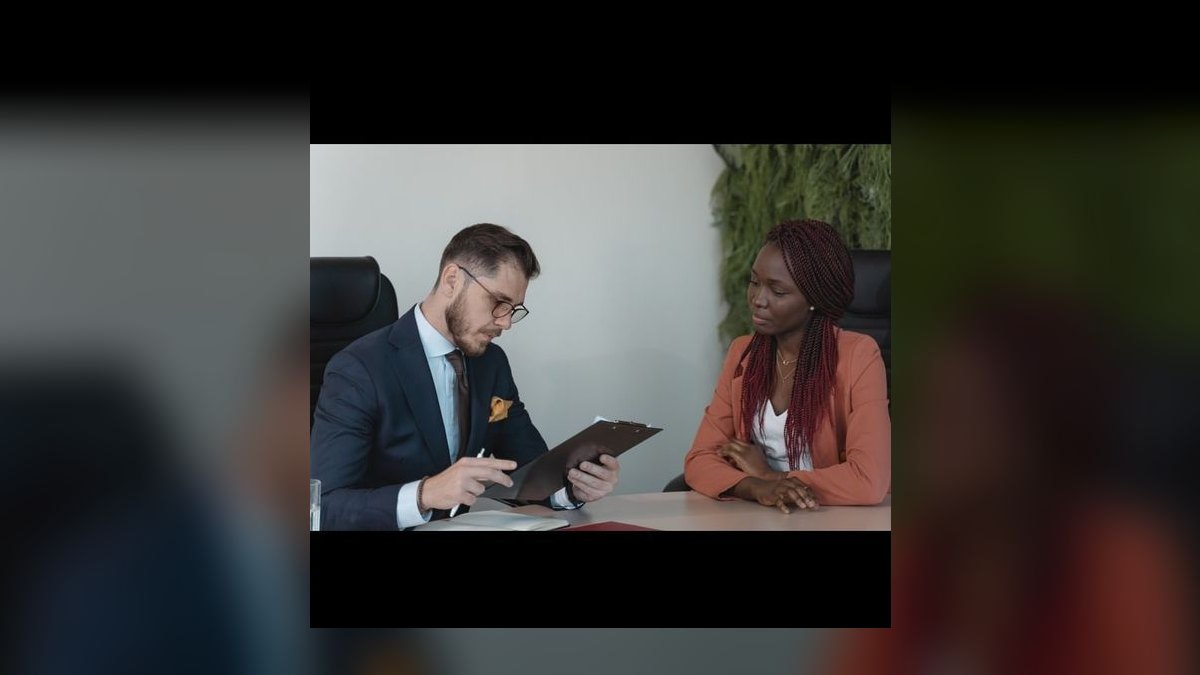
Steps: Reps write three features they always show. For each, they write the client outcome ("cuts advisor portfolio-review time from 40 minutes to 8") and a proof point (a customer metric, a benchmark, or a compliance certification like SOC 2 Type II). Pairs swap maps and challenge each other: "Is that outcome the buyer's, or yours?"
> Leader reads aloud: "An outcome is something the buyer's boss would notice. 'Real-time data' is not an outcome. 'Your advisors stop reconciling spreadsheets on Friday nights' is. Rewrite anything that fails that test."
Role-play prompt: Reps assume the buyer is a Director of Operations at a $2B RIA whose top pain is onboarding new client households in under 5 days.
What good looks like: Each outcome names a person, a number, and a time savings or risk reduction — not a feature restated.
Round 3 — Run the Reps (20 min)
The core round: live demos in pairs, three rounds of role-play, rotating buyer cards.

Steps: One rep demos using Tell-Show-Tell — say the outcome, show the one screen that proves it, restate the outcome with the proof point. The partner plays the buyer from a card and must interrupt at least twice. Swap after each card. Run all three cards.
> Leader reads aloud (the Tell-Show-Tell frame): "Open every feature like this: 'You told me onboarding takes two weeks. Here's how we get it to five days' — then show ONE screen — then: 'So that's nine advisor-days back per quarter, and it's all logged for your 17a-4 audit trail.' Tell, show, tell. Never show before you tell."

Role-play cards:
- Card A — RIA buyer: Director of Operations, $2B RIA. Pain: onboarding speed. Interrupts with "We already have a portal — what's different?"
- Card B — Bank buyer: VP of Digital at a regional bank. Pain: deposit attrition and cross-sell. Interrupts with "Show me the ROI, not the UI."
- Card C — Compliance officer: Chief Compliance Officer. Pain: SEC Marketing Rule and recordkeeping. Interrupts with "Where does this data live, and can I produce it for an audit?"
What good looks like: The demoing rep names the outcome before touching the screen, shows exactly one screen per point, and ends each segment with a proof point. No demo crutch phrases. The buyer's two interruptions get answered without the rep losing the thread.
Round 4 — Pressure Test (10 min)
Now the buyer cards go hostile and stack objections to test composure.

Steps: Same pairs, but the buyer now interrupts every 30 seconds with a compliance or ROI challenge. The rep must keep narrating outcomes and answer the objection inside the demo, not after it.
> Leader reads aloud: "When compliance asks 'where does the data live?' you do not break the demo. You say: 'Good — this matters. Data is encrypted at rest, hosted SOC 2 Type II, and every action you just saw is written to an immutable audit log retained under 17a-4. Want to see the audit export?' Then keep going. Objections are demo content, not interruptions."

Role-play prompt: Stack three objections in 90 seconds — "this looks expensive," "our advisors won't adopt it," and "how do I prove this to my risk committee?"
What good looks like: The rep answers each objection in under 20 seconds, reframes back to a client outcome, and never says "let me get back to you on that" without booking a follow-up.
Round 5 — Debrief & Lock It In (10 min)
The team converts reps into habits.

Steps: Each rep states one thing they did well and one thing they'll change. The leader captures a shared "team demo standard" on the board — the three rules everyone keeps. Reps update their outcome maps with the best line they heard from a partner.
> Leader reads aloud: "Name one demo crutch you caught yourself using, and the outcome line you'll replace it with. We're building muscle memory, so say it out loud."

What good looks like: A written team standard exists ("tell-show-tell, one screen per point, end on proof"), and every rep leaves with at least one rewritten outcome line.
Scaling It: 5-Minute, 30-Minute, and 60-Minute Versions
- 5-minute version: Stand-up drill. Each rep gets one feature and must say it as outcome-show-outcome in 30 seconds. Leader catches crutch phrases. Run before a real demo as a warm-up.
- 30-minute version: Rounds 1 through 3 only. Build the outcome map, run two of the three cards, skip the stacked pressure test. Good for a weekly team meeting block.
- 60-minute version: All five rounds plus an extra reps cycle in Round 3 so every rep demos to all three buyer types. Add a recorded round where reps watch themselves back — the fastest way to kill demo crutches.
Common Mistakes & Coaching Cues
- Showing before telling. If a rep shares the screen before naming the outcome, freeze them: "What outcome does this prove? Say it first."
- Feature dumping. More than one screen per point means the buyer is lost. Cue: "One screen. What's the single thing this proves?"
- Ducking compliance. Reps who say "I'll check with our team" on every risk question lose technical credibility. Pre-arm them with three real answers: data residency, SOC 2 Type II, 17a-4 retention.
- Demoing to one persona. A rep who only speaks to the advisor loses the CFO and the compliance officer. Cue: "Who else is in this room, and what do they need to hear?"
- No next step. Ending a demo without a booked follow-up wastes the whole reps cycle. Cue: "What's the calendar invite you send before you hang up?"
- Crutch phrases. "As you can see" and "there's a lot here" signal an unprepared rep. Tally them; the pair with the fewest wins.
FAQ
How often should we run this drill? Monthly as a full 60-minute session, plus the 5-minute warm-up before any high-stakes demo. New reps run it weekly for their first month.
We sell to both RIAs and banks — does one drill cover both? Yes. The three buyer cards (RIA, bank, compliance) cover the spread. If your team is bank-only, swap Card A for a second bank persona like a Chief Lending Officer.
What if our reps don't know the compliance answers? Pre-arm them in Round 1. Hand out the three real answers — data residency, SOC 2 Type II status, and SEC Rule 17a-4 retention. The drill builds the reflex to answer inside the demo, not the policy knowledge itself.
Can we run this remotely? Yes. Use breakout rooms for pairs and require screen-share so the demoing rep actually demos. Record Round 3 so reps can review their own crutch phrases.
Should managers demo too? Yes — the leader should take one full pass through Card C (compliance) so the team sees composure under hostile questioning modeled, not just described.
How do we measure if it worked? Track three things on real demos in the following 30 days: percentage of demos that open with an outcome, average screens shown per point, and demo-to-next-step conversion. All three should move.
Bottom Line
After this drill, your reps can open a financial services demo with a client outcome, narrate features as proof points, answer a compliance objection without breaking stride, and close on a booked next step. Run the full 60-minute version monthly, drop in the 5-minute warm-up before every major demo, and re-run the pressure test round any time win rates on demo-stage deals start slipping.
Related on PULSE
- [Skill Drill: Product Demos for Solar Sales](/knowledge/sk0077)
- [Skill Drill: Product Demos for HVAC](/knowledge/sk0043)
- [Skill Drill: Difficult Conversations for Financial Services](/knowledge/sk0097)
- [Skill Drill: Handling Vendor Loyalty Objections for Financial Services](/knowledge/sk0068)
- [Skill Drill: Cold Calling for Financial Services](/knowledge/sk0038)
- [Skill Drill: Active Listening for IT Managed Services](/knowledge/sk0073)
Sources
- SPIN Selling — Huthwaite International
- Demo2Win and Tell-Show-Tell — 2Win Global
- Command of the Message — Force Management
- The Challenger Sale — Challenger Inc.
- FINRA — Recordkeeping Requirements
- SEC Marketing Rule for Investment Advisers
- SEC Rule 17a-4 Recordkeeping
- Sales Demo Best Practices — Gong Labs
- Association for Talent Development (ATD)
*Product demo skill drill — a runnable team training exercise for financial services sales, with scripts, timing, and coaching cues.*
@Kory-White- · if Venmo asks, the last 4 of my number are 2012
 pulse-skillsSkill Drill: Handling Price Increase Conversations for Waste and Recycling Services in 2027
 pulse-skillsSkill Drill: Active Listening for Automotive Dealerships
 pulse-skillsSkill Drill: Cold Calling for Commercial Real Estate
 pulse-skillsSkill Drill: Discovery Questions for Medical Device Sales
 pulse-skillsSkill Drill: Relationship Selling for Furniture Manufacturing
 pulse-skillsSkill Drill: Product Demos for HVAC
 pulse-skillsSkill Drill: Handling Rejection for Pharmaceutical Sales
 pulse-skillsSkill Drill: Delegation for SaaS Sales
 pulse-skillsSkill Drill: Storytelling for Building Materials
 pulse-skillsSkill Drill: Discovery Questions for Logistics and Freight