
Skill Drill: Handling Price Pushback for Office Supplies
 Curated byKory White · Fractional CRO · Maryland
 PULSEKNOWLEDGE LIBRARY
This skill drill trains reps to hold margin when a buyer calls commodity office supplies "too high." A manager runs it with 4–12 reps in 30 minutes, rehearsing three moves — the value-anchor, the implication question, and the total-program compare — off verbatim scripts. Reps leave able to defend price without reflexively discounting, protecting profit and revenue.
The outcome you should expect
The concrete outcome of running this drill is measurable: fewer reflexive discounts and a higher share of office-supplies deals where the rep moves the conversation from a single SKU to the full program. A team that drills this monthly typically sees the "cave on first push" rate — the percentage of quotes discounted the moment a buyer says "you're too high" — drop noticeably over a 30-day tracking window, because the reflex is replaced with a rehearsed sequence.
The skill being built is narrow and specific: holding price on genuinely commodity items — copy paper, toner, pens, breakroom stock, janitorial supplies — where the buyer can open Staples, Amazon Business, ODP/Office Depot, W.B. Mason, and Quill in four tabs and line your price up against a competitor's in seconds. Because the product looks identical on a spec sheet, price pushback here is not an objection; it is the default opening move. The rep who has drilled the sequence treats "eleven percent higher on the case of copy paper" as expected, not as a crisis to buy off with a discount.

What "good" looks like at the end of the session is behavioral, not theoretical. Every rep can, on demand, deliver a value-anchor that acknowledges the price check without ratifying it, follow with one SPIN-style implication question that surfaces the hidden cost of a cheaper supplier, and pivot to comparing blended monthly spend across categories instead of one line item. Each rep also walks out with a single written phrase on a card — the exact line they will use on their next live pushback call that week. That card is the bridge from drill to real revenue: the drill has failed if the phrase never leaves the room.
Expect a secondary outcome too. The drill exposes reps whose companies have no real program advantage to defend. If a rep genuinely cannot name what the program includes beyond price — next-day delivery, a fill-rate SLA, consolidated invoicing, returns handling, a dedicated rep, contract pricing — the drill surfaces an operational gap, not a coaching gap. That is useful information a manager should act on rather than paper over with a script.

What drives that outcome
Three named methodologies underpin the moves, and understanding why each is in the drill is what makes the outcome durable rather than a party trick.
From SPIN Selling (Neil Rackham) comes the Implication question — the rep surfaces the hidden cost of a "cheaper" supplier: stockouts that halt a mailroom, rogue spend across fragmented vendors, an AP team processing fifteen separate invoices a month. The buyer answers the rep's own case out loud. From The Challenger Sale (Dixon & Adamson) comes the reframe — the rep teaches the buyer something about their total spend they had not seen, moving the frame off the one SKU. From Sandler comes the negative-reverse and the iron rule embedded in this drill: price never moves for free. A rep who discounts must remove something from scope in exchange.

The buyers reps will face are named and specific so the practice is realistic: a procurement manager at a mid-market firm who reports to a unit-price-focused CFO, an office manager at a 40-person company who is also the owner's proxy, and a facilities lead consolidating janitorial and breakroom under one PO. Each persona pushes on price differently, and the same three moves answer all three.
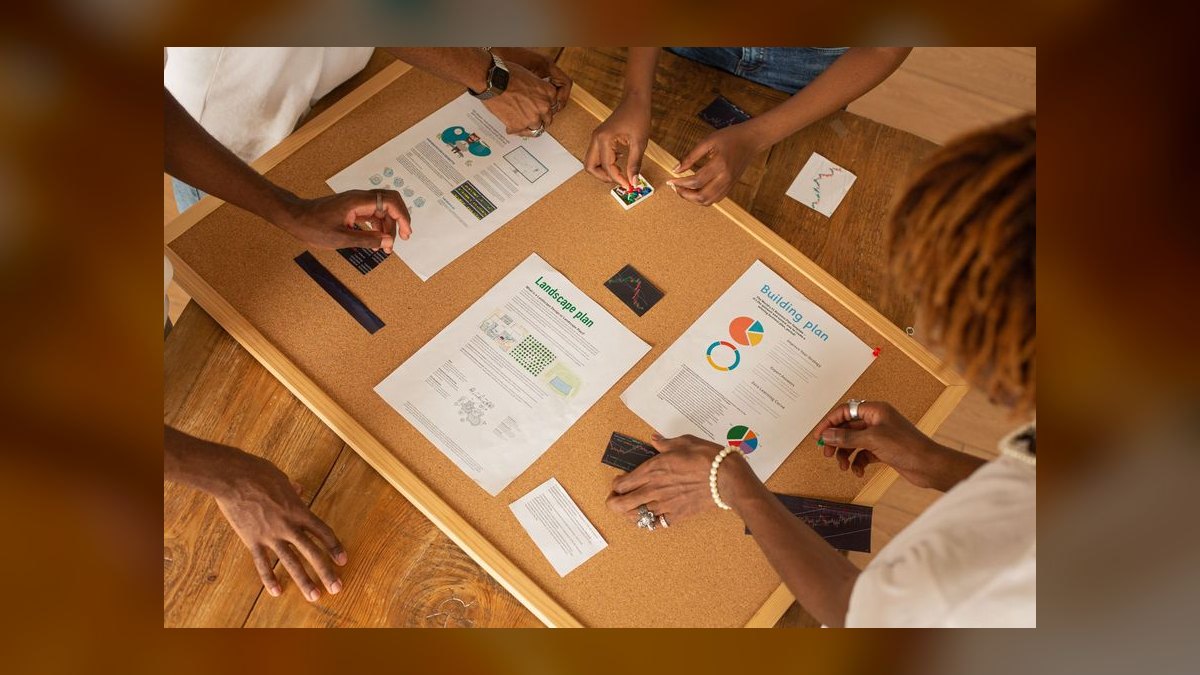
The mechanism the diagram encodes is the whole point. Discounting feels like the only lever a rep controls, so an undrilled rep pulls it first. The drill installs a different first lever — reframing — and only permits the price lever as a trade. Once that sequence is automatic, the outcome (held margin) follows without the rep having to feel brave in the moment.
Benchmarks and realistic ranges
Group size runs 4–12 reps, paired up; with an odd number the leader fills a seat. Below four reps, the leader plays buyer for everyone one pair at a time; in a two-person team it becomes a 1-on-1 with the rep cycling through all roles. The default session is 30 minutes across four rounds, compressible to 5 and extendable to 60.
The four-round timing benchmark is: Round 1 (set the scene) about 5 minutes, Round 2 (run the reps) about 12 minutes, Round 3 (pressure test) about 8 minutes, Round 4 (debrief and lock it in) about 10 minutes. The 5-minute version is Round 2 only — the leader reads the buyer's opening, one rep delivers the value-anchor and one implication question live, done — ideal for a Monday huddle. The 60-minute version adds a fifth round where reps build a buyer card from a real account, swap, run unscripted, then critique two recorded discovery calls and each commit to one account to re-quote on a full-program basis.

The verbatim scripts are the benchmark for what a passing rep sounds like. The buyer's opening, read by the leader then repeated by buyers, is: "I pulled your quote next to Amazon Business and you're eleven percent higher on the case of copy paper. I can't justify that to my CFO." The rep's value-anchor is: "Totally fair to check that — most of our clients did exactly that before they switched to us. The eleven percent on that one SKU is real. Here's what's not on Amazon's quote: next-day delivery with a 98% fill rate, one consolidated invoice instead of forty, and returns we handle without a ticket queue. Can I ask — what's your team's time worth when an order shows up short and someone has to chase it?" That last line is the Implication question. The rep's total-program compare is: "Let's not compare the paper. Let's compare the program. What are you spending across all your suppliers — paper, toner, breakroom, janitorial — in a typical month? Our contract price on the bundle is built to beat your blended spend, not match Amazon on one line."
For measuring success afterward, track two numbers over 30 days: discount frequency and average discount size on office-supplies deals, plus the count of reps who successfully move a live conversation to total-program pricing. Materials needed per session are modest and fixed: three printed role-play cards (one buyer scenario each), a one-page value menu listing everything the program includes beyond price, a visible timer, and a whiteboard for the debrief. Room setup is tables for pairs facing each other. Buyers get 30 seconds to read their card silently and get into character before Round 2 begins.

Risks, edge cases, and failure modes
The most common failure modes are predictable, and each has a coaching cue the leader watches for during the rounds.
Repeating the buyer's price gap out loud. The moment a rep says "yeah, we're eleven percent higher," they ratify the problem as real and central. Cue: acknowledge the check ("fair to compare that"), never the gap. Discounting on the first push. The first "you're too high" is a reflex, not a decision; the fix is holding and asking an implication question before any number moves. Comparing line items instead of programs. If a rep is defending one SKU, they have already lost — the cue is to move immediately to blended monthly spend across categories. Free concessions. Every price drop must remove something from scope — delivery speed, dedicated rep, returns handling — with no exceptions. Talking past the close. The move should end on a question that hands the buyer a choice between two good-for-you outcomes, not a monologue. Ignoring the CFO third party. When the buyer says "my CFO only looks at unit price," the rep must arm the buyer with a contract-lock argument they can carry upstairs, because the rep is not in that room.

A distinct edge case is the escalation in Round 3, where reps most often freeze. The buyer pushes twice more before relenting — "I hear you, but my CFO only looks at unit price. Match Amazon on the paper or I'm splitting the order." The correct rep response is the Sandler trade-down: "I can get you closer on the paper — but I won't pretend the price moves for free. If unit price on copy paper is the only number that matters, I can drop it to match, and we move you from next-day to two-day on that line and pull the dedicated rep. Most buyers don't want that trade once they see it. Or — we keep the full program and I lock your contract price for twenty-four months so this conversation never happens again. Which one actually helps you with your CFO?" Reps freeze here because they feel cornered; the fix is rehearsing the trade-down line until it is automatic — run it five times in a row if needed.
The deepest edge case is when the price genuinely is higher and the program offers nothing to justify it. Handling this honestly matters: the drill is not a tool to defend indefensible pricing. When it exposes that gap, the conversation to have is operational — fix fill rates, consolidate invoicing, add returns handling — not a better script. Veterans are a quieter risk: they often claim they already know how to handle price while carrying a reflexive-discount habit. Running the drill forces them to articulate a structured response and trade scope, which is exactly the discipline they have been avoiding.

A practical rollout plan
Roll the drill out on a cadence, not as a one-off. Run the full 30-minute version monthly, plus the 5-minute version in any week the team is hearing heavy price pushback. New reps should run it inside their first two weeks. Rotate buyer cards each month — add a new persona (a CFO, a facilities manager) or drop in a specific competitor's quote as the pushback trigger — so the drill never feels repetitive.
The leader opens every session by reading the rule aloud so nobody freelances into a discount: "Today we drill price pushback on office supplies. The rule is simple — nobody drops a price in this room without taking something out of scope in exchange. If you discount, you trade." Then pairs run Round 2 twice (Rep A sells, then Rep B), Round 3 adds the escalation, and Round 4 runs the board: ask each rep whether they held or what they traded, capture the best implication question verbatim, name the single best total-program compare line and have that rep repeat it, and have every rep write one live-call phrase on a card. The leader closes: "Price is the easiest thing to give and the hardest to get back. Run your card line on your next live call this week."

Virtual rollout works cleanly: use Zoom or Teams breakout rooms for the paired rounds, share the buyer card and value menu by screen share, and run the debrief on a shared timer and digital whiteboard. The plan is deliberately lightweight so the barrier to running it monthly is near zero — the only durable cost is the manager's 30 minutes, and the return is measured directly in protected margin and revenue.
Related questions
How do I handle price pushback when my product is genuinely more expensive?
Acknowledge the difference, then pivot to total cost of ownership — fill rates, delivery reliability, administrative savings from consolidation. If no program advantage exists, the drill has exposed an operational gap to fix rather than a script to memorize.
Can this drill work for a team selling to small businesses only?
Yes. For small businesses the buyer is often the owner, so the total-program argument still applies but leans on time savings and convenience rather than multi-invoice consolidation across departments.
What if my team has never done role-play before?
Start with the 5-minute version. Have the leader model the rep role first, then let new reps read the scripts verbatim without improvising until they are comfortable enough to run without the page.
How do I measure success after running this drill?
Track discount frequency and average discount size on office-supplies deals for 30 days post-drill, and monitor how many reps successfully move a live conversation to total-program pricing instead of defending a single line item.
Should I run this for veteran reps who say they already know price?
Yes. Veterans often carry a reflexive-discount habit. The drill forces them to articulate a structured response and trade scope — the exact discipline they have been avoiding by leaning on instinct.
FAQ
How is this different from a generic objection-handling drill? It is specific to commodity office supplies, where the product is genuinely identical and the buyer has live price comparison at their fingertips. The entire drill is built around moving off the SKU and onto the program, which is the only durable defense in a true commodity category.
What if our prices really are higher and we can't justify it? Then the drill exposes that quickly, which is useful. In office supplies the justification almost always lives in the program — fill rates, consolidated invoicing, next-day delivery, returns. If none of that is true for your company, the conversation to have is operational, not a sales script.
Should reps ever discount in this drill? Yes, but only as a trade. The Sandler rule embedded here is that price never moves for free. A rep who discounts and pulls dedicated support or delivery speed from scope has run the drill correctly. A rep who discounts to be liked has not.
How often should we run this? Monthly for the full 30-minute version, plus the 5-minute version in any week the team is hearing heavy price pushback. New reps should run it inside their first two weeks on the desk.
My reps freeze when the buyer pushes a third time. What do I do? Slow Round 3 down. Have the buyer push, then pause, and let the rep think out loud. The freeze comes from feeling cornered; the fix is rehearsing the trade-down line until it is automatic — run it five times in a row if needed.
Can I use this for toner, janitorial, or breakroom instead of paper? Yes. Swap the SKU on the buyer card. The three moves — value-anchor, implication question, total-program compare — work across every office-supplies category. Janitorial and breakroom make the program argument stronger because consolidation savings are larger.
Sources
- SPIN Selling — Huthwaite International
- The Challenger Sale — Gartner
- Sandler Training — Negotiation & Price Objections
- RAIN Group — Handling Sales Objections
- Harvard Business Review — The Right Way to Negotiate Price
- Gong — Sales Blog
- Association for Talent Development (ATD)
- HubSpot Sales Blog — Overcoming Price Objections
- Richardson Sales Performance
Related on PULSE
- [Skill Drill: Handling Price Pushback for Industrial Equipment](/knowledge/sk0011)
- [Skill Drill: Handling Price Pushback for Staffing and Recruiting](/knowledge/sk0045)
- [Skill Drill: Presenting to Executives for Office Supplies](/knowledge/sk0050)
- [Skill Drill: Consultative Selling for Office Supplies](/knowledge/sk0021)
- [Skill Drill: Objection Handling for Construction](/knowledge/sk0036)
- [Skill Drill: Handling Rejection for Roofing](/knowledge/sk0049)
@Kory-White- · if Venmo asks, the last 4 of my number are 2012
 pulse-skillsSkill Drill: Handling Price Increase Conversations for Waste and Recycling Services in 2027
 pulse-skillsSkill Drill: Active Listening for Automotive Dealerships
 pulse-skillsSkill Drill: Cold Calling for Commercial Real Estate
 pulse-skillsSkill Drill: Discovery Questions for Medical Device Sales
 pulse-skillsSkill Drill: Relationship Selling for Furniture Manufacturing
 pulse-skillsSkill Drill: Product Demos for HVAC
 pulse-skillsSkill Drill: Handling Rejection for Pharmaceutical Sales
 pulse-skillsSkill Drill: Delegation for SaaS Sales
 pulse-skillsSkill Drill: Storytelling for Building Materials
 pulse-skillsSkill Drill: Discovery Questions for Logistics and Freight