
How many rounds of roleplay should a single skill drill session include before returns diminish in 2027?
 Curated byKory White · Fractional CRO · Maryland
 PULSEKNOWLEDGE LIBRARY
Quality
Certified

For most skill drills in 2027, plan four to six roleplay rounds per session and stop by eight. Rounds one and two build fluency, rounds three to five produce the sharpest gains, and returns diminish noticeably after round six as fatigue, repetition, and memorized scripts replace genuine learning. Cap any single drill session at ninety minutes and reassess before adding rounds.
The two options compared: fixed-round blocks versus adaptive round counts
The first practical choice is between a fixed block of roleplay rounds and an adaptive count that ends when performance stops improving. A fixed block is simple to schedule: you decide that every drill session will include, say, five rounds, and every rep runs the same scenario structure with a debrief between rounds. This works well for onboarding cohorts, certification prep, and any program where you need comparable data across dozens of reps. The downside is that a fixed block ignores individual variance. A tenured rep may hit their ceiling in round three and spend rounds four and five reinforcing a script they already own, while a new hire may still be climbing in round six and get cut off early.
An adaptive count flips that. You run roleplay rounds until a defined stopping rule fires: two consecutive rounds with no improvement on the scored rubric, a drop in talk-track accuracy, or a self-reported confidence plateau. This squeezes more value out of each minute and avoids the dead zone where reps are just going through motions. The cost is facilitator judgment. Someone has to score each round consistently, and if the scorer is generous or distracted, the stopping rule never fires and you drift into the same over-repetition you were trying to avoid.
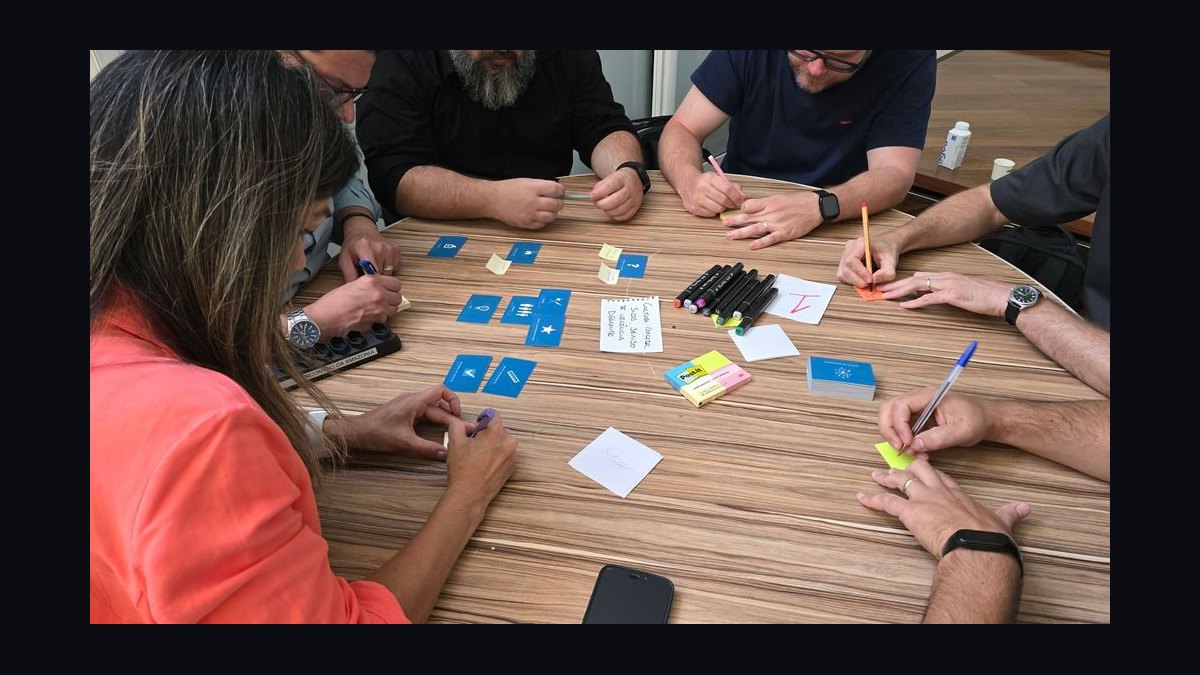
In practice, most revenue teams land on a hybrid: a default range of four to six rounds, with permission to stop at four if the rubric flatlines or extend to seven only when a specific, named skill is still visibly improving. The hybrid keeps scheduling predictable while respecting the fact that returns diminish at different points for different people.
There is a third option worth naming because it is common and usually wrong: running as many rounds as time allows. When a session has a hard ninety-minute block and no round target, facilitators tend to fill the time. That produces sessions of eight, ten, or twelve rounds where the last third is low-quality repetition. Reps rehearse errors, get bored, and disengage. The number of rounds should be a deliberate decision, not a byproduct of the calendar.
One more distinction matters: a "round" is not the same as a "rep." A round includes the roleplay itself plus the debrief and any reset. If you count only the live roleplay minutes, a five-round session might be twenty-five minutes of actual practice inside a ninety-minute block. Teams that confuse rounds with reps end up over-scheduling and wondering why fatigue sets in early.

How to decide between them
The decision hinges on three inputs: the skill's complexity, the rep's experience level, and how precisely you can measure improvement round over round. Complex, multi-threaded skills like discovery calls with three stakeholders need more rounds because each round surfaces a different objection pattern. Simple, bounded skills like a pricing objection response or a voicemail opener need fewer. Experience level cuts the other way: newer reps benefit from more rounds because they are still building the mental model, while veterans hit diminishing returns faster because they already have the pattern.
Measurability is the tiebreaker. If you have a rubric with observable behaviors scored after every round, adaptive counting is safe and usually better. If your only signal is the facilitator's gut feel, a fixed block of four to six rounds is more reliable because it does not depend on real-time judgment under time pressure.

The flow above is deliberately conservative on the upper end. Nothing in it authorizes a session beyond seven rounds, because the evidence from practice is consistent: quality collapses before quantity pays off. The one exception is a drill built around a single narrow behavior, such as pausing after a question, where short rounds of two to three minutes each can run to eight or nine before fatigue bites. Even then, the total live practice time stays under thirty minutes.
A useful sanity check before you commit to a count: ask what the rep should be able to do differently after round six that they could not do after round four. If you cannot name it, you do not need round six.

Concrete numbers behind each option
The numbers that matter fall into four buckets: round counts, time per round, total session length, and the point where measured improvement flattens.
Round counts. Across most sales and customer-facing skill drills, the productive window is four to six rounds. Round one is typically the weakest and mostly diagnostic. Round two shows the largest single jump in most cohorts because the debrief from round one is fresh. Rounds three through five deliver steady, smaller gains. Round six is often marginal but still positive for complex skills. Round seven and beyond rarely produce measurable improvement on a rubric and frequently produce regression as reps simplify or rush.
Time per round. A full round including roleplay, debrief, and reset usually runs twelve to eighteen minutes. Live roleplay itself is typically four to eight minutes; the debrief is five to eight; the reset and note-taking is two to three. If your rounds are running under eight minutes total, you are probably skipping the debrief, which is where most of the learning happens. If they run over twenty, you are likely over-scenarioing and will not fit five rounds into a sane session.

Total session length. Ninety minutes is the practical ceiling for a single drill session with a facilitator. Beyond that, attention and energy drop sharply, and the later rounds are worth less than the earlier ones. A ninety-minute block comfortably fits four to five full rounds. To fit six, you need either shorter rounds or a hundred-and-twenty-minute block, and the extra thirty minutes usually buys less than scheduling a second session two days later.
The flattening point. When teams score each round on a five-point rubric, the typical pattern is a rise from roughly two to roughly four across rounds one through five, then a plateau at four to four-and-a-half in rounds six and seven, then a slight decline in round eight. The exact numbers vary by skill and cohort, but the shape is remarkably consistent. That plateau is what "diminish" means in practice: the marginal round costs fifteen minutes and returns almost nothing.

Spacing beats stacking. Two sessions of four rounds separated by forty-eight hours consistently outperform one session of eight rounds. The consolidation that happens between sessions is doing real work, and no amount of within-session repetition substitutes for it. If you have eight rounds of budget, split them.
Cohort size. In a group session, each rep gets fewer live rounds because others are watching or roleplaying. With six reps and ninety minutes, each person gets two to three live rounds at most. That is below the productive window, which is why group drills should be paired with solo or paired practice to reach four to six rounds per person.
Implementation details and sequencing
Getting the round count right is mostly about sequencing and instrumentation. The sequence below assumes a ninety-minute session with one facilitator and one to four reps.

Before the session, pick the single skill and write the rubric. The rubric should have three to five observable behaviors, each scored on a simple scale. If you cannot observe it in a round, it does not belong on the rubric. Share the rubric with reps before round one so they know what is being measured.
Set the default round count and the stopping rule in advance. Write them down. A workable default is five rounds, with an early stop at four if two consecutive rounds show no rubric improvement, and a conditional extension to six only if the facilitator can name the specific behavior still improving.

Run round one as a baseline. Do not coach during it. Score it, then debrief for five to eight minutes with one or two specific changes for the next round. Resist the urge to give five notes; reps can act on two.
Run rounds two through five with the same structure: roleplay, score, debrief, reset. Keep the scenario stable across rounds so you are measuring the rep, not the scenario. Change only one variable at a time if you change anything.

Watch for the three fatigue signals. First, script drift: the rep starts paraphrasing into vague language. Second, speed-up: rounds get shorter without a corresponding jump in quality. Third, disengagement: shorter debriefs, flat affect, checking the clock. Any two of these firing together means stop, even if you planned more rounds.
Close the session with a two-minute summary per rep: one thing that improved, one thing to practice before the next session. Log the round count, the rubric scores, and the stopping reason. That log is what lets you tune the default over time.
Two implementation details are easy to get wrong. First, the debrief is not optional and should not be compressed to fit more rounds. Cutting the debrief from six minutes to two to squeeze in a sixth round trades the highest-value minutes for the lowest-value ones. Second, keep the scenario constant across rounds within a session. Rotating scenarios mid-session resets the learning curve and makes round-over-round comparison meaningless.

For remote sessions, add one rule: cameras on during roleplay, and the facilitator mutes themselves during the round. Side-channel commentary during a round breaks the rep's focus and inflates the perceived round count without adding real practice.
Finally, treat the round count as a parameter to tune, not a law. Review your logs monthly. If most sessions are stopping early at four, lower the default to four. If most are extending to six and the rubric supports it, raise the default to six for that skill only. The number should follow the data, and the data only exists if you log it.
Related questions
Does the ideal round count change for remote versus in-person drills?
Slightly. Remote rounds tend to run shorter because there is less physical setup, so you can often fit five to six rounds in the same block. But remote fatigue sets in faster, so watch the disengagement signals closely and be willing to stop at four.
Should every rep in a cohort run the same number of rounds?
No. Use the same default and the same stopping rule, but let individuals stop early or extend by one round. Forcing identical counts produces low-value repetition for fast learners and cuts off slow ones prematurely.
How do you count rounds when two reps roleplay with each other?
Count each person's live turns separately. In a paired drill, one person's round is the other's observation period, so a forty-minute pairing yields roughly three to four live rounds each, not seven or eight.
What is the biggest mistake teams make with round counts?
Running rounds until the clock runs out. Time-boxed sessions with no round target drift to eight or ten rounds, and the last third is low-quality repetition that can entrench errors rather than fix them.
Can you split a session into two shorter ones instead?
Yes, and it usually works better. Two sessions of four rounds separated by a day or two outperform one session of eight rounds, because consolidation between sessions does work that repetition within a session cannot.
FAQ
How many roleplay rounds should a single skill drill session include before returns diminish?
Four to six rounds for most skills, with a hard practical ceiling around eight. Rounds one and two build fluency, three through five deliver the largest measured gains, and beyond six the marginal round usually produces no rubric improvement and sometimes causes regression.
Does the answer change in 2027 versus earlier years?
The underlying learning dynamics have not changed, but the tools have. AI roleplay partners and automated scoring now make it cheap to run more rounds, which makes the discipline of stopping more important, not less. The constraint has shifted from facilitator time to rep attention.
What signals tell you to stop adding rounds?
Two consecutive rounds with flat rubric scores, script drift into vague paraphrasing, rounds getting shorter without quality gains, and visible disengagement during debriefs. Any two of these together mean stop, regardless of the planned count.
Is a round the same as a rep?
No. A round includes the roleplay, the debrief, and the reset. Counting only live roleplay minutes understates the time cost and leads teams to over-schedule. Five full rounds typically consume sixty to ninety minutes.
Should complex skills get more rounds?
Yes, but not unlimited. Multi-threaded skills like discovery with several stakeholders may justify six rounds and occasionally seven. Simple bounded skills like an objection response rarely justify more than four.
How do you know the round count is working?
Log the round count, rubric scores per round, and the stopping reason for every session. If scores plateau before your default count, lower it. If they are still climbing at your default, raise it for that skill only.
Sources
- Association for Talent Development
- Sales Enablement Society
- Harvard Business Review
- ATD Research and Insights
- Gartner Sales Research
- McKinsey Growth, Marketing and Sales
- Society for Industrial and Organizational Psychology
- eLearning Industry
Related on PULSE
- How long should a single skill drill session run before quality drops?
- What is the best debrief structure between roleplay rounds?
- How do you score roleplay rounds consistently across facilitators?
- When should you split a drill into two sessions instead of one?
- How do AI roleplay partners change optimal round counts?
This page will be disappearing soon. Save it to your device for $1 — or read it free while it is here.
@Kory-White- · if Venmo asks, the last 4 of my number are 2012
 pulse-skillsSkill Drill: Follow-Up Cadence for Healthcare Sales
 pulse-recentSkill Drill: Step-by-Step Roleplay for Agriculture Equipment in 2027
 pulse-skillsSkill Drill: Discovery Questions for Medical Device Sales
 pulse-recentSkill Drill: Step-by-Step Roleplay for Steel and Metals in 2027
 pulse-skillsSkill Drill: Handling Price Increase Conversations for Waste and Recycling Services in 2027
 pulse-recentSkill Drill: Step-by-Step Roleplay for Medical Device Sales in 2027
 pulse-skillsSkill Drill: Cost-Effective Skill Drills for SaaS Sales in 2027
 pulse-skillsHow many skill drills should a sales rep complete before their first roleplay assessment in 2027?
 pulse-recentWhat are the exact steps to run a skill drill roleplay session from start to finish in 2027?
 pulse-skillsSkill Drill: Asking for Referrals for Building Materials