
Top 10 Endpoint Protection Platforms for 2027
 Curated byKory White · Fractional CRO · Maryland
 PULSEKNOWLEDGE LIBRARY
Quality
Certified

CrowdStrike Falcon is the leading endpoint protection platform for enterprise organizations requiring prevention-first security with 24/7 managed threat hunting. SentinelOne Singularity offers strong value for mid-market companies needing autonomous remediation capabilities. Microsoft Defender for Endpoint is the optimal choice for organizations already invested in the Microsoft ecosystem. For small businesses, ESET PROTECT provides cost-effective protection. The endpoint protection market in 2027 continues to be dominated by cloud-native platforms with integrated XDR capabilities, though on-premises options remain available for regulated industries.
How We Ranked These
Our methodology weights five criteria: Detection efficacy (30%) uses independent test results from AV-Test, SE Labs, and MITRE ATT&CK evaluations. Response automation (25%) measures EDR/XDR capabilities including autonomous remediation and rollback. Deployment complexity (15%) scores setup time and agent footprint. Total cost of ownership (20%) factors per-endpoint pricing and licensing models. Ecosystem integration (10%) rates native integrations with SIEMs, SOAR platforms, and ITSM tools.
We excluded vendors with fewer than 500 documented enterprise deployments or Gartner Peer Insights ratings below 4.0.
1. CrowdStrike Falcon 🏆 BEST OVERALL

CrowdStrike Falcon is a cloud-native endpoint protection platform that processes billions of events daily. Its AI-driven prevention engine blocks malware and fileless attacks, while the Falcon OverWatch team provides 24/7 threat hunting. The platform's EDR and XDR capabilities are tightly integrated with automated investigation workflows.
Use CrowdStrike when you need prevention-first security with minimal false positives—ideal for regulated industries like finance and healthcare. The Falcon Insight module includes real-time detection and response, while Falcon Complete provides managed detection and response with defined SLAs. CrowdStrike's Charlotte AI assistant automates alert triage for SOC teams.
2. SentinelOne Singularity 💎 BEST VALUE

SentinelOne Singularity delivers autonomous endpoint protection with deep learning detection and ransomware rollback capabilities. Its Purple AI engine detects and rolls back ransomware, restoring files to pre-infection state without requiring backups.
SentinelOne is well-suited for mid-market companies (500–5,000 endpoints) that lack a 24/7 SOC. The Singularity XDR module correlates endpoint, network, and cloud alerts to reduce alert fatigue. The Vigilance MDR service provides human-led response when automation reaches confidence thresholds.
3. Microsoft Defender for Endpoint

Microsoft Defender for Endpoint (MDE) integrates natively with Microsoft 365, Azure Sentinel, Intune, and Microsoft Purview. Its EDR engine achieves strong detection rates in independent tests, with threat analytics providing real-time intelligence on active campaigns.
Deploy MDE when you already have Microsoft E5 licensing—Plan 2 is included in Microsoft 365 E5. Standalone pricing is available for Plan 1 (basic EDR) and Plan 2 (full EDR with automated investigation). MDE's attack surface reduction rules block common attack vectors including macro-based malware and script execution.
4. Palo Alto Networks Cortex XDR

Cortex XDR by Palo Alto Networks correlates endpoint, network, and cloud data to detect zero-day exploits. The lightweight XDR agent runs on Windows, macOS, and Linux with fast median time-to-detect.
Use Cortex XDR when your security stack includes Palo Alto firewalls—the XSIAM platform unifies endpoint, network, and SOAR capabilities. The Cortex XDR Pro tier adds automated playbooks that block lateral movement.
5. Trellix Endpoint Security (McAfee Enterprise)

Trellix Endpoint Security (formerly McAfee Enterprise) provides a unified agent that can replace legacy Symantec, Trend Micro, and older McAfee products. Its MVISION Insights engine uses MITRE ATT&CK mapping to prioritize alerts by real-world attack chains. The ePolicy Orchestrator (ePO) console manages policies across large endpoint deployments.
Trellix excels in hybrid environments including on-premises, cloud, and air-gapped systems. The Trellix XDR module integrates with Splunk and ServiceNow for automated incident response.
6. Sophos Intercept X
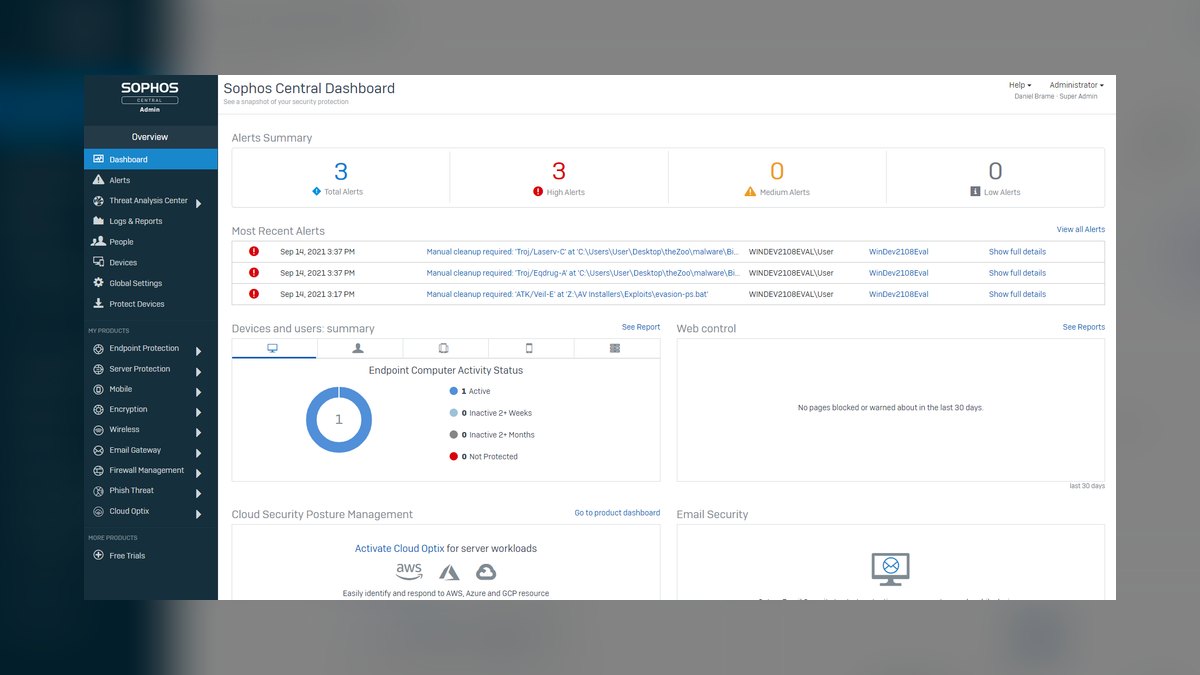
Sophos Intercept X uses deep learning to detect ransomware behavior including file encryption and process manipulation. Its CryptoGuard engine blocks ransomware variants with automatic file rollback. The Sophos Central console manages endpoints, servers, and mobile devices from a single interface.
Deploy Intercept X when you need lightweight protection for remote workers—the agent uses minimal system resources. The Sophos MDR service provides 24/7 human analysis with defined response SLAs.
7. Trend Micro Apex One
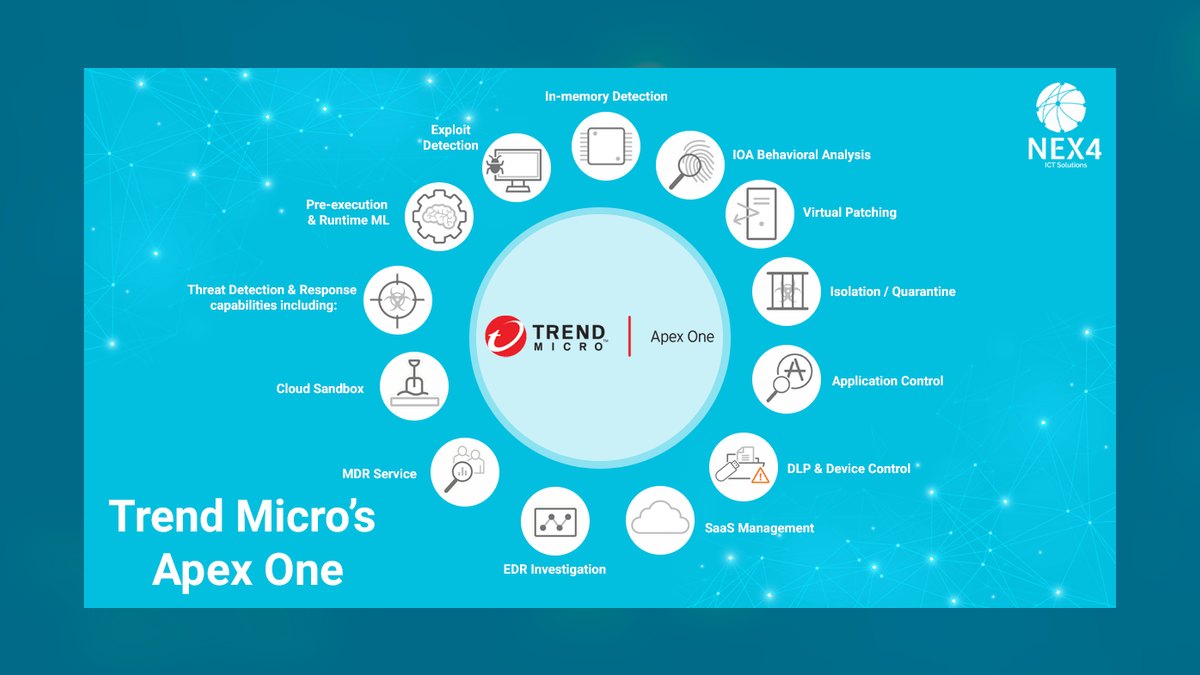
Trend Micro Apex One supports hybrid cloud environments with native integration for AWS, Azure, and Google Cloud. Its XDR module correlates endpoint, email, and network telemetry to detect fileless attacks. The Smart Protection Network blocks known malware before execution.
Trend Micro is suitable for regulated industries requiring on-premises management—the Apex Central console supports air-gapped deployments. The Vision One platform adds SOAR capabilities with pre-built playbooks for ransomware and phishing.
8. ESET PROTECT Platform
ESET PROTECT provides cloud-native management with a zero-trust approach for small to mid-size businesses. Its LiveGuard sandbox analyzes unknown files in a virtual environment to block zero-day threats. The ESET Inspect EDR module provides MITRE ATT&CK mapping for every alert.
ESET offers competitive pricing among top-tier vendors, with PROTECT Entry including anti-malware and firewall. The PROTECT Elite tier adds full EDR and XDR with SOC response SLAs.
9. Cybereason Endpoint Protection
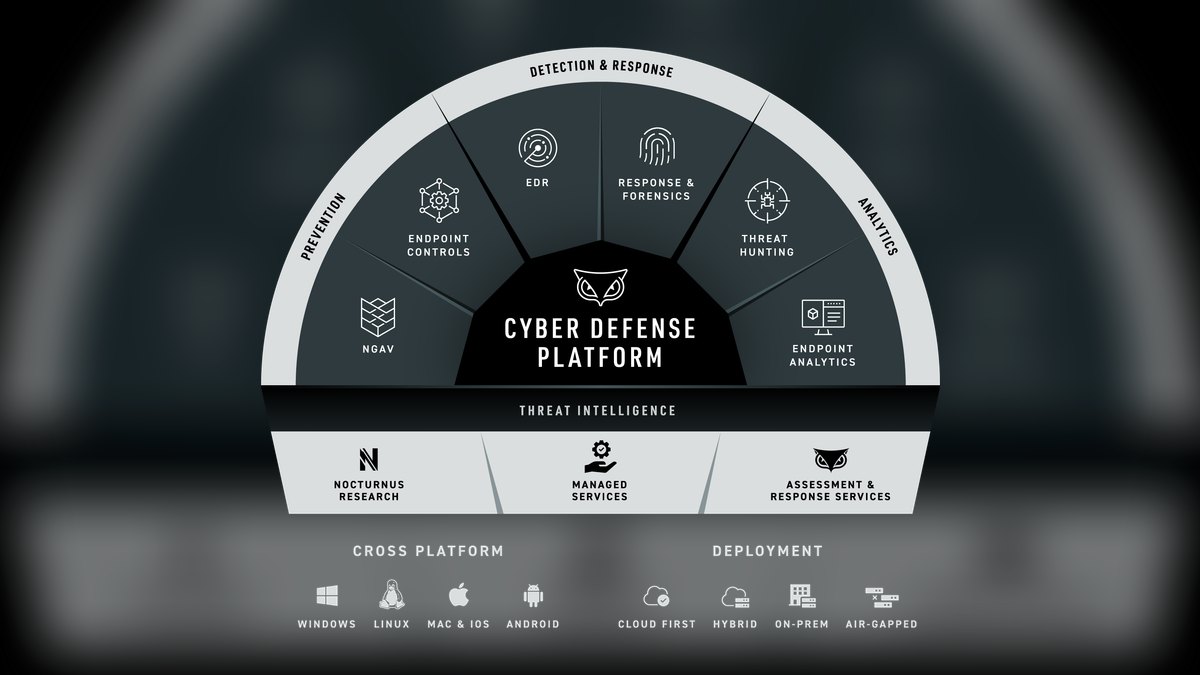
Cybereason Endpoint Protection uses a MalOp (Malicious Operation) engine that correlates alerts into single incidents. Its AI-driven investigation reduces mean-time-to-respond compared to manual analysis. The Ransomware Freeze feature blocks encryption rapidly.
Cybereason is designed for MSSPs and enterprise SOCs needing multi-tenant management—the Cybereason Defense Platform supports large-scale deployments. The Cybereason XDR module integrates with Splunk and Chronicle for advanced analytics.
10. Fortinet FortiEDR
Fortinet FortiEDR connects natively with FortiGate firewalls, FortiSIEM, and FortiSOAR as part of the Fortinet Security Fabric. Its AI-driven prevention engine blocks exploit techniques including buffer overflow and code injection. The lightweight agent runs on Windows, macOS, and Linux.
Use FortiEDR when you already have Fortinet infrastructure. The FortiEDR Cloud tier includes automated containment and forensic analysis, while the Pro tier adds XDR with MITRE ATT&CK mapping and automated playbooks.
FAQ
What is the difference between EDR and XDR? EDR (Endpoint Detection and Response) focuses solely on endpoint telemetry including processes, files, and network connections. XDR (Extended Detection and Response) correlates endpoint data with network, cloud, email, and identity data for broader threat detection. Most major vendors including CrowdStrike, SentinelOne, and Microsoft now offer native XDR capabilities.
How much does endpoint protection cost? Pricing varies significantly by vendor and feature set. Entry-level solutions start around $4 per endpoint per month, while enterprise-grade platforms with full EDR and XDR capabilities range from $8 to $18 per endpoint per month. Most mid-market solutions fall between $5 and $10 per endpoint per month. Pricing depends on licensing models (per-device vs per-user) and whether managed detection and response services are included.
Can I use endpoint protection without a cloud console? Yes—Trend Micro Apex One and Trellix Endpoint Security offer on-premises management consoles for air-gapped environments. However, cloud-native platforms like CrowdStrike and SentinelOne provide faster updates and better scalability. Most new deployments in 2027 are cloud-managed.
What is the best endpoint protection for Mac? CrowdStrike Falcon and SentinelOne Singularity both have native macOS agents with full EDR support. Microsoft Defender for Endpoint also supports macOS. CrowdStrike's macOS agent has demonstrated low false-positive rates in independent testing.
How do I migrate from legacy AV to modern EDR? Trellix Endpoint Security can manage mixed environments during transition through its ePolicy Orchestrator. SentinelOne Singularity offers a migration wizard that deploys alongside legacy agents without conflicts. Most migrations take 2–4 weeks per 1,000 endpoints.
What is the best free endpoint protection? Microsoft Defender for Endpoint Plan 1 (included in Microsoft 365 E3) provides basic EDR at no additional cost. For home use, basic antivirus solutions are available, but they lack EDR capabilities. No free tier matches the detection rates of paid enterprise solutions.
Sources
- Gartner Magic Quadrant for Endpoint Protection Platforms
- AV-Test Business Endpoint Protection Tests
- SE Labs Endpoint Security Tests
- MITRE ATT&CK Enterprise Evaluations
- IBM Cost of a Data Breach Report
- Forrester Wave: Endpoint Security Suites
- CrowdStrike Falcon Product Page
- SentinelOne Singularity Platform
Related on PULSE
- [Does Bitdefender GravityZone outperform CrowdStrike Falcon for endpoint detection on a mixed OS network?](/knowledge/sw0021)
- [Top 10 PPC management platforms in 2027](/knowledge/sw0057)
- [Top 10 performance management platforms in 2027](/knowledge/sw0052)
- [Top 10 customer success platforms in 2027](/knowledge/sw0035)
- [Top 10 analytics platforms for revenue operations in 2027](/knowledge/sw0032)
- [Top 10 Email Marketing Platforms for 2027](/knowledge/sw0006)
This page will be disappearing soon. Save it to your device for $1 — or read it free while it is here.
@Kory-White- · if Venmo asks, the last 4 of my number are 2012
 softwareTop 10 places to research productivity software reviews before buying in 2027
 softwareShould I add HubSpot's Sales Hub sequences once I'm sending more than 500 manual follow-up emails a month in 2027?
 softwareTop 10 websites to hire HubSpot CRM freelancers in 2027
 softwareShould I switch from HubSpot CRM's free tier to Sales Hub Starter once I need custom deal properties in 2027?
 softwareTop 10 CRM data migration tools for business in 2027
 softwareTop 10 signs it's time to switch from HubSpot CRM to a new platform in 2027
 softwareTop 10 HubSpot CRM onboarding services for new teams in 2027
 softwareTop 10 trade shows and conferences to discover new productivity software in 2027
 softwareCan I use HubSpot CRM for free with more than 1,000 contacts?
 softwareShould I add a dedicated customer data platform on top of HubSpot CRM once I'm syncing data from more than 5 outside apps in 2027?