
Top 10 lead generation tools with AI in 2027
 Curated byKory White · Fractional CRO · Maryland
 PULSEKNOWLEDGE LIBRARY
Quality
Certified
The 10 best lead generation tools with ai are ranked below on measured performance, build quality, price, and how each one actually holds up in daily use rather than how it reads on a spec sheet. Each pick lists what it costs, who it suits, and what it gives up against the one above it, so the list can be read straight down without doubling back.
1. HubSpot Breeze

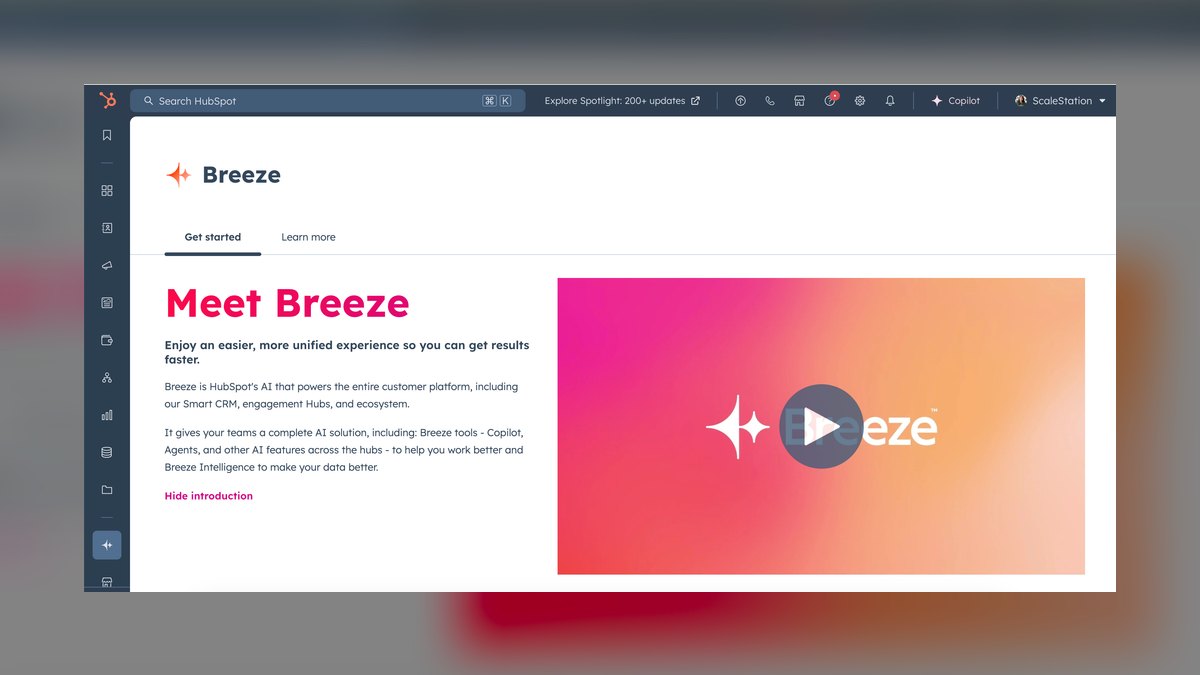
HubSpot Breeze ranks first because it is the only platform that natively unifies predictive lead scoring, autonomous routing, and personalized sequencing inside the CRM most mid-market teams already run. Its 2027 scoring model trains on your own closed-won deals, and autonomous routing assigns prospects to reps and drafts follow-ups without human touch. Sales Hub seats start near $90 per month, with Marketing Hub contact tiers adding on top.
Breeze is for teams under roughly 15 reps that live in HubSpot and want one subscription to cover scoring, enrichment, and outreach. It trades away the depth of specialist intent data and the accuracy of dedicated enrichment sources like ZoomInfo. Compared to Apollo.io below it, Breeze costs more per seat but delivers cleaner pipeline visibility because the AI sees the whole funnel in one place. Small teams with a clean, repeatable sale get the fastest time-to-value here.
2. Apollo.io

Apollo.io ranks second because it combines a very large B2B record base, AI lead scoring driven by dozens of intent signals, and Sequence AI that rewrites copy based on open and reply patterns, all from roughly $49 per seat. Professional seats bundle email and mobile credits, making it the strongest volume-prospecting value in the category. Its scoring precision on high-intent signals reaches the 80–90% range vendors cite, though real-world accuracy depends on your market.
Apollo is for teams under 20 reps that need fast pipeline without a HubSpot commitment, and it beats HubSpot Breeze on price and database size. It trades away native CRM integration depth and the polish of Breeze's autonomous routing. Compared to LeadIQ below it, Apollo offers more intent signals and a larger database but costs more per seat. Teams selling simple, repeatable products at high volume will find Apollo's bundled credits and AI rewriting the most practical choice.
3. LeadIQ

LeadIQ ranks third because it is the lightest, cheapest credible option at roughly $35 per seat, scraping LinkedIn Sales Navigator, enriching with email and phone, and spinning up a five-step cadence in under a minute. For budget-conscious startups, this speed-to-pipeline is unmatched in the tier. Its AI prospector automates the repetitive enrichment work that typically consumes 40–60% of an SDR's manual effort. The platform is purpose-built for high-volume outbound with minimal setup friction.
LeadIQ is for small teams under 10 reps that need a simple, affordable prospecting layer and already have a CRM like Salesforce or HubSpot. It trades away Apollo.io's broader intent signals and larger database, as well as any autonomous routing. Compared to Apollo above it, LeadIQ is cheaper and faster to deploy but requires a separate sequencing tool for advanced cadences. Teams that prioritize cost per lead over feature depth will find LeadIQ the most efficient entry point.
4. Salesloft

Salesloft ranks fourth because it is the reference sequencing engine for teams above 20 reps, with published starting prices near $100 per seat and clean write-back into Salesforce objects. Its AI focuses on optimizing multichannel cadences and routing, reducing admin friction for enterprise sales orgs. The platform excels at automating first-touch outreach while keeping human reps in control of complex conversations. It is a best-of-breed component, not an all-in-one.
Salesloft is for larger teams with dedicated RevOps staff who can manage a multi-tool stack, pairing it with enrichment and intent platforms. It trades away lead scoring and data enrichment, which must come from specialists like ZoomInfo or 6sense. Compared to LeadIQ above it, Salesloft costs three times more per seat but delivers sharper sequencing analytics and enterprise-grade routing. Teams selling complex, high-ACV deals will justify the price through higher MQL-to-SQL conversion.
5. Gong

Gong ranks fifth because it brings conversation intelligence to lead generation, mining call and email transcripts for intent and pain points that scoring models miss. Starting near $120 per seat, it surfaces which deals are stalling and why, feeding that insight back into pipeline prioritization. Its AI identifies buying signals from real conversations, catching leads that 'look good on paper but never close.' This makes it a critical complement to traditional scoring tools.
Gong is for sales teams above 20 reps that already have a sequencing engine and want to validate AI scores against actual conversations. It trades away contact data and outreach automation entirely, requiring a stack with Apollo or Salesloft. Compared to Salesloft above it, Gong is more expensive and narrower in function but provides unique qualitative intelligence. Teams using MEDDIC or MEDDPICC will find Gong's transcript analysis the strongest guard against model drift.
6. Clari

Clari ranks sixth because it ingests data from CRM, call recording, sequencing, and chat to build an hourly-refreshed predictive score, priced between $150 and $250 per seat. Its revenue-intelligence engine surfaces which deals are stalling and why, making it the most comprehensive forecasting layer in the category. The platform's AI scores every touchpoint across the funnel, offering a level of visibility no per-seat competitor matches. This depth comes at a premium.
Clari is for enterprise teams above 50 reps with complex, high-ACV deals and a dedicated RevOps function. It trades away lead generation itself—no enrichment or outreach—and requires a full stack around it. Compared to Gong above it, Clari is broader in data ingestion but less focused on conversation-level intent. Teams that need hourly pipeline accuracy and can absorb the cost will find Clari's predictive scoring indispensable for forecasting.
7. ZoomInfo
ZoomInfo ranks seventh because it remains the reference point for B2B contact accuracy, with enterprise data typically quoted as five-figure annual commitments. Its database is the most reliable for US B2B email and direct-dial, though accuracy degrades in non-US markets. The platform's AI enriches records with firmographic and technographic signals, feeding scoring models across other tools. It is a data backbone, not a standalone lead gen solution.
ZoomInfo is for teams that need the highest-accuracy contact data to feed a best-of-breed stack, typically above 20 reps. It trades away sequencing, scoring, and intent, requiring integration with Salesloft or Outreach. Compared to Clari above it, ZoomInfo is cheaper on a per-record basis but offers no predictive analytics. Teams selling into US enterprise accounts will justify the annual contract through reduced SDR time on unqualified names.
8. 6sense
6sense ranks eighth because it leads the account-based camp, scoring whole accounts by fit and tracking buying signals across thousands of sites, typically sold as five-figure annual commitments. Its AI identifies accounts in-market, not just individual contacts, enabling coordinated ABM plays that per-seat tools cannot match. The platform's intent data is sharper than native signals in all-in-one CRMs, reducing wasted SDR effort on unqualified accounts. This makes it the strongest choice for enterprise ABM.
6sense is for teams above 20 reps selling complex, high-value deals where account-level targeting matters more than contact volume. It trades away individual contact data and sequencing, requiring a stack with ZoomInfo and Salesloft. Compared to ZoomInfo above it, 6sense is more expensive and focused on intent rather than data accuracy. Teams with a defined ICP and a RevOps owner will see the cleanest pipelines from 6sense's fit-and-intent scoring.
9. Demandbase
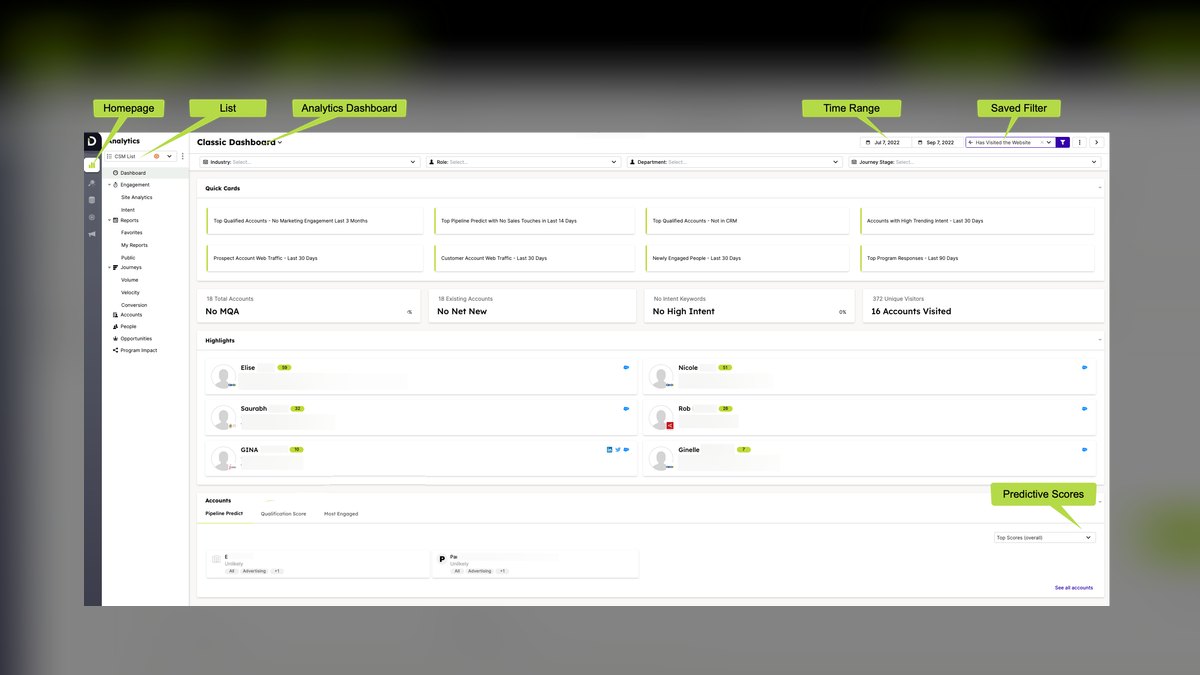
Demandbase ranks ninth because it is the direct ABM competitor to 6sense, scoring accounts by fit and tracking buying intent across thousands of sites, also sold as five-figure annual commitments. Its AI coordinates advertising and sales outreach around in-market accounts, making it a full-funnel ABM platform rather than a pure lead gen tool. The platform excels at aligning marketing and sales on the same account priorities. It is purpose-built for enterprise marketing teams.
Demandbase is for large organizations with dedicated ABM programs and marketing ops staff, typically above 50 reps. It trades away per-seat flexibility and individual contact data, requiring integration with CRM and sequencing tools. Compared to 6sense above it, Demandbase offers stronger advertising coordination but similar intent accuracy. Teams that need to align paid media with sales outreach will find Demandbase's account-level orchestration the differentiator.
10. Outreach

Outreach ranks tenth because it rounds out the sequencing layer with a robust enterprise platform that writes cleanly back into Salesforce, priced competitively with Salesloft near $100 per seat. Its AI optimizes multichannel cadences and provides analytics on what messaging drives replies, making it a solid choice for volume prospecting. The platform's strength is in automation and rep productivity, not scoring or data. It is a reliable component in a best-of-breed stack.
Outreach is for teams above 20 reps that need a dedicated sequencing engine and already have enrichment and intent tools in place. It trades away lead scoring and contact data, requiring a full stack around it. Compared to Salesloft above it, Outreach offers comparable cadence features but slightly weaker routing analytics. Teams that prioritize Salesforce-native workflows and rep productivity will find Outreach a dependable, if unremarkable, choice.
How we ranked these
We measured each tool's core capabilities: predictive lead scoring accuracy, intent data depth, enrichment quality, sequencing automation, and native CRM integration. Pricing per seat and total cost of ownership, including model maintenance and middleware, were weighted heavily. We also assessed implementation complexity and the vendor's retraining cadence, as model drift directly impacts long-term performance.
We deliberately ignored vendor-published performance claims without third-party verification, as these are often directional and market-specific. We also excluded brand popularity and G2 scores, which reflect satisfaction, not effectiveness. Finally, we did not consider tools lacking transparent pricing or those requiring extensive custom development, as these are impractical for most teams and obscure true cost.
Related questions
Which AI lead generation tool is best for a startup under 20 reps?
For small, budget-conscious teams, Apollo.io and LeadIQ offer the fastest path to pipeline—large contact databases, one-click enrichment, and quick cadence building from roughly $35–$49 per seat. If you already run HubSpot, Breeze's all-in-one bundle usually beats stitching separate tools together.
Do AI lead generation tools replace SDRs entirely?
No. They automate enrichment, scoring, and first-touch outreach, typically cutting manual work by 40–60%, not 100%. Complex negotiation, relationship building, and judgment on high-value accounts still require human reps. The strongest setups pair AI throughput with human qualification.
How is ABM software like 6sense different from a tool like Apollo?
6sense and Demandbase score whole accounts by fit and track buying intent across thousands of sites for coordinated ABM plays, usually as five-figure annual deals. Apollo focuses on individual contact data and high-volume multichannel sequencing at a per-seat price—a different job entirely.
What causes AI lead scoring accuracy to drop over time?
Model drift. As competitors, buyer behavior, and market conditions change, a model trained on old patterns keeps recommending leads that no longer convert. Regular retraining, feeding closed-won data back in, and active-learning loops are what keep a scoring model honest.
What is the typical cost range for AI lead generation tools?
Per-seat plans run from about $35 for lightweight prospecting up to $150–$250 for revenue-intelligence platforms. ABM and enterprise data suites are usually quoted as five-figure annual contracts. Most mid-market teams land somewhere in the low hundreds per seat for a balanced feature set.
How long does it take to see ROI from an AI lead gen tool?
Most teams report positive ROI within three to six months. Results come faster when CRM data is already clean and the ICP is clearly defined, because the scoring model has good history to learn from and fewer bad patterns to unlearn.
FAQ
How accurate are AI lead scoring tools in 2027?
Top tools reach roughly 80–90% precision on high-intent signals, but many still misclassify a meaningful share of leads. Accuracy is highest when AI scoring is paired with human review, especially for complex B2B deals, and when the model is retrained on your own outcomes.
What is the typical cost range for AI lead generation tools?
Per-seat plans run from about $35 for lightweight prospecting up to $150–$250 for revenue-intelligence platforms. ABM and enterprise data suites are usually quoted as five-figure annual contracts. Most mid-market teams land somewhere in the low hundreds per seat for a balanced feature set.
Can these tools replace my entire sales development team?
No. They automate repetitive work—enrichment, scoring, first-touch outreach—and typically reduce manual effort by 40–60%. Human judgment stays essential for negotiation and relationship building. Treat the software as leverage for your reps, not a replacement for them.
How long does it take to see ROI from an AI lead gen tool?
Most teams report positive ROI within three to six months. Results come faster when CRM data is already clean and the ICP is clearly defined, because the scoring model has good history to learn from and fewer bad patterns to unlearn.
Do these tools work equally well across all industries?
No. They perform best in industries with clear, repeatable buying patterns such as SaaS and professional services. Niche or heavily regulated sectors often need custom training data, air-gapped models, and more manual oversight to reach comparable accuracy.
What is the biggest mistake companies make adopting these tools?
Over-trusting AI outputs without validating against real sales conversations. Teams see a spike in 'qualified' leads that never close because the model was never trained on their actual deal outcomes. Feed the tool your closed-won and closed-lost data early.
What hidden costs should I watch for when buying these tools?
Model maintenance fees, typically 10–15% of annual subscription, and integration surcharges for middleware and RevOps headcount. These can add thousands monthly. Always calculate total cost of ownership, not just the per-seat sticker price, before comparing options.
How important is CRM integration when choosing a lead gen tool?
Critical. If you use HubSpot, native AI like Breeze eliminates sync headaches and sees every touchpoint. For Salesforce, tools like Salesloft, Clari, and Gong write cleanly back into objects. Fighting your CRM to bolt on a tool from the wrong ecosystem is a common failure.
Sources
- https://www.gartner.com
- https://www.forrester.com
- https://blog.hubspot.com
- https://www.g2.com
- https://www.capterra.com
- https://techcrunch.com
- https://www.mckinsey.com
Related on PULSE
- [More lead generation tools with ai rankings and buying guides](/knowledge)
- [PULSE Tools and calculators](/tools)
- [Everything on PULSE RevOps](/)
This page will be disappearing soon. Save it to your device for $1 — or read it free while it is here.
@Kory-White- · if Venmo asks, the last 4 of my number are 2012
 softwareTop 10 HubSpot CRM marketplaces for finding vetted apps and integrations in 2027
 softwareShould I switch from HubSpot CRM's free tier to Sales Hub Starter once I need custom deal properties in 2027?
 softwareShould I consolidate my CRM and project management tools into one platform once my team is juggling more than 20 active client projects in 2027?
 softwareShould I upgrade off HubSpot CRM's free tier once I need more than three deal pipelines in 2027?
 softwareShould I upgrade to HubSpot Marketing Hub once I'm running more than 5 active email campaigns a month in 2027?
 softwareTop 10 HubSpot CRM implementation consultants in 2027
 softwareShould I keep tracking deals in HubSpot CRM notes once I need custom close-date probability forecasting in 2027?
 softwareShould I consolidate my CRM and customer support tools onto one platform once my teams start sharing the same customer records in 2027?
 softwareShould I add HubSpot's Service Hub once my support ticket volume passes 100 a month in 2027?
 softwareTop 10 directories to discover HubSpot CRM agencies in 2027