
How does Google Workspace compare to Microsoft 365 for collaboration?
 Curated byKory White · Fractional CRO · Maryland
 PULSEKNOWLEDGE LIBRARY
Quality
Certified
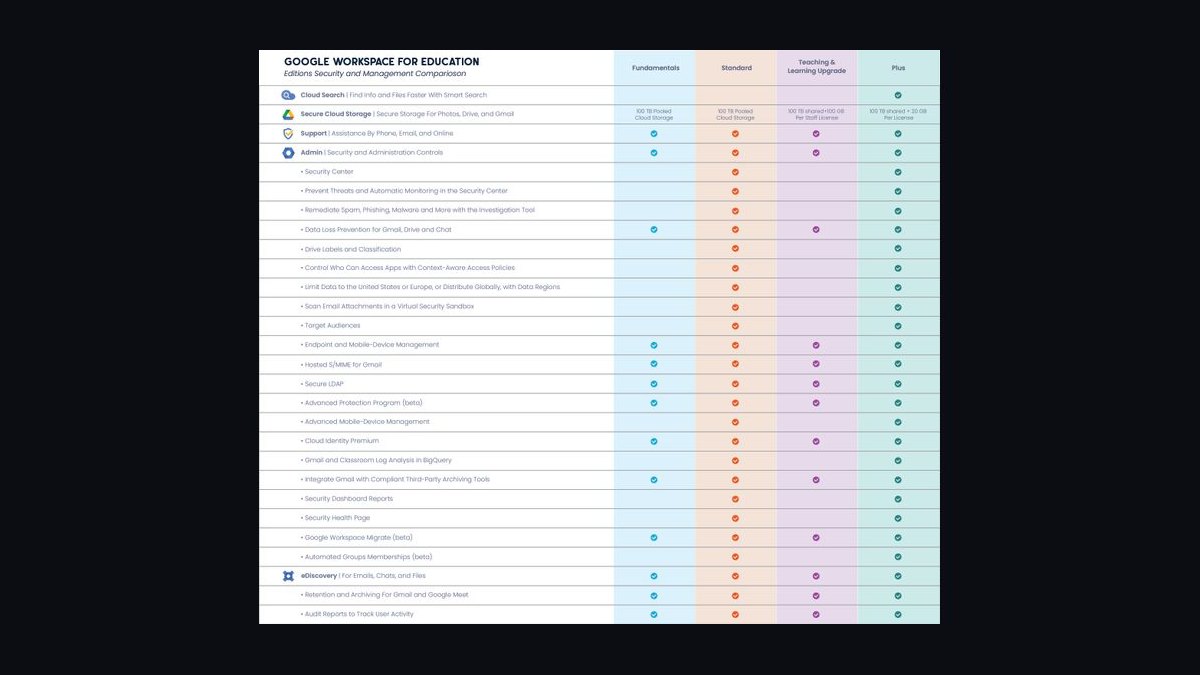
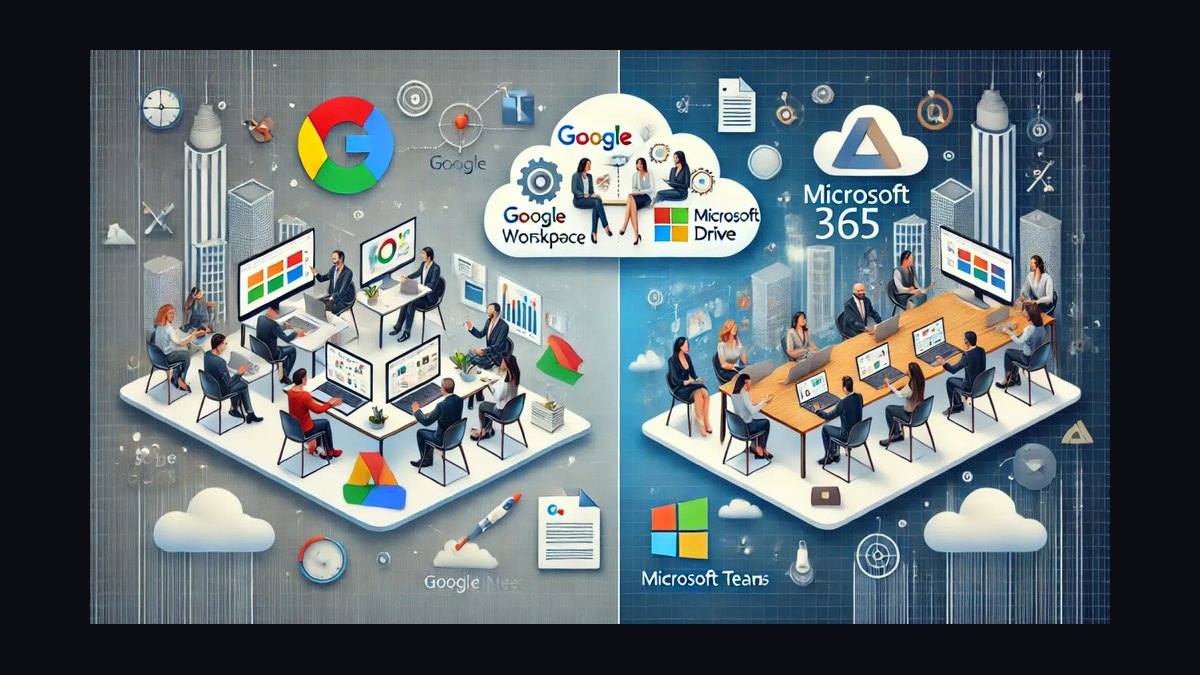
Google Workspace and Microsoft 365 both deliver strong real-time collaboration, but they optimize for different environments. Google Workspace wins on browser-first simplicity, fast co-editing, and API-friendly integrations. Microsoft 365 wins on desktop depth, governance, external sharing controls, and enterprise compliance. The right choice usually follows your existing data gravity, security requirements, and buying-committee size rather than raw feature checklists.
The two collaboration suites, compared
Google Workspace and Microsoft 365 overlap heavily on the basics: email, calendars, file storage, video meetings, chat, and office document editing. The differences show up in how each suite handles scale, governance, and the edges of collaboration — external guests, offline work, and complex documents.
Google Workspace is built around the browser. Docs, Sheets, and Slides are cloud-native from the first keystroke, which is why simultaneous editing feels frictionless even with dozens of cursors in one file. Google Meet, Chat, and Drive are tightly woven into that same browser experience, and Gemini features surface inside Docs, Sheets, Gmail, and Meet. The sharing model assumes recipients will use a Google account or a one-time passcode, and the admin console exposes a clean but relatively shallow set of controls compared with Microsoft's compliance stack.

Microsoft 365 is built around the desktop app first, with the web versions as a companion. Word, Excel, PowerPoint, Outlook, and Teams are the anchors, and the suite reaches into Power Automate, Power Apps, Power BI, Purview, and Entra ID (formerly Azure AD). That depth is the point: a single tenant can enforce data loss prevention across Teams, SharePoint, OneDrive, Exchange, and Viva, place legal holds on a user's entire collaboration footprint, and share files with external parties through Entra B2B without forcing them to create a Microsoft account.
For a RevOps practitioner, the practical framing is this: Google Workspace is a collaboration platform that happens to have admin controls, while Microsoft 365 is a governance platform that happens to have excellent collaboration. Which one you pick depends on whether your bottleneck is speed or control. Teams selling into small and mid-market buying committees usually feel the speed bottleneck first. Teams selling into enterprise procurement, legal, and security review usually feel the control bottleneck first.

The collaboration experience itself is closer than marketing suggests. Both suites support comments, suggestions, version history, mentions, and co-presence. Google's co-editing is generally smoother on very large Sheets and Slides files, and its revision history is easier to scan. Microsoft's co-authoring has improved dramatically and is now solid for typical Word and PowerPoint files, though heavy Excel models with external data connections can still produce sync conflicts when many editors work at once. Neither platform is a clear loser on day-to-day collaboration; the divergence is at the edges.
How to decide between them
The decision rarely comes down to a single feature. It comes down to a handful of forcing questions: Where does your data already live? Who are your external collaborators? What does your compliance team require? How large is your typical buying committee? Answer those honestly and the suite usually picks itself.

A few rules of thumb help before you even run the pilot. If your CRM is Salesforce and your BI is Power BI, Microsoft 365 tends to reduce integration friction because the identity, data, and automation layers already align. If your go-to-market stack is HubSpot, Gong, and a modern data warehouse, Google Workspace usually connects with less middleware. If you operate in financial services, healthcare, or government, Microsoft 365's compliance surface is often a procurement requirement rather than a preference. If your team is small, distributed, and lives in the browser, Google Workspace's setup and adoption curve are meaningfully shorter.
The trap to avoid is choosing based on personal preference. Individual contributors often prefer the suite they used at their last company, and that preference can override the data gravity argument in a steering committee. Bring the decision back to concrete criteria: external share acceptance rate, security review cycle time, integration count, and total cost of ownership across three years. Those four numbers will settle most debates.

The concrete numbers behind each option
Pricing is the easiest place to start, but it is also where teams get misled. List prices are only the entry point. The real cost includes the adjacent tools each suite replaces, the tools it fails to replace, and the friction tax of running both.
Google Workspace Business Plus sits in the low-to-mid teens per user per month on annual commitments, and Business Standard sits lower still. For a 50-person revenue team, that lands in the range of roughly 9,000 to 13,000 dollars per year depending on tier and commitment length. Storage is generous — Business Plus includes multiple terabytes per user — and Meet, Chat, and Drive are bundled without add-ons. The catch is that advanced security capabilities such as data loss prevention across chat and meeting recordings, and unified eDiscovery beyond Gmail, Drive, and Chat, are narrower than what Microsoft ships in comparable enterprise tiers.

Microsoft 365 Business Premium sits in the low twenties per user per month, and E3 and E5 climb from there into the thirties and fifties. For the same 50-person team, that is roughly 13,000 to 34,000 dollars per year depending on tier. E5 bundles Copilot, Power BI Pro, advanced Purview compliance, and Defender capabilities that Google sells or partners separately. The trade is straightforward: you pay more per seat, but you consolidate more of the security, analytics, and automation stack into one contract and one admin plane.
Adjacent tool cost is where the math gets interesting. A Google Workspace shop that needs enterprise-grade eDiscovery, DLP across chat, and legal hold often layers on third-party tools, and those tools can easily add several dollars per user per month or more. A Microsoft 365 shop that already pays for Power BI, Power Automate, and Purview may find that those capabilities replace two or three point solutions. Whether Microsoft is "more expensive" depends entirely on how many of those adjacent tools you would otherwise buy.

There is also a friction cost that almost never appears in a vendor comparison. When a team runs one suite internally and collaborates with external parties on the other, document conversions, formatting fixes, and "just send me a PDF" workarounds creep in. Those workarounds are not free. They consume selling time, push conversations into email threads where version control disappears, and slow signature cycles. The size of that tax scales with how many of your external stakeholders sit on the other platform. If most of your buyers are Microsoft shops and your team is on Google, the tax is real and recurring.
Finally, consider storage and attachment limits. Google Workspace offers more pooled storage per user on most tiers, which matters for media-heavy teams. Microsoft 365 offers larger email attachment limits and deeper file governance through SharePoint and OneDrive. Neither is universally better; they optimize for different workloads.
Implementation details and sequencing
A migration or consolidation is where most of the risk lives. The suite choice is a decision; the rollout is a project. Sequencing matters more than speed.
Start with identity. In Microsoft 365, everything flows from Entra ID, so get tenant structure, conditional access, and guest sharing policies right before you touch documents. In Google Workspace, get organizational units, groups, and sharing defaults correct before you migrate Drive content. Identity mistakes are expensive to unwind later because they propagate into every permission and every audit log.

Next, migrate in waves by team, not by tool. Move one revenue-adjacent team — say, the deal desk or sales engineering — and let them run for two to three weeks. Watch three signals: external share acceptance rate, time to first edit on shared documents, and security review turnaround. Those signals tell you whether the platform is actually reducing friction or just relocating it.
Then handle the hard edges. Calendar interoperability, distribution lists, shared mailboxes, and meeting room resources are the four areas that generate the most post-migration tickets. Test them explicitly with a cross-platform cohort before you cut over the whole company. If you operate a hybrid model temporarily, document which suite owns which document class, and put a hard expiration date on the hybrid state so it does not become permanent by inertia.

Training is the most underbudgeted line item. Budget two to four hours per user for a suite switch, and more for power users who live in Excel or Slides. The productivity dip in weeks one and two is normal; the recovery curve depends almost entirely on how much of the training is role-specific rather than generic. Deal desk, sales engineering, and finance each need their own walkthrough because their collaboration patterns differ.
Finally, define your success metrics before the pilot starts. Good candidates: percentage of external shares accepted on first attempt, median time from document creation to first external comment, number of version-conflict incidents per hundred documents, and security review cycle time for new vendors. If you cannot measure the friction you are trying to remove, you cannot prove the migration worked.

Related questions
Does Google Workspace or Microsoft 365 have better real-time co-authoring?
Google Workspace is generally smoother for simultaneous edits in Docs, Sheets, and Slides, especially on large files. Microsoft 365 has closed most of the gap and is solid for typical Word and PowerPoint work, though heavy Excel models with external data connections can still show sync conflicts when many editors work at once.
Which suite integrates better with third-party RevOps tools?
Google Workspace tends to offer more native, API-first integrations with tools like HubSpot and modern data warehouses, reducing middleware. Microsoft 365 leans on Power Automate and custom connectors, which take longer to configure but can be more powerful once built for complex, multi-source workflows.
Is Microsoft 365 more secure for external collaboration with clients?
Microsoft 365 offers more granular external sharing controls, including conditional access and tenant-wide data loss prevention across Teams, SharePoint, and Exchange. Google Workspace security is strong but its external sharing defaults are more permissive. Regulated industries often find Microsoft's compliance surface easier to pass through procurement.
Can an organization run both suites at the same time?
Yes, but it creates real friction. Users context-switch, document version conflicts rise on cross-platform shares, and IT support tickets increase. A temporary hybrid state during migration is reasonable; a permanent one usually costs more in lost productivity than it saves in license flexibility.
Which platform handles large files and storage better?
Google Workspace provides more pooled storage per user on most tiers, which suits media-heavy teams. Microsoft 365 offers larger email attachment limits and deeper file governance through SharePoint and OneDrive. The better choice depends on whether your bottleneck is storage volume or file governance.
FAQ
Which suite is cheaper for a 50-person revenue team?
Google Workspace Business Plus typically lands in the 9,000 to 13,000 dollar range annually for 50 users, while Microsoft 365 Business Premium lands around 13,000 to 16,000 dollars, with E3 and E5 higher. Microsoft's price includes security and analytics capabilities Google charges extra for, so total cost of ownership can converge once adjacent tools are counted.
Does Google Workspace support legal hold and eDiscovery as well as Microsoft 365?
Google Vault covers Gmail, Drive, and Chat, but coverage of third-party integrations is narrower than Microsoft Purview, which spans Teams, SharePoint, Exchange, OneDrive, and Viva in a unified eDiscovery workflow. Organizations with frequent litigation or audit requirements often find Purview's breadth easier to operate.
How long does a typical migration take?
A single-team pilot usually runs two to three weeks. A full company migration for a few hundred users typically takes one to two quarters when done in waves, including identity setup, content migration, training, and a stabilization period. Rushing the identity phase is the most common cause of extended timelines.
Will switching suites break our existing integrations?
Most major CRM, call intelligence, and BI tools support both suites, but the depth of integration differs. Expect to rebuild automation flows, re-test calendar and email sync, and re-validate sharing permissions. Budget engineering time for the top five integrations your revenue team depends on daily.
Is a hybrid Google Workspace plus Microsoft 365 setup ever a good idea?
It can work temporarily during a transition or for genuinely distinct user populations, such as creative teams on Google and regulated deal teams on Microsoft. As a permanent state it usually raises support cost, complicates security policy, and reintroduces the cross-platform friction the consolidation was meant to remove.
What metrics should we track after choosing a suite?
Track external share acceptance rate, median time to first external comment, version-conflict incidents per hundred documents, security review cycle time, and collaboration tool support tickets per user. These five metrics reveal whether the platform is reducing friction or simply moving it.
Sources
- Google Workspace official site — https://workspace.google.com
- Microsoft 365 official site — https://www.microsoft.com/microsoft-365
- Google Workspace admin help on sharing and security — https://support.google.com/a
- Microsoft Learn documentation for Purview and Entra ID — https://learn.microsoft.com
- Gartner research on productivity and collaboration platforms — https://www.gartner.com
- Forrester research on collaboration and employee experience — https://www.forrester.com
- PCMag productivity software reviews — https://www.pcmag.com
- TechRadar Pro collaboration software coverage — https://www.techradar.com/pro
Related on PULSE
- [How does Slack's canvas feature compare to Microsoft Teams' wiki for documentation sharing?](/knowledge/sw0022)
- [Does Google Analytics 4 integrate directly with HubSpot to track form submissions and ad conversions?](/knowledge/sw0113)
- [What is the difference between ChatGPT Enterprise and Microsoft Copilot for business?](/knowledge/sw0074)
- [Top 10 document collaboration tools in 2027](/knowledge/sw0054)
- [Top 10 collaboration tools for remote-first companies in 2027](/knowledge/sw0029)
This page will be disappearing soon. Save it to your device for $1 — or read it free while it is here.
@Kory-White- · if Venmo asks, the last 4 of my number are 2012
 softwareTop 10 YouTube channels to watch before choosing productivity software in 2027
 softwareShould I add a dedicated customer data platform on top of HubSpot CRM once I'm syncing data from more than 5 outside apps in 2027?
 softwareShould I pick HubSpot CRM over a spreadsheet once I'm tracking more than 50 leads a month in 2027?
 softwareTop 10 directories to discover HubSpot CRM agencies in 2027
 softwareShould I add HubSpot's Service Hub once my support ticket volume passes 100 a month in 2027?
 softwareTop 10 HubSpot CRM data hygiene tools in 2027
 softwareHow much does Software cost in 2027?
 softwareTop 10 HubSpot CRM agencies to hire for custom implementation in 2027
 softwareTop 10 HubSpot CRM marketplaces for finding vetted apps and integrations in 2027
 softwareTop 10 HubSpot CRM automation workflows for lead nurturing in 2027