
William Faulkner’s Nobel Prize Acceptance (1950) — Key Passages and Lessons
 Curated byKory White · Fractional CRO · Maryland
 PULSEKNOWLEDGE LIBRARY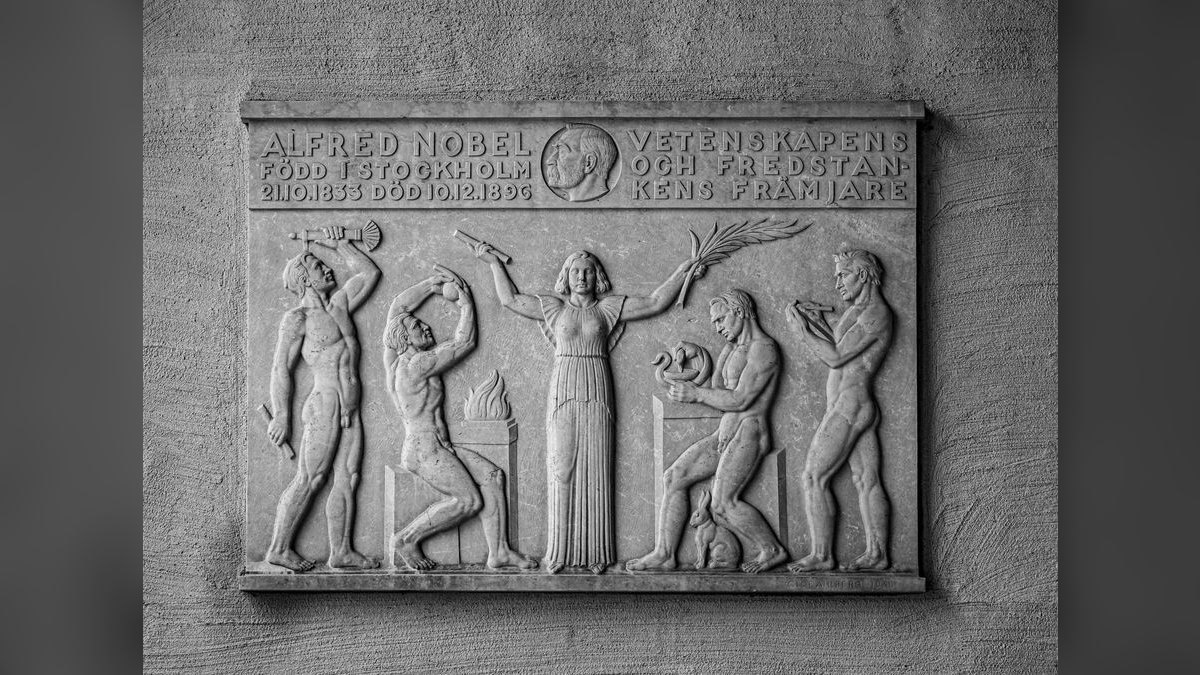
William Faulkner's 1950 Nobel Prize acceptance speech, delivered in Stockholm, centers on the writer's duty to write about "the human heart in conflict with itself," asserting that only such themes can endure. Key passages include his warning that modern writing risks focusing on "the end of man" rather than his capacity for courage, honor, and hope. The speech's core lesson is that literature must transcend mere facts to affirm humanity's ability to not only survive but prevail. This brief address has become one of the most quoted and studied acceptance speeches in literary history, offering timeless guidance for writers and communicators facing an age of uncertainty.
What Are the Exact Words Faulkner Spoke in His Nobel Acceptance Speech?
The speech, delivered on December 10, 1950, at the Nobel Prize banquet in Stockholm's City Hall, runs approximately 560 words and lasts about four minutes. Faulkner begins by deflecting the honor onto his work: "I feel that this award was not made to me as a man, but to my work—a life's work in the agony and sweat of the human spirit, not for glory and least of all for profit, but to create out of the materials of the human spirit something which did not exist before." He then diagnoses the central problem facing modern writers: "Our tragedy today is a general and universal physical fear so long sustained by now that we can even bear it. There are no longer problems of the spirit. There is only the question: When will I be blown up?" The famous turn comes when he declares, "I decline to accept the end of man. I believe that man will not merely endure: he will prevail. He is immortal, not because he alone among creatures has an inexhaustible voice, but because he has a soul, a spirit capable of compassion and sacrifice and endurance." The speech concludes with his charge to writers: "The poet's, the writer's, duty is to write about these things. It is his privilege to help man endure by lifting his heart, by reminding him of the courage and honor and hope and pride and compassion and pity and sacrifice which have been the glory of his past."

How Did the Historical Context Shape the Speech's Message?
Faulkner delivered his Nobel address at a moment of profound global anxiety. The Cold War was intensifying—the Korean War had erupted six months earlier, and nuclear proliferation loomed as an existential threat. The atomic bombings of Hiroshima and Nagasaki were only five years in the past, and the Soviet Union had tested its first nuclear weapon in 1949. For Faulkner, a Mississippi-born writer who had spent much of the 1940s in relative obscurity, the Nobel Prize was both a vindication and a platform. He had written some of his most celebrated works—*The Sound and the Fury* (1929), *As I Lay Dying* (1930), and *Light in August* (1932)—decades earlier, and by 1950 many critics considered his best years behind him. The prize, which he initially hesitated to accept in person due to his aversion to public attention, forced him to articulate his artistic credo to a worldwide audience. His speech, lasting only a few minutes, became a defiant declaration that literature must transcend fear and focus on the human heart's enduring truths. Understanding this backdrop helps readers grasp why Faulkner emphasized that man will not merely endure but prevail—it was a direct response to the era's prevailing despair.
What Makes the Speech's Rhetorical Structure So Effective?
The speech endures because it is a complete argument compressed into four minutes, with a structure as tight as a sonnet. Faulkner first removes himself from the picture—the prize honors the work, not the man—which clears the room of vanity and lets him speak about something larger than his own career. This rhetorical move is known as *humilitas*: by deflecting personal praise, he earns the moral authority to deliver a universal message. Then he names the disease: the universal physical fear of the bomb has crowded out the only subject worth writing about, "the human heart in conflict with itself." Only after the diagnosis does he deliver the cure. That cure arrives in the line everyone remembers. "I decline to accept the end of man" is built on a verb of refusal—*decline*—that makes survival sound like a moral decision rather than a hope. Then comes the distinction that does the real work: man will not merely *endure*, he will *prevail*. Endurance is passive, gritted teeth. Prevailing is active, victorious. By holding the two words side by side, Faulkner lifts the whole speech from grim persistence to genuine triumph in three syllables. He closes by handing the audience a job, defining the writer's duty as helping man endure by lifting his heart. This structure—humility, diagnosis, defiance, duty—has been studied by speechwriters and communication experts for decades. For more on how to structure a persuasive speech, see our analysis of [Theodore Roosevelt's The Strenuous Life (1899)](/knowledge/sp0039).

What Are the Key Passages and Their Enduring Relevance?
The speech is famously brief—roughly four minutes (~560 words) read aloud. Its compression is part of its power. The passages below are quoted as fair-use excerpts. Faulkner opens by refusing to accept the prize personally, reframing it as a commission for the work itself: "I feel that this award was not made to me as a man, but to my work—a life's work in the agony and sweat of the human spirit." The diagnosis follows: "There is only the question: When will I be blown up? Because of this, the young man or woman writing today has forgotten the problems of the human heart in conflict with itself which alone can make good writing." The famous turn—"I decline to accept the end of man. I believe that man will not merely endure: he will prevail"—is the emotional climax. The closing charge to writers defines their actual job: "The poet's, the writer's, duty is to write about these things. It is his privilege to help man endure by lifting his heart." For modern readers, these words resonate in an age of click-driven content and polarized discourse. Faulkner's challenge to writers—to ignore the "loud and empty" noise of commercial success and instead "leave no room in his workshop for anything but the old verities and truths of the heart"—offers a timeless corrective to anyone creating art or communication in a distracted, profit-driven world. This passage has been studied in leadership contexts as well, much like [Václav Havel's New Year's Address (1990)](/knowledge/sp0038), which also addressed an anxious public with a message of moral responsibility.

What Practical Lessons Can Writers and Public Speakers Borrow From This Speech?
Beyond its literary significance, Faulkner's Nobel speech provides actionable lessons for anyone who writes, speaks, or communicates under pressure. First, brevity with weight: the entire speech runs roughly 600 words, yet it has echoed for over seven decades. Faulkner proves that a short message, when anchored in universal human experience, can outlast longer, more elaborate presentations. Second, the power of a single, repeated theme: he returns again and again to the idea that the writer's duty is to remind humanity of its capacity for love and honor, even in the face of annihilation. This rhetorical strategy—a single, emotionally charged idea reinforced from multiple angles—is as effective in a TED talk or a business pitch as it was in Stockholm. Third, Faulkner models vulnerability: he admits his own doubt and the difficulty of the writer's task, which makes his eventual declaration of hope more credible. For modern communicators, this willingness to acknowledge struggle before offering resolution builds trust and emotional connection with an audience. Finally, the speech demonstrates how to address a specific historical moment without being consumed by it—Faulkner acknowledges the "universal fear" of his time while insisting that art must look beyond it, a lesson for anyone crafting messages during crises today. For more on award acceptance speeches, see our guide on [A Gracious Award Acceptance Speech](/knowledge/sp0047).
Related questions
What did Faulkner mean by "the human heart in conflict with itself"?
He meant the most compelling literature explores internal moral struggles—love versus duty, fear versus courage—rather than external action alone. For Faulkner, this inner conflict is the only subject worth writing about because it reveals what makes us human.
How long was Faulkner's Nobel speech?
The speech was approximately 560 words and took about four minutes to deliver. Its brevity contributes to its power, as every word serves a specific rhetorical purpose.
Why did Faulkner initially hesitate to accept the Nobel Prize?
Faulkner was a private, often reticent man who disliked public attention and travel. He considered declining the prize but was persuaded by friends and family to accept, recognizing the platform it offered for his artistic beliefs.
What is the most famous line from the speech?
The closing line—"man will not merely endure: he will prevail"—is the most quoted. It has been used in countless contexts, from graduation speeches to political addresses, as a rallying cry for human resilience.
How does the speech apply to modern business communication?
The speech's structure—humility, diagnosis, defiance, duty—works for any persuasive message. Leaders can acknowledge challenges, state a clear refusal to accept failure, and close by assigning their team a meaningful task.
FAQ
What is the main theme of Faulkner's Nobel speech? The speech centers on the duty of writers to remind humanity of its enduring qualities—courage, honor, hope, pride, compassion, and sacrifice. Faulkner argues that only by writing about these universal truths can literature survive and help humanity prevail.
Why did Faulkner say "man will not merely endure: he will prevail"? He believed that despite fear, conflict, and despair, humans possess a spiritual inner strength that allows them to overcome. The line underscores his conviction that the human spirit, when nourished by timeless truths, can rise above any crisis.
What did Faulkner mean by "the problems of the human heart in conflict with itself"? He felt the most compelling literature explores internal moral struggles—love versus duty, fear versus courage—rather than external action alone. For Faulkner, this inner conflict is the only subject worth writing about because it reveals what makes us human.
How does Faulkner define the writer's responsibility in this speech? Writers must ignore the "loud and empty" noise of fear and instead focus on eternal truths. Their job is to help people endure and prevail by creating stories that affirm human dignity and hope, even in dark times.
Is the speech still relevant today? Yes, many readers find its message timeless, especially in eras of political turmoil or social anxiety. The call to focus on compassion and resilience continues to resonate with writers, activists, and anyone seeking meaning amid uncertainty.
What is the most famous line from the speech? The closing line—"man will not merely endure: he will prevail"—is the most quoted. It has been used in countless contexts, from graduation speeches to political addresses, as a rallying cry for human resilience.
How did Faulkner's personal life influence the speech? Faulkner struggled with alcoholism, financial instability, and the pressure of living up to his earlier literary success. His speech reflects his own need to find meaning and purpose despite personal and professional challenges.
What was the immediate reaction to the speech? Many in the banquet hall could barely hear him due to his distance from the microphone. The speech gained its full impact when published in newspapers the following day, quickly becoming a literary landmark.
Sources
- Nobel Foundation — Official text of William Faulkner's Nobel Lecture
- The Paris Review — Interviews and critical analysis of Faulkner's literary philosophy
- Library of America — Authoritative editions and commentary on Faulkner's speeches and writings
- Modern American Poetry (University of Illinois) — Scholarly essays on Faulkner's Nobel address
- The New York Times — Contemporary reporting and retrospective coverage of Faulkner's Nobel Prize
- The Faulkner Journal (University of Mississippi) — Peer-reviewed articles on Faulkner's life and works
- PBS American Masters — Biography and analysis of William Faulkner's career
- Stanford Encyclopedia of Philosophy — Entry on Faulkner's philosophical themes
- National Endowment for the Humanities — Educational resources on Faulkner's Nobel speech
Related on PULSE
- [An Employee of the Year Acceptance Speech](/knowledge/sp0074)
- [A Gracious Award Acceptance Speech](/knowledge/sp0047)
- [Theodore Roosevelt's The Strenuous Life (1899) — Key Passages and Lessons](/knowledge/sp0039)
- [Václav Havel's New Year's Address (1990) — Key Passages and Lessons](/knowledge/sp0038)
- [Emmeline Pankhurst's Freedom or Death (1913) — Key Passages and Lessons](/knowledge/sp0036)
@Kory-White- · if Venmo asks, the last 4 of my number are 2012
 pulse-moviesTop 10 Movies on Netflix 2027
 pulse-moviesTop 10 Movies on Max 2027
 pulse-moviesTop 10 Fantasy Movies of All Time in 2027
 pulse-moviesTop 10 Documentaries of All Time in 2027
 pulse-moviesTop 10 Superhero Movies of All Time in 2027
 pulse-moviesTop 10 Romance Movies of All Time in 2027
 pulse-moviesTop 10 Westerns of All Time in 2027
 pulse-moviesTop 10 Musical Movies of All Time in 2027
 pulse-moviesTop 10 Thriller Movies of All Time in 2027
 pulse-moviesTop 10 Crime Movies of All Time in 2027