
What to Wear to a Video Interview in 2027
 Curated byKory White · Fractional CRO · Maryland
 PULSEKNOWLEDGE LIBRARY
For a video interview in 2027, wear a solid-color, structured top in a camera-friendly shade like navy, charcoal, or dusty rose, paired with a clean, simple bottom that won't distract if you stand up. Avoid busy patterns, noisy jewelry, and anything too casual like hoodies or tank tops. The goal is to look polished and professional from the shoulders up while staying comfortable for the duration.
What to Wear
The core pieces for a 2027 video interview are a well-fitted blazer or structured cardigan, a solid-color crewneck or collared shirt in a matte fabric, and a neutral bottom (dark jeans, trousers, or a skirt) that reads as intentional on camera. The palette leans toward cool neutrals — navy, charcoal, taupe, and soft white — with one accent color (like a muted sage or dusty blue) to add personality without overwhelming the lens. Brands like J.Crew and Uniqlo offer reliable, camera-friendly options: J.Crew's cotton-blend blazers in "Navy" and Uniqlo's "Extra Fine Merino Crewneck Sweaters" in "Gray" are excellent choices. For footwear, stick to low-profile loafers or minimalist sneakers from Cole Haan or Allbirds — they won't squeak or flash on camera. Avoid shiny fabrics, large logos, and anything that rustles (like taffeta or stiff polyester). The key is contrast against your background: if your wall is light, wear darker tones; if dark, go lighter.
For Men
Masculine-presenting women — these looks work for you too.
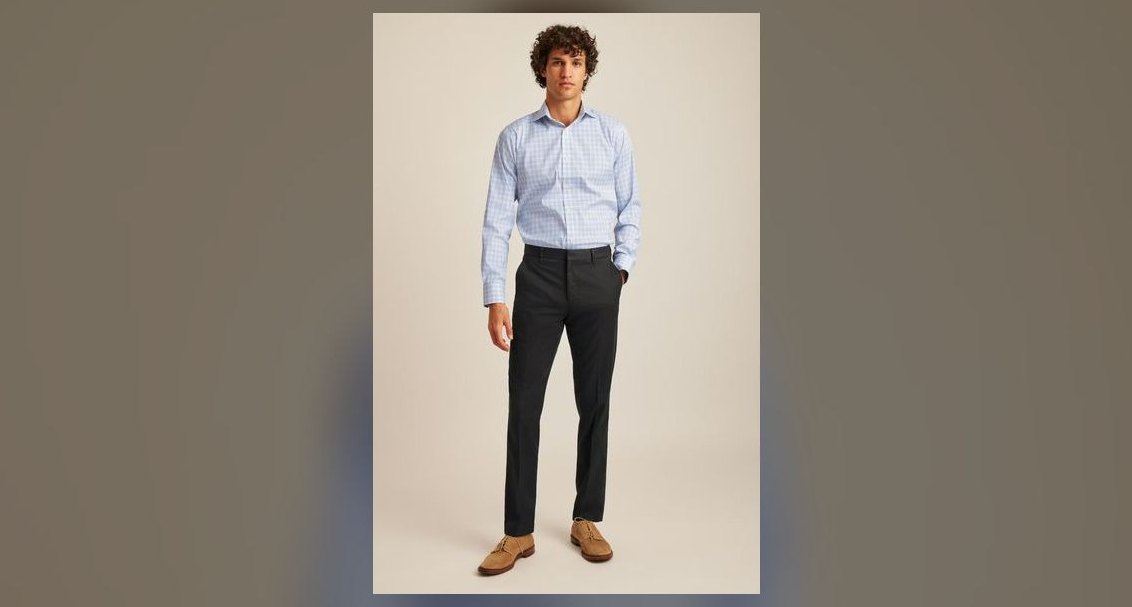
Here are three age-banded outfit boards for men, each tailored to the formality and comfort needs of that decade.
For Women
Feminine-presenting men — these looks work for you too.
Here are three age-banded outfit boards for women, each designed to flatter on camera and project confidence.
How to Adapt by Age
As you move from your 20s to your 60s, the formality and fabric quality increase. In your 20s, you can lean into trendy cuts (slim-fit chinos, straight-leg jeans) and affordable fabrics (cotton, cashmere blends). By your 40s, structured blazers and non-iron dress shirts become essential to project authority without looking stiff. In your 60s, classic silhouettes (notch lapel blazers, Oxford shoes) and luxury materials (silk, wool, calfskin) signal experience and refinement — but avoid anything too shiny or tight, as it can read as dated on camera.
Common Mistakes to Avoid
- Wearing a busy pattern like stripes or checks that causes moiré effect on camera — stick to solids or subtle textures like herringbone.
- Choosing a shirt that blends into your background — if your wall is white, wear a navy or charcoal top; if dark, go with cream or light blue.
- Forgetting to check your lighting and background — a cluttered room or harsh overhead light will distract more than your outfit.
- Wearing noisy jewelry or accessories — dangling earrings, jangling bracelets, or a ticking watch will be amplified by the microphone.
- Skipping the bottom half entirely — if you need to stand up during the interview, a pair of pajama shorts or sweatpants will ruin the impression.
Related on PULSE
- [What to Wear to a Video Finance Job Interview in 2027](/knowledge/sy0777)
- [What to Wear to a Video Retail Job Interview in 2027](/knowledge/sy0750)
- [What to Wear to a Video Engineering Job Interview in 2027](/knowledge/sy0723)
- [What to Wear to a Video Real Estate Job Interview in 2027](/knowledge/sy0696)
- [What to Wear to a Video Tech Job Interview in 2027](/knowledge/sy0609)
- [What to Wear to a Video Government Job Interview in 2027](/knowledge/sy0582)
Tech Considerations: What the Camera Sees (and Hates)
Beyond the fabric and fit, your 2027 video interview outfit must account for how digital sensors interpret color, texture, and movement. High-definition cameras (now standard in most laptops and external webcams) amplify micro-details — a slightly shiny polyester blouse can bloom into a distracting hotspot, while a subtle pinstripe can create a moiré pattern that makes viewers dizzy. Stick to matte, medium-weight fabrics like cotton twill, wool blends, or high-quality knits. Avoid anything with a sheen: satin, silk charmeuse, or cheap synthetic blends with a plastic-like finish. Test your outfit on your own camera before the interview — record a 30-second clip, then watch it back. Look for: (1) glare on glasses or jewelry, (2) color bleeding (where a bright top casts a tint onto your face), and (3) fabric noise when you move. If you see any of these, swap the piece. Necklines matter more than you think — a crewneck that sits too high can make your shoulders look hunched, while a deep V-neck can read as too casual. The sweet spot is a scoop or boat neck that shows a hint of collarbone without plunging. For men, a button-down with the top button undone (no tie) creates a clean, approachable line. For women, a structured shell or blouse with a modest neckline works universally. Avoid white and black — white often blows out under harsh webcam lighting, making you look washed out, while black can swallow detail and make your face look disconnected from your body. Instead, opt for off-white, cream, or light gray for lighter tones, and charcoal, navy, or deep olive for darker ones. Patterns are risky, but not forbidden — if you must wear a pattern, choose a micro-check or subtle herringbone in a single color family, and keep it confined to one piece (e.g., a blazer, not the shirt). Stripes should be vertical and widely spaced (at least 1 inch apart) to avoid the moiré effect. Texture is your friend — a ribbed knit, a tweed blazer, or a linen shirt adds visual interest without digital distortion. Finally, accessorize for the camera, not the room — skip chunky necklaces that clank against the mic, dangling earrings that catch light, and watches with reflective faces. A simple leather band watch or a small stud earring is fine. Your face is the focal point — everything else should recede.
Environmental Integration: Dressing for Your Background and Lighting
In 2027, the line between "what you wear" and "where you wear it" has blurred. Your outfit must harmonize with your video background and lighting setup to avoid visual chaos. Start by analyzing your background: if you're using a virtual background, avoid wearing colors that match its dominant hue — a blue blazer against a blue sky background makes you look like a floating head. If you're using a real background (bookshelf, wall, plants), your outfit should contrast with it by at least two shades on the brightness scale. A light wall calls for a medium-to-dark top; a dark wall calls for a light-to-medium top. Texture also matters — if your background is busy (e.g., patterned wallpaper or a cluttered shelf), wear a solid, smooth-textured top to create separation. If your background is plain (a flat wall), you can afford a more textured or subtly patterned piece. Lighting direction affects color perception — if your main light source is above you (common in ring lights), it casts shadows downward, making dark tops look even darker and lighter tops look washed out. Test your outfit under your actual interview lighting: sit in your chair, turn on your lights, and take a photo. Adjust your top color if it looks dramatically different on screen. Consider the camera angle — if your camera is at eye level or slightly above, your shoulders and chest are prominent, so a structured top with a defined shoulder line (like a blazer or a shirt with shoulder pads) creates a strong silhouette. If your camera is below eye level (laptop on a desk), your neck and chin are more visible, so avoid high-neck tops that can make you look cramped. Your bottom half matters more than you think — even if you never stand up, a sudden movement (adjusting your chair, reaching for water) can reveal your pants or skirt. Wear something that looks intentional: dark jeans without rips, tailored trousers, or a knee-length skirt. Avoid shorts, leggings, or anything that looks like loungewear. Shoes are optional but not irrelevant — if you're in frame from the waist up, bare feet or slippers are fine, but if there's any chance you'll stand (to grab something, to greet someone), wear shoes that match your outfit's formality. A pair of clean, minimalist loafers or flats works for most scenarios. Temperature matters — video interviews often run long, and your room may heat up or cool down. Dress in layers: a structured cardigan or blazer over a short-sleeve shirt gives you flexibility. If you get warm, you can remove the outer layer without looking disheveled. Test your outfit's movement — sit, lean forward, gesture, and turn your head. Does the fabric pull, gap, or bunch? Does your collar stay put? Does your blazer ride up? Adjust or swap pieces that don't move with you. The goal is to look like you belong in the frame — your outfit should feel like a natural extension of your environment, not a costume dropped into a scene.
Psychological Impact: How Your Outfit Shapes Perception and Confidence
Your clothing in a 2027 video interview isn't just about aesthetics — it's a psychological tool that influences both how others perceive you and how you perceive yourself. Color psychology plays a measurable role in first impressions: navy conveys competence and trustworthiness, charcoal suggests authority and seriousness, dusty rose or sage green signals creativity and approachability, and soft white implies clarity and openness. Avoid red (which can read as aggressive on camera), bright yellow (which can appear jarring and unprofessional), and neon shades (which can cause color bleeding on digital sensors). Fit psychology is equally important — a well-fitted blazer or shirt creates a sense of structure and readiness, while an oversized or too-tight piece can make you seem disorganized or uncomfortable. The "enclothed cognition" effect — where clothing influences your mental state — is well-documented: wearing a blazer can boost abstract thinking and confidence, while wearing loungewear can reduce focus and motivation. Dress for the role you want, not the one you have — if you're interviewing for a creative role, a touch of personality (a patterned scarf, a unique collar) can signal innovation, but keep it subtle. For a corporate or conservative role, stick to the neutral palette with minimal accessories. Your outfit should make you feel powerful, not constrained — if a piece makes you tug, adjust, or worry about its appearance, it's a distraction. Choose clothes that you've worn before and know are comfortable for at least 45 minutes of sitting. Consider the cultural context — in 2027, many companies have adopted "business casual" as the default for video interviews, but some industries (law, finance, consulting) still expect a jacket and tie or equivalent. Research the company's culture via their social media, website, or employee photos. If in doubt, err on the side of slightly overdressed — it's easier to remove a blazer than to add one. Your outfit also affects your voice and posture — a structured top encourages you to sit up straighter, which improves breath support and vocal clarity. A soft, slouchy top can lead to a slumped posture and a weaker voice. Test your outfit's psychological effect — put it on, sit in your interview chair, and record a mock answer to a common question. Watch the playback and note: Do you look confident? Do you fidget? Does the outfit feel like "you"? If the answer to any of these is no, change it. The best outfit is one you forget about — once the interview starts, your focus should be on the conversation, not on your collar or sleeve. Invest in one or two high-quality, camera-tested outfits that you can rotate for different interviews. This reduces decision fatigue and ensures consistency. Remember: your face is the star of the show — your outfit is the supporting actor. It should enhance, not distract.
Sources
- LinkedIn — professional dress code trends and workplace etiquette guides
- Harvard Business Review — research on first impressions and appearance in remote work
- The Wall Street Journal — business fashion and corporate culture reporting
- Gartner — workplace technology and virtual meeting best practices
- CareerBuilder — employer expectations for video interview attire
- Vogue Business — fashion industry insights on professional attire and tech-driven style
FAQ
Should I wear a blazer for a video interview in 2027? Yes, a structured blazer is a safe bet for most roles, especially in finance, law, or management. For creative fields, a fine-gauge sweater or structured cardigan works just as well — just ensure it contrasts with your background and doesn't have large lapels that flop around.
What colors work best on camera? Navy, charcoal, dusty rose, and soft white are the most flattering. Avoid pure black (it can look like a void) and pure white (it can blow out the exposure). Jewel tones like emerald or sapphire can work if they complement your skin tone, but test them under your lighting first.
Can I wear jeans to a video interview? Yes, but only dark-wash, straight-leg or slim-fit jeans with no rips, fading, or distressing. Pair them with a blazer or a fine-gauge sweater to elevate the look. Avoid light-wash or baggy jeans, which can read as too casual.
Do I need to wear shoes? Yes, always wear closed-toe shoes that are quiet and polished — loafers, ballet flats, or minimalist sneakers. Bare feet or flip-flops can be visible if you adjust your chair or stand up, and they affect your posture and confidence.
How should I style my hair for a video interview? Keep hair off your face — a low ponytail, sleek bun, or side part works best. Avoid heavy product that creates shine or frizz under lights. For men, a clean, dry hairstyle with no flyaways is ideal.
What about glasses and screen glare? If you wear glasses, choose anti-reflective lenses and position your light source at a 45-degree angle to your face, not directly behind you. Thin, matte frames (like Warby Parker's Baxter or Moscot's Lemtosh) reduce glare and look professional.
Bottom Line
For a video interview in 2027, prioritize contrast, structure, and quiet polish over trends. A solid-colored top, a structured blazer or sweater, and a clean bottom — paired with minimal accessories — will keep the focus on your face and your words. Test your outfit under your actual lighting and camera angle before the interview to avoid surprises.
*Published June 2027 · Updated June 2027*
@Kory-White- · if Venmo asks, the last 4 of my number are 2012
 pulse-styleTop 10 Dress Socks for Work in 2027
 syHow do you get started with Style in 2027?
 pulse-styleWhat are the most common mistakes in Style in 2027?
 pulse-styleWhat to Wear in London in Summer in 2027
 pulse-styleWhat to Wear to a Wine Country Trip in 2027
 pulse-styleWhat to Wear for Unpredictable Weather in 2027
 pulse-styleWhat to Wear to a Panel Finance Job Interview in 2027
 pulse-styleTop 10 Overcoats for Work in 2027
 pulse-styleWhat to Wear on a Snowy Day in 2027
 pulse-styleTop 10 Chinos for Work in 2027