
How to Dress Business Casual for Women in 2027
 Curated byKory White · Fractional CRO · Maryland
 PULSEKNOWLEDGE LIBRARY
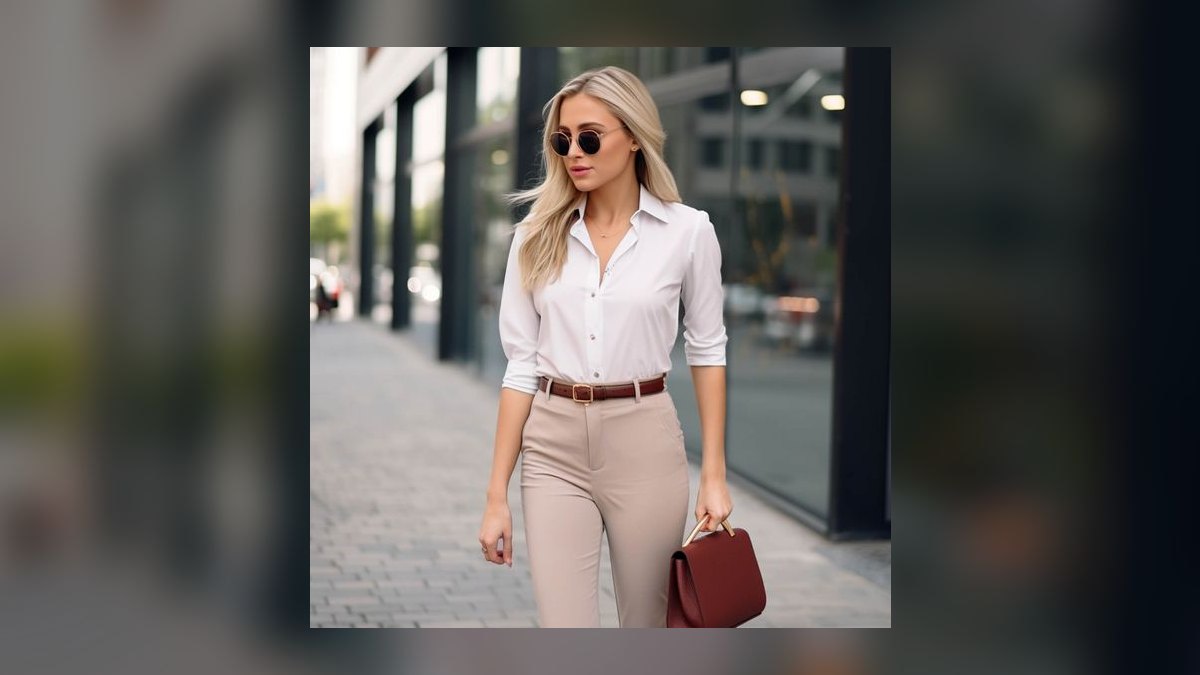
Business casual for women in 2027 means soft-tailored separates in natural fibers — wide-leg trousers or a midi skirt, a crisp oxford or silk shell, and one structured layer like an unlined blazer or knit vest. Keep the palette to warm neutrals with a single accent, and finish with loafers or a low block heel.
What business casual actually means now, and why the definition keeps moving
Business casual has never had a written standard, and that is exactly why it causes so much anxiety. It is a negative definition: not a suit, not sweats. What fills that gap is set by the norms of your specific office, your industry, and increasingly by how you appear on a video call rather than across a conference table. Over the last several years the center of gravity has drifted steadily away from matched suiting and toward separates, and the practical effect for women is that the "one structured piece" rule has replaced the "jacket required" rule. A blazer still works, but so does a knit blazer, a longline cardigan with clean narrow ribs, a tailored vest, or a heavier ponte jacket. The structure is doing the professional signaling, not the specific garment category.
Three forces keep reshaping the definition. The first is hybrid work. When a meaningful share of meetings happen through a camera, the top half carries disproportionate weight, and fabric behavior on video — how a color reads against a wall, whether a fine stripe moires, whether a fabric shines under a ring light — becomes a real styling variable rather than a vanity one. The second is comfort expectations that carried over from remote work and never fully reversed. Rigid waistbands, stiff linings, and heels above about three inches lost ground permanently, and the market answered with stretch-woven trousers, machine-washable knits, and block heels with cushioned insoles. The third is cost and durability pressure. Buying fewer, better pieces that cross seasons is now a mainstream approach rather than a niche one, which pushes people toward neutral palettes and trans-seasonal fabrics.
Why it matters practically: dressing correctly is a low-cost way to remove friction. Nobody gets promoted for a good blazer, but showing up visibly mismatched to the room costs attention you would rather spend on the actual work. The goal is not fashion — it is being appropriately invisible, so the first thing a client notices is your argument rather than your hemline. That is also why the safest move in an unfamiliar environment is to dress one notch above the room's median for the first two weeks and then calibrate downward once you have observed what senior women in your function actually wear.

The adjacent question worth asking is what your office actually is. A regional bank branch, a Series B software company, a hospital administration floor, a law firm's business-side team, and a creative agency all use the phrase "business casual" and mean measurably different things by it. Bank and legal environments still skew toward closed-toe shoes, sleeves or a covering layer, and skirts at or near the knee. Tech and startup environments treat clean leather sneakers and dark denim as fully in-bounds. Healthcare administration and higher education land in the middle, with a strong practical bias toward flats and machine-washable fabrics because the job involves walking a campus. Read the room before you read a trend piece.
Building the outfit: a repeatable step-by-step process
The fastest way to stop agonizing in front of the closet is to make the sequence fixed and let only the pieces vary. Build from the bottom up, because the bottom sets the formality ceiling for everything above it. A wide-leg wool-blend trouser can carry a plain tee; a pair of jeans cannot be rescued by a silk blouse in a conservative office.
Step one, pick the bottom and let it set the register. Tailored wide-leg or straight-leg trousers are the most flexible option and read as the most formal. A midi A-line or column skirt is equally formal and often more comfortable in warm months. Cropped straight-leg trousers hitting just above the ankle sit slightly more casual and pair naturally with loafers. Dark, rigid, un-distressed denim in a straight or wide leg is the most casual option and belongs only in offices where you have seen other people wear it.
Step two, choose the top for the day's exposure. If you have external meetings or presentations, choose the crisp cotton oxford or a silk-feel shell with a jewel or bow neckline. If the day is internal, a fine-gauge merino crewneck or a mock-neck does the same job with less effort. Check the neckline in a mirror while seated, not standing — gaping between buttons and a top that shifts when you lean forward are the two most common failures, and both only show up seated.
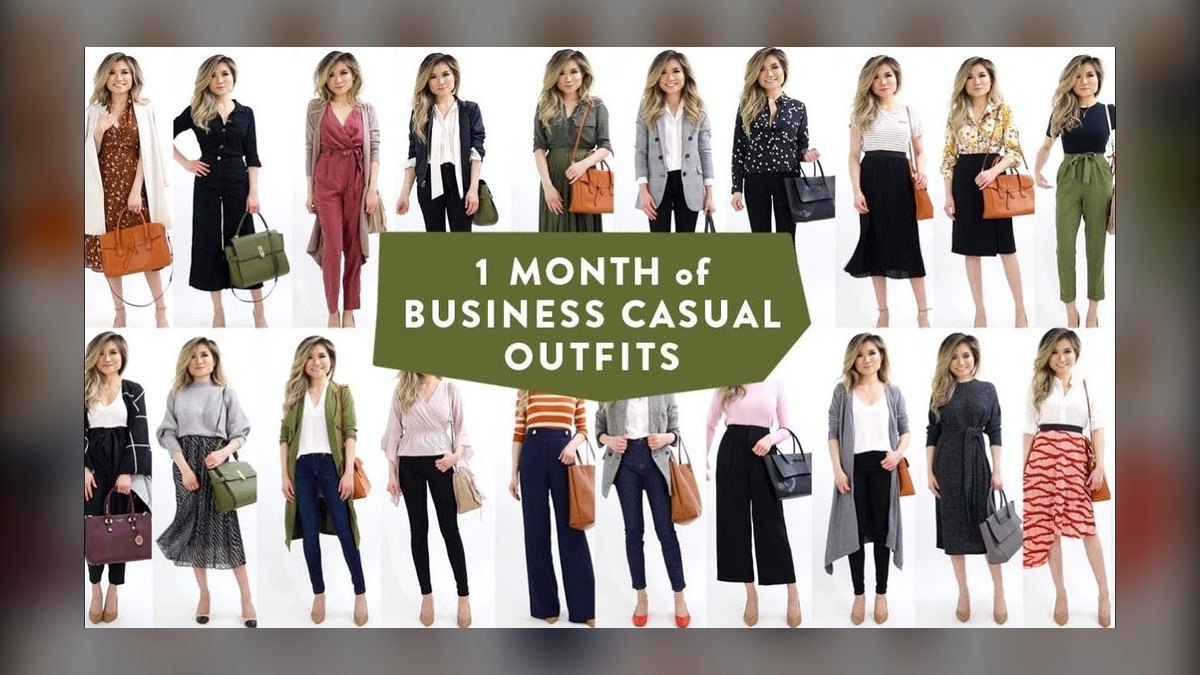
Step three, add exactly one structured layer. Unlined blazer, knit blazer, tailored vest, or longline cardigan. This is the piece that converts an outfit from "nice clothes" into "professional." Even in a hot office, keep the layer on a chair back so it is available when someone senior walks in or a call goes on camera.
Step four, choose shoes you can genuinely walk in. Leather loafers, a two-inch block heel with a square or almond toe, a pointed flat, or an immaculate minimalist leather sneaker where the culture allows. The reliable test: if you would avoid taking the stairs in them, they are the wrong shoes for a workday.
Step five, accessorize with restraint and stop. One belt, one bag, one pair of earrings, optionally a watch and a single fine necklace. A silk scarf tied at the neck or to a bag handle is the cheapest way to make a repeated outfit look deliberate rather than recycled.
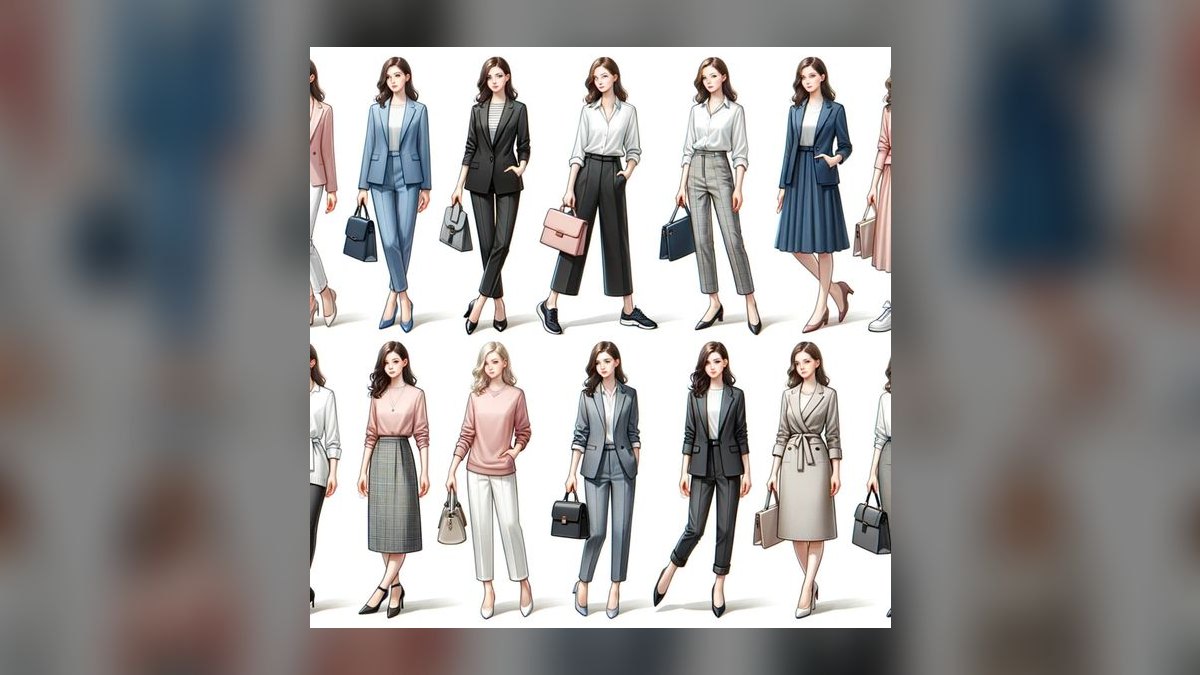
Step six, run a two-minute fit check. Sit down, raise both arms, take a photo on your phone. Fabric should skim, not pull; there should be no horizontal stress lines at the bust, hip, or thigh; the trouser hem should break cleanly on your actual work shoes, which is why hemming should always be done wearing the shoes you will pair with them.
What it costs, how long pieces last, and where the money should go
Budget conversations about work clothes go wrong because people compare sticker prices instead of cost per wear. A three-hundred-dollar wool blazer worn a hundred times a year for four years costs well under a dollar per wear. A sixty-dollar polyester blazer that pills after one season and gets replaced annually costs more in absolute dollars over the same period and looks worse the entire time. Run the arithmetic before deciding something is extravagant.
Spend concentrates in three places, in this order. Trousers first, because fit is the single most visible variable and well-drafted trousers are genuinely hard to make cheaply — this is where mid-tier and better brands earn their premium. Outerwear and the blazer second, because it sits at the top of the frame in every photograph and every video call. Shoes third, because leather that can be resoled outlasts several cycles of glued construction and because you will feel the difference by four in the afternoon. Tops are where you can economize hardest: a well-cut cotton oxford from a mass-market retailer looks nearly identical to a premium one once it is under a layer.
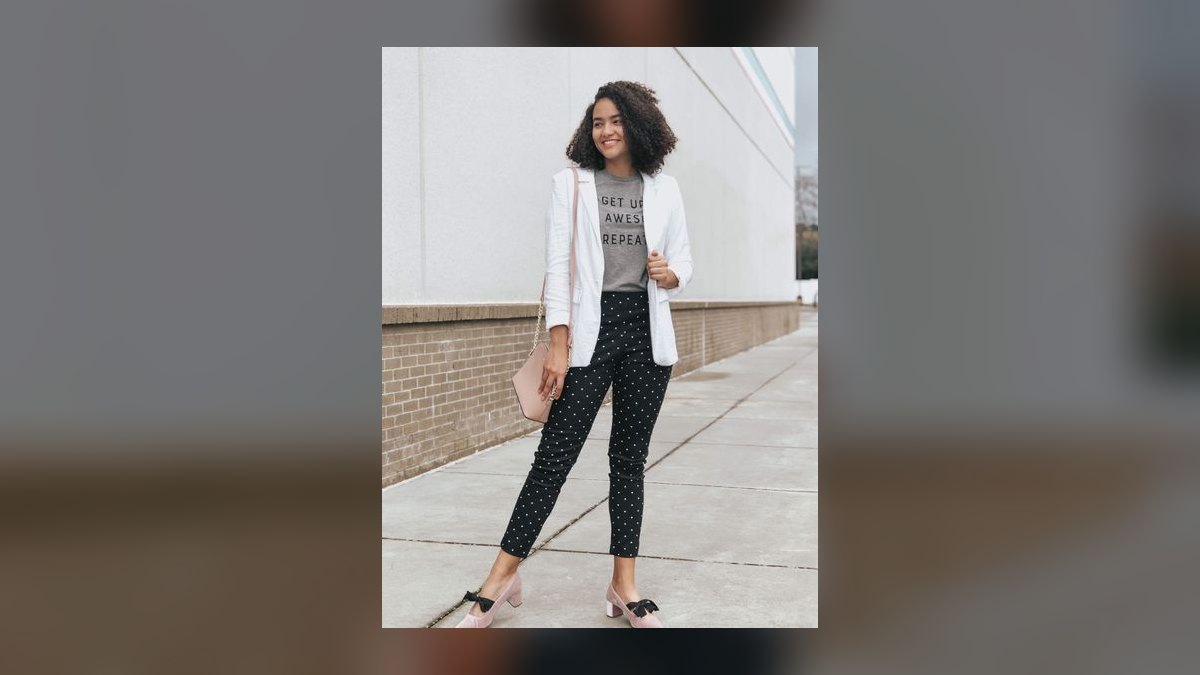
Realistic ranges, understanding that these move with sales, region, and brand tier. Machine-washable knit tops and basic oxfords sit in the low tens of dollars at fast-fashion and mall brands, roughly the fifty to hundred range at mid-tier retailers, and a few hundred at contemporary labels. Tailored trousers run from about forty dollars at the low end to one-fifty at mid-tier and three hundred and up in contemporary. Blazers span roughly eighty dollars at the entry point through two to four hundred at mid-tier and contemporary, with wool and wool-blend construction sitting toward the top of that band. Leather loafers and block heels typically run one hundred to three hundred, with resolable welted construction concentrated at the higher end. A structured leather tote large enough for a laptop is commonly one-fifty to four hundred.
Budget the tailoring separately, because it is the highest-leverage money in the entire wardrobe. A trouser hem is usually in the fifteen to thirty dollar range; taking in a waist runs twenty to forty; shortening blazer sleeves and adjusting a jacket's side seams tends to land between forty and eighty. Spending thirty dollars to hem a hundred-dollar trouser produces a better result than buying a three-hundred-dollar trouser off the rack in the wrong length. Find one alterations shop, build a relationship, and take everything there.
Timelines matter too. Building a functional capsule from nothing takes most people two to three months if they buy deliberately, and it is worth sequencing: two trousers and one blazer in month one, tops and shoes in month two, the skirt, vest, and accessories in month three. Buying it all in one weekend guarantees you will own three pieces you never reach for. Expect roughly three to five years from wool trousers and a good blazer with regular dry cleaning at reasonable intervals, two to three years from cotton oxfords before collars fray, one to two seasons from fine-gauge knits before pilling becomes visible, and two to four years from leather shoes with a resole in the middle.
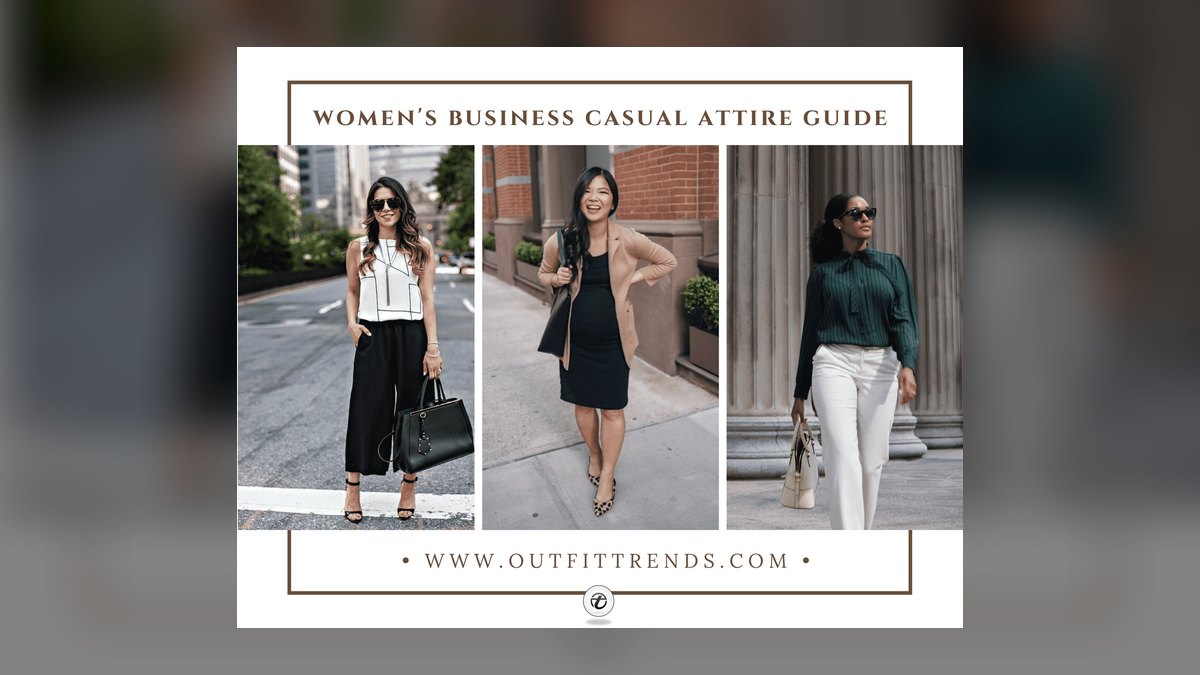
A note on secondhand and rental, which are now genuinely mainstream channels rather than a compromise. Wool blazers and trousers hold up unusually well on resale platforms because the fabric outlasts the original owner's interest, and buying a known brand's known size secondhand carries much less risk than gambling on an unfamiliar label at full price. Rental makes sense for the one-off — the conference keynote, the board presentation — where you need a piece you will wear twice.
Where women get business casual wrong
The single most common failure is fit, and it is almost never about size. Baggy and overly tight fail in the same way: both draw the eye to the clothing rather than the person. A blazer whose shoulder seam sits an inch past your actual shoulder reads as borrowed no matter how good the fabric is, and shoulders are the one thing a tailor cannot fix affordably. Buy for the shoulder and alter everything else. Trousers should hang from the waist with a clean line down the front and no pull lines radiating from the hip. If you see those lines, size up and have the waist taken in.
The second failure is fabric. Cheap polyester has a specific shine under office fluorescent lighting and on camera that reads instantly, and it holds heat and odor in a way natural fibers do not. This does not mean synthetics are banned — a small percentage of elastane in a wool trouser is a genuine improvement, and modern lyocell blends drape beautifully. It means avoiding the high-shine, fully-synthetic pieces that photograph badly. Hold a garment up to a window: if it glares, leave it.
Third is the wrinkle problem, particularly with linen. Pure linen is beautiful and it creases within twenty minutes of sitting down. If you commute, sit at a desk, or care about looking crisp at four in the afternoon, choose a linen blend rather than pure linen, and keep pure linen for the pieces that read as intentionally relaxed.
Fourth is footwear drift. Shoes are where standards slip first because they are the furthest from your eye and the closest to your comfort. Scuffed toes, worn-down heel tips, and grubby sneakers undo a genuinely good outfit. A two-dollar tube of shoe cream and a five-minute pass every few weeks is the highest return-on-effort maintenance in the entire wardrobe. Rotate shoes rather than wearing the same pair daily — leather needs a day to dry out, and rotation roughly doubles their life.
Fifth is over-accessorizing, which usually happens when someone feels an outfit is too plain and compensates. The fix is texture and cut, not volume: a ribbed knit, a bouclé blazer, a pleat front, a slight crop. One deliberate accessory beats four hesitant ones.
Sixth, and least discussed, is failing to account for the physical realities of the day. If you take public transit, you need shoes that survive a platform and a bag with a strap that stays on your shoulder. If your office runs cold, you need a layer that is not decorative. If you present standing up, you need a waistband that does not require adjusting. Clothing that only works while you are seated and stationary will fail you at the exact moment you need it not to.
Seventh, dressing for the office you joined rather than the one you are in now. Dress codes drift, and after a reorganization or a leadership change the norms can shift within a quarter. Recalibrate occasionally rather than assuming the standard you learned in your first month still holds.
Choosing what to wear when: a decision framework
The framework is a formality ladder with four rungs, and the only question you need to answer each morning is which rung the day calls for.
Rung one is deep internal — a heads-down day with no camera time. Cropped straight-leg trousers or dark denim if permitted, a fine-gauge knit, a cardigan available on the chair, loafers or clean sneakers. This is the day to wear the comfortable thing.
Rung two is standard business casual, the default. Tailored trousers or a midi skirt, an oxford or shell, a blazer or vest, loafers or a low block heel. If you get dressed on autopilot, this is the setting to autopilot into, because it is never wrong.
Rung three is client-facing or a presentation. Same architecture, better fabric, and a deliberate color choice. Wool rather than cotton twill, silk rather than jersey, a structured blazer rather than a knit one, closed-toe shoes. Add the accent — a scarf, a stronger lip, a heavier piece of jewelry — so there is something to remember besides the neutral.
Rung four is business formal territory: board meetings, external panels, regulated-industry client sites, interviews at conservative firms. A matched suit or a sheath dress with a structured jacket, closed-toe heels or refined flats, minimal jewelry. Most people need one such outfit and wear it four times a year, which makes it a perfect candidate for buying well once.
Two overlay rules cut across all four rungs. First, when a day mixes registers — an internal morning and a client dinner — dress for the higher rung and dress down mid-day by removing the layer, never the reverse. Second, when you genuinely do not know, default one rung up. Being slightly overdressed reads as respect for the occasion; being underdressed reads as not having thought about it.
Video calls deserve their own overlay. Solid mid-tone colors read best; fine stripes and small checks can shimmer on compressed video; pure white blows out under a bright key light while pure black loses all detail in shadow. Necklines matter more than usual because the frame usually cuts at mid-chest — a jewel neck, a mock-neck, or a collared shirt all hold the frame better than a wide scoop. Avoid earrings that catch and reflect light every time you turn your head; they are more distracting on camera than in a room.
Adapting the same rules across career stage, climate, and body
The architecture stays constant; the execution shifts. Early in a career the temptation is to over-index on trend — oversized proportions, chunkier footwear, brighter color. That is fine and often appropriate in creative and tech environments, but keep one conservative outfit hanging ready for the meeting you get pulled into. Mid-career, the look tightens: more structure, better fabric, silhouettes chosen because they suit you rather than because they are current. Later career, the reliable move is to lean into quality and consistency — cashmere, silk, well-made leather, a signature you repeat. A recognizable uniform at a senior level reads as confidence, not as a lack of imagination.
Climate reshapes everything. In a hot, humid market, the summer version of this wardrobe is an unlined hopsack or basketweave blazer, a lyocell-blend trouser that resists creasing, and perforated or woven leather shoes — the goal is airflow without losing the tailored line. In cold markets, the winning strategy is thin layers rather than thick ones: a silk or merino base under a shirt, a fine knit over it, and the structured layer on top, so you can shed pieces as you move between a freezing platform and an overheated office. A column skirt in felted merino over opaque tights outperforms trousers for warmth more often than people expect.
Body-specific adjustments matter more than any trend. If you are petite, cropped trousers and a shorter blazer preserve proportion where a standard-length jacket swallows the frame; look for petite-specific sizing rather than hemming a regular blazer, since the pocket and button placement will still sit wrong. If you are tall, tall-sizing on trousers is worth hunting for, because a hem that hits at the wrong point on the ankle undermines an otherwise good outfit. If you are busy through the bust, a blazer that buttons at the natural waist and a shirt with a hidden placket or a knit shell solve the gaping problem more reliably than sizing up. If you are pregnant or postpartum, the vest-and-knit combination is the most forgiving structured layer, and side-ruched or drawstring-waist trousers in a work-appropriate fabric bridge months where nothing else fits.
Care routines are the unglamorous half of looking put-together. Wool wants airing rather than washing — hang it overnight, brush it, and dry clean only two or three times a season. Cotton shirts last longer washed cold and hung to dry rather than tumbled. Fine knits should be folded, never hung, and shaved with a fabric comb the moment pilling starts. A steamer beats an iron for anything with structure, takes ninety seconds, and is the difference between a blazer that looks pressed and one that looks slept in.
Finally, adjacent scenarios worth pre-solving: the office holiday party (rung two with a silk top and better shoes, not a cocktail dress unless the invitation says so), travel days (the blazer goes on your body, not in the bag, and everything else rolls), and the unexpected client visit (which is exactly why the spare layer lives on the back of your chair). Business casual works best as a system you set up once and then stop thinking about — the whole point of the uniform is that it frees attention for everything else.
Related questions
Is business casual different for women than for men?
Structurally, no — both need a tailored bottom, a clean top, and one structured layer. Women have more silhouette options (skirts, dresses, knit blazers) and correspondingly more ambiguity, which is why an explicit personal formality ladder helps more than it does for men.
Can I wear a dress instead of separates?
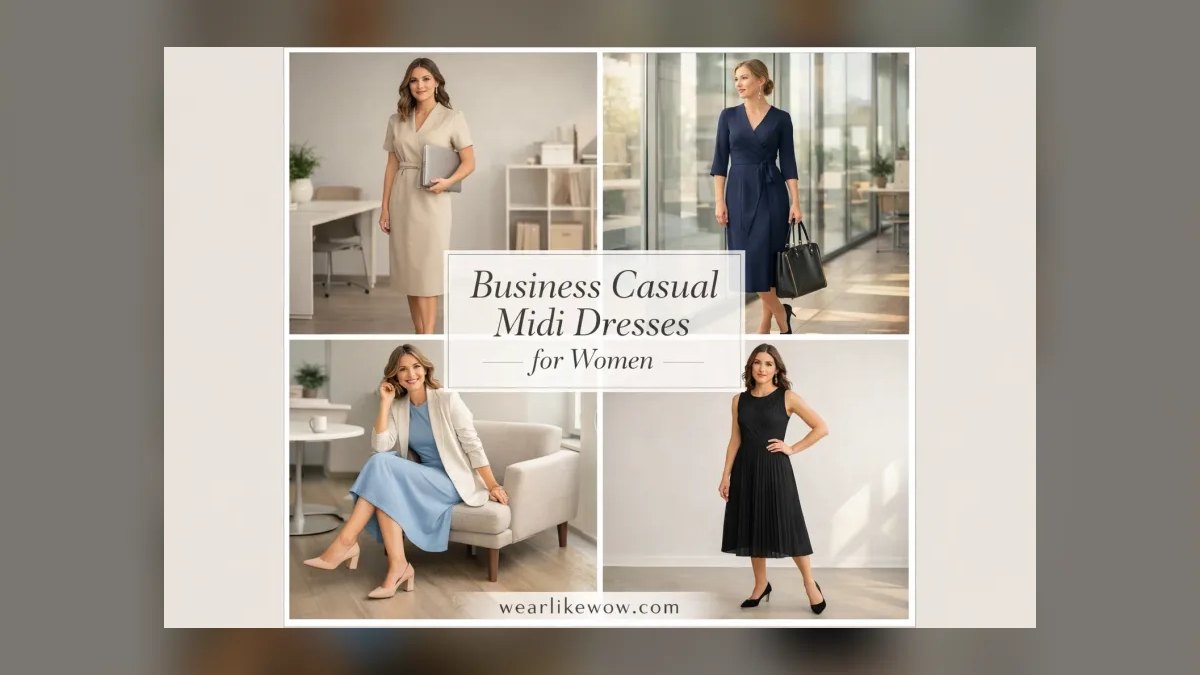
Yes. A midi knit or sheath dress with a blazer or cardigan is a complete business casual outfit and often the fastest one to assemble. Keep the hem near the knee or longer and add a structured layer for anything client-facing.
How many outfits do I actually need?
A twelve-piece capsule of three tops, three bottoms, three layers, and three pairs of shoes produces roughly thirty workable combinations — enough that nothing repeats within a two-week window if you rotate accessories.
What if my office has no written dress code?
Observe what women two levels above you wear for a fortnight and match that median. Unwritten codes are still real codes; they are just transmitted by example rather than by policy document.
Are open-toe shoes acceptable?
In most contemporary offices, a closed-back sandal or peep-toe is fine in summer. In finance, law, healthcare, and government settings, assume closed-toe unless you have clearly observed otherwise.
FAQ
Can I wear sneakers to a business casual office?
Clean, minimalist leather sneakers in white or a neutral are accepted in most tech, creative, and many corporate environments when paired with tailored trousers or a midi skirt. Running shoes, chunky trainers, and anything visibly scuffed are not. The condition of the shoe matters more than the category — a pristine leather sneaker outperforms a tired loafer.
Are jeans business casual?
Sometimes. Dark, rigid, un-distressed denim in a straight or wide leg, paired with a blazer and real shoes, works in many offices. Faded washes, rips, and skinny casual cuts do not. The safest rule is to wait until you have seen someone senior in your function wear denim before you do.
Do I have to wear a blazer?
No. You need one structured layer, and a knit blazer, a tailored vest, a longline cardigan with clean ribs, or a ponte jacket all satisfy that requirement. The blazer is simply the most reliable version of it, which is why it earns a place in almost every capsule.
What colors should I build around?
Anchor on warm neutrals — stone, camel, charcoal, navy, olive — because they combine with each other in nearly any order. Add one accent you actually like, appearing in a scarf, a knit, or a shoe. Roughly sixty percent core neutrals, thirty percent secondary neutrals, and ten percent accent keeps a wardrobe coherent.
How do I move a summer wardrobe into fall?
Layer a fine-gauge turtleneck under the same blazer or dress, swap sandals for loafers or a low block heel, switch cropped trousers for full-length, and add opaque tights under the midi skirt. The palette barely changes; the fabric weight and the layering do.
Is it a problem to repeat outfits?
No, and worrying about it costs more than it is worth. Rotating accessories, changing the layer, and keeping everything clean and pressed makes repetition read as a signature rather than an oversight. Senior people repeat constantly; that is what a uniform is.
Sources
- https://hbr.org/2014/12/dress-for-the-job-you-want — Harvard Business Review on how attire affects workplace perception
- https://www.bls.gov/ — U.S. Bureau of Labor Statistics, for data on occupations, industries, and workplace composition
- https://www.shrm.org/topics-tools/news/employee-relations — Society for Human Resource Management, on dress code policy and workplace norms
- https://www.wsj.com/lifestyle/fashion — The Wall Street Journal's fashion and style coverage of professional dress
- https://www.vogue.com/fashion — Vogue's ongoing coverage of workwear and tailoring
- https://www.nytimes.com/wirecutter/ — Wirecutter, for tested recommendations on clothing care tools such as steamers and fabric shavers
- https://www.consumerreports.org/ — Consumer Reports, for garment care and fabric durability guidance
- https://www.businessinsider.com/style — Business Insider's style desk on corporate dress trends
- https://www.thecut.com/ — The Cut, for reporting on shifting workplace dress norms
Related on PULSE
- [Top 10 Business Casual Shoes for Women in 2027](/knowledge/sy0028)
- [Top 10 Work Tote Bags for Women in 2027](/knowledge/sy0052)
- [Top 10 Work Pants for Women in 2027](/knowledge/sy0016)
- [Top 10 Work Blazers for Women in 2027](/knowledge/sy0010)
- [Top 10 Women's Work Flats in 2027](/knowledge/sy0042)
- [How to Dress Business Casual in Summer in 2027](/knowledge/sy0081)
@Kory-White- · if Venmo asks, the last 4 of my number are 2012
 pulse-styleTop 10 Dress Socks for Work in 2027
 syHow do you get started with Style in 2027?
 pulse-styleWhat are the most common mistakes in Style in 2027?
 pulse-styleWhat to Wear in London in Summer in 2027
 pulse-styleWhat to Wear to a Wine Country Trip in 2027
 pulse-styleWhat to Wear for Unpredictable Weather in 2027
 pulse-styleWhat to Wear to a Panel Finance Job Interview in 2027
 pulse-styleTop 10 Overcoats for Work in 2027
 pulse-styleWhat to Wear on a Snowy Day in 2027
 pulse-styleTop 10 Chinos for Work in 2027