

What to Wear to an Evening Wedding in 2027
 Curated byKory White · Fractional CRO · Maryland
Quality
Certified

Wear formal evening attire: men in a dark navy, charcoal, or black suit — a tuxedo or velvet dinner jacket if the invitation says black-tie — and women in a floor-length gown or a refined midi cocktail dress. Choose rich fabrics like wool, silk, velvet, or crepe, and finish with polished leather shoes or elegant heels.
Gown-and-tuxedo formality versus the modern cocktail read
Nearly every evening wedding decision collapses into two competing interpretations of the same invitation, and choosing between them is the whole game. The first option is the traditional formal read: floor-length gown for women, tuxedo or very dark suit with a tie for men. The second is the modern cocktail read: knee-to-midi dress or a luxe jumpsuit for women, a tailored suit with an open collar or a knit tie for men. Both are defensible at most 2027 weddings. They are not interchangeable, and showing up with the wrong one is the single most common source of guest regret.
The traditional read wins when the invitation carries an explicit formality label ("black-tie," "black-tie optional," "formal"), when the ceremony starts after 6 p.m., and when the venue is a hotel ballroom, a historic estate, a country club, or a house of worship followed by a seated dinner. Under this read, men wear a dinner jacket with a satin or grosgrain lapel, a white pleated or marcella-front shirt, black trousers with a side stripe, and black patent or highly polished calfskin shoes. Women wear floor-length. The floor-length gown is doing something specific here: it signals that the wearer read the invitation and accepted its terms.

The modern cocktail read wins when the invitation says "cocktail attire," "dressy casual," "festive," or gives no code at all; when the venue is a rooftop, a restaurant buyout, an urban loft, a brewery, or a working farm; and when the reception is standing-and-grazing rather than a seated multi-course. Here, a satin midi with a defined waist, a wide-leg crepe jumpsuit, or a tailored two-piece in a jewel tone all read correctly. Men can drop the tie, wear a knit or textured tie instead of silk, and swap oxfords for polished loafers or a clean leather Chelsea boot.
The trade-off is real. The traditional read is safer but less personal — you will look correct and slightly interchangeable. The cocktail read is more expressive and more comfortable for a long night on a dance floor, but it has a failure mode: read the room wrong and you are visibly the most casual person at a black-tie dinner. Photographs make that permanent. A useful tiebreaker: the traditional read fails gracefully (overdressed guests get compliments), while the cocktail read fails badly (underdressed guests get pity). When the two options are genuinely tied, take the more formal one.
A third path worth naming, because it splits the difference honestly, is the elevated hybrid: a floor-length dress in a matte, low-shine fabric with minimal jewelry, or, for men, a black or midnight-blue suit with a black knit tie and patent-free but glass-polished shoes. It photographs as formal at a ballroom and doesn't scream "tuxedo" on a rooftop. It is the single most transferable outfit an occasional wedding guest can own.
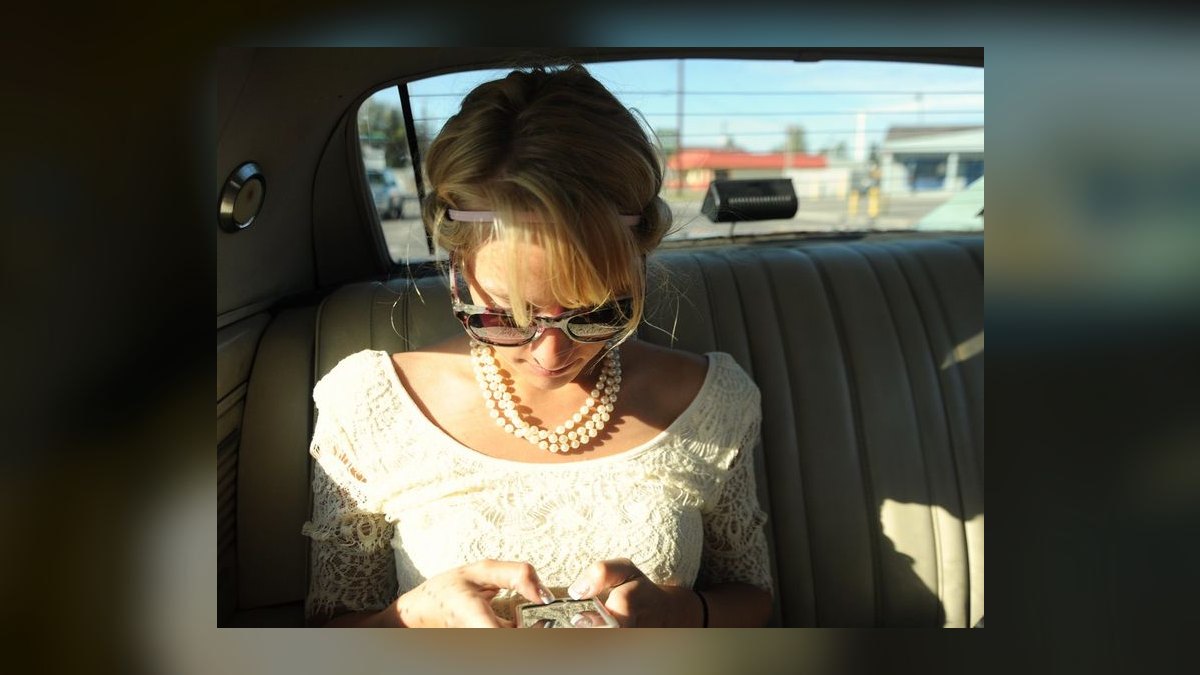
How to decide between the two reads
Decisions get easier when you stop treating the invitation as the only input. Four signals matter, in order of weight: the stated dress code, the start time, the venue type, and what the wedding party is wearing. The stated code overrides everything. If it's absent — and roughly a third of modern invitations omit it — start time becomes the primary lever. A ceremony beginning at or after 6 p.m. pushes formal; 4 to 6 p.m. sits in the ambiguous middle where the venue decides; before 4 p.m. is not an evening wedding at all, even if the reception runs late.
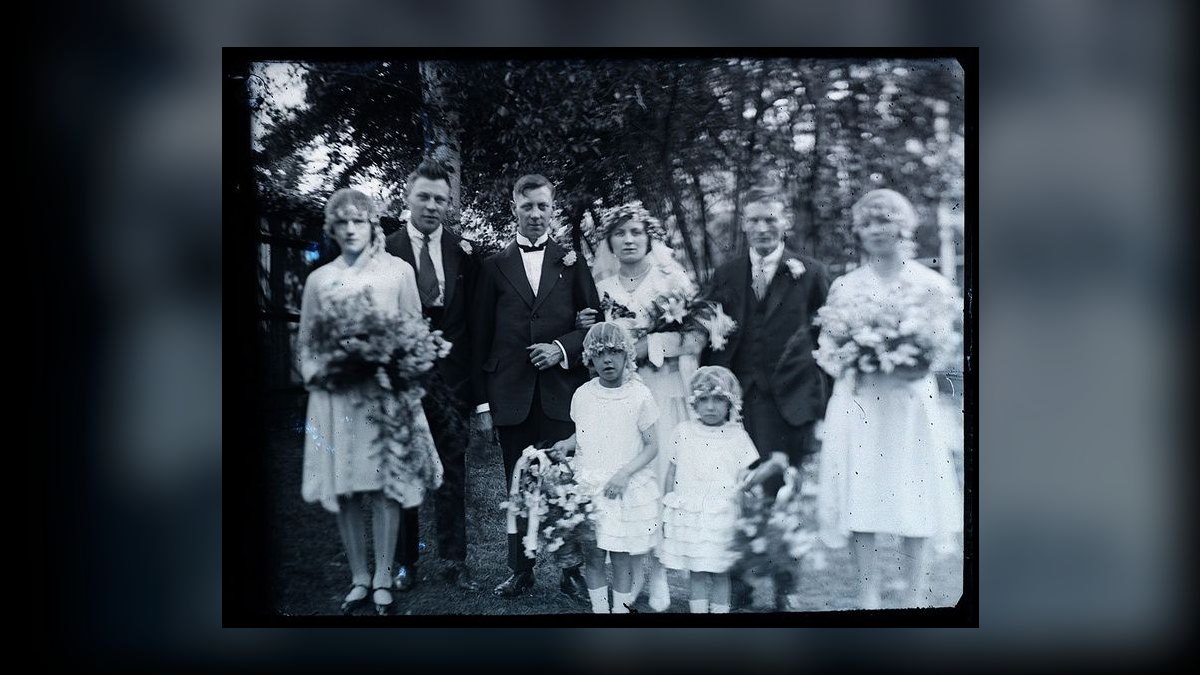
Venue type is the tiebreaker in that ambiguous middle. Ballrooms, estates, museums, and country clubs pull formal. Rooftops, lofts, restaurants, wineries, barns, and beaches pull cocktail. Check the venue's own website — many publish a house dress code, and phrases like "jacket required" or "no denim" settle the question without you having to text anyone.
The fourth signal is the most reliable and the most underused: ask. A single message to a member of the wedding party — "what are you wearing, roughly?" — resolves in thirty seconds what an hour of guessing won't. If the maid of honor is in floor-length, guests go floor-length or near it. If groomsmen are in suits rather than tuxedos, no guest should out-formal them.
One more decision layer that people skip: your own role in the night. If you are giving a toast, sitting at the head table, or being photographed in a formal group, move one notch more formal than the crowd baseline. If you're a plus-one who knows three people and plans to dance until the bar closes, comfort earns more weight — a midi with a block heel beats a floor-length gown with stilettos every time.

Adjacent scenarios follow the same logic tree with different weights. A rehearsal dinner the night before is typically one notch below the wedding itself; if the wedding is black-tie, the rehearsal is cocktail. A post-wedding brunch drops two notches into smart casual. A formal charity gala or awards dinner — the closest non-wedding cousin — behaves almost identically to a black-tie wedding, with one exception: white and ivory are perfectly fine there, since no bride is present. That single difference is worth internalizing, because it means the gown you buy for a gala may or may not transfer to a wedding depending on its color.
Concrete numbers behind each option
Budget is where the two reads separate most sharply, and the numbers are worth laying out plainly.
The traditional read, bought new. A rented tuxedo runs roughly $150 to $250 for a package including jacket, trousers, shirt, and bow tie; shoes usually add $25 to $40. Buying an entry-level tuxedo starts around $400 to $600 at mainstream suiting retailers, climbs to $800 to $1,500 for a well-constructed half-canvassed jacket in a good wool, and goes well past $2,500 for fully canvassed or designer construction. A velvet dinner jacket sits in a similar band — $300 to $700 for a solid off-the-rack piece. Formal shoes: $150 to $400 for patent or polished calfskin oxfords that will last a decade with care.
For women, a floor-length gown spans an enormous range. Fast-fashion and mall-tier evening wear starts around $100 to $250. Contemporary brands land at $250 to $600 for a gown in a real fabric with lined construction. Designer evening wear starts around $800 and has no ceiling. Rental services have compressed this dramatically: a four-to-eight-day rental of a gown that retails at $500 to $1,200 typically costs $50 to $150 — often the single best value in the entire outfit, especially for a dress you will realistically wear once.
The cocktail read. A tailored suit in navy or charcoal — the workhorse — runs $300 to $800 off the rack, and unlike a tuxedo, it earns its keep at work, funerals, and interviews. Cost-per-wear is the argument here: a $600 suit worn fifteen times costs $40 a wear; a $600 tuxedo worn twice costs $300 a wear. A satin or crepe midi dress lands at $80 to $300; a good jumpsuit, $120 to $350.
Alterations, the highest-return line item. This is where the money actually works. Typical costs: hemming trousers, $15 to $30. Taking in a jacket's waist, $30 to $60. Shortening sleeves, $25 to $50 (more if there are working buttonholes). Hemming a gown, $30 to $80. Taking in a dress at the bust and waist, $40 to $90. Adding cups or straps, $20 to $40. A $250 off-the-rack suit with $60 of tailoring visibly outperforms an $800 suit worn as-is. Build two weeks of lead time into the schedule; rush tailoring inside a week often carries a 25 to 50 percent surcharge, and some shops simply won't take it during peak season.
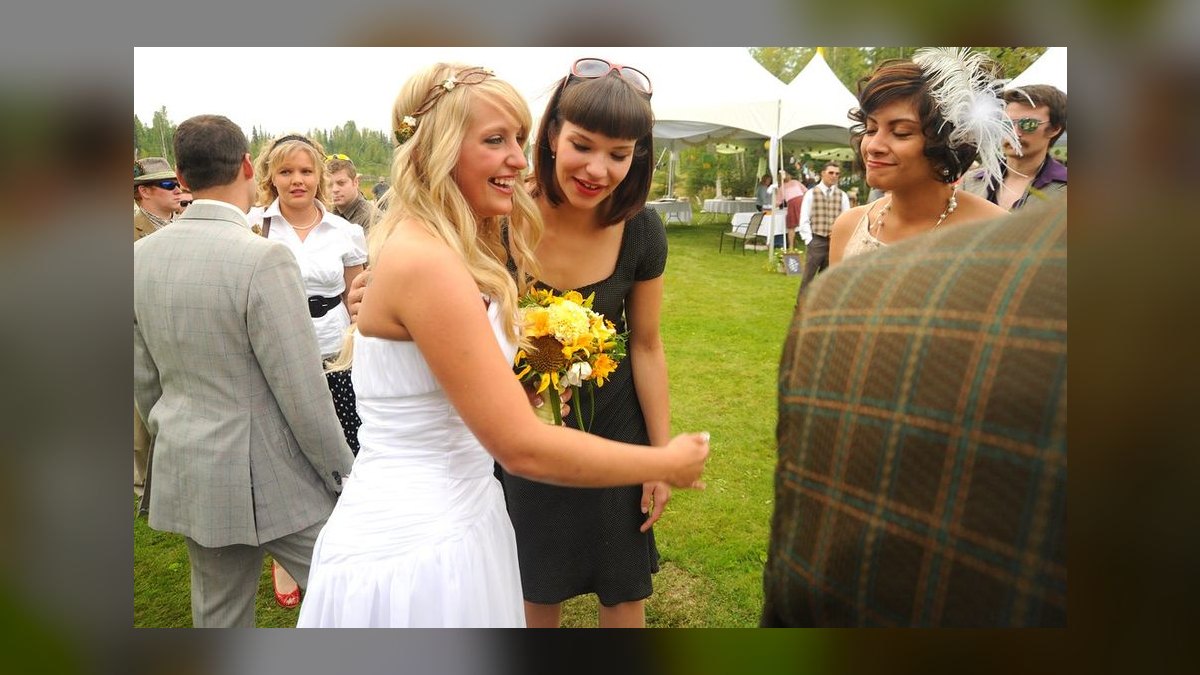
Fit specifications worth measuring against. Jacket shoulders should end where your shoulder ends, with no divot or overhang. Sleeves should finish at the wrist bone, showing roughly a quarter to half inch of shirt cuff. Trousers should have a slight break or none at all — no pooling. A jacket should close without strain and show a hand's width of clearance at the waist. For dresses: no gaping at the bust, no horizontal pull lines across the hips, hem clearing the floor by about half an inch in the heels you'll actually wear. Bring those shoes to the fitting; hemming a gown against the wrong heel height is the most common and most expensive re-do.
Heel heights and survival math. Stilettos above three and a half inches are a two-hour shoe for most people, not a six-hour one. Block heels at two to three inches, or a low kitten heel, hold up across a ceremony, cocktail hour, dinner, and dancing. Foldable flats add $20 to $40 and roughly three extra hours of standing tolerance. For outdoor and lawn venues, heel-protector caps cost under $15 and prevent the sinking that ruins both the shoe and the walk.
Timeline numbers. Order or rent six to eight weeks out for peak season (May through October); four weeks is workable off-season. Alterations: two to three weeks. Break in new shoes across at least five to six hours of household wear, in thick socks, spread over a week. Polish leather the day before, not the morning of — cream polish needs time to set.
Cost isn't only money. There's a real time cost to the traditional read: a tuxedo fitting, a shirt-and-stud decision, a bow tie you may have to learn to tie. If the wedding is a destination event, add luggage risk — a gown in a garment bag survives a flight far better than folded in a checked case, and many airlines will hang one in the cabin closet if you ask at boarding.
Building the outfit, in order
Sequencing matters more than people expect, because each choice constrains the next. Work outward from the largest, hardest-to-change piece.
Step one: lock the anchor garment. The suit, tuxedo, gown, or dress. This determines your color story, your formality level, and everything downstream. Do not buy shoes first. Do not buy jewelry first. For 2027 evening weddings, the reliable anchor palette is deep and saturated: navy, charcoal, midnight blue, black, emerald, burgundy, sapphire, and plum. Neutrals — bone, camel, warm gray — read daytime under evening light and generally underperform after dark. Avoid pastels and bright florals; they photograph as garden-party.
Step two: fabric, matched to season. Winter and late fall: wool flannel, velvet, brocade, heavier crepe, cashmere blends. Summer: tropical-weight wool (a "high-twist" or open-weave wool breathes far better than the same weight in a dense weave), silk-cotton blends, chiffon, lightweight crepe. Velvet in July is a mistake regardless of how good it looks. Linen, conversely, is a daytime fabric — it wrinkles by the second hour and reads casual under chandeliers.
Step three: the layering plan. Evening temperature drops are the most consistently underestimated variable at outdoor weddings. A ten-to-fifteen-degree drop between the 5 p.m. ceremony and the 9 p.m. dancing is normal in most climates. A silk or cashmere wrap, a structured blazer, or a tailored overcoat solves it without ruining the line of the outfit. Men can layer a fine-gauge merino turtleneck under a dinner jacket in winter — a look that's gained traction and reads intentional rather than improvised.
Step four: shoes, then hem. Choose footwear before final alterations. Men: black or dark brown leather oxfords, loafers, or a sleek Chelsea boot; no sneakers, no rubber soles that squeak on a wood dance floor. Women: closed-toe pumps or elegant strappy heels in a block or moderate stiletto; skip chunky platforms.
Step five: accessories, deliberately capped. Pick one focal point and support it. A pocket square in a complementary tone (white linen is never wrong), cufflinks in silver, gold, or enamel, a watch on leather or metal — but leave the smartwatch home; it breaks the formal illusion instantly. For women: statement earrings *or* a bold necklace, not both, plus a small clutch or minaudière sized for a phone, lipstick, and ID.
Step six: grooming, day-of. Trimmed facial hair or a clean shave; hair with light hold, not wet-look. Nails clean, bare or in a neutral or jewel tone. Fragrance: one spray. Many guests have sensitivities, and a ballroom concentrates everything.
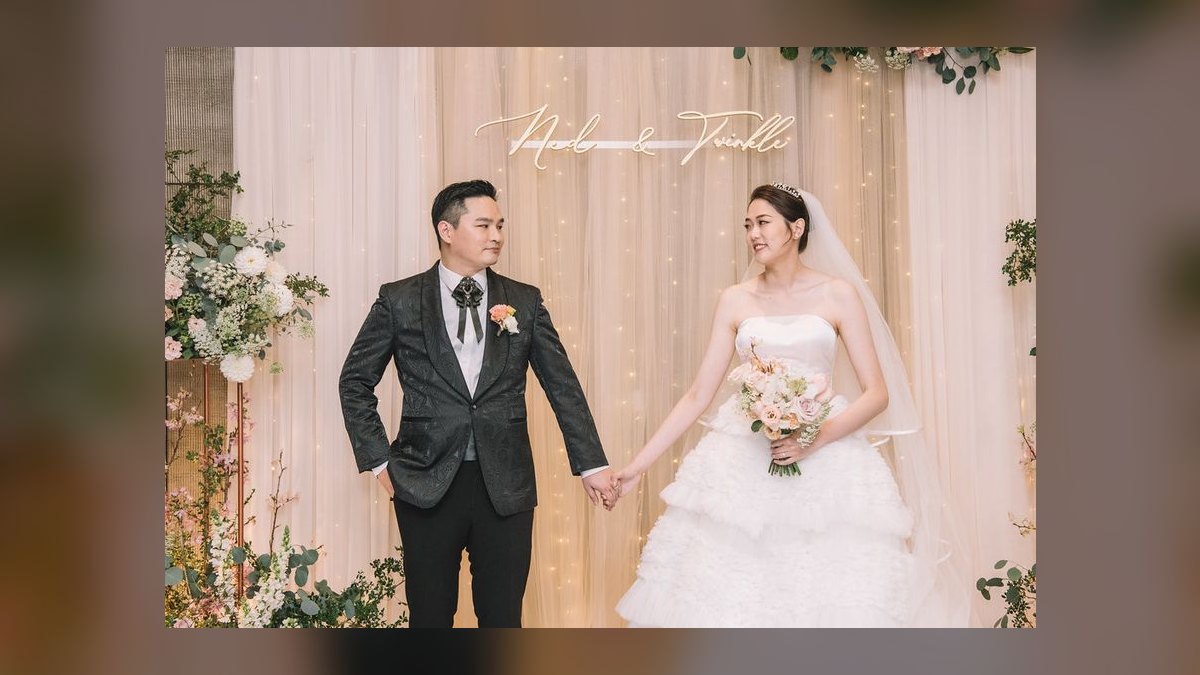
The hard exclusions, worth stating once. White and ivory remain off-limits for guests unless the couple explicitly asks otherwise. Anything that competes with the wedding party — a matching bridesmaid color, if you know it — is a courtesy avoid. Denim, sneakers, flip-flops, and open-toed sandals for men are out at evening weddings regardless of season. Oversized logos and heavy branding read try-hard against formal wear; a discreet monogram is fine, a hardware-covered handbag is not. Mini lengths above mid-thigh are risky outside an explicitly cocktail-coded urban venue.
Adjacent scenarios that reuse this sequence. A destination evening wedding adds a packing constraint: choose wrinkle-resistant fabrics (crepe, high-twist wool, jersey) over linen and silk charmeuse, and carry the anchor garment on. A multi-day celebration — welcome party, ceremony, brunch — is a wardrobe-planning problem, not an outfit problem; build one formal anchor and two lower-formality pieces that share a shoe. A black-tie corporate gala or industry awards dinner, common for anyone whose revenue targets involve client entertaining, uses this same six-step sequence with the white/ivory restriction lifted. And a winter evening wedding inverts step three entirely: the layering plan gets chosen alongside the anchor rather than after it, because a velvet or brocade gown with long sleeves may need no wrap at all.
The last piece of sequencing is contingency. Pack a stain pen, a spare collar stay, a small sewing kit, blister plasters, and — for women planning to dance — foldable flats in the clutch. None of it costs more than $30 combined, and every item addresses a failure that has ended someone's night early.
Related questions
Is black-tie optional the same as black-tie?
No. Black-tie optional means a tuxedo is welcome but a dark suit with a tie is equally correct for men; women should still lean floor-length or a very formal midi. Black-tie without the qualifier expects a tuxedo and a gown.
Can men skip the tie at an evening wedding?
Only under a cocktail or festive code, and only with a well-fitted jacket and a crisp shirt. Under formal or black-tie codes, a tie or bow tie is expected. A pocket square partially compensates but doesn't replace it.
What if there's no dress code on the invitation?
Default to start time and venue. After 6 p.m. at a ballroom or estate means formal; a rooftop or restaurant means cocktail. When genuinely torn, choose the elevated hybrid — a matte floor-length dress or a dark suit with a knit tie.
Does a jumpsuit work for an evening wedding?
Yes, in a luxe fabric — crepe, satin, or heavy silk — with a defined waist and a wide leg. Pair it with statement earrings and a heel. Avoid casual fabrics like cotton twill or jersey, which read daytime.
How is this different from a black-tie gala?
Almost identically formal, with one key difference: white and ivory are perfectly acceptable at a gala since no bride is present. Galas also tolerate bolder, more theatrical statement pieces than a wedding, where guests deliberately avoid upstaging.
FAQ
Can I wear black to an evening wedding in 2027?
Yes. Black is a standard, correct choice for evening weddings and has been for decades — the old superstition against it has effectively vanished. Make it feel celebratory rather than somber by choosing a fabric with depth like silk, velvet, or a textured crepe, and adding metallic accessories, colorful jewelry, or a bright clutch. Flat matte black with no accent can read severe under low reception lighting.
How much should I actually spend on a wedding-guest outfit?
That depends on how often you'll wear it. A navy or charcoal suit at $300 to $800 pays for itself across weddings, work, and funerals. A tuxedo worn twice is better rented at $150 to $250. For women, renting a gown for $50 to $150 often beats buying a $400 dress you'll wear once — but if you attend several formal events a year, a well-cut gown you own and alter to fit is the better economics.
Is velvet appropriate for a summer evening wedding?
Generally no. Velvet holds heat and photographs heavy in warm months. Save it for October through March. For a summer evening, choose tropical-weight or high-twist wool for suits and chiffon or lightweight crepe for dresses, with details like an open back, halter neckline, or a skirt slit that let air move.
What shoes work best for a long evening reception?
Block heels between two and three inches, low kitten heels, or elegant flats for women; polished leather oxfords, loafers, or Chelsea boots for men. Break new shoes in over five to six hours of household wear across the week before. For lawn or beach venues, use heel protectors or choose a wedge — stilettos sink into grass and sand.
Can I re-wear an outfit the couple has already seen?
Absolutely. Re-wearing is normal, sustainable, and invisible to almost everyone. Change the read with different accessories — a new clutch, different earrings, a swapped tie or pocket square — and have it pressed or steamed. Guests remember how you looked, not the specific garment.
What should I do if I realize on the day that I'm underdressed?
Fix what you can quickly: add a jacket, swap to a tie, upgrade the shoes, and remove anything overtly casual. Most hotels near wedding venues sit close to a department store, and a tie or pocket square is a ten-minute fix. Then let it go — carrying yourself confidently reads better than visible discomfort about a hemline.
Sources
- https://www.brides.com/ — wedding guest attire etiquette and dress-code definitions
- https://www.theknot.com/ — guest dress code guidance and venue-specific recommendations
- https://www.vogue.com/ — evening wear and formal dressing coverage
- https://www.harpersbazaar.com/ — editorial on gowns, tailoring, and accessories
- https://emilypost.com/ — traditional and contemporary wedding guest etiquette
- https://www.gq.com/ — men's tailoring, black-tie, and suiting guidance
- https://www.marthastewart.com/ — wedding planning and guest attire resources
- https://www.wwd.com/ — fashion industry reporting on fabrics and trends
Related on PULSE
- What to Wear as a Groomsman to a Destination Wedding in 2027
- What to Wear as a Officiant to a Backyard Wedding in 2027
- What to Wear as a Maid of Honor to a Courthouse Wedding in 2027
- What to Wear to a Winter Country Club Wedding in 2027
- What to Wear to a Summer Church Wedding in 2027
- What to Wear as a Officiant to a Destination Wedding in 2027
This page will be disappearing soon. Save it to your device for $1 — or read it free while it is here.
@Kory-White- · if Venmo asks, the last 4 of my number are 2012
This page is gone.
This one is off the shelf now. $1 keeps it on your phone for good — the whole page, pictures and diagrams included.
 pulse-styleWhat to Wear to a Company Offsite in 2027
 pulse-styleHow to Wear Cream in Summer in 2027
 pulse-styleHow to Wear Olive Green in Fall in 2027
 pulse-styleWhat to Wear to a Parent-Teacher Conference in 2027
 pulse-styleWhat to Wear to a Video Startup Job Interview in 2027
 pulse-styleHow to Style a Knit Vest for a Theater Show in 2027
 pulse-styleWhat to Wear to a Work Awards Gala in 2027
 pulse-styleWhat to Wear on a Muggy Summer Night in 2027
 pulse-styleHow to Wear Terracotta with White Sneakers in 2027
 pulse-styleHow to Style a Midi Skirt for a Job Interview in 2027