

What to Wear to a Funeral in 2027
 Curated byKory White · Fractional CRO · Maryland
Quality
Certified

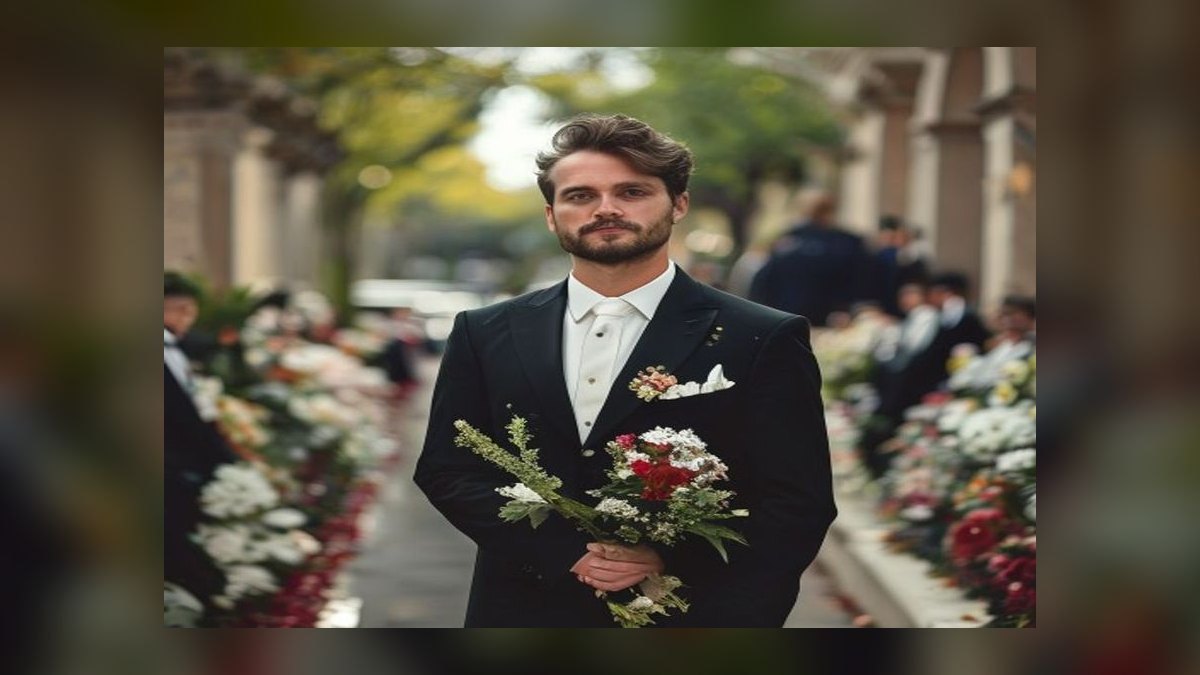
Wear dark, matte, well-tailored clothing to a funeral in 2027: charcoal, navy, or black remains the safe default, with muted olive or taupe acceptable at daytime services. Men need a dark suit, light shirt, polished closed-toe shoes; women a knee-length dress or tailored separates. Skip denim, sneakers, bright color, and loud jewelry unless the family requests otherwise.
The outcome you should expect
The correct outcome of a funeral outfit is that nobody remembers it. That sounds like a low bar, but it is the actual measurable goal, and it is worth stating plainly because most dressing mistakes come from optimizing for the wrong thing — looking good, looking current, looking like yourself. A funeral is one of the few remaining occasions where visual anonymity is the point. You are attending as part of a group whose job is to hold attention on one family, and any garment that pulls a second glance has taken something from them.
Practically, that means the outcome you should expect from a well-chosen outfit is a set of quiet non-events. Nobody asks where you got the jacket. Nobody notices your shoes at the graveside. You are not adjusting a waistband during the eulogy or pulling a hem down when you sit. You can stand for ninety minutes in a receiving line without your feet becoming the loudest thing in your head. You can hug people without worrying about a fragile fabric or a stiff structured shoulder. That is the whole deliverable.

There is a second, less discussed outcome: you should expect to feel slightly overdressed, and you should let that be fine. In 2027 the average American service is meaningfully less formal than it was two decades ago — cremation rates have climbed past two-thirds nationally, celebrations of life have partially displaced traditional church funerals, and outdoor and venue-based memorials are common. The result is a wider spread of what people show up in. You will see a suit standing next to a dark sweater and chinos. Being at the more formal end of that spread costs you nothing socially; being at the less formal end can read as indifference to the one person you cannot apologize to afterward. Asymmetric risk, so you take the overdressed side.
Expect, too, that the outfit does a small amount of work you did not plan for. Pockets matter. Tissues matter. A jacket that lets you carry a phone silently on vibrate, a bag small enough to hold on your lap in a pew, a coat you can shed in an overheated funeral home without a production — these are the details that convert "dressed correctly" into "actually able to be present." Every reliable etiquette source lands in the same place, which is that respect and restraint outrank fashion, and that when the family has stated a preference, their preference is the rule and everything else is commentary.
Finally, expect the outfit to have a second life. The pieces that work here — a charcoal suit, a navy crepe dress, black leather shoes with a real sole — are the same pieces that work at a promotion interview, a courthouse appointment, a board meeting, a client dinner. That overlap is why building this small wardrobe is not a morbid purchase. It is the most reusable formal capsule most people will ever own.
What drives that outcome
Four inputs drive whether an outfit lands: the family's stated wishes, the tradition governing the service, the venue and weather, and fit. Everything else — brand, price, whether the tie is grenadine — is downstream noise.
Stated wishes come first and override everything. In 2027 it is common for an obituary or a group text to carry an explicit instruction: "dark attire requested," "please wear bright colors, he hated black," "casual, we're doing this at the lake." Follow it exactly. If the family asks for color, muted jewel tones — burgundy, forest, deep teal — honor the request without turning the service into a costume. If they ask for casual, casual still means clean and intentional: dark denim with a proper sweater and leather shoes, not athletic wear or flip-flops. The one instruction people mishandle is "casual," which they hear as "no effort" when it means "no suit."
Tradition sets the modesty floor. Catholic and mainline Protestant services skew dark and conservative; women covering shoulders in church is still the norm, so a cardigan or wrap is the single most useful thing in the bag. Jewish services expect dark and modest but not necessarily black — navy, charcoal, and dark brown are all common, kippot are provided at the door, and knee-length or longer is the standard for women. Muslim services put modesty above color: long sleeves and full-length trousers for men, loose clothing covering arms and legs plus a dark headscarf for women, no sheer fabric, no strong fragrance. Hindu and Sikh services often center white as the mourning color, with shoes removed before entering the prayer hall — a detail that quietly makes sock condition a real consideration. Buddhist services lean white or black, simple and unadorned. If you do not know which set of rules applies, ask someone close to the family; nobody has ever been offended by that question.
Venue and weather set the material. A graveside in March and a funeral home chapel in July are different engineering problems wearing the same color.
Fit is the variable people underweight. A $200 suit that has been to a tailor outperforms a $1,200 suit off the rack, every time. Sleeve length showing a quarter inch of shirt cuff, trousers that break once, a jacket that closes without straining — these read as respect in a way brand never does.
Benchmarks and realistic ranges
Concrete targets, so this stops being abstract.
Color. Black, charcoal, and navy carry roughly ninety percent of what you will see at a traditional service. Deep olive, taupe, dark brown, and slate are the accepted second tier and read fine at daytime and outdoor services. Anything at or above mid-tone brightness — royal blue, red, mustard, white for non-family at a Western service — sits outside the range unless the family asked for it. Pattern should be invisible at conversational distance: a tonal herringbone or a micro-check is fine, a windowpane you can count from across the room is not.

Formality by service type. Church or funeral-home chapel: suit and tie for men, dress or tailored separates for women. Graveside-only: same, plus outerwear and a shoe that survives grass. Celebration of life at a home, bar, or venue: dark jacket over a knit or collared shirt, no tie required; dark dress or trousers with a good top. Outdoor memorial at a park or beach: dark linen-cotton blend, no tie, flat sturdy shoes. Notice the floor never drops below "dark and deliberate."
Coverage. Hemlines at or below the knee. Sleeves at least to mid-bicep, full-length in more traditional settings. Necklines that do not require monitoring when you lean forward. Shoulders covered or coverable — the wrap or cardigan solves this and weighs nothing.
Shoes and heel height. Closed toe, always. Heels in the one-to-two-inch block range if you want any heel; stiletto is both a formality mismatch and a literal hazard on turf, where the point sinks and you spend the burial concentrating on your ankles. Men's oxfords or derbies with leather or rubber soles; loafers acceptable at less formal services. Rubber soles are not a downgrade in 2027 — they are the practical choice for wet grass and stone chapel floors, and a plain black rubber-soled leather shoe reads identically to a leather-soled one at ten feet.

Accessories. One or two visible pieces, total. Small studs or a single pearl strand. A watch on a dark strap. A wedding band or signet. Bags: structured, small-to-medium, black or dark brown, no logo hardware. Backpacks read as too casual in a chapel, though at an outdoor memorial with a long walk from parking, a plain dark one is forgivable.
Budget ranges, honestly stated. A complete respectful outfit assembled from mainstream mall and online retailers runs roughly $200–$450. A tailored mid-tier version with real wool and leather runs about $500–$1,200. Above that you are buying longevity and hand-finishing, not appropriateness — an $1,800 suit is not more respectful than a $400 one that fits. The single highest-return $60 you will spend is tailoring: hemming trousers, taking in a jacket waist, shortening sleeves. Secondhand is a genuinely strong play here — dark formalwear gets worn a handful of times and resold in excellent condition, so consignment and resale platforms are full of quality wool suits and crepe dresses at a fraction of retail. Buying a $150 secondhand suit and spending $80 on alterations beats a new $300 suit worn as-is.
Time. Give yourself forty-eight hours of lead time if you can. That is the difference between discovering the trousers need hemming and discovering it at 7 a.m. on the day. If you have hours instead of days, a steamer and a lint roller recover more than most people expect.
Risks, edge cases, and failure modes
The "casual" trap. The family says casual, you interpret it literally, you arrive in athletic wear while everyone else landed on dark jeans and a sweater. Casual at a funeral means one notch below a suit, not five. Read it as "no tie required," never as "whatever's clean."

The overheated chapel. Funeral homes run warm, deliberately. A heavy three-piece with a wool overcoat becomes miserable within twenty minutes and you spend the service managing your own body temperature instead of listening. Layer so you can subtract: jacket over knit over shell, rather than one heavy thing.
Weather whiplash. A spring or fall service anywhere between 45°F and 70°F can swing twenty-five degrees between the chapel and the graveside. Mid-weight wool, a shed-able layer, and a compact dark umbrella cover almost every case. In summer above 75°F, tropical-weight wool or linen-cotton blends in dark colors breathe; a matte finish matters because shiny synthetics in direct sun photograph and read cheap. Below 40°F, a dark wool overcoat, leather gloves, a muted scarf, and waterproof leather boots. Avoid the bright technical shell and the puffy down jacket — not because they are disrespectful in principle, but because a lime rain jacket in a group of black coats is exactly the second glance you were trying to avoid.
The graveside surface. Grass, gravel, mud, uneven stone, sometimes an incline. Thin soles and thin heels fail here. This is also the moment when a long unstructured coat catches on things and when an unpinned hat becomes a small comedy.

Physical failure modes. Shoes you have never broken in will blister within an hour of standing. A shirt collar that fit two years ago and does not now will be visible in every photograph. A dress that fits standing but rides when seated becomes a ninety-minute distraction. Do a full dress rehearsal: put the whole outfit on, sit down, stand up, reach overhead, walk a lap. Whatever fails in your living room will fail worse in a pew.
Emotional bandwidth. This is the underrated one. Grief compresses decision-making. People make bad clothing calls the morning of a funeral not because they lack taste but because they have none of the executive function required to problem-solve a wardrobe at 7 a.m. while crying. The mitigation is to decide the night before and lay everything out — shoes, belt, jewelry, coat, keys — so the morning is retrieval, not design.
Photographs and the long tail. Funerals get photographed now, informally and constantly, and those images circulate in family group chats and sometimes persist for decades. Something that reads as merely trendy today can age badly in the one photo a family keeps. Conservative choices are, among other things, a hedge against that.
The travel case. Flying to a service compresses everything. Pack the jacket on top, roll nothing that needs to hold a crease, and carry the shoes rather than checking them — an outfit that arrives without its shoes is not an outfit. A steamer-free hack: hang the suit in the bathroom during a hot shower for ten minutes.
Body-shape edge cases. Athletic builds fight jacket shoulders and thigh room; go up a size in the suit and have the waist taken in. Curvy builds get more from a wrap or A-line silhouette than a rigid sheath, and a knit blazer moves where a woven one binds. Petite and tall builds should assume hemming is mandatory, not optional. Maternity: a dark jersey wrap dress with a shawl is the whole answer.
Pallbearing and active roles. If you are carrying, wear a jacket you can move in, shoes with grip, and nothing at the wrist that will scrape a casket rail. Ask about gloves — some funeral directors provide them.
A practical rollout plan
Treat this as a small, repeatable process rather than a one-time scramble. The people who never stress about this have simply pre-built the capsule.
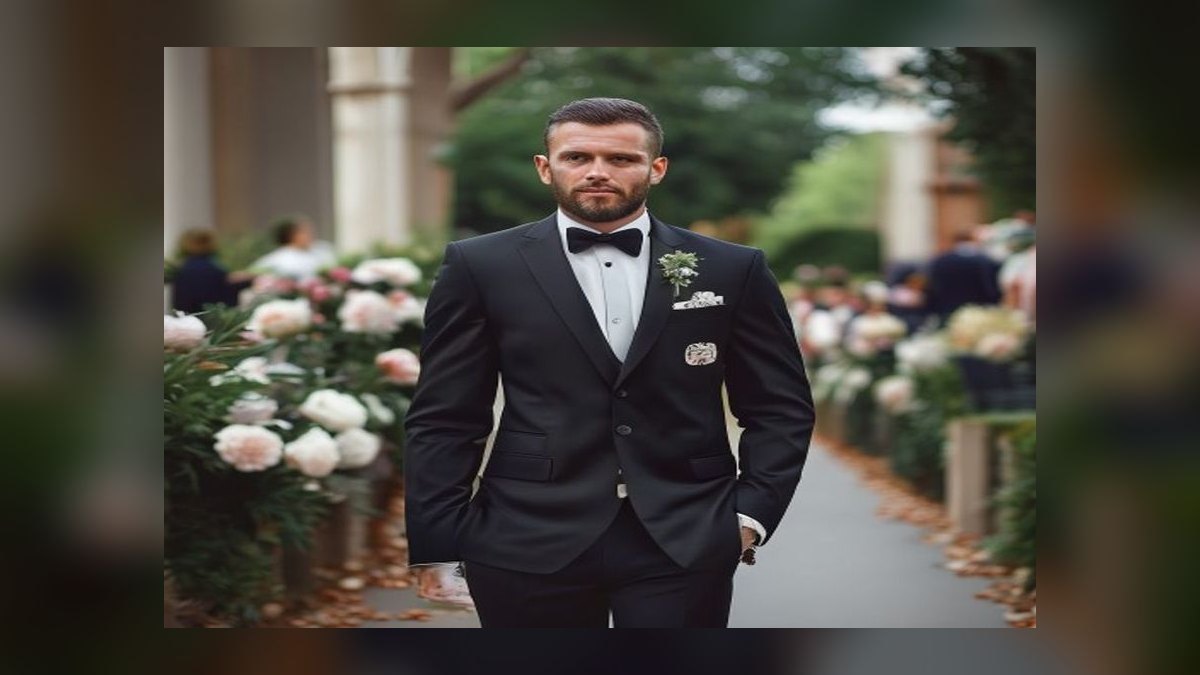
Step one — build the standing capsule, before you need it. Five pieces cover nearly every service you will ever attend. For a suit-based wardrobe: one charcoal or navy suit in mid-weight wool, one white and one light-gray shirt, one black or deep-burgundy tie in a matte weave, one pair of black leather cap-toe oxfords, one black leather belt matching the shoes. For a dress-based wardrobe: one black or navy knee-length crepe dress with sleeves, one dark blazer or fine-gauge cardigan, one pair of black low-block-heel pumps or leather flats, one small dark bag, one pashmina or wrap. Add a dark wool overcoat if you live anywhere cold. That is the whole kit. Buy it on a normal Tuesday when you have judgment available, get it tailored then, and hang it in a garment bag where you can find it in the dark.
Step two — confirm the specifics as soon as you hear. Read the obituary or announcement in full for a stated dress code. Establish the tradition and whether the service is indoor, outdoor, or both. Check whether you have an active role. If anything is unclear, text the person closest to the family who is not the immediate bereaved — a sibling-in-law, a coworker, a friend organizing rides. That is a thirty-second question that removes the entire guessing problem.
Step three — pull and inspect the night before. Everything out on a hanger. Check for missing buttons, stains, a broken belt loop, shoes that need polish, tights with a run. Steam or press. Set out the small things — tissues, charger, sunglasses for the graveside, an umbrella by the door.
Step four — rehearse. Full outfit on, five minutes. Sit, stand, reach, walk. Fix or swap whatever fails.
Step five — build in slack on the day. Dress with enough margin that a spilled coffee is recoverable. Keep a backup shirt or top in the car. Arrive early enough to be composed at the door rather than sprinting from parking.
Step six — reset afterward. Dry-clean or air out, replace anything that failed, and put the capsule back in one place. Next time, steps one through four collapse into ten minutes. That maintenance loop is the entire difference between people who find this stressful and people who do not.
The same capsule logic applies to adjacent occasions — courthouse dates, memorial anniversaries, wakes and shivas, a graduation you have to be respectable at, a job interview that appeared with three days' notice. A dark suit or dark dress bought for one solemn day quietly becomes the highest-utility item in the closet, which is a mildly unromantic way to say that the money spent here does not evaporate. If you think about a wardrobe the way a business thinks about revenue per asset, this is the single best-performing formal purchase most people make: low cost per wear over a decade, near-zero risk of being wrong.
Related questions
Can I wear navy or gray instead of black?
Yes. Navy and charcoal are fully standard at Western services and are often the more flattering choice. Black is the safest single answer but not a requirement outside a few strict traditions. Keep the fabric matte and the cut conservative and the color question resolves itself.
What if I have no dark formal clothes and no time to shop?
Assemble from what you have: darkest trousers or skirt, a plain dark top with sleeves, closed-toe shoes, and a cardigan or jacket. No logos, no athletic pieces, nothing shiny. Nobody will fault a clean, deliberate, dark outfit that is not technically a suit.
Are open-toe shoes or sandals ever acceptable?
Rarely. Closed-toe is the expectation at nearly every service. The narrow exception is an explicitly casual outdoor memorial in hot weather, and even then a dark flat or loafer beats a sandal. Never flip-flops.
Should children follow the same rules?
Loosely. Dark, neat, comfortable, and closed-toe is enough — a collared shirt and dark trousers, or a dark dress or skirt with tights. Do not buy a child a suit for one hour. Comfort matters more, because a fidgeting, miserable child is the larger distraction.
What do I wear to a wake or viewing versus the funeral itself?
Wakes and viewings are typically one notch less formal than the service, but the color rules are identical. A dark jacket without a tie, or a dark dress without the full formality, works well. If you are attending both, one outfit for both is completely normal.
FAQ
Is it disrespectful to wear a color other than black?
Not in 2027, and largely not for decades. Navy, charcoal, dark brown, deep olive, and slate are all accepted at Western services, particularly during the day. The signal that matters is restraint — matte fabric, conservative cut, no loud pattern — rather than the specific pigment. The exceptions run the other direction: some Hindu and Sikh traditions center white, and some families explicitly request bright colors. In both cases the tradition or the family's request is the instruction, not your default.
Can a man skip the tie?
Yes, at most services now. A dark suit or blazer over a collared shirt reads as respectful without one, especially at celebrations of life, outdoor memorials, and less formal venues. The safe move is to bring the tie in a pocket and read the room at the door — if the front rows are all wearing them, take thirty seconds in the lobby. Skipping the jacket is a bigger drop in formality than skipping the tie.
Is a pantsuit or jumpsuit appropriate for women?
Completely. Tailored dark trousers with a blazer, or a well-cut jumpsuit in a structured fabric like crepe or wool, are modern and entirely respectful. The requirements are the same as for a dress: modest neckline, comfortable fit, closed-toe shoes, minimal jewelry. Avoid anything tight, sheer, or cut low, and make sure the fit works seated as well as standing.
What should I do about head coverings?
It depends entirely on the tradition. Kippot are provided at Jewish services. Women typically wear a dark headscarf at Muslim services. Some churches expect no hats indoors for men and permit them for women; hats are generally removed indoors otherwise. If you are unsure, carry a plain dark scarf — it solves the shoulder-covering problem too — and ask at the door. Funeral staff answer this question constantly and will not find it awkward.
How do I dress for an outdoor or graveside service?
Same colors and formality, different footwear and layering. Choose a flat or low block heel with a rubber sole that will not sink into turf. Bring a coat or wrap you can add and remove, and a compact dark umbrella. Sunglasses are fine outdoors and should come off indoors. Skip anything that will blow around dramatically — a long unfastened scarf or an unstructured wide-brim hat becomes a distraction in wind.
Is buying secondhand appropriate for something this formal?
Yes, and it is one of the smarter choices available. Dark formalwear is worn infrequently and resold in excellent condition, so consignment and resale channels are unusually deep in quality wool suits and crepe dresses. Nobody can tell, the fabric is often better than a new piece at the same price, and the money saved goes further in tailoring — which is what people actually notice.
Sources
- https://emilypost.com/advice/funeral-etiquette
- https://www.gq.com/story/what-to-wear-to-a-funeral
- https://www.nytimes.com/section/style
- https://www.vogue.com/fashion
- https://www.nfda.org/news/statistics
- https://www.cdc.gov/nchs/fastats/deaths.htm
- https://www.bbc.com/culture
- https://www.smithsonianmag.com/history/
Related on PULSE
- What to Wear to a Funeral if You Have an Athletic Build in 2027
- What to Wear to a Funeral in Your 40s in 2027
- What to Wear to a Funeral if You're Curvy in 2027
- How to Style a Cardigan for a Funeral in 2027
- How to Style Tailored Shorts for a Funeral in 2027
- How to Style a Wrap Dress for a Funeral in 2027
This page will be disappearing soon. Save it to your device for $1 — or read it free while it is here.
@Kory-White- · if Venmo asks, the last 4 of my number are 2012
This page is gone.
This one is off the shelf now. $1 keeps it on your phone for good — the whole page, pictures and diagrams included.
 pulse-styleWhat to Wear to a Tennis Match in 2027
 pulse-styleHow to Style a Wrap Dress for a First Date in 2027
 pulse-styleHow to Style a Midi Skirt for a Job Interview in 2027
 pulse-styleWhat to Wear to a Cruise in 2027
 pulse-styleHow to Wear Cream with a Turtleneck in 2027
 pulse-styleHow to Wear Lavender in Summer in 2027
 pulse-styleHow to Style a Blazer in Fall in 2027
 pulse-styleWhat to Wear to a Wedding if You Have Broad Shoulders in 2027
 pulse-styleHow to Wear Dusty Rose with a Bomber Jacket in 2027
 pulse-styleWhat to Wear to a Site Inspection in 2027