

What to Wear to a Date at a Nice Restaurant in 2027
 Curated byKory White · Fractional CRO · Maryland
Quality
Certified

For a date at a nice restaurant in 2027, wear elevated separates rather than a full suit or gown: a tailored blazer or fine-knit layer over trousers, a midi skirt, or a simple dress, in deep neutrals with one accent color. Add polished, comfortable shoes and one accessory. Intentional beats formal.
The reservation that changes everything
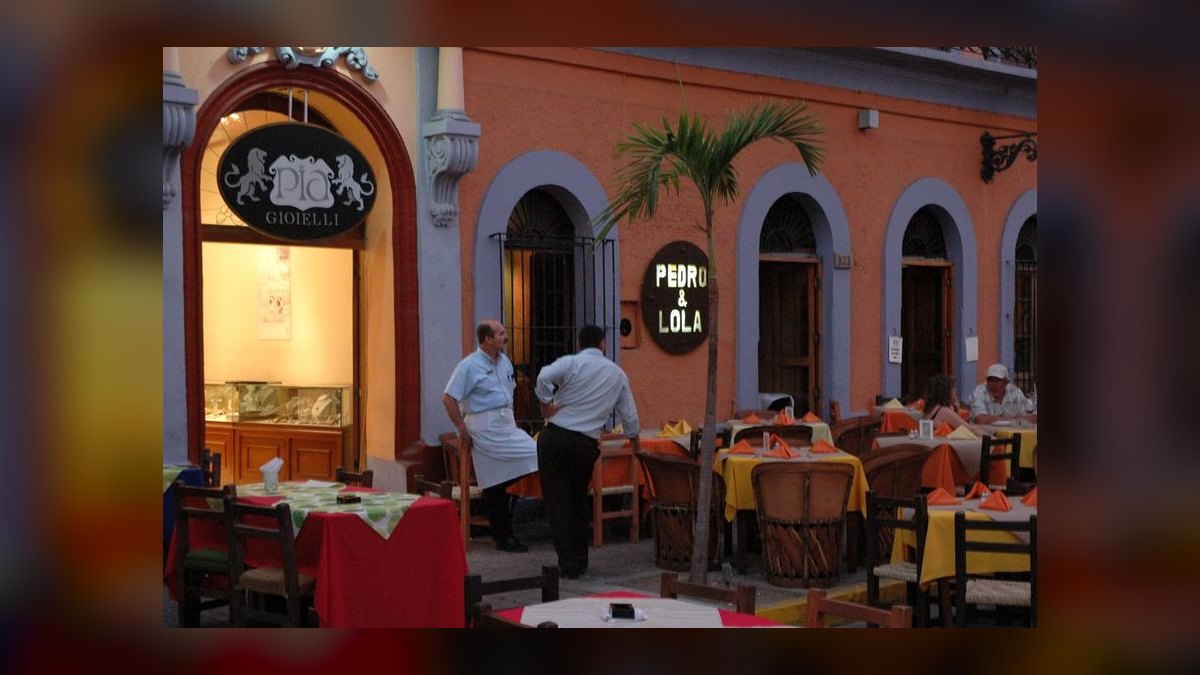
Picture the actual sequence, because it explains every decision that follows. You book a 7:30 table at a place with cloth napkins, a sommelier, and a website that says "smart casual" in eight-point type at the bottom of the contact page. You arrive at 7:22. There is a bar with high stools and no coat check. The dining room runs about 68°F but the patio door opens every time a party leaves. The lighting is warm and dim — maybe 2200K, the kind that flatters skin and destroys any fabric with a synthetic sheen. You will sit for roughly ninety minutes, stand up twice, and walk somewhere afterward, possibly six blocks in whatever shoes you chose at 6:40.
Every element of that scenario is a design constraint. The dim warm light means matte and textured fabrics photograph and read better than glossy ones. The ninety minutes seated means anything that binds at the waist when you sit will make you fidget, and fidgeting reads as nervousness even when it is just a waistband. The six-block walk means the shoes are not a costume, they are equipment. The temperature swing means a layer you can remove without disassembling the outfit.
This is why the "what to wear" question is really a logistics question wearing a fashion costume. People fail the date-outfit test not because they lack taste but because they optimize for the mirror at home instead of the room they will actually occupy. The mirror at 6:40 shows a static figure in overhead light. The restaurant shows a moving one in candlelight, from three feet away, across a small table, for an hour and a half.
Practically, the framing collapses to four questions you answer before you open the closet. What is the venue's actual formality — not its price, its formality? Those diverge constantly; a $180-per-head tasting menu in a converted warehouse can be more casual than a $60 neighborhood bistro with white tablecloths. What is the temperature path from your door to the table and back? What is the seating — banquette, bar stool, low lounge chair? And what happens after: straight home, or a second location?
A useful pre-date reconnaissance habit: look at the restaurant's own social feed rather than its website. Websites publish aspirational dress codes; the feed shows what people actually wore last Saturday. Two minutes of scrolling tells you more than any published policy. If you see blazers over t-shirts, that is your ceiling and your floor. If you see suit jackets and heels, adjust upward. If you see hoodies, you have misjudged the venue and can relax considerably.
The same reconnaissance logic shows up in adjacent scenarios worth flagging, because the restaurant date is not an isolated event. A client dinner, a rehearsal dinner, a first meeting with a partner's parents, and a small work celebration all sit in the same formality band and reward the same wardrobe. Building for the restaurant date builds for all of them, which is the practical argument for spending real money on two or three pieces instead of buying a single-use outfit.
How the outfit actually assembles
The mechanism is layering by anchor. You are not picking five items independently. You are picking one anchor piece that establishes formality, then selecting everything else to sit within one step of it. This is why outfits fail — someone pairs a formal anchor with casual support, or worse, picks two competing anchors and ends up looking costumed.
The anchor is the most structured item you will wear. For most people that is a jacket: a tailored blazer, an unstructured sport coat, a longline cardigan with real weight, or a structured dress that functions as its own anchor. The anchor sets the ceiling. Once it is chosen, every other slot fills downward from it.
Slot two is the torso layer under the anchor. It should be one step less formal than the anchor and one step more formal than a t-shirt. A silk or silk-blend blouse, a fine-gauge merino crewneck, an oxford button-down, a knit polo, a good shell top. The rule that holds: if the anchor is soft and unstructured, the torso layer can be crisp; if the anchor is crisp and structured, the torso layer should be soft. Contrast is what stops an outfit from reading as a uniform.
Slot three is the bottom. Trousers, a midi skirt, or dark denim in a slim-straight cut. Denim is the contested one. It works in 2027 at most "nice but not ceremonial" restaurants provided it is dark, unripped, unfaded, and paired with a genuinely elevated top half. It fails the moment it is the third casual element in a row.
Slot four is footwear, which is the single highest-leverage item and the one most people underweight. Shoes are what a date actually notices, partly because they are the item most correlated with effort and partly because bad shoes visibly change how you walk. Loafers, Chelsea boots, block-heel mules, pointed flats, low kitten heels. The constraint is the six-block walk.
Slot five is one accessory. A watch, a belt matched to the shoes, a small crossbody, one piece of jewelry. One. The failure mode here is additive: each individual accessory seems fine, and the aggregate reads as trying hard.
The sit-and-move test at the end of that flow is not optional and takes ninety seconds. Put the whole outfit on. Sit in a dining chair, not a couch. Cross your legs. Reach forward as if for a glass. Stand up. If anything pulls, rides, gaps, or requires adjustment, the outfit fails, regardless of how it looks standing still. Most outfit regret is discovered at the table, which is exactly the wrong place to discover it.
One more mechanism worth naming: the removal path. Whatever you wear, you should be able to take off exactly one item and still have a complete outfit underneath. If removing the blazer leaves you in a thin camisole you would not have worn alone, you have a single point of failure. Restaurants get warm. Build the layer so it is a choice, not a dependency.
What the numbers actually look like
Budgets in this category are wildly misreported, so it helps to work from ranges people actually spend rather than aspirational editorial pricing.
A complete, credible restaurant-date outfit assembled new, entirely from mass-market retail, lands roughly in the $200–$400 band. That covers a blazer in the $70–$150 range, a good torso layer at $30–$80, trousers or a skirt at $50–$100, and shoes at $80–$150. This tier is entirely viable. The visible difference between a $90 blazer and a $600 blazer at candlelight distance across a two-top is smaller than almost anyone selling you the $600 blazer wants to admit.
Step up and the $400–$800 band buys you materials rather than appearance: real wool instead of wool-blend, full-grain leather instead of corrected-grain, lining that does not pill, and construction that survives thirty wearings without losing shape. The practical case for this tier is cost-per-wear, not looks. A $400 blazer worn sixty times over four years costs $6.67 a wear. A $120 blazer worn twelve times before the shoulders collapse costs $10.
Above $800 for a single outfit you are buying provenance, fit precision, and fabric hand-feel. It is a legitimate purchase and a terrible first purchase. Nobody should buy their expensive blazer before they know, from experience, which cut they actually reach for.
Some concrete numbers that matter more than the totals:
Tailoring. A sleeve shortening runs roughly $20–$40. Taking in a jacket's waist, $40–$75. Hemming trousers, $15–$30. Taking in a shirt's sides, $20–$35. This is the single highest-return spend in the entire category. A $100 blazer with $60 of tailoring outperforms a $400 blazer off the rack, every time, without exception. If you have a budget of $300 and are agonizing over which blazer to buy, buy the $150 one and put $75 into the tailor.
Heel height and walking distance. A useful rule of thumb from people who do this often: a 2-inch block heel is comfortable for roughly a mile of walking; a 3-inch block heel for about half that; a 3-inch stiletto for a few hundred yards. Set your heel height off the actual distance from parking or transit to the door, plus whatever happens after dinner.
Fabric weight for temperature. Blazers are sold by fabric weight in grams per square meter. Roughly: 200–250 gsm is a warm-weather or heavily air-conditioned-room jacket. 250–320 gsm is the year-round middle. 320 gsm and up is genuinely cold-weather. A common mistake is buying one heavy blazer and wearing it in July, then concluding that blazers are uncomfortable.
Wardrobe math. Three tops, two bottoms, one jacket, and two pairs of shoes generate twelve distinct outfit combinations if the colors are coordinated. That is a full year of restaurant dates without repetition anyone would notice. The failure mode is buying eleven items in eleven color families that combine into four workable outfits.
Lead time. Alterations typically take three to seven business days at a normal shop, longer around holidays and wedding season. If the date is Friday and it is Wednesday, you are wearing what you own. Build the wardrobe before you need it — this is the whole argument for treating date attire as an asset rather than an event purchase, and it is the same argument any operator makes about capacity: you cannot buy it the day the revenue arrives.
Trade-offs worth making deliberately
Nearly every decision here is a real trade-off, not a right answer, and knowing which axis you are trading on prevents most regret.
Comfort versus formality. The honest tension. A structured wool blazer looks better and feels worse than an unstructured knit one. In 2027 the unstructured option has improved enough that the gap is small, and for a two-hour dinner where you want to be relaxed and present, the softer option is usually correct. Save the structured jacket for the contexts where formality is doing real work.
Statement versus safe. A safe outfit — navy, charcoal, clean lines — never fails and never registers. A statement outfit registers and occasionally fails. The reasonable middle is a safe base with exactly one deliberate risk: an unexpected color, an unusual texture, one distinctive accessory. That way the risk is contained and reversible.
Buying new versus wearing what you own. The default assumption is that a date requires new clothes. It usually does not. An outfit you have worn before is an outfit you know sits correctly when you sit down, and that confidence is worth more than novelty. New clothes on a first date is a genuinely risky combination — you are discovering the shirt's behavior at the same time you are trying to hold a conversation.
Matching your date versus dressing for yourself. If you know what they are wearing, matching the formality level is a real kindness; being visibly overdressed or underdressed relative to the person across from you creates a small persistent asymmetry all night. A one-line text — "how dressed up are we doing tonight?" — is not unromantic. It is competent.
Owning versus renting. For a genuinely once-a-year formality level, rental services make arithmetic sense. For the restaurant-date band, they usually do not: the frequency is high enough and the formality low enough that ownership wins on both cost and fit.
Two adjacent trade-offs worth noting, since the wardrobe carries over. If the same jacket has to work for a client dinner, bias toward structure and neutral color — business contexts penalize a statement more than dates do. If it has to work for a rehearsal dinner or a family event, bias toward comfort and forgiving fit, because you will wear it for four hours instead of two, and there will be photographs.
Where this goes wrong
The failure modes are consistent and mostly avoidable.
Overdressing past the room. A full suit at a smart-casual bistro is worse than jeans, because jeans read as relaxed and a suit reads as misjudged. The correction is simple: aim one notch above the room's average, never three. If the reconnaissance says blazers, wear a blazer; do not add a tie to be safe. A tie is not safe, it is an escalation.
Shoes chosen for the photo, not the walk. The most common single regret. If you have to think about your feet at any point during the evening, the shoes were wrong. This includes new shoes: a first wearing on date night means you discover the blister at the same time you are trying to be charming. Break shoes in for at least two short wears first.
The fabric that betrays you under warm light. Cheap synthetic satin, poly-blend shirting with a sheen, and anything glossy read very differently at 2200K than under the store's white LEDs. Test any questionable garment under a single warm lamp at home before committing.
Neglecting the sit test. Covered above, but it is the pitfall people skip. A jacket that fits standing can pull badly across the back when you reach for the table. A skirt that hits well standing can ride four inches when seated. Sit down at home.
The accessory pile. Watch plus bracelet plus necklace plus rings plus pocket square. Each fine, the sum loud. Remove one thing before leaving; the classic advice survives because it works.
Wrinkles. Genuinely the most-noticed and least-addressed failure. A perfectly chosen outfit that has been folded in a drawer for three weeks looks worse than a mediocre outfit that has been steamed. A handheld steamer costs less than a single entrée at the restaurant in question and fixes this permanently. Steam the night before, hang it, do not touch it.
Fragrance volume. Restaurants are enclosed, seated, and food-forward. Heavy fragrance competes with the meal and traps your date in it for ninety minutes with no escape. Two applications to pulse points, applied twenty minutes before leaving so the top notes have burned off. If someone can smell you before you arrive at the table, it is too much.
Ignoring the after. If dinner leads to a walk, a bar, or a cab, your outfit needs to survive the transition. A coat that works over the jacket. Shoes that handle a sidewalk. A bag that holds a phone and a card without being a project.
Solving the wrong problem. Occasionally people spend a week on the outfit as displacement activity for nerves about the date itself. The clothes are a ninety-minute decision, not a week-long one. Pick the anchor, fill the four slots, run the sit test, steam it, and spend the remaining energy on being someone worth having dinner with.
Related questions
Does the same outfit work for a client dinner?
Mostly yes, with one adjustment: swap the statement item for a neutral. Business contexts penalize distinctiveness more than dates reward it. Keep the blazer, trousers, and shoes; drop the unusual color. The same three-piece core covers both, which is why it earns its cost.
How much should the outfit change by season?
Silhouette barely changes; fabric weight does. Summer wants 200–250 gsm jackets, linen blends, and open-weave knits. Winter wants 300+ gsm wool, cashmere blends, and a real coat that fits over the jacket without crushing the shoulders. Same shapes, different weights.
What if the restaurant has no stated dress code?
Look at the venue's own social feed rather than its website — it shows what guests actually wore, not what management aspires to. Absent that, default to smart casual with a jacket you can remove. That position is correct at roughly ninety percent of nice restaurants.
Is dark denim really acceptable at a nice restaurant?
At most non-ceremonial nice restaurants, yes — provided it is dark, unfaded, unripped, slim-straight, and paired with a genuinely elevated top and real shoes. It fails when it becomes the third casual element. One casual anchor is a choice; three is an accident.
How do I handle a very cold-weather date?
Buy the coat that fits over the jacket, not the coat that fits you in a t-shirt. Most people size outerwear wrong and end up with crushed shoulders. Then plan the removal path: coat off at the host stand, jacket stays on, one layer in reserve.
FAQ
What if I don't own a blazer?
You can build the outfit without one. A heavyweight longline cardigan, a fine merino crewneck over a collared shirt, or a well-cut dark jacket in good condition all function as the anchor. The anchor's job is to establish structure and formality, and several garments can do that. What does not work is skipping the anchor entirely — an outfit with no structured element reads as casual regardless of how expensive the individual pieces were.
Are sneakers ever acceptable for a nice restaurant date?
At the more relaxed end of "nice," yes, with strict conditions: minimalist leather, plain white or off-white, no visible branding, no mesh panels, no chunky sole, and genuinely clean. They work paired with trousers or a midi, not with formalwear. At a white-tablecloth restaurant with a stated dress code, they do not work, and the fact that they are expensive sneakers does not change that.
How do I read "smart casual" in practice?
It means a collared or elevated top, a structured layer, non-athletic bottoms, and real shoes. No tie required, no suit required. A silk blouse with dark trousers and low heels satisfies it. Chinos with an oxford and loafers satisfy it. Athletic wear, logo tees, ripped denim, and flip-flops do not. When a venue writes "smart casual," it is usually setting a floor rather than a ceiling — you can go slightly above it safely.
What colors work best under restaurant lighting?
Deep, saturated neutrals — navy, charcoal, forest, burgundy, olive — hold their character under warm dim light. Very pale pastels can wash out, and neon reads as jarring in a dim room. All-black is fine but can flatten under low light, so break it with texture: a matte wool jacket over a subtly ribbed knit reads far better than head-to-toe flat black.
How far ahead should I prepare the outfit?
Assemble it the night before, run the sit test, and steam it then. Anything requiring alterations needs three to seven business days, so that decision happens the week before, not the day of. Same-day outfit assembly is where the wrinkled shirt and the untested shoes come from.
Is it worth spending money on a tailor?
It is the highest-return spend in the entire category. A hem, a sleeve shortening, and a waist adjustment typically cost $50–$120 combined and make a mass-market garment look substantially more expensive. If you are choosing between a pricier off-the-rack jacket and a cheaper one plus tailoring, take the tailoring nearly every time.
Sources
- https://www.gq.com/style — men's style guidance including smart casual and restaurant dress codes
- https://www.vogue.com/fashion — coverage of evening and occasion dressing
- https://www.esquire.com/style/ — men's fashion and grooming guidance for evening occasions
- https://www.harpersbazaar.com/fashion/ — women's occasion and evening wear coverage
- https://www.nytimes.com/section/style — reporting on evolving dress codes and social etiquette
- https://www.whowhatwear.com — outfit formulas and occasion dressing
- https://www.thecut.com/fashion/ — commentary on contemporary dress norms
- https://www.michelin.com/en/restaurants — restaurant listings including dress code and atmosphere notes
- https://www.opentable.com — restaurant profiles frequently listing stated dress codes
Related on PULSE
- What to Wear to a Fine-Dining Restaurant in Spring in 2027
- What to Wear to a Sushi Restaurant in Winter in 2027
- What to Wear to a Fine-Dining Restaurant in Winter in 2027
- What to Wear to a Sushi Restaurant in Fall in 2027
- What to Wear to a Restaurant Management Role in 2027
- What to Wear to a First Date if You Have Broad Shoulders in 2027
This page will be disappearing soon. Save it to your device for $1 — or read it free while it is here.
@Kory-White- · if Venmo asks, the last 4 of my number are 2012
This page is gone.
This one is off the shelf now. $1 keeps it on your phone for good — the whole page, pictures and diagrams included.
 pulse-styleWhat to Wear to a Tech Startup Interview in 2027
 pulse-styleWhat to Wear to an Award Ceremony at Work in 2027
 pulse-styleHow to Style White Sneakers for a Job Interview in 2027
 pulse-styleTop 10 Affordable Work Dress Brands in 2027
 pulse-styleHow to Wear Maroon with Combat Boots in 2027
 pulse-styleWhat to Wear to a Graduation if You’re Plus-Size in 2027
 pulse-styleWhat to Wear to a Real Estate Job Interview in 2027
 pulse-styleHow to Wear Cream with Cargo Pants in 2027
 pulse-styleHow to Wear Cream with a Turtleneck in 2027
 pulse-styleHow to Style Loafers for a Holiday Party in 2027