

What to Wear to Christmas Dinner in 2027
 Curated byKory White · Fractional CRO · Maryland
Quality
Certified

For Christmas dinner in 2027, wear smart-casual in one rich color: dark trousers or dark-wash denim with a cashmere or merino sweater, or a velvet midi dress. Add leather shoes, one layer you can remove, and a single accessory. Skip tuxedos, ball gowns, ripped denim, and athletic sneakers.
The 6:40 PM doorway problem
Picture the actual moment the outfit gets judged. It is 6:40 PM on December 25th, you are standing in a doorway with a coat over one arm and a bottle of wine in the other hand, and eleven people look up at once. The room is 74 degrees because the oven has been running since noon. Someone's aunt is in a sequined top. Someone's brother is in a fleece vest. The host is in an apron over something you cannot see yet. You have roughly four seconds to read the room, and whatever you are wearing has already made its argument.
That doorway is the whole design brief. Almost everyone who overthinks Christmas dinner attire is optimizing for a photograph, when the real constraints are thermal, social, and physical. Thermal: you will move between a 30-degree car park and a kitchen hovering near 80, and you will sit in that kitchen heat for two hours. Social: you want to land within one notch of the room's median formality, not three. Physical: you will sit for 90 to 150 minutes, lean over a table, possibly carry a casserole dish, and quite possibly hold a toddler who has been eating chocolate.

Run the same test on adjacent occasions and you can see how much the doorway changes. A New Year's Eve dinner is colder, later, and photographed more, so the sequins that read as loud on the 25th read as correct on the 31st. A Thanksgiving table is the same thermal problem with a lower formality ceiling — nobody expects a blazer. A client dinner in a restaurant flips the priorities entirely: the room is climate-controlled, the median is set by the most senior person present, and the whole point is to signal that you took the meeting seriously. A work holiday party sits in between, which is why it generates more outfit anxiety than any of them: the formality target is genuinely ambiguous, and getting it wrong has professional consequences that Christmas dinner does not.
The practical answer to the doorway problem is to dress in two layers where the outer one is removable and the inner one is complete on its own. A merino crewneck under an unstructured blazer works because the sweater alone is a finished outfit. A silk blouse under a cardigan works for the same reason. A velvet blazer over a t-shirt does not work, because when the room hits 80 degrees and the blazer comes off, you are in a t-shirt at Christmas dinner. Build outward from something that already stands on its own, and heat stops being a risk.
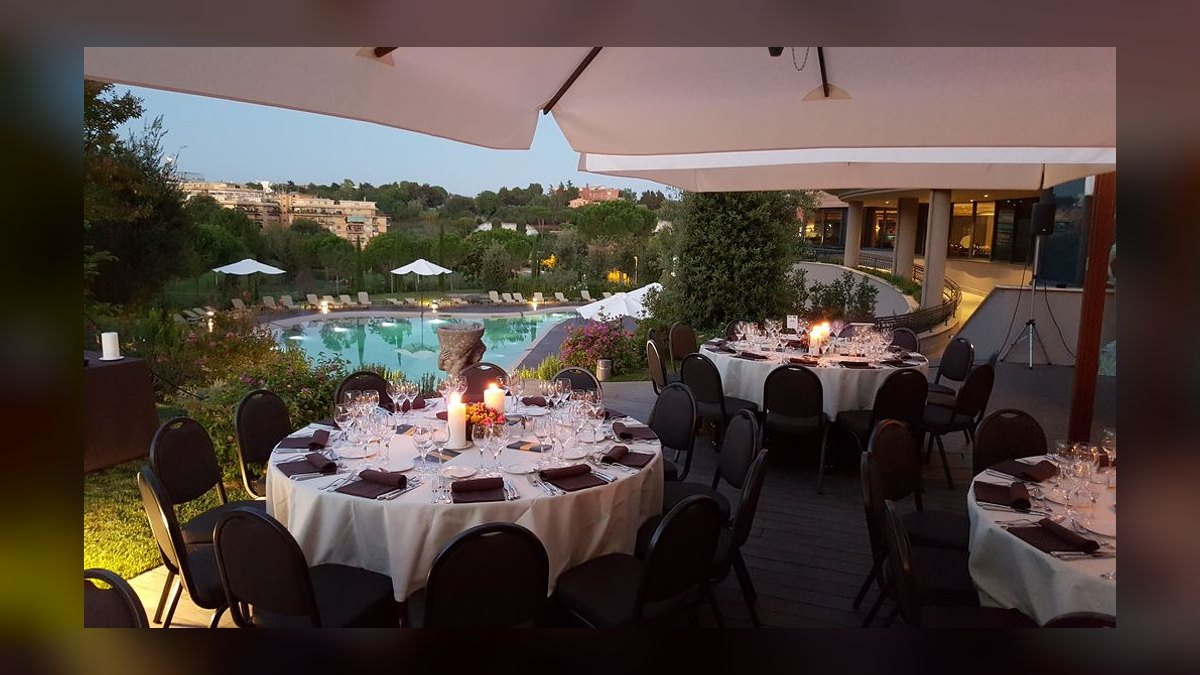
The second half of the doorway problem is the venue, which changes the answer more than age, gender, or budget do. A home dinner has no coat check, uneven heating, and a host who may hand you a dish towel. A restaurant booking has a coat check, consistent temperature, and a dress code you can look up. A rented hall or club splits the difference and usually runs cold. Ask one question before you dress — where, and what time — and most of the ambiguity resolves itself.
How the outfit decision actually resolves
The decision is not "what looks festive." It is a short chain of constraints, each of which eliminates options, and the order matters. Solve them out of order and you end up with a beautiful dress that leaves you shivering in a drafty dining room, or a wool three-piece in a kitchen running at 80 degrees.
Start with venue and time, because those two set the formality ceiling and the thermal floor. A 2 PM home lunch and a 7:30 PM restaurant booking are different problems, and no amount of good taste rescues an outfit built for the wrong one. Next, read the host signal: a printed card or a formal email means the ceiling is higher; a group chat that says "come whenever" means it is lower. If the host used a phrase — festive casual, cocktail attire, "just come as you are" — take it literally, because hosts almost never say those words by accident.
Only after those two constraints do you pick a silhouette, and only after the silhouette do you pick color. This ordering is the part most people invert. Choosing "emerald green" first and then hunting for an emerald garment that also survives a hot room and two hours of sitting is a much harder search than choosing "wool trousers and a fine-gauge knit" and then asking which of those you own in a good color. Silhouette is a hard constraint; color is a soft one with dozens of acceptable answers.

Layers come next, and they are a checkpoint rather than a step: does the outfit still work with the outer layer removed? If not, go back. Then footwear, which is chosen against the floor and the walk — gravel driveway, icy path, hardwood floors where the host asks you to take shoes off. Then, last, exactly one or two accessories.
The "one notch above the host" rule deserves its own note, because it is the single most reliable heuristic in the whole process and it scales to every adjacent occasion. If the host will be in a sweater and jeans, you in trousers and a knit look considerate. If the host will be in a suit, you in a blazer look correct. Going two notches above reads as a performance; going one notch below reads as indifference. The rule works at a work holiday party, a client dinner, a friend's apartment, and a formal restaurant booking, and it works precisely because it is relative rather than absolute — it needs no dress code at all, only an estimate of one person.
The color question resolves faster than people expect once silhouette is fixed. Deep saturated tones — burgundy, forest green, navy, emerald — carry the season without literalism, and they photograph well in the warm, low, mixed lighting that every Christmas dining room has. Neutrals — cream, charcoal, camel, black — work as the base with one saturated element on top. All-black is fine and always has been; it just needs one warm accent so it does not read as funeral rather than festive. What consistently does not work is a costume-adjacent literal reading of the holiday: a full head-to-toe red outfit, or a sweater with a three-dimensional reindeer, unless the host explicitly asked for it, in which case the ugly-sweater brief overrides everything above.
What the pieces actually cost, and what lasts
Concrete numbers help more than adjectives, so here are honest ranges for the categories that matter, with the caveat that prices move and these are ballparks rather than quotes.
A cashmere crewneck is the single highest-leverage garment for this occasion. Entry-level cashmere-blend knits from high-street retailers land in the rough $70 to $120 range; mid-tier pure cashmere in two-ply gauge runs about $150 to $300; luxury houses go well past that without a proportional jump in wearability. The meaningful spec is not the price, it is the ply and the gauge. A two-ply knit holds its shape and resists pilling far better than a single-ply featherweight, and a fine gauge sits better under a blazer than a chunky one. If you buy one sweater for this, buy two-ply in a mid-gauge, in navy, charcoal, forest, or burgundy.
An unstructured wool blazer sits in a similar band — roughly $200 to $400 for something that fits well and is unlined or half-lined. Unlined matters here specifically because of the hot-room problem: a fully canvassed, fully lined jacket is a beautiful object and a poor choice for a dining room at 80 degrees. Tailored wool or wool-blend trousers run roughly $100 to $250 in the same tier. Together those three pieces — knit, blazer, trousers — form a kit that covers Christmas dinner, a client dinner, a work conference dinner, a funeral, and most winter weddings you will be invited to. That reusability is the actual return, and it is worth spending on.
Dresses are wider in range because the category is wider. A velvet or crepe midi in the mid-market lands roughly $120 to $300; a silk slip dress that will survive repeated wear tends to start higher, because cheap silk-look fabrics wrinkle in the car and never recover. Wide-leg wool-blend trousers plus a silk or satin blouse is often the better buy at the same total spend, because the two halves separate into other outfits.
Footwear is where under-spending shows fastest. Leather loafers, derbies, or block-heel boots that will last multiple winters generally start around $150 and run to $350 in the durable mid-market. Resoleable construction costs more up front and changes the math over five years. Clean minimal leather sneakers are genuinely acceptable at a casual home dinner, especially for younger guests — running shoes are not, and the distinction is visible from across a room.
Then there is the option most people skip: not buying at all. Rental services for occasion wear typically run in the region of $30 to $80 for a short rental window, which is rational for a velvet dress you will wear once. Resale platforms and local consignment routinely list cashmere and wool at large discounts to retail, and winter knits are one of the categories where secondhand quality is highest, because good wool survives its first owner easily.
Care is the cheapest lever of all. A fabric shaver costs around $15 to $25 and will keep a knit looking new for years. Store knits folded rather than hung, because hanging stretches the shoulders permanently. Let wool rest a day between wears. Condition leather shoes twice a winter. These habits cost under $50 total and add years to a $300 sweater, which is a better return than almost any upgrade in purchase price.

One adjacent note, because it comes up every year: if you are the host rather than the guest, budget separately for an apron you are willing to be seen in. The host's outfit is a different problem — it has to survive a kitchen — and the standard solution is to dress at guest level and cover it, then remove the apron when the food lands.
Trade-offs: comfort against polish, and cost against reuse
Every Christmas dinner outfit is a negotiation between four things that pull against each other: comfort, polish, warmth, and cost. You cannot maximize all four, and the honest move is to decide which one you are willing to lose.
Comfort against polish is the classic tension, and it is mostly solved by fabric choice rather than by formality level. Stretch-wool trousers give you tailored lines with give at the waistband. A knit blazer looks like a blazer and moves like a cardigan. Block heels give height with stability on a gravel driveway. Elastic-waist wide-leg trousers in a crepe or wool blend read as deliberate rather than as loungewear. The people who look both comfortable and polished at dinner did not compromise on formality — they bought fabrics that behave.
Warmth against polish runs the other way, and it is where the removable-layer rule earns its keep. Sleeveless dresses plus a cashmere wrap beat long sleeves in a heavy fabric, because the wrap comes off when the room heats and goes back on when you step outside for the fireworks or the dog. A scarf is a warmth device with a polish bonus, which is why it appears on every winter list ever written.

Cost against reuse is the one worth thinking about hardest, because it determines whether you face this problem again next December. A velvet blazer in a strong jewel tone is exciting once and conspicuous the second time; a charcoal wool blazer is invisible in the best way and works at ten more events. A statement dress is memorable at exactly one dinner. Separates recombine. If your budget is fixed, spending it on recombinable neutrals and renting or thrifting the statement piece gets you more outfits per dollar than the reverse.
There is also a trade-off nobody names out loud: effort against attention. A very considered outfit invites comment, and comment at a family dinner can be affectionate or it can be pointed. If you have relatives who treat any deviation from the norm as material for the evening, dressing one notch above the host and stopping there is the strategically correct move. The outfit that gets no comments at all has usually done its job.
Finally, the adjacent trade-off for anyone whose December includes work obligations: the same wardrobe has to cover the office party, the client dinner, and the family table, and those three have different failure modes. The office party punishes underdressing; the family dinner punishes overdressing; the client dinner punishes anything that looks like you did not think about it. A charcoal blazer, dark trousers, a fine knit, and one good pair of leather shoes clears all three, which is why that specific kit keeps appearing in every guide. It is not a lack of imagination — it is the intersection of the constraint sets.

Pitfalls, and the fixes that actually work
The failure modes repeat every year, and each has a specific, unglamorous fix.
Overdressing is the most common and the most awkward. A tuxedo or a floor-length gown at a family dinner does not read as respectful; it reads as a misunderstanding, and it makes the host feel underdressed in their own home. The fix is the one-notch rule and a text to the host if you genuinely cannot estimate. Phrase the question as enthusiasm rather than anxiety — asking whether to lean sweater-and-trousers or blazer gets you a straight answer without making the host feel they should have specified.
Underdressing is less common but harder to recover from, because you cannot add formality mid-evening. Ripped or heavily distressed denim, athletic sneakers, and hoodies are the three items that reliably land below the floor at almost any Christmas dinner, regardless of age. Dark-wash intact denim is fine nearly everywhere; the rips are what fail, not the jeans.

Dressing for the photo instead of the chair is the pitfall that ruins the actual evening. A garment that looks superb standing and cuts into you sitting is a two-hour problem, and Christmas dinner is a sitting event. Before you commit, sit down in it, lean forward as if reaching for the gravy, and cross your legs. Anything that gaps, rides up, or digs in has failed the only test that matters.
Ignoring the floor and the walk is the footwear version of the same error. Stiletto heels on a gravel driveway, suede in slush, and brand-new leather soles on wet stone all end badly. Check whether the host asks guests to remove shoes indoors — if they do, your socks or hosiery are now part of the outfit, and the fix is simply to wear intact ones in a color that coordinates.
Skipping the layer plan means you are at the mercy of a thermostat you do not control. Bring the cardigan, the wrap, or the blazer even if you suspect you will not need it. Removing a layer is easy; conjuring one is not.
Over-accessorizing is the subtlest failure. The rule that holds up: if the garment has texture — velvet, cable knit, sequins, brocade — let the texture be the interest and skip the necklace. If the garment is plain, one accessory earns its place. Earrings long enough to reach the soup, bracelets that clatter on the table during dinner, and strong fragrance that competes with the food are three specific, avoidable irritations for everyone sitting near you.

Forgetting the practical realities of the meal costs more outfits than anything else. Pale silk and gravy are natural enemies. If you are helping in the kitchen, roll your sleeves or bring an apron. Carry a stain pen if you are wearing something you care about. For children, dress smart-casual with movement built in — a cotton button-down with chinos, or a velvet dress with room to run — and bring a full change of clothes, because the odds are not in your favor.
The last pitfall is planning too late. Dry cleaning turns around slowly in late December, rental inventory in festive colors thins out through the month, and alterations get backed up. Decide the outfit by the second week of December and try it on once, fully assembled, shoes included. That single rehearsal catches the missing button, the shoe that needs a heel tip, and the trousers that no longer fit — all of which are trivial in early December and unsolvable on the 24th.
For anyone thinking about this at a business level rather than a personal one, the same seasonal crunch is why occasion-wear retailers and rental services concentrate so much of their annual revenue into a six-week window, and why they push early booking so aggressively. Booking early is genuinely better for you and for them.
Related questions
What if the host does not give a dress code?
Default to smart-casual one notch above what you expect the host to wear: dark trousers or dark-wash denim, a fine knit or a collared shirt, and leather shoes. Bring a blazer or cardigan in the car so you can add formality after you read the room.
Can I wear the same outfit to the office party and Christmas dinner?
Yes, with one swap. Keep the trousers and shoes, change the top layer. A blazer plus knit reads correct at the office party; the knit alone reads correct at the family table. That one substitution moves you a full notch without a second outfit.
How do I dress if I am hosting rather than attending?
Dress at guest level, then cover it with an apron you would not mind being photographed in. Choose fabrics that tolerate a kitchen — wool blends and cotton over silk — and shoes with grip. Change nothing when guests arrive except removing the apron.
Does the advice change for a Christmas lunch instead of dinner?
Slightly. Daytime lowers the formality ceiling by about one notch and daylight is less forgiving of heavy shine, so satin and sequins read better after dark. Lighter fabrics, fewer layers, and the same footwear rules apply.
What should children wear to Christmas dinner?
Smart-casual with movement built in: cotton button-downs with chinos, or a velvet or knit dress with room to play. Clean shoes rather than trainers if the setting is formal. Bring a complete change of clothes — spills are close to guaranteed.
FAQ
Can I wear jeans to Christmas dinner in 2027?
Yes, in most settings. Choose a dark wash with no rips or distressing, in a straight or slim cut that is not skin-tight, and pair them upward — a fine knit, a silk blouse, a collared shirt, or a blazer. The jeans are not the problem; a casual top plus casual jeans is. At a formal restaurant booking or a household with a stated dress code, switch to wool or wool-blend trousers instead.
What colors work best for Christmas dinner?
Deep saturated jewel tones carry the season without looking costumed: burgundy, forest green, navy, and emerald all photograph well under the warm, low lighting of a December dining room. Neutrals — cream, charcoal, camel, black — make a reliable base. All-black is completely acceptable; add one warm accent such as a red scarf, gold jewelry, or a burgundy shoe so it reads festive rather than severe.
Are sneakers acceptable?
Clean, minimal leather sneakers in white or a neutral tone work at a casual home dinner, particularly for younger guests, and they pair well with dark denim or chinos. Running shoes, trail shoes, and anything with visible technical branding do not — the difference is obvious across a room. At a restaurant or any dinner with a stated code, switch to loafers, derbies, or boots.
Do I have to wear heels?
No. Block-heel boots, low-heel pumps, loafers, and polished flats are all correct, and a stable heel is a better choice than a stiletto for a gravel driveway or an icy path. Christmas dinner involves sitting for a long stretch and often standing in a kitchen; comfort is not a compromise here, it is a design requirement.
Is a blazer necessary?
Not mandatory, but it is the most efficient formality dial you have. A well-fitting unstructured blazer over a knit or shirt moves an outfit up one notch instantly and comes off when the room heats up. Bring it, wear it into the room, and take it off if you have read the room too high. A sweater alone is sufficient at most family dinners.
How far in advance should I plan the outfit?
Decide by the second week of December and do one full try-on with shoes. Dry cleaning slows down late in the month, rental inventory in festive colors runs thin, and alterations get backed up. A rehearsal catches missing buttons, worn heel tips, and fit changes while they are still easy to fix.
Sources
- https://www.vogue.com/fashion — seasonal collections and holiday dressing coverage
- https://www.harpersbazaar.com/fashion/ — festive attire guides and trend reporting
- https://www.nytimes.com/section/style — cultural and fashion coverage of holiday events
- https://www.gq.com/style — menswear guidance on tailoring, knitwear, and footwear
- https://www.nordstrom.com/browse/holiday-shop — retailer holiday collections and price benchmarks
- https://www.goodhousekeeping.com/beauty/fashion/ — practical dressing and garment-care advice
- https://www.renttherunway.com/ — occasion-wear rental pricing and inventory
- https://www.therealreal.com/ — resale pricing benchmarks for cashmere and wool
- https://www.uniqlo.com/us/en/men/outerwear — entry-tier knitwear and trouser price reference
- https://www.britishfashioncouncil.co.uk/ — industry commentary on seasonal trends
Related on PULSE
This page will be disappearing soon. Save it to your device for $1 — or read it free while it is here.
@Kory-White- · if Venmo asks, the last 4 of my number are 2012
This page is gone.
This one is off the shelf now. $1 keeps it on your phone for good — the whole page, pictures and diagrams included.
 pulse-styleHow to Wear Forest Green in Summer in 2027
 pulse-styleWhat to Wear to a Wedding if You Have Broad Shoulders in 2027
 pulse-styleHow to Wear Maroon with a Slip Dress in 2027
 pulse-styleWhat to Wear to a Concert in 2027
 pulse-styleHow to Style a Blazer in Fall in 2027
 pulse-styleWhat to Wear to a Factory Tour in 2027
 pulse-styleHow to Style Loafers for a Holiday Party in 2027
 pulse-styleHow to Wear Slate Blue with Linen Pants in 2027
 pulse-styleHow to Style a Pleated Skirt for a Gala in 2027
 pulse-styleWhat to Wear to a Karaoke Night in 2027