

What to Wear to a Baptism in 2027
 Curated byKory White · Fractional CRO · Maryland
Quality
Certified
For a 2027 baptism, dress one notch above smart casual: women in a knee-or-midi dress, skirt suit, or tailored trousers with a blouse; men in a collared shirt with chinos or wool trousers and a blazer. Choose cream, navy, blush, sage, or taupe. Skip denim, sneakers, and anything sheer or strapless.
The outcome you should expect
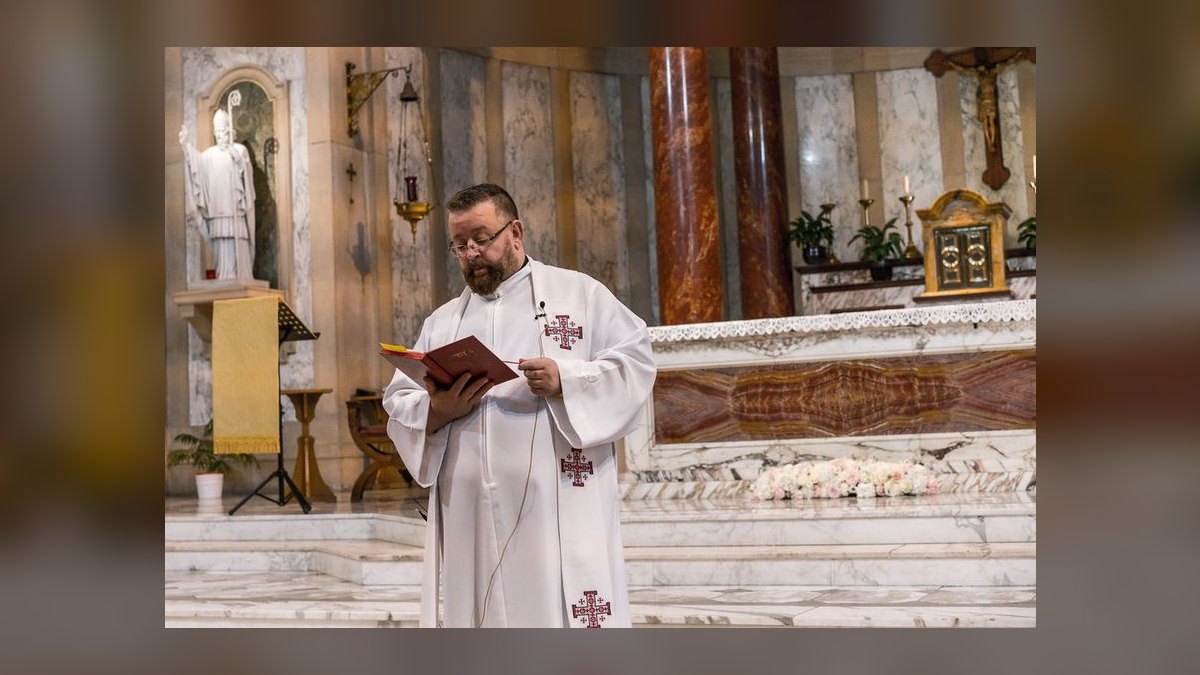
The realistic goal is not to be noticed — it is to be *un*-noticed in the right way. A baptism is a ceremony where the visual center is a baby in a white gown and, in most traditions, a clergy member in vestments. Every guest outfit is supporting cast. If you dress correctly, three things happen: you never think about your clothes during the service, you photograph well in the group shots that will outlive the day, and nobody at the reception can tell whether you spent $180 or $800.
That last point matters more than most guides admit. Baptism dress codes are almost never printed on the invitation, and when they are, they say something unhelpful like "Sunday best." The practical translation in 2027 is: business-casual floor, cocktail ceiling, with modesty applied on top of both. You will be over-dressed if you arrive in a floor-length gown or a three-piece suit with a pocket square at a Tuesday-evening chapel service. You will be under-dressed in dark denim and clean white sneakers at a Sunday morning Catholic Mass followed by a catered lunch. The middle band between those two failures is wide, forgiving, and where you should live.
Expect to be on your feet more than you plan for. A typical baptism runs 20 to 45 minutes for the rite itself, but if it is folded into a full Mass or a Sunday service, budget 60 to 90 minutes in the building, followed by 20 to 30 minutes of photographs in a courtyard, on church steps, or on grass. Then a reception of two to four hours. That is a four-to-six-hour day in the same clothes, often with temperature swings between a cold stone sanctuary and a sunny outdoor lunch. The outfit that "looks best" in a mirror at 8 a.m. is frequently not the outfit that survives hour five. Plan for the day, not the photo.
You should also expect to hold or be handed a child. Godparents will definitely hold the baby; aunts, uncles, grandparents, and family friends very likely will. This has real wardrobe consequences: dark, dry-clean-only silk shows every drop; long dangling earrings get grabbed; sharp brooches and stiff sequins scratch; anything strapless requires a hand you will not have free. Fabrics that release marks — cotton poplin, wool blends, machine-washable crepe, textured linen — are quietly the smartest choice in the room.
Finally, expect the reception to be more casual than the church. Many families hold the ceremony at 10 or 11 a.m. and move to a home, a backyard, or a restaurant private room. A layering piece that comes off — a blazer, a cropped cardigan, an open-front linen jacket — lets one outfit cover both halves of the day without a change of clothes. That single decision does more work than any other on this list.
What drives that outcome
Four inputs determine the right answer, and they compound rather than compete: the denomination and venue, the time of day, the season and weather, and your role in the ceremony. Get these four right and the specific garment almost picks itself.
Denomination and venue. A Catholic or Orthodox baptism inside a sanctuary carries the strictest modesty expectations: shoulders covered or a wrap available, hemlines at or below the knee, necklines at or above the collarbone, backs covered to at least mid-back. Orthodox services in particular often involve full immersion, a longer rite, and considerable standing — some parishes have limited pew seating by design. Many mainline Protestant churches — Methodist, Presbyterian, Lutheran, Episcopal — are noticeably more relaxed, and a sleeveless sheath with a light cardigan reads as entirely appropriate. Non-denominational and evangelical congregations, especially those meeting in converted spaces or auditoriums, are the most casual of all; chinos and an untucked linen button-down will not raise an eyebrow. A civil naming ceremony or a backyard dedication drops the bar further still. When you genuinely do not know, ask the parents what they're wearing. It is not a rude question, and their answer calibrates everything.
Time of day. Morning and midday ceremonies pull toward lighter colors, lighter fabrics, and less shine — cream, sage, blush, light blue, tan. Late-afternoon and evening services tolerate deeper tones and more texture: navy, charcoal, burgundy, forest. Metallics are a night thing. A satin camisole under a blazer works at 5 p.m. and looks slightly out of place at 10 a.m.
Season and weather. Stone churches hold cold. A sanctuary can sit ten degrees below the outside air in July and feel like a refrigerator in January regardless of the thermostat. Layers solve this and nothing else does. For summer ceremonies, linen and cotton-linen blends breathe but wrinkle — accept the wrinkles or choose a linen-viscose blend that creases less. For winter, wool-blend trousers and a fine-gauge merino layer beat a heavy coat you will have to store somewhere.
Your role. Godparents are in every photograph and often stand at the font for the entire rite. They should dress a half-step above the average guest, in the cleanest, most structured version of the outfit they were already considering. Grandparents typically dress formally by instinct and should be encouraged to. Ordinary guests should aim to be slightly *less* dressed than the immediate family, never more.
Benchmarks and realistic ranges
Concrete numbers make this easier to execute, so here are the ranges practitioners actually work within.
Hemlines. At or below the knee for any sanctuary service. Midi (mid-calf to just above the ankle) is the safest single length in 2027 and reads as intentional rather than conservative. Maxi is fine and often the most comfortable option for a long day. Anything landing more than two inches above the knee will require you to manage it every time you sit, stand, or kneel — and a baptism involves all three.
Heel height. One to two and a half inches, on a block heel or wedge. A stiletto above three inches is a bad bet on grass, gravel, worn stone, cobbles, or church steps — all common photo locations. Flats are perfectly acceptable if they are polished leather rather than fabric ballet slippers that have seen a commute.
Necklines. Collarbone or higher for Catholic and Orthodox services. A modest V, boatneck, crew, or square neck all work. If a favorite dress dips lower than you want, a camisole or a delicate scarf solves it in ten seconds.

Color. Cream, ivory, blush, dusty rose, sage, soft olive, taupe, light blue, navy, and charcoal are the safe center. Two edge cases deserve specifics. First, white: soft white and cream are generally fine for guests — the baby's gown is the visual anchor and nobody confuses an adult with an infant — but pure optic white head-to-toe on a godmother is worth avoiding out of simple courtesy. Break it up with a colored blazer, a belt, or accessories. Second, black: an all-black outfit can read funereal at a celebration of new life. Black trousers or a black skirt paired with ivory, blush, or sage is perfect; black on black on black is the one palette to reconsider.
Budget. A complete, respectable baptism outfit lands in three tiers. Roughly $150 to $300 gets a well-fitting dress or a trouser-and-blouse combination from mainstream retailers, plus shoes you already own. Roughly $350 to $600 buys better fabric — real wool, silk or silk-blend, leather shoes — and the drape that comes with it. Above $600 you are buying longevity and tailoring, not appropriateness; nobody at the ceremony can tell the difference from six feet away. Whatever the tier, spend disproportionately on fit. A $120 dress that has been hemmed and taken in at the waist for $40 outperforms a $500 dress straight off the rack every time.
Tailoring lead time. Two weeks minimum for a hem or a waist adjustment, three to four if you want a buffer during busy seasons. Baptisms cluster around Easter, Pentecost, and late spring, and tailors know it.
For men, the specific ranges. Trousers in wool blend, cotton twill, or chino cloth; charcoal, navy, khaki, or stone. Collared shirt always — oxford cloth, poplin, or linen, tucked for a formal service, optionally untucked only if the shirt is cut short enough to look deliberate. A blazer or unstructured sport coat is the single highest-leverage item; it converts a plain shirt-and-trousers into something that photographs as intentional. A tie is optional in most denominations and expected in few, but if you are the godfather, wear one — in a muted pattern, not a novelty print. Shoes: loafers, cap-toe oxfords, or derbies in brown or black leather, cleaned. Belt matched to shoe color. No athletic sneakers, no shorts, no logo caps inside the sanctuary.

Children. Kids get more latitude than adults, but the same logic holds: collared shirt and chinos or shorts-with-a-collar for boys in warm weather, a simple dress or skirt for girls, and shoes they can actually walk in. Sending a child in stiff new dress shoes to a four-hour event reliably ends in a barefoot toddler and a parent carrying two pairs of shoes.
Risks, edge cases, and failure modes
Most baptism outfit failures are not taste failures. They are planning failures, and they repeat.
The un-tested shoe. By far the most common. New shoes bought for the occasion, worn for six hours on stone floors and grass, end the day in a bag. Wear them around the house for two evenings first. If they hurt at hour two indoors, they will be unwearable at hour four out.
The layer you forgot. A sleeveless dress with no wrap in a cold sanctuary means you spend the ceremony visibly hunched. Bring the cardigan even if the forecast says 78 degrees. It weighs nothing and it is reversible; a cold ceremony is not.

The dry-clean-only fabric plus a baby. Silk and a burp cloth are not compatible. If you are a godparent, a grandparent, or anyone who will be handed the child, choose something that survives a spot-clean. This is not a hypothetical risk — it is close to a certainty.
Sheer without lining. Lace, mesh, and open-weave panels are fine when fully lined and a problem when not. Check the garment against a bright window before the day, not in a dim fitting room. Church lighting — especially near stained glass or a bank of windows behind the font — is unforgiving in exactly this way.
Strapless anything. You will be holding a plate, a program, a bag, and possibly a child. A garment that needs a free hand to stay in place is a garment that will fail. Straps, sleeves, or a securely fitted bodice only.
The immersion surprise. Orthodox and some Baptist and non-denominational baptisms involve full or partial immersion, and people standing near the font can get splashed. If you are a godparent at an Orthodox service, expect water and dress in something that does not turn transparent or spot permanently when wet.

Outdoor and destination ceremonies. Beach, lakeside, and garden baptisms invert several rules. Heels sink; flats or wedges win. Wind makes lightweight midi dresses a two-handed problem — a slightly heavier fabric or a lined skirt holds its shape. Full sun for 40 minutes means sunscreen, and it means a hat is genuinely useful rather than decorative, though a small brim beats a wide one so you are not blocking anyone's view or shadowing faces in photographs.
Cultural and regional variation. Latin American, Filipino, Italian, Greek, and Polish family baptisms are frequently more formal than the Anglo-American default, sometimes approaching wedding-guest attire with a large multi-generational gathering and a full catered reception. Some Orthodox and traditional Catholic parishes still expect women to cover their heads; a lightweight scarf in your bag costs nothing and removes the question. Southern US congregations skew more formal than West Coast ones. When you are attending across a cultural line you don't know well, ask.
Postpartum and pregnancy fit. Baptisms happen within weeks or months of a birth, so the mother — and often other guests — may be dressing a changing body. Smocked waists, wrap dresses, empire lines, and elastic-back trousers all read as polished while accommodating fit shifts. Nursing access is a real constraint: a button-front dress or a two-piece separates combination beats a back-zip sheath by a wide margin.
Weight the cost of being wrong asymmetrically. Being slightly over-dressed at a baptism costs you nothing — you look like you took it seriously. Being under-dressed is memorialized in the family photo album for forty years. When genuinely torn between two options, take the more formal one.

A practical rollout plan
Treat this like any small project with a fixed deadline and a hard quality bar. The sequence below runs comfortably in two weeks and can be compressed to three days if you skip tailoring.
Two weeks out — gather requirements. Confirm the denomination, the exact venue, the start time, and whether there is a reception and where. Text the parents one message: "What are you two wearing? Want to make sure I land in the right zone." That single question resolves more ambiguity than an hour of searching. Confirm your role — if you are a godparent, you are in the photos and at the font, and you should plan accordingly.
Ten days out — shop your closet first. Most people already own 80% of a correct baptism outfit and buy something unnecessary out of anxiety. Lay out candidates on the bed. Check each against four filters: hemline at or below the knee, neckline at or above the collarbone, back covered, fabric that survives a spot-clean. Anything that clears all four is a live candidate.
One week out — fill the single gap. Usually it is one item: a blazer, a pair of trousers that fit, a comfortable low heel, or a modest top. Buy one thing well rather than three things adequately. This is also the moment to book tailoring if a hem or waist needs work.

Three days out — full dress rehearsal. Put on the entire outfit, shoes included, and sit down, stand up, reach overhead, and walk for ten minutes. Check the mirror while seated — hemlines behave differently sitting than standing. Take a photo with a flash; it reveals sheerness and unflattering shine that ambient light hides.
One day out — press, prep, and pack. Steam or press everything. Assemble a small bag: a stain pen, safety pins, blister plasters, a lightweight scarf or wrap, and a phone charger. Charge the camera if you are bringing one.
Day of — layer, arrive early, and stop thinking about it. Wear the layering piece into the church, remove it at the reception. Arrive 15 minutes early; latecomers at a baptism are conspicuous in a way they are not at a wedding, because the congregation is small and the seating is close. Then forget the outfit entirely. That is the whole point of the preparation.
Adjacent occasions that follow the same logic
The reason it is worth building this outfit properly is that it is not a single-use purchase. The "modest, mid-formality, comfortable for six hours" brief covers a surprising amount of the calendar, and the return on a well-chosen blazer or midi dress compounds across the year.
A confirmation, a first communion, a bar or bat mitzvah, a naming ceremony, a memorial service, a graduation, a small civil wedding, a christening for a second child, and a daytime engagement party all sit inside roughly the same band. Swap the accessories and the layering piece and one core outfit covers most of them. The specific adjustments: memorials shift the palette toward charcoal and navy and away from blush; bar and bat mitzvahs typically run a half-step more formal and involve a longer service; graduations move outdoors and demand real sun protection and shoes that handle bleachers or lawn.
The same reasoning extends into professional settings, which is why this is a genuinely portable skill rather than a one-time lookup. A client-facing offsite, a board meeting, a conference where you are presenting, and a company holiday lunch all present the identical problem: dress to the room's expectation, remove any friction that would distract you from the actual purpose, and let the work be the thing people remember. Sales and revenue teams live this constantly — a rep walking into a first meeting with an enterprise buyer is solving the same equation as a godparent walking into a sanctuary, which is *don't let the clothes become the subject*. The mechanics are identical: research the room, dress one notch above its floor, choose fabric that survives the day, and pick shoes you can stand in.
The wardrobe math also favors this approach. If a single navy blazer, one pair of well-hemmed wool trousers, one midi dress in a neutral, and one pair of comfortable low-heel or leather flats can carry you through six to ten events a year, the effective cost per wear on a $250 blazer drops under $10 in the first twelve months and keeps falling. That is a far better outcome than buying a new outfit for each occasion, and it is why the "invest in fit, not in labels" advice is more than a platitude. Fit is what makes one garment work across many contexts; a trend is what limits it to one.
One last adjacent note worth flagging: what to *give*, since it travels with what to Wear. Traditional baptism gifts skew toward the keepsake — a cross or pendant, an engraved frame, a children's Bible or storybook, or a contribution to an education fund. Godparents typically give something more substantial than guests. If you are unsure, a savings-bond-style contribution or a book inscribed with the date is never wrong and never wasteful, which is more than can be said for most gift categories.
Related questions
Can I wear white to a baptism?
Soft white, ivory, and cream are fine for guests — the baby's gown is the visual anchor and no one confuses the two. Avoid a head-to-toe optic-white outfit if you are the godmother; break it up with a colored blazer, belt, or accessories as a simple courtesy.
Is all black inappropriate for a baptism?
Not inappropriate, but it can read funereal at a celebration of new life. Black trousers or a black skirt with an ivory, blush, or sage top is ideal. The palette to reconsider is black layered on black on black with no lighter element anywhere.
Do men have to wear a tie?
Rarely required. A collared shirt is the actual non-negotiable; a blazer is the highest-leverage upgrade. Wear a tie if you are the godfather, if the service is Catholic or Orthodox and formal, or if the family is dressing up. Choose a muted pattern.
What should I wear to an outdoor or beach baptism?
Flats or wedges instead of heels — thin heels sink in sand and grass. Choose a slightly heavier or lined fabric so wind does not make a lightweight skirt a two-handed problem. Add sunscreen and a small-brim hat that will not shadow faces in photographs.
How formal should godparents dress compared to guests?
A half-step above the average guest. Godparents stand at the font, appear in nearly every photograph, and often hold the child. Structured, clean, and spot-cleanable beats delicate and expensive. Guests should never outdress the immediate family.
FAQ
Can I wear jeans to a baptism in 2027?
Generally no. Even dark-rinse or black denim reads as too casual for a sanctuary service, and denim is the specific line most congregations draw between smart casual and too casual. The exception is a stated casual dress code or an informal outdoor ceremony, and even then chinos or tailored trousers are a safer, equally comfortable substitute.
Can women wear pants to a baptism?
Yes, without hesitation. Tailored trousers, wide-leg crepe pants, or a well-cut pantsuit all read as polished and are frequently more comfortable than a dress for a long day. The requirement is that they be dressy rather than casual — pair them with a silk or cotton blouse, a structured belt, and loafers or a low block heel.
What colors work best for a 2027 baptism?
Cream, blush, sage, taupe, light blue, navy, and charcoal are the reliable center. Muted and soft beats saturated and bright. Avoid neon, all-over sequins, and large brand logos. A subtle metallic thread or a small tasteful print is fine; head-to-toe sparkle belongs at an evening event, not a morning service.
What shoes should I wear if the ceremony is partly outdoors?
Block heels, wedges, or polished leather flats. Anything with a thin heel will sink into grass or catch on gravel and worn stone, and photographs almost always happen outside the building. Test whatever you choose for two evenings at home before the day; six hours standing is longer than it sounds.
How do I dress for a baptism if I am postpartum or pregnant?
Prioritize adjustable and accessible cuts: smocked or elastic waists, wrap dresses, empire lines, and separates. A button-front dress or a top-and-skirt combination handles nursing far better than a back-zip sheath. Comfortable low shoes matter more here than anywhere else, since you may be standing, holding, and managing a child simultaneously.
Should I bring a jacket or wrap even in summer?
Yes. Stone sanctuaries stay noticeably cooler than the outside air year-round, and many churches run air conditioning aggressively in summer. A lightweight cardigan, unstructured blazer, or pashmina weighs almost nothing, solves the temperature problem entirely, and doubles as the layer you remove when the reception moves outdoors.
Sources
- https://www.vogue.com — seasonal style direction and formal-occasion dressing
- https://www.harpersbazaar.com — guest-attire guides and dress-code explainers
- https://www.gq.com — men's tailoring, blazers, and semi-formal guidance
- https://www.theknot.com — guest dress codes and formality tiers for ceremonies
- https://www.realsimple.com — practical family-event and church-occasion dressing
- https://www.usccb.org — United States Conference of Catholic Bishops, on the sacrament of baptism
- https://www.goarch.org — Greek Orthodox Archdiocese of America, on baptism practice and immersion
- https://www.churchofengland.org — christenings, service structure, and what to expect
- https://www.britannica.com/topic/baptism — history and denominational variation of the rite
Related on PULSE
- What to Wear to a Cocktail Party if You Have an Athletic Build in 2027
- What to Wear to a Phone-Screen Follow-Up Real Estate Job Interview in 2027
- What to Wear to an Executive Engineering Job Interview in 2027
- What to Wear to a Wedding as a Guest in 2027
- What to Wear to a Funeral or Memorial Service in 2027
This page will be disappearing soon. Save it to your device for $1 — or read it free while it is here.
@Kory-White- · if Venmo asks, the last 4 of my number are 2012
This page is gone.
This one is off the shelf now. $1 keeps it on your phone for good — the whole page, pictures and diagrams included.
 pulse-styleWhat to Wear to a Summer Garden Wedding in 2027
 pulse-styleHow to Style a Blazer in Fall in 2027
 pulse-styleWhat to Wear to an Outdoor Concert Date in 2027
 pulse-styleHow to Style a Midi Skirt for a First Date in 2027
 pulse-styleHow to Wear Forest Green in Spring in 2027
 pulse-styleHow to Style Wide-Leg Pants in Spring in 2027
 pulse-styleWhat to Wear to Yoga Class in 2027
 pulse-styleWhat to Wear to a Video Startup Job Interview in 2027
 pulse-styleHow to Style a Wrap Dress for a Graduation in 2027
 pulse-styleHow to Wear Sage Green in Winter in 2027