

What to Wear to an Indian Wedding in 2027
 Curated byKory White · Fractional CRO · Maryland
Quality
Certified

Wear a jewel-toned, tailored Indian outfit — men in a bandhgala, sherwani, or Nehru jacket over a kurta and churidar; women in a silk lehenga, anarkali, or draped saree with a dupatta. Choose breathable fabrics, closed-toe juttis or block heels, and avoid pure white, all-black, and bridal red.
What the dress code actually means and why guests get it wrong
An Indian wedding is not one event with one dress code. It is a sequence — typically two to five distinct functions spread across a weekend, each with its own time of day, venue type, formality level, and unwritten color logic. A guest who packs a single "nice Indian outfit" and expects it to carry them from a 9 a.m. haldi to a midnight reception has misunderstood the assignment. The haldi involves turmeric paste being smeared on the couple and, frequently, on anyone standing within arm's reach; the mehendi is a long, seated, floor-cushion affair; the sangeet is a dance night; the ceremony itself may run three hours in an open-air mandap; the reception is the black-tie-equivalent slot. Each of those calls for a different fabric weight, a different sleeve length, and in practice a different pair of shoes.
The second misunderstanding is about who the outfit is for. Western formalwear operates on a logic of not standing out — you wear something that disappears into the room so the couple is the only visual event. Indian wedding dress operates on the opposite logic: guests are expected to contribute to the color field. Showing up in a discreet charcoal suit at a sangeet reads as though you didn't want to participate. The restraint is not in the color, which should be saturated and confident; it is in the ornamentation. You can wear emerald green and no one will blink. You cannot wear more zari, more crystal, and more gold than the bride, because that reads as competing.
Third, there is regional and religious variation that a generic guide flattens. A Punjabi Sikh wedding at a gurdwara requires a covered head for everyone regardless of gender — a scarf, dupatta, or provided bandana — and bare feet inside the prayer hall, which quietly changes your footwear calculus toward slip-ons you can remove in four seconds. A South Indian Hindu wedding may run at dawn, favor silk over sheer, and expect a saree or a lehenga over anything sleeveless. A Muslim nikah leans conservative on coverage: full sleeves, high neck, longer hems, and a dupatta actively used rather than draped decoratively. A Gujarati garba night is a workout — you will be doing choreographed circular dance for two hours and a floor-length heavily beaded lehenga will punish you for it. When the invitation gives no guidance, the single highest-leverage thing you can do is ask the person who invited you what the community expects. That one text saves more outfit mistakes than any trend forecast.

Why this matters beyond etiquette: Indian weddings are among the largest discretionary spending events in the world, and the guest-attire economy around them is substantial. Rental platforms, tailors, boutique designers, and jewelry rental services all draw meaningful revenue from guests rather than the wedding party — which is why the market has flooded with rental and made-to-measure options that did not exist a decade ago. That is good news for a guest: you no longer need to buy a $900 lehenga you will wear once. But it also means you are being marketed to aggressively, and a lot of what gets sold as "wedding guest wear" is polyester with a silk-adjacent name. Knowing what you actually need protects both your comfort and your wallet.
How to build the outfit, step by step
Work backward from the schedule, not forward from the store. The sequence below is the one that consistently produces a coherent set of looks without over-buying.
Step one: get the itinerary and the venue types. Ask for the list of functions with start times and whether each is indoor, outdoor, or a religious building. Outdoor plus midday equals cotton, linen, or a light silk blend and a shorter or lighter dupatta. Indoor plus evening equals heavier silk, velvet accents, and full drape. Religious building equals covered head, covered shoulders, easily removable shoes.
Step two: pick one hero color for the biggest event. This is usually the ceremony or the reception. Choose a saturated jewel tone — emerald, sapphire, amethyst, deep teal, wine — that you know suits you. Everything else in the weekend gets built to complement or echo that hero, which is how you get five looks out of maybe eight garments.
Step three: choose the silhouette per event, not per person. For women, a lehenga is the dance-friendly choice because the skirt moves and the two-piece structure lets you swap the blouse; an anarkali or a saree is the more formal, more ceremonial choice; a sharara or palazzo-kurta set is the comfortable, seated-function choice for mehendi. For men, a kurta-pajama in cotton or linen is the daytime baseline, a Nehru jacket over that kurta upgrades it two levels for a sangeet, and a bandhgala or sherwani is the ceremony and reception answer.
Step four: book the tailor early. This is the step guests skip and regret. Almost nothing in Indian wedding wear fits off the rack. Blouses in particular are usually sold with unstitched margin specifically so they can be fitted. Budget ten to fourteen days for alterations, longer during peak season (roughly October through February, plus the spring window), when tailors are booked solid. If you are renting, most platforms want the garment back within three to four days of delivery, so order to arrive four or five days before you travel, not the night before.
Step five: solve footwear and undergarments before you solve jewelry. Everyone gets this backwards. You will be on your feet for six to ten hours a day. Juttis and mojaris with a cushioned insole, or a block heel no higher than two inches, are the functional answer. Slip-ons matter if there is a temple or gurdwara visit. For women, the petticoat or the shapewear under a lehenga determines how the skirt sits more than the skirt does.
Step six: accessorize last and subtract one item. Statement earrings plus bangles is a complete look. Statement earrings plus bangles plus a maang tikka plus a heavy necklace plus a nath is a costume. The old styling rule applies cleanly here: assemble everything, then remove one piece.
What it costs, how long it takes, and where the money goes
Budgets for guest attire span an enormous range, and the honest framing is that there are four viable tiers, each of which produces a perfectly acceptable result.
The rental tier runs roughly a tenth to a fifth of retail for the same garment. A designer lehenga that sells for well into four figures rents for a fraction of that, usually with a refundable security deposit and a mandatory dry-cleaning fee. Rental works best when you will genuinely wear the outfit once and when you are a reasonably standard size, since alteration options on rented pieces are limited to what can be pinned or taken in temporarily. It works worst for men's sherwanis, which depend heavily on shoulder fit, and for anyone attending three functions, since three rentals often cost more than one good purchase.
The high-street tier — ready-to-wear ethnic lines from established Indian retail chains and their online storefronts — is the sweet spot for most guests. You get real fabric, decent construction, and a price that does not require negotiation. Expect to spend meaningfully less than designer while still looking correct in photographs. The trade-off is ubiquity: at a 400-person wedding, someone else will be wearing your kurta.
The local tailor tier is the best value if you have lead time. Buying fabric by the meter and having a kurta, churidar, or blouse made to your measurements typically costs less than an equivalent ready-to-wear piece and fits incomparably better. The constraint is time — three to six weeks in a normal window, and tailors in wedding season will simply decline new work. If you have a family tailor or access to one, this is the move.
The designer tier makes sense for people who attend many weddings, for immediate family, or for anyone who wants a piece they will re-wear for Diwali, Eid, engagements, and future weddings for a decade. Handloom Banarasi, Kanjeevaram, or a well-made bandhgala genuinely lasts; a heavily crystal-embellished trend piece does not.
Costs people forget to budget for. Alterations, typically a modest but non-trivial line item per garment. Dry cleaning after, which for a heavily worked lehenga is specialty work and priced accordingly. Undergarments and shapewear, which for a saree or lehenga are not optional. Footwear, since existing dress shoes rarely work. Jewelry, though rental and costume options here are excellent and no one is inspecting your earrings for hallmarks. And travel-related costs — a garment bag, a steamer, or paying for a checked bag you would not otherwise have booked.
Timelines that actually hold. Six to eight weeks out: confirm the itinerary and lock a budget tier. Four weeks out: buy or reserve. Two weeks out: first fitting. One week out: final fitting, break in the shoes for a few hours around the house, and do a full dress rehearsal including how the dupatta is pinned. Two days out: steam everything, pack rolled rather than folded, and put jewelry in a separate carry-on pouch. If any of those windows compress, the first thing to sacrifice is the number of distinct outfits, not the fit of the main one.
Where guests consistently go wrong
Wearing white or black without checking. In many Hindu communities white is the color of mourning and is worn at funerals; showing up in an all-white outfit reads badly. Black carries a similar inauspicious association in some families and is entirely unremarkable in others, particularly at urban evening receptions. The failure mode is not the color itself but wearing it without asking. If you love a black outfit, a black-and-gold combination at a reception is usually safe; a black outfit at a morning religious ceremony is not.
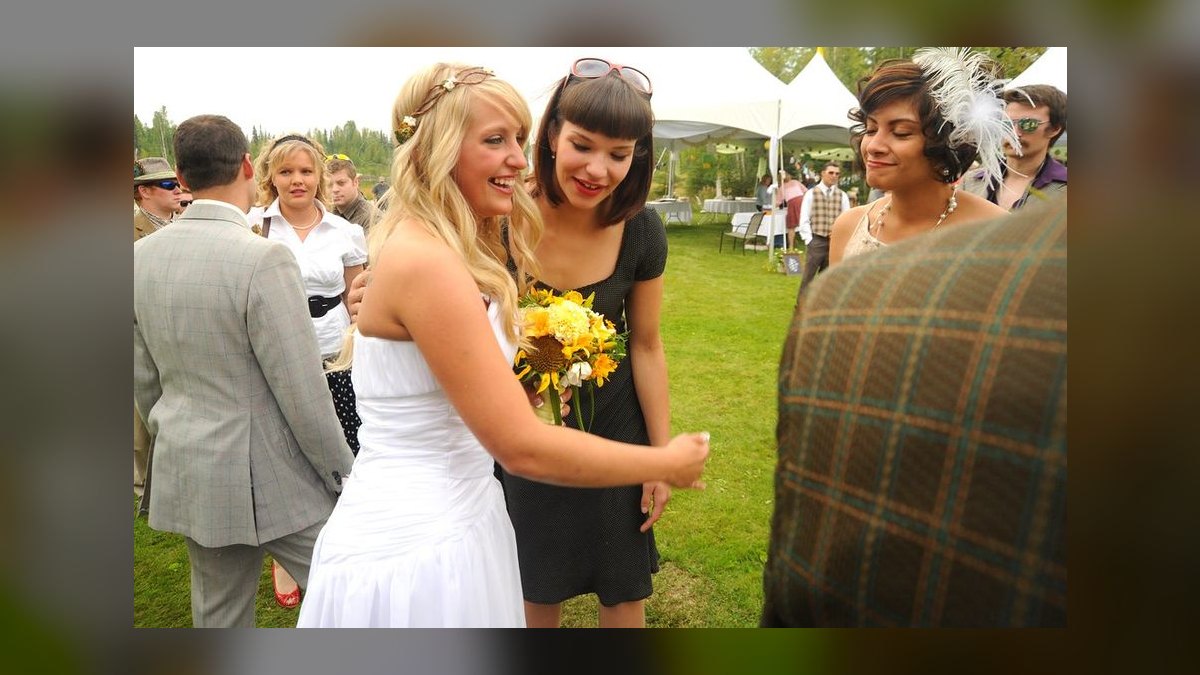
Wearing bridal red to the ceremony. Red and deep maroon are the traditional bridal palette across much of North India. A red lehenga on a guest at the ceremony is the equivalent of a white gown at a Western wedding. Wine, rust, and burgundy are usually fine and read as distinct from bridal red; a saturated primary red with heavy gold zari is not.
Over-embellishing a daytime function. Full crystal work at a 10 a.m. haldi looks like you got the invitation time wrong. Daytime wants prints, light embroidery, chikankari, cotton, and lighter silks. Save the mirror work and the sequins for after dark, when the lighting justifies them.
Underestimating physical demand. A garba or bhangra floor is genuinely athletic. Stilettos on grass or on a marble banquet floor is a bad plan on both surfaces. Guests routinely end night two barefoot and miserable. Break shoes in beforehand, bring a backup flat, and if there is an outdoor lawn ceremony consider heel stoppers or simply choose a flat jutti.
Ignoring the dupatta as a functional garment. A dupatta is not a decorative scarf. In a religious setting it covers your head. It also solves shoulder coverage, sun protection at an outdoor mandap, and modesty when seated on the floor. Learn one reliable drape and pin it — safety pins at the shoulder are standard practice, not a hack.
Buying polyester labeled as silk. "Art silk," "silk blend," and "faux silk" are polyester. Under June heat in an outdoor tent, polyester does not breathe and you will feel it within an hour. Read fiber content, not product names.
Getting the fit of the blouse or the shoulder wrong. A lehenga blouse that gaps at the underarm or a sherwani that pulls across the shoulder ruins an otherwise excellent outfit, and no amount of jewelry compensates. This is why the tailoring step is non-negotiable.
Assuming Indo-western means a business suit with a scarf. A standard corporate suit reads as sombre and out of key. If you want a hybrid, the working version is a well-cut jacket in a bold color or a textured fabric worn over a kurta with churidar or tapered trousers — the jacket does the Western structural work, the kurta does the cultural work.
Choosing between the main options, by function and by person
Use this as the decision layer once you know the schedule. For women, the honest ranking by function looks like this: for mehendi and any seated, floor-cushion function, a sharara, palazzo-kurta set, or a light cotton-silk anarkali wins on comfort and does not restrict how you sit. For sangeet and garba, a lehenga wins because the skirt moves and the two-piece structure survives dancing. For the ceremony, a saree or a formal anarkali reads most appropriate, especially in South Indian and more traditional settings. For the reception, a lehenga or a heavily worked saree, whichever you feel most confident photographed in.
For men, the ranking is simpler. Daytime and casual functions: kurta-pajama or kurta with churidar, cotton or linen, minimal work. Sangeet: the same kurta with a Nehru jacket in a contrasting jewel tone — this single garment is the highest-leverage purchase in a man's Indian wedding wardrobe because it upgrades any kurta instantly and packs flat. Ceremony: bandhgala or sherwani. Reception: bandhgala in a richer fabric, or a sherwani if the couple is going formal. If you own exactly one thing, own a good bandhgala in a deep neutral or a jewel tone; it works at every evening function and, unlike a sherwani, it is subtle enough to wear at non-wedding events.
On age and formality: the shift from twenties to sixties is mostly about fabric weight and ornamentation, not about being less bold. A twenty-something can wear an asymmetric hem, a cape dupatta, or a crop blouse. A forty-something typically looks best in a structured anarkali or a sharp bandhgala with darker, richer tones and restrained embroidery. A sixty-something in a pure silk saree with a good gold border or an ivory Nehru jacket over a fine cotton kurta will out-dress most of the room, because handloom and fit beat trend every time.
On buying versus renting, the deciding variables are re-wear count, fit sensitivity, and lead time. Rent when you will wear it once, you are a standard size, and you have under three weeks. Buy when you attend more than one wedding a year, when the garment needs real tailoring, or when the piece is a handloom you would happily wear for a decade.
Adjacent situations that use the same rules
The framework above transfers cleanly to a set of neighboring scenarios that guests run into.
You are in the wedding party rather than a guest. Bridesmaids and groomsmen at Indian weddings are increasingly coordinated to a palette set by the couple, and that palette overrides everything in this guide. Ask for the color code in writing, ask whether outfits are being sourced centrally, and if you are buying your own, send a fabric photo in natural light for approval. The one thing you control unilaterally is fit and footwear.
It is a fusion wedding. A ceremony that pairs an Indian rite with a Western one often runs two dress codes in one weekend — Indian attire for the baraat and mandap, cocktail or black-tie for the reception. Read the invitation carefully; if it says "Indian attire encouraged" for one event and "formal" for another, that is two wardrobes, not a suggestion to blend them into one.
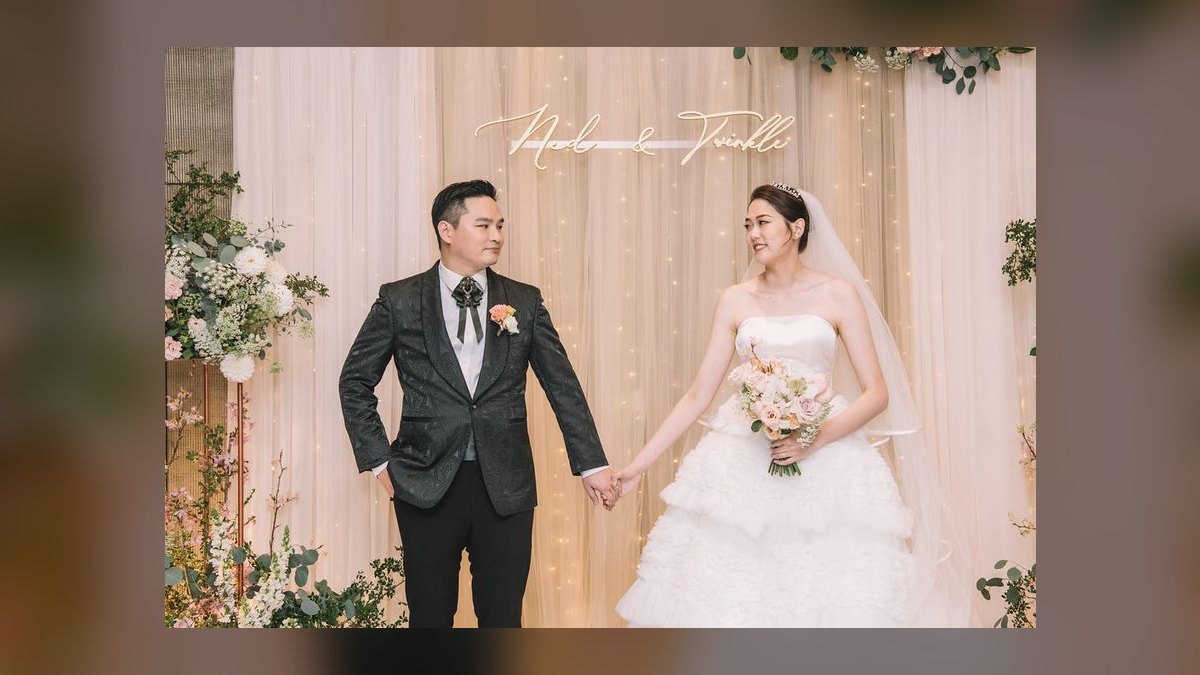
You are attending as a non-Indian guest and worried about appropriation. The short answer is that wearing Indian clothing to an Indian wedding, when invited, is welcomed and usually actively appreciated — the concern arises around religious articles and around wearing cultural dress as costume outside its context. Wear the clothes, wear them correctly and with a good fit, ask the host or a friend if you are unsure how to drape something, and skip explicitly religious items like a kalava, a bindi worn as decoration if you are unsure, or a Sikh turban unless specifically invited to wear one.
It is a destination wedding. Heat and humidity become the dominant constraint, and packing becomes a logistics problem. Favor cotton, linen, and lightweight silk blends; roll rather than fold; carry the main ceremony outfit in your hand luggage rather than checked; and assume you will not find a tailor or a steamer at the venue. A travel steamer is genuinely worth the suitcase space for a multi-day event.
You are attending a related celebration. Engagements, roka ceremonies, mehendi-only invitations, Diwali parties, Eid gatherings, and griha pravesh housewarmings all draw on the same wardrobe, at a notch lower formality. This is the argument for buying rather than renting if you are part of a community where these events recur: a good kurta with a Nehru jacket, or a well-made anarkali, amortizes across a dozen occasions a year.
Care afterward. Heavily embroidered pieces should be dry-cleaned by someone who handles zari work, not a general cleaner. Store silk wrapped in cotton or muslin, never in plastic, and refold along different lines every few months so creases do not become permanent breaks in the fibers. Zari tarnishes on contact with moisture; a silica packet in the garment bag is cheap insurance.
Related questions
Can a guest wear a saree if they have never draped one?
Yes. Pre-stitched and ready-to-wear sarees exist precisely for this, and they zip or wrap in under two minutes with the pleats already set. Alternatively, hire a draper at the venue or ask a family member — most weddings have someone happy to help.
Is it acceptable to repeat an outfit across two functions?
Yes, and it is common. Change the dupatta, the jacket, or the jewelry and it reads as a different look. Repeating between the ceremony and the reception on the same day is the one case worth avoiding, since photos will sit side by side.
What should children wear to an Indian wedding?
Scaled-down versions of adult attire — kurta-pajama for boys, lehenga or a simple anarkali for girls — in cotton, with flat shoes. Prioritize comfort ruthlessly; children at a six-hour ceremony in stiff embroidery will make the day harder for everyone.
Do I need to cover my head?
At a gurdwara, yes, universally, and coverings are usually provided at the entrance. At Hindu temple ceremonies it varies by community. At a nikah, women typically cover. Carrying a dupatta or a scarf means you can comply in ten seconds without planning.
How many outfits do I need for a three-day wedding?
Three, plus a spare. One light daytime set, one dance-friendly evening set, one formal ceremony or reception set. Buy or rent to that count and stop — most over-budget guest wardrobes come from buying a fourth and fifth outfit nobody remembers.
FAQ
Can men wear a Western suit to an Indian wedding in 2027? At a reception, often yes — many urban Indian receptions are explicitly cocktail or formal. At the ceremony, baraat, or any religious function, Indian attire is strongly preferred and a plain business suit will look like you opted out. The best hybrid is a jacket in a bold color or textured fabric worn over a kurta with churidar, which respects both registers.
What colors are genuinely off-limits for guests? Pure white and all-black are the two to check before committing, because their associations vary by community and by function. Bridal red at the ceremony is the third. Beyond those, saturated jewel tones, warm earth tones, ivory paired with a bold dupatta, and pastels for daytime are all safe. When in doubt, ask the host — that question is never unwelcome.
Are open-toe or Western shoes acceptable? For men, closed-toe juttis, mojaris, or a clean leather loafer all work; sandals and flip-flops do not. For women, block heels, embellished flats, and dressy sandals are all fine. The real constraint is removability — any temple or gurdwara visit means shoes off at the door, so buckles and laces become a liability.
How much should a guest realistically budget? It depends entirely on tier. Renting is the cheapest viable route and works for a single function; ready-to-wear from established ethnic retail chains is the mainstream middle; buying fabric and using a local tailor is the best fit-per-dollar if you have three to six weeks; designer or handloom makes sense only if you will re-wear it for years. Add alterations, dry cleaning, footwear, and shapewear to whatever number you land on.
Is a dupatta optional? Functionally, no. It completes almost every women's silhouette, provides shoulder and head coverage for religious settings, and gives you sun protection at an outdoor mandap. Even with an outfit that does not strictly require one, carrying a lightweight dupatta or a scarf is the single most useful thing in your bag.
What if I only have a week before the wedding? Rent, or buy ready-to-wear in a standard size and pay a tailor for a rush fit on the one garment that matters most — usually the blouse or the jacket shoulder. Do not attempt a custom build on a one-week timeline; the result will be worse than a well-fitted off-the-rack piece. Prioritize fit and comfortable shoes over embellishment.
Sources
- https://www.vogue.in/ — Vogue India, ongoing coverage of Indian wedding fashion and designer collections
- https://www.theknot.com/content/indian-wedding-guest-attire — The Knot, guest attire and cultural dress code guides
- https://www.brides.com/ — Brides, wedding guest etiquette and attire guidance
- https://www.harpersbazaar.in/ — Harper's Bazaar India, festive and wedding season style coverage
- https://texmin.nic.in/ — Ministry of Textiles, Government of India, handloom and traditional textile information
- https://www.nift.ac.in/ — National Institute of Fashion Technology, Indian textile and garment research
- https://www.bbc.com/culture — BBC Culture, features on South Asian cultural and fashion traditions
- https://www.sikhs.org/ — Sikh reference material on gurdwara etiquette including head covering
- https://www.britannica.com/topic/sari — Encyclopaedia Britannica, background on the saree and its regional variations
Related on PULSE
- What to Wear as a Groomsman to a Destination Wedding in 2027
- What to Wear as a Officiant to a Backyard Wedding in 2027
- What to Wear as a Maid of Honor to a Courthouse Wedding in 2027
- What to Wear to a Winter Country Club Wedding in 2027
- What to Wear to a Summer Church Wedding in 2027
- What to Wear as a Officiant to a Destination Wedding in 2027
This page will be disappearing soon. Save it to your device for $1 — or read it free while it is here.
@Kory-White- · if Venmo asks, the last 4 of my number are 2012
This page is gone.
This one is off the shelf now. $1 keeps it on your phone for good — the whole page, pictures and diagrams included.
 pulse-styleHow to Wear Maroon with Combat Boots in 2027
 pulse-styleWhat to Wear to a Bowling Night in 2027
 pulse-styleHow to Style a Wrap Dress for a Graduation in 2027
 pulse-styleHow to Style Ankle Boots for a Job Interview in 2027
 pulse-styleWhat to Wear to a Summer Garden Wedding in 2027
 pulse-styleHow to Style Wide-Leg Pants in Spring in 2027
 pulse-styleWhat to Wear to Yoga Class in 2027
 pulse-styleHow to Wear Maroon with a Slip Dress in 2027
 pulse-styleWhat to Wear to a Site Inspection in 2027
 pulse-styleWhat to Wear to a Real Estate Job Interview in 2027