

What to Wear for a Windy Day in 2027
 Curated byKory White · Fractional CRO · Maryland
Quality
Certified
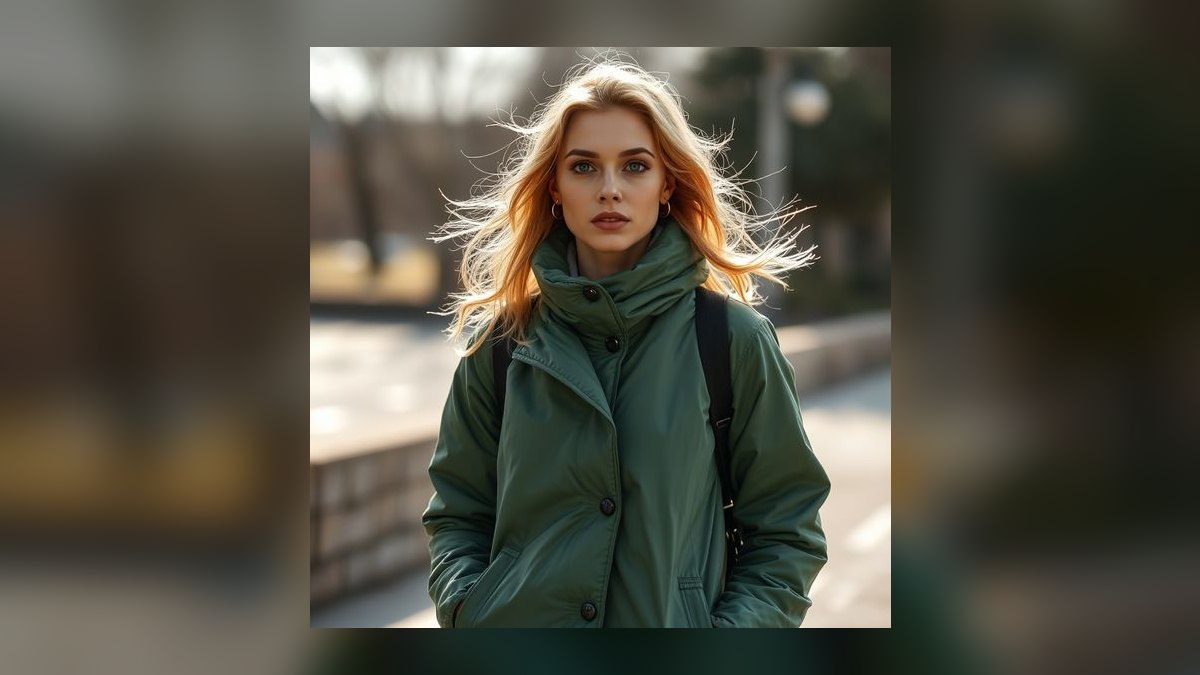
Dress for a windy day in 2027 with a fitted, wind-resistant shell over thin insulating layers, plus tapered or weighted bottoms that won't billow. Anchor the look with closed-toe rubber-soled shoes, a snug beanie instead of a brimmed hat, and a closed-loop scarf. Streamline the silhouette — wind punishes loose fabric, not warm fabric.
What wind actually does to an outfit, and why silhouette beats warmth
Most people dress for a windy day the way they dress for a cold day, and that is the root error. Cold is a thermal problem. Wind is a thermal problem *and* a mechanical one, and the mechanical half is what ruins the day. Air moving at 20–30 mph strips the thin boundary layer of warmed air your body maintains against your skin — that's the "wind chill" effect the National Weather Service charts. At 40°F with a 20 mph wind, the effective temperature on exposed skin lands closer to 30°F. That gap is why a heavy sweater that felt perfect on a still day at the same temperature feels useless the moment you round a corner into a gust.
The mechanical half is more practical and gets less attention. Loose fabric in moving air behaves like a sail. A wide-leg trouser leg with roughly 22–24 inches of hem circumference presents a surface the wind can push; the leg flaps, the fabric slaps your shin, and you spend the walk managing it. A lightweight A-line skirt in a chiffon or thin rayon does the same thing vertically. A long single-tail scarf becomes a whip. An open tote becomes a scoop. None of these are warmth failures — they're aerodynamics failures, and no amount of insulation fixes them.
So the governing principle for a Windy day is: *seal the perimeter, tighten the silhouette, weight the hems.* Seal the perimeter means the shell's cuffs, hem, and collar close against air infiltration — elastic or velcro cuffs, a drawcord hem, a collar that stands. Tighten the silhouette means tapered or straight-leg bottoms rather than flared, fitted crops rather than swing shapes. Weight the hems means choosing heavier-hand fabrics for anything that hangs — a bias-cut heavy satin or wool crepe midi will stay down where a poly chiffon will not.

The fabric science underneath this is straightforward. Wind resistance comes from tight weave density and, in technical pieces, a membrane. Waxed cotton (the Barbour approach) blocks wind because the wax fills the interstices of the weave. Tightly woven nylon and polyester shells block it because the yarn count is high enough that air can't pass in volume. Membrane laminates — Gore-Tex, Gore Windstopper, Polartec Windbloc, Pertex — block essentially all of it, which is why they're the choice when the forecast is genuinely nasty rather than merely breezy. The trade-off is always breathability: the more completely a fabric stops moving air from getting in, the more completely it stops your water vapor from getting out. That's the entire design tension in a wind shell, and it's why softshells exist as a middle path.
The knits and mid-layers work differently. A chunky wool sweater has enormous air space between yarns, which is exactly what makes it warm in still air and exactly what makes it porous in wind. Fleece is worse — it's mostly trapped air by volume. That's why the classic mistake of "I'll just wear a big sweater" fails so reliably: without a shell over it, wind blows straight through the loft and takes the warm air with it. The correct role for a knit on a windy day is thin and next-to-shell: fine-gauge merino or a lightweight cashmere crewneck that adds insulation without adding bulk under the outer layer.
Why this matters beyond comfort: for anyone whose day involves being seen — client visits, field sales calls, outdoor site walks, event staffing, retail floor work with a shared entrance — arriving disheveled is a small, recurring credibility tax. Field teams whose comp is tied to revenue know the arrival state matters; you don't want the first thirty seconds of a meeting spent flattening your hair and re-tucking a shirt. The wind-day outfit is, in that sense, a small operational decision with a professional downstream, which is why it's worth systematizing rather than improvising each morning.

The step-by-step process for building the outfit
Work outward from the skin, and make each decision before you make the next one. The order matters because every layer constrains the one over it — pick a bulky mid-layer first and you've forced yourself into a shell that fits over it.
Step one: check the actual wind number, not just the temperature. Any standard weather app shows sustained wind speed and gust speed. These are different, and the gust number is the one that decides your outfit. Sustained 10 mph with gusts to 35 mph is a hat-and-tapered-pants day even though the sustained figure sounds mild. Rough working thresholds: under 10 mph, dress normally and skip the special measures. 10–20 mph, tighten the silhouette and add a closed-loop scarf. 20–35 mph, you want a dedicated wind shell, secure headwear, and no loose hems at all. Above 35 mph, add eye protection — sunglasses or clear lenses — because airborne grit becomes a genuine irritant, and reconsider anything that hangs.
Step two: base layer. Merino wool in a 150–200 g/m² weight is the reliable choice; it wicks, it regulates, and it resists odor over multiple wears. Synthetic base layers (polyester or the polyester-acrylic blends used in Uniqlo's HeatTech line) are cheaper and dry faster, at the cost of odor performance. What matters most is what you *don't* pick: cotton. Cotton holds moisture against the skin, and moisture plus wind is the fastest route to being cold. If you sweat on the walk to the train in a cotton tee, the first exposed platform gust will make you regret it.

Step three: mid-layer, chosen for removability. Windy days are variable days — sheltered streets are calm, open plazas are not, and indoors is a third climate. The mid-layer is the piece you'll take on and off. A thin fleece, a fine-gauge merino crewneck, a lightweight synthetic-fill vest, or a cashmere sweater all work. Avoid anything so bulky that it changes your shell size. If you can't comfortably zip the shell over it, it's the wrong mid-layer for a wind day.
Step four: the shell — the actual wind decision. Three archetypes, and they map to different days. A *hard shell* (Gore-Tex or comparable 2.5/3-layer) blocks essentially all wind and all rain, breathes least, and crinkles; correct for genuinely severe conditions. A *softshell* stretches, breathes well, blocks most wind, and looks less technical; correct for the common 15–25 mph day. A *waxed cotton or tightly-woven trench* blocks wind well, looks fully civilian, and is the right answer when the day includes a meeting. All three should have a hood or a collar that stands up, and ideally a drawcord hem — an open, flapping jacket hem lets air up your back and undoes everything underneath.
Step five: bottoms. Tapered, straight-leg, or heavy. Tapered chinos, cargo pants with elastic or drawcord cuffs, straight-leg denim, wool-blend trousers with a crepe finish. If you want a skirt or dress, the answer isn't "no" — it's *weight and length*: a bias-cut heavy satin midi, a wool crepe A-line that stops at or below the knee, or a wrap style with a real fastening. Add opaque tights or leggings underneath for both warmth and insurance. Flared, unlined, and lightweight is the combination to avoid.
Step six: footwear and socks. Closed toe, rubber outsole with actual tread, secure closure. Lace-up sneakers, Chelsea boots, chukkas, or trail runners. Merino-blend socks; never cotton. Skip open-toe, backless, and thin-soled flats.

Step seven: head, neck, hands, bag. Beanie or a snug cap over any brimmed hat. Infinity scarf, snood, or a traditional scarf with the ends tucked into the jacket. Gloves if the wind chill drops the effective temperature below roughly 45°F — touchscreen-compatible ones so you're not degloving at every crosswalk. Crossbody bag or a backpack with a sternum strap, never an open tote.
Costs, timelines, and what a wind-ready kit actually runs
A complete wind-day kit is one of the cheaper wardrobe problems to solve permanently, because almost every piece is a multi-year item. Here are honest ranges as of the current market; treat them as bands, not quotes, since pricing moves with season and sale cycles.
Shells span the widest range. Budget waterproof/windproof shells from mainstream outdoor brands run roughly $60–$100 and genuinely work — they're heavier, less breathable, and less refined, but they stop wind. The mid-tier, where most people should land, is roughly $130–$220: Patagonia's Torrentshell line, comparable pieces from Marmot, Columbia's better tiers, REI's house brand. Premium technical softshells and 3-layer hard shells from Arc'teryx and peers run $300–$500. Heritage waxed cotton — Barbour and similar — sits around $350–$450 for a flagship jacket, with the wrinkle that waxed cotton needs re-waxing every year or two (a $20 tin and an afternoon, or $30–$60 to have it done). Designer trenches run into four figures; high-street versions from Mango, Uniqlo, and similar land around $100–$200 and are entirely adequate if the lining is windproof.

Mid-layers run $30–$60 for a basic fleece, $100–$150 for a premium fleece or a decent cashmere crewneck, and $150–$250 for a synthetic-fill lightweight puffer. Base layers are $15–$30 synthetic, $70–$110 for merino from the established names. Socks are the highest-leverage cheap upgrade in the whole kit: $20–$30 a pair for merino from a brand with a real guarantee, versus a few dollars for cotton that will make you miserable. Buy four pairs and stop thinking about it.
Footwear is the biggest single line. Trail runners with aggressive lugs run $130–$180. Cushioned road-style sneakers with usable tread run $140–$170. Chelsea boots in the durable-workwear category land around $200–$240; classic 6-inch leather boots $150–$220. Waterproof-lined versions of most models carry a $20–$40 premium over the non-lined equivalent, and it's usually worth it. If you'd rather not re-buy, a $12–$18 can of fabric waterproofing spray extends what you already own for a season or two.
Accessories total less than people expect. A merino or cashmere beanie is $25–$70. An infinity scarf or snood is $30–$80. Touchscreen fleece or lined-leather gloves run $15–$25 at the budget end and $90–$150 for premium leather with a windproof membrane. A belt bag or compact crossbody is $35–$80; a technical daypack with a sternum strap is $80–$160.
Totaled honestly: a competent, sale-shopped wind kit — shell, mid-layer, base, tapered bottoms, shoes, socks, beanie, scarf, gloves — lands around $400–$600. A no-compromise version with premium technical outerwear and boots runs $1,200–$1,800. The middle path most people actually want sits near $700–$900.

On timelines: the shell is a 5–10 year item if you wash it correctly (technical detergent, no fabric softener, tumble-dry low to reactivate the DWR finish). Merino base layers last 2–4 years before thinning at the elbows. Fleece pills but functions for years. Shoes are the fast-consuming line — outsole tread on a daily-wear pair is meaningfully worn by 400–600 miles, and worn tread is exactly the failure mode that matters on a wet, gusty day. Waxed cotton is effectively permanent with maintenance; some of these jackets outlive their first owner.
The adjacent purchase worth naming: if your windy days are also commuting days, the highest-return item isn't apparel at all. It's a wind-resistant compact umbrella with a vented double-canopy — the vented design is what keeps it from inverting — at roughly $30–$60. A standard $10 umbrella will invert at around 25–30 mph and become litter.
Where people get this wrong
They dress for the temperature reading and ignore the gust column. The forecast headline number is sustained wind. Gusts commonly run 1.5–2× sustained. Planning off the sustained figure is how you end up under-shelled on the exact days it matters.

They pick warmth over wind resistance. A chunky sweater with no shell is the single most common failure. All that loft is air, and moving air replaces it. Thin layer plus real shell beats thick layer alone at every temperature where wind is a factor.
They wear cotton somewhere in the stack. Cotton tee as a base, cotton socks, a cotton hoodie as the mid-layer. Each of these individually is survivable; together they're the recipe for being damp and then cold. The rule that actually holds up: cotton is fine as an *outer* layer if it's tightly woven or waxed, and bad everywhere else.
They over-layer and then sweat. Three bulky layers under a sealed shell means you overheat on the walk, soak the inner layers, and then get chilled the moment you stop moving and the wind hits damp fabric. This is why venting matters — pit zips, a front zip you can drop a few inches, mesh-backed pockets. Manage heat actively rather than committing to one configuration for the whole day.
They keep the flowy piece anyway. The wide-leg trouser, the unlined maxi, the long single-tail scarf. These are all fine garments on a still day. On a 30 mph day they convert the entire outing into fabric management. The fix isn't abandoning the aesthetic — it's the weighted or tapered version of the same shape.

They wear a brimmed hat. A brim is a lever arm. Any hat with a meaningful brim and no chin strap is a projectile above about 20 mph. The correct substitutes are a beanie, a snug five-panel or baseball cap worn low, or nothing plus a secured hairstyle.
They forget the hem and the cuffs. A great shell left open at the bottom lets air funnel up your torso. If the jacket has a drawcord hem, use it. If the cuffs are adjustable, snug them. These are two seconds of work and they're the difference between a shell that performs and one that just looks the part.
They carry the wrong bag. An open tote is a scoop; a single-shoulder bag slides and needs constant clutching. Crossbody or backpack with a sternum strap. Zip closures over magnetic snaps, which pop open in gusts.
They ignore the return trip. Wind typically peaks mid-afternoon as daytime heating drives mixing, then eases after sunset. If you dress for the calm morning, the walk home is the problem. Pack the shell even when the morning doesn't seem to need it.

They skip eye protection. Above roughly 30–35 mph, airborne dust and grit is the actual complaint people have, not cold. Sunglasses on a bright day, clear lenses on a gray one. This is the cheapest comfort upgrade on the list and the most consistently overlooked.
Decision framework: choosing by day, occasion, and gust band
The kit above covers everything, but you don't deploy all of it every time. Decide on three axes: gust band, whether precipitation is involved, and whether the day has a dress requirement.
Gust band sets the aggressiveness. Under 10 mph, wind isn't the constraint — dress for temperature and move on. 10–20 mph is the "tighten up" band: tapered bottoms, a light shell or a structured coat, a closed-loop scarf if it's cold. 20–35 mph is the full protocol: dedicated wind shell with sealed cuffs and drawn hem, secured headwear, no loose hems, crossbody bag. Above 35 mph, add eye protection, reconsider skirts and dresses entirely, and expect to arrive needing a minute.
Precipitation flips the shell choice. Dry and windy is softshell territory — you get stretch, quiet fabric, and breathability, and you don't need the membrane. Wet and windy demands a membrane laminate with taped seams; a water-resistant softshell will wet through in sustained rain and then chill you badly. The in-between case — showers possible — favors a lightweight packable hard shell carried in the bag over a softshell worn on the body.
Dress requirement decides materials and cut. A client meeting, a site visit with a customer, an event where you're representing the company: this is where the waxed cotton jacket or the windproof-lined trench earns its price, because it reads as clothing rather than gear. A technical hard shell over business dress reads as improvisation. Conversely, for a school run, a dog walk, or a commute where nobody's evaluating you, the technical piece is strictly better and you should use it.
Two useful edge cases. Coastal and open-water wind carries salt and moisture; it feels colder than the same speed inland and it degrades leather and untreated fabrics faster. Rinse salt exposure off leather footwear and re-treat more often. Urban canyon wind is the opposite problem — sustained readings from the airport weather station understate what happens between tall buildings, where channeling can double local speeds at street corners while the block itself sits calm. If you live somewhere with real downtown density, dress one band up from what the forecast says.
The adjacent scenarios worth carrying over: this same logic covers a stadium or open-air venue in shoulder season, ferry and rooftop-bar situations, and outdoor trade-show or event booth work, where you're stationary for hours in exposed conditions and generating no body heat. Stationary exposure is harsher than walking exposure at the same wind speed, so for anything static, add one layer beyond what the gust band suggests — and bring a thermos, because staying warm from the inside is a real and underrated lever.
Related questions
Does a windbreaker actually beat a regular jacket?
Yes, when the regular jacket has a loose weave. A dedicated wind shell blocks near-total airflow through the fabric. A tightly woven wool coat or waxed jacket performs nearly as well. A knit or open-weave coat does not, regardless of thickness.
Can I wear a dress or skirt on a very windy day?
Yes, with weight and length. A bias-cut heavy satin midi, wool crepe A-line, or a wrap style with a real fastening all stay down. Add opaque tights. Avoid unlined chiffon, thin rayon, and full-circle cuts above the knee.
How do I keep my hair manageable without a hat?
Secure it before you leave: a low bun, a braid, or a tight ponytail. A silk scarf tied at the nape or a wide headband tames flyaways. Loose hair plus 25 mph wind is a tangle you'll be fixing on arrival.
What's the single highest-impact item to buy first?
A shell that actually blocks wind, in the $130–$220 mid-tier. It's the only piece that changes the outcome on its own — everything else is optimization around it. Second purchase: merino socks.
Is wind chill a real effect on clothed skin?
It's real on exposed skin — face, hands, neck — where it strips the warmed boundary layer. Under a windproof shell the effect is largely neutralized, which is exactly why sealing the perimeter matters more than adding insulation.
FAQ
Are there fabrics I should avoid entirely on a windy day?
Avoid loose-weave and lightweight fabrics that let air through and flap: chiffon, thin rayon, gauzy linen, and thin cotton voile. Avoid cotton anywhere next to skin because it holds moisture. Chunky open-knit sweaters are fine *under* a shell but useless as an outer layer — the wind blows straight through the loft.
Should I use a backpack or a crossbody bag?
Crossbody or belt bag is the safer default: it sits against the body and can't swing or catch air. A backpack is fine if it has a sternum strap and you actually buckle it, which keeps it snug rather than shifting with each gust. Avoid open totes — they behave like scoops — and prefer zip closures over magnetic snaps, which pop open in strong gusts.
How windproof does a jacket need to be, in practical terms?
For most urban days, a tightly woven shell or a softshell is plenty. Full membrane laminates — Gore-Tex, Windstopper, Windbloc — matter when you're exposed for extended periods, when the wind is over about 30 mph, or when rain is involved. The trade-off is real: the more completely a fabric blocks air, the less it breathes, so over-specifying the shell means overheating on a mild day.
What footwear works best when it's both windy and wet?
Closed-toe, rubber outsole with visible tread, secure lace or pull-on closure. Trail runners with deep lugs give the most grip; Chelsea and chukka boots give a more polished version of the same thing. A waterproof lining is worth the $20–$40 premium if you get wet-and-windy days regularly. Pair with merino-blend socks — never cotton, which goes cold as soon as it dampens.
Does layering strategy change if I'll be standing still rather than walking?
Substantially. Walking generates body heat that masks an under-insulated kit; standing generates almost none. For stationary outdoor time — an event booth, a sideline, a ferry deck — add one insulating layer beyond what the temperature suggests, cover the extremities properly, and factor in a hot drink. Most people who are miserable outdoors are miserable because they dressed for movement they didn't end up doing.
Do I need different gear for coastal wind versus inland wind?
Coastal wind carries moisture and salt, so it feels colder at the same speed and it's harder on materials. Favor a membrane shell over a softshell near open water, and rinse and re-treat leather footwear more often after salt exposure. Inland gusty days are usually drier, which means breathability matters more than waterproofing.
Sources
- https://www.weather.gov/safety/wind — National Weather Service wind safety guidance
- https://www.weather.gov/safety/cold-wind-chill-chart — NWS wind chill chart and methodology
- https://www.rei.com/learn/expert-advice/layering-basics.html — REI Co-op layering fundamentals
- https://www.rei.com/learn/expert-advice/rainwear.html — REI Co-op on waterproof/breathable shell construction
- https://www.patagonia.com/stories/ — Patagonia field notes on outdoor apparel construction
- https://www.consumerreports.org/ — Consumer Reports product testing and apparel reviews
- https://www.gore-tex.com/technology — Gore-Tex on membrane technology and wind resistance
- https://www.noaa.gov/ — NOAA weather data and wind measurement resources
- https://www.barbour.com/us/how-to-rewax-your-jacket — Barbour on waxed cotton maintenance
Related on PULSE
This page will be disappearing soon. Save it to your device for $1 — or read it free while it is here.
@Kory-White- · if Venmo asks, the last 4 of my number are 2012
This page is gone.
This one is off the shelf now. $1 keeps it on your phone for good — the whole page, pictures and diagrams included.
 pulse-styleWhat to Wear to an Outdoor Concert Date in 2027
 pulse-styleWhat to Wear to a Concert in 2027
 pulse-styleHow to Wear Maroon with Combat Boots in 2027
 pulse-styleHow to Wear Dusty Rose with a Bomber Jacket in 2027
 pulse-styleWhat to Wear to March Madness Watch Party in 2027
 pulse-styleWhat to Wear to an Award Ceremony at Work in 2027
 pulse-styleHow to Style Cargo Pants for a Gallery Opening in 2027
 pulse-styleHow to Wear Terracotta with White Sneakers in 2027
 pulse-styleWhat to Wear to a Parent-Teacher Conference in 2027
 pulse-styleTop 10 Affordable Work Dress Brands in 2027