

What to Wear to an Art Gallery Opening in 2027
 Curated byKory White · Fractional CRO · Maryland
Quality
Certified

Wear polished creative separates in muted neutrals — tailored trousers or a midi dress with a structured jacket, plus one deliberate accent piece. Aim for smart-casual with intent: clean lines, quality fabric, comfortable shoes you can stand in for three hours. Complement the art, don't compete with it, and skip logos entirely.
The outcome you should expect from dressing well at an opening
The measurable result of getting this right is not compliments. It is access. An art gallery opening is a working room disguised as a party: dealers are qualifying buyers, artists are looking for collectors and press, curators are scouting for group shows, and a handful of people are there purely for the wine. What you wear is the fastest signal any of those people get about which category you fall into, and they sort you within roughly three seconds of eye contact — long before you say a word.
Dress correctly and the outcome is that you become approachable to gallery staff rather than invisible to them. Gallerists at commercial spaces are trained to read a room for people who look like they belong in the collector conversation. That does not mean looking wealthy. It means looking considered — the same way a well-hung show looks considered. Someone who has clearly thought about fabric, fit, and proportion reads as someone who thinks about visual decisions generally, which is precisely the trait a gallery is scanning for.
Dress incorrectly in either direction and the outcome is friction. Show up in a tuxedo or a floor-length gown to a Thursday-evening opening in a converted warehouse and you have misread the register; people will assume you wandered in from a different event, and the mismatch makes conversation awkward for everyone. Show up in cargo shorts, a graphic tee, and running shoes and you will be treated as foot traffic. Neither is catastrophic — nobody gets turned away from an opening for clothing — but both cost you the easy, low-friction conversation that is the entire point of attending.
There is a second outcome worth naming: physical endurance. Openings typically run two to three hours, usually 6:00 to 8:00 or 6:00 to 9:00 p.m. on a weekday evening, and you will spend nearly all of that time standing on polished concrete, hardwood, or terrazzo. Concrete is unforgiving. If your shoes fail you at the ninety-minute mark, you leave early, and leaving early is how you miss the part of the evening when the crowd thins and the actual conversations start. Comfort is not a compromise on style here; it is a functional requirement of the outcome you want.
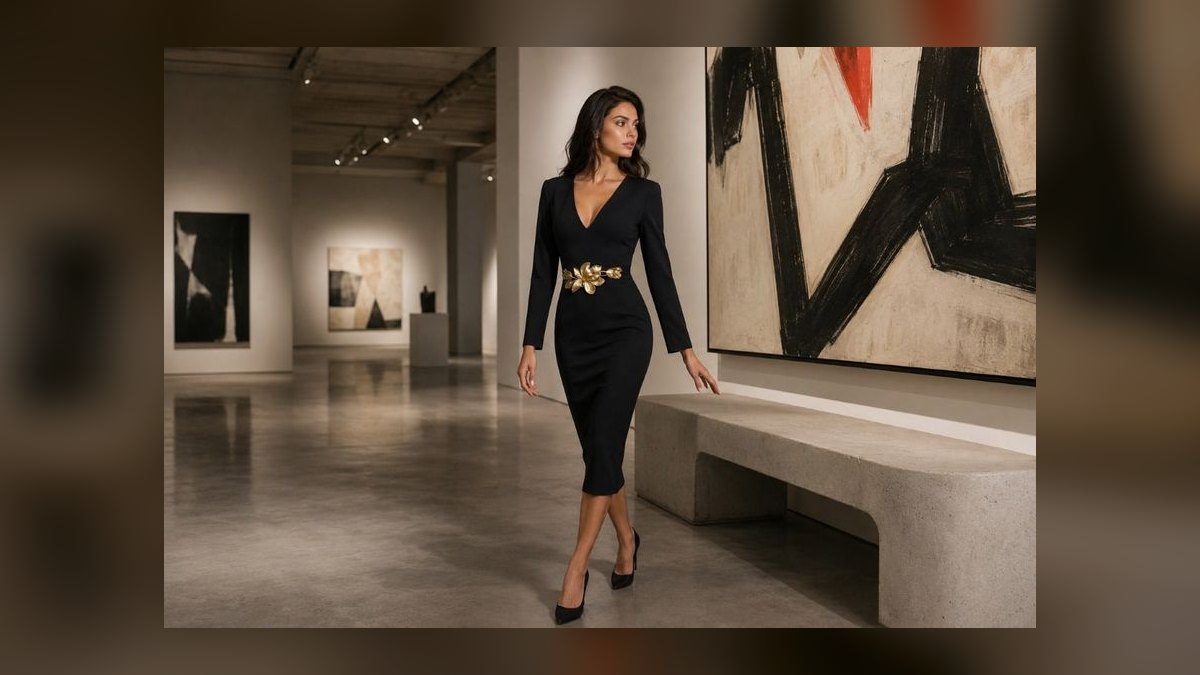
The third outcome is repeatability. Openings are a circuit. Regional gallery districts — Chelsea in New York, the Bergamot Station cluster in Santa Monica, the Wynwood and Design District spaces in Miami, Fitzrovia and Mayfair in London — cluster their openings on the same evenings so visitors can walk between four or five in a night. If you are attending more than one gallery opening a season, you want a repeatable uniform rather than a costume, because the same faces recur and a memorable outfit becomes a liability the third time it appears. Build a base you can vary, not a look you can only deploy once.
Finally, expect the dress code to be genuinely looser than it was a decade ago and looser still by 2027. The formal-invitation era is largely over outside of museum galas and auction-house previews. What replaced it is a taste-based register where the bar is not formality but evident intention. That is a harder bar in some ways — you cannot buy your way past it with a suit — and a much easier one in others, because a linen shirt and good trousers clear it as reliably as anything expensive.
What actually drives whether an outfit lands
Five variables do nearly all the work, and none of them is price.

Venue type is the biggest single input. A blue-chip gallery in a Mayfair townhouse with a champagne table and a printed price list runs a different register than an artist-run space above a bike shop with beer in a cooler. Museum-affiliated openings and auction-house previews sit at the formal end; university and nonprofit gallery openings sit in the middle; artist-run and co-op spaces sit at the casual end and often skew younger. If you know nothing else about an event, look at the gallery's own Instagram from a previous opening — the crowd photographs tell you the register in about fifteen seconds. Failing that, the invitation's own language is a decent proxy: "reception" reads more formal than "opening," and anything mentioning a performance or an afterparty reads more casual.
Fabric quality outranks garment cost, and it is what people actually perceive at conversational distance under gallery lighting. Galleries light for artwork, which means bright, high-CRI track lighting aimed at the walls and comparatively dim ambient light in the middle of the room. That lighting is merciless on cheap synthetics — polyester picks up a specular sheen that reads instantly as inexpensive, and thin knits show every pull. Natural fibers and good blends photograph and read far better under the same lights. Wool, linen, cotton, silk, and heavier viscose blends all hold up. A well-fitted cotton shirt beats a poorly-made silk one every time.
Fit is the second-highest-leverage variable and the one most people skip. Tailoring a $150 blazer costs $40 to $90 for sleeve and waist adjustments and produces a bigger visual improvement than spending $600 more on the jacket. The specific things worth paying for: sleeve length so a quarter to half inch of shirt cuff shows, jacket shoulders that end where your shoulder ends, and trouser hems that break cleanly rather than pooling. If you own one blazer and one pair of trousers you have had altered, you have a gallery outfit for years.
Color discipline matters more here than at almost any other social event, because you are standing in front of the work. Muted neutrals — charcoal, cream, olive, taupe, navy, bone, oatmeal, rust — form the reliable base. One accent is plenty: a cobalt scarf, a burnt-sienna bag, a single unusual shoe. What to avoid is not "bright colors" as a category but *high-chroma, large-surface* color that fights the walls, plus loud all-over prints and visible logos. Logos read as a competing message in a room whose entire purpose is looking at one message at a time.

Silhouette coherence is the last one. Pick one volume relationship and commit: loose top with a narrow bottom, or narrow top with a full bottom. Loose-on-loose can work but requires deliberate proportion and usually a defined waist or a strong shoe to anchor it. Loose-on-loose by accident is the single most common way an otherwise well-chosen outfit reads sloppy.
Benchmarks, budgets, and realistic ranges
Concrete numbers help, so here are the ranges that hold up in practice.
Total outfit spend. A credible gallery-opening look assembled new runs roughly $250 to $500 at the accessible end — think a mid-tier blazer, cotton or linen trousers, a simple knit or shell top, and one decent shoe. The mid range, $600 to $1,200, buys better fabric and usually a leather shoe or boot that will last five years. Above $1,500 you are buying brand and finishing detail, not additional social signal; nobody in the room can tell a $900 blazer from a $2,400 one at three feet under track lighting, and several of the best-dressed people at any opening are wearing something secondhand. Vintage and resale are genuinely well-regarded in this context rather than merely tolerated — an unusual older piece reads as taste, which is the currency.

Cost per wear is the more useful metric. A navy or charcoal blazer worn to eight openings, four dinners, and two work events over three years lands well under $10 a wear at $400. A statement piece worn twice does not. Build the base first: one blazer, one pair of tailored trousers, two good tops, one shoe. That is four to five purchases that cover the entire circuit.
Timing and layers. Most openings run 6:00–8:00 p.m. or 6:00–9:00 p.m., typically Thursday, and the crowd peaks in the middle hour. Arriving in the first twenty minutes gets you an unblocked view of the work; arriving in the last forty-five gets you the better conversations. Either way you are likely outside at some point, so layering matters. Galleries themselves are usually kept cool — conservation guidance for works on paper and canvas generally targets a stable environment around 68–72°F with moderate relative humidity, and a crowded room fights that, so staff often run the space cold on purpose. Dress for a slightly chilly room, not a warm one.
Seasonal ranges. Summer: linen, cotton poplin, lightweight viscose; open shoes are fine if they are leather and polished rather than casual. Winter: wool, cashmere or a good merino blend, a proper coat you are not embarrassed to hand over. Note that many galleries do not have a coat check — assume you will be carrying your coat over an arm all evening, which argues for something lighter and more compact than your bulkiest option.
Bag size. Small. A compact crossbody, a clutch, or nothing. Gallery rooms are crowded and a large tote becomes a hazard around artwork; some spaces will ask you to check anything backpack-sized. Museums frequently enforce this formally, and commercial galleries increasingly follow the same practice on busy nights.

Heel height. If you wear heels, two inches with a block or wedge base is the practical ceiling for a three-hour standing event on hard flooring. Stilettos on polished concrete are a genuine endurance problem and, in older buildings with wide-plank wood floors, a physical one. A pointed flat or a low ankle boot achieves the same line without the cost.
Age adaptation. In your twenties, trend-forward silhouettes work — oversized outerwear, asymmetric cuts, a clean sneaker, bolder jewelry. Through your thirties and forties, shift the ratio toward tailored classics and better fabric: a structured blazer, wool or silk, a loafer or a low pump. From your fifties on, the winning formula is investment fundamentals — cashmere, real leather, well-cut wool, jewelry with weight to it — with fit prioritized over anything current. The through-line at every age is the same base palette; only the proportions and the risk tolerance change.
Risks, edge cases, and failure modes
Overdressing is a real cost, not a safe default. The instinct to "dress up to be safe" misfires here. A dinner jacket at a warehouse opening isolates you. If you are unsure, the safe direction is *neutral and well-fitted*, not *formal*. A plain crewneck under a blazer with good trousers is essentially unimpeachable across the entire range from artist-run space to museum reception.

The white-wine problem. Openings serve wine, in a crowded room, to people gesturing at walls. Light-colored fabric and unlined pale silk are a real risk. If you wear cream or bone, know that you are accepting that risk. A practical hedge: dark bottom, light top, so a spill lands on the more replaceable half. Also worth noting — carrying both a glass and a large bag while shaking hands is a three-object problem with two hands, which is another argument for the small bag.
Fragrance is the underrated failure mode. Heavy scent in a crowded, poorly-ventilated room is genuinely unpleasant to people trapped near you, and many galleries and museums discourage it around sensitive works and in tight spaces. Apply lightly or skip it.
Jewelry and hardware near artwork. Large rings, wide bracelets, chunky belt buckles, and rigid bag hardware can scratch a surface if you lean in for a closer look, and sculpture in the round is often uncased and within arm's reach. This is a real conservation concern that gallery staff watch for. If you gesture while talking, be conscious of what is on your hands.
The photographed-outfit trap. Openings get photographed for the gallery's social accounts and sometimes for press. Two things fail under a flash that look fine in a mirror: sheer or thin fabric, which can go transparent, and anything highly reflective, which blows out. If there is a photographer working the room, matte fabrics are your friend.
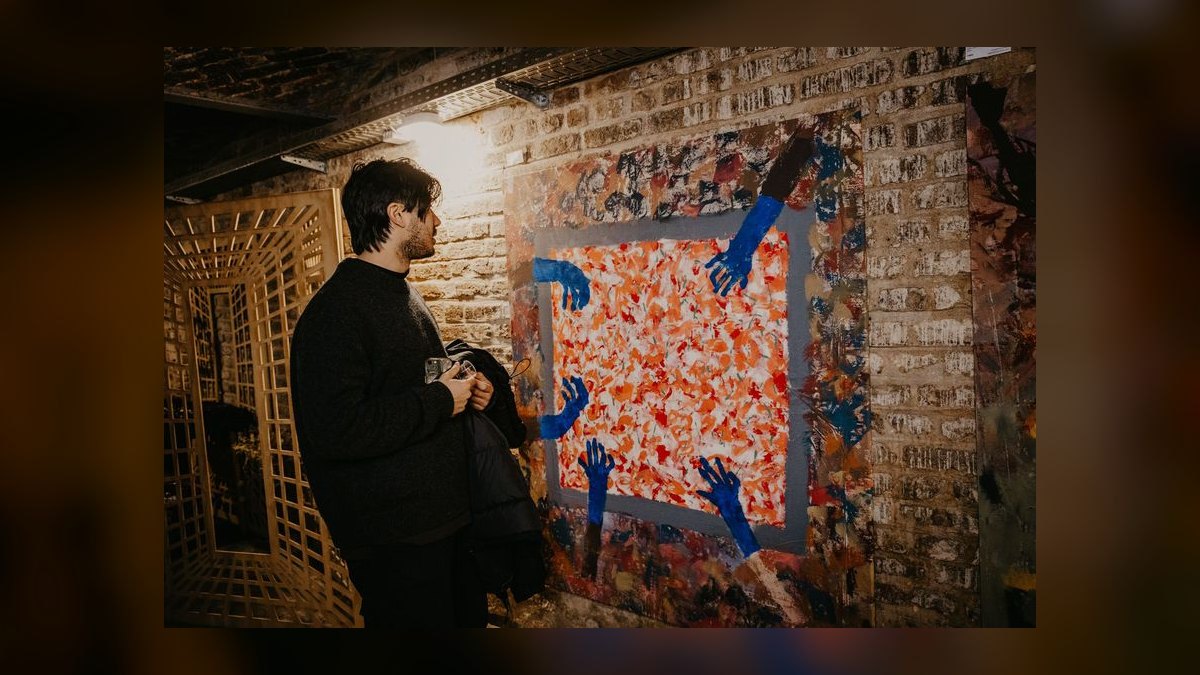
Weather and the coat problem. No coat check plus a January opening means you are wearing or carrying outerwear all night. Choose a coat that looks intentional over your outfit rather than a purely functional shell, because for a meaningful part of the evening the coat *is* the outfit.
The multi-gallery night. If you are walking a district and hitting four openings, the register can shift substantially between the first and the last — a blue-chip space at 6:00 and an artist-run basement at 9:00. Dress for the middle of the range and adjust with one removable layer. A blazer you can take off, or a jacket you can put on, spans most of the distance.
Cultural and regional variance. Registers differ by city and by scene. London and Berlin openings skew more casual and more experimental than New York's Upper East Side. Los Angeles skews toward relaxed and expensive-looking. Openings in Asia's major art markets — Hong Kong, Seoul, Tokyo — often run noticeably more formal, and international art fairs generally run a full step more formal than a standalone gallery opening. If you are traveling for a fair rather than dropping in on a neighborhood opening, size up.
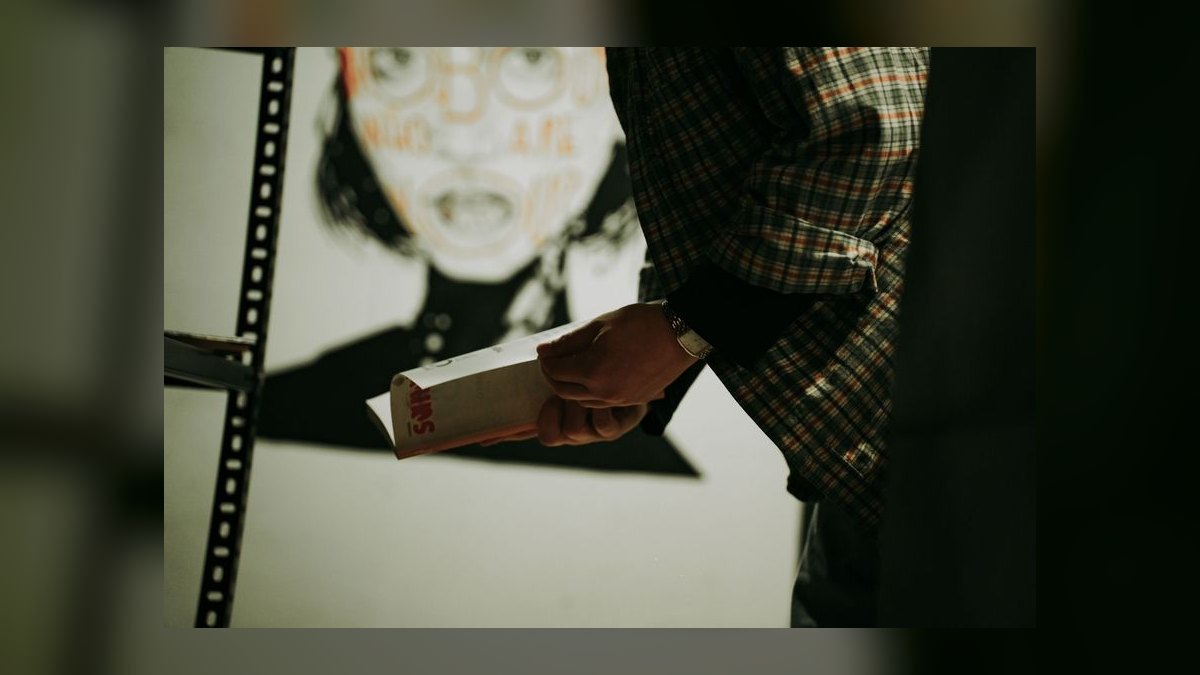
Accessibility and comfort constraints. If standing for hours is not an option for you, that is worth planning around rather than dressing around. Many galleries have a bench or a chair somewhere, staff will usually find you one if asked, and there is no dress-code penalty for prioritizing a shoe that actually works for your body. The correct outfit is the one you can wear for three hours.
Adjacent scenarios that follow similar rules. The same framework transfers with small adjustments to studio visits (more casual, wear something you don't mind getting a little dusty), art fair previews (a step more formal, and you will walk far more, so shoes matter even more), auction previews (formal end, quiet colors), museum member evenings (mid-range, slightly older crowd), and design or architecture launches (more experimental, more room for an unusual silhouette). Learning the gallery register gives you a usable default for a whole category of cultural events.
A practical rollout plan
Treat this as building a small system rather than solving one evening.
Step one, audit what you own. Lay out every blazer, jacket, tailored trouser, midi or knee-length dress, knit, and leather shoe you have. Most people discover they already own two-thirds of a working outfit and are missing exactly one thing — usually a shoe, or a jacket that fits in the shoulders.
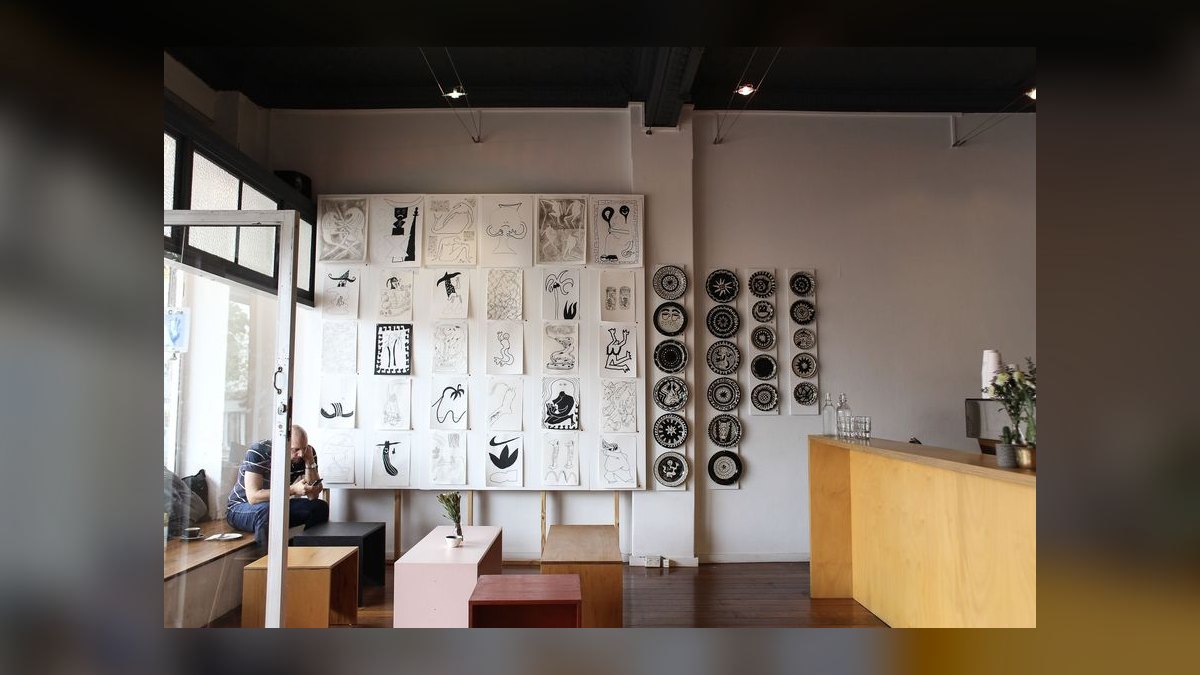
Step two, fix fit before buying anything. Take your best-fitting jacket and best trousers to a tailor. Sleeve shortening, waist suppression, and hemming typically land in the $40–$90 range per garment and take a week to ten days. Do this first because it changes what you actually need to buy.
Step three, fill exactly one gap. Buy the single missing piece, not a wardrobe. In practice the highest-return single purchase is a neutral unstructured or lightly structured blazer in wool or linen, because it upgrades everything already in your closet. The second-highest is a comfortable leather shoe in black or a mid-brown.
Step four, build two saved combinations. One warm-weather and one cold-weather version, written down or photographed on your phone. The point is to remove the decision entirely on the evening of an opening — decision fatigue at 5:30 p.m. is how people end up defaulting to the wrong thing.
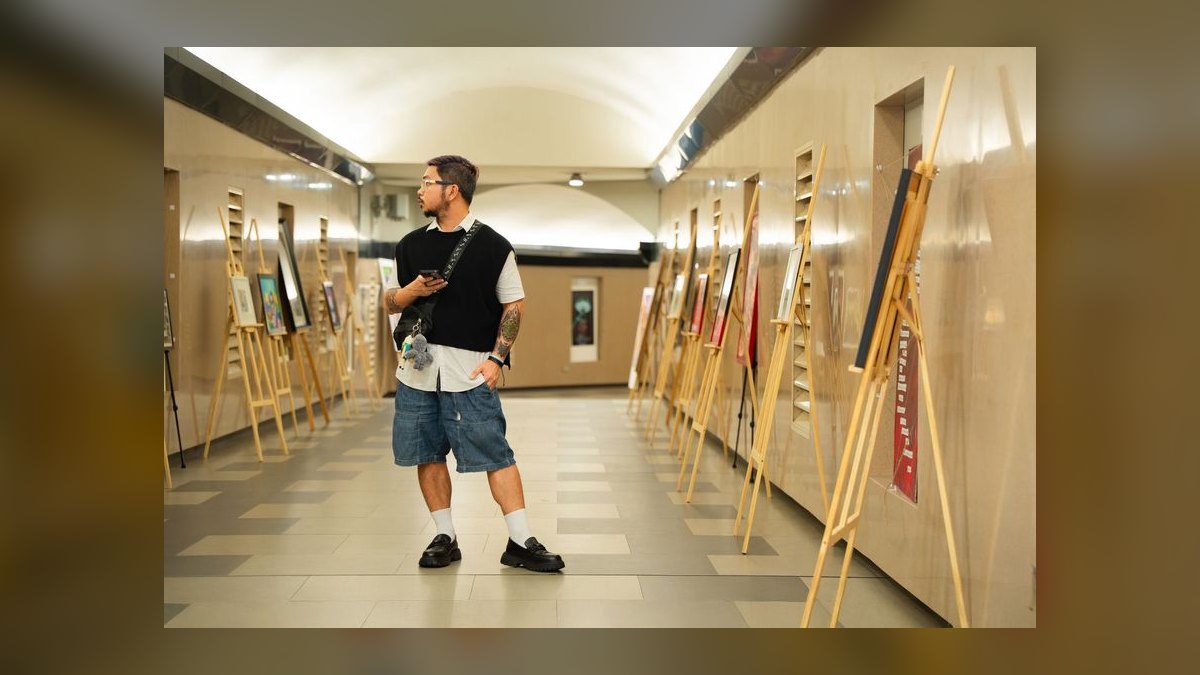
Step five, pressure-test the shoes. Wear them for a full evening somewhere lower-stakes first. A shoe that hurts at hour two is a shoe you will not wear again, and you want to learn that at a bar, not at a show.
Step six, do a lighting check. Stand under the brightest, coolest light in your home — a kitchen or bathroom fixture is closest to gallery track lighting. Look for synthetic sheen, visible pilling, and anything sheer. This takes thirty seconds and catches the most common failure.
Step seven, calibrate to the specific venue. Before each opening, check the gallery's recent posts for crowd photographs and read the invitation language. Adjust one variable — swap the sneaker for a boot, add or drop the jacket — rather than rebuilding.
Step eight, iterate across the season. After each opening, note one thing that worked and one that didn't. Within three or four events you will have converged on a personal uniform that requires no thought at all, which is the actual goal.
Related questions
Can I wear jeans to a gallery opening?
Yes, at most commercial and artist-run spaces. Choose a dark, clean, well-fitted pair with no distressing, and raise the rest of the outfit — a blazer, a good knit, a leather shoe. Skip jeans entirely for museum receptions and auction previews.
How early should I arrive?
Arrive in the first twenty minutes to actually see the work before the room fills. Arrive in the last forty-five minutes for better conversation with staff and the artist. Peak crowd is usually the middle hour, when viewing is hardest.
Should I dress differently if I plan to buy something?
Slightly. Looking considered helps you be taken seriously in a price-list conversation, but nothing formal is required. Ask for the list directly and ask about the work — that signals intent far more reliably than clothing does.
What if the invitation says nothing about dress?
That is the norm now. Default to smart-casual in muted neutrals with one accent, calibrated by venue type. When genuinely unsure, neutral and well-fitted beats formal every time.
Does the same guidance apply to art fairs?
Mostly, but size up one step in formality and prioritize shoes heavily. Fairs mean hours of walking across large convention floors rather than standing in one room, and preview days skew notably more dressed than a neighborhood gallery evening.
FAQ
Can I wear sneakers to an art gallery opening in 2027?
Yes, if they are clean, minimal, and leather or a plain canvas in a neutral color. The distinction is intentional versus default — a low-profile white or black sneaker with tailored trousers reads deliberate; a running shoe or a scuffed everyday pair reads like you didn't think about it. At museum receptions and auction previews, choose a loafer or boot instead.
What colors work best for a gallery opening?
A muted base — charcoal, navy, cream, olive, taupe, bone, rust — with one accent. The reason is functional rather than aesthetic: you are standing in front of artwork under lighting designed to make that artwork the brightest thing in the room. Large fields of high-chroma color and all-over prints compete with the walls. Logos are the one thing to avoid outright.
Is a hat acceptable?
A structured felt or wool hat — a fedora, a beret, a good flat cap — works and can be a strong accent piece. A baseball cap or a beanie generally reads too casual outside artist-run spaces. If you wear one, commit to it as the accent and keep everything else quiet.
How do I dress for a summer opening?
Linen, cotton poplin, and lightweight blends in the same neutral palette. A linen blazer over a simple shell, or a cotton midi dress, both work. Polished leather sandals are acceptable; casual slides and flip-flops are not. Remember that galleries often run their rooms cool for conservation reasons, so bring one light layer.
Do I need to coordinate with the art on display?
No, and trying to usually backfires. Match the venue's register rather than the artwork. A minimalist white-cube space rewards clean lines; a more maximalist or historic room gives you room for texture and pattern. But your outfit's job is to make you easy to talk to, not to comment on the show.
How much should I actually spend?
Less than you think. A credible look assembled new runs $250–$500, and secondhand or vintage lands well under that while reading as more interesting. Spend on tailoring before you spend on brand — $40–$90 in alterations changes more than several hundred dollars of upgrade does.
Sources
- https://www.moma.org/visit/plan/
- https://www.tate.org.uk/visit
- https://www.metmuseum.org/visit
- https://www.guggenheim.org/plan-your-visit
- https://www.getty.edu/conservation/
- https://www.nga.gov/visit.html
- https://www.artbasel.com/
- https://whitney.org/visit
- https://www.si.edu/visit
- https://www.vam.ac.uk/info/visit
Related on PULSE
- How to Style Tailored Shorts for a Gallery Opening in 2027
- How to Style a Wrap Dress for a Gallery Opening in 2027
- How to Style a Puffer Jacket for a Gallery Opening in 2027
- How to Style Combat Boots for a Gallery Opening in 2027
- How to Style a Pencil Skirt for a Gallery Opening in 2027
- How to Style a Maxi Dress for a Gallery Opening in 2027
This page will be disappearing soon. Save it to your device for $1 — or read it free while it is here.
@Kory-White- · if Venmo asks, the last 4 of my number are 2012
This page is gone.
This one is off the shelf now. $1 keeps it on your phone for good — the whole page, pictures and diagrams included.
 pulse-styleHow to Wear Terracotta with White Sneakers in 2027
 syHow do you get started with Style in 2027?
 pulse-styleHow to Style Loafers for a Holiday Party in 2027
 pulse-styleWhat to Wear to a Work Awards Gala in 2027
 pulse-styleHow to Wear Olive Green in Summer in 2027
 pulse-styleHow to Style a Midi Skirt for a Job Interview in 2027
 pulse-styleWhat to Wear to a Cruise in 2027
 pulse-styleWhat to Wear to an Award Ceremony at Work in 2027
 pulse-styleWhat to Wear to a Video Startup Job Interview in 2027
 pulse-styleWhat to Wear to Yoga Class in 2027