

What to Wear to a Trip to New York City in 2027
 Curated byKory White · Fractional CRO · Maryland
Quality
Certified
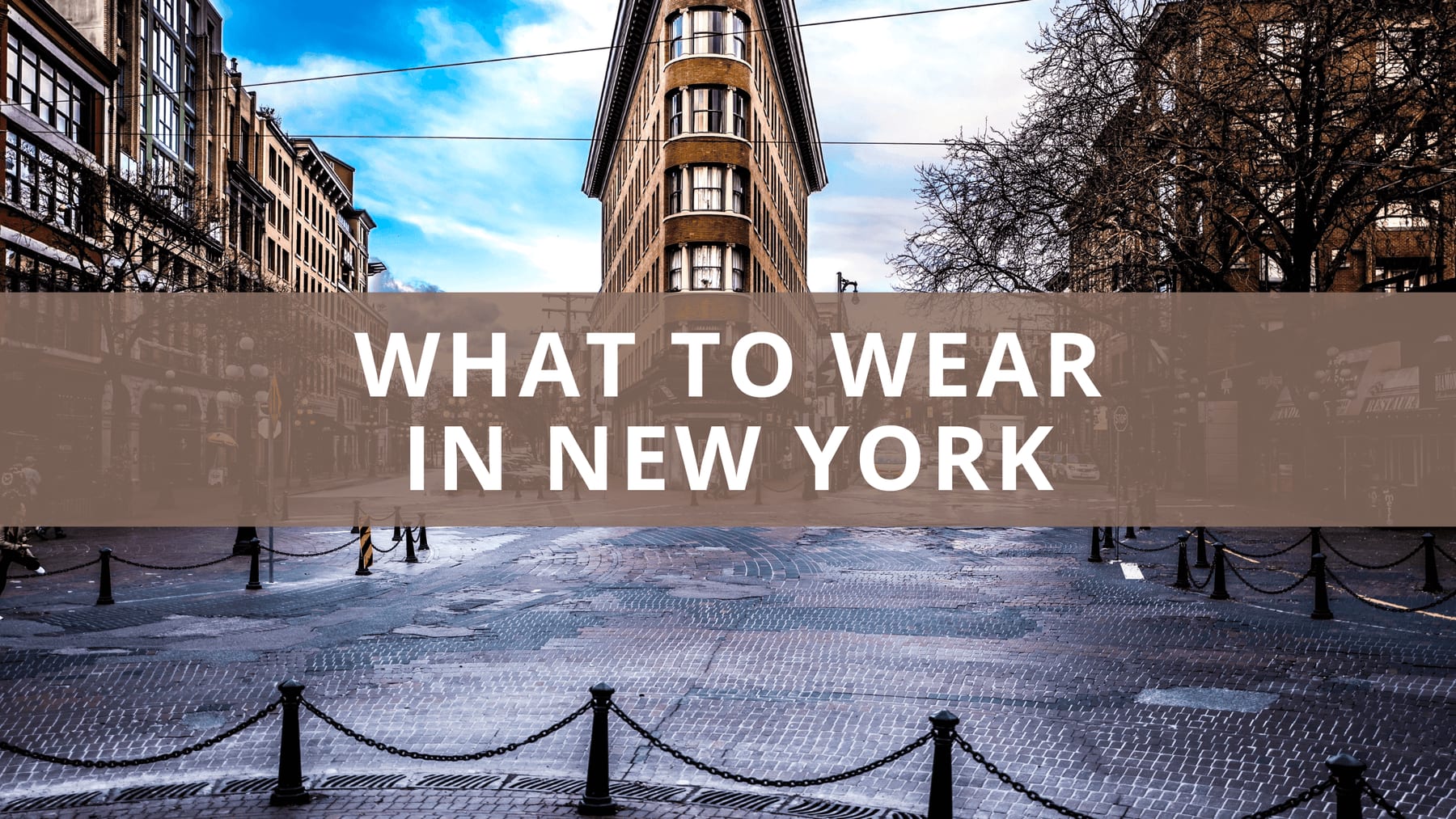
Pack a neutral, layerable capsule: merino or cotton base layers, one structured coat, straight-leg denim or tailored trousers, and broken-in leather sneakers or block-heel boots. New York rewards clothes that walk 12,000 steps, survive sudden rain, and still read polished at a 7pm reservation without a hotel-room outfit change.
Two packing philosophies: the capsule versus the occasion kit
Most people arrive in New York having committed, usually without realizing it, to one of two packing strategies. Understanding which one you've chosen — and which one the trip actually calls for — is the difference between a suitcase that works and one that becomes furniture in the corner of a hotel room.
The capsule is a small, tightly interlocking set of pieces where nearly every top works with nearly every bottom. A typical five-day capsule runs 9–12 garments: two bottoms, three or four tops, one mid-layer, one outer layer, two pairs of shoes. Everything shares a palette — charcoal, navy, camel, olive, cream — so mismatches are structurally impossible. The math is the appeal: three tops × two bottoms × two layering options produces roughly a dozen distinct looks from a carry-on. The capsule is why the same merino crewneck can go under a field jacket for a morning at the Whitney and over a collared shirt for dinner downtown.
The occasion kit is the opposite: you list the trip's events — Broadway Tuesday, walking-heavy Wednesday, nice dinner Thursday, museum Friday — and pack a dedicated outfit for each. Nothing is expected to do double duty. This is how most first-time visitors pack, and it isn't stupid; it's just expensive in volume. Five events means five outfits plus contingency, which reliably becomes a checked bag.
The trade-off is concrete. The capsule wins on mobility — a carry-on clears the AirTrain, fits a subway turnstile, and doesn't require a bell desk. It loses on variety; by day four you will be tired of your own clothes, and photos across the trip will look repetitive. The occasion kit wins on photographs and on genuinely formal commitments, and it loses everywhere else: baggage fees, stair-hauling at older subway stations without elevators, and the specific misery of a rolling suitcase on Manhattan sidewalk plate seams.
There's a middle path most experienced travelers converge on: a capsule base plus one occasion piece. Nine interlocking garments in a shared palette, plus a single item that can't do anything else — a silk shell, a sport coat, a pair of heels carried in a bag and changed into at the restaurant. That structure covers roughly 90% of a five-day New York itinerary while staying inside a carry-on.
Adjacent trips inherit the same logic with different constants. A weekend trip to Chicago or Boston is the same capsule with heavier outerwear. A trip to New Orleans or Mexico City is the same capsule with breathable fabrics and a rain shell instead of a wool coat. The framework travels; the fabric weights don't.
How to decide between them
The decision isn't taste, it's a short chain of practical constraints. Walk them in order and the answer usually falls out in under a minute.
Four questions drive it. First: bag size. If you're carry-on only, the capsule isn't a preference, it's arithmetic — a standard 22-inch bag holds roughly 9–12 garments plus a second pair of shoes and nothing more. Second: event density. Zero or one dressy commitment means the capsule absorbs it with a blazer. Three or more — a wedding, a gala, a client dinner in the same week — and you genuinely need dedicated outfits. Third: trip length. Past five days, a capsule needs a laundry stop or a third bottom; most hotels above a certain tier have same-day service, and laundromats in residential neighborhoods run wash-and-fold by the pound. Fourth: layering compatibility. If the dressy piece layers over something already in the capsule, it costs you almost nothing to bring.
Season shifts the weights. November through March, outerwear dominates the volume budget and you should plan the capsule around the coat rather than the other way around. June through August, the coat disappears and the constraint becomes fabric — cotton, linen, and lightweight knits that recover from humidity, since summer in the city means moving repeatedly between 90-degree sidewalks and aggressively air-conditioned interiors. Shoulder seasons in April, May, September, and October are the easiest packing months and the hardest forecasting months; a 55-degree morning can become a 75-degree afternoon.
The concrete numbers behind each option
Vague advice about "packing light" doesn't help anyone. Here are the actual quantities.
Walking volume. Visitors routinely log 15,000–25,000 steps a day in Manhattan — roughly 7–12 miles. That's a full working day on your feet, on concrete, much of it on the pavement plate seams and subway stairs that destroy thin-soled shoes. Two consequences: never bring shoes with fewer than 20 miles already on them, and bring two pairs so you can alternate. Alternating lets the footbed dry out overnight, which matters more for blister prevention than the shoe's price.
The capsule count. For five days: 2 bottoms (one denim, one trouser), 3–4 tops, 1 mid-layer (merino crewneck or cardigan), 1 outer layer appropriate to season, 2 pairs of shoes, 5–6 pairs of socks and underwear, and one packable rain shell. That's 15–18 items total including smalls, which fits a carry-on with room for a compressed puffer.
The occasion-kit count. The same five days packed by event runs 5 complete outfits plus a spare, typically 22–28 garments, plus 3 pairs of shoes. That is a checked bag, and checked bags on domestic carriers generally run a per-bag fee each way — money that could be a museum admission or two.
Temperature ranges that drive fabric choice. New York winters commonly sit in the 25–40°F band with wind chill along the avenues pushing lower; summers run 75–90°F with high humidity. Spring and fall hover in the 45–70°F range with wide daily swings. The practical translation: winter needs a genuine insulating layer plus a windproof shell, not one thick coat that's wrong at both ends of the day. Summer needs fabrics that breathe and a light layer for over-cooled interiors. Shoulder seasons need layers you can carry once you shed them, which is why a packable shell beats a bulky one.
Budget bands, honestly. A functional capsule can be assembled at three tiers. Entry-level, roughly $300–$600, gets you serviceable basics from mass retailers — the fabrics will be thinner and the coat won't last a decade, but it will work for a week. Mid-tier, roughly $600–$1,000, buys better wool content, real leather footwear, and coats with actual structure. Upper tier, $1,000 and above, is where cashmere, full-grain leather, and made-to-last outerwear live. The single highest-leverage line item at every tier is footwear; a $180 broken-in leather sneaker outperforms a $600 coat you're carrying over your arm by noon.
Laundry math. Wash-and-fold service in most residential neighborhoods is priced by the pound with a minimum, and a few days' worth of a capsule wardrobe typically lands near that minimum. Factoring one laundry stop into a seven-day trip lets you pack the five-day capsule instead of expanding it — usually the cheapest way to buy suitcase space.
Building the outfits: sequencing from base layer out
The order you assemble an outfit matters more than any individual purchase, because each layer constrains the next. Work outward.
Base layer. Merino wool in the 150–200 gsm range is the workhorse for cool weather: it regulates temperature across a 20-degree swing, resists odor across multiple wears, and packs flat. For warm weather, cotton and linen blends breathe better than pure synthetics. Avoid anything requiring dry cleaning — a week of subway platforms and sudden rain is not a dry-clean environment.
Mid layer. One fine-gauge knit — a merino crewneck, a cashmere V-neck, a button-front cardigan — does the most work of any garment in the bag. It goes over a tee for daytime, under a coat for cold, and over a collared shirt for dinner. Fine-gauge matters: chunky knits don't fit under a tailored coat.
Bottoms. Straight-leg denim with 1–2% elastane content moves well without looking athletic. A wool-blend or crepe trouser covers everything the denim can't. Two bottoms is genuinely enough for five days if the palette is disciplined.
Outer layer. Season decides. Water-resistant trench or field jacket for spring and fall, insulated coat plus windproof shell for winter, packable rain shell only for summer. The rule that saves trips: the outer layer must accommodate the mid layer underneath without pulling at the shoulders. Try it on layered before it goes in the bag.

Footwear. Two pairs, both broken in, at least one weather-appropriate. Leather sneakers and block-heel ankle boots is the most versatile pairing across genders and seasons; both read acceptable at a nice restaurant and both survive a full walking day.
Accessories. A crossbody or structured tote you can wear hands-free, because you will be holding a coffee, a phone, and a subway pole simultaneously. One scarf adds warmth and visual interest for almost no volume. Skip the statement jewelry you'd be nervous about on a crowded train.
Age shifts emphasis, not structure. In your twenties, relaxed silhouettes and chunky sneakers read current and cost less. In your forties, tailored basics — a merino crewneck, stretch chinos, Chelsea boots — bridge casual and professional without a second outfit. In your sixties, better fabrics and classic cuts do the work: cashmere, pleated wool trousers, polished leather, a good watch or a silk scarf. The capsule logic is identical at every age; only the fabric budget and the silhouette move.
The mistakes that cost the most
New shoes. The single most common trip-ruining error. Blisters on day one compress a five-day itinerary into two. Twenty miles of break-in before departure is the minimum.

One heavy coat instead of two layers. A single thick winter coat is too warm on a heated subway and not windproof enough on Sixth Avenue. An insulating layer plus a shell handles both.
All-black with no texture. Black works in New York, but flat black in identical fabrics photographs poorly and reads as unconsidered. A camel knit or an olive jacket breaks it up at no cost to versatility.
Ignoring the rain. Sudden rain is routine, and street vendors selling umbrellas at intersections are a genuine market signal. A packable shell weighs almost nothing and prevents the day where you retreat to the hotel to change.
Stiff denim. Rigid raw denim on a 20,000-step day is a mistake you make once. Stretch content is not a compromise here.
Overdressing for the venue. New York skews less formal than its reputation. Smart-casual — a blazer over a knit with dark denim, or a midi dress with block heels — clears the bar at nearly every restaurant and theater. Very few places still enforce a jacket requirement, and those that do say so on the reservation.
Related questions
How does packing for New York differ from a beach trip?
Almost entirely. A beach capsule optimizes for heat and water; a New York capsule optimizes for walking distance, temperature swings between indoors and outdoors, and evening dress codes. The shared principle is a disciplined palette; the fabric weights and footwear are unrelated.
Do I need different clothes for different boroughs?
Not meaningfully. Downtown Manhattan and Brooklyn skew more casual and fashion-forward; Midtown and the Upper East Side skew more traditional. A neutral capsule with one accent piece reads correctly in all of them, which is precisely the argument for the capsule.
What changes if the trip is for work rather than leisure?
Add one occasion piece — a blazer or a structured dress — and one dressier shoe. Everything else holds. Business travelers often report that the same capsule serves both, since revenue-generating client dinners and tourist dinners land at similar dress codes in this city.
How many days can one capsule cover?
Five comfortably, seven with a single laundry stop. Past seven days without laundry, you're adding a third bottom and more tops, and the volume advantage disappears.
Is renting or buying on arrival ever smarter than packing?
Occasionally. If you need one formal outfit for one evening, buying or renting locally can beat checking a bag — you avoid the fee and the haul. It's rarely worth it for anything you'd wear more than once.
FAQ
What shoes handle a full walking day in the city?
Leather sneakers with a cushioned footbed, or block-heel ankle boots with a heel under two inches. Both read acceptable at dinner and both survive 20,000 steps. Thin-soled flats and any heel above two inches will not. Bring two pairs and alternate them so each dries overnight.
Can I wear shorts in summer?
Yes. Tailored shorts in linen or cotton hitting just above the knee, paired with a lightweight button-down or a knit tee, look intentional rather than touristy. Athletic shorts read as gym clothes. Bring a light layer regardless — interiors are aggressively air-conditioned.
Is athleisure acceptable for dinner?
Elevated athleisure works at casual spots — ponte leggings with a silk blouse and leather sneakers, for instance. Actual gym shorts and sweatpants do not. If the reservation took effort to get, default to smart-casual.
What's the minimum viable winter packing list?
Thermal or merino base layers, a fine-gauge mid layer, an insulating coat, a windproof outer shell, waterproof boots with real tread, and wool accessories — scarf, gloves, hat. The base layer plus shell combination handles the heated-subway-to-windy-avenue transition better than one heavy coat.
How should I dress for a Broadway show?
Smart-casual clears it. A blazer over a turtleneck with dark denim, or a midi dress with block heels, is more than sufficient. Theaters have no enforced dress code, though ripped denim and flip-flops will make you the most casually dressed person in the room.
Which colors work best?
Neutrals with one accent. Charcoal, navy, camel, olive, and cream interchange freely, which is the entire mechanism behind a working capsule. Add one muted accent — brick red, forest green, burgundy — for visual interest. Pure white shows city grime within hours.
Sources
- https://www.weather.gov/okx/ — National Weather Service, New York City forecast office
- https://www.ncei.noaa.gov/access/us-climate-normals/ — NOAA U.S. Climate Normals, monthly temperature and precipitation
- https://www.nyc.gov/site/visit/index.page — Official New York City visitor information
- https://www.mta.info/accessibility — MTA station accessibility and elevator availability
- https://www.tsa.gov/travel/security-screening/whatcanibring — TSA carry-on rules and restrictions
- https://www.cdc.gov/physical-activity-basics/guidelines/index.html — CDC physical activity guidance, walking volume context
- https://www.nps.gov/stli/planyourvisit/index.htm — National Park Service, Statue of Liberty visit planning
- https://www.aafa.org/ — American Apparel & Footwear Association, industry and materials resources
Related on PULSE
This page will be disappearing soon. Save it to your device for $1 — or read it free while it is here.
@Kory-White- · if Venmo asks, the last 4 of my number are 2012
This page is gone.
This one is off the shelf now. $1 keeps it on your phone for good — the whole page, pictures and diagrams included.
 syHow do you get started with Style in 2027?
 pulse-styleHow to Wear Olive Green in Summer in 2027
 pulse-styleHow to Wear Terracotta with White Sneakers in 2027
 pulse-styleWhat to Wear to a Tech Startup Interview in 2027
 pulse-styleWhat to Wear to a Video Government Job Interview in 2027
 pulse-styleWhat to Wear to a Concert in 2027
 pulse-styleHow to Style Wide-Leg Pants in Spring in 2027
 pulse-styleHow to Wear Forest Green in Summer in 2027
 pulse-styleWhat to Wear to a Karaoke Night in 2027
 pulse-styleHow to Wear Cream with a Turtleneck in 2027