

What to Wear to a Fall Backyard Wedding in 2027
 Curated byKory White · Fractional CRO · Maryland
Quality
Certified
For a fall backyard wedding in 2027, wear layered pieces in warm earth or jewel tones — a velvet or crepe midi dress with a knit topper, or a tweed sport coat with wool trousers. Choose block heels, loafers, or boots that won't sink into grass, and always pack an evening layer.
The two camps: tailored-formal versus textured-relaxed
Almost every fall backyard wedding outfit decision collapses into one of two camps, and knowing which one you're in solves eighty percent of the problem before you open a closet door.
Camp one: tailored-formal. This is the traditional wedding-guest instinct scaled slightly down. A matched suit in charcoal, navy, or a deep autumn brown. A structured sheath or A-line dress in crepe, with a proper blazer or tailored jacket over it. Polished leather shoes. A tie or at least a pocket square. The silhouette is clean, the fabrics are smooth, and the whole outfit reads as "I dressed for a wedding" the second you walk through the gate. It photographs beautifully in the wide shots. It looks slightly stiff standing next to a hay bale.
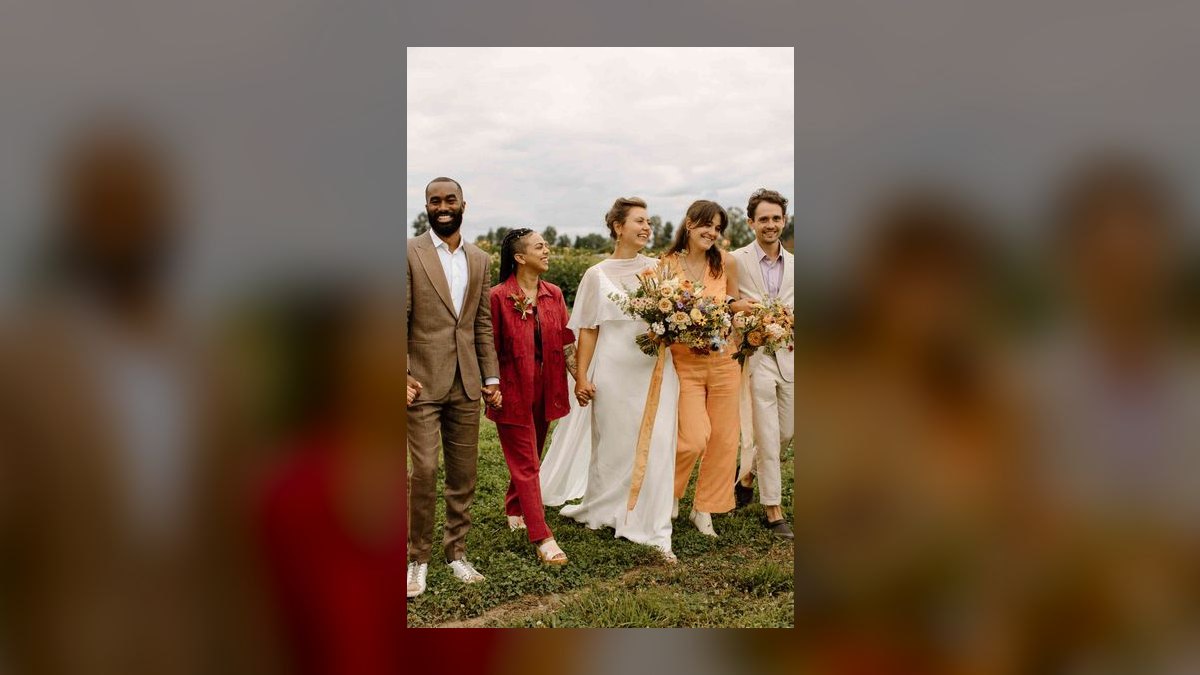
Camp two: textured-relaxed. Same formality *level*, different texture vocabulary. Instead of a matched suit, you separate: a tweed or wool-blend sport coat over trousers in a contrasting shade. Instead of smooth crepe, you reach for velvet, corduroy, boucle, ribbed knit, or a heavier matte satin. Shoes are suede chukkas, penny loafers with rubber soles, or block-heeled ankle boots. The outfit reads as considered rather than corporate. It sits naturally in a yard with string lights and folding chairs, and it survives a walk across damp lawn without visible distress.
The mistake people make is assuming these camps map onto formality. They don't. A tweed sport coat with wool trousers and a knit tie is exactly as formal as a navy suit — it's just speaking a different dialect. The relevant difference is environmental fit, not dress-code compliance. Tailored-formal was designed for interiors: hardwood, carpet, climate control, a coat check. Textured-relaxed was designed for outdoors: uneven ground, temperature swings, wind, the possibility of sitting on a bench that has been outside all week.
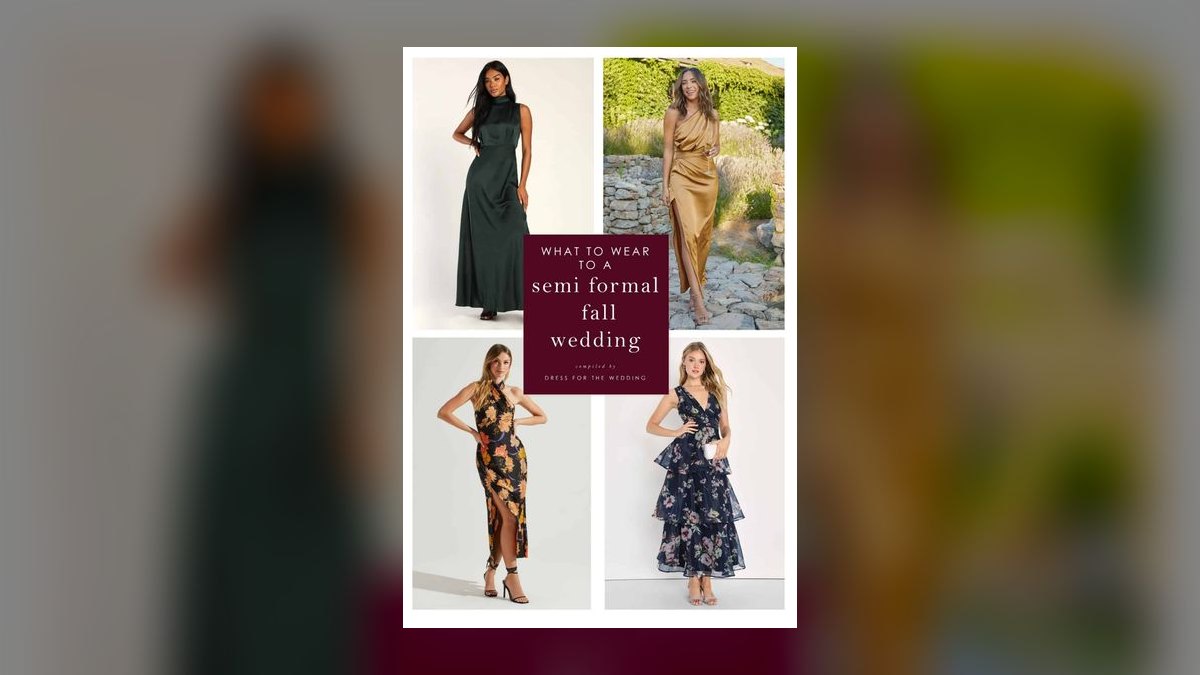
Fall backyard weddings sit almost entirely in outdoor conditions, which is why camp two wins most of the time. But not always. The variables that push you back toward tailored-formal are: a formal or black-tie-optional line on the invitation; a tented reception with flooring and heaters; an evening ceremony start; a couple whose broader wedding aesthetic is clearly polished rather than rustic; and any venue where "backyard" means a two-acre estate lawn with catering staff rather than an actual residential yard.
There's a third position worth naming even though it isn't really a camp: the hybrid, which is what most well-dressed guests actually land on. Tailored core, textured accents. A smooth wool suit with a knit tie and suede shoes. A crepe midi dress with a velvet blazer and a cashmere wrap. The hybrid hedges intelligently — it holds up if the wedding turns out to be dressier than you expected, and it doesn't look out of place if it turns out to be a genuinely casual afternoon in someone's mother's backyard.
Adjacent scenarios follow the same logic, which is why this framework travels. A fall vineyard wedding pushes toward textured-relaxed with better shoes. A fall barn wedding is textured-relaxed with a warmer outer layer, because barns are unheated. A fall rooftop wedding flips it — hard flooring means heels are back on the table, but wind means you need a layer that stays put. An October rehearsal dinner in a backyard is the same outfit at seventy percent intensity: drop the jacket, keep the texture.
How to decide between them
The decision isn't a coin flip. Run the invitation and the logistics through a short sequence and the answer falls out.
Step one: read the literal dress code. "Black tie optional" and "formal" both mean tailored-formal, backyard or not. "Cocktail" is genuinely ambiguous and lands you in hybrid territory. "Dressy casual," "garden party," "festive," or no stated code at all points to textured-relaxed. If the couple wrote something idiosyncratic — "wear your fall best," "boots encouraged," "dress for the weather" — believe them literally. Couples who write custom dress codes have thought about it, and "dress for the weather" is a direct instruction to prioritize layers over silhouette.
Step two: check the ceremony start time. A 2 p.m. ceremony in October means the light is warm, the temperature is at its daily peak, and the whole event skews daytime-informal. A 5 p.m. ceremony means you will be outdoors as the sun sets, and in most of North America that's a fifteen-to-twenty-five-degree Fahrenheit drop between the vows and the last dance. Later start times argue for heavier fabrics and a real outer layer, not just a decorative one.
Step three: find out about the tent and the flooring. This single fact determines your shoes. Tented with a plywood-and-vinyl floor: heels are fine, stilettos are survivable, suede is safe. Open lawn: block heels, wedges, flats, loafers, or boots — nothing with a contact patch smaller than a quarter. Mixed (tented reception, lawn ceremony): wear the lawn-appropriate shoe and stop thinking about it, because you'll be on grass for photos regardless.
Step four: look at the couple's own aesthetic. Their save-the-date, their registry, the venue photos they shared — these are a reliable signal of the room's overall dress level. Guests tend to dress within one notch of the couple.
Step five: apply the regional weather reality. A backyard wedding in Charleston in mid-October is a completely different garment problem from one outside Minneapolis on the same date. Southern fall weddings often stay in the seventies through the afternoon, which means linen-wool blends and lightweight layers you can actually take off. Northern and mountain-region fall weddings can run from forty to sixty-five in a single afternoon, which means the layer isn't decorative, it's structural.
The sequence matters because people usually run it backward. They pick a dress or a jacket they like, then try to make the shoes and the layer work around it. Running it forward — code, time, ground, aesthetic, climate — means the constraints are settled before the fun part, and you never end up carrying your shoes across a lawn at ten at night.
Concrete numbers behind each option
Costs, temperatures, and dimensions are where vague advice becomes actionable. Here are the real figures worth planning against.
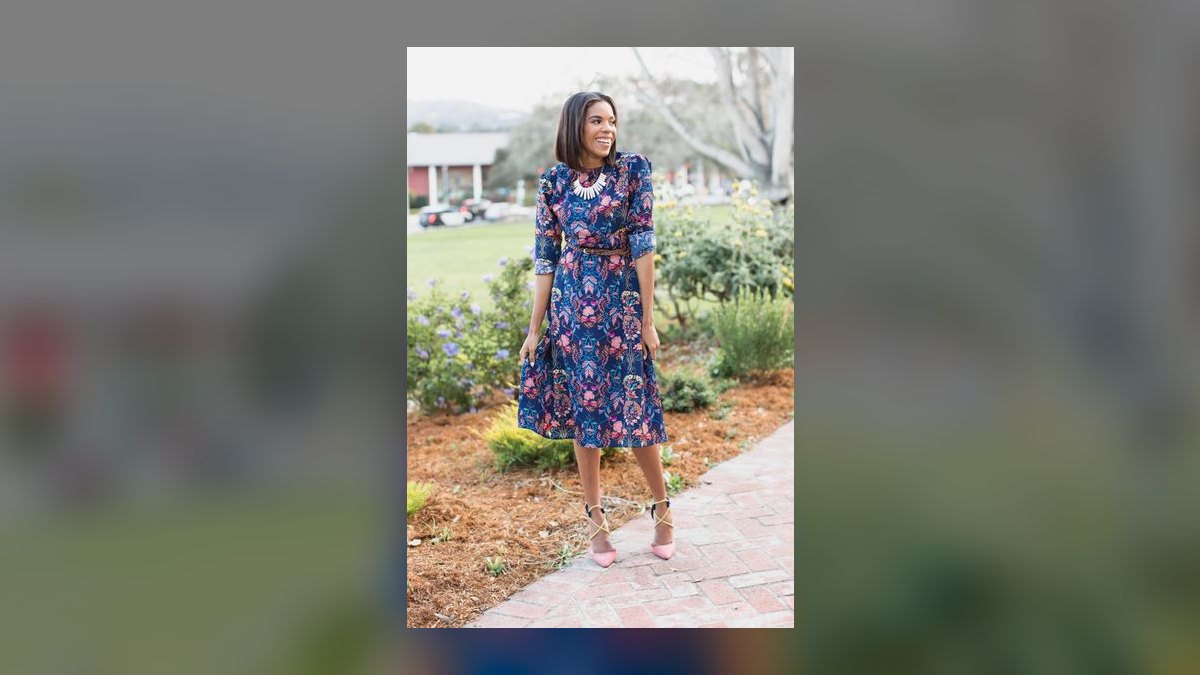
Temperature bands. Plan against a range, not a forecast high. Across most of the continental U.S., October afternoons land somewhere between 55°F and 75°F, and evenings drop to 40°F–58°F. That delta — commonly 15 to 25 degrees — is the single most underestimated variable at outdoor fall weddings. September weddings run roughly 8 to 12 degrees warmer across the board; early November weddings run 8 to 15 degrees cooler and lose daylight around forty-five minutes earlier. If you only optimize for the ceremony photos, you will be cold from cocktail hour onward.
Layer weights. A useful shorthand: a fine-gauge merino or cashmere layer buys you roughly 8–10 degrees of comfort. A structured wool blazer or sport coat buys 10–15. A heavy knit cardigan or a lined trench buys 15–20. A pashmina or large wrap buys about 8, and its real advantage is that it packs into a bag. Match the layer to your temperature delta rather than to the outfit's aesthetics, then make it look intentional.
Heel geometry. This is the number that actually prevents disasters. A stiletto's contact patch is roughly 0.2 to 0.4 square inches; on unfrozen lawn it sinks under normal body weight almost immediately. A block heel at 2 to 3 inches gives you something closer to 1.5 to 2.5 square inches, which distributes weight enough to stay on the surface. Wedges spread the load over the full footprint and are the most stable option on turf, though they're the least formal-looking. Practical rule: if the heel's base is narrower than a U.S. quarter, don't wear it on grass. Heel-protector caps — small plastic covers that widen the base — are inexpensive and genuinely work if you're committed to a thinner heel.
Budget bands, honestly stated. A complete guest outfit assembled from mainstream mall and mid-tier brands typically runs $150–$350 if you're buying everything new and $0–$120 if you're layering something new over pieces you own. A step up into better fabrics — real cashmere, full-canvas tailoring, leather-soled shoes — moves you into the $400–$800 range. Above that you're buying longevity and fit, not wedding-appropriateness. Rental services occupy a useful middle band for dresses you'd wear once. The genuinely high-leverage spend is tailoring: $20–$60 to hem trousers or take in a jacket does more for how an outfit reads than an extra two hundred dollars of garment price.
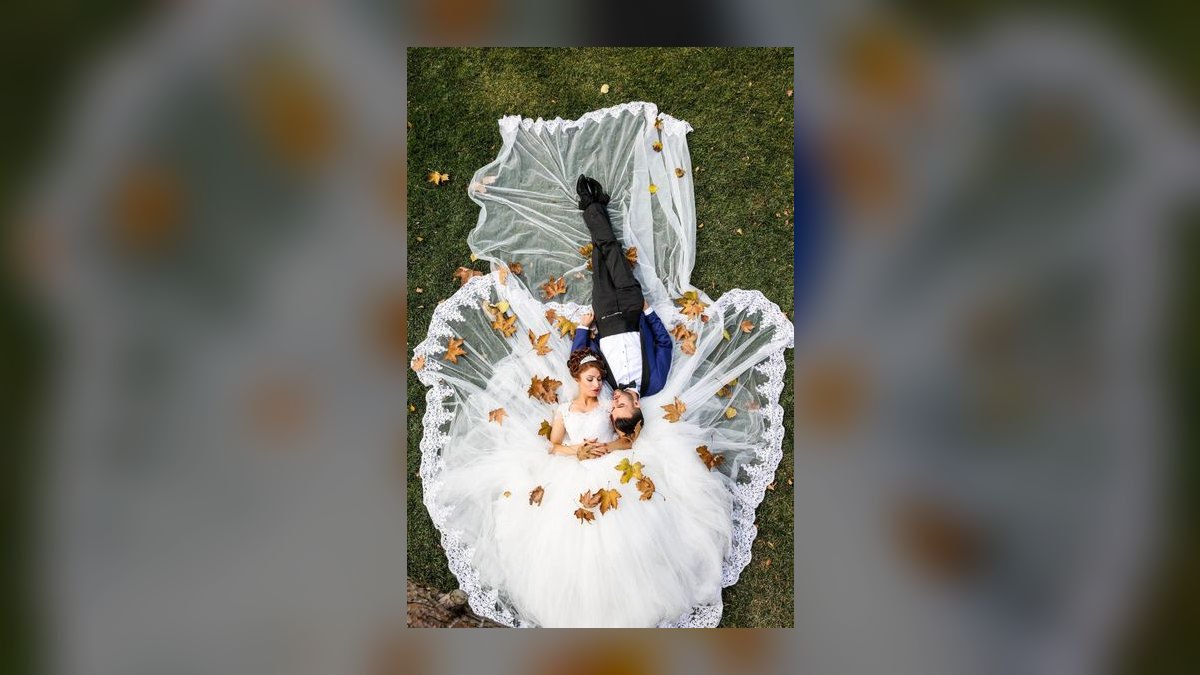
Fabric behavior in cold and damp. Velvet, corduroy, tweed, boucle, and flannel all hold warmth and hide light moisture. Crepe and ponte hold structure and resist wrinkling in a car. Silk and satin look extraordinary and offer close to zero insulation — plan a layer if you go that route. Untreated suede spots permanently in rain; a protector spray applied 24 hours ahead handles light drizzle but not a downpour. Linen is a September fabric, not an October one, and reads as out of season in photos regardless of the temperature.
Timing. Order or buy at least two weeks out if alterations are involved, and one week out if they aren't. Break in any new shoe for at least three separate hours indoors before the event — lawn walking is meaningfully harder on feet than pavement, and a shoe that's fine for a commute can blister across four hours of standing on uneven ground.
Building the outfit, in order
Sequencing matters as much as selection. Build outward from the constraint that can't move, which is almost always the ground.
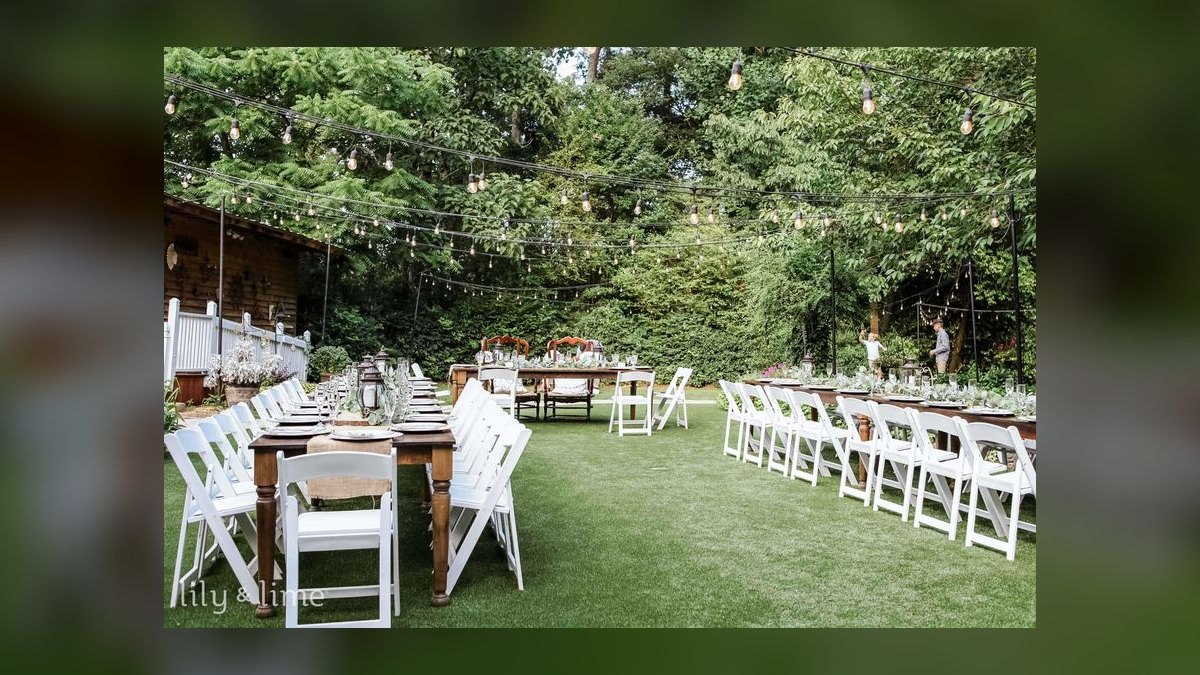
Start with shoes. They are the only element with a hard physical failure mode. Pick a grass-viable shoe you can stand in for four hours, then build the outfit's formality level to match. If you start with the dress and shop for shoes last, you will end up rationalizing a heel that doesn't work.
Then the base garment. Dress, or trousers-and-top, or the suit separates. This carries the color story. For fall, the reliable palette is deep burgundy, forest and olive green, rust and burnt orange, mustard, chocolate and camel brown, with cream, charcoal, and dusty blue as neutrals. Avoid pure white and ivory entirely. Avoid anything close to the wedding party's stated colors if you know them — nobody wants to be mistaken for a bridesmaid in the group shots. Solid black is technically fine at a modern wedding but reads somber outdoors in October unless it's textured; a black velvet or black boucle piece works where flat black crepe can feel funereal against fall foliage.
Then the layer, chosen against the temperature delta. This is the piece most people treat as optional and then regret. A blazer, sport coat, cardigan, wrap, or tailored jacket in a texture that contrasts with the base garment. The contrast is what makes the outfit look composed rather than assembled.
Then accessories, sparingly. One metal family. One point of visual interest — a pocket square, a statement earring, a knit tie, a patterned scarf. A bag with a strap, because backyard weddings have nowhere to set a clutch down.
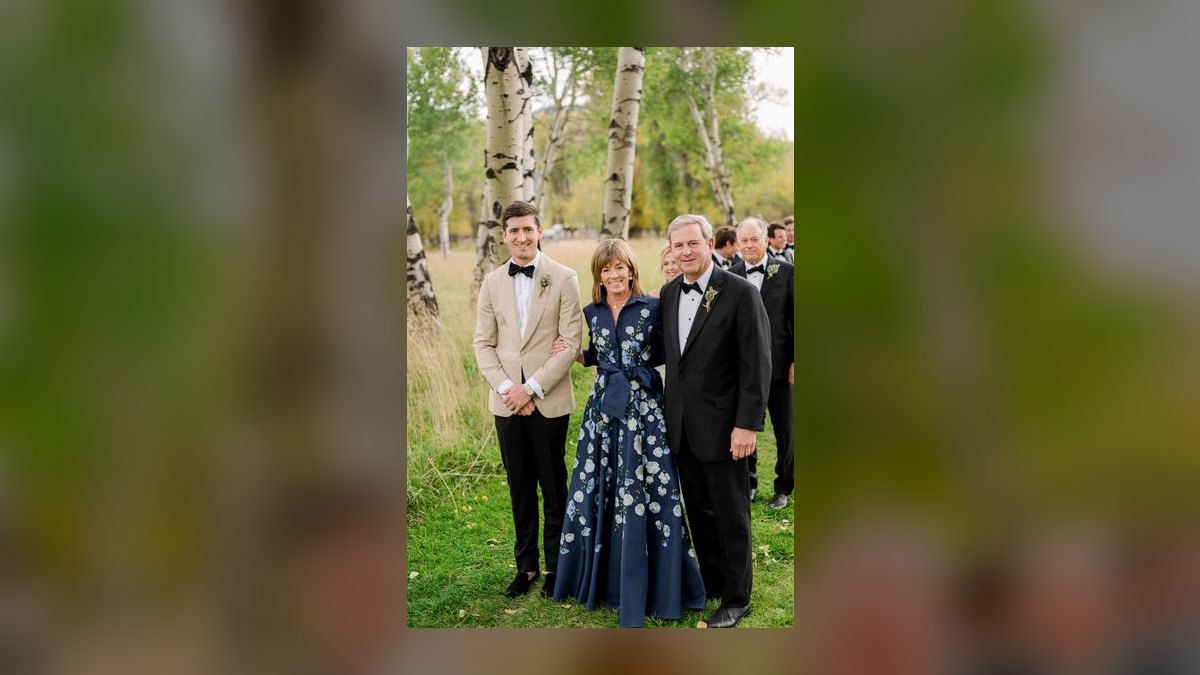
Then the contingency kit. This is the step that separates people who enjoy the evening from people who endure it: a packable wrap or a thin extra layer, blister plasters, a compact umbrella if there's any rain probability, and heel protectors if applicable. Most of it fits in a small bag or a car.
The full dress rehearsal. Put the entire outfit on at home and stand in it for twenty minutes. Sit down. Cross your legs. Walk on carpet and then, if you can, on actual grass. Raise your arms as if hugging someone. Most outfit failures at weddings are fit failures that were completely discoverable in advance: a jacket that binds across the shoulders when you hug, a dress that rides up when you sit, a strap that slides, a shoe that rubs at the heel counter after fifteen minutes. Twenty minutes standing at home is a nearly complete simulation of the failure modes.
Reading the invitation, the venue, and the couple
Dress codes have drifted. "Cocktail" in 2027 covers a much wider band than it did twenty years ago, and couples increasingly write their own language instead of using inherited terms. Learning to decode it is more useful than memorizing a formality chart.
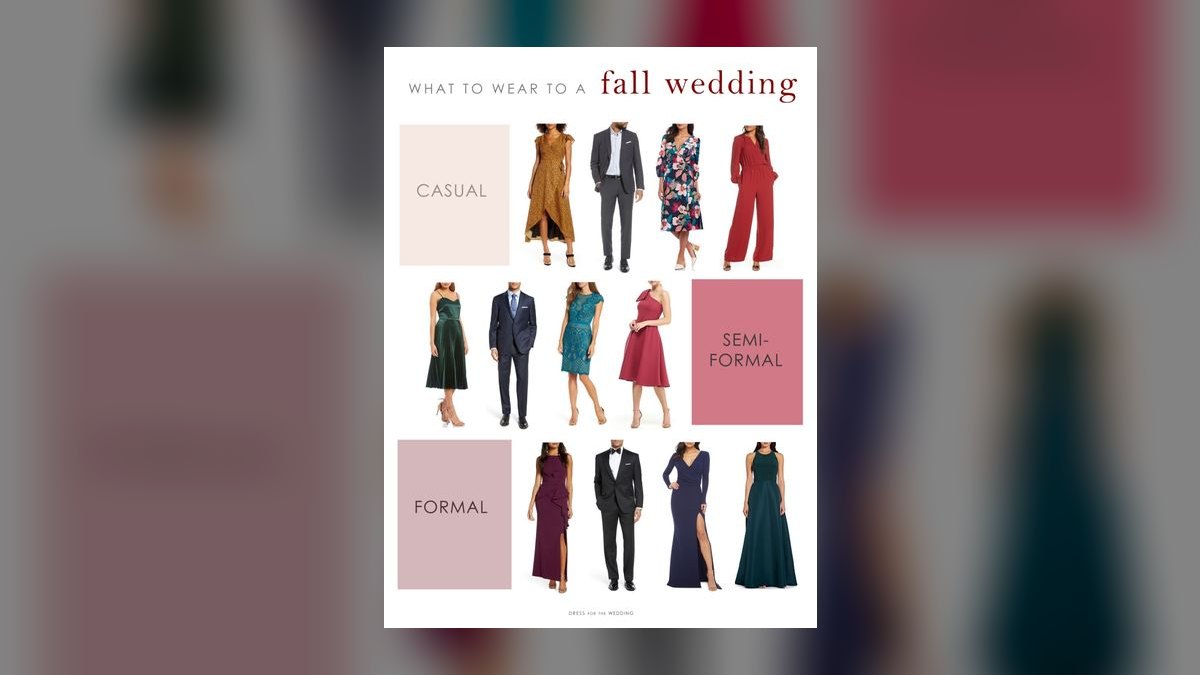
Explicit codes and what they actually mean outdoors. *Black tie* at a backyard wedding is rare but real, usually at large residential estates; it means a tuxedo or a floor-length gown, and the couple has almost certainly arranged flooring. *Black tie optional* means a dark suit is fully acceptable. *Cocktail* means a suit or a knee-to-midi dress, and outdoors it tilts toward the textured end. *Dressy casual* or *semi-formal* means a sport coat without a tie, or a nice dress without a full formal shoe. *Garden party* is an explicit instruction toward florals, lighter structure, and comfortable footwear. *Casual* at a wedding never means jeans-and-a-tee — it means you can skip the jacket, not that you can skip getting dressed.
Custom language. When a couple writes "cozy fall vibes," "boots welcome," "we're in a backyard, dress comfortably," or "no need for a tie," take it at face value. Ignoring an explicit relaxation and showing up in a three-piece suit is its own kind of misread — it signals you didn't read the invitation, and it can make more casually dressed guests self-conscious.
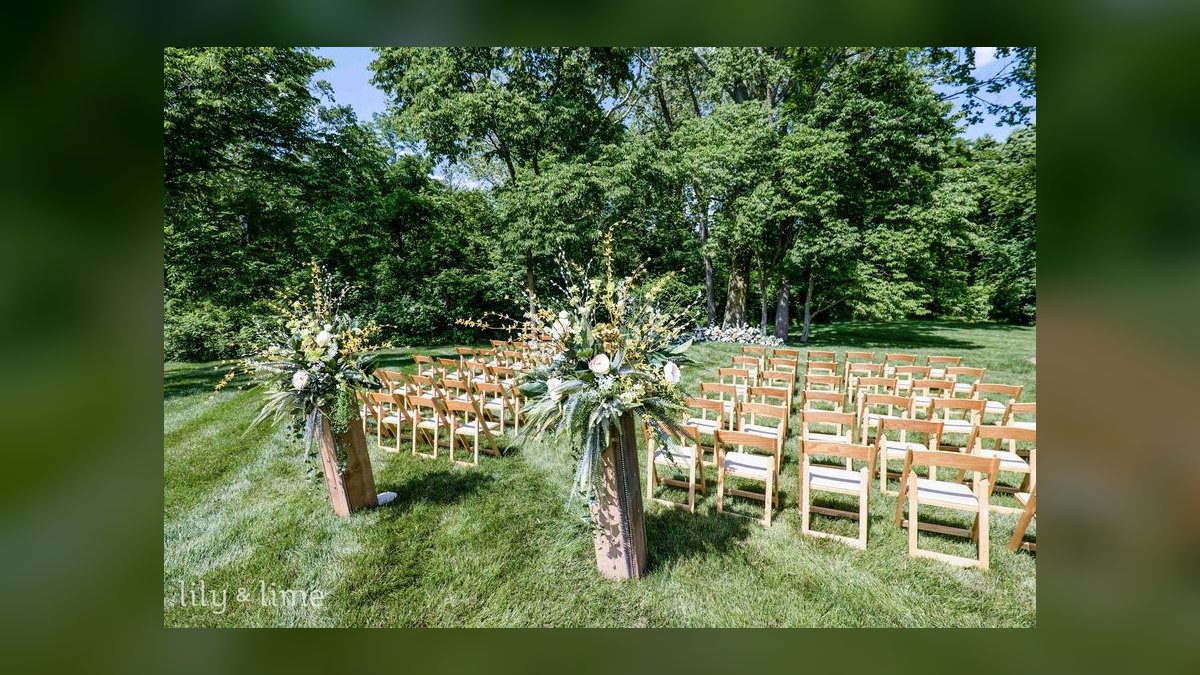
Venue signals. A residential backyard with a rented tent and folding chairs is a different formality environment than a landscaped estate lawn with a permanent pergola. Look at photos if the couple shared a location. Gravel driveways, string lights, and hay bales indicate textured-relaxed. Catering tents, uplighting, and a dance floor indicate the room will skew dressier.
Time-of-year drift within "fall." Early September still behaves like summer in most places — lighter fabrics, open-toe shoes, brighter colors are all fine. Peak October is the classic fall wedding window and the palette described above is exactly right. Late November edges toward winter dressing: heavier coats, closed-toe shoes without exception, and darker, richer colors. A "fall wedding" on November 22 and one on September 6 call for meaningfully different wardrobes even though they share a season label.
When in doubt, ask someone in the wedding party. A one-line text to a bridesmaid or the groom's brother — "what are people wearing?" — resolves more ambiguity in thirty seconds than an hour of guessing. Couples generally appreciate it. Nobody has ever been annoyed by a guest who wanted to get the dress code right.
Adjacent scenarios: roles, weather turns, and the multi-event weekend
The core question has neighbors worth answering, because most people attending a fall backyard wedding are also navigating at least one of these.
If you're in the wedding party. Your outfit is largely dictated, but the environmental problem is identical and *worse* — you'll be standing on grass longer, posing for photos in the coldest part of the evening, and possibly walking a processional across uneven ground. Push hard on shoes. If you've been assigned a heel that won't survive the lawn, heel caps or a second pair for the reception are legitimate and nobody will notice.
If you're a parent of the couple. Coordinate with the other parents and with the wedding party palette. Comfort matters more here than anywhere, because parents are on their feet greeting people for hours. Classic silhouettes, a real jacket, and a shoe that's been broken in.
If you're the officiant. You'll be visible in every ceremony photo and standing still, facing into whatever wind exists, for fifteen to thirty minutes. Layer more than you think you need, and choose something that photographs cleanly against the backdrop rather than blending into it.
If the weather turns. Rain is the most common disruption at fall outdoor weddings. A packable trench in beige, olive, or navy handles it without looking like emergency gear. Rubber-soled shoes over leather-soled ones. Skip untreated suede if the forecast is above about thirty percent. A clear umbrella keeps photos usable. An unexpected cold snap is handled by the layer you already packed. Unexpected heat is the easiest failure: take the jacket off.
If it's a multi-event weekend. Welcome party, wedding, morning-after brunch. The efficient approach is one neutral base — a pair of trousers, a blazer, or a versatile dress — recombined with different layers and accessories across the three events. It cuts your packing significantly and nobody photographs the same trousers twice.
Comparable settings. Everything here transfers, with adjustments, to fall vineyard weddings (add wind protection), barn weddings (add warmth, expect dust), rooftop weddings (hard flooring, more wind), orchard or farm weddings (mud is a real possibility, so boots), and outdoor rehearsal dinners (dial the whole thing down one notch and keep the shoes). The constant across all of them is that outdoor autumn events reward texture, layers, and stable footwear — and punish smooth formality that was designed for a ballroom.
Related questions
What color should I avoid at a fall backyard wedding?
Skip white, ivory, cream-as-a-full-look, and anything close to the stated wedding-party colors. Very pale blush can photograph as white in bright light. Solid flat black is acceptable at modern weddings but reads better with texture — velvet or boucle rather than plain crepe.
Can I wear boots to a fall wedding?
Yes, and they're often the smartest choice outdoors. Sleek leather or suede ankle boots with a block heel, or Chelsea and chukka boots for men, read as intentional fall dressing. Avoid work boots, chunky combat lugs, or anything visibly weatherproofed unless the couple invited them.
How dressy is "backyard casual"?
One notch below cocktail. A sport coat without a tie, or a midi dress without formal heels. It removes the obligation to wear a full suit or a gown — it does not authorize jeans, sneakers, or anything you'd wear to run errands.
Do I need a tie at an outdoor fall wedding?
Only if the invitation says formal or black tie optional. Otherwise a knit tie is a nice texture play but genuinely optional. An open collar under a tweed or wool sport coat is entirely appropriate at a backyard ceremony.
What's the safest all-purpose outfit if I can't find out the dress code?
The hybrid: tailored base, textured layer, grass-safe shoe. A midi dress with a blazer, or wool trousers with a sport coat and no tie. It sits comfortably at cocktail level and adapts up or down by adding or removing the jacket.
FAQ
Can I wear jeans to a fall backyard wedding?
Only if the invitation explicitly says casual, and even then it's a narrow window. Dark, clean, unfaded denim with a sport coat and leather shoes can work at a genuinely relaxed afternoon event. Anything distressed, light-wash, or paired with sneakers is too far. When uncertain, chinos or wool trousers get you the same relaxed feel with none of the risk.
What shoes actually work on grass?
Block heels of two to three inches, wedges, flats with a substantial sole, loafers, and ankle boots. The test is the width of the contact patch — narrower than a quarter and it sinks. Rubber or crepe soles grip damp lawn far better than smooth leather. If you're set on a thinner heel, heel-protector caps widen the base enough to keep you on the surface.
Is a full suit too formal for a backyard wedding?
Rarely too formal, but often the less interesting choice. A suit is always safe. Separates — a tweed or wool sport coat over contrasting trousers — read as equally dressed while fitting the setting better. If the invitation says formal, cocktail, or black tie optional, wear the suit.
How should I dress if rain is in the forecast?
Packable trench in a neutral, rubber-soled shoes, and skip untreated suede. Choose fabrics that recover from moisture — wool, crepe, and ponte all do; silk and satin spot. Bring a clear umbrella so photos stay usable, and put a small towel in the car. Rain at an outdoor fall wedding is common enough to plan for as a default rather than an exception.
Are open-toe shoes acceptable in the fall?
In early September, yes. Through October it depends on the forecast and the ground — a peep-toe or open-toe block heel is fine on a dry sixty-five-degree afternoon and miserable at a damp fifty-degree evening reception. Closed-toe is the safer default from mid-October onward, and it's what most guests will be wearing.
What if the ceremony is outdoors but the reception is tented?
Dress for the outdoor portion — that's where the harder constraints live. Wear the grass-viable shoe even if the reception has flooring, since photos happen on the lawn regardless. Bring the layer for the ceremony and shed it once you're under the tent with heaters running.
Sources
- https://www.brides.com/
- https://www.theknot.com/content/wedding-guest-attire-guide
- https://www.weddingwire.com/wedding-ideas/wedding-guest-attire
- https://www.vogue.com/article/wedding-guest-dress-code
- https://www.gq.com/story/wedding-guest-attire-guide
- https://www.realsimple.com/beauty-fashion/clothing/wedding-guest-attire
- https://www.nytimes.com/wirecutter/
- https://www.weather.gov/
- https://www.harpersbazaar.com/wedding/planning/
- https://www.marthastewart.com/weddings
Related on PULSE
- What to Wear as a Officiant to a Backyard Wedding in 2027
- What to Wear as a Maid of Honor to a Backyard Wedding in 2027
- What to Wear as a Best Man to a Backyard Wedding in 2027
- What to Wear to a Winter Backyard Wedding in 2027
- What to Wear as a Bridesmaid to a Backyard Wedding in 2027
- What to Wear as a Father of the Groom to a Backyard Wedding in 2027
This page will be disappearing soon. Save it to your device for $1 — or read it free while it is here.
@Kory-White- · if Venmo asks, the last 4 of my number are 2012
This page is gone.
This one is off the shelf now. $1 keeps it on your phone for good — the whole page, pictures and diagrams included.
 pulse-styleWhat to Wear to a Company Offsite in 2027
 pulse-styleWhat to Wear to a Tech Startup Interview in 2027
 pulse-styleWhat to Wear to a Cruise in 2027
 pulse-styleWhat to Wear to a Summer Garden Wedding in 2027
 pulse-styleWhat to Wear to Yoga Class in 2027
 pulse-styleHow to Wear Cream with a Turtleneck in 2027
 pulse-styleHow to Wear Forest Green in Spring in 2027
 pulse-styleWhat to Wear to a Graduation if You Have a Long Torso in 2027
 pulse-styleHow to Wear Slate Blue with Chelsea Boots in 2027
 pulse-styleHow to Wear Dusty Rose with a Bomber Jacket in 2027