

What to Wear as a Guest to a Lakeside Wedding in 2027
 Curated byKory White · Fractional CRO · Maryland
Quality
Certified

For a lakeside wedding in 2027, wear breathable natural fabrics — linen, cotton, silk blends — in muted earth and water tones, cut into a relaxed but polished silhouette. Men: unstructured blazer, chinos, loafers. Women: flowy midi dress or tailored separates. Choose block heels or flats for grass, and pack a light layer for the evening breeze.
The 4 p.m. ceremony that ends at a dock
Picture the invitation you actually received: ceremony at 4:00 on a lawn sloping toward the water, cocktails on a wraparound porch at 5:15, dinner under a tent at 6:30, dancing on a wooden deck until eleven. That single line of logistics dictates almost everything about what you should wear, and it is the piece most guests never bother to decode. A lakeside wedding is not one event with one set of conditions. It is three or four micro-environments strung across seven hours, and the outfit has to survive all of them without a costume change.
Start with the ground. A lawn that looks manicured in the photos is still soil, and soil at four in the afternoon in June holds moisture from the morning dew and from whatever the sprinklers did on Thursday. A stiletto heel concentrates roughly the entire weight of the wearer onto a contact patch smaller than a dime. It will sink. It will keep sinking through the twenty-five minutes of the ceremony while you stand for the processional, and by the recessional you will be either barefoot or walking on your toes. This is not a style failure — it is a physics failure, and it is the single most common regret guests report about outdoor weddings.
Then the temperature swing. Water bodies moderate air temperature, which is exactly why they feel pleasant at two in the afternoon and surprisingly cold at nine at night. A lake surface holds heat longer than the surrounding land, and as the land cools after sunset the air moves — that is the evening breeze people describe as "coming off the water." In practical terms, expect a drop of roughly 15 to 25°F between the ceremony and the last dance in most temperate summer climates, plus wind. An outfit that is perfect at 4 p.m. is genuinely uncomfortable by 9 p.m. unless you brought a layer.
Then the light. Late-afternoon sun over water is doubled — direct overhead plus reflected off the surface — which means the ceremony seating on the water side of the aisle is getting hit twice. Guests in dark, dense fabrics standing in that for half an hour will sweat through them. It is also why sunglasses and a brimmed hat are functional at a lakeside ceremony in a way they are not at a church wedding, and why nobody will think you are being precious for wearing them.
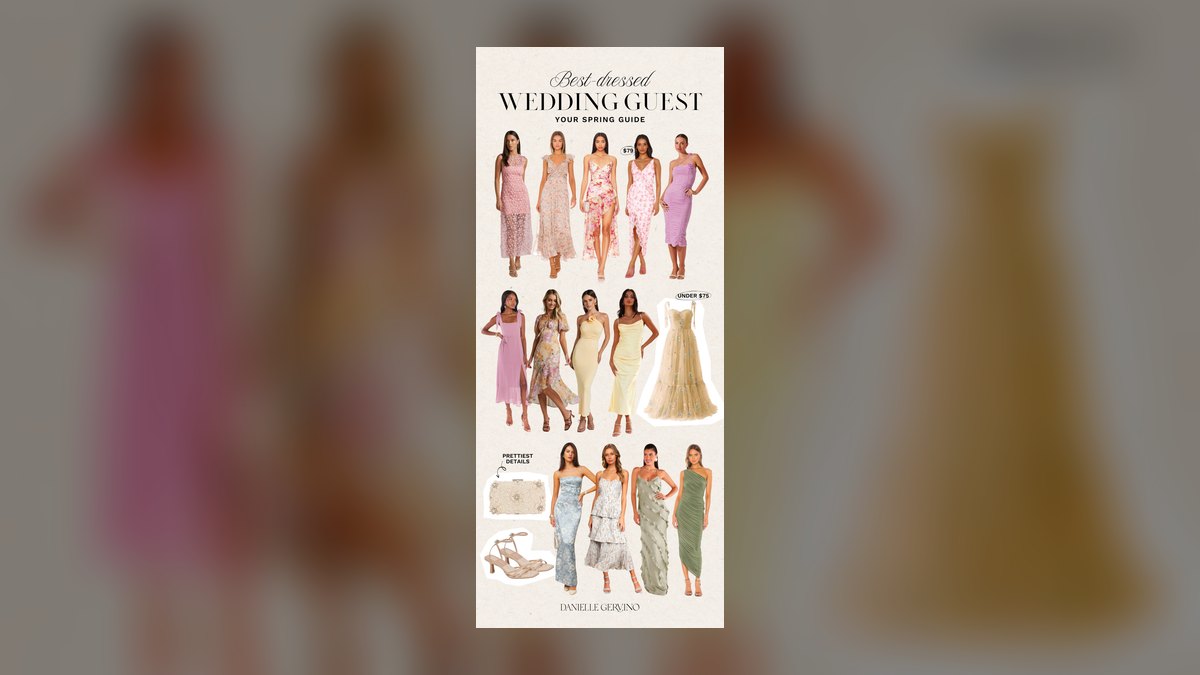
And finally the vibe. Lakeside venues skew toward what the invitation will probably call "semi-formal," "cocktail," or the increasingly common and maddeningly vague "garden party attire" or "dressy casual." All of these land in roughly the same place: more polished than brunch, less structured than a ballroom. A full three-piece suit reads as though you did not read the invitation. A polo and shorts reads the same way from the other direction. The target is the middle, and the middle is wider than people fear.
The practical framing to carry through the rest of this: dress for the *terrain and the timeline*, then adjust for the dress code — not the other way around. Guests who start from the dress code and ignore the terrain end up in beautiful, miserable clothes.
How the venue actually determines the outfit
The mechanism is simpler than the volume of wedding-guest content suggests. Four inputs — dress code, terrain, time of day, and season — chain into four decisions: fabric, silhouette, footwear, and layer. Get the chain right and the outfit assembles itself.
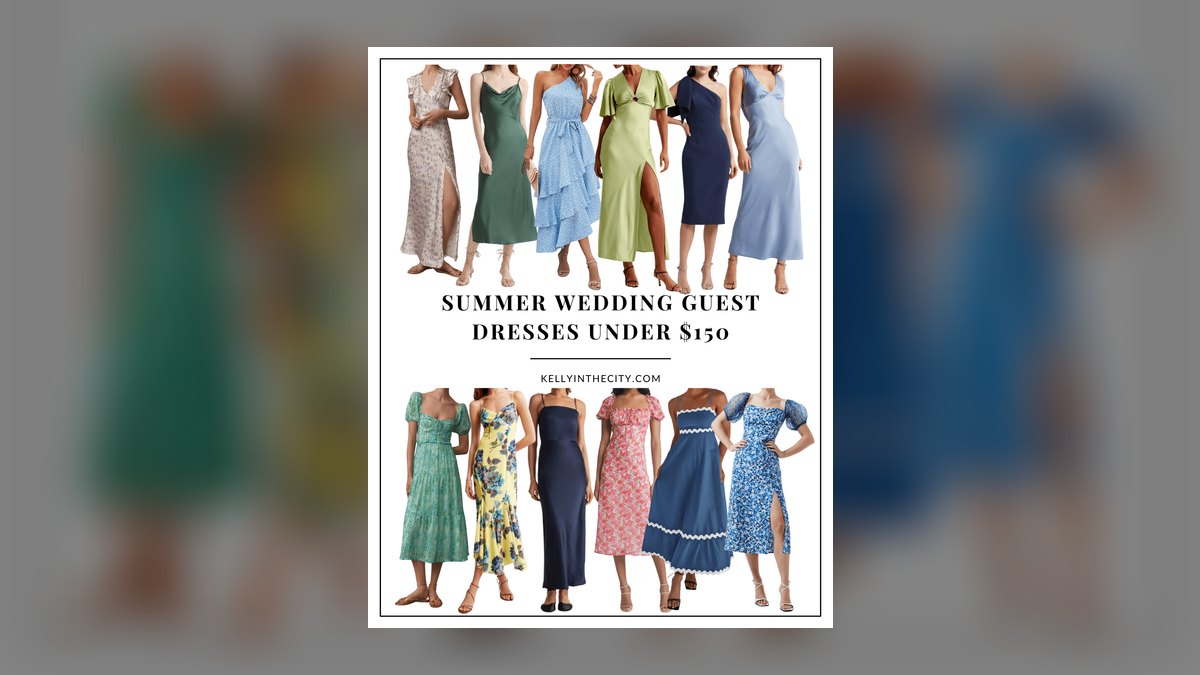
Dress code sets the ceiling and floor. Black-tie optional at a lakeside venue is rare but does happen at larger lodge or club properties; it means a dark suit or tuxedo for men and a long dress for women, with the terrain adjustments still applying. Cocktail is the most common lakeside code and means a suit or blazer-and-trousers for men, a knee-to-midi dress or elevated separates for women. Semi-formal is a half-step down — the jacket can be unstructured, the dress can be cotton rather than silk. "Garden party" or "dressy casual" is a signal the couple wants you comfortable outdoors: no tie required, sundresses welcome, but still no denim and still no sneakers.
Terrain sets footwear, and footwear constrains the rest. Grass, gravel, wooden docks with gaps between the boards, and stone paths are the four surfaces you are likely to cross. A thin heel fails on all four. A block heel, a wedge, an espadrille, a leather sandal, a loafer, or a chukka with a lugged or crepe sole handles all four. Once footwear is set, hem length follows — a midi hem with a block heel is proportionally correct; a midi hem with a flat sandal can read heavy unless the fabric is light enough to move.
Time of day sets fabric weight and color depth. An 11 a.m. lakeside ceremony is a genuinely different event from a 6 p.m. one. Morning and early afternoon support lighter colors, more open weaves, short sleeves. Evening supports deeper colors, a real jacket, and closed shoes.
Season sets the layer. May and September lakeside weddings almost always need a wrap, a linen shawl, a fine-gauge cardigan, or an actual jacket for the back half of the night. July and August often do not, but a lake still cools faster than a city block, so a packable layer is cheap insurance.
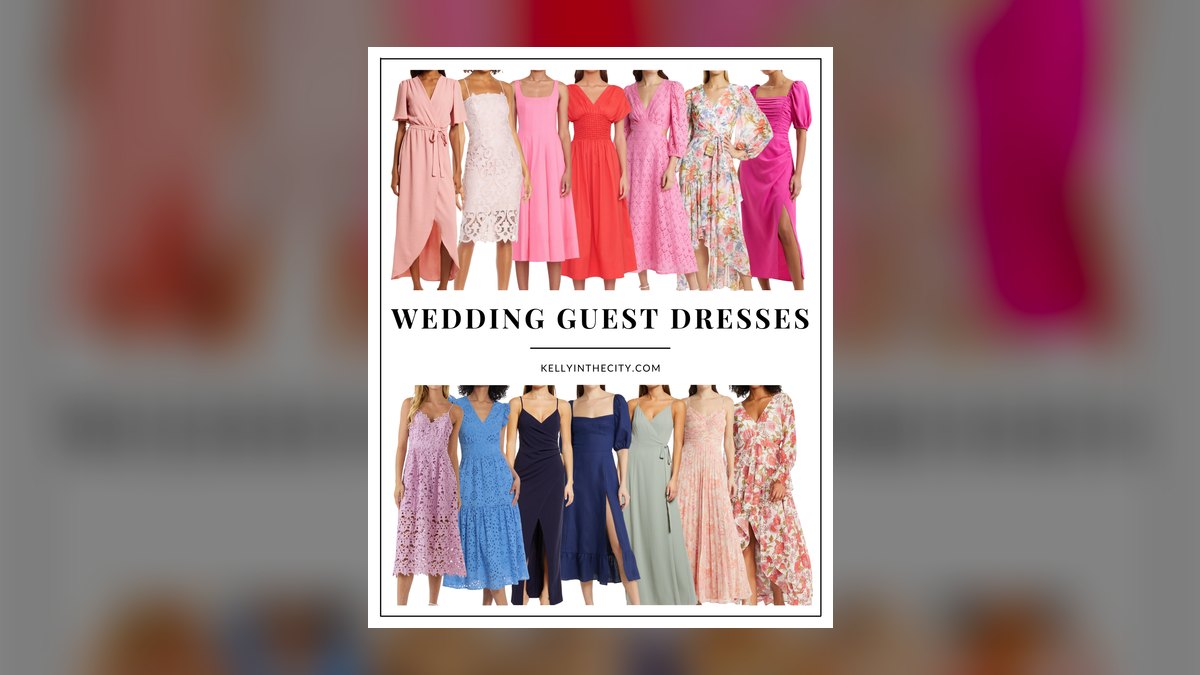
Two adjacent scenarios ride on the same logic and are worth noting because guests often face them in the same summer. A vineyard wedding substitutes packed dirt and gravel rows for lawn, which is harder on thin soles but easier on heels; the dress code usually runs a notch more formal. A beach wedding substitutes sand, which defeats every heel including block heels — there the honest answer is a flat sandal or bare feet for the ceremony with shoes carried in. A barn or farm wedding is the closest cousin to lakeside: same lawn-and-gravel terrain, same evening temperature drop, but typically a half-step more casual and with more dust, which argues against pale hems that sweep the ground.
What the ranges actually look like
Concrete numbers make the abstract advice usable. These are ranges to plan against, not rules.
Heel height. Two to two-and-a-half inches on a block heel is the sweet spot for grass — enough lift for proportion, wide enough contact patch to stay on the surface. Above three inches on any outdoor terrain and you are fighting the ground. A wedge distributes weight across the entire sole and can go higher safely. Flats and a one-to-one-and-a-half-inch low heel are the most comfortable option and are entirely appropriate at cocktail and below.
Hem length. Midi — roughly mid-calf to just above the ankle — is the most versatile lakeside hem because it photographs well, moves in wind, and does not drag on grass. A floor-length hem is beautiful and will collect dew, grass clippings, and dust; if you wear one, plan on it. Knee-length and just-above-knee are safe at cocktail and below. For men, trousers should break lightly or not at all — a long puddle of fabric over the shoe collects everything the lawn has.
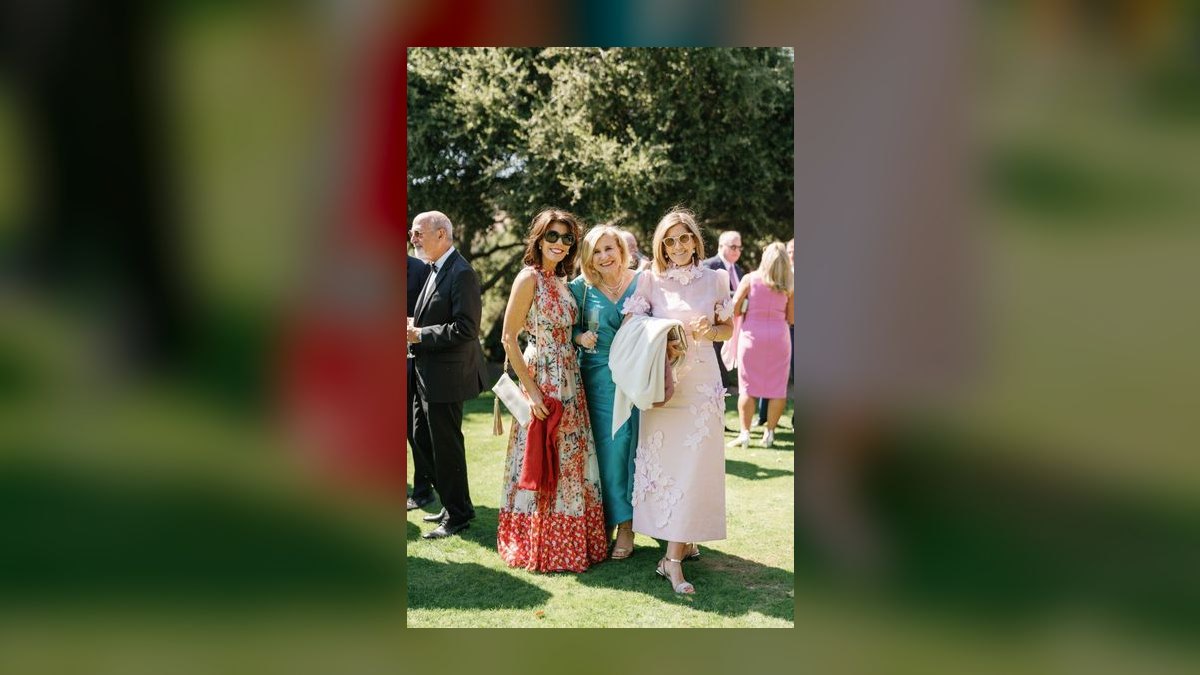
Layer weight. A linen or cotton shawl, a fine-gauge merino or cotton cardigan, or an unlined blazer covers the typical evening drop. You do not need a coat. You do need something.
Fabric. Linen, cotton poplin, cotton voile, silk and silk blends, Tencel/lyocell, and lightweight wool blends all breathe. Polyester, heavy crepe, velvet, and thick satin do not — they will trap heat in the sun and feel clammy after dancing. A linen-cotton blend is often the best practical choice for men's jackets because it breathes like linen but wrinkles noticeably less.
Color. Sage green, sand, dusty rose, light steel blue, almond, ecru, terracotta, navy, and soft plum all sit well against water and foliage. Neon and hot brights fight the setting in photographs. Black is not forbidden but reads formal and absorbs heat in afternoon sun; if you wear black, wear it in a light weave and preferably at an evening ceremony. White, ivory, cream, and champagne remain off the table unless the couple has explicitly invited them — and increasingly some couples do, so read the invitation rather than assuming.
Budget. A complete, appropriate guest outfit is achievable across a wide band. Roughly $150–$300 gets a full look from mainstream retail — a cotton midi dress or a chino-and-shirt combination with decent shoes. Roughly $300–$500 buys better fabric and tailoring — a silk-blend dress, a linen-cotton blazer, leather footwear that will last several seasons. Above $500 you are buying longevity and fit rather than appropriateness; nobody at the wedding can tell the difference from ten feet away. The highest-leverage spend is almost always tailoring an item you already own rather than buying a new one off the rack.

Timing. Order or pull the outfit at least two weeks out and try the whole thing on together, shoes included, standing up, for at least twenty minutes. Most outfit failures are discovered in the first hour of the event and could have been discovered on a Tuesday at home.
Trade-offs worth making consciously
Every lakeside outfit decision is a trade, and the trades are more interesting than the rules.
Linen versus linen-blend. Pure linen breathes best and looks the most seasonally correct. It also wrinkles the moment you sit in a car, and it will look slept-in by the reception. A linen-cotton or linen-viscose blend gives up perhaps 15% of the breathability for a large gain in recovery. If the drive to the venue is long or the ceremony is late, blend wins. If you are changing at the venue and the event is short, pure linen wins.
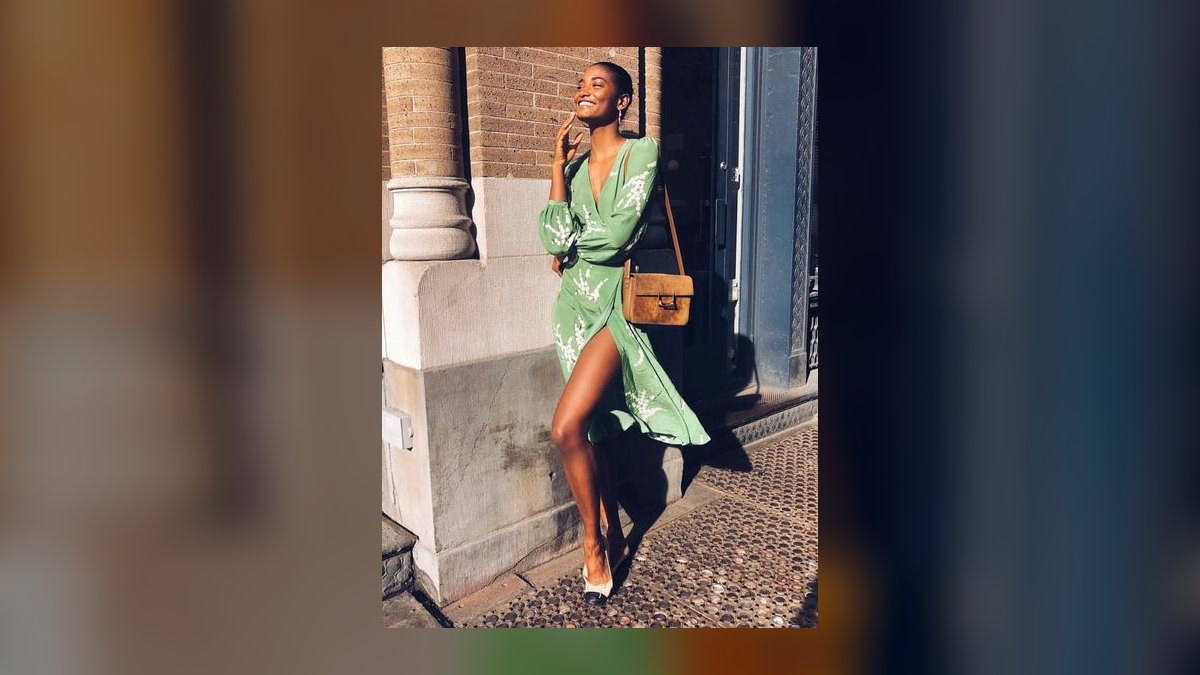
Midi versus floor-length. Floor-length is more formal and more photogenic in wide shots. Midi is more practical and more comfortable on uneven ground. At a cocktail-coded lakeside wedding, midi is almost always the better call; save floor-length for black-tie-optional or for an indoor reception where the ground is not a factor.
Jacket versus no jacket for men. A jacket is the fastest way to look like you dressed for the occasion, and it doubles as the evening layer. It is also hot at 4 p.m. in direct sun. The resolution most people land on: bring the jacket, wear it for the ceremony and photographs, take it off during cocktails and dinner, put it back on when the temperature drops. That is a feature of the format, not a compromise.
Comfort versus formality in footwear. This is the trade guests most often get wrong in the formal direction. Nobody remembers your shoes. Everybody remembers whether you danced. A block heel or a smart flat costs you almost nothing in perceived formality and buys you the entire back half of the night.
Buying versus renting versus re-wearing. Rental services have made a single-wear formal look economically rational for guests who attend one or two weddings a year. But a lakeside wedding sits in the most re-wearable zone of the formality spectrum — a linen blazer, a cotton midi dress, or leather block-heel sandals will get used again all summer. If you are going to buy anything, buy here, because the cost-per-wear is genuinely low.
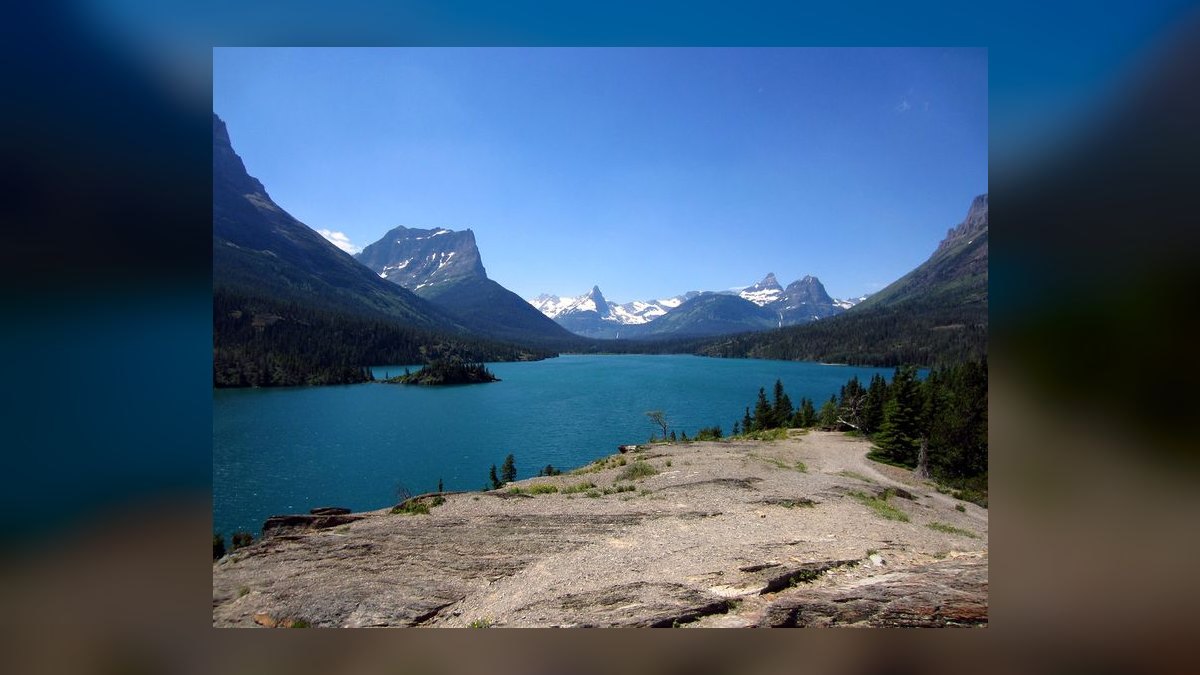
Standing out versus fitting in. The setting does the visual work at a lakeside wedding. Water, trees, and late light are already doing more than any outfit can. Guests who try to compete with that tend to look loud in photographs. The outfits that age well in the album are the quiet ones in colors that sit inside the landscape's palette.
How the look shifts across decades
The through-line from a guest in their twenties to a guest in their sixties is not a change in rules — it is a change in emphasis. Trend content goes down, fabric quality and fit go up, and the silhouette gets quieter.
In your twenties, trend-forward cuts read as intentional rather than costume-y: puff sleeves, smocked bodices, a shorter hem, a bolder print, an espadrille wedge. Cotton and cotton blends are perfectly appropriate and keep the budget sane. For men, a short-sleeve button-down under an unstructured blazer, chinos, and loafers without socks is a complete and correct look. The main risk at this age is under-dressing — treating a lakeside venue as an excuse for a beach outfit.
In your thirties and forties, tailored separates start to out-perform single garments. A silk-blend camisole with a pleated midi skirt, or a linen sheath with a structured accessory, gives more control over fit than a dress off the rack. Men's version: a linen-cotton blazer that has actually been altered at the sleeve and shoulder, flat-front trousers, a leather chukka or a suede loafer. This is the decade where the tailor becomes the highest-return line item.
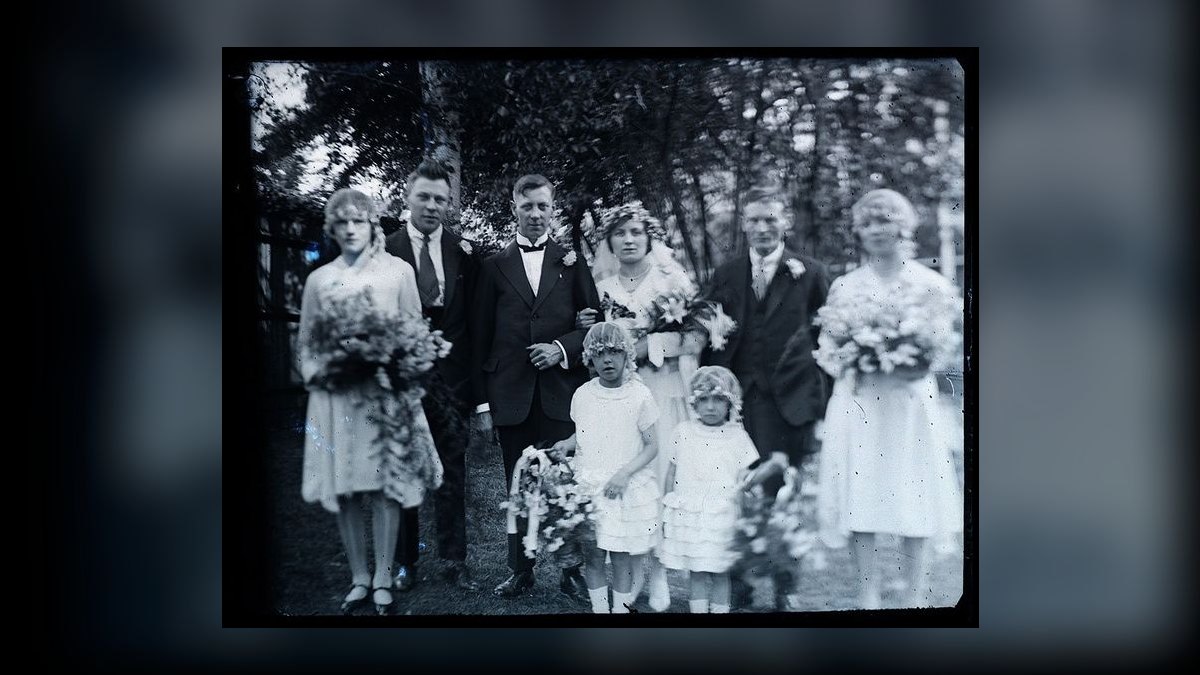
In your fifties and sixties, timeless silhouettes and better materials carry the look. A sheath dress with three-quarter sleeves, a seersucker or lightweight navy blazer, a silk scarf, a low leather pump with a real sole. Comfort stops being a compromise and becomes part of the design brief — and a well-cut comfortable shoe is not visually distinguishable from an uncomfortable one at a wedding.
Across all ages, the same terrain and temperature logic applies unchanged. A twenty-five-year-old and a sixty-five-year-old at the same lakeside wedding face the identical lawn, the identical breeze off the water, and the identical 9 p.m. temperature drop.
Pitfalls, and the fix for each
Thin heels. Covered above, and worth repeating because it is the number one issue. Fix: block heel, wedge, espadrille, or flat. If you are committed to a thin heel, heel-protector caps that widen the contact patch genuinely work on grass and cost very little — but they do nothing on a dock with gaps between the boards.
No evening layer. Fix: a linen shawl, pashmina, fine cardigan, or the jacket you wore for the ceremony. Put it in the car if not on your person.
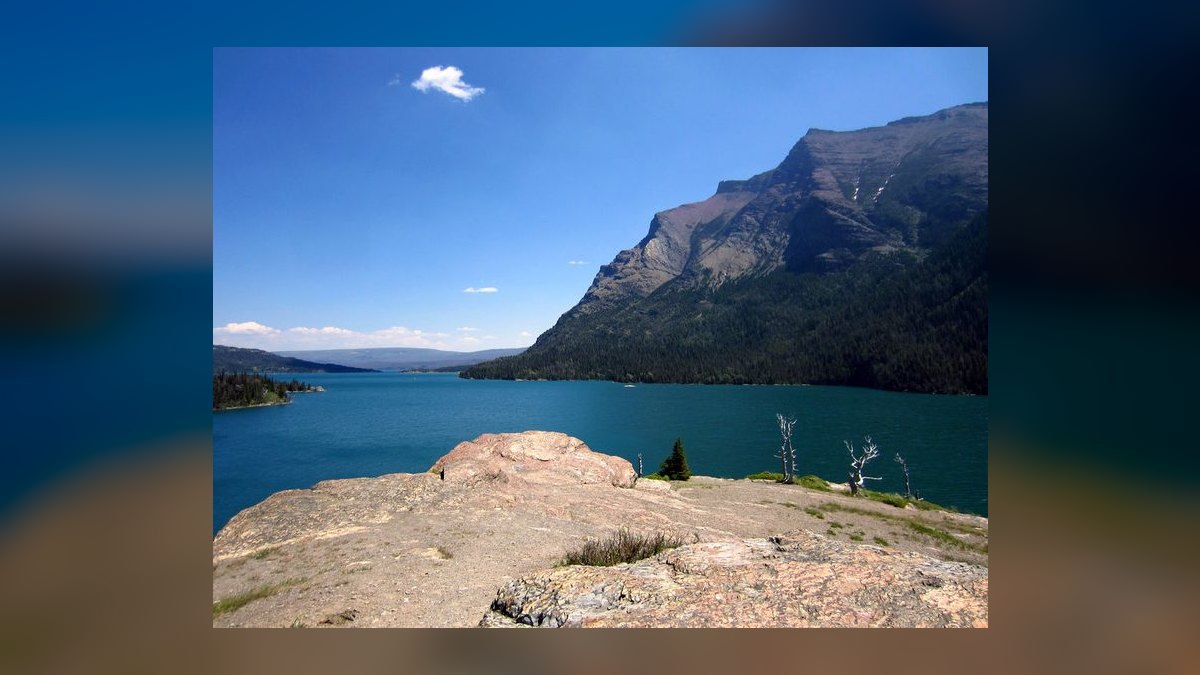
Heavy or non-breathable fabric. Velvet, thick satin, heavy crepe, and unlined polyester will make the ceremony miserable and photograph as effort rather than ease. Fix: natural fibers and open weaves.
Wearing white or near-white. Ivory, cream, champagne, and heavily white-based florals all risk reading as bridal in photographs, where color shifts under warm evening light. Fix: unless invited, pick sage, blush, blue, terracotta, or navy. If the couple has asked for an all-white guest palette — which some now do — follow their instruction, not the old rule.
Ignoring the forecast. A lakeside venue has essentially no shelter beyond the tent. Fix: check the forecast the morning of, and adjust. Rain at a lakeside wedding means the lawn becomes genuinely soft; that is a day for a wedge or a flat with a real sole, not a suede anything.
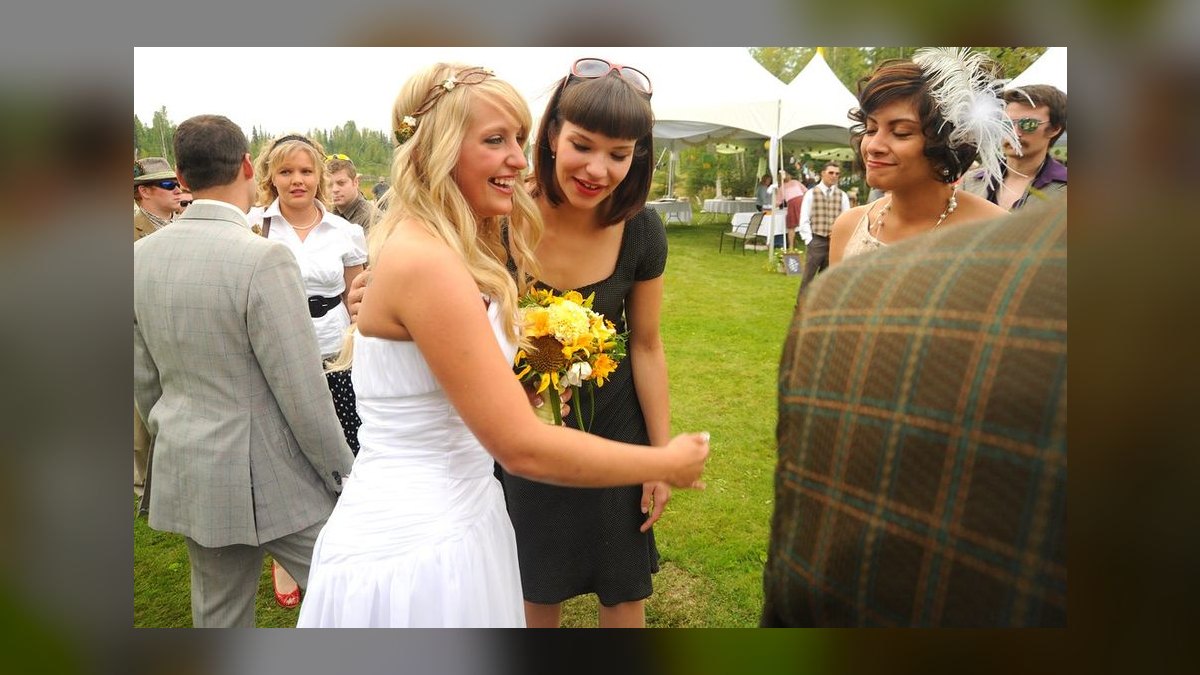
Over-accessorizing. Large statement jewelry and oversized bags fight a minimal natural setting. Fix: a small clutch or a structured crossbody, delicate metal, and let the venue carry the drama.
Fragile fabrics near water and firepits. Silk chiffon and dry-clean-only pieces meet dock splash, sunscreen, bug spray, and smoke. Fix: if a piece cannot survive a small stain, do not bring it to a lakeside reception.
Forgetting the small logistics. Bug spray for a lakeside evening, sunscreen for the ceremony, a spare pair of flats in the car, and — for anyone in a long hem — a plan for how it crosses grass. These are the details that separate a guest who enjoyed the wedding from one who endured it.
Under-dressing because it is "outdoors." A lakeside setting is casual scenery, not a casual event. Denim, athletic sneakers, cargo shorts, and graphic tees are out regardless of how relaxed the venue looks in photographs.
Related questions
Can I wear a full suit to a lakeside wedding?
Yes, if the dress code is cocktail or above and the fabric is light — linen-cotton, tropical wool, or seersucker. A heavy worsted three-piece is overdressed and hot. Most guests do better with a blazer and separate trousers, which reads correctly and lets you shed the jacket.
What if it rains?
Choose a wedge or flat with a real rubber or crepe sole, skip suede entirely, and favor a hem that clears wet grass. Bring a compact umbrella. Most lakeside venues have a tent contingency, so the risk is the walk between spaces, not the ceremony itself.
Are sandals acceptable for men?
Dress sandals are borderline and depend on the code. At "dressy casual" or "garden party," a clean leather sandal can work. At cocktail or above, a loafer, driving shoe, or suede chukka is the safer and more polished answer.
How does a lakeside wedding differ from a beach wedding?
Terrain is the difference. Lakeside means grass, gravel, and docks — block heels and wedges work. Beach means sand, which defeats every heel; there you want flats, espadrilles, or bare feet. Lakeside dress codes also tend to run a half-step more formal.
Can I re-wear the same outfit to a barn wedding?
Usually yes. Barn and lakeside venues share terrain, evening temperature drops, and a semi-formal-to-cocktail range. Adjust for dust — avoid pale sweeping hems — and for a slightly more casual overall register.
FAQ
Can I wear jeans to a lakeside wedding?
No. Even the most relaxed lakeside venue is still hosting a wedding, and denim reads as though you did not read the invitation. Chinos, linen trousers, a midi dress, or tailored separates all hit the relaxed-but-appropriate register that the setting actually calls for.
What colors work best for a lakeside wedding?
Muted, nature-adjacent tones: sage green, sand, almond, light steel blue, dusty rose, terracotta, navy, and soft plum. These sit inside the landscape's palette instead of fighting it, which matters because you will be photographed against water and trees for most of the day. Avoid neon brights and, unless invited, anything white or near-white.
What shoes are actually practical on grass and docks?
Block heels around two inches, wedges, espadrilles, leather sandals with a real sole, loafers, and suede or leather chukkas with crepe or lugged soles. All of these spread weight across a wide enough contact patch to stay on top of soft ground and to bridge the gaps between dock boards. Stilettos and thin kitten heels fail on both surfaces.
Do I need to bring a jacket or wrap even in July?
Yes, or at least leave one in the car. Lakes cool faster than surrounding land after sunset and generate an evening breeze off the water. A drop of 15 to 25°F between a 4 p.m. ceremony and a 9 p.m. reception is normal in temperate summer climates. A linen shawl or fine cardigan weighs almost nothing and solves it entirely.
Is a hat appropriate?
At an outdoor daytime ceremony, yes — a straw fedora, panama, or wide-brim sun hat is both stylish and functional against doubled sun off the water. Remove it during the ceremony itself if it blocks anyone's view, and take it off indoors and for dinner. At an evening ceremony, skip it.
What is the single best fabric choice?
For most guests, a linen-cotton blend. It breathes nearly as well as pure linen but recovers from wrinkles far better, which matters when you are driving to a venue, sitting through a ceremony, and then dancing. Pure linen, cotton poplin, silk blends, and Tencel are all good alternatives; heavy synthetics are the one category to avoid outright.
Sources
- https://www.brides.com/
- https://www.theknot.com/
- https://www.vogue.com/
- https://www.gq.com/
- https://www.harpersbazaar.com/
- https://www.realsimple.com/
- https://www.marthastewart.com/
- https://www.nytimes.com/wirecutter/
Related on PULSE
- What to Wear as a Guest to a Courthouse Wedding in 2027
- What to Wear as a Guest to a Backyard Wedding in 2027
- What to Wear as a Guest to a Destination Wedding in 2027
- What to Wear as a Guest to a Church Wedding in 2027
- What to Wear as a Guest to a Ballroom Wedding in 2027
- What to Wear as a Guest to a Greenhouse Wedding in 2027
This page will be disappearing soon. Save it to your device for $1 — or read it free while it is here.
@Kory-White- · if Venmo asks, the last 4 of my number are 2012
This page is gone.
This one is off the shelf now. $1 keeps it on your phone for good — the whole page, pictures and diagrams included.
 pulse-styleHow to Style a Blazer in Fall in 2027
 pulse-styleHow to Wear Maroon with Combat Boots in 2027
 pulse-styleWhat to Wear to a Company Offsite in 2027
 pulse-styleWhat to Wear to a Parent-Teacher Conference in 2027
 pulse-styleWhat to Wear to a Karaoke Night in 2027
 pulse-styleWhat to Wear to a Concert in 2027
 pulse-styleWhat to Wear to a Real Estate Job Interview in 2027
 pulse-styleWhat to Wear on a Muggy Summer Night in 2027
 pulse-styleHow to Style White Sneakers for a Job Interview in 2027
 pulse-styleHow to Wear Slate Blue with Linen Pants in 2027