

What to Wear to a Internship Fashion Job Interview in 2027
 Curated byKory White · Fractional CRO · Maryland
Quality
Certified

Wear one trend-forward statement piece anchored by polished, well-fitting basics — roughly 70% classic, 30% current. A neutral blazer, clean trousers or a midi skirt, natural-fiber top, and polished loafers or low heels signal you read the industry's visual language without overreaching. Fit and fabric quality matter more than labels or logos.
The 20 seconds before you say anything
Picture the actual scenario. You have a 10 a.m. slot for a summer internship at a mid-size apparel brand — the kind with a 40-person office, a showroom on one floor, and a design studio on the other. You are the fourth of nine candidates being seen that week. The hiring manager walks you from the lobby to a glass conference room. That walk is about 20 seconds, and during it nobody has asked you a single question. What they have done is register your silhouette, your shoe condition, your fabric drape, and whether your outfit looks like a decision or an accident.
This matters more in fashion than in almost any other field because the interviewer's entire professional competence is pattern recognition on clothing. In a software internship interview, nobody grades your outfit because nobody in the room is trained to. Here, everyone is. A merchandiser can clock a poly-blend blazer from across a room by how it catches overhead light. A studio director notices that your trousers break twice over your shoe instead of once. These are not petty judgments — they are the same judgments the job itself requires you to make about product, so they read as a live audition.
The trap for interns specifically is that you are being evaluated on two axes at once, and they pull in opposite directions. Axis one: do you have taste and point of view? Axis two: will you show up on time, follow direction, handle a garment-return spreadsheet without complaining, and not embarrass the brand in front of a buyer? A head-to-toe avant-garde look scores high on axis one and terribly on axis two. A generic navy suit from a career-services closet does the reverse. The 70/30 split exists precisely to score acceptably on both.
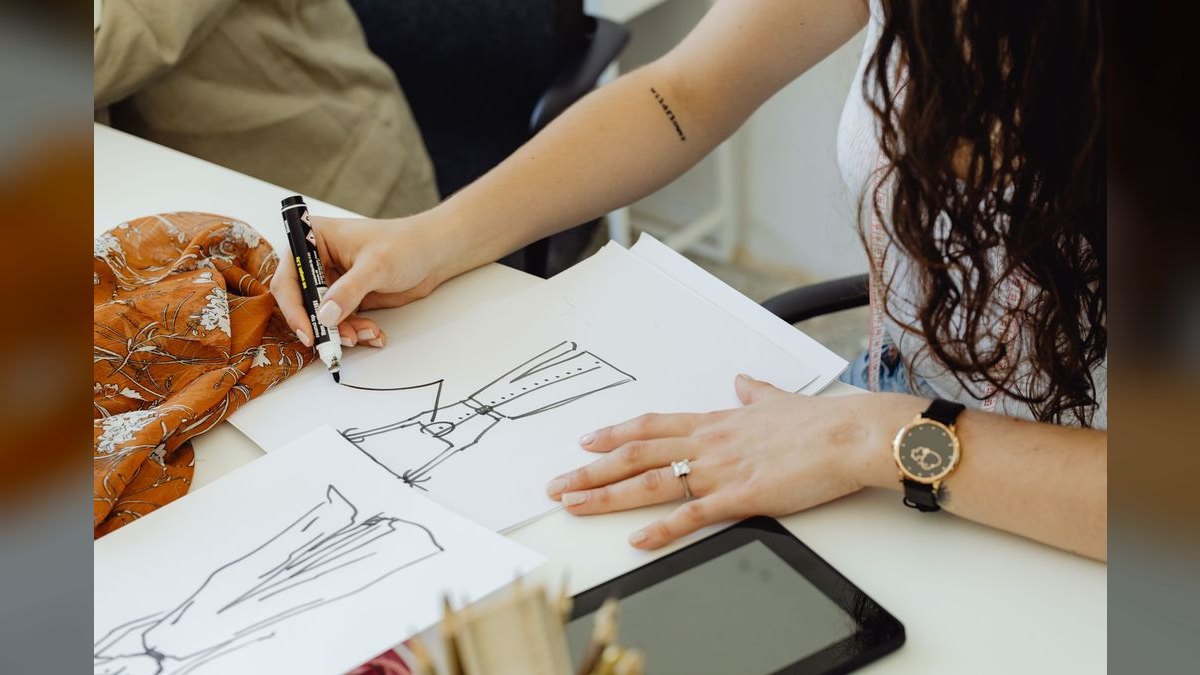
Concretely, for that 10 a.m. slot: an unstructured charcoal blazer, a fine-gauge cream turtleneck or ivory silk shell, black wide-leg trousers cropped just above the ankle, black penny loafers with a slight lug sole, and one accessory that carries actual point of view — a slim olive leather crossbody, a matte gold hoop, a well-chosen belt. That is the whole outfit. The statement lives in one place and everything else is quiet enough to let it register.
The second scenario worth planning for: the interview that turns into a floor tour. This happens constantly at internship level because the person hiring you wants to see how you react to the sample room. If there is any chance you will be walking a warehouse floor, climbing to a mezzanine, or standing for 40 minutes at a rack, your shoe choice has to survive it. A 3.5-inch stiletto that makes you wince on concrete undoes every good decision above the ankle.
How an interviewer actually decodes your outfit
The evaluation is not a scorecard, but it is more systematic than candidates assume. It runs in three passes, and each pass takes a different amount of time.
Pass one — silhouette, under two seconds. Before any detail resolves, the interviewer registers your overall shape: where the shoulder line sits, where the waist reads, whether the proportion between top and bottom is deliberate. This is why a structured jacket does so much work. It creates a defined shoulder and a clear vertical line, and it reads as "considered" from 30 feet. An oversized hoodie or a shapeless drape reads as "undefined" at the same distance regardless of what it cost.
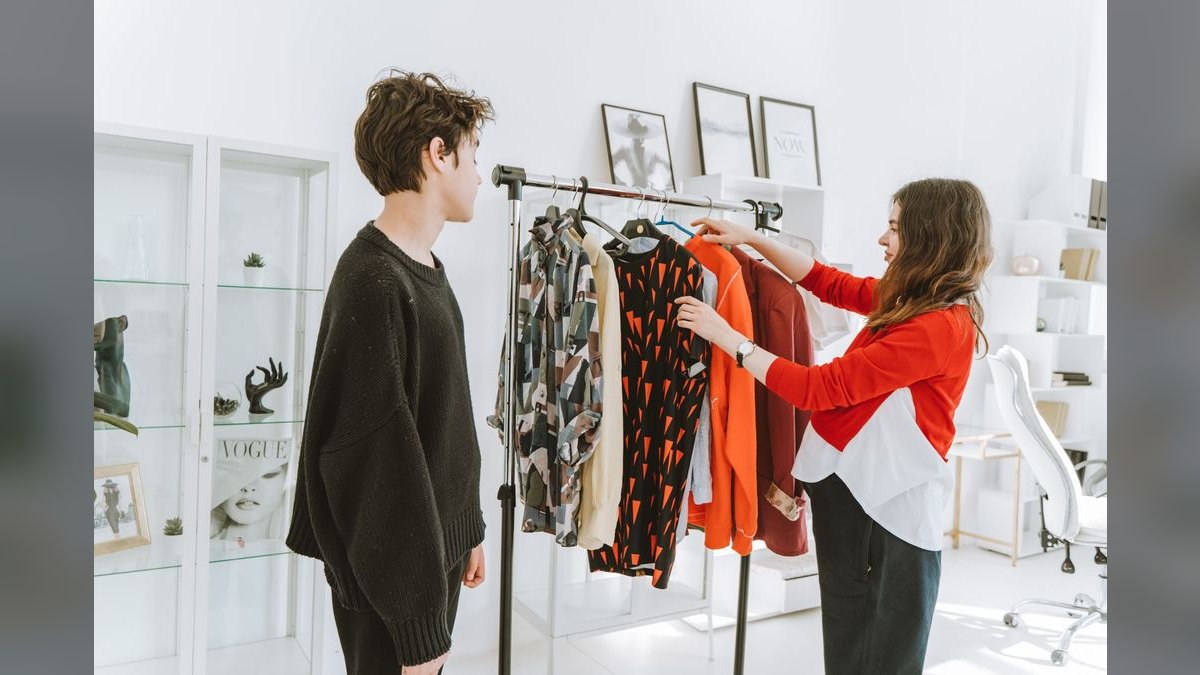
Pass two — condition and fit, roughly five to fifteen seconds. Now details resolve. Is the blazer sleeve ending at the wrist bone or swallowing your hand? Do the trousers puddle? Is there a visible pull at the button when the jacket closes? Are the shoes scuffed at the toe? Fit errors are the single most common and most fixable failure. A $90 blazer tailored properly outperforms a $600 blazer that fits like a rental, and every interviewer in this industry knows that, which means an ill-fitting expensive garment actually scores worse than a well-fitted cheap one — it demonstrates that you could not tell.
Pass three — point of view, ongoing through the conversation. This is where the 30% lives. Over the next 30 minutes the interviewer keeps noticing things: the unexpected color of your bag lining, the way your earring shape echoes your neckline, the fact that your sock is a considered choice rather than whatever was clean. These accumulate into an impression of whether you have an eye. One or two of these is plenty. Six is costume.
The practical implication of the three-pass model is a sequencing rule for how you spend effort. Silhouette and fit are worth almost all of your preparation time and money, because they are evaluated first and they are the things that cannot be recovered from later in the conversation. Point of view is worth one deliberate choice, made last, after the base outfit already works on its own.
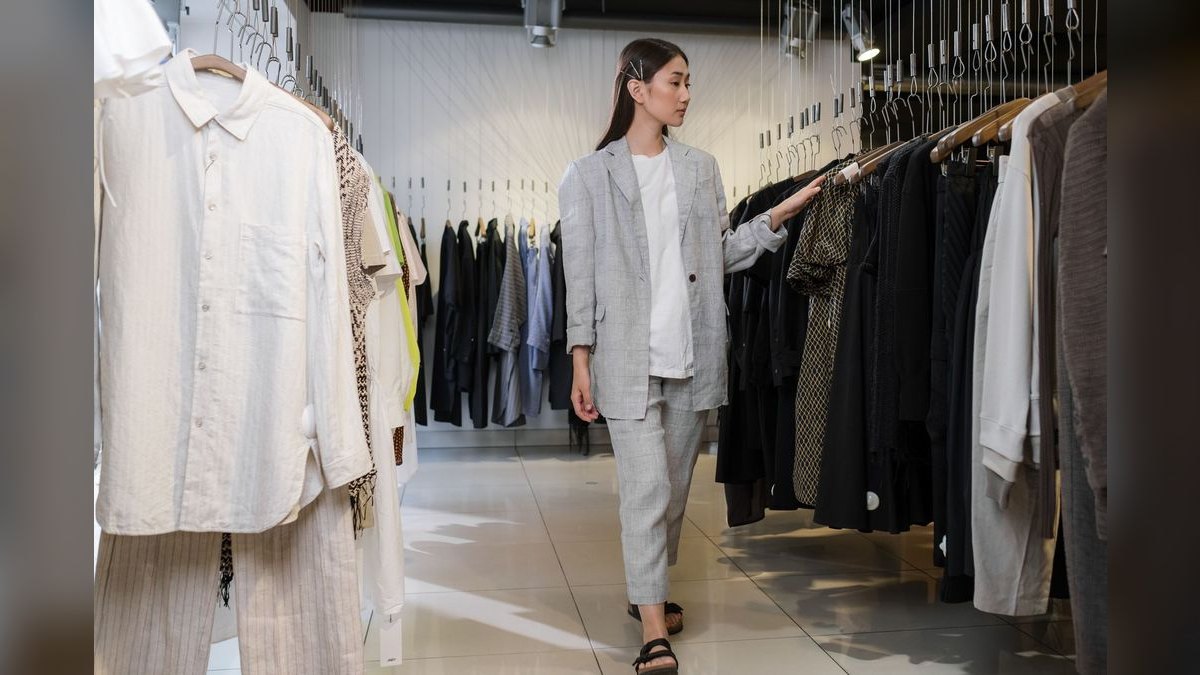
What the pieces actually cost and how the budget splits
Internship candidates are usually assembling this on a real constraint, so it helps to see where money genuinely changes the outcome and where it does not.
The blazer or structured jacket — allocate roughly 35-45% of the budget. This is the single highest-leverage garment because it drives pass one entirely. Look for wool or wool-blend over full polyester; a wool-poly blend in the 55/45 range is a reasonable compromise and drapes far better than 100% synthetic. Unstructured or lightly structured reads more current than heavily padded shoulders. Neutral only: charcoal, navy, black, camel, or mid-grey. On a $400-700 total, this is your $150-280 piece. On an $800-1,200 total, a wool-cashmere blend in the $350-500 range is the natural landing spot.
Trousers or skirt — roughly 20-25%. Wide-leg or straight-leg trousers in a fluid fabric with a front crease, cropped at or just above the ankle bone, or a midi skirt hitting mid-calf. Avoid anything distressed, and avoid a hem that puddles. Budget $80-180 in the lower band, $180-300 in the higher.
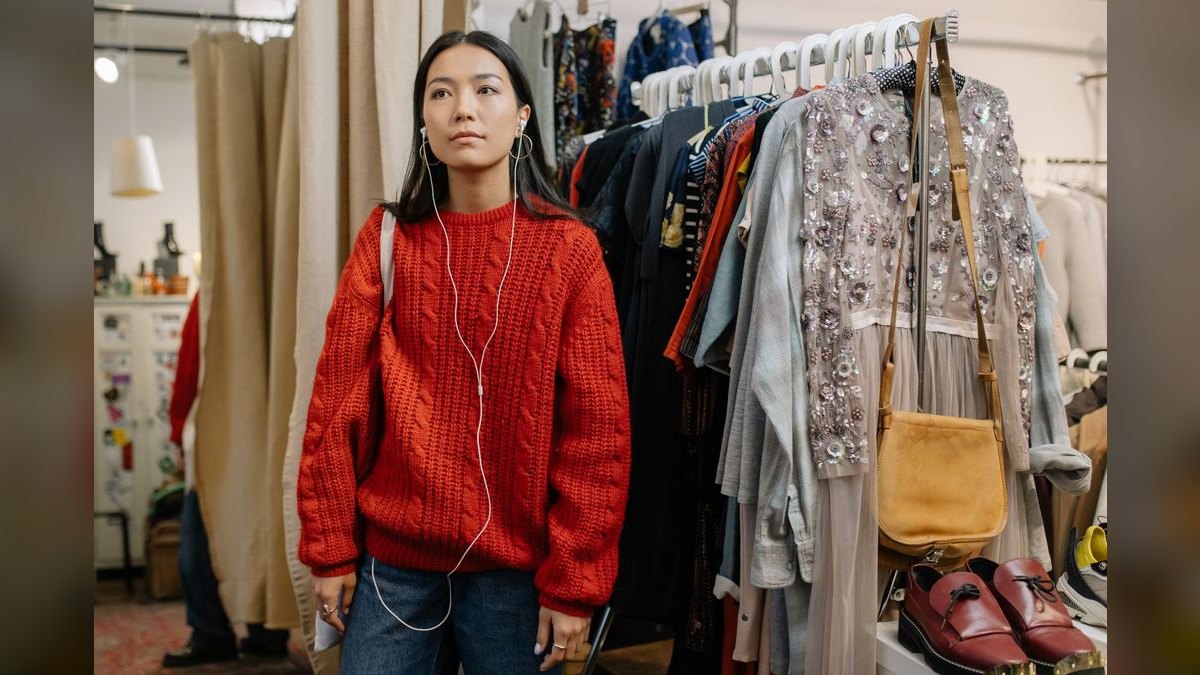
Shoes — roughly 20-25%. This is the second-highest-leverage item and the one candidates most often under-invest in. Leather uppers, clean sole, no visible wear at the toe or heel. Loafers, low block heels in the 1.5-2.5 inch range, pointed-toe pumps, derbies, or a cap-toe oxford. If you are choosing between a nicer blazer and nicer shoes at the same price, the honest answer for a fashion interview is that the interviewer will look at your shoes twice and your blazer lining never.
Top — roughly 10-15%. Fine-gauge merino turtleneck, silk or silk-blend shell, crisp cotton oxford, or a fitted cashmere crewneck. Avoid anything shiny, sheer, or with a visible bra line. $40-140 covers this well.
One accessory — roughly 5-10%. The point-of-view piece. A slim leather crossbody, a structured tote, matte gold hoops, pearl studs, a linen pocket square, a considered belt.
The palette rule is worth stating numerically: build from muted tones — cream, beige, olive, slate, charcoal, navy, black — and permit exactly one accent, in one piece, in something like deep burgundy, muted mustard, or a saturated olive. One accent, one piece. Two accent colors in two places starts reading as an outfit that was assembled rather than composed.
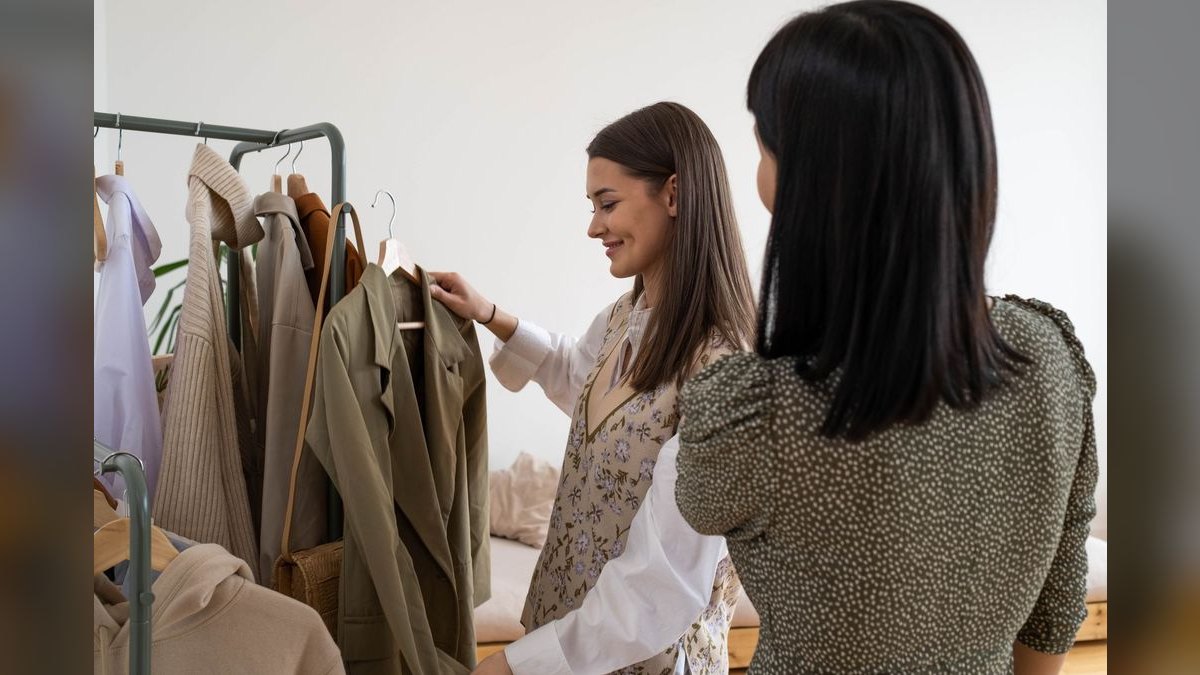
On formality by age band, the silhouette stays constant and the fabric and structure escalate. A candidate in their 20s can run an unstructured blazer, chunky-soled loafers, and a crossbody at a $350-700 all-in. A career-changer in their 40s should shift to precise fit, wool-cashmere, a structured tote or briefcase, and a $700-1,200 range. Someone in their 60s pursuing an internship — increasingly common in second-career and returnship programs — lands on double-breasted or soft-shouldered tailoring, wholecut or ballet-flat footwear, fine jewelry, at $1,200-2,500. Note that the older bands are not "more formal because older" — they are more formal because the garments people accumulate over decades tend to be better made, and the look leans into that rather than fighting it.
One more number that matters: build in 7-10 days of lead time for tailoring. A blazer sleeve shorten and a trouser hem are inexpensive alterations, frequently in the $20-60 range combined, and they are the highest return-on-dollar move available in the entire outfit. Same-week interviews are the reason candidates show up in unaltered clothes, so check the calendar the moment the interview is scheduled.
Where a fashion internship interview differs from a corporate one
The instinct many candidates import is business-formal: matched suit, white shirt, dark tie or shell, minimal everything. That is correct for banking or law and actively wrong here. But the overcorrection — full creative expression, head-to-toe trend — is worse. The real answer sits between them and depends on which house you are interviewing with.
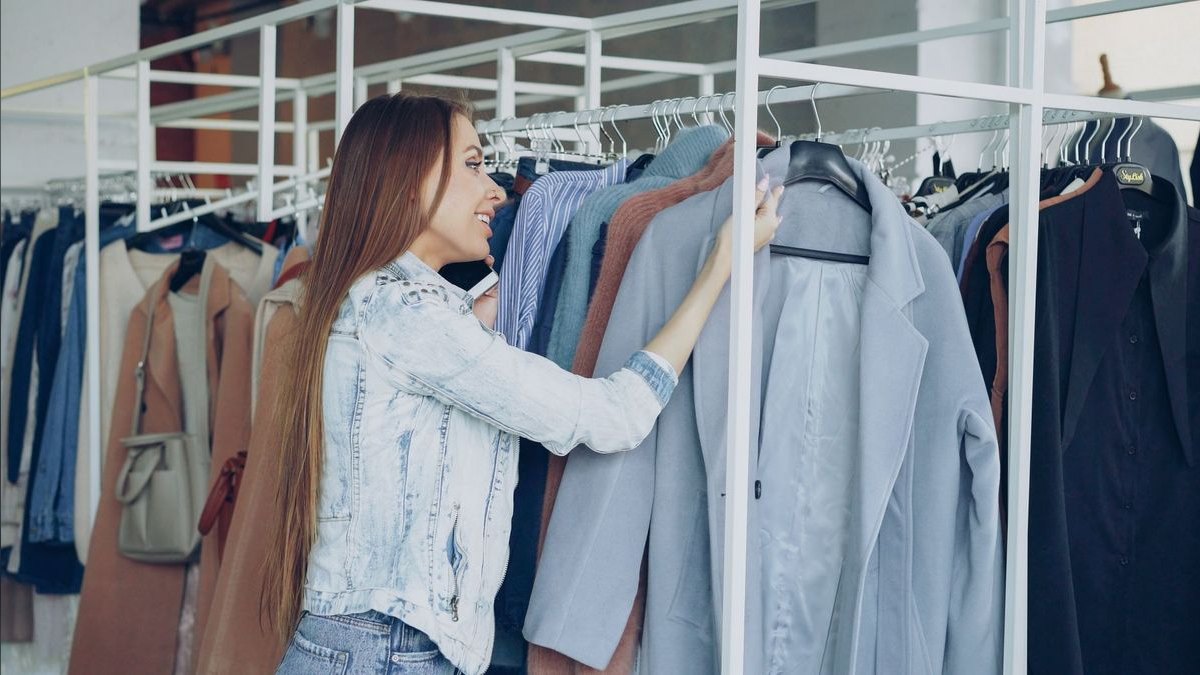
Heritage and luxury houses skew formal. Tailoring, natural fibers, restrained palette, polished leather. The 30% here is expressed in fabric and detail, not silhouette — a French cuff, a subtle weave, a pocket square, a shoe with a mirror finish. Trend-forward means *this season's proportion of a classic shape*, not a novel shape.
Contemporary and DTC brands skew relaxed. An unstructured blazer over a knit, wide trousers, a clean minimalist sneaker in leather or suede is genuinely acceptable at many of these. Note the qualifier: minimalist, leather or suede, all-white or a single quiet color, no athletic tread, no chunky trainer. If you are unsure whether sneakers land, loafers are strictly safer and cost you nothing in perception.
Streetwear and youth brands invert the whole thing — over-formality here signals you do not understand the customer. But even so, the underlying rules survive: intentional silhouette, good condition, one clear point of view. It is a different vocabulary, not a different grammar.
Editorial, styling, and PR reward the most visible point of view of any of these, because the job is literally taste. This is the one context where two considered signals instead of one is defensible.

The way to resolve this without guessing is research, and it takes about 20 minutes. Pull the brand's own Instagram and look at what the team wears in behind-the-scenes content, not what the models wear in campaigns. Check LinkedIn photos of the department you would be joining. If a recruiter is coordinating, ask them directly — "what do people in the studio typically wear?" is a completely normal question that no one has ever held against a candidate. Then dress one notch above whatever you find. One notch, not three.
There is also a trade-off nobody names out loud: the more your outfit signals taste, the more it invites scrutiny of your taste. A quiet, well-fitted, entirely classic look is low-ceiling and low-floor — you will not be remembered for it, but you will not be marked down either. A look with strong point of view raises both bounds. For an internship specifically, where the hiring bar is more about trainability and reliability than about a finished aesthetic, the asymmetry favors restraint. Take the one signal. Do not take five.
The mistakes that cost candidates offers
Footwear condition, above everything else. Scuffed toes, worn heel caps, athletic sneakers, flip-flops, or beat-up boots. This is the most-cited failure and the cheapest to fix — a $12 polish and a heel-tip replacement resolves most of it. Clean, polished leather loafers or a low heel are the safe default in nearly every context above.

Fit errors that read as carelessness. Baggy shoulders, sleeves past the wrist bone, trousers puddling over the shoe, a jacket that pulls at the closure. Every one of these is a tailoring problem, not a shopping problem, and each is correctable for a fraction of what a new garment costs.
Cheap synthetics that catch the light wrong. Shiny poly-satin, plasticky "leather," anything with a sheen it did not earn. Natural fibers — cotton, wool, silk, linen — and quality blends read correctly under both daylight and fluorescent office lighting, which is exactly the two-lighting problem your outfit has to survive.
Over-accessorizing. Stacked rings plus layered necklaces plus a statement watch plus a bold bag. Each individual piece may be good; together they compete and none registers. One statement, plus optionally a watch. That is the ceiling.
Too much skin. Crop tops, mini lengths, deep necklines, sheer panels. This is not a moral point, it is a context point: the interviewer is trying to picture you at a buyer meeting or a factory visit, and the outfit has to survive that mental transfer. Hems at or below the knee, modest necklines.
Wrong outerwear. A denim jacket is too casual for an interview even in this industry. If you want something less formal than a blazer, a tweed blazer, a soft cotton safari jacket, or an unstructured overshirt in a neutral does the job while still holding a shoulder line.
Logo and branding noise. Visible logos read as "I bought taste" rather than "I have taste." Minimal branding across the board — this applies to bags especially, where a discreet leather crossbody outperforms a monogrammed one for this specific purpose.
Forgetting the carry. Bring a portfolio, a slim leather folder, or a structured tote holding your resume and any physical samples. Backpacks and oversized totes undercut everything above them. If you have physical work to show, the case it arrives in is part of the work.
Grooming as an afterthought. Hair neat and off the face — a low ponytail, a sleek bun, or clean blow-dried hair. Nails clean and short or deliberately done. Fragrance minimal to none, since showrooms and sample rooms are shared, enclosed spaces.
Skipping the sit-and-stand test. Put the whole outfit on 48 hours before, sit down for five minutes, stand, walk a hallway, and look in a full-length mirror. Skirts that ride, jackets that bunch at the seatbelt, and trousers that twist all reveal themselves here and nowhere else.
A last practical note on how any of this connects to the job you are actually applying for: fashion is a revenue business, not an art project. The internship exists because someone in merchandising, wholesale, or e-commerce needs work done that ties to sell-through. Dressing well here is not vanity — it is evidence that you can make the same judgment calls about product that the company makes when it decides what to put on a rack. That is the argument your outfit is quietly making while you answer questions about your coursework.
Related questions
How early should I start assembling the outfit?
Ten days out. That leaves 7-10 days for tailoring — sleeve and hem alterations often run $20-60 combined — plus time for a full sit-and-stand test 48 hours before. Same-week interviews are the main reason candidates arrive in unaltered clothing.
Can I repeat the outfit for a second-round interview?
Change at least the top and one accessory. Keep the jacket and shoes if they worked. Interviewers rarely remember an exact outfit, but overlapping panel members will notice an identical head-to-toe repeat within the same week.
Does this change for a video interview?
Yes. Only the top half is evaluated, so shift budget to the jacket, top, and one visible accessory. Avoid tight patterns that shimmer on camera, and check how your neutral reads against your background — cream on a white wall disappears.
What if the brand explicitly says "come as you are"?
Take it as permission to relax formality one notch, not to skip the effort. Swap the blazer for an unstructured overshirt or a fine knit, keep the fit and shoe condition identical. The signal being tested is judgment, not compliance.
FAQ
Can I wear a bold pattern or bright color?
Yes, in exactly one piece. A printed blouse or a colored blazer works when everything else is muted — cream, charcoal, navy, olive. The rule is one accent in one place. A bold top plus a bold bag plus a bold shoe cancel each other out and read as unresolved rather than confident.
Are sneakers ever acceptable?
Only minimalist leather or suede sneakers in a single quiet color, and only at contemporary, DTC, or streetwear-adjacent brands. No athletic tread, no chunky trainers, no visible logos. If you are weighing it at all, loafers are safer and lose you nothing. At a heritage or luxury house, sneakers are a clear miss.
Should I carry a portfolio or a bag?
Both, ideally combined. A slim leather folder or a structured neutral tote holds your resume and any samples. Avoid backpacks and oversized totes — they break the silhouette you spent the rest of the budget building. If you are showing physical work, the case is part of the presentation.
How do I choose between a skirt and trousers?
Both read correctly. Choose by fit and by whether the day might include a floor or showroom tour. Wide-leg or straight-leg trousers are the more current proportion; an A-line or pencil midi hitting mid-calf is the reliable classic. Confidence in the piece matters more than which category it belongs to.
What is the best hair approach?
Neat and off the face. A low ponytail, a sleek bun, or clean blow-dried hair all work. The goal is that nothing requires adjusting mid-conversation — touching your hair repeatedly is the tell that undermines an otherwise composed look.
How much should the whole outfit cost?
There is no floor that disqualifies you. A well-tailored $350-500 outfit outperforms an unaltered $1,500 one every time. Allocate roughly 40% to the jacket, 25% to shoes, 20% to the bottom, and the remainder to the top and one accessory, then spend $20-60 on alterations.
Sources
- https://www.businessoffashion.com/
- https://wwd.com/
- https://www.vogue.com/
- https://www.thecut.com/
- https://www.bls.gov/ooh/arts-and-design/fashion-designers.htm
- https://www.gq.com/
- https://hbr.org/
- https://www.linkedin.com/
- https://www.fitnyc.edu/
Related on PULSE
- What to Wear to a Fashion Job Interview in 2027
- What to Wear to a Phone-Screen Follow-Up Fashion Job Interview in 2027
- What to Wear to a Executive Fashion Job Interview in 2027
- What to Wear to a Second-Round Fashion Job Interview in 2027
- What to Wear to a Panel Fashion Job Interview in 2027
- What to Wear to a Video Fashion Job Interview in 2027
This page will be disappearing soon. Save it to your device for $1 — or read it free while it is here.
@Kory-White- · if Venmo asks, the last 4 of my number are 2012
This page is gone.
This one is off the shelf now. $1 keeps it on your phone for good — the whole page, pictures and diagrams included.
 pulse-styleWhat to Wear to a Temple Visit in 2027
 pulse-styleWhat to Wear to a Site Inspection in 2027
 pulse-styleHow to Style White Sneakers for a Theater Show in 2027
 pulse-styleWhat are the most common mistakes in Style in 2027?
 pulse-styleWhat to Wear to a Bowling Night in 2027
 pulse-styleHow to Wear Cream with Combat Boots in 2027
 pulse-styleWhat to Wear to a Summer Garden Wedding in 2027
 pulse-styleHow to Style a Blazer in Fall in 2027
 pulse-styleWhat to Wear to an Outdoor Concert Date in 2027
 pulse-styleWhat to Wear to Yoga Class in 2027