


How to Style Air Jordan 1s for a Cocktail Party in 2027
Quality
Certified
Yes, Air Jordan 1s work for a cocktail party in 2027 — if the shoe is a clean leather high or mid in a single dark colorway, worn with tailored trousers that break just above the collar, no visible athletic sock, and a jacket that outranks the sneaker. Treat the Jordan as the one loud note, not the whole outfit.
What it is and why it matters
"Cocktail attire" was never a fixed uniform. It sits between business formal and smart casual, and its footwear rules have been loosening for roughly two decades — first with loafers replacing oxfords, then with minimal white leather sneakers, and more recently with retro basketball silhouettes. The Air Jordan 1 is the most likely basketball shoe to survive that transition because of what it physically is: a leather upper, a low-profile cupsole, a relatively narrow toe box, and a shape that predates the chunky-runner era entirely. It reads closer to a high-top boot than to a performance trainer.
That matters practically. When you put a foam-heavy running sneaker next to a wool trouser, the eye registers a mismatch in material and mass — soft synthetic mesh against structured cloth, a bulky sole against a clean line. A leather Jordan 1 does not create that mismatch nearly as hard. The leather answers the wool, the flat sole answers the trouser break, and the silhouette holds a shape rather than slumping.
Why does styling it correctly matter more than it used to? Because the shoe stopped being rare. Retro releases and general-release colorways mean a room may hold several pairs. In 2020 a Jordan 1 at a cocktail party was a statement about access. By 2027 it is a statement about taste — which means execution carries the whole message. A beat-up pair with yellowed midsoles and creased toe boxes now reads as "I didn't think about this," not "I know something you don't."
The other thing worth naming honestly: dress codes vary by host, venue, and region, and there is no universal rule that a sneaker is acceptable. A wedding reception with a stated black-tie-optional line, a private club with a posted footwear policy, or a formal corporate function are all environments where the answer is simply no. The styling advice below assumes a genuine cocktail-attire event — a gallery opening, a birthday party at a bar, a holiday party, a rehearsal dinner, a launch event — where the range is broad and personal expression is expected.
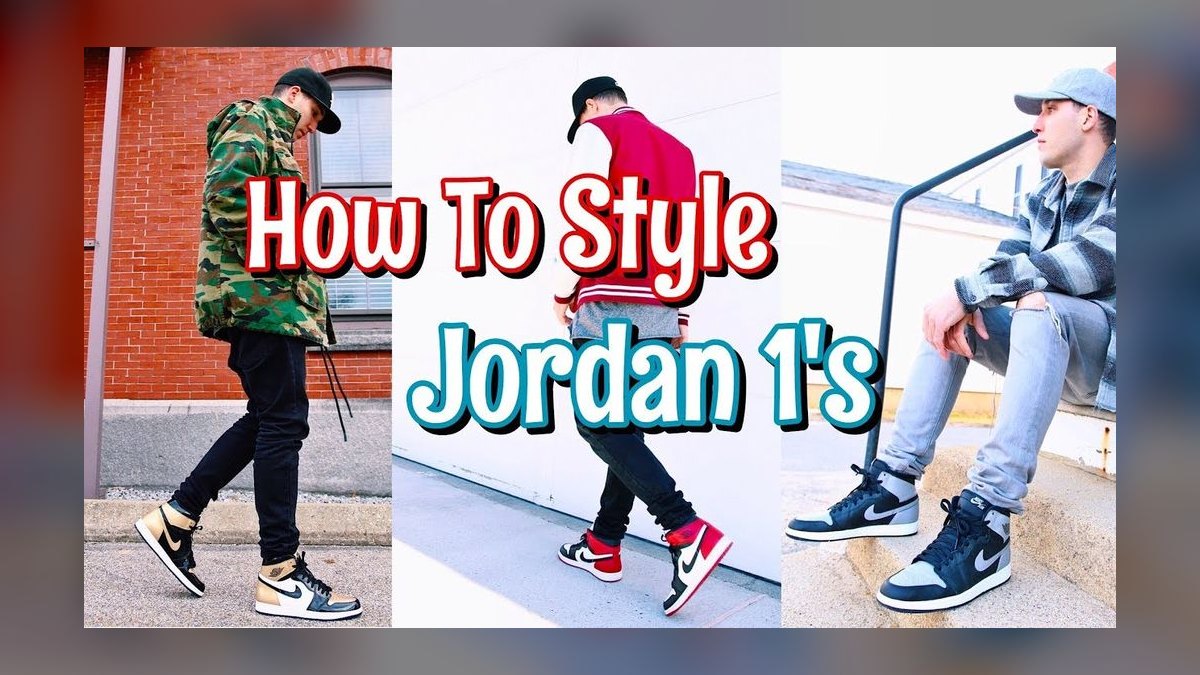
The strategic framing that makes every downstream decision easier: you are not dressing a sneaker up. You are dressing an outfit down by exactly one notch, and the Jordan is the notch. Everything else should climb. If your trousers, shirt, and outerwear would each pass a stricter dress code on their own, the sneaker becomes a deliberate choice. If two or three other pieces are also casual, the sneaker becomes the confirmation that you're underdressed.
Choosing the right pair before you choose anything else
Not every Jordan 1 is a cocktail shoe, and this is where most attempts fail before the outfit is even assembled. Three attributes decide it: cut, colorway, and material.
Cut. The Jordan 1 exists in High, Mid, and Low. All three can work, but they solve different problems.
- *High* is the most formal-adjacent counterintuitively, because it reads as a boot when the collar is covered or half-covered by a trouser. It also hides the sock line entirely, which removes a common failure point. The trade-off is bulk at the ankle, which fights a very slim trouser.
- *Low* is the safest with tailored trousers because it exposes the least shoe and keeps the ankle clean. It also most closely mimics the visual footprint of a leather sneaker or a derby. The trade-off is that it exposes the sock and the ankle, so hosiery discipline becomes mandatory.
- *Mid* is the hardest to pull off. It has the bulk of the High without the intentional collar statement, and the sneaker community's long-running skepticism toward the Mid means a knowledgeable room may read it as the default option rather than the chosen one. If you have a Mid and nothing else, wear it — but if you're buying for this purpose, buy High or Low.
Colorway. The single strongest predictor of success is tonal restraint. A one- or two-color pair in dark leather — black, black and white, deep navy, burgundy, forest, charcoal, off-white on off-white — behaves like a dress shoe. A three-color pair with contrast stitching, contrast Swoosh, contrast collar, and a colored midsole behaves like a sneaker and pulls every eye down to your feet.
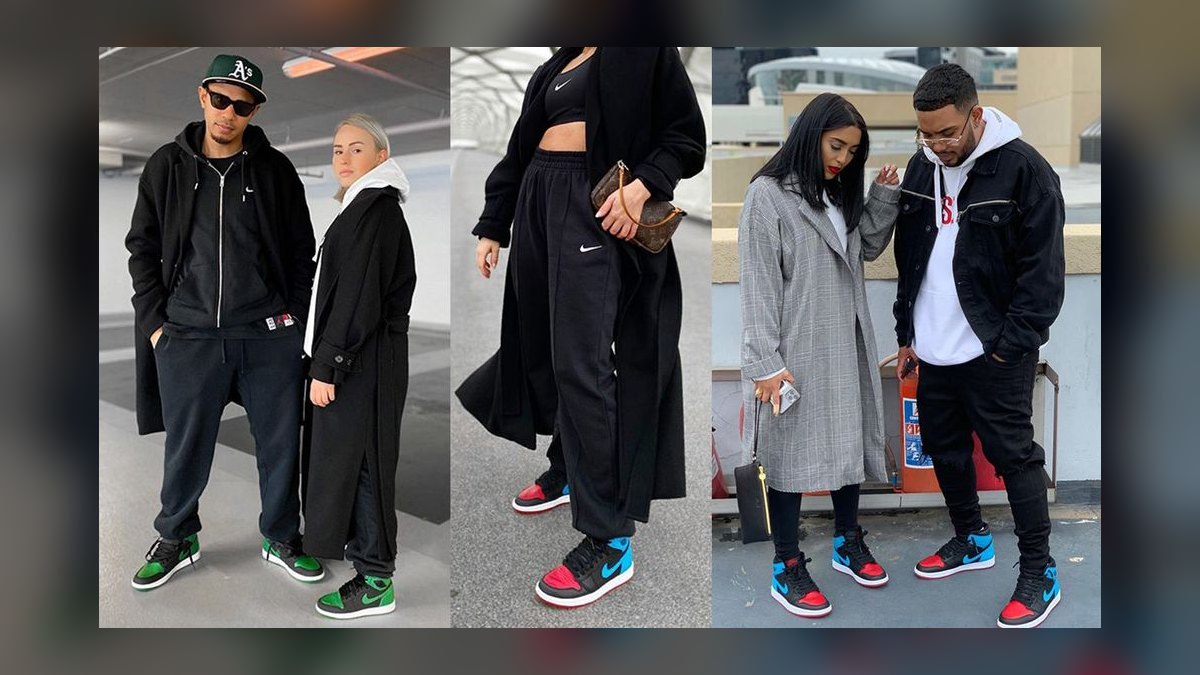
Rank order, roughly, from most cocktail-appropriate to least:
- All-black or near-all-black leather
- Black-and-white in a large-block arrangement (minimal fragmentation)
- Deep single-tone colors — navy, burgundy, olive, chocolate
- White-on-white or bone-on-bone leather (works, but shows every scuff)
- Two-tone with a bright accent limited to the Swoosh
- Multi-panel, high-contrast, or bright-midsole pairs — avoid
Material. Smooth full-grain or tumbled leather is the target. Patent leather can work in a dark color but reads as costume in a bright one. Nubuck and suede are acceptable in dark tones and actually pair beautifully with flannel and tweed in cold weather, though they are weather-vulnerable. Canvas, mesh panels, and any nylon detailing should be skipped for this use case — the material contrast against tailoring is too sharp.
Condition is not optional. A midsole that has yellowed, a toe box with deep horizontal creasing, a heel that has collapsed inward, or an outsole caked with the previous owner's driveway all disqualify a pair regardless of how good the colorway is. Before the event: brush the leather with a soft horsehair brush, clean the midsole with a dedicated sneaker cleaner and a soft brush (a magic-eraser-style melamine sponge works on rubber but will dull painted panels, so keep it off the leather), and re-lace with flat laces in the shoe's dominant color. Fresh laces cost very little and change the read of the shoe more than anything else you can do in ten minutes.
The step-by-step process
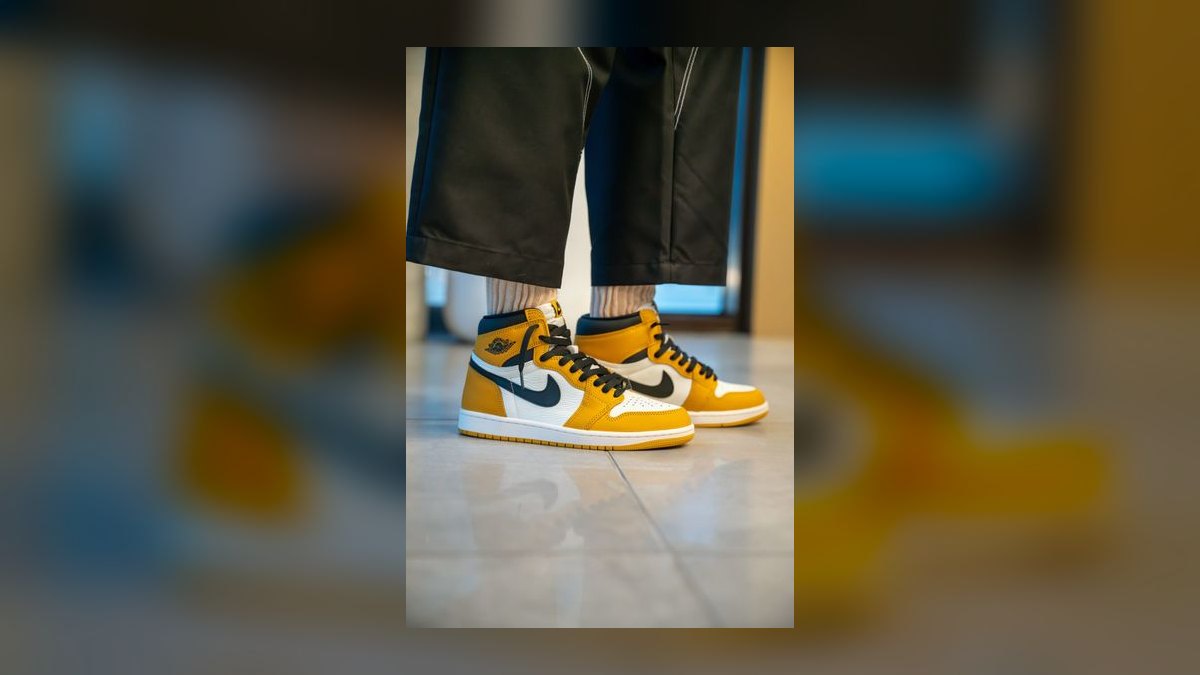
Work from the shoe upward. Every decision above the ankle is a response to the shoe you already chose.
Step 1 — Set the trouser. This is the highest-leverage decision in the outfit. The leg opening should be roughly 15–18 cm (6–7 in) at the hem for most builds. Narrower than that and the Jordan's toe box flares out past the trouser line, making the foot look oversized. Wider than that and the trouser swallows the shoe and defeats the point of wearing it. Wool, wool-blend flannel, or a heavy cotton twill all work; avoid technical/athletic fabrics and avoid denim unless the event skews genuinely casual.
Step 2 — Set the break. With a High, aim for a very slight break or a clean no-break that lands right at or just over the top of the ankle collar. Full break — where the trouser puddles — is the single most common failure, because the fabric bunches on the collar and creates a shapeless mass at the ankle. With a Low, a cropped or no-break hem sitting 1–2 cm above the collar is ideal; it exposes a small, deliberate band of ankle or sock.
Step 3 — Sock discipline. No crew socks with visible logos. No white athletic socks. Either a dark, thin, ribbed or flat-knit sock in a color that reads as an extension of the trouser, or an invisible/no-show sock with a Low where you want a bare ankle. If you're going for a visible sock, treat it as an intentional color: matching the trouser is safe, matching the shoe's accent color is advanced, and contrasting for its own sake is risky.
Step 4 — Build upward with structure. The upper half has to carry more formality than usual to offset the shoe. Options that work, in descending safety: unstructured or soft-shouldered blazer over a fine-gauge knit; blazer over a plain crewneck or mock-neck; a well-cut overshirt or shirt-jacket in wool over a shirt; a heavy merino or cashmere crewneck alone. Options that fail: hoodie, graphic tee, anything with athletic branding, anything that repeats the "sport" signal the sneaker is already sending.
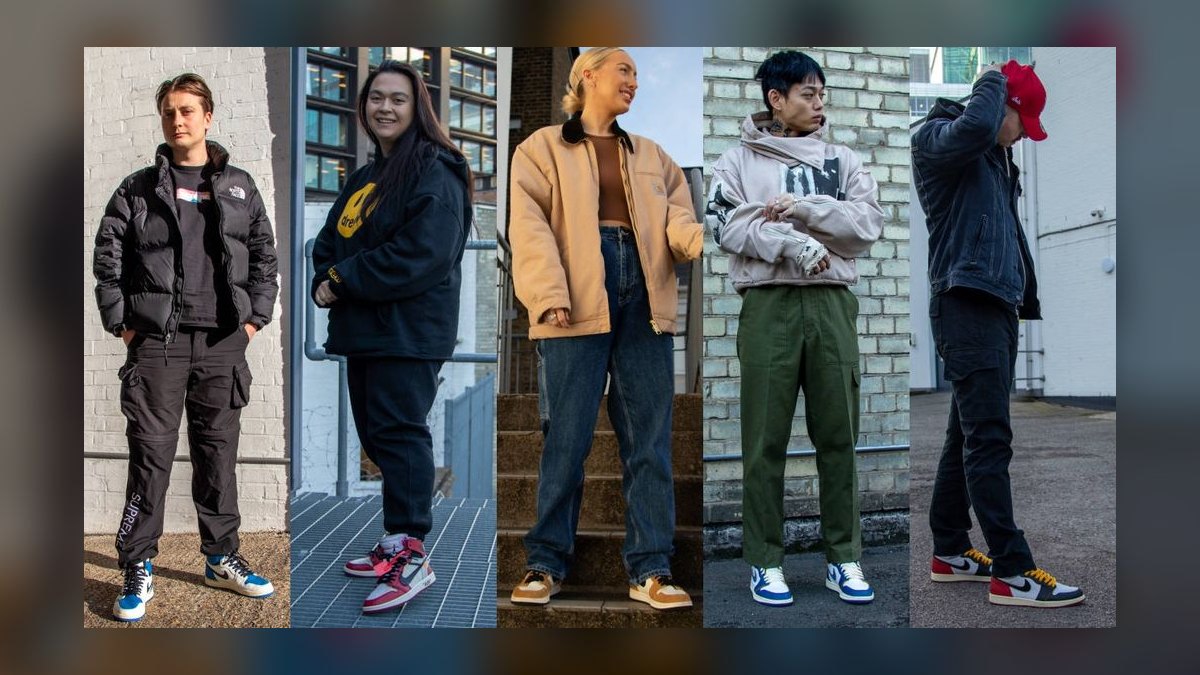
Step 5 — Resolve the shirt. An open-collar shirt with a collar that stands on its own — a spread or a soft one-piece collar — is the workhorse. Skip the tie in most cases; a tie plus a basketball sneaker is a hard combination to sell unless the whole outfit is committed to that clash on purpose. A fine-gauge turtleneck or mock-neck is an excellent alternative in cold months and does a lot of formality work for very little effort.
Step 6 — Echo, don't match. Pick one accent — the belt, the watch strap, a bag, or the outerwear — and echo the shoe's dominant color or its leather finish. Black shoe, black belt, black watch strap. Burgundy shoe, brown-to-burgundy leather elsewhere. One echo is enough; three echoes turns into a costume.
Step 7 — Mirror check the whole thing standing and seated. Sit down and look. Cocktail parties involve a lot of standing but you will sit at some point, and a trouser that rides up when seated will expose four inches of calf and whatever sock decision you made. Check it.
Costs, timelines, and typical ranges
Nobody talks honestly about the money and time here, so here it is plainly.
The shoe. Retail pricing for Air Jordan 1 Highs and Lows has trended upward over the years and varies by region and specific model, so verify current pricing at the source rather than trusting a number in an article. Resale is a wider spread: general-release colorways in common sizes frequently sit at or near retail, sometimes below it, while limited or collaborative releases can carry multiples of retail. For this specific use case that pricing dynamic is good news — the tonal, low-drama colorways that work best at a cocktail party are usually the ones that are *not* hyped, which means they're often the cheapest pairs on any resale platform. You are not competing with collectors for a plain black leather pair.
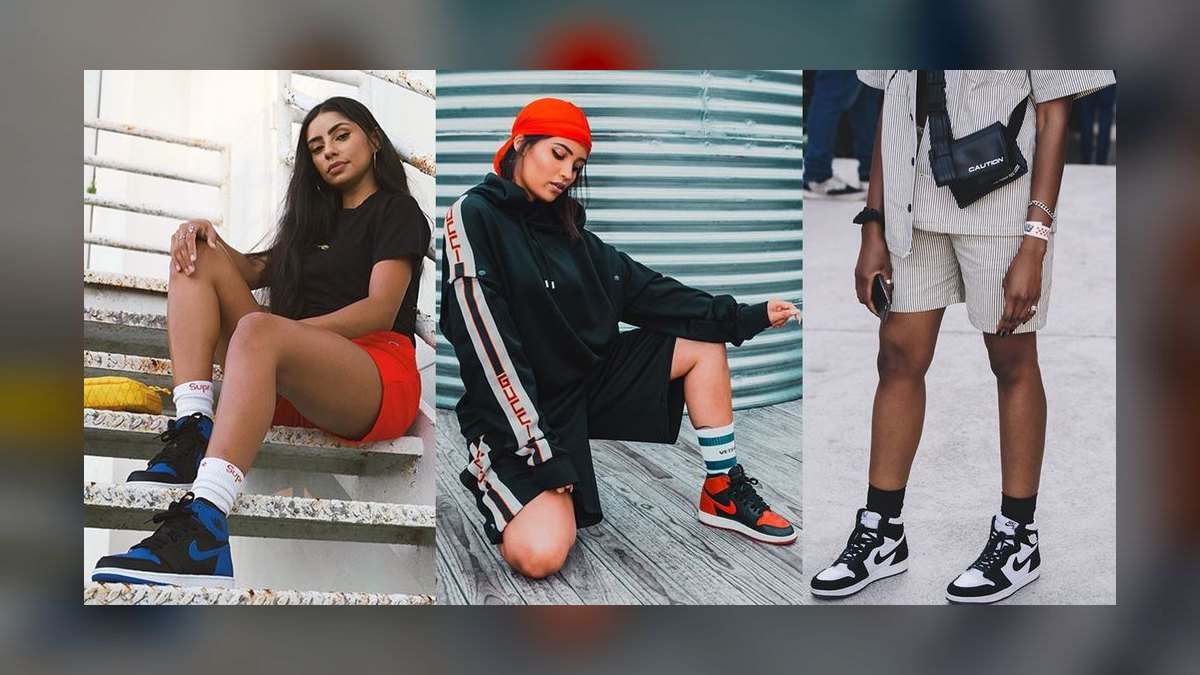
The rest of the outfit. Assume the trouser is the piece you may need to buy or alter. Off-the-rack tailored trousers span an enormous range, from fast-fashion to bespoke; the meaningful cost is usually the hem. A tailor charging for a simple hem and taper is one of the highest-return purchases in this entire exercise — you are paying to fix the exact dimension (leg opening and break) that determines whether the outfit works.
Timelines.
- *Tailoring:* budget 5–10 business days for a standard hem and taper at a local tailor; rush service is often available for a surcharge. Do not leave this to the week of the event.
- *Cleaning a pair:* 20–40 minutes of active work, plus overnight drying. Leather needs to dry away from direct heat; a radiator or hair dryer will crack and shrink it.
- *Sole whitening or deep restoration:* if the midsole has genuinely yellowed, oxidation-reversal treatments exist but take multiple days and carry real risk of uneven results. For a party next week, choose a different pair instead.
- *Break-in:* a new leather Jordan 1 High needs real break-in at the collar and the toe flex point. Wear a new pair for 3–5 short sessions before an event where you'll stand for four hours. A blistered heel is a bad trade for a crisp toe box.
Where the money actually goes, ranked by return per dollar:
- Fresh flat laces — trivial cost, largest visual change
- Hem and taper on one pair of trousers — moderate cost, changes every future outfit
- A soft, unstructured blazer that fits the shoulders — the largest single expense and the largest formality gain
- Dark, thin dress socks in a three-pack
- A shoe cleaning kit (brush, solution, microfiber)
- Shoe trees or crease protectors — cheap insurance on toe-box creasing between wears
A realistic assembly timeline for someone starting from a pair of Jordans and nothing else: two weeks. Week one, buy or pull the trouser and get it to a tailor, order laces and socks. Week two, pick up the trouser, clean the shoes, do a full dress rehearsal three days out so there's time to fix a surprise.
Where people get it wrong
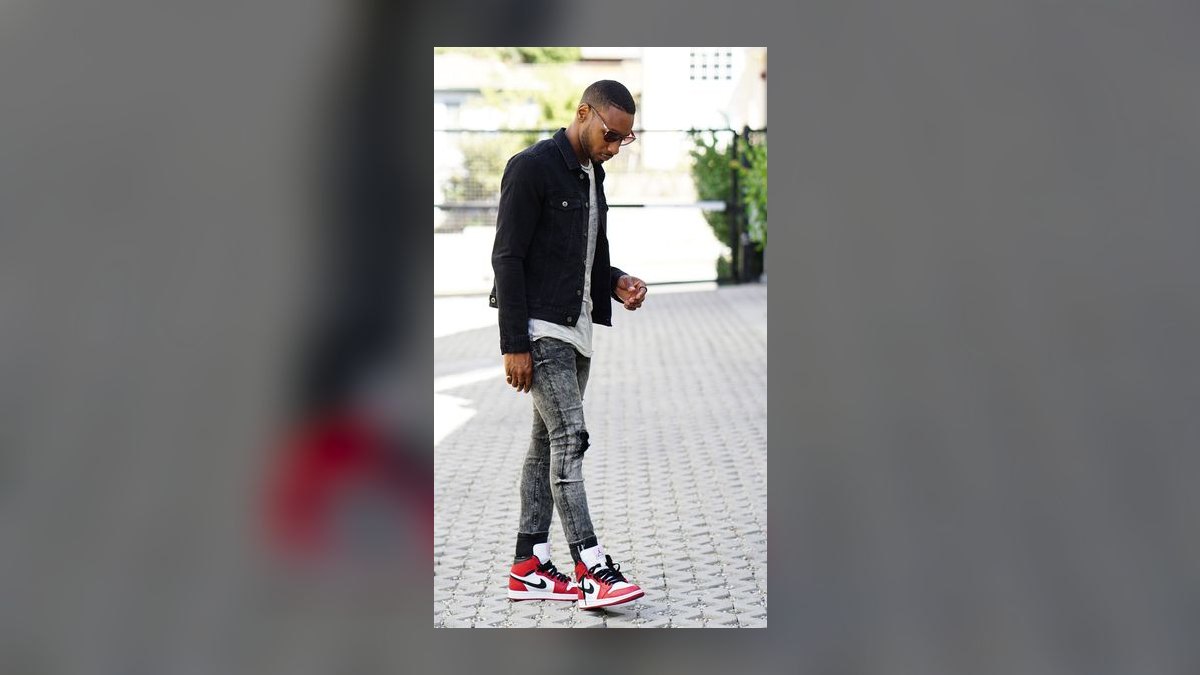
Mistake: wearing the loudest pair you own. The instinct is to bring out the pair with the most story attached — the collaboration, the rare colorway, the one with the interesting materials. At a cocktail party this backfires, because the outfit's job is coherence and a loud shoe forces every other piece to compete. The best pair for this context is often the most boring one in the rotation.
Mistake: full-break trousers. Covered above but worth repeating because it is by far the most frequent error. Fabric puddling over a high-top collar is the visual signature of an outfit that wasn't planned. If your trousers break fully and you can't get to a tailor, a temporary interior cuff or a discreet safety-pin hem is better than the puddle — but the tailor is the real answer.
Mistake: treating the sneaker as permission to relax everything else. Once one casual piece is in play, the temptation is to let the rest slide — a rumpled shirt, an untucked hem, a canvas bag. This is the failure mode that turns "deliberately dressed down" into "didn't try." The shoe buys you exactly one degree of casualness. Spend it once.
Mistake: dirty or creased shoes. A crisp outfit with beat sneakers reads worse than an average outfit with clean ones. Deep toe-box creasing in particular photographs badly, and cocktail parties are photographed constantly. Crease protectors between wears and shoe trees in storage cost very little.
Mistake: mismatched leather temperatures. A cool-toned black shoe with warm-toned brown leather accessories, or a stark white sneaker with cream-toned everything else, creates a low-level wrongness people notice without being able to name. Keep leathers in the same temperature family.
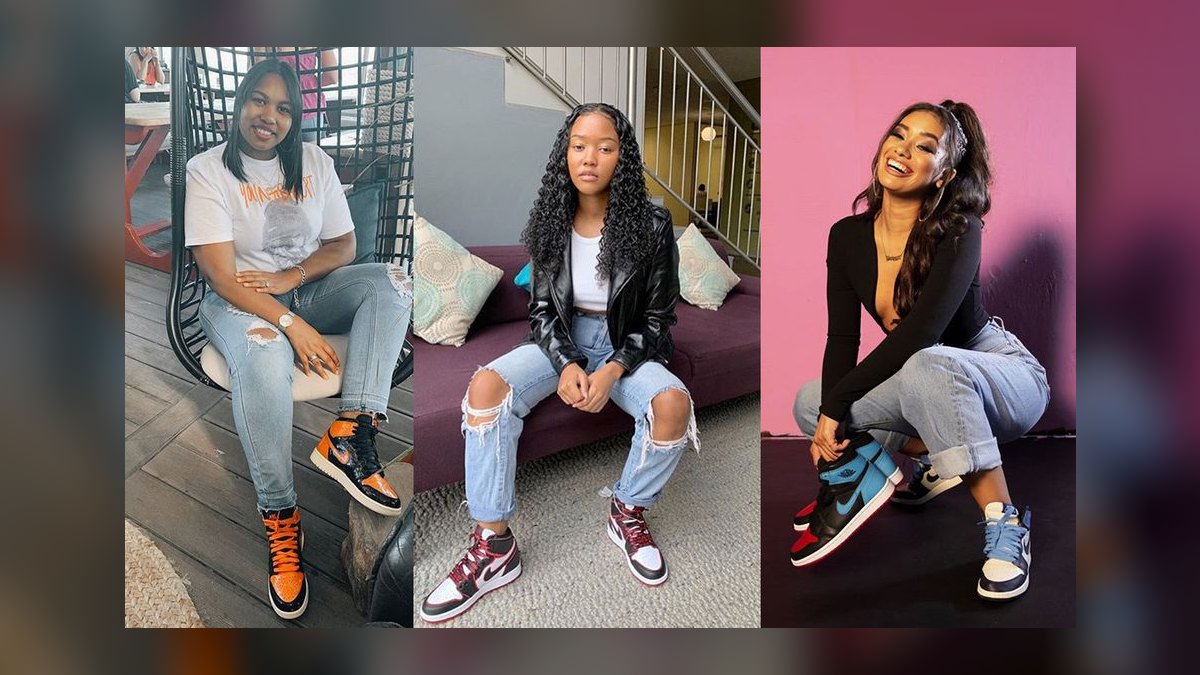
Mistake: ignoring the venue floor. Outsoles on retro Jordans are not designed for polished stone or wet marble. A venue with a slick floor plus four hours of standing and a drink in hand is a real slip risk. If the venue is a hotel ballroom or a gallery with poured concrete or polished terrazzo, walk carefully — or scuff the outsole lightly on rough pavement beforehand to break the gloss on the rubber.
Mistake: not checking the actual dress code. If the invitation states a code, honor it. If it doesn't, ask the host or a guest who has been before. Showing up in sneakers to a room where every other person is in leather-soled shoes is uncomfortable regardless of how well-styled you are — and the discomfort will be visible in how you carry yourself, which undoes the whole effort.
Mistake: overloading the accessories. Because the shoe already introduces a streetwear signal, adding a chunky chain, a cap, or a heavily branded bag stacks signals until the outfit stops reading as cocktail attire at all. One statement piece total, and the Jordan is already it.
Decision framework: when to choose what
Different events, seasons, and personal styles push toward different configurations. Rather than one rule, use the branching logic below.
By season. Cold-weather cocktail events are substantially friendlier to this look, because flannel, tweed, heavy knits, and topcoats all supply structure and visual weight that balance a chunky-ish shoe. A dark suede High under a wool flannel trouser with a topcoat is one of the strongest versions of this outfit that exists. Warm-weather events are harder: lightweight fabrics drape rather than hold shape, so the sneaker carries proportionally more visual mass. In summer, lean Low, lean tonal, and lean toward a trouser with enough body — a mid-weight tropical wool rather than a limp linen.
By body proportion. Taller, longer-legged builds can carry the High comfortably because there's enough leg length above the collar for the eye to read the shoe as a terminus rather than a chunk. Shorter or shorter-legged builds generally do better with a Low and a slightly cropped hem, which lengthens the visible leg line. This is a proportion question, not a rule — try both in a mirror.
By how much attention you want. If the goal is for the shoe to be noticed and admired, a distinctive but still restrained colorway with a fully neutral outfit around it does that job cleanly — the eye goes to the one interesting element. If the goal is to be comfortable without the footwear being the story, all-black leather with dark trousers is nearly invisible from across a room, and only the people standing close will register that they're Jordans at all. Both are legitimate strategies; pick one before you get dressed rather than discovering which one happened.
By what you already own. The honest hierarchy of substitutions when you're missing a piece: no blazer → heavy knit; no tailored trouser → dark, well-fitted five-pocket in a non-denim fabric; no dark socks → Low with no-show socks; no clean pair of Jordans → wear something else and clean the Jordans for next time. The last one is not a joke. Condition beats colorway beats cut, in that order.
The escape hatch. If you get halfway through assembling this and something feels off, the reliable fallback is a dark leather loafer or a minimal leather sneaker, both of which do most of what a Jordan 1 does here with none of the risk. Wearing the Jordan should be a decision you make because the outfit is right for it — not a decision you defend after the fact.
Related questions
Can I wear Jordan 1s with a suit?
With a full matching suit, it gets difficult — the suit's formality creates a gap the sneaker has to jump. It works best with a soft, unstructured suit in a casual fabric (cotton, linen-wool, textured wool), no tie, and a tonal dark shoe. A sharp worsted business suit plus Jordans reads as a mismatch.
Do Jordan 1 Lows or Highs look better with dress trousers?

Lows are the safer pairing because they expose less shoe and preserve the leg line. Highs work well when the trouser hem sits right at or just over the collar and the leg opening is wide enough not to fight the collar's bulk. Mids are the hardest of the three.
What colorways are safest for formal-adjacent events?
Single-tone or two-tone dark leather: all-black, black and white in large blocks, deep navy, burgundy, olive, chocolate. Avoid multi-panel high-contrast pairs, bright midsoles, and anything with nylon or mesh panels. Restraint in the colorway is what lets the shoe read as leather footwear rather than sportswear.
Should I wear socks with Jordan 1 Lows at a party?
Yes — either a thin, dark sock that reads as an extension of the trouser, or a genuine no-show sock if you want a bare ankle. Avoid white athletic socks and avoid going truly sockless in leather for a long event; it damages the lining and it's uncomfortable by hour three.
How do I keep the toe box from creasing before the event?
Use crease protectors while wearing and shoe trees in storage. Walk with a slightly more deliberate heel-to-toe roll rather than pushing off hard. Creasing is unavoidable over time on leather — the goal is to slow it, and to make sure the pair you wear to an event is the least-creased pair you own.
FAQ
Are sneakers actually acceptable at cocktail parties in 2027?
At many of them, yes — dress codes have loosened steadily and "cocktail attire" is interpreted more broadly than it was a decade ago. But acceptance is not universal and it is not your call to make unilaterally. It depends on the host, the venue, the region, the guest list, and whether the invitation states a code. If the invitation says anything about formal or black-tie-optional, the answer is no. When in doubt, ask.

What's the single most important factor?
Condition, then colorway. A pristine plain black pair will always outperform a scuffed rare pair in this setting. Clean leather, an unyellowed midsole, fresh flat laces, and minimal creasing do more work than any amount of styling above the ankle.
Can I wear a tie with this outfit?
You can, but it's an advanced move and it narrows your margin. A tie pushes the upper half toward business formality while the shoe pulls the lower half toward streetwear, and the outfit has to be confident enough to make that tension read as deliberate. Most people are better served by an open collar or a fine-gauge mock-neck.
Does this work for women?
The same principles apply — tonal leather, clean condition, tailoring that ranks above the shoe. Jordan 1s pair particularly well with a midi or maxi dress in a structured fabric, with a tailored wide-leg trouser, or with a slip dress plus a structured blazer. The proportional logic is the same: the shoe should be the one relaxed element in a composed outfit, and the hemline should relate deliberately to the shoe's collar rather than accidentally.
What if the event has a photographer?
Assume it does. Photography exaggerates every flaw in footwear — creases, scuffs, and yellowed midsoles all show up harder under a flash than they do to the naked eye across a dim room. If you know there will be photos, weight the "clean and boring" side of every decision.
Is the Mid genuinely worse, or is that just snobbery?
Some of it is snobbery, but there's a real design argument underneath. The Mid's collar height sits in an awkward middle where it lacks the High's intentional boot-like silhouette and the Low's clean ankle line, and its cut around the collar is shaped differently from the High rather than being a simple trim. For most outfits the practical answer is: if it's what you own and it's clean and tonal, wear it — but don't buy one specifically for this.
Sources
- https://www.nike.com/jordan
- https://www.gq.com/style
- https://www.esquire.com/style/
- https://www.permanentstyle.com/
- https://www.highsnobiety.com/tag/air-jordan-1/
- https://www.vogue.com/fashion
- https://www.complex.com/sneakers
- https://www.businessoffashion.com/
- https://www.thefashionlaw.com/
Related on PULSE
- How to style leather loafers for a cocktail party
- What "cocktail attire" actually means in 2027
- Sneaker care: cleaning and storing leather uppers
- How to get the right trouser break for sneakers
- Dark tonal dressing: building an outfit around one accent
- When to wear sneakers to a wedding
This page will be disappearing soon. Save it to your device for $1 — or read it free while it is here.
@Kory-White- · if Venmo asks, the last 4 of my number are 2012
This page is gone.
This one is off the shelf now. $1 keeps it on your phone for good — the whole page, pictures and diagrams included.
 pulse-styleTop 10 Leather Jacket Outfits for an Engagement Party in 2027
 pulse-styleWhat to Wear to a Tropical Resort in 2027
 pulse-styleTop 10 White Sneaker Outfits for Spring in 2027
 pulse-styleTop 10 Cobalt Blue Outfits for Spring in 2027
 pulse-styleTop 10 Lavender Outfits for Winter in 2027
 pulse-styleTop 10 Loafer Outfits for Winter in 2027
 pulse-styleTop 10 Teal Outfits for Spring in 2027
 pulse-styleTop 10 Turtleneck Outfits for Spring in 2027
 pulse-styleTop 10 Maroon Outfits for Fall in 2027
 pulse-styleTop 10 Trench Coat Outfits for a Conference in 2027