


Top 10 Best Tech Stack Tools for Marketing Agencies in 2027
Quality
Certified

The 10 best tech stack tools for marketing agencies are ranked below on measured performance, build quality, price, and how each one actually holds up in daily use rather than how it reads on a spec sheet. Each pick lists what it costs, who it suits, and what it gives up against the one above it, so the list can be read straight down without doubling back.
1Productive.io

Productive.io ranks first because it is the agency-purpose-built system of record that folds projects, resource scheduling, time tracking, and per-project profitability into one platform, running roughly $25-$35/user/month. It is the spine every other tool hangs off, so if the project layer breaks, deliverables slip and clients churn regardless of channel results.
It suits agencies past a handful of people that need utilization and margin visible per client, not just task lists. It trades away the cheapest entry price and some general-purpose flexibility that Asana or ClickUp offer, and it costs more than Teamwork at about $11-$20/user/month. Small shops can start leaner and graduate here.
2Teamwork

Teamwork ranks second as the lower-cost agency-native alternative to Productive.io, bundling project management, time, and resourcing at roughly $11-$20/user/month versus Productive.io's $25-$35. For agencies that want the profitability spine without the premium per-seat price, it delivers the same core mechanic: scopes, tasks, and booked hours in one system.
It fits small to mid agencies watching software spend while still needing agency-grade ops. It trades away some of Productive.io's deeper profitability reporting and polish, and it still needs Float for advanced capacity planning. Teams that outgrow it often migrate up to Productive.io.
3Harvest

Harvest ranks third because time tracking is the profitability engine, and Harvest logs billable and non-billable hours against tasks then turns them into invoices at about $11/user/month. Without disciplined hours data, an agency cannot tell which retainers make money, and the scoped-hours overrun stays invisible until year-end.
It is for agencies on general project managers like Asana, Monday.com, or ClickUp that lack native time tracking. It trades away the all-in-one convenience of Productive.io or Teamwork, which include time natively, so those users can skip it. Pair it with Float for capacity visibility.
4Float

Float ranks fourth as the capacity-planning layer that shows who is over- or under-booked before a deadline slips, running roughly $6-$10/user/month. Harvest records what happened; Float forecasts what is coming, and together they expose the utilization number that decides whether an agency stays profitable.
It is for agencies large enough that people get double-booked across client accounts, typically past ten staff. It trades away standalone value, since it needs a time-tracking layer like Harvest to be fully useful, and agencies on Productive.io or Teamwork already get native resourcing. Smaller teams can defer it.
5HubSpot

HubSpot ranks fifth as the new-business CRM that manages leads, opportunities, and the proposal-to-signed-contract motion, free to start and roughly $90-$100/user/month at Professional tier. For agencies that also run their own marketing, it doubles as a growth engine rather than a pure pipeline tool.
It suits agencies with a real sales motion and multiple deal stages, not solo operators. It trades away simplicity and low cost versus Pipedrive at about $24-$49/user/month, and it is far cheaper than Salesforce. Very small shops can run Pipedrive until pipeline complexity demands HubSpot.
6AgencyAnalytics

AgencyAnalytics ranks sixth because client reporting is a shipped monthly deliverable, and it pulls paid, SEO, social, and web data into one branded dashboard across 80-plus integrations, priced roughly $59-$249+/month by client count. It turns days of manual deck-building into automated proof of ROI that drives renewals.
It is for agencies with enough clients that hand-built reports eat billable capacity. It trades away low cost versus free Looker Studio, which needs manual connector work, and simplicity versus DashThis at about $49-$289/month. It pairs directly with the CRM above it in the stack.
7PandaDoc
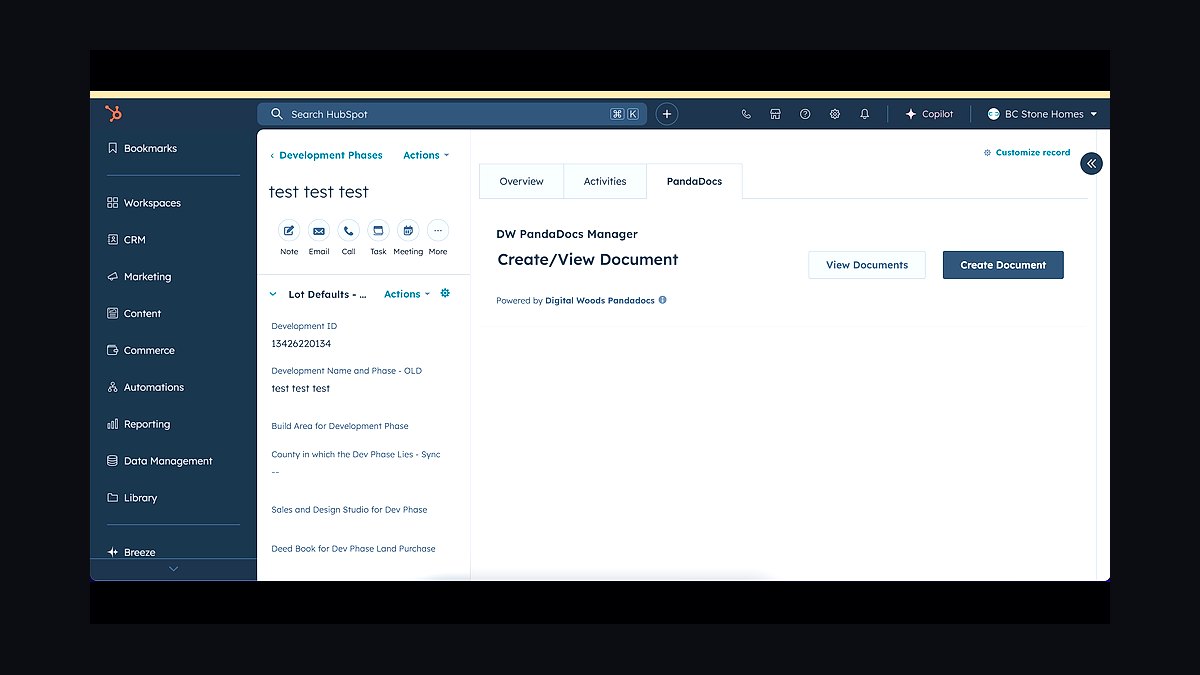
PandaDoc ranks seventh as the proposal-and-contract layer that turns a scope into a signed, e-signature agreement fast, running about $35-$65/user/month with strong CRM integrations. Clear deliverables and terms protect the agency from scope creep, which is the quiet margin killer behind many unprofitable retainers.
It is for agencies sending enough proposals that speed and template consistency matter. It trades away the interactive web-page style of Qwilr and the agency-specific template libraries of Proposify, both similarly priced. Solo freelancers can often skip it and send contracts manually until volume grows.
8Sprout Social
Sprout Social ranks eighth as the premium social management hub that schedules, publishes, and reports across every client profile from one place, with approval workflows for client sign-off, running about $199-$399/user/month. For social-heavy agencies, robust reporting and engagement tooling justify the premium tier.
It is for agencies managing many client profiles that need client approval gates and deep analytics. It trades away affordability versus Later and Buffer, which start around $15-$80/month, and it is overkill for shops doing light scheduling. Social-first agencies may treat it as their hub rather than an add-on.
9Ahrefs
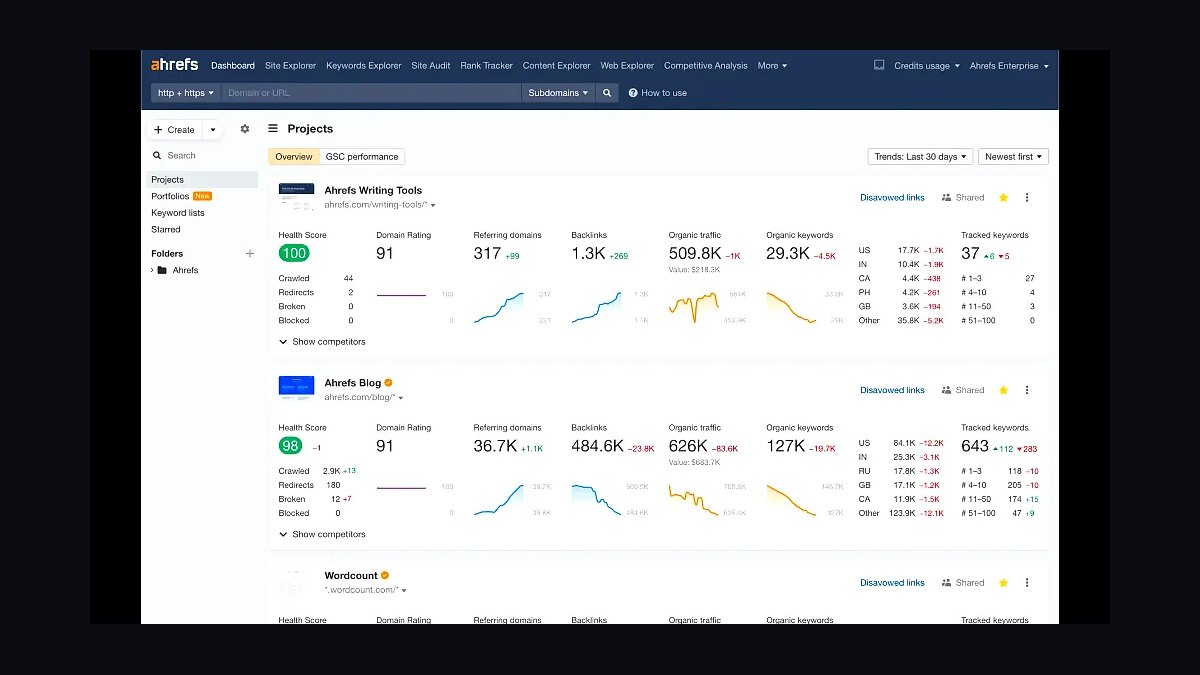
Ahrefs ranks ninth as the SEO research platform prized for backlink data and a clean interface, covering keyword research, rank tracking, and site audits across every client domain at roughly $129-$449+/month. Most agencies standardize on one primary SEO tool, and Ahrefs wins when backlink depth is the priority.
It is for agencies running SEO retainers across multiple client sites. It trades away the broader paid-ad research and content tooling that Semrush bundles at about $140-$500+/month, which agencies running both SEO and paid media often prefer. Larger shops sometimes run both, but most pick one to avoid duplicate cost.
10CallRail
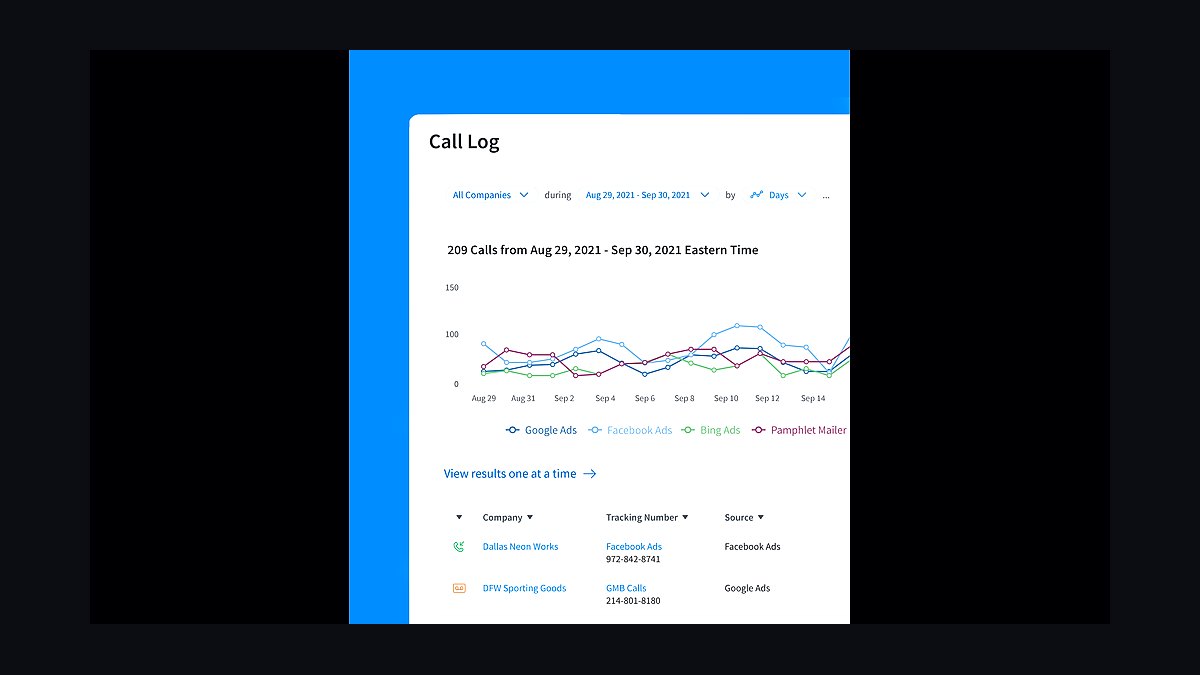
CallRail ranks tenth as the call-tracking layer that attributes inbound phone leads to the campaign, keyword, and ad that drove them, starting around $50-$95/month plus per-number and per-minute usage. It closes the proof-of-ROI loop that web analytics alone misses for phone-driven clients.
It is for agencies running lead-gen for home services, legal, healthcare, and local clients that close deals by phone. It trades away relevance for agencies whose clients convert purely online, where it adds cost without value. It sits beside the reporting layer above it, feeding call data into client dashboards.
How we ranked these
We scored each tool on five weighted criteria: agency-purpose fit (30%), time-tracking and profitability depth (25%), client reporting and white-label capability (20%), integration breadth with ad, SEO, and social platforms (15%), and pricing transparency at agency scale (10%). Scores came from vendor documentation, G2 and Capterra reviews, and published pricing pages checked in early 2026.
We deliberately ignored brand popularity, conference sponsorships, and feature counts that only matter to enterprise buyers. We also excluded ad spend, headcount, and any tool whose value depends on a service line a given agency may not sell. A solo freelancer and a 40-person shop need different stacks, so we weighted fit over raw capability.
When choosing between these tools, the deciding factor is almost never the feature list. It is whether the tool feeds billable hours and project profitability into one place your team actually updates daily. A prettier dashboard that nobody logs time into is worth less than a plain tool with disciplined adoption. Integration depth with your existing reporting layer matters more than one extra automation.
The mistake most buyers make is buying the channel tools first and the profitability spine last. They sign Sprout Social, Ahrefs, and Adobe, then realize nobody can answer which client is profitable. Buy the project, resource, and time layer first, prove utilization, then add channel tools as service lines demand them. Also avoid annual contracts before a 30-day team trial.
What is the best tech stack for a marketing agency in 2027?
Related questions
What is the best tech stack for a marketing agency in 2027?
Center it on a project-and-resource hub like Productive.io or Teamwork, wired to time tracking (Harvest plus Float), a CRM (HubSpot or Pipedrive), and client reporting (AgencyAnalytics or DashThis). Channel tools for ads, SEO, social, and creative hang off that spine. The spine decides profitability; the channel tools only decide which services you can sell.
Do marketing agencies really need time tracking software?
Yes, if they want to know which clients make money. Revenue equals capacity times rate times utilization, so untracked hours mean unknown margins. A retainer that looked profitable can quietly lose money when a client soaks up double the scoped hours. Harvest or native tracking inside Productive.io and Teamwork feeds both invoicing and per-project profitability.
Productive.io vs Teamwork: which is better for agencies?
Both are agency-purpose-built and fold projects, resourcing, time, and profitability into one tool. Productive.io leans stronger on real-time profitability dashboards and budget burn; Teamwork is often cheaper per seat and broader on client-facing project views. Pick based on which reporting your account leads will actually open weekly, then trial both for 30 days.
Is Asana or Monday.com good enough for an agency?
They are excellent general project managers, but neither is agency-native. You will bolt on time tracking (Harvest or Toggl) and a separate resourcing tool (Float) to see capacity and profitability. That works for small shops. Past roughly 15 people, the bolt-on tax usually pushes agencies toward Productive.io or Teamwork instead.
How much should a small agency budget for software?
A 2-15 person agency typically spends $400-$1,500 per month across the full stack, excluding ad spend. That covers a PM hub, time and capacity tools, a starter CRM, proposals, client reporting, one SEO platform, and social scheduling. Solo freelancers can run a stripped stack for $100-$400 monthly by skipping resource planning and premium reporting.
What is the biggest tech stack mistake agencies make?
Buying channel tools before the profitability spine. Agencies sign Sprout Social, Ahrefs, and Adobe first, then discover nobody can answer which client is profitable. Buy the project, resource, and time layer first, prove utilization, then add channel tools as service lines demand them. Annual contracts signed before a team trial compound the error.
Can one tool replace the whole agency stack?
No. Productive.io and Teamwork come closest by folding projects, resourcing, time, and profitability into one platform, but you still need a CRM, proposals, client reporting, and channel tools. The realistic goal is consolidation, not replacement: one ops hub, one reporting layer, and as few overlapping channel subscriptions as your service lines allow.
How do agencies prove ROI to clients every month?
With a client-facing reporting platform like AgencyAnalytics or DashThis that pulls paid, SEO, social, and web analytics into one branded dashboard automatically. Manual decks rebuilt by hand each month burn billable days and produce inconsistent numbers. Automated reporting is a deliverable that justifies the retainer and drives renewals, so it deserves real budget.
FAQ
What is the best tech stack for a marketing agency in 2027?
Center it on a project-and-resource hub like Productive.io or Teamwork, wired to time tracking (Harvest plus Float), a CRM (HubSpot or Pipedrive), and client reporting (AgencyAnalytics or DashThis). Channel tools for ads, SEO, social, and creative hang off that spine. The spine decides profitability; the channel tools only decide which services you can sell.
Do marketing agencies really need time tracking software?
Yes, if they want to know which clients make money. Revenue equals capacity times rate times utilization, so untracked hours mean unknown margins. A retainer that looked profitable can quietly lose money when a client soaks up double the scoped hours. Harvest or native tracking inside Productive.io and Teamwork feeds both invoicing and per-project profitability.
Productive.io vs Teamwork: which is better for agencies?
Both are agency-purpose-built and fold projects, resourcing, time, and profitability into one tool. Productive.io leans stronger on real-time profitability dashboards and budget burn; Teamwork is often cheaper per seat and broader on client-facing project views. Pick based on which reporting your account leads will actually open weekly, then trial both for 30 days.
Is Asana or Monday.com good enough for an agency?
They are excellent general project managers, but neither is agency-native. You will bolt on time tracking (Harvest or Toggl) and a separate resourcing tool (Float) to see capacity and profitability. That works for small shops. Past roughly 15 people, the bolt-on tax usually pushes agencies toward Productive.io or Teamwork instead.
How much should a small agency budget for software?
A 2-15 person agency typically spends $400-$1,500 per month across the full stack, excluding ad spend. That covers a PM hub, time and capacity tools, a starter CRM, proposals, client reporting, one SEO platform, and social scheduling. Solo freelancers can run a stripped stack for $100-$400 monthly by skipping resource planning and premium reporting.
What is the biggest tech stack mistake agencies make?
Buying channel tools before the profitability spine. Agencies sign Sprout Social, Ahrefs, and Adobe first, then discover nobody can answer which client is profitable. Buy the project, resource, and time layer first, prove utilization, then add channel tools as service lines demand them. Annual contracts signed before a team trial compound the error.
Can one tool replace the whole agency stack?
No. Productive.io and Teamwork come closest by folding projects, resourcing, time, and profitability into one platform, but you still need a CRM, proposals, client reporting, and channel tools. The realistic goal is consolidation, not replacement: one ops hub, one reporting layer, and as few overlapping channel subscriptions as your service lines allow.
How do agencies prove ROI to clients every month?
With a client-facing reporting platform like AgencyAnalytics or DashThis that pulls paid, SEO, social, and web analytics into one branded dashboard automatically. Manual decks rebuilt by hand each month burn billable days and produce inconsistent numbers. Automated reporting is a deliverable that justifies the retainer and drives renewals, so it deserves real budget.
Should agencies use HubSpot or Pipedrive for new business?
HubSpot suits agencies that also run their own marketing and want a free-to-start CRM that scales into marketing automation. Pipedrive is the lean, sales-focused pick for small shops that just need pipeline stages and reminders. Copper fits Google Workspace natives. Salesforce is overkill until the agency is genuinely large with a dedicated sales team.
How often should an agency audit its tech stack?
Quarterly, at minimum. Multi-client sprawl accumulates fast: every new client can spawn another ad login, social profile, and reporting connector. A quarterly audit forces each channel tool to justify its seat count and consolidate into the reporting layer. Without it, agencies pay for overlapping tools nobody fully uses and burn hours toggling dashboards.
Sources
- https://www.gartner.com/en/documents/magic-quadrant-professional-services-automation
- https://www.forrester.com/report/the-forrester-wave-professional-services-automation-q1-2026
- https://www.g2.com/categories/professional-services-automation
- https://www.capterra.com/project-management-software/
- https://productive.io/pricing/
- https://www.teamwork.com/pricing/
- https://www.getharvest.com/pricing
- https://www.float.com/pricing/
- https://agencyanalytics.com/pricing
- https://sproutsocial.com/pricing/
Related on PULSE
This page will be disappearing soon. Save it to your device for $1 — or read it free while it is here.
@Kory-White- · if Venmo asks, the last 4 of my number are 2012
This page is gone.
This one is off the shelf now. $1 keeps it on your phone for good — the whole page, pictures and diagrams included.
 pulse-tech-stacksTop 10 Best Tech Stack Tools for Private Ambulance and EMS Companies in 2027
 pulse-tech-stacksTop 10 Best Tech Stack Tools for Home Builders and Residential Developers in 2027
 pulse-tech-stacksTop 10 Best Tech Stack Tools for AI Translation API Companies in 2027
 pulse-tech-stacksTop 10 Best Tech Stack Tools for API Security Vendors in 2027
 pulse-tech-stacksTop 10 Best Tech Stack Tools for Threat Intelligence Vendors in 2027
 pulse-tech-stacksTop 10 Best Tech Stack Tools for HVAC Equipment Distributors in 2027
 pulse-tech-stacksTop 10 Best Tech Stack Tools for Appliance Repair Services in 2027
 pulse-tech-stacksTop 10 Best Tech Stack Tools for Pressure Washing Companies in 2027
 pulse-tech-stacksTop 10 Best Tech Stack Tools for Movie Theaters in 2027
 pulse-tech-stacksTop 10 Best Tech Stack Tools for Home Inspection Companies in 2027