


Top 10 Best Tech Stack Tools for Industrial Equipment Distributors in 2027
Quality
Certified
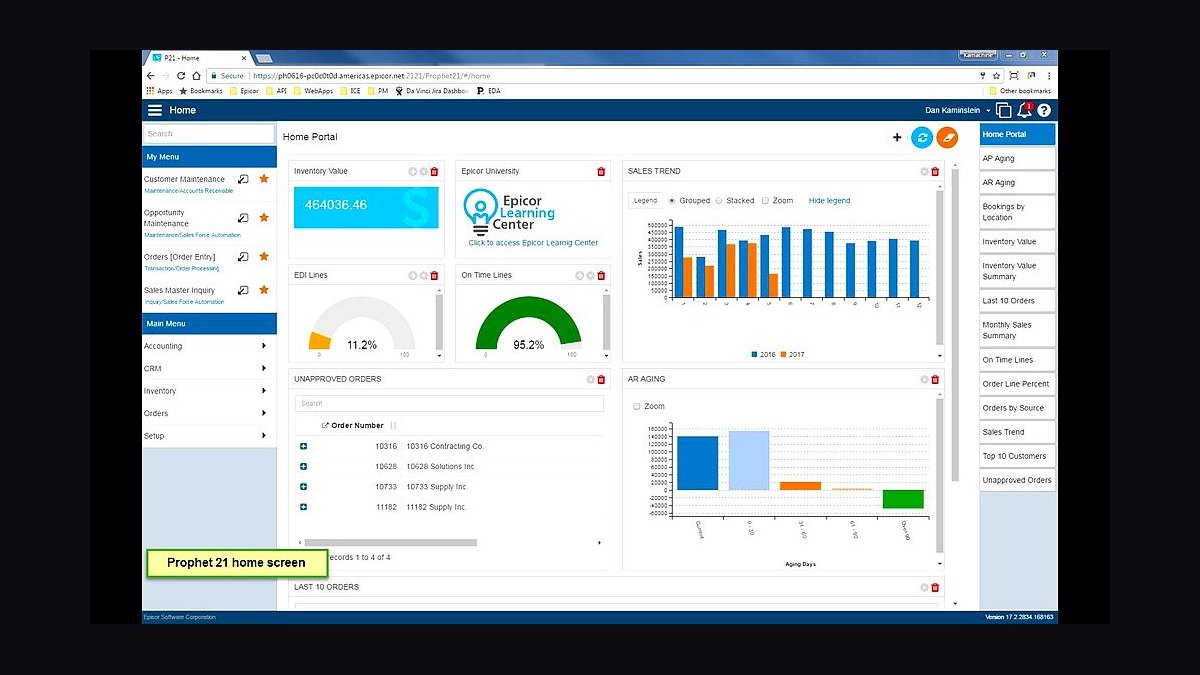
The 10 best tech stack tools for industrial equipment distributors are ranked below on measured performance, build quality, price, and how each one actually holds up in daily use rather than how it reads on a spec sheet. Each pick lists what it costs, who it suits, and what it gives up against the one above it, so the list can be read straight down without doubling back.
1Epicor Prophet 21
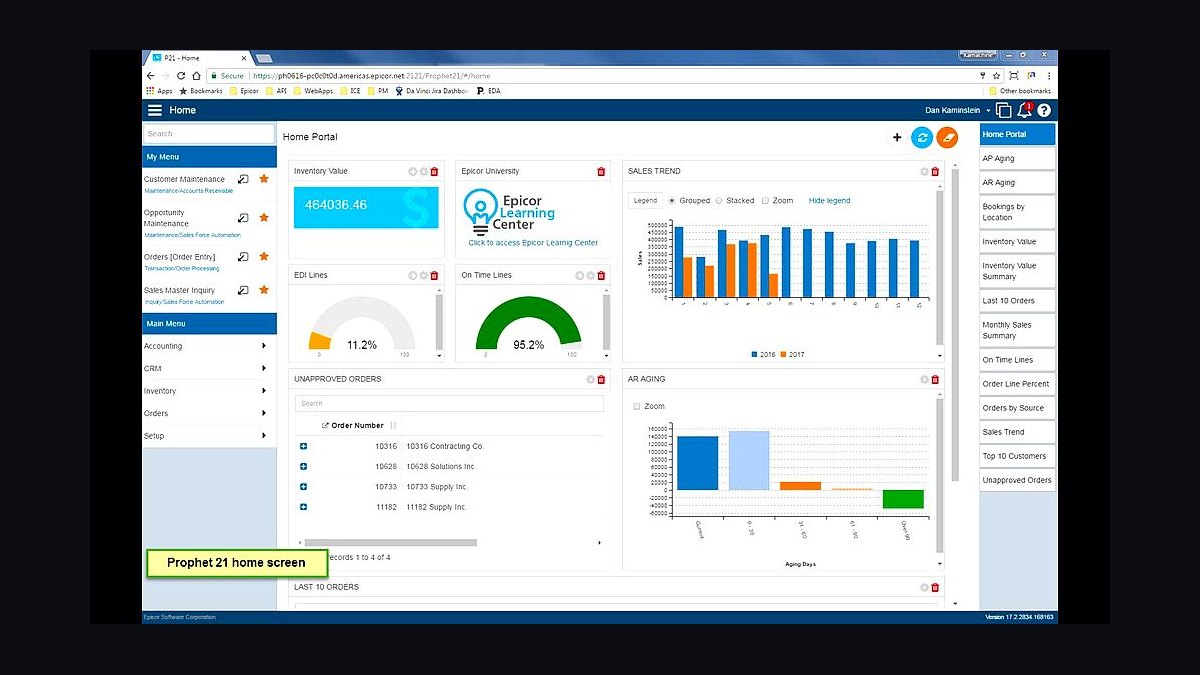
Prophet 21 ranks first because it is the distribution ERP that most industrial, durable-goods, and MRO distributors actually run as their system of record. It models inventory by location, purchasing and replenishment, multi-branch stock transfers, landed cost, unit-of-measure conversions, and customer-specific contract pricing across tens of thousands of SKUs natively. Cloud pricing runs roughly $3,000-$6,000 per user per year, with a 6-12 month implementation.
It is built for the distributor quoting a $40 box of fittings and a $400,000 configured compressor through the same pipeline. It trades away the lighter setup and lower cost of NetSuite or DDI Inform, and it is overkill below roughly $30M in revenue. Against Infor Distribution SX.e directly below, P21 wins on industrial and MRO vertical fit while SX.e wins on deep replenishment for larger wholesale operations.
2Infor Distribution SX.e
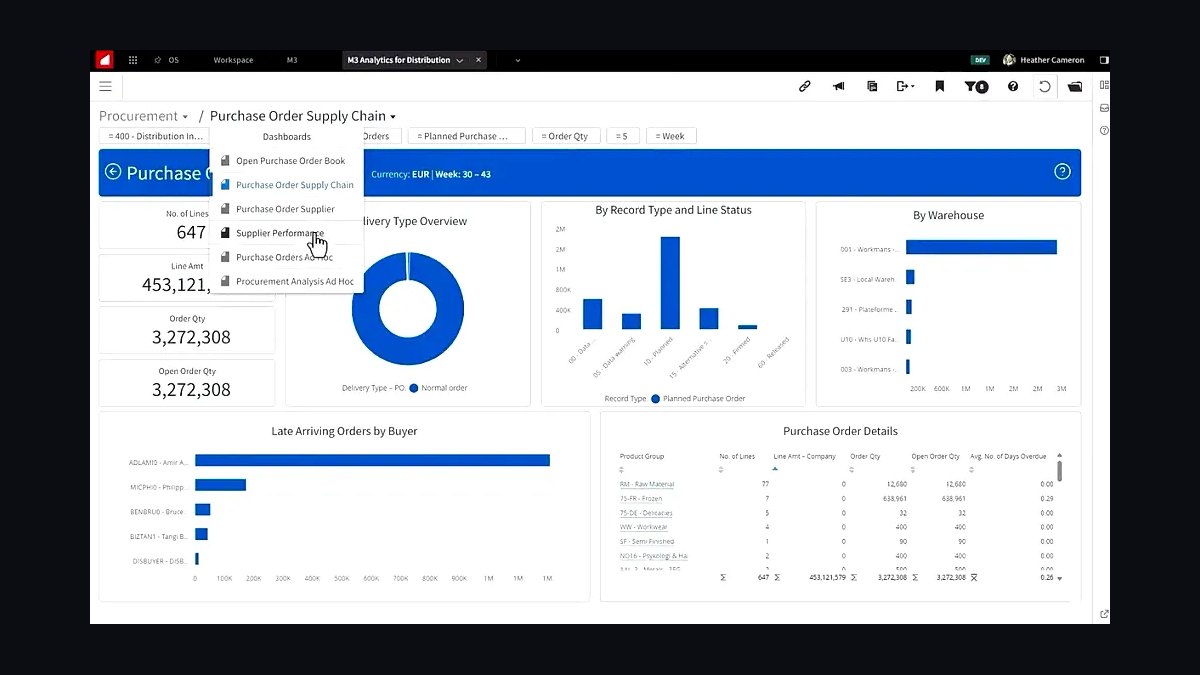
Infor Distribution SX.e ranks second as the ERP alternate for larger wholesale distributors that need deeper replenishment and warehouse logic than P21 ships out of the box. It handles multi-branch inventory, vendor rebates, lot and serial tracking, and contract pricing at the scale of national distribution networks. Pricing is comparable to Prophet 21, and implementations run 6-12 months with heavy configuration.
It suits distributors above roughly $150M with complex procurement and replenishment, or those already standardized on Infor. It trades away P21's broad industrial install base and third-party ecosystem, so CRM, e-commerce, and BI integrations take more work. Against Epicor Eclipse below, SX.e is the wholesale and replenishment pick while Eclipse is the trade-vertical pick.
3Epicor Eclipse
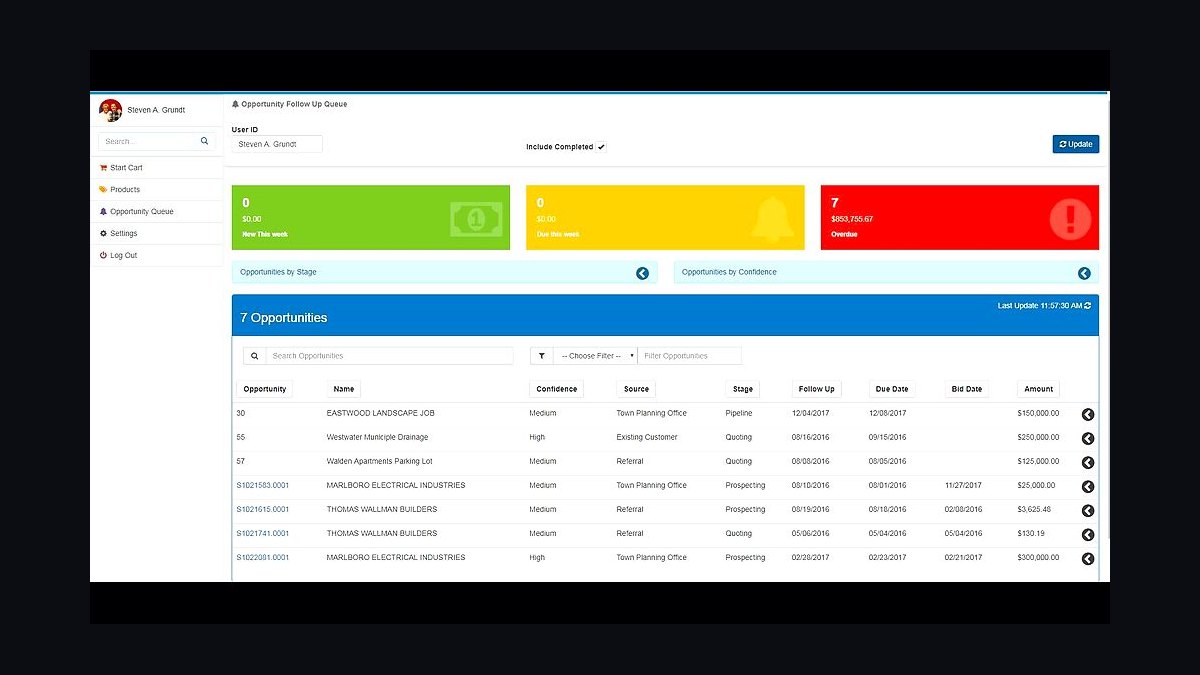
Epicor Eclipse ranks third as the ERP purpose-built for electrical, plumbing, HVAC, and PVF distribution rather than general industrial. It carries trade-specific workflows — contractor pricing, job quotes, counter sales, and branch replenishment — that generic and industrial ERPs force distributors to configure from scratch. It sits in the same price band as Prophet 21, with comparable implementation timelines.
It is the right call for a trade distributor whose daily business is contractor accounts and counter transactions, not capital equipment. It trades away P21's dominance in MRO and durable-goods distribution, so mixed-line distributors often pick P21 instead. Against NetSuite below, Eclipse is heavier and more vertical but far better at multi-branch trade distribution economics.
4Oracle NetSuite
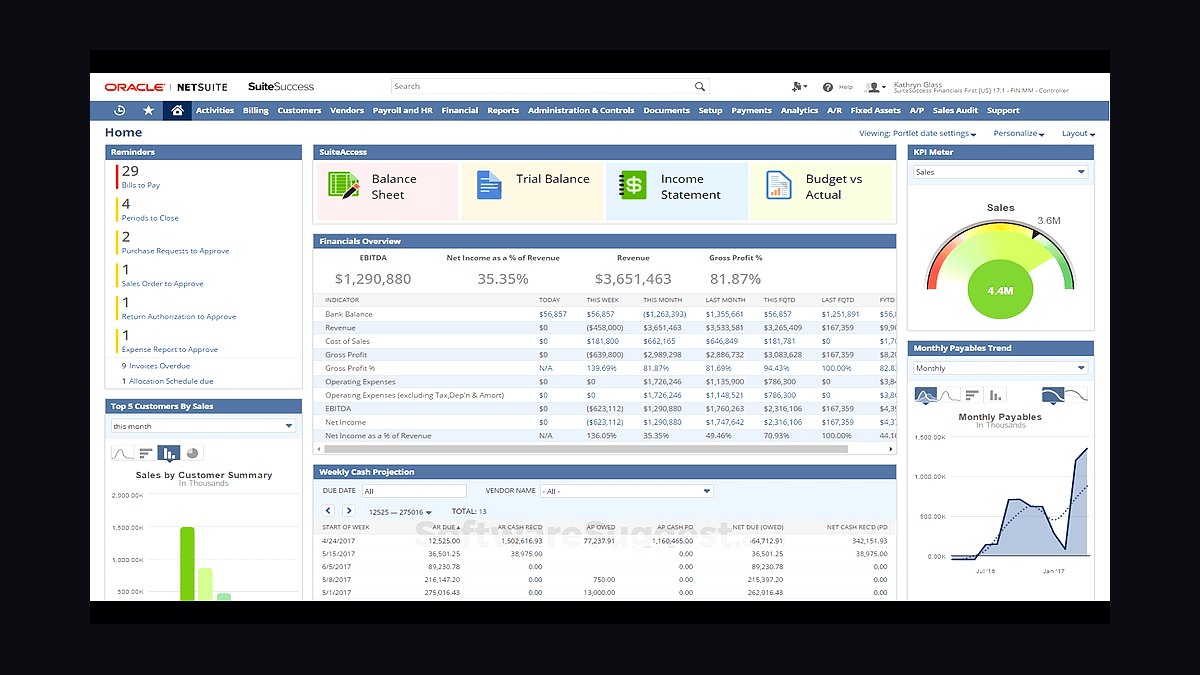
NetSuite ranks fourth as the mid-market ERP for distributors under roughly $30M that do not need P21-scale weight. It delivers cloud ERP plus light CRM and a built-in commerce option, covering multi-location inventory, purchasing, and counter sales at about $999 per month base plus roughly $99-$129 per user per month. Implementations are shorter and lighter than a P21 deployment.
It fits smaller distributors wanting one vendor for finance, inventory, and basic CRM without a dedicated IT team. It trades away native distribution depth — unit-of-measure conversions, vendor rebate accruals, and multi-branch replenishment are thinner than P21 or SX.e. Against DDI System Inform below, NetSuite is broader and more general while DDI is purpose-built for distributor counter sales.
5DDI System Inform
DDI System Inform ranks fifth as the distribution-native ERP for small distributors, typically single-warehouse operations under roughly $30M. It is purpose-built for counter sales, quick setup, and the inventory and purchasing mechanics small distributors run daily, quoted per seat and landing well under a P21 deployment. Go-lives are measured in weeks, not the 6-12 months a P21 project takes.
It suits independents that need real distribution functions without enterprise overhead, and it is often paired with HubSpot and Power BI to compress the stack. It trades away the analytics depth, multi-branch sophistication, and third-party integration ecosystem of P21 or SX.e. Against NetSuite above, DDI is narrower but faster to deploy and tuned specifically for distributor workflows.
6White Cup CRM
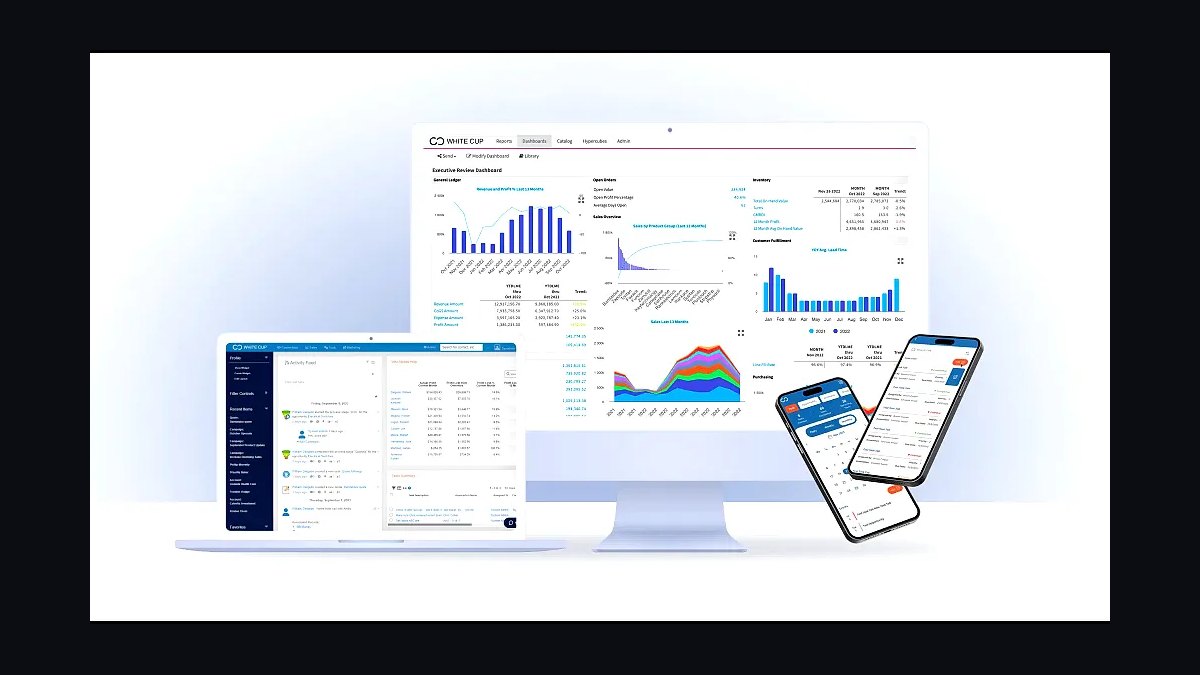
White Cup ranks sixth as the distribution-aware CRM that reads directly from P21, Eclipse, SX.e, and DDI rather than duplicating their data. Outside reps see real ERP sales history, open orders, and margin per account without re-keyed pricing, which is the failure mode that breaks generic CRM deployments. It is quoted per seat, typically in the $50-$100 per user per month range.
It is built for distributors whose outside sales reps own territories and accounts across thousands of SKUs and need ERP truth in the CRM. It trades away the customization depth and app ecosystem of Salesforce, so distributors with heavy custom CRM needs often choose Salesforce instead. Against Salesforce below, White Cup is lighter and distribution-native while Salesforce is broader and more expensive at about $165 per user per month.
7Salesforce Sales Cloud
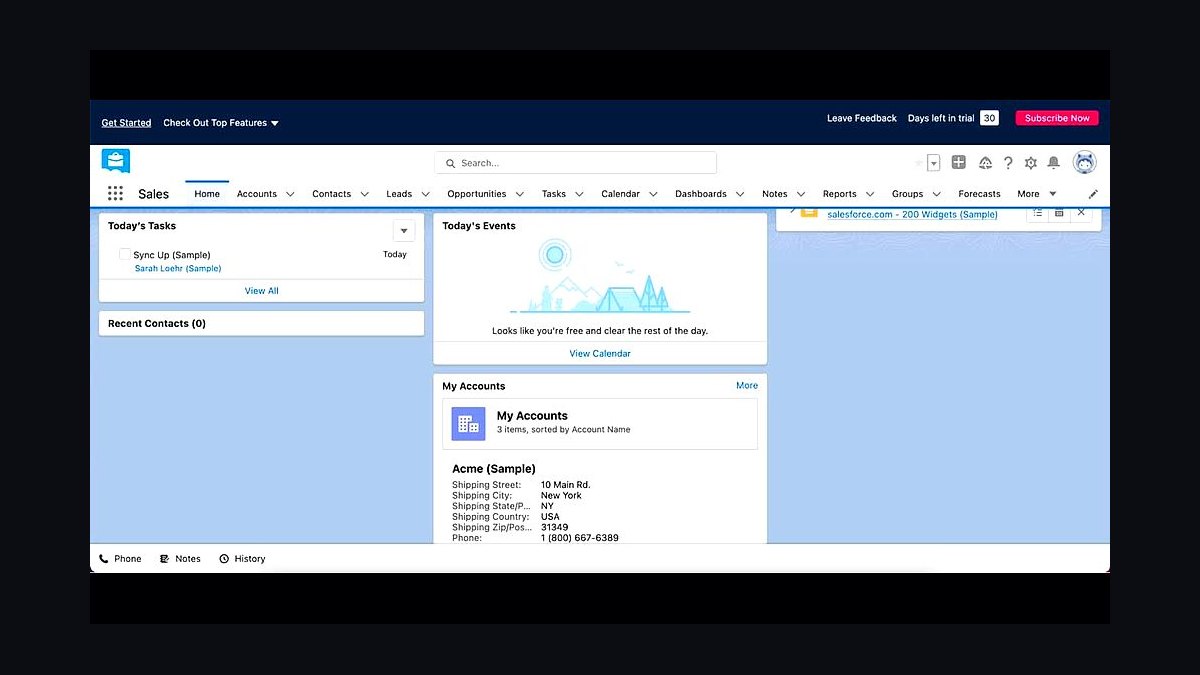
Salesforce ranks seventh as the CRM for distributors that need heavy customization or have already standardized on the platform. It handles complex B2B pipelines, long capital-equipment sales cycles, and territory management, with Enterprise pricing around $165 per user per month. It integrates with distribution ERPs through middleware rather than reading them natively.
It fits larger distributors with internal Salesforce administrators and custom objects tying CRM to ERP account and pricing data. It trades away the out-of-the-box distribution views White Cup ships, so reps see ERP history only after integration work is done. Against HubSpot below, Salesforce is more powerful and more expensive while HubSpot is faster to adopt for smaller teams.
8Unilog CIMM2
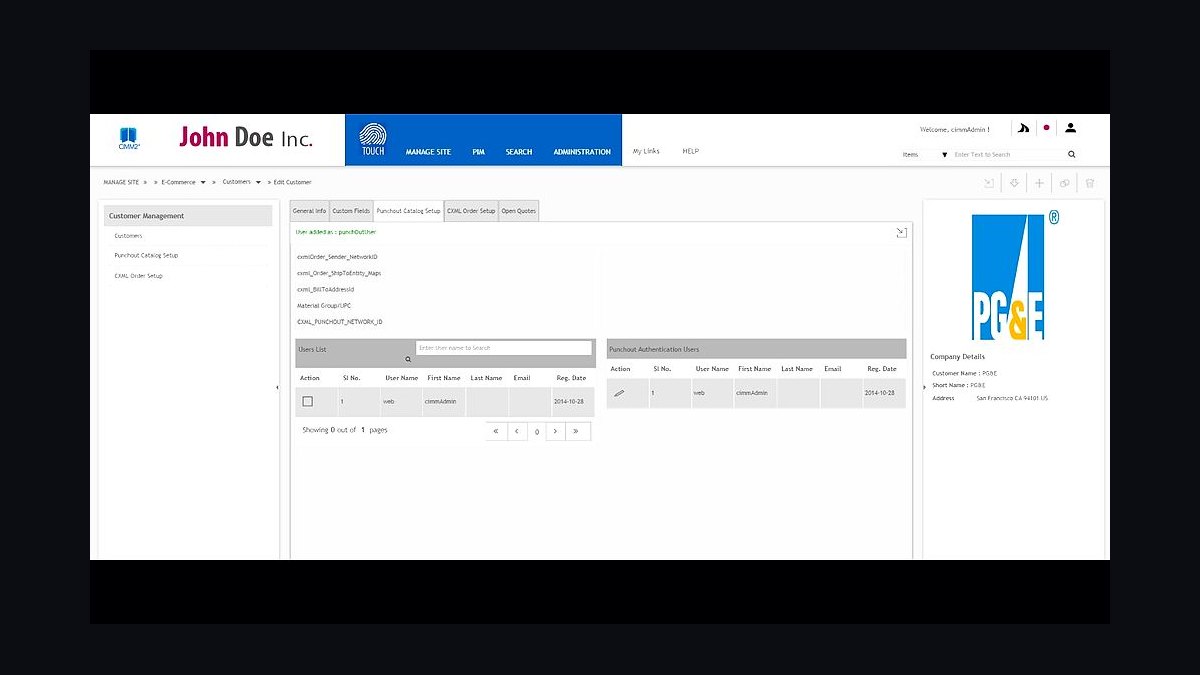
Unilog CIMM2 ranks eighth as the B2B e-commerce and product information platform built for distribution rather than retail. It pairs a distribution-grade storefront with a managed PIM and enriched product content across thousands of technical SKUs, supporting customer-specific contract pricing, account hierarchies, and punchout to procurement systems. Pricing typically runs $2,000-$6,000 per month depending on catalog size.
It is for distributors whose procurement buyers expect negotiated prices and punchout into Ariba, Coupa, or SAP, where the PIM work is the hard, unavoidable part. It trades away the design flexibility and lower cost of BigCommerce B2B or OroCommerce, which suit distributors wanting more storefront control. Against SPS Commerce below, Unilog owns the storefront and catalog while SPS owns the transaction network.
9SPS Commerce
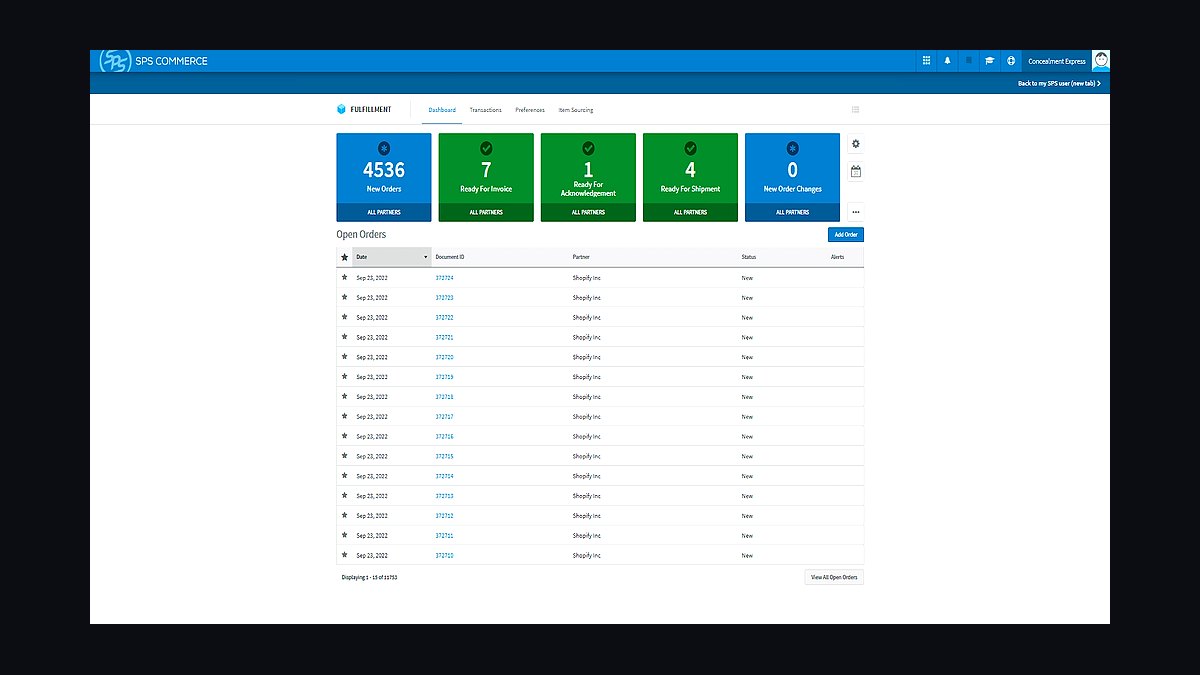
SPS Commerce ranks ninth as the EDI and punchout network that connects distributors to manufacturers upstream and large customers downstream. It runs the largest retail and distribution EDI network, mapping purchase orders, advance ship notices, and invoices cleanly to P21 and SX.e, with pricing commonly $1,000-$5,000 or more per month at distributor document volumes.
It is for distributors transacting with manufacturers and large accounts that require EDI and procurement punchout, where mapping dozens of trading partners is the longest tail of any ERP go-live. It trades away simplicity — setup and partner onboarding take real effort and time. Against Vendavo below, SPS handles transactions while Vendavo handles the margin science on the pricing behind them.
10Vendavo
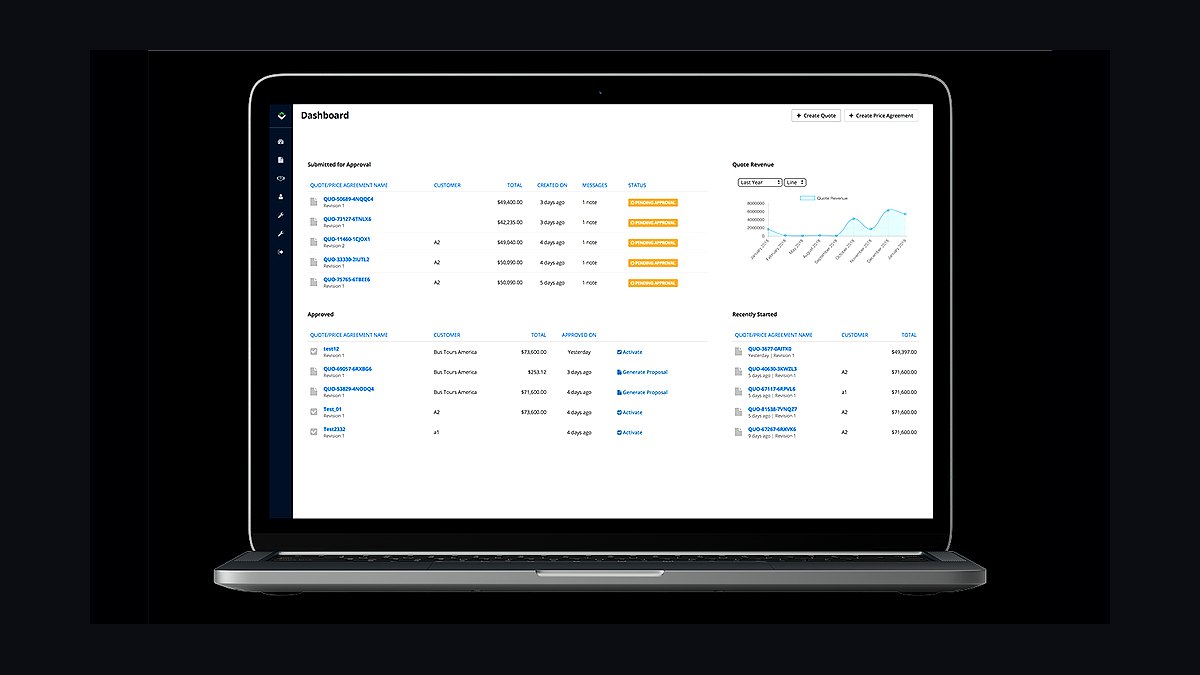
Vendavo ranks tenth as the pricing and margin analytics layer that separates a serious distribution stack from a basic one. It applies pricing science across the SKU base — segmented price setting, deal guidance for reps, and margin policing — recovering 1-3 margin points that hide across millions of line items. It is enterprise-priced, typically five to six figures per year.
It is justified above roughly $50M in revenue, where margin leakage becomes material and the ERP's native contract and matrix pricing cannot police it. It trades away affordability and simplicity, so smaller distributors run Epicor's native pricing instead. Against Phocas below, Vendavo sets and enforces price while Phocas reports the margin outcome.
How we ranked these
We ranked tools by weighting five factors: fit to distribution economics (inventory, multi-branch stock, contract pricing) at 30%, integration depth with the ERP system of record at 25%, pricing and margin capability at 20%, total cost of ownership at 15%, and implementation track record at 10%. Each vendor was scored against real industrial distributor deployments, not generic feature checklists or vendor-supplied demos.
We deliberately ignored brand prestige, analyst quadrant placement alone, and feature breadth that no distributor under $150M would ever configure. We also excluded retail-first e-commerce platforms, generic CRMs with no ERP pricing read, and any tool whose value depends on a data-engineering team the distributor does not have. The goal was fit, not a comprehensive market survey.
What to look for
What matters most is whether the tool reads from and writes to your ERP without duplicating the item, customer, or pricing master. A distribution-aware CRM like White Cup beats a more powerful generic CRM that forces reps to re-key contract prices. Ask every vendor to show a live integration with your specific ERP version, not a slide.
The mistake most buyers make is buying the storefront or CRM first because it demos well, then discovering the ERP item and pricing master is dirty. Clean the ERP, lock contract pricing, then layer commerce and analytics. Distributors who sequence it backward spend eighteen months reconciling two pricing systems and lose rep trust in both.
Related questions
What is a distribution ERP and why is it the system of record?
A distribution ERP runs inventory by location, purchasing and replenishment, multi-branch stock transfers, landed cost, and customer-specific contract pricing across thousands of SKUs. For an industrial distributor it is the business, not a back office. Prophet 21, Infor SX.e, and Epicor Eclipse exist because generic ERPs cannot model distribution economics like vendor rebates and unit-of-measure conversions.
How does Prophet 21 compare to Epicor Eclipse for distributors?
Prophet 21 is the default for industrial, durable-goods, and MRO distributors, modeling inventory, purchasing, and contract pricing natively. Eclipse is purpose-built for electrical, plumbing, HVAC, and PVF distribution with trade-specific workflows. Pick by vertical: industrial and general distribution go P21, the building trades go Eclipse. Both run roughly $3,000-$6,000 per user per year.
Why do distributors need pricing analytics like Vendavo or Zilliant?
A distributor carries tens of thousands of SKUs, each with list price, cost, contract price, quantity breaks, and vendor rebates. Margin leaks one penny at a time across millions of line items and nobody sees it until year-end. Vendavo and Zilliant apply pricing science to set and police margins, typically recovering one to three margin points. They are justified above roughly $50M revenue.
What makes B2B e-commerce different from retail e-commerce for distributors?
Distribution e-commerce needs customer-specific contract pricing, account hierarchies, punchout to buyers' procurement systems like Ariba and Coupa, and a clean product catalog across thousands of SKUs. A retail-style storefront with no negotiated pricing and a thin catalog gets abandoned by procurement buyers. The PIM and enriched product content, not the storefront skin, is the hard work.
Do small distributors need a full ERP or can they use NetSuite?
Under roughly $30M with simpler operations, NetSuite or DDI System Inform delivers real distribution functions without the weight of P21. NetSuite gives cloud ERP plus light CRM and commerce; DDI Inform is purpose-built for small-to-mid distributors and strong at counter sales. Both beat spreadsheets. Move to P21 or SX.e when multi-branch complexity and contract pricing outgrow them.
How important is EDI for an industrial equipment distributor?
Manufacturers and large customers transact by EDI for purchase orders, advance ship notices, and invoices, and procurement buyers expect punchout catalogs. SPS Commerce runs the largest distribution EDI network and maps cleanly to P21 and SX.e; TrueCommerce is the common alternate. EDI mapping and vendor rebate configuration are the longest tail of any distribution ERP go-live.
What CRM should an industrial distributor with outside sales use?
White Cup is purpose-built distribution CRM and BI that reads directly from P21, Eclipse, SX.e, and DDI, so reps see real sales history, open orders, and margin per account. Salesforce wins when heavy customization is needed; HubSpot fits smaller distributors wanting fast adoption. The rule is the CRM must read ERP pricing, never duplicate it.
When does a distributor need a dedicated WMS instead of the ERP's native warehouse module?
Most distributors run the ERP's native warehouse and barcode scanning for receiving, putaway, pick/pack, and cycle counts, which is bundled into the ERP cost. A high-throughput, multi-branch distribution center with wave picking and automation justifies a dedicated Körber (HighJump) WMS. That is a six-figure project and only pays off at real volume.
FAQ
What is the single most important system in an industrial distribution tech stack?
The distribution ERP. It is the system of record for inventory, purchasing, multi-branch stock, and customer-specific contract pricing, which is the entire economics of the business. Get Prophet 21, Eclipse, or SX.e right first. CRM, e-commerce, pricing analytics, and BI all attach to it and read from it.
Should a distributor use Prophet 21 or Epicor Eclipse?
Prophet 21 is the default for industrial, durable-goods, and MRO distribution. Epicor Eclipse is purpose-built for electrical, plumbing, HVAC, and PVF distribution with trade-specific workflows. Pick by vertical: industrial and general distribution go P21, the building trades go Eclipse. Both run roughly $3,000-$6,000 per user per year on cloud.
Do small distributors really need a dedicated distribution ERP?
Yes, but a lighter one. Under roughly $30M, NetSuite or DDI System Inform delivers real distribution functions including multi-location inventory, counter sales, purchasing, and basic contract pricing. DDI Inform is purpose-built for small distributors and well-loved for quick setup. A real ERP plus a transactional storefront beats spreadsheets even at the small end.
How long does a distribution ERP implementation actually take?
Expect six to twelve months for a mid-market Prophet 21 or SX.e deployment, and longer if EDI mapping and vendor rebate configuration are underscopied. The most common reason a distribution go-live slips from nine months to eighteen is treating EDI and rebates as an afterthought. Lock the item and pricing master before anything else.
What is punchout and why do industrial distributors need it?
Punchout lets a procurement buyer connect their system, such as Ariba, Coupa, or SAP, directly to your storefront, pull a live catalog with their negotiated pricing, and push the cart back as a requisition. Large customers increasingly require it. Without punchout, distributors lose the procurement-controlled spend that flows through those buying platforms.
How much should a mid-size distributor budget for its full tech stack?
A regional distributor between roughly $30M and $150M with three to ten branches should budget about $15,000-$45,000 per month in software. That covers Prophet 21 or SX.e, Unilog B2B commerce and PIM, SPS Commerce EDI, White Cup or Salesforce CRM, entry pricing analytics, and Phocas BI, plus a nine-to-twelve month ERP implementation.
Is Phocas better than Power BI for a distributor?
Phocas ships pre-built sales, inventory, and margin cubes tuned for distribution ERP data, so distributors get answers without a data-engineering team. Power BI is cheaper at about $10 per user per month but requires building the data models yourself. Most distributors under $150M without internal analytics capacity choose Phocas; larger shops with data teams often run both.
When does equipment rental software like Texada make sense?
When rental is a real revenue line, not an occasional courtesy. Texada and Point of Rental handle rental-specific contracts, utilization tracking, and return and billing cycles the core ERP does not model well. Pure parts-and-service distributors use the ERP's native service module instead. Rental platforms are quoted per location or seat and scale with fleet size.
What is the biggest mistake distributors make when buying this stack?
Buying the storefront or CRM first because it demos well, then discovering the ERP item and pricing master is dirty. The correct sequence is clean the ERP, lock contract pricing, then layer commerce, CRM, and analytics. Distributors who sequence it backward spend eighteen months reconciling two pricing systems and lose rep trust in both.
Will AI change the distribution tech stack by 2027?
AI improves specific layers rather than replacing the ERP. Expect AI-assisted pricing recommendations inside Vendavo and Zilliant, demand forecasting in replenishment, and product-content generation inside PIM platforms like Unilog. The system of record stays the distribution ERP. Distributors should demand AI features that read ERP data, not standalone AI tools that duplicate it.
Sources
- https://www.epicor.com/en-us/products/prophet-21/
- https://www.infor.com/products/distribution-sx-e
- https://www.epicor.com/en-us/industries/distribution/
- https://www.netsuite.com/portal/industries/wholesale-distribution.shtml
- https://www.spscommerce.com/
- https://www.unilogcorp.com/
- https://www.whitecup.com/
- https://www.vendavo.com/
- https://www.zilliant.com/
- https://www.phocassoftware.com/
Related on PULSE
This page will be disappearing soon. Save it to your device for $1 — or read it free while it is here.
@Kory-White- · if Venmo asks, the last 4 of my number are 2012
This page is gone.
This one is off the shelf now. $1 keeps it on your phone for good — the whole page, pictures and diagrams included.
 tkTop 10 Best Tech Stack Tools for Fencing and Deck Contractors in 2027
 pulse-tech-stacksTop 10 Best Tech Stack Tools for HOA and Community Association Management Companies in 2027
 pulse-tech-stacksTop 10 Best Tech Stack Tools for Self-Storage Operators in 2027
 pulse-tech-stacksTop 10 Best Tech Stack Tools for Podiatry Practices in 2027
 pulse-tech-stacksTop 10 Best Tech Stack Tools for Commercial HVAC Contractors in 2027
 pulse-tech-stacksTop 10 Best Tech Stack Tools for Tree Services in 2027
 pulse-tech-stacksTop 10 Best Tech Stack Tools for Online Travel Agencies (OTAs) in 2027
 pulse-tech-stacksTop 10 Best Tech Stack Tools for AI Legal Tech Companies in 2027
 pulse-tech-stacksTop 10 Best Tech Stack Tools for Small Pest Control Companies in 2027
 pulse-tech-stacksTop 10 Best Tech Stack Tools for Septic and Portable Sanitation Services in 2027