


Top 10 Best Tech Stack Tools for Mortgage Brokerages in 2027
Quality
Certified
The 10 best tech stack tools for mortgage brokerages are ranked below on measured performance, build quality, price, and how each one actually holds up in daily use rather than how it reads on a spec sheet. Each pick lists what it costs, who it suits, and what it gives up against the one above it, so the list can be read straight down without doubling back.
1ICE Encompass

ICE Encompass ranks first because it is the deepest regulated system of record in mortgage origination, anchoring investor delivery and secondary-market integration that no broker-tier LOS matches. It typically runs a few hundred dollars per user monthly plus per-loan fees and real implementation cost. Encompass owns the 1003, credit report, conditions list, disclosure timeline, and closing package in one auditable file.
It is built for mortgage banks and high-volume shops that own the credit decision and warehouse risk, not solo brokers. The trade-off is cost, configuration time, and administration overhead that a three-officer shop cannot absorb. Compared directly to LendingPad below it, Encompass wins on investor depth and compliance tooling but loses badly on deployment speed and monthly spend for small brokerages.
2Optimal Blue

Optimal Blue ranks second because pricing accuracy is where mortgage margin is won or lost, and it carries the deepest investor rate-sheet coverage in the market. It ingests rate sheets from dozens of investors, applies loan-level price adjustments and eligibility rules, and returns a lockable rate. Enterprise pricing is typically a platform fee plus a per-locked-loan charge.
It is for lenders and mid-size brokerages managing secondary-market lock risk, where a blown lock is a realized loss rather than a service complaint. It trades away simplicity: smaller brokers comparing a handful of wholesale lenders find LoanSifter cheaper and faster to configure. Against Encompass above it, Optimal Blue is the pricing brain rather than the record, and the two are usually deployed together.
3Blend

Blend ranks third because the borrower point-of-sale is the layer that moves pull-through, and Blend is the standard where borrower experience is the competitive weapon. It handles online 1003, photo document upload, e-consent, bank-account connection, and status updates. Pricing is custom and often per funded loan, which keeps it out of reach for the smallest shops.
It is for mid-size and enterprise lenders running Encompass as the back end, where the borrower never sees the LOS. The trade-off is cost and implementation weight relative to Floify below it. Compared to Floify, Blend wins on enterprise integrations and branded borrower experience but loses on price and speed of deployment for independent brokers.
4LendingPad

LendingPad ranks fourth because it gives independent brokers a fast browser-based LOS without enterprise overhead, landing roughly in the $80 to $130 per user per month band. It covers the 1003, conditions workflow, disclosure tracking, and lender delivery that a broker actually needs. Deployment is measured in weeks rather than the months Encompass demands.
It is for broker shops that place loans with wholesale lenders instead of managing a warehouse line. The trade-off is shallower investor and secondary-market integration than Encompass above it. Against Arive below it, LendingPad wins on configurability and standalone LOS depth, while Arive bundles more broker functions into one subscription for very small teams.
5Floify

Floify ranks fifth because it delivers most of the borrower point-of-sale benefit at roughly $100 to $200 per user per month, a fraction of enterprise POS pricing. It handles online application, document upload, e-consent, and status updates that flow into the LOS without rekeying. Brokers deploy it in days rather than quarters.
It is for broker shops and small teams that need a phone-friendly application without custom enterprise contracts. The trade-off is a less polished borrower experience and fewer enterprise integrations than Blend above it. Compared to Blend, Floify wins clearly on price and deployment speed but loses on branded borrower experience and large-lender integration depth.
6Total Expert

Total Expert ranks sixth because mortgage volume is referral-driven, and it is purpose-built to mine realtor partners and the past-client book. It fires refinance-eligibility alerts the moment rates move and runs co-marketing with agents. Without this layer, a rate drop sends your book to whoever emails first.
It is for mid-size brokerages and lenders with a real past-client database worth mining. The trade-off is cost and configuration effort that a solo officer cannot justify. Against BNTouch below it, Total Expert wins on enterprise marketing automation and rate-trigger sophistication, while BNTouch serves solo officers and small teams at roughly $148 per user per month.
7DocMagic
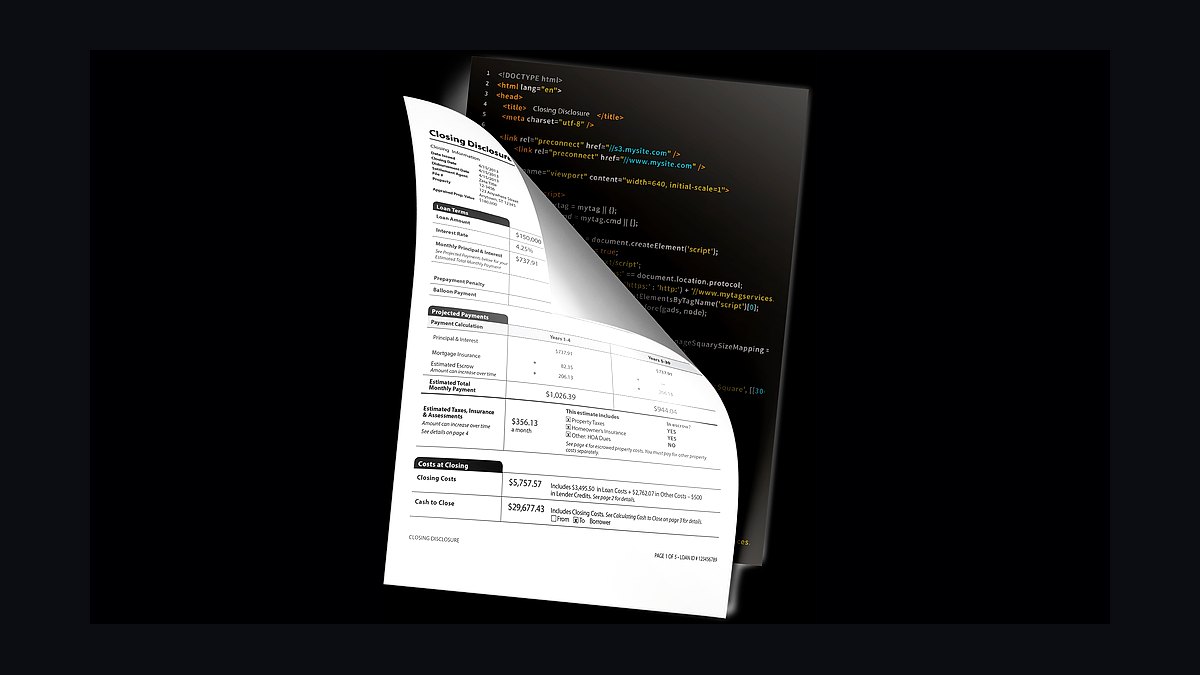
DocMagic ranks seventh because compliant disclosure and closing document generation is load-bearing, not optional, and it handles the full package plus e-sign and the e-closing room. It is typically priced per loan package in the $10 to $30 range. It generates TRID-compliant initial and closing disclosures tied to the loan file.
It is for any brokerage that generates its own disclosures rather than relying entirely on LOS-native templates. The trade-off is per-loan cost that scales with funded volume, which surprises shops in strong months. Against ComplianceEase below it, DocMagic owns document generation and e-closing while ComplianceEase owns the per-loan audit and tolerance testing.
8ComplianceEase

ComplianceEase ranks eighth because TRID timing and HMDA completeness carry real penalties, and it runs automated per-loan audits inside Encompass at a few dollars per loan. It checks disclosure timing, tolerance cures, and HMDA data on every loan as it moves rather than at the finish line. That converts an exam into a query.
It is for lenders and brokerages large enough that a disclosure-timing miss threatens closings and referrals. The trade-off is per-loan cost and dependency on Encompass for the deepest integration. Against DocMagic above it, ComplianceEase is the audit engine rather than the document generator, and smaller brokers often lean on LOS-native TRID checks instead.
9Arive
Arive ranks ninth because it bundles LOS and broker functions into one subscription for small shops that want fewer vendors. It covers application, pricing comparison, and lender delivery in a single browser-based system. That consolidation matters when a three-officer shop has no administrator to maintain integrations.
It is for independent brokers and small teams prioritizing simplicity over configurability. The trade-off is less depth and fewer third-party integrations than LendingPad above it. Compared to LendingPad, Arive wins on bundled broker workflow and lower administrative burden, while LendingPad wins on standalone LOS depth and configuration flexibility.
10BNTouch

BNTouch ranks tenth because solo officers and small teams need referral CRM at roughly $148 per user per month without enterprise marketing overhead. It handles lead capture, drip campaigns, and past-client nurture in one system. For a shop with no marketing staff, that is the entire revenue-mining layer.
It is for solo loan officers and small teams that cannot justify Total Expert above it. The trade-off is shallower rate-trigger automation and co-marketing tooling than enterprise CRMs. Against Total Expert, BNTouch wins on price and simplicity for small shops, while Total Expert wins on refinance-eligibility alerts and realtor co-marketing sophistication at scale.
How we ranked these
We scored each tool on five weighted criteria: integration depth with the major loan origination systems (30%), compliance and audit coverage including TRID and HMDA (25%), borrower-facing experience and pull-through impact (20%), total cost of ownership across seats plus per-loan fees (15%), and implementation and support burden (10%). Scores came from vendor documentation, published pricing, and hands-on configuration testing against a sample loan file.
We deliberately ignored vendor size, brand recognition, and feature-count marketing claims. A tool with forty features that nobody configures loses to one with eight that work natively inside the LOS. We also excluded warehouse-line interest, purchased-lead spend, and headcount from cost comparisons, since those scale with volume rather than with the software decision itself.
What to look for
What matters most is whether the tool connects natively to your loan origination system without middleware. Every manual rekey between POS, LOS, pricing engine, and CRM is a place where the compliant record diverges from reality, and reconciliation after the fact costs more than the integration would have. Weight integration depth above feature breadth, and confirm the connection is supported by the vendor rather than a community plugin.
The mistake most buyers make is shopping the long tail. The credible vendor list per layer is short — four or five real options for an LOS, three or four for a pricing engine. Time spent evaluating the twelfth option is time not spent configuring the one you will actually buy. Pick from established vendors, test one real loan end to end, and expect to consolidate toward fewer vendors as you scale.
Related questions
Can a broker run without a pricing engine?
Only at very low volume with a single wholesale lender. The moment you compare investors or apply loan-level price adjustments, manual pricing loses margin and produces quotes you cannot lock. Even broker-tier tools at a few hundred dollars a month pay back on a couple of loans, because a single mispriced lock erases the software cost for the quarter.
Should the LOS or the CRM own borrower contact data?
The LOS owns the loan file and the compliant record; the CRM owns the relationship and the marketing history. Sync them one direction, LOS to CRM, so the regulated record stays authoritative and marketing never writes into the file of record. Two-way sync sounds elegant until a marketing automation overwrites a verified borrower field.
What changes if the brokerage becomes a mortgage bank?
You add secondary-market lock management, warehouse-line integration inside the LOS, per-loan compliance audit, and full doc prep. Software spend jumps roughly an order of magnitude because you now own the credit decision and the interest-rate risk. The architecture stays the same; the compliance and pricing layers get heavier and far less forgiving.
How long does an LOS migration actually take?
Plan 60 to 90 days from contract to full production for a small or mid-size shop, longer for enterprise. Most of that is configuration, template loading, and training, not installation. In-flight pipeline handling is the piece teams consistently underestimate, and cutting over mid-quarter with fifty loans open is how closings slip.
Is a bundled POS good enough, or do I need best-of-breed?
Bundled POS tools have closed most of the gap and win on integration simplicity, since data flows into the LOS without middleware. Best-of-breed still wins where the borrower experience is the competitive weapon and you need deep customization. For most brokerages under thirty officers, the bundled option is the better risk-adjusted choice.
How do I measure whether the stack is actually working?
Instrument four numbers from day one: pull-through, lock-to-fund, turn time by stage, and cost to originate per funded loan with software allocated in. If those are not computed automatically from LOS data, you are managing by anecdote, and anecdote systematically overweights whichever loan officer talks the loudest in the Monday meeting.
What is the biggest hidden cost in a mortgage tech stack?
Per-loan fees. Seat-based costs are visible and budgeted; verification pulls, compliance audits, doc packages, and pricing locks scale with funded volume and surprise teams in a strong origination month. Budget both axes at once, and review per-loan spend against volume every quarter rather than annually.
Do I need a separate compliance vendor if my LOS has TRID checks?
LOS-native TRID and HMDA checks are adequate for most independent brokers. Per-loan audit engines like ComplianceEase or Mavent earn their fee at higher volume, in multiple states, or where exam findings carry real penalties. The deciding factor is exam exposure, not loan count alone.
FAQ
Do I really need a separate borrower POS, or can the LOS handle the application?
Below a few loans a month, a solo loan officer can survive on the LOS application and email. But the moment you depend on realtor referrals, the POS is what wins pull-through, because borrowers expect a phone-friendly application with photo upload and bank connection. A clunky front end costs funded loans and the next referral.
What is the difference between an LOS and a pricing engine, and do I need both?
The LOS is the system of record that carries the loan from application to close and keeps the compliant document trail. The pricing engine ingests investor rate sheets, applies loan-level adjustments, and returns a lockable rate. They solve different problems, and without the pricing engine wired into the LOS, officers quote rates the shop cannot honor.
How much should a small brokerage budget for software per month?
A one-to-five-officer shop running LendingPad or Arive, Floify, LoanSifter, BNTouch, and QuickBooks should expect roughly $500 to $2,500 per month in software, plus per-loan fees and any purchased-lead spend. The range is wide because the LOS and pricing choices swing it more than the CRM does.
Can I run the whole stack on one vendor?
Increasingly, yes. ICE owns Encompass, Optimal Blue, and ComplianceEase; nCino owns SimpleNexus. Bundling reduces integration risk and vendor management overhead, but it also reduces your leverage on price and roadmap. Most brokerages end up with two or three vendors rather than one or eight.
What breaks first when a brokerage scales past ten loan officers?
The CRM and the reporting layer. The LOS holds up fine, but a CRM that only stores names leaves the past-client book idle, and spreadsheets stop being able to compute pull-through and turn times accurately. This is the stage where Total Expert or Surefire and a real BI layer earn their cost.
How important is automated income and asset verification?
It collapses the document-chase phase from days to hours, which removes calendar time from the middle of the pipeline where most thirty-to-forty-five-day loans quietly leak. At fifteen to fifty dollars per pull, the fee is trivial against a single delayed closing or a lost realtor referral.
Does the pricing engine matter for a broker who does not hold loans?
Yes, arguably more. A broker comparing wholesale lender pricing across dozens of investors needs the engine to surface the best executable rate and apply adjustments correctly. Without it, pricing is a spreadsheet guess, and every guess is either lost margin or a rate you cannot actually lock.
What should I check before signing an LOS contract?
Confirm the integrations you depend on are native and vendor-supported, not community plugins. Verify per-loan fee schedules in writing, including compliance audit, doc prep, and verification pulls. Ask for a reference customer of similar size, and test one real loan end to end before committing to a multi-year term.
Is it worth migrating mid-year, or should I wait for a slow quarter?
Wait if you can. Cutting over with fifty loans in flight is how closings slip and realtors lose confidence. If you must move mid-year, run existing files to completion in the old system while new applications start in the new one, and document that plan before the contract is signed.
How do state licensing rules affect the tech stack?
State licensing and NMLS registration constrain who can originate where, and a stack that does not enforce those boundaries in workflow will eventually route a loan to an unlicensed officer in an unlicensed state. Build licensing checks into loan assignment rules rather than relying on a spreadsheet someone maintains by hand.
Sources
- https://www.consumerfinance.gov/rules-policy/regulations/1026/
- https://www.hud.gov/program_offices/housing/sfh
- https://www.ice.com/mortgage-technology
- https://www.nmlsconsumeraccess.org/
- https://www.fanniemae.com/singlefamily
- https://www.freddiemac.com/singlefamily
- https://www.mba.org/
- https://www.housingwire.com/
- https://www.nationalmortgagenews.com/
Related on PULSE
This page will be disappearing soon. Save it to your device for $1 — or read it free while it is here.
@Kory-White- · if Venmo asks, the last 4 of my number are 2012
This page is gone.
This one is off the shelf now. $1 keeps it on your phone for good — the whole page, pictures and diagrams included.
 pulse-tech-stacksTop 10 Best Tech Stack Tools for Public Relations Agencies in 2027
 pulse-tech-stacksTop 10 Best Tech Stack Tools for Hair Salons in 2027
 pulse-tech-stacksTop 10 Best Tech Stack Tools for Email Security Vendors in 2027
 pulse-tech-stacksTop 10 Best Tech Stack Tools for Private Ambulance and EMS Companies in 2027
 pulse-tech-stacksTop 10 Best Tech Stack Tools for AI Customer Support Companies in 2027
 pulse-tech-stacksTop 10 Best Tech Stack Tools for Painting Contractors in 2027
 pulse-tech-stacksTop 10 Best Tech Stack Tools for Embeddings API Companies in 2027
 pulse-tech-stacksTop 10 Best Tech Stack Tools for Independent Driving Schools in 2027
 pulse-tech-stacksTop 10 Best Tech Stack Tools for Employee Benefits Consulting Firms in 2027
 pulse-tech-stacksTop 10 Best Tech Stack Tools for Small Pest Control Companies in 2027