


Top 10 Best Tech Stack Tools for Direct Primary Care and Concierge Medicine Practices in 2027
Quality
Certified
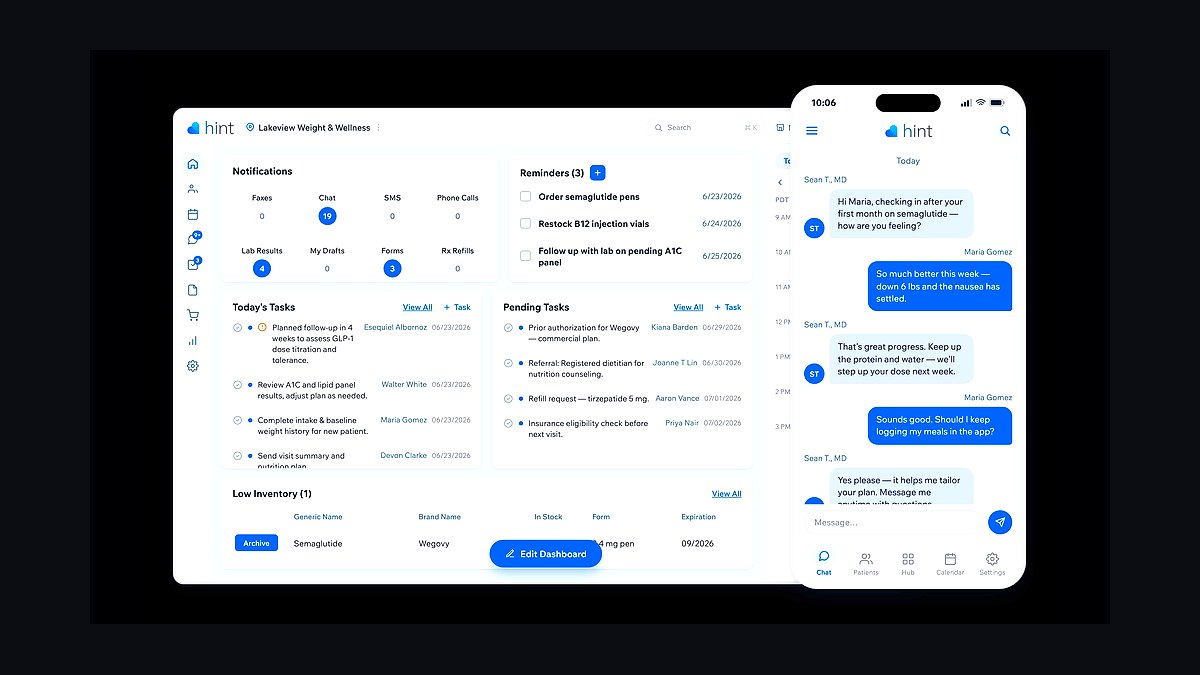
The 10 best tech stack tools for direct primary care and concierge medicine practices are ranked below on measured performance, build quality, price, and how each one actually holds up in daily use rather than how it reads on a spec sheet. Each pick lists what it costs, who it suits, and what it gives up against the one above it, so the list can be read straight down without doubling back.
1Hint Health Hint Core

Hint Core ranks first because recurring membership billing is the entire revenue engine of a DPC practice, not claims. It runs enrollment, monthly and annual dues, family pricing, card-on-file dunning, failed-payment retries, and member lifecycle reporting, priced at a low single-digit per-active-member-per-month fee. Most DPC-friendly tools integrate with it directly.
It is built for practices that want clean MRR, churn, and roster reporting plus employer contracts later. Solo operators on AtlasMD can skip it and use built-in billing, but that trades away Hint's employer tooling and reporting depth. Compared with Elation Health below, Hint owns money while Elation owns the chart.
2Elation Health EHR

Elation Health ranks second because it is the most common standalone EHR in well-run DPC practices, charting fast for longitudinal care without claims-coding cruft. It runs roughly $200-$350 per provider per month by tier and integrates cleanly with Hint for billing and Spruce for messaging. Panels of 400-800 members fit its workflow far better than RVU-tuned systems.
It suits multi-provider DPC clinics and concierge practices that want best-of-breed separation of concerns. It trades away the simplicity of an all-in-one, since billing and messaging live in other vendors. Against AtlasMD below, Elation is deeper clinically but requires assembling the rest of the stack yourself.
3AtlasMD All-in-One

AtlasMD ranks third because it bundles EHR, membership billing, and basic messaging in one system, which many solo DPC physicians prefer for simplicity. Its all-in figure is comparable to Elation plus Hint plus Spruce, and it removes integration work entirely. For a 400-600 member solo panel, one login covers most daily operations.
It is for solo operators who value low overhead over module depth. It trades away best-of-breed reporting, employer contract tooling, and advanced team routing that larger clinics need. Against Hint Health above, AtlasMD handles billing adequately but lacks Hint's roster reconciliation and employer marketplace.
4Spruce Health

Spruce Health ranks fourth because the always-on access promise is what members actually pay for, and Spruce delivers it daily. It provides HIPAA-compliant texting, voice, video visits, secure messaging, and shared team inboxes at roughly $25-$75 per user per month by tier. It is the most-recommended comms layer in DPC communities.
It is for any practice whose retention depends on reachability, from solo to multi-site. It trades away nothing clinically, but it is an added subscription rather than a free portal. Against Elation Health above, Spruce is where the membership value gets delivered, while Elation holds the chart.
5Hint Connect

Hint Connect ranks fifth because employer DPC contracts bring members in bulk, and roster errors quietly bleed revenue past two or three deals. It ingests eligibility rosters, handles per-employee-per-month billing, consolidates employer invoicing, and connects practices to benefits brokers. It is the contract layer most DPC practices adopt once they sell to employers.
It is for clinics with an employer book or active broker relationships. It trades away simplicity, since spreadsheet-plus-Stripe invoicing works fine for one or two small deals. Against Hint Core above, Connect extends the same platform outward to employer customers rather than individual members.
6Cerbo MD HQ

Cerbo (MD HQ) ranks sixth because it is favored by functional and concierge practices that want labs, supplements, and protocols built into the chart. It supports the retainer-style, white-glove workflows that MDVIP-style practices run, with deeper care-coordination and executive-physical tooling than generic EHRs. It sits alongside Elation as a relationship-EHR alternative.
It is for concierge and functional-medicine practices whose protocols drive the visit. It trades away the broad DPC integration ecosystem that Elation and AtlasMD enjoy. Against Elation Health above, Cerbo is more specialized but less commonly paired with Hint and Spruce out of the box.
7Quest Diagnostics DPC

Quest Diagnostics DPC ranks seventh because wholesale lab passthrough turns ancillaries into transparent member value and modest margin. Practices open a DPC pricing account and pass cost-plus lab pricing directly to members, with results feeding back through the EHR's lab interface. There is little software cost beyond that interface.
It is for practices ready to contract and operate wholesale lab pricing rather than bill insurance. It trades away the simplicity of sending patients to any lab, since members must use the contracted pathway to get the pricing. Against Hint Connect above, Quest is operational contracting rather than a software layer.
8LabCorp DPC Program

LabCorp DPC ranks eighth because it gives practices a second wholesale lab pathway alongside Quest, improving coverage and member convenience. Its DPC pricing account passes cost-plus lab rates through to members, and results route into the EHR the same way. Many multi-provider clinics run both Quest and LabCorp to widen access.
It is for clinics whose members are geographically split or who want lab redundancy. It trades away single-vendor simplicity, since two accounts mean two reconciliation workflows. Against Quest Diagnostics DPC above, LabCorp is a parallel option rather than a replacement.
9HubSpot CRM

HubSpot ranks ninth because member acquisition is a marketing-and-sales motion, and growing practices need a real pipeline. Starter runs roughly $20 per seat per month and manages prospect pipelines, enrollment nurture sequences, and employer-deal tracking tied to website lead forms. Professional costs far more but adds deeper automation.
It is for clinics funding paid acquisition or chasing employer contracts. It trades away the simplicity of Hint's built-in enrollment pages plus a basic website, which genuinely suffice for many solos. Against Hint Connect above, HubSpot manages the sales process while Connect manages the signed contract.
10QuickBooks Online

QuickBooks Online ranks tenth because subscription revenue still has to land in the books cleanly. It runs roughly $35-$200 per month by plan, reconciling Hint payouts and tracking dispensing and lab passthrough costs for the vast majority of solo and multi-provider DPC practices. It is the default accounting layer beneath the membership engine.
It is for practices that need clean books without multi-entity complexity. It trades away dimension-based consolidated reporting that larger networks require. Against HubSpot CRM above, QuickBooks handles money already earned while HubSpot handles prospects not yet enrolled.
How we ranked these
We ranked tools by weighting five factors: fit for recurring-membership revenue (30%), depth of DPC-specific functionality (25%), integration with the membership billing core (20%), total cost at typical panel sizes (15%), and operator-reported reliability and support (10%). Scores came from vendor documentation, published pricing, analyst reports, and patterns across DPC operator communities. Tools that only serve insurance-based primary care were penalized heavily.
We deliberately ignored feature-count checklists, generic EHR rankings built for claims-based clinics, and vendor marketing claims about AI or automation without shipped evidence. We also excluded enterprise hospital platforms, legacy clearinghouse-centric suites, and anything requiring insurance billing to function. The goal was a stack a real DPC or concierge operator could deploy in 2027, not a comprehensive software catalog.
What to look for
What matters most is whether the tool treats the subscription as the system of record. Membership billing, dunning, proration, and churn reporting must be first-class, not bolted onto an insurance EHR. Second is integration depth with your billing core and communication layer, because split workflows quietly leak revenue and staff time. Third is total cost at your actual panel size, including per-member fees.
The mistake most buyers make is choosing an EHR first and forcing membership billing to fit around it. That inverts the model: DPC revenue is recurring dues, so the membership platform should anchor the stack and the EHR should sync into it. A close second mistake is under-buying patient communication, then watching retention erode because members cannot reach the practice.
Related questions
Why is Hint Health considered the financial core of a DPC stack?
Hint Core runs recurring dues, family pricing, card-on-file dunning, failed-payment retries, and member lifecycle reporting, which is exactly what a subscription practice needs. Insurance-era EHRs handle claims, not subscriptions, so bolting dues onto them causes silent revenue leakage. Hint also powers employer contracts through Hint Connect, making it the de facto standard most DPC-friendly tools integrate with.
Is AtlasMD or Elation Health better for a solo DPC physician?
AtlasMD bundles EHR, membership billing, and basic messaging in one system, which many solo DPCs prefer for simplicity and lower overhead. Elation Health charts faster and integrates cleanly with Hint and Spruce, but requires assembling multiple vendors. If you want one login and minimal administration, AtlasMD wins; if you want best-of-breed modules and plan to grow, Elation plus Hint plus Spruce is stronger.
What does Spruce Health actually replace in a DPC practice?
Spruce replaces the front-desk phone tree, the patient portal nobody uses, and the separate telehealth app. It bundles HIPAA-compliant texting, voice, video, and shared team inboxes into one line, which is how members actually reach the practice. In a subscription model, that reachability is the product, so Spruce functions as revenue infrastructure rather than a convenience add-on.
How do wholesale labs and in-house dispensing fit into the stack?
DPC practices open Quest or LabCorp DPC pricing accounts, dispense common generics at cost-plus through a dispensing module, and route imaging to cash-pay radiology partners. These ancillaries feed back into the membership platform so charges and member balances reconcile. Software cost is minimal; the real work is contracting and operations, not technology.
When does a DPC practice need HubSpot or a real CRM?
Solo practices can rely on Hint's built-in enrollment pages plus a simple website. Once a clinic funds paid acquisition or chases employer contracts, a CRM like HubSpot earns its keep by managing prospect pipelines, nurture sequences, and B2B employer-deal tracking. The trigger is outbound growth, not panel size alone.
What reporting should a DPC operator watch beyond visit volume?
Monthly recurring revenue, net member retention, churn rate, and panel utilization matter far more than visit counts in a subscription model. Hint's native dashboards cover most solos, while multi-site networks pipe Hint, Elation, and QuickBooks data into Power BI. A 5% monthly churn rate quietly halves a practice inside a year if nobody is watching.
How does employer DPC contracting change the tech stack?
Employer contracts introduce eligibility rosters, per-employee-per-month billing, and reconciliation, which spreadsheets handle poorly past two or three deals. Hint Connect ingests rosters and consolidates employer invoicing, preventing billing for terminated employees and missed charges for active ones. It becomes essential once employer revenue is material.
Can a DPC practice run entirely on QuickBooks and Stripe?
Very small or budget-conscious solos sometimes wire Stripe directly to a website for recurring charges and reconcile in QuickBooks. That works until you need member lifecycle reporting, family plan proration, employer rosters, or clean churn metrics. At that point Hint Core pays for itself by replacing manual reconciliation and preventing silent revenue leakage.
FAQ
Do I really need Hint if my EHR already does billing?
If you are a true solo running AtlasMD, its built-in membership billing may be enough and Hint is optional. But the moment you want clean MRR and churn reporting, employer contracts, or a best-of-breed EHR like Elation, Hint Health becomes the system of record for money, and most growing DPC practices land there.
How is this different from an insurance-based primary care tech stack?
An insurance-based practice centers on a claims-capable EHR, a clearinghouse, RVU and coding optimization, and payer revenue-cycle tools. A DPC or concierge stack centers on recurring membership billing, a relationship EHR, direct communication, and wholesale ancillary passthrough, with little to no claims infrastructure at all.
Can I run a concierge practice without Spruce or a dedicated comms tool?
Technically yes, but you would be undercutting the product. Members pay for access, so a reliable texting, telehealth, and async layer is core revenue infrastructure, not a nicety. Spruce Health or OhMD is where the membership value gets delivered every day, and skimping here shows up as churn.
What does the employer DPC contract layer actually do?
Hint Connect ingests employer eligibility rosters, handles per-employee-per-month billing, and consolidates employer invoicing. It prevents billing for terminated employees, which is a compliance risk, and missed charges for active ones, which is revenue loss. Past a handful of contracts, it pays for itself by eliminating eligibility errors.
How much should a solo DPC budget for software monthly?
A solo DPC running AtlasMD all-in-one, or Elation plus Hint Core plus Spruce plus QuickBooks, typically spends roughly $400 to $700 per month in software, plus per-active-member Hint fees in the low single-digit dollars. Wholesale lab accounts and in-house dispensing add operational cost, not much software cost.
Is Cerbo or MD HQ a better fit for functional medicine DPC?
Cerbo, also known as MD HQ, is favored by functional and concierge practices because it builds labs, supplements, and protocols into the chart. If your model leans heavily on functional testing and supplement protocols, Cerbo fits better than a generic EHR. Elation remains stronger for pure relationship-primary-care charting.
What is the biggest failure mode when building this stack?
Treating the EHR as the system of record instead of the membership platform. Practices that bolt subscription billing onto an insurance-era EHR end up with broken dunning, missed failed-card retries, and silent revenue leakage. The membership platform must own billing truth, with the EHR syncing demographics into it.
How long does it take to stand up a DPC tech stack?
A reasonable 30/60/90 plan works for most practices. Days 0 to 30 cover Hint Core, the EHR, and the enrollment page. Days 31 to 60 add Spruce, wholesale lab accounts, and dispensing. Days 61 to 90 add CRM, the first employer contract through Hint Connect, QuickBooks reconciliation, and retention dashboards.
Do DPC networks need different tools than solo practices?
Yes. Multi-site networks typically run Elation enterprise across locations, Hint at enterprise scale for consolidated member and employer billing, Spruce org-wide, Sage Intacct for multi-entity accounting, and a Power BI warehouse aggregating MRR, churn, and panel data per site. Standardized playbooks and central contracting matter as much as the software.
Where does Power BI fit if Hint already has dashboards?
Most solos live happily inside Hint's native MRR, churn, and roster dashboards, and a spreadsheet is genuinely fine at that scale. Once a practice runs multiple sites or a meaningful employer book, piping Hint, Elation, and QuickBooks data into Power BI reveals per-site economics and retention trends that native dashboards cannot consolidate.
Sources
- https://www.hint.com/
- https://elationhealth.com/
- https://www.atlas.md/
- https://www.sprucehealth.com/
- https://www.quickbooks.intuit.com/online/
- https://www.hubspot.com/products/crm
- https://powerbi.microsoft.com/
- https://www.klasresearch.com/
- https://www.gartner.com/en/documents
- https://www.idc.com/
Related on PULSE
This page will be disappearing soon. Save it to your device for $1 — or read it free while it is here.
@Kory-White- · if Venmo asks, the last 4 of my number are 2012
This page is gone.
This one is off the shelf now. $1 keeps it on your phone for good — the whole page, pictures and diagrams included.
 pulse-tech-stacksTop 10 Best Tech Stack Tools for Insulation Contractors in 2027
 pulse-tech-stacksTop 10 Best Tech Stack Tools for AI Translation API Companies in 2027
 pulse-tech-stacksTop 10 Best Tech Stack Tools for RV Dealerships in 2027
 pulse-tech-stacksTop 10 Best Tech Stack Tools for Appliance Repair Services in 2027
 pulse-tech-stacksTop 10 Best Tech Stack Tools for Independent Landscaping Companies in 2027
 pulse-tech-stacksTop 10 Best Tech Stack Tools for Data Loss Prevention (DLP) Software Vendors in 2027
 pulse-tech-stacksTop 10 Best Tech Stack Tools for Employee Benefits Consulting Firms in 2027
 pulse-tech-stacksTop 10 Best Tech Stack Tools for Independent Driving Schools in 2027
 pulse-tech-stacksTop 10 Best Tech Stack Tools for Bot Mitigation Vendors in 2027
 tkTop 10 Best Tech Stack Tools for Fencing and Deck Contractors in 2027